“What REALLY Happened to the Cast of The Closer After the Show Ended?”
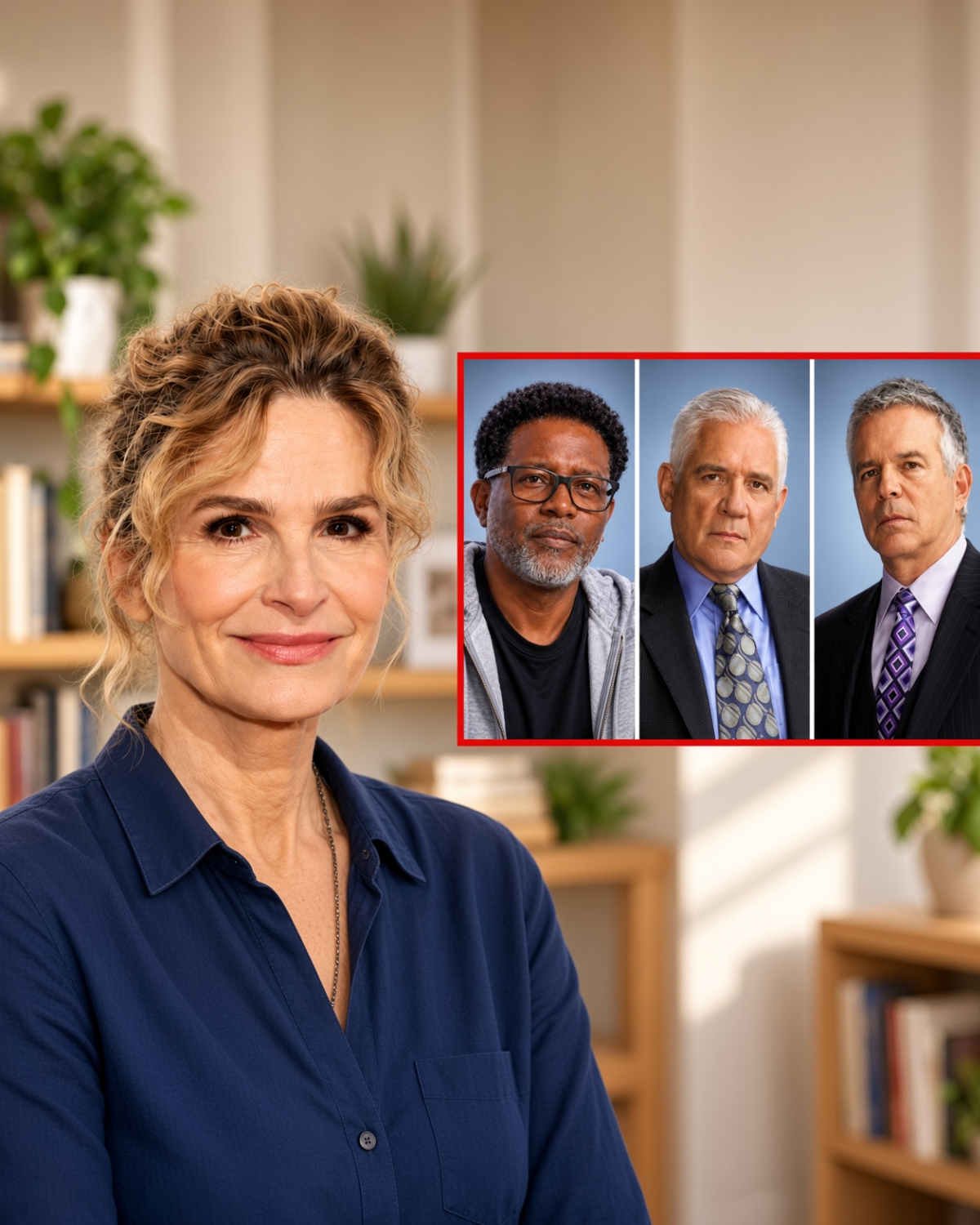
Fourteen years after the crime drama aired its final episode, millions of Americans are discovering the show all over again. Somewhere between a familiar face in the squad room, Brenda Leigh Johnson’s unmistakable Southern accent, and another perfectly timed “ding-dong,” viewers are remembering why this series became one of cable television’s most beloved police dramas.
And the numbers are difficult to ignore.
During a single week around New Year’s, American viewers watched nearly a billion minutes of The Closer. A show that had ended in 2012 was suddenly competing for attention with some of the biggest television releases of the modern streaming era.
But the revival isn’t the only surprising part.
The actors who brought that unforgettable squad to life have taken remarkably different paths. One made a gamble on Broadway that could easily have ended his career before it truly began. Another spent years working on two major television franchises at the same time, sometimes putting in fourteen-hour days, seven days a week. One turned a deeply personal struggle into part of his character’s story. And one of the show’s most recognizable stars eventually became the voice of a superhero who is almost nothing like the man audiences remember from the squad room.
Then there’s Kyra Sedgwick.
She walked away from one of the biggest roles of her career while the show was still attracting millions of viewers. Years later, she gave an unusually honest explanation for that decision.
Her answer reveals something about the entertainment industry that audiences rarely get to see.
So, where is everyone now? What happened behind the scenes when The Closer ended? And why did the woman at the center of the entire series decide it was time to leave?
To understand the remarkable second life of this television phenomenon, we have to go back to the beginning.
On December 22, 2025, all seven seasons of The Closer arrived on Netflix in the United States for the first time. The timing introduced the series to a new generation of viewers while giving longtime fans an opportunity to revisit the characters they had followed for years.
According to Nielsen figures reported by the entertainment trade press, viewing during that first week approached one billion minutes on American television sets.
The following week brought another remarkable viewing period, coinciding with the finale of Stranger Things.
By the end of June 2026, Nielsen figures had placed The Closer above 11 billion minutes of viewing for the year.
There was, however, an interesting detail behind the numbers.
The resurgence was concentrated in the United States. It wasn’t simply a worldwide social media phenomenon or a sudden TikTok challenge. It was something much more familiar: Americans finding an old favorite, pressing play, and discovering that the episodes still worked.
And there was another reason the show’s return attracted attention.
The Closer hadn’t ended because audiences had abandoned it.
Approximately nine million viewers watched the series finale in 2012. At that point, the program remained a major success, but its leading actress, Kyra Sedgwick, had decided that she was ready to move on.
That decision would change the future of the entire cast.
Then, in September 2026, another part of the television universe returned to the streaming conversation. The spin-off Major Crimes arrived on Netflix on September 3, and a month later it was still appearing among Nielsen’s top ten programs, with 666 million minutes recorded in one week.
For viewers who remembered the original squad, the connection was immediately recognizable.
The characters had grown older, their relationships had changed, and the leadership had passed to someone new.
But the spirit of the original show remained.
And longtime fans of The Closer have always had a special connection to the actors who played those detectives.
Tony Denison discovered that connection in an unexpected way.
“When my publisher, Nadine Jolson, started telling me about these Flynn girls, I was like, ‘Oh, like, I thought it was maybe a handful of women.’ Even if it was a handful, I was flattered.”
He initially imagined a small group of enthusiastic fans.
Then he learned the truth.
“Oh, no. This is like a movement.”
It was a reminder that television audiences don’t always move on when a series ends. Sometimes, they simply wait for another opportunity to reconnect with the people they loved watching.
So what made this particular show so difficult to forget?
It began with an unusual lead character.
Brenda Leigh Johnson wasn’t the traditional television detective. She didn’t need to dominate a room physically or rely on intimidation to establish authority.
Her greatest weapon was understanding people.
She could listen to a suspect, notice a contradiction, offer a seemingly harmless question, and slowly guide the conversation toward the truth. Her sweet Southern manner often made people underestimate her, which was precisely what gave her an advantage.
The character’s distinctive voice was not an accident.
Series creator James Duff explained that his own upbringing influenced the decision.
“I grew up where there were a lot of smart, talented people with Southern accents, but on television, it was The Dukes of Hazzard or nothing.”
He wanted to create something different.
“It would be great to have a character who was sometimes the smartest person in the room with a Southern accent.”
That character became Brenda.
And the people surrounding her transformed the series from a police procedural into something much more personal.
One of the first detectives audiences came to love was Lieutenant Andy Flynn.
Tony Denison was 55 when The Closer premiered. Today, at 77, he remains one of the most recognizable members of the original ensemble.
Before becoming a television detective, Denison had already experienced an unusual journey into acting.
He was the son of immigrant parents and had worked as a newspaper editor. His career direction changed after an experience involving a performance of Death of a Salesman made him reconsider what he wanted to do with his life.
His eventual breakthrough came during the 1980s when he portrayed Ray Luca, a ruthless gangster in the television series Crime Story.
The character left a lasting impression.
Years later, Denison discovered just how much respect that performance had earned him among other actors.
At the Screen Actors Guild Awards, The Closer and The Sopranos were both nominated for outstanding ensemble performances.
While walking along the red carpet, Denison suddenly found himself surrounded by members of the Sopranos cast.
James Gandolfini wasn’t there at the time, but the other actors recognized him immediately.
“They all came over to me there on the red carpet. They surrounded me like I was some kind of superstar, and they were just telling me how much they dug me.”
Denison was surprised.
“I said, ‘I love what you guys do, too.’ And they were like, ‘Oh, yeah, man. You’re the Ray Luca.'”
For an actor, recognition from fellow performers can mean something different from public attention.
These were people who understood the work, the preparation, and the decisions behind a character. Their appreciation reminded Denison that Ray Luca had made an impression long after the series itself had ended.
But getting onto The Closer wasn’t nearly as straightforward as fans might imagine.
A producer had originally written the role of Lieutenant Louie Provenza with Denison in mind.
The network, however, gave that part to another actor.
Denison later auditioned for a different role and didn’t get that one either.
For a while, it appeared that the opportunity had passed.
Then, approximately five or six months before production began, the phone rang.
“There was a role named Lieutenant Flynn. He’s in the first six pages of the pilot episode. They wanted me to do that role.”
The offer sounded modest.
There was one scene, followed by the possibility that Flynn might become a recurring character.
Denison agreed.
He went in, performed the scene, and left without realizing that anything unusual had happened.
Then the network responded.
“They said, ‘Who is this guy? This guy was great.'”
The producers had another reaction.
At the end of Denison’s seven-page scene, Flynn walked away. But the people watching weren’t ready to let the character disappear.
“They said, ‘We wanted to know what happened to him.'”
That single reaction changed everything.
By the end of the first season, Denison had become a regular member of the cast.
Initially, Flynn was written as one of Brenda’s biggest obstacles. He questioned her decisions, challenged her authority, and wasn’t particularly interested in accepting a new commander simply because the department had assigned one.
But the writers gradually discovered something more interesting.
Flynn was difficult, but he wasn’t incapable of loyalty.
Denison remembered that the creative team wanted to keep the character while changing his relationship with Brenda.
“They wanted him to be on her side. So they just sort of rehabilitated me a little bit.”
The transformation made sense because it revealed something about Flynn’s personality.
He was the kind of man who would stand beside someone once that person had earned his respect.
And Brenda did exactly that.
After she defended him in an important situation, Flynn began to understand that his allegiance belonged with her rather than Commander Taylor.
The relationship developed into one of the show’s most enjoyable partnerships.
Their conversations could be sharp, funny, and occasionally frustrating, but underneath the disagreements was a growing trust that made the squad feel like a real workplace.
There was another part of Flynn’s character that was much more personal to Denison.
The actor has spoken openly about his own sobriety and his experiences with alcoholism.
Rather than keeping that part of his life completely separate from his work, he approached James Duff with an idea.
He pointed out that alcohol-related struggles could affect people in law enforcement, firefighting, the military, and other demanding professions.
It would make sense, he suggested, for at least one police officer in the series to be dealing with that reality.
Duff considered the suggestion.
Then he agreed.
“Let’s go with it.”
That decision gave Flynn a dimension beyond the familiar television image of an experienced detective who always had a sarcastic comment ready.
His personal struggles became part of a larger story about accountability, recovery, and the possibility of changing one’s life.
And the next detective had a connection to the show’s creator that went back much further than the series itself.
G.W. Bailey played Lieutenant Louie Provenza, the grumpy veteran detective whose complaints often made him seem like the least enthusiastic person in the room.
Yet somehow, he became one of its most lovable characters.
Bailey was 60 when The Closer began. Today, at 82, he is remembered by fans for a career that had already included some major television and film roles.
Before Provenza, audiences knew him as Rizzo on MASH* and as the frequently miserable Captain Harris in the Police Academy movies.
His career had covered decades of comedy, drama, and memorable supporting performances.
But his connection to James Duff was particularly meaningful.
The two men had known each other long before The Closer existed.
Bailey explained that Duff had been his teacher.
“He taught me acting, and I ended up as a writer.”
Their relationship had influenced both of their professional lives.
Bailey remembered how Duff encouraged him to pursue the work he actually wanted rather than simply following the expectations his parents had established.
“He convinced me that I should try and do something that I wanted to do instead of what my parents wanted me to do.”
For Bailey, that encouragement made a lasting difference.
Away from acting, he developed another important part of his life through the Sunshine Kids Foundation.
As the organization’s executive director, he has devoted considerable energy to helping children with cancer experience opportunities for friendship, travel, and enjoyment.
He remembers the first time he attended an event involving a large group of the children.
“I had seen one kid with cancer. I had seen a couple of kids with cancer. I had never seen 30 kids with cancer all in the same place, all laughing and having this exuberant celebration of their lives.”
That experience stayed with him.
It also helps explain why his work outside Hollywood has become such an important part of his identity.
His last screen role that could be identified in the source material was in 2022, but his contribution to the entertainment world is only one part of his story.
And while Provenza was busy complaining about practically everything in the squad room, another detective was quietly becoming the person everyone relied on when technology entered the investigation.
Michael Paul Chan played Lieutenant Mike Tao.
Tao was the team’s technical expert, the detective who seemed to have an interesting fact ready for almost every situation.
Chan was 54 when the series premiered. Today, at 76, he remains associated with one of the show’s most recognizable characters.
His journey into entertainment began long before the LAPD squad room.
As a teenager, he played keyboards in bands around the San Francisco Bay Area.
Eventually, acting became his profession, and The Closer gave him a character whose intelligence and personality could develop over several seasons.
One particular episode, however, affected his family in a way he hadn’t anticipated.
The writers created a story involving Tao’s family, and the opening sequence featured a park that had special meaning to Chan.
It was the same park where his son had spent much of his childhood.
Birthday parties, playdates, and ordinary family memories were connected to that location.
When the episode appeared on television, the memories came rushing back.
“It was a very heavy episode. We had a hard time watching it at our house because the park that was the opening sequence of our show was the same park that basically our son grew up in.”
His wife recognized the location immediately.
“When that park appeared, my wife just kind of came undone.”
For an actor, locations are often just another part of a production schedule.
But sometimes, a place on a television screen carries an entire family history.
Chan’s reaction was a reminder that even after the cameras stop rolling, the people making a show bring their own lives into the stories.
His most recent screen role identified in the source material was in 2024.
But another member of the squad would continue moving between two television universes that audiences rarely realized were connected behind the scenes.
That actor was Raymond Cruz.
Cruz played Detective Julio Sanchez, the tough, quiet investigator whose patience could disappear quickly when someone crossed a line.
He was 40 when The Closer premiered. Today, at 62, he has built a career that reaches far beyond the Los Angeles police department.
For fans of crime television, Cruz is particularly recognizable because of another character.
Tuco Salamanca.
The volatile character from Breaking Bad and later Better Call Saul became one of the most memorable figures in those franchises.
What many viewers never realized was how much work Cruz was doing while playing both roles.
He explained that he sometimes had to shoot Breaking Bad on weekends while working on The Closer.
Then, when Major Crimes began, the scheduling challenge continued with Better Call Saul.
“I did The Closer, and I had to shoot Breaking Bad on the weekends. Then I did the spin-off to The Closer, Major Crimes, and I had to shoot Better Call Saul on the weekends.”
The schedules overlapped.
“I ended up having to work seven days a week, like fourteen hours a day.”
Think about that for a moment.
While audiences were watching Sanchez investigate complicated cases during the week, Cruz was also preparing to become Tuco Salamanca in another production.
He had to move between two completely different characters, two different creative teams, and two demanding television schedules.
One required the restrained intensity of a police detective.
The other demanded the unpredictable energy of one of television’s most memorable antagonists.
Cruz managed to make both characters feel completely distinct.
And even after the original shows ended, he wasn’t finished with Tuco.
In 2023, he returned to the character for a Super Bowl commercial promoting PopCorners.
The advertisement brought back the familiar personality in a completely different setting, introducing the character to viewers who might never have watched the original series.
Cruz also has new film projects in development.
But among the detectives who worked beside Brenda, the actor who made one of the biggest career gambles before joining the show was Corey Reynolds.
He played Sergeant David Gabriel, Brenda’s loyal right-hand man.
Reynolds was only 30 when The Closer premiered. Today, at 52, his career includes Broadway, television, and several very different types of roles.
Before television audiences knew him as Gabriel, Reynolds had already reached an important turning point in his professional life.
He had been cast in the Broadway musical Hairspray.
It was an exciting opportunity, but accepting it meant turning down something that seemed much safer.
He had also been offered a place on the first national tour of The Lion King.
For a young performer, that was an enormous decision.
Reynolds remembered visiting the office of someone who wanted him to reconsider.
He explained that he intended to accept Hairspray, then placed the contract on the desk.
The response was immediate.
“Let me get this straight. You’re turning down the first national tour of The Lion King for a show that could open and close in a week?”
The warning was understandable.
A national tour of an established production offered a recognizable name and a degree of security.
Hairspray was a different kind of gamble.
It could become a major success, or it could disappear before anyone had time to notice.
Reynolds had to decide whether to take the opportunity in front of him or choose the option that appeared safer.
He chose Hairspray.
The gamble paid off.
The musical won the Tony Award for Best Musical, giving Reynolds an experience that would become an important part of his professional foundation.
A few years later, another opportunity appeared.
This time, it was a television audition for The Closer.
Reynolds remembered walking into the audition room and looking around at the other actors.
He was the only minority actor testing for the role.
The other candidates, as he described them, were mostly light-skinned men who looked similar to one another.
He began to doubt his chances.
“Oh, man. I thought to myself, this isn’t going to go well.”
But the network saw something different.
After his audition, the response was enthusiastic.
“Who is this guy? This guy was great.”
The role went to Reynolds.
He remained with the series throughout all seven seasons, becoming one of the central figures in Brenda’s professional world.
After The Closer, he continued building his television career.
He played Sheriff Mike on Resident Alien, a job he has described as the best he ever had.
He also appeared as Cliff Mosley during the final season of All American.
And although audiences may associate him most closely with Gabriel, Reynolds has expressed interest in exploring another genre.
He would love to make a horror movie.
The man Gabriel reported to, however, had already built an extraordinary career long before joining the squad.
J.K. Simmons played Assistant Chief Will Pope.
He was 50 when The Closer began and is now 71.
By that point, Simmons was already recognizable to audiences through his work as J. Jonah Jameson in the Spider-Man movies.
His performance as the newspaper editor was unforgettable.
He could deliver an insult with such confidence that even a brief appearance became a memorable moment.
But his career was never limited to one type of character.
In 2015, Simmons received the Academy Award for Best Supporting Actor for his performance in Whiplash.
The film featured an intense relationship between a demanding music instructor and a young drummer.
Simmons’ performance became one of the most talked-about aspects of the movie.
The role demonstrated how dramatically different he could be from the measured, authoritative Will Pope.
More recently, he has introduced his voice to an entirely different audience.
He plays Omni-Man in the animated superhero series Invincible.
The character is powerful, intimidating, and far removed from the police administrator viewers remember from The Closer.
Simmons admitted that he initially wondered who the intended audience for the series would be.
“Who’s it for?”
Then he discovered the answer.
“Everyone’s watching.”
He now regularly encounters people who recognize his voice and want to talk about Invincible.
People stop him on the street to discuss the show.
For an actor whose career has included everything from television crime dramas to superhero films, that kind of recognition is another reminder of how unpredictable Hollywood can be.
But there was one more important person in Brenda’s life, and he wasn’t part of her police department.
He was waiting for her at home.
Jon Tenney played FBI Special Agent Fritz Howard.
Fritz was Brenda’s patient boyfriend and eventually became her husband.
He was 43 when The Closer premiered and is now 64.
The character provided a different kind of relationship for Brenda.
At work, she was constantly making decisions, challenging suspects, managing detectives, and trying to keep the department functioning.
At home, Fritz was often the person who understood that the woman everyone else saw as a brilliant commander was also someone who needed patience, affection, and occasionally a reminder about ordinary domestic responsibilities.
Their relationship gave the show a personal dimension that balanced the investigations.
But Tenney almost played someone else.
He originally auditioned for the role of David Gabriel, which eventually went to Corey Reynolds.
He didn’t get Gabriel.
Instead, the production eventually found a different role for him.
Fritz became one of the most important characters in Brenda’s personal life.
Off screen, Tenney married Leslie Ardin in 2012.
And when the original series approached its ending, his character was only one part of a much larger transition.
Because someone else was preparing to take over the squad.
Her name was Captain Sharon Raydor.
Mary McDonnell played the internal affairs officer who first arrived during season five to keep an eye on Brenda’s team.
At first, Raydor wasn’t exactly welcomed with open arms.
She was serious, disciplined, and accustomed to navigating difficult professional environments.
She had a different approach to authority, and the detectives were not immediately convinced that she understood them.
But that was precisely what made her interesting.
McDonnell was 53 when The Closer began and is now 74.
Before joining the series, she had already earned two Academy Award nominations, establishing herself as an accomplished dramatic actress.
Her arrival changed the atmosphere of the squad.
And one moment behind the scenes gave her a nickname that would follow the character for years.
During her first night on the set, McDonnell appeared in a dark blue trench coat.
The production was moving between camera angles, a process known as a turnaround.
During the break, someone from the makeup department looked at her and reacted.
“Oh my God, it’s perfect. It’s like Darth Raydor.”
The nickname was too good to disappear.
Eventually, it became part of the show’s culture.
McDonnell understood that the character had to operate in an environment where she wasn’t automatically trusted.
She described Raydor as someone who could navigate an unfriendly workplace, expect resistance, and continue pushing until she accomplished what needed to be done.
That description would become especially important after Brenda’s departure.
But first, there was a major question that the cast didn’t know how to answer.
What would happen when Kyra Sedgwick left?
By 2012, The Closer had completed seven seasons.
Brenda Leigh Johnson had become one of the defining television detectives of her era.
The finale aired on August 13, 2012, and brought her story to a conclusion.
For viewers, the departure was emotional.
For the cast, it was also a moment of uncertainty.
Tony Denison remembered receiving a call from executive producer James Duff.
The two men had known each other for years, even before The Closer existed.
Duff wanted to reassure him.
“Listen, don’t worry about it. I’ve got more stories I want to tell.”
He wasn’t completely sure how everything would work out.
But he had an idea.
“We’re going to do something.”
Denison agreed to wait.
The answer turned out to be Major Crimes.
The original squad had already been operating within the Major Crimes Unit, so Duff didn’t have to invent an entirely new world.
Instead, he created a continuation that would allow the detectives to remain together while introducing Mary McDonnell as the central character.
But the decision wasn’t simply about keeping familiar faces employed.
Duff had another creative reason for wanting to continue the story.
One of the things he felt The Closer couldn’t explore as deeply as he wanted was what happened after a suspect confessed.
Brenda was exceptionally good at getting people to admit what they had done.
She could break through excuses, identify contradictions, and bring an investigation to a conclusion.
But what happened after the confession?
What happened to the people involved?
What happened to the victims and their families?
What happened when the investigation was over and the consequences continued?
Those were questions Duff wanted to explore.
And Major Crimes gave him an opportunity to do that.
The transition was remarkable.
The Closer ended on August 13, 2012.
Major Crimes premiered that very same night.
For viewers, it meant they didn’t have to say goodbye to the entire squad.
For the actors, it meant a new chapter rather than an immediate end.
McDonnell later described the experience of joining the ensemble.
She remembered that her new colleagues could be quite difficult toward Raydor on camera.
Off camera, however, they treated her wonderfully.
“These guys were really mean to me on camera and so wonderful off camera.”
That contrast helped create the chemistry audiences eventually embraced.
Major Crimes ran for six seasons and produced 105 episodes.
During that time, relationships changed in ways that fans of the original series might never have expected.
Andy Flynn and Sharon Raydor eventually fell in love and got married.
The same detective who had once struggled to accept Brenda’s authority found himself building a life with another strong woman who had taken command of the unit.
It was a fitting development for a character whose journey had begun with resistance.
But the spin-off wasn’t guaranteed a completely happy ending.
In its final season, Sharon Raydor died.
The decision shocked many viewers.
At a fan convention in 2018, McDonnell explained that the ending had been planned as a major dramatic event.
James Duff wanted to give the series a tragic conclusion that would create a deeper emotional resonance.
It was a difficult decision, especially because viewers had invested so much in Sharon and Flynn’s relationship.
But it gave the series a final chapter that audiences would continue discussing.
McDonnell has remained active as an actress, and the arrival of Major Crimes on Netflix has introduced Sharon Raydor to another generation of viewers.
Still, there is one person without whom none of these stories would have existed in quite the same way.
The woman whose voice, personality, and unusual investigative methods made The Closer what it was.
Kyra Sedgwick played Deputy Chief Brenda Leigh Johnson.
She was 39 when the series premiered and is now 61.
The role earned her a Golden Globe Award in 2007 and an Emmy Award in 2010.
For seven seasons, she became the face of the show.
Brenda’s Southern accent, her intense attention to detail, her complicated relationships, and her ability to extract confessions made her a distinctive television character.
Even her eating habits became part of the show’s identity.
There was the famous “ding-dong” moment, the candy, and the way Brenda could become completely absorbed in food at precisely the moment everyone else was focused on something serious.
Sedgwick explained that some of those details came directly from the scripts, while others developed through her own decisions about the character.
She wanted to continue the habit because she felt it reflected something familiar about American life.
“Who in America doesn’t have an eating issue? What woman in America doesn’t have an eating issue?”
It was a small character detail, but it became one of the things viewers remembered most.
And the production itself was something of a family affair.
Sedgwick’s husband, Kevin Bacon, directed episodes of the series.
Their daughter, Sosie Bacon, also appeared as Brenda’s niece.
At one point, Sedgwick was asked whether Sosie would return to the show.
The actress remembered that her daughter had reached a conclusion after working on several episodes.
“After the fourth episode, she said, ‘This is really hard, and I think I’ve gotten this whole crazy acting thing out of my system.'”
But Sosie eventually changed her mind.
She went on to build her own acting career.
In March 2026, Kyra Sedgwick and Kevin Bacon premiered a comedy-horror film they directed together at South by Southwest.
The project starred Sosie and her brother, Travis.
It was another example of the family’s creative connection, although their individual careers have developed in different directions.
But the question that still interests many Closer fans is not what Sedgwick did after the series.
It’s why she decided to leave in the first place.
After all, the show was successful.
The audience remained loyal.
Her character was popular.
And the series had not reached a point where the network was forced to end it.
Sedgwick could have continued playing Brenda.
She could have remained the central figure in one of cable television’s most recognizable crime dramas.
Instead, she chose to walk away.
For years, viewers have wondered whether the decision was about money, exhaustion, creative disagreements, or simply wanting to spend more time with her family.
Eventually, Sedgwick offered an unusually honest explanation during an appearance on the Design Matters podcast.
Her answer wasn’t what many people expected.
She explained that she didn’t want to become the kind of lead actor who grew bitter after spending too many years at the top of a production.
She had watched what could happen to people who carried enormous responsibility for a successful series.
The pressure could change them.
The long schedules, the expectations, and the constant demands could turn something they once loved into something they resented.
She didn’t want that to happen to her.
“I really didn’t want to become one of those number one on the call sheet who is really kind of bitter and sour and icky and not treating people well and not grateful.”
That was a major part of her decision.
She had genuinely enjoyed making The Closer.
She described the experience as a joy from top to bottom.
But it was also all-consuming.
And she knew that remaining in the same role for too long could create another problem.
She didn’t want to become known only as Brenda Leigh Johnson.
“I also didn’t want to hang around too long in that role and then only be known for that role.”
That was the other important reason.
Sedgwick saw herself as an artist who needed opportunities to explore different creative environments.
She wanted to be challenged by new characters and new projects.
She didn’t want the success of one role to become a limitation on everything that came afterward.
Still, leaving wasn’t easy.
She knew that the decision would affect a large number of people, from the actors and crew members to everyone whose livelihood depended on the production.
She understood that her departure would change the future of the series.
And that made the choice even more difficult.
But she ultimately decided that the best way to preserve her relationship with the show was to leave while she still loved it.
That decision also allowed the characters around Brenda to continue developing.
Without it, Major Crimes might never have existed in the form audiences eventually came to know.
And perhaps that’s the most interesting part of the entire story.
When The Closer ended, it didn’t simply disappear.
Its characters moved into another series.
Its actors continued working in different genres.
Some discovered new audiences, while others devoted more time to causes outside Hollywood.
Tony Denison remained connected to the character who unexpectedly became a regular after one memorable audition.
G.W. Bailey continued his work with the Sunshine Kids Foundation, helping young people and their families experience moments of joy during difficult circumstances.
Michael Paul Chan carried the memories of his television family and his real family into the next chapter of his career.
Raymond Cruz continued moving between demanding roles, including the unforgettable Tuco Salamanca.
Corey Reynolds took his Broadway experience into a continuing television career and remained interested in exploring new genres.
J.K. Simmons moved from the authority of Will Pope to the extraordinary world of Invincible.
Jon Tenney continued building his career beyond Fritz Howard.
Mary McDonnell gave audiences another memorable central character through Sharon Raydor.
And Kyra Sedgwick found the freedom to explore projects beyond the role that had made her one of television’s most recognizable actresses.
Fourteen years after the final confession, the squad is still finding new viewers.
The Netflix resurgence has demonstrated that a successful television series doesn’t always need a reboot, a reunion special, or a viral internet challenge to become relevant again.
Sometimes, a good story simply needs another chance to be discovered.
A viewer finds an episode.
Someone recognizes a familiar actor.
A longtime fan recommends the series to a friend.
And suddenly, a television show that ended more than a decade ago becomes part of the conversation again.
Perhaps that’s the real legacy of The Closer.
It wasn’t just the mysteries, the interrogations, or the surprising confessions.
It was the people.
The disagreements between Brenda and Flynn.
Provenza’s endless complaints.
Tao’s knowledge.
Sanchez’s intensity.
Gabriel’s loyalty.
Pope’s authority.
Fritz’s patience.
And eventually, Sharon Raydor’s determination to prove that a new leader could earn the respect of the same detectives who had once resisted Brenda.
Each character contributed something different.
Together, they created a television family that viewers weren’t quite ready to leave behind.
And there’s something fitting about the fact that Brenda’s most recognizable habit remains one of the details people remember years later.
The little “ding-dong” at the end of a scene.
It was never the most important part of an investigation.
It didn’t solve a case.
It didn’t identify a suspect.
But it made Brenda feel like Brenda.
And maybe that’s why audiences keep coming back.
Because fourteen years after she walked away from the squad room, a new generation is still discovering the woman who could make an entire interrogation room underestimate her with one sweet Southern smile.
One confession at a time.
And, of course, one ding-dong at a time.