Before Death, John Lennon Confessed: “It Was Never Yoko Ono”
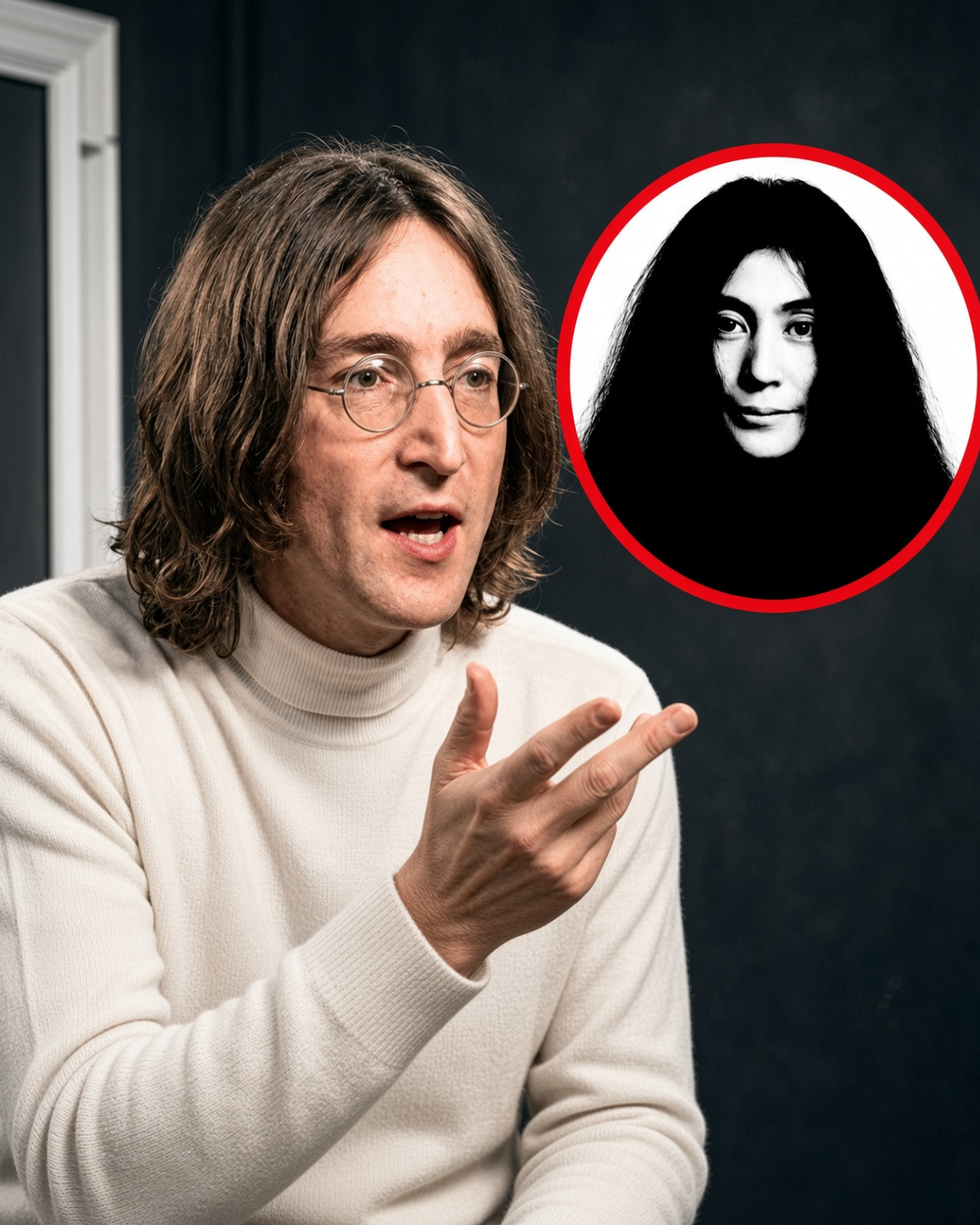
There is a reason this story still matters more than four decades after Lennon’s death.
The Beatles were not simply four musicians who became successful and eventually decided to pursue different careers. They were four young men who had grown up together, survived extraordinary pressures, and built something that changed popular culture forever. Their friendship, however, was not immune to ambition, jealousy, exhaustion, personal tragedy, and the enormous weight of worldwide fame.
And when the group finally collapsed, the public wanted one explanation.
Yoko Ono became that explanation.
But John Lennon had spent much of his later life challenging the idea that one woman could destroy a band whose problems had been developing for years. His reflections on those final Beatles years reveal a much more complicated picture, one involving personal wounds, creative disagreements, business disputes, and four men who were gradually becoming different people.
To understand why Lennon defended Yoko so fiercely, however, it is necessary to understand the boy he had been before the world knew his name.
Long before the screaming crowds, the expensive recording studios, and the photographs that filled newspapers across America, John Lennon was a child growing up in Liverpool, England, during one of the most uncertain periods in modern history.
He was born on October 9, 1940, while World War II was still raging.
Air raids shook Liverpool, families lived with uncertainty, and ordinary childhood routines were constantly interrupted by circumstances beyond their control.
John’s father, Alfred Lennon, was frequently away at sea, leaving his mother, Julia, to raise him largely on her own.
But the instability did not end when the war moved further into history.
When John was about four years old, Alfred disappeared from the family’s daily life. The financial and emotional support he had provided became uncertain, and Julia was left trying to rebuild a life without knowing what would happen next.
Eventually, Alfred returned.
But by then, Julia was involved with another man and expecting a child. The family situation had become complicated, and the adults around John could not provide the kind of stable home he desperately needed.
The little boy was caught between people who had their own problems, their own disappointments, and their own expectations.
Then came another painful separation.
Julia’s sister, Mary Elizabeth, known to everyone as Mimi, stepped forward and took John into her home. Mimi was strict, traditional, and deeply concerned about discipline. Her husband, George, offered a gentler presence and helped create a more predictable environment.
For John, the move provided something he had been missing: consistency.
But it also meant growing up with the complicated feeling of belonging to two different worlds.
His mother remained an important emotional presence, even though he did not live with her. Mimi provided structure, while Julia represented spontaneity, affection, and freedom.
Those competing influences would remain part of his personality throughout his life.
There was another incident that demonstrated just how uncertain his childhood had become.
When John was around five, Alfred reappeared and attempted to take him away, reportedly suggesting a trip to Blackpool. Julia became concerned and followed with her partner.
The situation escalated when it became apparent that Alfred intended to leave with the boy.
The confrontation ended without John being taken away, but the experience added another layer of uncertainty to a childhood already marked by separation.
Years later, people would recognize Lennon’s extraordinary ability to express complicated emotions through music.
What they sometimes overlooked was how early those emotions had begun.
When John was fourteen, his Uncle George died unexpectedly from a liver hemorrhage.
George had been one of the most important male figures in his life. His death removed a source of stability at an age when John was already struggling to understand the world around him.
Then, in 1958, another tragedy changed everything.
His mother, Julia, was struck by a car driven by an off-duty police officer and died from her injuries.
John was only seventeen.
The loss was devastating.
He later described the experience as losing his mother twice: first through the separation during his childhood, and then through her sudden death.
There were emotions he could not easily explain, and there were questions he could never completely answer.
Instead of finding comfort in long conversations, John increasingly turned toward music.
It became his language.
His anger, humor, insecurity, imagination, and grief could all find a place inside a song.
Julia had encouraged his musical interests, even helping him obtain his first guitar despite Mimi’s concerns about whether music offered a secure future.
That small act of encouragement became one of the most important gifts of his childhood.
John eventually enrolled at Liverpool College of Art, where he met Cynthia Powell and continued developing his artistic interests.
But music was already becoming more important than the classroom.
He formed a skiffle group called the Quarrymen, bringing together young musicians who shared his enthusiasm for American rock and roll.
The group was rough, inexperienced, and far removed from the polished sound that would eventually conquer the world.
Yet something important was happening.
John was discovering a place where he could belong without having to explain every complicated part of himself.
When Paul McCartney joined the group, the musical relationship that would define an era began taking shape.
George Harrison followed, and the group gradually evolved into the Beatles.
Their early performances demanded enormous energy.
The long residency in Hamburg, Germany, became a defining experience. They played night after night in crowded clubs, often performing for hours under exhausting conditions.
They were not yet international superstars.
They were young men learning how to survive as musicians.
And those experiences created a bond that would later become difficult to separate from the pressures of fame.
But even as the Beatles were becoming stronger musically, the emotional lives of their members were becoming increasingly complicated.
John had learned early that people could disappear.
Now he was building a career around three friendships that he hoped would last forever.
He had no way of knowing how difficult that promise would become.
The first major turning point came during the band’s Hamburg years.
The atmosphere was intense, the schedule demanding, and the nightlife filled with temptations.
Stimulants were common in the environment, and Lennon developed a relationship with substances that would become a recurring problem during the years that followed.
Paul McCartney later recalled the extent of John’s use of pills during that period.
The experience was not simply about staying awake.
It reflected the exhausting conditions in which the young musicians were working and the increasingly difficult lifestyle surrounding their performances.
Their sound became sharper, louder, and more confident.
But their personal lives were not developing at the same speed.
John could be funny, charming, and extraordinarily creative.
He could also be impatient, jealous, and emotionally unpredictable.
His relationship with Stuart Sutcliffe, the original bassist who later pursued painting, was particularly complicated.
Stuart had been part of John’s early artistic world and represented an important connection to the person Lennon had been before the Beatles became famous.
They shared creative interests, arguments, jokes, and moments of genuine closeness.
John sometimes mocked Stuart publicly, and their relationship included periods of serious tension.
There have also been later attempts to interpret the emotional complexity of their friendship in different ways, although speculation about its exact nature should not be confused with established fact.
What is clear is that Stuart mattered deeply to John.
Their disagreements were sometimes intense, and the pressures of the Hamburg period made those conflicts more difficult.
Stuart eventually left the Beatles to concentrate on art.
Then, in 1962, he died from a brain hemorrhage at just twenty-one years old.
For John, the loss was another reminder that people could disappear without warning.
It was a pattern he had experienced with his uncle and mother, and now another important person from his younger life was gone.
Meanwhile, the Beatles were approaching a level of success that none of them could have fully imagined.
Their music was reaching larger audiences, their performances were attracting increasing attention, and their identities were becoming inseparable from the excitement surrounding the band.
But success did not make John’s personal responsibilities disappear.
His relationship with Cynthia had become serious, and when she became pregnant, the couple married in 1962.
The marriage was kept relatively private because the Beatles’ management worried that the image of a young married rock star might interfere with the band’s appeal to teenage fans.
John and Cynthia had a son, Julian, in 1963.
But John missed the birth because he was away working.
For a man whose own childhood had been shaped by his father’s absence, this was a deeply complicated beginning to fatherhood.
He loved his son, but his ability to be consistently present was affected by the demands of his career and his own emotional struggles.
The Beatles were becoming a worldwide phenomenon, and the distinction between private life and public identity was disappearing.
The crowds grew larger.
The schedules became more demanding.
The press wanted access to every detail.
And the four young men who had once played in Hamburg clubs were now expected to represent an entire generation.
For John, the experience was both exhilarating and exhausting.
Behind the humor and sharp remarks was a growing sense that the life he had built was no longer entirely his own.
In 1965, he released “Help!”
To the public, it was another successful Beatles song.
But Lennon later acknowledged that the song reflected a genuine personal cry for assistance.
He was becoming uncomfortable with the image that had been created around him.
The famous smile, the clever answers, the endless performances, and the expectation that he would always be entertaining were becoming difficult to maintain.
He had reached a position that millions of musicians dreamed about.
Yet something inside him remained unsettled.
And that contradiction would become increasingly important as the Beatles entered their final years.
By the middle of the 1960s, the band’s creative ambitions were expanding.
They were no longer interested in simply reproducing the songs and performances that had made them famous.
They wanted to experiment.
They wanted to explore different sounds, different recording techniques, and different ways of expressing themselves.
John was especially interested in pushing beyond traditional pop music.
Paul was also developing rapidly as a songwriter and musical arranger.
George Harrison was becoming increasingly confident in his own creative identity.
Ringo Starr brought his own personality and musical instincts to the group.
Their individual growth was a sign of artistic success.
But it also created a problem.
The Beatles had been built around a shared identity.
Now each member was discovering that he had ambitions that could not always be accommodated within the group.
Their musical partnership was changing.
And their personal relationships were changing with it.
This was happening before Yoko Ono became a central part of John’s life.
It is one of the most important details in understanding the breakup.
The band was already experiencing the tension between collective creativity and individual freedom.
There was another problem.
John’s marriage to Cynthia was becoming increasingly distant.
The relationship had started before the Beatles became famous, when both were young art students in Liverpool.
But the life they had built together was no longer the life they had imagined.
John was spending more time away.
His interests were changing.
His social circle was expanding.
Cynthia was raising Julian while trying to maintain some sense of normality in a world that had become anything but normal.
By the late 1960s, their marriage was under considerable strain.
Small incidents revealed how far apart they had become.
John sometimes left Cynthia behind during trips and social engagements, and she increasingly felt excluded from his life.
The emotional distance was becoming impossible to ignore.
Then came 1968.
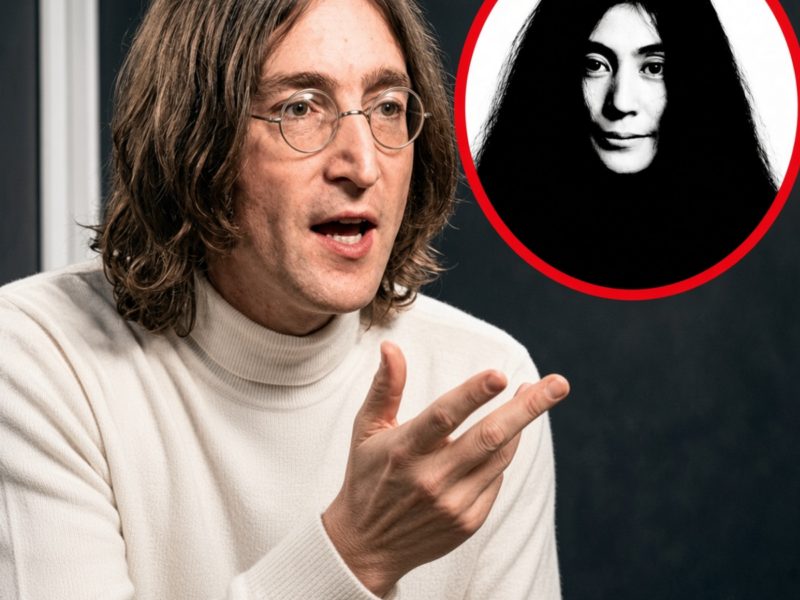
Cynthia returned from a vacation and discovered John with Yoko Ono.
The encounter marked a devastating turning point in her marriage.
John’s response was reportedly casual, which only made the situation more painful.
For Cynthia, the man she had known since their youth seemed to have become someone she barely recognized.
The relationship with Yoko was no longer a passing acquaintance.
It was becoming central to John’s personal and creative life.
Cynthia eventually left with Julian, and the marriage moved toward divorce.
The public response was immediate.
Photographs of John and Yoko appeared in newspapers.
The relationship became a subject of constant attention.
Paul McCartney reportedly visited Cynthia after the separation, bringing her a red rose and expressing sympathy.
He was saddened by what had happened and struggled to understand the choices John had made.
This moment reveals something important about the Beatles.
Their private lives were not separate from the group’s emotional structure.
They were friends, colleagues, competitors, and people who had shared experiences that few outsiders could understand.
When one relationship collapsed, the consequences often reached everyone.
But John’s connection with Yoko was about more than romance.
She was an artist with her own ideas, ambitions, and understanding of the world.
She had developed a reputation within experimental art circles long before meeting Lennon.
Her work challenged traditional expectations.
She approached creativity differently from the people John had known in his earlier musical life.
And he was fascinated.
Their connection became an artistic partnership as well as a personal relationship.
They discussed music, visual art, philosophy, peace, and the possibility of using celebrity to communicate ideas.
John found in Yoko someone who did not simply admire the Beatles.
She challenged him to think beyond them.
That distinction mattered.
For years, Lennon had been surrounded by people who treated him as one of the most important figures in popular culture.
Yoko approached him as another artist.
She did not need him to remain the funny Beatle with the clever one-liners.
She was interested in the person behind that identity.
And John increasingly wanted to understand that person himself.
But the new relationship created problems inside the band.
For years, the Beatles had maintained a relatively clear boundary between their private relationships and their recording sessions.
Wives and girlfriends were generally not permanent fixtures in the studio.
Yoko’s presence changed that arrangement.
John began bringing her into recording sessions, where she sometimes offered observations and participated in discussions.
The other Beatles were not accustomed to this.
The studio had traditionally been a space where the four members worked through ideas together.
Now a new dynamic was developing.
The issue was not simply that Yoko was present.
It was that John was changing the way he approached his place within the group.
He increasingly viewed his relationship with her as an essential part of his creative identity.
The others did not necessarily share that perspective.
George Harrison, who was becoming more ambitious as a songwriter, was also frustrated by the limited attention his compositions sometimes received.
He had spent years contributing to the Beatles while watching the Lennon-McCartney partnership dominate the songwriting identity of the group.
Now he was developing a stronger musical voice of his own.
He wanted greater recognition.
He wanted more space.
And he was not always receiving it.
Paul, meanwhile, was increasingly involved in organizing the band’s activities.
He believed the Beatles needed direction and structure.
But his attempts to keep the group moving sometimes created friction with John and George.
The disagreements were becoming personal.
The recording sessions for the White Album exposed many of these problems.
The atmosphere was different from the earlier years.
Members sometimes worked on separate tracks.
The old sense of four musicians creating everything together was becoming less consistent.
John was experimenting with new sounds and ideas.
Paul was pursuing his own musical direction.
George was demanding more creative independence.
Ringo, too, was experiencing the difficulty of being part of a group in which individual tensions were becoming increasingly visible.
Yoko’s presence became an easy explanation for the discomfort.
But the discomfort was not created from nothing.
The band was already struggling with questions of authority, artistic freedom, and personal identity.
The relationship between John and Yoko simply made those questions impossible to ignore.
One image from the period became especially memorable.
A large bed was brought into the studio for Yoko’s comfort while she was recovering from health difficulties.
To outsiders, the arrangement seemed extraordinary.
To critics, it became another symbol of what they believed was happening to the Beatles.
But the image also reflected a much more personal reality.
John wanted Yoko close.
He was unwilling to maintain the old boundaries simply because the band had followed them for years.
That decision made some sessions uncomfortable.
It also revealed how differently John was beginning to understand his priorities.
And while the arguments continued, the emotional distance between the four musicians widened.
The Let It Be sessions made the problem even more visible.
The project was supposed to reconnect the Beatles with the energy of live performance.
Instead, the recording process exposed disagreements that had been building for years.
George Harrison eventually walked out.
His frustration had reached a point where he no longer wanted to continue under the existing conditions.
The departure was temporary, but the message was unmistakable.
The Beatles were no longer operating as the united group they had once been.
John’s response to the situation was not always constructive.
His relationships with the other members were becoming more difficult, and his personal circumstances were affecting the way he behaved in the studio.
The tension was especially complicated because Lennon and McCartney had once functioned as an extraordinary creative partnership.
They could challenge one another, complete one another’s ideas, and create songs that neither might have written alone.
But their relationship had never been free of competition.
As they became more confident as individual songwriters, their differences became more obvious.
Paul wanted to maintain the Beatles as a functioning group.
John increasingly wanted the freedom to pursue his own work.
George wanted his contributions treated with greater seriousness.
And Ringo wanted to remain part of a band whose internal disagreements were becoming exhausting.
No single person could resolve all those competing needs.
There was also the growing issue of business management.
The Beatles had become an enormous commercial enterprise.
Their recordings, publishing interests, performances, merchandising, and financial arrangements required decisions that went far beyond making music.
When their longtime manager Brian Epstein died in 1967, the group lost an important figure who had helped guide their business affairs and maintain a degree of unity.
His absence created a vacuum.
The members disagreed about who should manage the Beatles and how the business should be organized.
Paul supported the involvement of Lee Eastman and John Eastman, members of his wife’s family.
John preferred Allen Klein, a manager whose approach appealed to him.
The disagreement became increasingly bitter.
It was no longer just a question of which song should be recorded next.
It involved control, money, ownership, and the future of a business that had grown beyond anything the four men had experienced as young musicians.
The financial details were complicated, and the members did not always trust one another’s judgment.
Even when they agreed about the music, they could disagree about the business surrounding it.
By this point, the Beatles were facing a situation in which personal loyalties and professional interests were increasingly difficult to separate.
And that is where the familiar story begins to fall apart.
If Yoko had truly been the single cause of the breakup, removing her from the picture should have solved the underlying problems.
But the disagreements over management, creative control, and the future of the band existed independently of her relationship with John.
The four members were no longer united by a single vision.
They had different priorities.
They had different ideas about what success should look like.
And they were no longer willing to compromise in the same ways they once had.
The Beatles still produced extraordinary music.
In 1969, they completed Abbey Road, an album that demonstrated just how much musical ability remained between them.
The record was remarkable partly because the group could still create something so cohesive despite the personal disagreements surrounding its production.
The medley on the second side became one of the defining achievements of their career.
The music sounded like a band that understood one another.
But the people making it were moving toward separate futures.
During this period, John and Yoko also became increasingly involved in public campaigns for peace.
Their marriage in March 1969 attracted enormous media attention.
Instead of treating the publicity as something to avoid, they used it to promote their message.
Their bed-in for peace in Amsterdam became one of the most recognizable public demonstrations of the period.
They invited journalists into their hotel room and used the unusual setting to discuss nonviolence and peace.
For John, this was another way to use the attention surrounding his celebrity.
He was increasingly uncomfortable with the idea that being famous should be limited to selling records.
He wanted his public identity to represent something larger.
Yoko shared those interests.
Together, they became a highly visible artistic and political partnership.
But the more John moved toward that world, the less connected he sometimes seemed to the traditional Beatles identity.
The band was changing.
John was changing.
And the public was watching a separation that had been developing for years.
Another difficult episode occurred in July 1969.
John was involved in a serious car accident in Scotland while traveling with Yoko and members of his family.
The crash caused injuries, and the incident added further disruption to an already difficult period.
It was another reminder that the couple’s private life was unfolding under extraordinary circumstances.
But John did not abandon his relationship with Yoko.
On the contrary, he increasingly described her as someone who helped him navigate the emotional and creative confusion of those years.
He had spent much of his life trying to understand who he was outside the expectations of other people.
With Yoko, he felt he could pursue that question more openly.
That did not mean their relationship was perfect.
They experienced difficulties, disagreements, and periods of separation.
Their partnership would face challenges that were not visible in the carefully arranged photographs published in newspapers.
But John remained convinced that Yoko had given him something important.
A different way to understand himself.
The Beatles, meanwhile, were approaching the end.
In September 1969, Lennon informed the others that he wanted to leave the group.
The announcement was initially kept private while business and contractual matters were being discussed.
Then, in April 1970, Paul McCartney publicly announced his departure from the Beatles.
The news shocked fans around the world.
For millions of people, the breakup felt almost impossible to accept.
The four musicians who had transformed popular music were no longer going to work together.
And because the public wanted an explanation, the blame began.
Yoko became one of the most visible targets.
She was portrayed as an outsider who had entered a private brotherhood and taken its most important member away.
Some fans believed she had manipulated John.
Others thought she had deliberately interfered with the group’s creative process.
The fact that she was a woman challenging established expectations made the criticism even more intense.
Her artistic style was unfamiliar to many Beatles fans.
Her public behavior was different from what audiences expected of the partner of a major rock star.
And her closeness to John was impossible to ignore.
But the narrative overlooked an important question.
Why had the other Beatles already been experiencing so much tension before Yoko entered the picture?
Why were there disagreements over management?
Why had George been frustrated about his songwriting opportunities?
Why had John and Paul begun pursuing different creative directions?
Why had the band struggled to maintain the same atmosphere after Brian Epstein’s death?
Those questions did not fit neatly into a simple story about one woman breaking up a band.
But they were essential to understanding what happened.
The breakup was not the result of one dramatic afternoon.
It was the outcome of years of changes.
The Beatles had grown from four young musicians into four international figures with enormous personal and professional responsibilities.
They had achieved something almost impossible.
But they had also reached a point where the things that once united them were no longer enough to keep them together.
For John, the end of the Beatles was painful, but it was also a form of freedom.
He could finally explore his own musical identity without having to negotiate every decision with three other people.
His solo work became a reflection of that independence.
Songs such as “Imagine” demonstrated a different side of his creativity.
The music was often simpler in arrangement but ambitious in its message.
John was no longer trying to represent the Beatles.
He was trying to represent himself.
And Yoko remained central to that journey.
There was one important truth about their partnership that John would later make clearer.
He did not believe Yoko had stolen his identity.
He believed she had helped him discover parts of it that he had ignored.
That distinction became increasingly important as the public continued criticizing her.
John was also beginning to recognize how much of his earlier life had been shaped by the expectations of others.
His childhood had been controlled by family circumstances.
His teenage years had been shaped by grief.
His early adulthood had been consumed by the Beatles.
And his fame had created an identity that millions of people believed they owned.
Now he wanted to live differently.
The mid-1970s brought another unexpected chapter.
John and Yoko experienced a period of separation that became known as the Lost Weekend.
Despite the name, the period lasted much longer than a few days.
During this time, John spent considerable time in Los Angeles, where his lifestyle became increasingly chaotic.
He attended parties, worked on music, and became involved in complicated personal relationships.
The separation from Yoko did not produce the simple freedom some might have expected.
Instead, it exposed how difficult it could be for John to manage his life without the emotional structure he had come to rely on.
There were moments of creative energy.
There were also moments of confusion, excessive partying, and personal instability.
John was still struggling to understand the relationship between independence and emotional security.
He had spent years wanting to escape expectations.
But freedom without direction could become another kind of trap.
During this period, he also reconnected with Paul McCartney.
The two former partners had experienced enormous tension, and their disagreements had become part of the public narrative surrounding the breakup.
But the friendship had not disappeared completely.
They could still communicate.
They could still share memories.
And despite everything that had happened, there remained a connection that could not easily be erased.
The story of Lennon and McCartney was never simply one of friendship turning into hatred.
It was a relationship between two exceptionally talented people who had grown up together, achieved extraordinary success, and eventually discovered that they could no longer work under the same conditions.
Their disagreements were real.
So was their shared history.
John eventually returned to Yoko.
Their relationship entered a new chapter, and they began building a family together.
In 1975, their son Sean was born.
For John, fatherhood became an opportunity to approach family life differently.
He had missed important moments with Julian during the height of Beatlemania.
He had struggled with the absence of his own father.
Now he wanted to be present for Sean in ways he had not always managed earlier in his life.
He stepped back from the constant demands of the music industry and devoted much of his time to family life.
For several years, he lived a quieter existence.
He cooked.
He spent time with Sean.
He participated in everyday family routines.
He was no longer constantly touring or trying to satisfy the demands of a worldwide audience.
To many fans, this period seemed like a disappearance.
But to John, it was an important personal transformation.
He had spent decades being watched.
Now he wanted to experience ordinary life.
And the irony was that the man who had once seemed unable to escape the Beatles was beginning to find happiness outside the spotlight.
Yoko remained an important part of that life.
Their partnership had evolved beyond the intense public experimentation of the late 1960s.
They were parents, collaborators, and people who had experienced years of criticism together.
John continued to value her opinions.
He also became more willing to acknowledge her creative contributions.
One example was “Imagine.”
For many years, the song had been discussed primarily as a John Lennon composition.
But John later acknowledged the importance of Yoko’s influence on its ideas.
Her conceptual work had helped shape the philosophy behind the song.
His recognition was significant because it challenged the assumption that she had simply followed him into his creative world.
She had been an artist in her own right.
And John increasingly wanted that fact understood.
Their relationship also included periods of difficult personal history.
The miscarriage they experienced in 1968 had been devastating.
The couple had been expecting a child and had even considered naming him John Ono Lennon II.
The loss affected them deeply.
It was one of several painful experiences that shaped their relationship and contributed to the difficult emotional period surrounding the end of the Beatles.
But they continued building a life together.
They found new ways to work.
They raised Sean.
They developed projects that reflected their shared interests.
And despite years of public criticism, their connection endured.
The familiar accusation that Yoko had destroyed John became increasingly difficult to reconcile with the life they had built.
Yet the myth persisted.
Perhaps that was because the public found the story emotionally satisfying.
It offered a villain.
It offered a simple explanation.
And it allowed fans to believe that the Beatles might have remained together if only one person had not entered their world.
But history is rarely that convenient.
John Lennon understood this better than most.
He knew the Beatles had experienced disagreements long before Yoko.
He knew that his own decisions had contributed to the tension.
He knew that Paul, George, and Ringo had their own ambitions and frustrations.
And he knew that blaming Yoko allowed people to avoid confronting the uncomfortable truth that the band had reached the end of its natural life.
By 1980, John was preparing to return to music after his years away from the industry.
His family life had become his priority, but he was ready to create again.
The result was Double Fantasy, an album that featured songs by both John and Yoko.
The project reflected their relationship in a way that few earlier recordings had.
Rather than presenting John as the central artist with Yoko somewhere in the background, the album gave both of them a creative voice.
The songs explored love, aging, domestic life, personal responsibility, and the complicated process of becoming a different person.
John was no longer writing only about rebellion or heartbreak.
He was writing about marriage, fatherhood, and the ordinary experiences that had become meaningful to him.
The album represented a new beginning.
And that made what happened next even more heartbreaking.
On December 8, 1980, John and Yoko spent much of the day working.
They had participated in an interview with radio journalist Dave Sholin, discussing their music, their family, and their plans for the future.
The conversation revealed a man who was enthusiastic about his return to recording.
He spoke about the creative energy he had rediscovered.
He also discussed the importance of family and the changes that had taken place during his years away from the spotlight.
John was looking ahead.
He had ideas for new music.
He wanted to continue working with Yoko.
He wanted to spend time with Sean.
And he seemed genuinely excited about the years that might still be ahead.
Earlier that day, he and Yoko had worked on her song “Walking on Thin Ice.”
The recording was particularly meaningful because it represented the continuing partnership between them.
John contributed his guitar work.
Yoko provided the song.
They were creating something together, just as they had done throughout their relationship.
It was an ordinary working day for two musicians who believed they still had much more to accomplish.
That evening, John expressed a desire to return home and see his young son before bedtime.
It was a simple wish.
But it would become one of the most heartbreaking details associated with his final hours.
On the night of December 8, 1980, John Lennon was shot outside the Dakota apartment building in New York City.
He was rushed to Roosevelt Hospital, but doctors were unable to save him.
He was forty years old.
The news spread around the world.
Radio stations interrupted their programming.
Fans gathered outside the Dakota.
People who had grown up listening to the Beatles struggled to understand how someone who had shaped their lives could suddenly be gone.
Yoko had lost her husband.
Sean had lost his father.
Julian had lost his father.
Paul, George, and Ringo had lost the man with whom they had shared the extraordinary journey that changed their lives.
And the world lost a musician whose work had become part of modern history.
The tragedy also gave a new emotional meaning to John’s earlier reflections about violence and the human cost of hatred.
In one interview, Lennon expressed his belief that killing another person did not solve problems.
His words reflected the pacifist ideas he and Yoko had promoted for years.
The contradiction between those beliefs and the circumstances of his death remains one of the most painful aspects of his story.
But there was another consequence.
John was no longer alive to challenge the stories being told about him.
He could no longer explain his relationship with Yoko in his own words.
He could no longer clarify what he believed about the Beatles’ breakup.
And he could no longer respond when people repeated the accusation that she had destroyed the group.
The public narrative continued without him.
Yoko became the person left to carry the weight of a story that had never been hers alone.
For years, she faced criticism from people who believed she had taken something away from them.
Some Beatles fans struggled to accept her place in John’s life.
Others criticized her artistic work or her public personality.
The accusations were repeated so often that they began to seem like established history.
But the evidence of the Beatles’ final years tells a more complicated story.
The tensions had been developing through the middle and late 1960s.
The death of Brian Epstein had created uncertainty.
The members disagreed over management.
George wanted more recognition for his songwriting.
Paul wanted to maintain the group.
John wanted greater independence.
Their creative ambitions were moving in different directions.
Their personal relationships were changing.
Their business interests were becoming increasingly difficult to manage.
Yoko’s presence added another source of friction, but it did not create all those problems.
And John understood that.
His later reflections were important because he was willing to admit that the Beatles had reached a point where their original arrangement could no longer contain the ambitions of four individual artists.
He did not need to pretend that every decision had been perfect.
He did not need to deny that Yoko’s presence sometimes made the studio environment uncomfortable.
But he rejected the idea that she was responsible for everything that went wrong.
He also rejected the idea that the Beatles were an unbreakable family that had been destroyed by an outsider.
They were human beings.
They made mistakes.
They experienced jealousy.
They disagreed.
They changed.
And eventually, they moved in different directions.
That was the truth he wanted people to understand.
There is another important dimension to John’s defense of Yoko.
He had spent much of his life struggling with the consequences of other people’s expectations.
As a child, he had experienced separation and loss.
As a teenager, he had learned to use music to process feelings that he could not easily communicate.
As a young adult, he had become part of a band that created an identity larger than any one member.
And as a global celebrity, he had discovered that millions of people believed they understood him simply because they listened to his songs.
Yoko challenged that entire structure.
She encouraged him to question the role he had been assigned.
She pushed him toward experimental art.
She shared his interest in peace activism.
She became a partner in the life he wanted to create after the Beatles.
John did not see that as betrayal.
He saw it as personal growth.
And perhaps that is why he became so determined to defend her.
He knew that people were judging a relationship they could only see from the outside.
They saw the photographs.
They heard the arguments.
They watched the unusual performances.
But they did not necessarily see the private conversations, the shared creative ideas, or the support that existed between them.
Their relationship was not a perfect romance.
It was a complicated partnership between two strong personalities.
But it was theirs.
And John did not want the world to define it for them.
The same principle applies to the Beatles.
Fans sometimes speak about the breakup as though it were a single moment when something perfect was suddenly destroyed.
But the band had never been perfect.
Even during their most successful years, there were disagreements, insecurities, competing ambitions, and personal difficulties.
What made the Beatles extraordinary was not that they avoided conflict.
It was that, for a time, they were able to transform their differences into music.
Eventually, that ability became harder to sustain.
The four members had grown older.
Their interests had changed.
Their relationships had evolved.
They had become individuals with separate ideas about what their futures should look like.
The music could still bring them together occasionally.
But the old partnership could not be restored simply because millions of people wanted it back.
And that is perhaps the most important lesson in John’s story.
A relationship can be meaningful without lasting forever.
A friendship can change without becoming meaningless.
And the end of something extraordinary does not always require one person to be blamed.
In the years after John’s death, Yoko continued protecting his legacy and managing aspects of his artistic estate.
She also continued her own work as an artist.
Her contribution to John’s life became increasingly visible through interviews, exhibitions, archival releases, and discussions about the history of their partnership.
Over time, more people began reconsidering the familiar story.
Historians, musicians, and fans examined the Beatles’ final years with greater attention to the actual events.
They looked at the business disagreements.
They revisited the recording sessions.
They listened to interviews from the members themselves.
And they discovered that the breakup had never been as simple as the headlines suggested.
Paul McCartney eventually spoke openly about the way Yoko had been treated.
He acknowledged that the public had often blamed her unfairly.
George Harrison’s own reflections revealed the complicated nature of the band’s internal relationships.
Ringo Starr also discussed the difficulties the group experienced during its final years.
Their perspectives were not identical.
But together, they demonstrated that the Beatles’ breakup was a shared human experience rather than a mystery with one convenient villain.
John’s relationship with Paul is particularly revealing.
Their creative partnership had been one of the most successful in music history.
They had written songs that defined an era.
They had challenged each other.
They had competed.
They had sometimes hurt one another.
But the connection remained important.
When people discuss the Beatles, it is easy to focus on the extraordinary music and forget the ordinary emotions behind it.
John and Paul were not fictional characters.
They were young men who had built a life together and then discovered that they wanted different things.
Their separation was painful.
But it did not erase what they had accomplished.
The same is true of John and Yoko.
Their relationship was frequently misunderstood, but it was not defined solely by the criticism surrounding it.
It was defined by the years they spent creating, raising a family, supporting one another, and trying to understand the world.
John had found someone who shared his desire to question established ideas.
Yoko had found a partner who took her work seriously.
Together, they built a life that was different from the one the public expected.
And that difference made them targets.
Perhaps the most revealing detail is that John was not trying to convince everyone that Yoko had been responsible for every positive thing in his life.
He was trying to stop people from making her responsible for every negative thing that happened.
There is a profound difference between those two ideas.
He could acknowledge the difficulties of the Beatles’ final years without turning his partner into the villain.
He could admit that the band had suffered because of changing relationships without pretending that one outsider had caused all the problems.
He could recognize that his own decisions had consequences.
And he could still believe that being with Yoko had made his life more meaningful.
That was the complexity the public often refused to accept.
The title of this story suggests a final confession: “It Was Never Yoko Ono.”
Those words capture the central argument of Lennon’s later reflections, even though they should not be mistaken for a verified verbatim statement from his final day.
The deeper message is supported by the way he discussed the relationship and the breakup over the years.
He did not believe the Beatles could be reduced to a story about one woman destroying four men’s friendship.
He understood that the truth was more difficult.
The Beatles had become four different people.
And sometimes, even when people share an extraordinary beginning, they cannot share the same ending.
Today, the music remains.
“Help!” still carries the emotional urgency of a young man trying to communicate something he could not easily say.
“Strawberry Fields Forever” preserves the dreamlike atmosphere of a childhood shaped by memory and loss.
“Come Together” captures the strange, unpredictable energy of Lennon’s imagination.
“Imagine” continues to communicate an ideal that remains relevant across generations.
And “Watching the Wheels,” released after his death, reflects the quieter perspective of a man who had finally stepped away from the demands of fame.
Each song reveals a different part of him.
The restless teenager.
The ambitious musician.
The complicated husband.
The father trying to be more present.
The artist who wanted to challenge the world.
And the man who eventually found comfort in a life that did not require him to be a Beatle every minute of every day.
The world remembers John Lennon as one of the defining musicians of the twentieth century.
But his story is also about the cost of becoming an icon.
Fame gave him opportunities beyond anything his younger self could have imagined.
It also made it difficult for him to live privately, to make mistakes without public judgment, or to change without disappointing people who wanted him to remain the person they remembered.
Yoko became part of that struggle because she represented a different future.
She was not simply the woman standing beside a Beatle.
She was an artist who helped John imagine a life beyond the band.
And although their relationship became one of the most criticized partnerships in popular music, it also became one of the most enduring.
John’s death ended the possibility of hearing his perspective develop further.
It left unanswered questions about what his next album might have sounded like, how his relationship with Paul might have evolved, and what kind of father and artist he would have become in the decades that followed.
But one thing is clear.
The Beatles did not end because one person walked into a recording studio.
They ended because four men who had once shared everything gradually discovered that they could no longer move forward together in the same way.
That truth does not diminish their achievement.
It makes it more human.
And perhaps the greatest injustice in the story is that Yoko Ono spent so many years being blamed for something that was never hers alone to control.
John had a complicated childhood.
He experienced profound losses.
He struggled with relationships and personal responsibility.
He made decisions that hurt people.
He changed as an artist.
And he eventually chose a different life.
Those choices belonged to him.
They were not made by an outsider who somehow took control of his future.
When John Lennon looked back on the Beatles, he saw a remarkable chapter of his life.
He did not need to pretend that it had ended perfectly.
He did not need to blame Yoko to explain why it ended.
And he did not need to return to the past to appreciate what the four of them had created.
Perhaps that is the real confession behind the familiar accusation.
It was never as simple as Yoko Ono.
It was about four musicians, four changing lives, and a friendship that could not remain frozen in the moment the world first fell in love with them.
And when we listen to the Beatles today, perhaps we should remember something beyond the arguments, the headlines, and the endless search for someone to blame.
Behind every legendary song were real people.
People who loved.
People who struggled.
People who made mistakes.
People who grew apart.
And people who, despite everything, left behind music that continues to bring generations together.
John Lennon once wanted the world to imagine a better future.
In his final years, he seemed to be learning something equally important about the past: that it cannot always be repaired, that people cannot always remain who they once were, and that love does not have to answer to the expectations of strangers.
The Beatles gave the world a musical legacy.
Yoko became part of John’s later journey.
And John, until the very end, remained a man who wanted the freedom to decide what his own life meant.
That is the truth behind the story.
Not a perfect band destroyed by one woman.
Not a simple tale of betrayal.
But four extraordinary musicians whose paths eventually separated, and one man who refused to let the world define the person he loved.
If there is one lesson worth carrying from John’s story, it is this: sometimes the easiest explanation is not the honest one.
And sometimes the person everyone blames is simply the person standing closest when a difficult ending finally arrives.