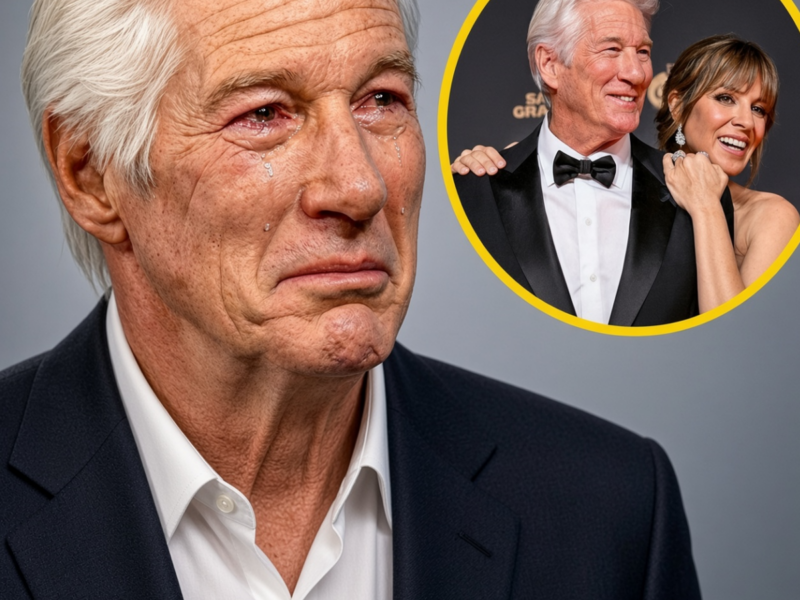
Richard Gere Breaks Down: “She Was The Love Of My Life”
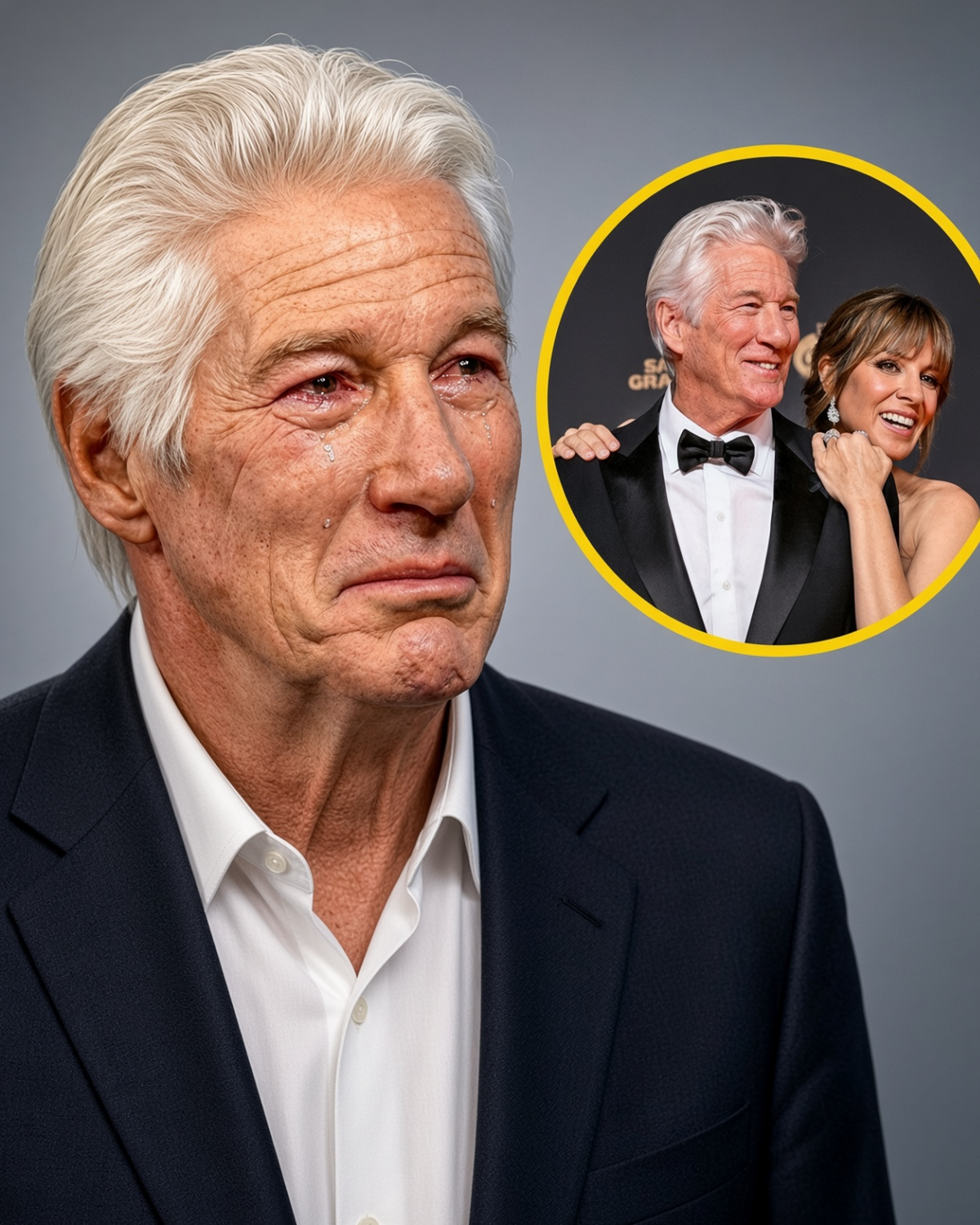
At 75, Richard Gere had reached a point in his life when the applause no longer mattered as much as the silence that followed it.
For decades, audiences had watched him play unforgettable romantic heroes, mysterious strangers, and men who seemed to understand love better than anyone else. From the glamorous streets of Hollywood to the quiet corners of his private life, he had become one of America’s most recognizable leading men.
But behind that familiar smile was a man whose personal journey had been far more complicated than the movies suggested.
There had been relationships that began with extraordinary promise, marriages that looked perfect in photographs, and painful realizations that came only after years of trying to make two different lives fit together.
And somewhere along that winding road, Richard began to understand something he had spent much of his life avoiding.
He had not always known how to stay.
That realization makes the story of his romantic life particularly fascinating, because the woman who eventually brought him the peace he had been searching for was not someone who simply fell in love with a Hollywood celebrity.
She was someone who seemed to understand the man behind the celebrity.
And to understand why that mattered so much, we have to return to the beginning, long before Richard Gere became the face of Hollywood romance.
The surprising part of his story is that the qualities audiences eventually admired in him were already developing in a quiet boy growing up far from the movie business.
Richard was born in Philadelphia, Pennsylvania, in 1949, and spent much of his childhood in Syracuse, New York.
His upbringing was not surrounded by movie premieres, expensive cars, or the kind of attention that would eventually follow him everywhere.
He came from an ordinary American family, and his early interests were surprisingly different from what people might expect of a future Hollywood heartthrob.
Music became one of his earliest sources of comfort.
He developed a particular affection for the trumpet, an instrument that gave him a way to express feelings he did not always know how to communicate.
He practiced constantly and even composed music for school productions.
For the young Richard, the trumpet was more than a hobby.
It was a private language.
When words felt inadequate, music offered another way to communicate.
There was something reassuring about being able to disappear into a melody, away from expectations and the opinions of other people.
That relationship with music would remain important throughout his life.
Even after Hollywood began demanding his attention, he continued to return to music as a personal refuge.
But music was not the only thing shaping his understanding of the world.
As he grew older, Richard became increasingly interested in acting.
At first, performing offered an exciting opportunity to explore different personalities and emotions.
Onstage, he could become someone completely different.
He could portray a confident hero, a rebellious young man, or a character whose emotional world was nothing like his own.
For someone who was still discovering his identity, acting offered an unusual kind of freedom.
He did not always have to explain himself.
He could communicate through another person’s words.
He could step into a character, deliver the lines, and leave the audience believing they had seen something genuine.
Yet there was another side to that ability.
The more comfortable he became performing, the more he understood how easily a public image could become separate from the person underneath it.
The audience might recognize the character, but that did not mean they understood the actor.
And that distinction would follow him throughout his career.
Richard eventually attended the University of Massachusetts Amherst, where he studied philosophy.
Unlike students who were primarily focused on establishing practical careers, he was drawn toward larger questions about existence, consciousness, and the meaning of human experience.
He was interested in understanding why people behaved the way they did and what made a life meaningful.
Those questions would eventually lead him toward Eastern philosophy and Buddhist teachings.
But before those ideas became central to his public identity, Richard was still a young actor trying to establish himself.
The entertainment industry was competitive, unpredictable, and demanding.
Success required persistence, confidence, and an ability to handle rejection.
Richard possessed many of those qualities, and his career gradually began to move forward.
His early work included theater and film appearances that helped him establish himself as a serious performer.
Then came the roles that introduced him to a much wider audience.
Hollywood began noticing his presence.
And with recognition came another kind of attention.
Women were drawn to his appearance, his reserved personality, and the mysterious quality that made him seem different from other leading men.
His romantic life began attracting almost as much curiosity as his career.
One early relationship involved model Carol Mallory.
Another important chapter involved actress Penelope Milford, with whom he shared a professional connection.
These relationships belonged to a period when Richard was still trying to understand what he wanted from both his career and his personal life.
He was ambitious.
He was curious.
And he was moving through adulthood without having discovered a stable rhythm that could accommodate another person’s needs.
The problem was not necessarily an absence of affection.
It was that he had not yet learned how to balance intimacy with independence.
He could become deeply interested in someone and still feel the pull of another direction.
He could enjoy companionship while remaining uncertain about the kind of future he wanted to build.
And then, in the late 1970s, something happened that would permanently change the way he viewed the world.
Richard traveled to Nepal and India with painter Sylvia Martins.
The journey introduced him to environments that felt completely different from the entertainment industry.
He encountered Buddhist communities, visited temples, and spent time learning about spiritual traditions that placed greater importance on compassion, awareness, and inner discipline than on material success.
The experience affected him deeply.
Imagine spending your days surrounded by professional ambitions, auditions, financial expectations, and the constant pressure to become recognizable.
Then suddenly finding yourself in a place where people seemed to measure a meaningful life by entirely different standards.
The contrast was enormous.
In Hollywood, appearance could become currency.
In the spiritual communities he encountered, the emphasis was on understanding the mind and reducing attachment to external approval.
Richard became increasingly interested in Tibetan Buddhism.
He would later develop a close relationship with Tibetan spiritual communities and become a prominent advocate for Tibet.
His interest was not simply a passing fascination.
It became an important part of his identity.
But this created a complicated situation.
The actor was becoming more famous at precisely the same time that the private individual was becoming less interested in fame.
The two versions of his life were beginning to pull in opposite directions.
By the 1980s, Richard Gere had become an international star.
His appearance, screen presence, and ability to portray romantic confidence made him one of the most recognizable men in American entertainment.
The public saw a glamorous leading man.
They saw someone who appeared completely comfortable being admired.
Yet the person behind that image was increasingly drawn toward meditation, reflection, and a quieter way of living.
The more attention he received, the more carefully he seemed to guard his private world.
It was almost ironic.
The man millions of people wanted to see was becoming increasingly interested in disappearing from view.
His spiritual interests also influenced how he approached fame.
He became more involved in humanitarian causes and continued supporting Tibetan communities.
He was no longer satisfied with simply being successful in the entertainment business.
He wanted his life to mean something beyond the roles he played.
But understanding what mattered to him personally did not automatically make relationships easier.
He was still learning.
And then came a summer gathering in Beverly Hills that introduced him to one of the most recognizable women of the era.
In 1988, Richard attended an outdoor party hosted by photographer Herb Ritts.
He was 39 years old and already an established Hollywood star.
Among the guests was Cindy Crawford, a 22-year-old model whose career was rising at extraordinary speed.
Cindy was young, ambitious, and rapidly becoming one of the most recognizable faces in fashion.
Richard was older, more established, and increasingly interested in a life that existed beyond the entertainment industry’s constant demands.
Despite their differences, the connection between them was immediate.
They were both surrounded by attention, but neither needed an introduction to the pressures that came with public recognition.
Their relationship quickly became one of the most photographed romances in the world.
Magazine covers featured them together.
Photographers followed their appearances.
Every public outing seemed to become another opportunity for the media to discuss their relationship.
From the outside, they looked like the perfect Hollywood couple.
He was the handsome movie star.
She was the international supermodel.
Together, they represented a version of celebrity romance that seemed almost impossible to improve upon.
But a beautiful photograph cannot reveal everything happening inside a relationship.
And the difference between what the public sees and what two people experience privately would become increasingly important.
Richard and Cindy were approaching life from different stages.
Cindy was building her adult identity and expanding a career that required travel, visibility, and constant professional decisions.
She was experiencing the excitement of becoming one of the most successful models of her generation.
Richard, meanwhile, was becoming more interested in meditation and spiritual reflection.
He was already questioning the value of the lifestyle that had made him famous.
He wanted more privacy.
He wanted fewer distractions.
He wanted to spend time exploring questions that could not be answered by another successful film.
Neither desire was inherently wrong.
But they did not always fit together.
Then, in December 1991, the couple surprised the public with a wedding in Las Vegas.
It was a remarkably private ceremony compared with the elaborate celebrations people might have expected from two international celebrities.
Their wedding rings became part of the romantic mythology surrounding the relationship.
Rather than traditional gold bands, they reportedly used rings made from silver gum wrappers.
The detail was charming.
It suggested spontaneity and a desire to make the moment personal rather than expensive.
To fans, it looked like a beautiful expression of love.
But there was another interpretation worth considering.
Perhaps two people who lived under extraordinary public pressure were trying to create something that belonged entirely to them.
They wanted a moment without photographers directing their movements.
They wanted a commitment that did not need a magazine cover to make it meaningful.
And perhaps they hoped that marriage would provide the stability their increasingly complicated schedules had made difficult to maintain.
Yet marriage cannot automatically resolve differences that existed long before the wedding.
Cindy was still developing her career and discovering what kind of woman she wanted to become.
Richard was increasingly committed to a spiritual path that required time, quiet, and personal discipline.
Their lives were moving at different speeds.
Cindy later spoke about how she had struggled with her sense of identity during the relationship.
She described a period when she felt she was losing herself.
The relationship had placed her alongside a much older, highly established man whose opinions and lifestyle carried considerable influence.
She wanted the marriage to work.
She wanted to be supportive.
But she also had ambitions and personal interests that deserved room to grow.
Over time, she recognized that she had been adjusting herself too much to fit into the life they were building together.
It was a difficult realization.
Sometimes the most painful part of a relationship is not an argument.
It is discovering that you have gradually stopped listening to your own voice.
Richard and Cindy did not need to become enemies for their marriage to end.
They simply needed to acknowledge that the lives they wanted were no longer moving in the same direction.
By 1995, they had separated and their divorce was finalized.
There was no need for a dramatic public battle to explain what had happened.
Their relationship had been important, but it had also revealed a truth neither could ignore.
Affection alone cannot guarantee compatibility.
Two people can care deeply about each other and still need different futures.
For Richard, the experience became another turning point.
He had entered the marriage believing that commitment might provide the stability he was searching for.
Instead, he discovered that stability required something more complicated than a wedding ceremony.
It required understanding another person without asking them to abandon themselves.
And that lesson would remain with him.
His next major relationship developed with actress Carey Lowell.
Many people recognized Carey from her work in film, including her appearance as a Bond girl in Licence to Kill.
But her personal life was not defined by the glamorous image audiences associated with her screen roles.
She was also a mother, a professional, and someone navigating the ordinary responsibilities of adult life.
Her relationship with Richard offered a different kind of companionship.
They appeared more interested in building a private household than maintaining the image of a glamorous celebrity couple.
Their connection developed over time.
The relationship eventually became an important part of Richard’s life, particularly when they welcomed their son, Homer James Jigme Gere, in February 2000.
Richard was 50 years old.
Becoming a father at that stage of his life changed his priorities.
Until then, much of his personal development had centered on understanding himself.
He had spent years exploring spirituality, meditation, and the importance of inner peace.
Fatherhood introduced an entirely different responsibility.
A child does not care whether his father has appeared in a successful movie.
A child does not understand the importance of a magazine cover or the demands of a film production schedule.
A child needs attention.
He needs patience.
He needs someone who will be there when the ordinary moments become important.
And Richard now had to learn how to make room for another person’s needs in ways that could not be postponed.
He and Carey built a family life that included time away from the busiest parts of New York and Hollywood.
Their home in Pound Ridge, New York, offered the kind of natural surroundings that suited Richard’s desire for privacy.
The property provided space for family life, reflection, and a slower daily rhythm.
It seemed to represent the life he had been searching for.
A quiet home.
A growing family.
A partner who understood the demands of raising a child while maintaining professional lives.
For a time, the arrangement appeared to offer a new sense of permanence.
But even a peaceful home cannot guarantee that two people will continue to grow in the same direction.
As the years passed, Richard and Carey encountered their own difficulties.
Their relationship eventually changed, and the couple separated.
By 2012, news of their separation had become public.
Their divorce proceedings continued into 2016.
The end of the marriage was another complicated chapter in Richard’s personal life.
It also meant that he would have to navigate a new family arrangement while continuing to be a father to Homer.
The experience was not simply about the end of a romantic relationship.
It was about accepting that family responsibilities continue even when a marriage changes.
And once again, Richard was forced to examine the difference between wanting a peaceful life and knowing how to build one with another person.
There was, however, an unexpected relationship during this period that would reveal how much his understanding of love had changed.
Richard became romantically linked with television personality Padma Lakshmi.
Padma was already a successful public figure, known for her work as a television host, author, and personality on Top Chef.
She had her own demanding professional life and her own complicated personal history.
The two reportedly connected in 2014, during a period when both were navigating significant transitions.
Their relationship was relatively private.
There were no elaborate attempts to turn their connection into a public spectacle.
Instead, they appeared to enjoy one another’s company while balancing their individual responsibilities.
For Richard, this represented a different approach to romance.
He was no longer the young actor who seemed to move from one intense chapter to another without fully understanding what he wanted.
He had experienced marriage.
He had become a father.
He had learned that a relationship could be meaningful even if it did not last forever.
Padma was also an independent woman with a career and identity of her own.
Their connection reportedly lasted for several months.
But their lives were still moving in different directions.
Padma’s professional world remained active and public.
Richard continued to prefer a more private existence.
Their relationship eventually ended.
There was no need to turn the separation into a public conflict.
They simply recognized that a romantic connection did not necessarily mean they were meant to build a permanent future together.
That distinction mattered.
For the first time, Richard appeared to be approaching the end of a relationship with a clearer understanding of what it meant.
Love did not always require two people to force themselves into the same future.
Sometimes the more respectful decision was to acknowledge the difference and move forward.
It was a lesson that prepared him for the relationship that would eventually become the most enduring chapter of his adult life.
And it began in Italy.
In 2014, Richard was visiting Positano, the picturesque coastal town known for its colorful buildings, winding streets, and spectacular views of the Mediterranean.
It was a world away from the busy streets of Manhattan and the crowded atmosphere of Hollywood.
During the trip, he encountered Alejandra Silva, a Spanish publicist and businesswoman whose family had connections to the hospitality industry.
Alejandra was also navigating a difficult period in her personal life.
She had her own experiences with marriage, separation, and the challenge of deciding what should come next.
The circumstances surrounding their meeting were not those of a typical Hollywood romance.
Neither person was necessarily searching for another highly publicized relationship.
Both had already experienced enough of life’s complications to understand that a new beginning required patience.
Richard was no longer interested in proving that he could attract someone.
He had already spent decades receiving attention.
What he wanted was a connection that felt genuine when nobody was watching.
And Alejandra appeared to understand that distinction.
Their relationship developed gradually.
Richard did not rely on celebrity status or expensive displays to establish a connection.
Instead, he reportedly expressed his affection through personal gestures.
He sent flowers.
He wrote thoughtful letters.
He used music to communicate feelings that were sometimes difficult to express in ordinary conversation.
These gestures were particularly meaningful because music had been part of his identity since childhood.
The trumpet that once provided comfort to a quiet boy in Pennsylvania had become part of a much larger emotional language.
He was now using creativity to connect with someone rather than simply retreat into himself.
It was a subtle but important change.
In earlier relationships, Richard had often been trying to protect his private world.
With Alejandra, he appeared more willing to invite someone into it.
Their age difference attracted attention.
Richard was more than three decades older than Alejandra, and the public naturally had questions about whether their different backgrounds and life experiences would create difficulties.
Alejandra also had reasons to approach the relationship carefully.
Dating a globally recognized actor meant accepting a level of public attention that few people experience.
It meant having private decisions discussed by strangers.
It meant understanding that an ordinary dinner could become a headline.
But the relationship continued.
What mattered most was that they seemed to share an interest in spirituality, humanitarian work, and a life that did not depend entirely on public approval.
Richard did not have to explain why meditation mattered to him.
Alejandra was interested in many of the same questions.
She was not simply tolerating an important part of his identity.
She was finding her own connection to that world.
Their shared interests created a foundation that had been missing from some of his earlier relationships.
They could enjoy the excitement of traveling and meeting people while still appreciating the importance of returning home.
They could participate in public events without making public attention the center of their lives.
And they could approach family life as something that belonged to them rather than to the entertainment industry.
In April 2018, Richard and Alejandra married in a private ceremony at their home in New York.
The celebration reflected their personal interests and spiritual connection.
Rather than trying to recreate a traditional Hollywood spectacle, they chose a more intimate atmosphere.
Their wedding marked a new chapter.
For Richard, marriage was no longer simply a declaration of affection.
It represented a decision to build a shared life with someone whose priorities seemed compatible with his own.
The couple later welcomed two sons together.
Their first son, Alexander, was born in 2019.
Their second son arrived in 2020.
Richard, already the father of Homer, was now experiencing another stage of fatherhood.
He was building a family with a younger partner while continuing to navigate the responsibilities of being a father to his older son.
The household became busier.
There were school routines, family responsibilities, and the everyday noise that comes with raising young children.
The quiet life Richard once imagined was no longer completely silent.
And perhaps that was the most meaningful change.
For years, he had associated peace with withdrawing from the world.
He had imagined that happiness meant finding a place where nobody demanded anything from him.
But family life taught him something different.
Peace did not always mean silence.
Sometimes it meant being surrounded by people whose presence made the noise worthwhile.
The farmhouse in Pound Ridge became a symbol of that transformation.
It was no longer simply a retreat from Hollywood.
It was a place where Richard could live as a husband and father rather than as a public personality.
The rooms did not need to look like a movie star’s private museum.
They could contain ordinary family belongings.
There could be children’s books, toys, and the evidence of daily life.
There could be music in the morning and the sound of children moving through the house.
Richard could still make time for personal reflection.
He could still write music.
He could still meditate.
But those activities now existed alongside the responsibilities and pleasures of family life.
The difference was that he no longer needed to choose between being himself and being present for other people.
He was learning to combine both.
And that brings us to the idea that may explain the most important change in his approach to love.
Richard has often spoken publicly about spirituality, awareness, and the importance of understanding oneself.
One idea associated with his later philosophy is the belief that a healthy relationship should not require another person to complete you.
It is a deceptively simple principle.
Many romantic stories teach people to search for their other half.
They suggest that somewhere in the world there is another person who can fill every emotional gap.
The problem is that this expectation places an enormous burden on a relationship.
It turns a partner into a solution.
It asks another human being to repair every insecurity, answer every question, and provide every form of happiness.
No person can realistically carry that responsibility.
When the expectation becomes too heavy, disappointment is almost inevitable.
Richard’s journey suggests a different approach.
Two people should be able to stand independently before deciding to build a life together.
They should bring their own experiences, identities, interests, and values into the relationship.
They should not need to erase themselves to make the partnership work.
This idea is especially important when looking back at his marriage to Cindy Crawford.
Cindy was still discovering who she wanted to become.
She had a career that demanded independence and a personality that needed room to develop.
Richard was already following a spiritual path that had become increasingly important to him.
The difficulty was not that either person was necessarily wrong.
It was that the relationship did not always provide enough room for both identities to develop naturally.
The same principle can be seen in his relationship with Carey Lowell.
They built a family and shared important years together.
They raised a son and experienced a chapter that would remain part of both their lives.
But the marriage eventually changed.
And the relationship with Padma Lakshmi demonstrated another important truth.
Two people can find comfort in one another without necessarily being suited for a permanent partnership.
A relationship can be valuable without becoming a lifelong commitment.
These experiences were not meaningless failures.
They were chapters that helped him understand what he needed and what another person deserved.
The most significant difference with Alejandra was not simply that she shared his spiritual interests.
It was that their relationship appeared to develop from a stronger sense of mutual independence.
She had her own identity.
She had her own history.
She had her own professional interests and experiences.
Richard did not need her to become a younger version of himself.
And she did not need him to become a completely different man.
They could meet somewhere in the middle.
That may sound less dramatic than the romantic stories Hollywood usually sells.
But it is often much more difficult to achieve.
A lasting relationship is not built by constantly trying to impress someone.
It is built through the ordinary decisions that happen when the excitement of a new romance begins to settle.
It is built through patience.
It is built through listening.
It is built through allowing another person to disagree without treating disagreement as a threat.
And it is built through understanding that love is not a performance that must be repeated for an audience.
For someone whose career had depended on performing, that realization carried a particular significance.
Richard had spent decades portraying characters who appeared confident, mysterious, romantic, and emotionally complicated.
The public often confused those characters with the person playing them.
But a movie role ends when the cameras stop.
A marriage continues through ordinary mornings, difficult conversations, family responsibilities, and moments when nobody is watching.
There is no director to provide instructions.
There is no script telling two people what to say.
There is no audience to applaud when they make the right decision.
There is only the relationship itself.
And that may be why his later approach to family life feels so different from the image that made him famous.
The man who once seemed to embody Hollywood romance now appears more interested in the quiet responsibilities that exist outside it.
He can still attend a major event.
He can still appear in films.
He can still receive the admiration of audiences who remember his most famous performances.
But those things no longer have to define the entire shape of his life.
His identity is not limited to being a movie star.
He is also a father, a husband, a musician, and someone whose interests extend far beyond the entertainment industry.
That does not mean his earlier relationships should be reduced to mistakes.
Cindy Crawford was an important part of his life.
Carey Lowell shared years of family history with him.
Padma Lakshmi represented a connection during a period of transition.
Each relationship belonged to a different stage of his development.
And each one revealed something about the kind of partnership he was capable of building at that particular moment.
Perhaps the most revealing part of his story is that he did not discover the importance of compatibility when he first became famous.
He discovered it gradually.
He learned that attraction could bring two people together, but it could not guarantee that their priorities would remain aligned.
He learned that marriage could provide a legal commitment without automatically creating emotional security.
He learned that fatherhood required a kind of presence that fame could never replace.
And he learned that a partner should not have to surrender her identity to make a relationship appear successful.
Those lessons took years.
They also required him to reconsider the way he understood himself.
For much of his life, Richard seemed to be searching for a place where he could finally feel comfortable.
As a young man, he found that feeling in music.
As an actor, he found it temporarily in the freedom of performing.
During his spiritual journey, he found it in meditation and Buddhist teachings.
As a father, he began finding it in the responsibilities of family life.
And eventually, through his relationship with Alejandra, he discovered that peace could exist in a shared life without requiring either person to disappear.
There is something particularly moving about that progression.
The boy who used a trumpet to communicate feelings he could not express had become a man who could use music to make someone he loved smile.
The young actor who hid behind fictional characters had gradually become more comfortable allowing people to see the person underneath.
The Hollywood star who once attracted attention everywhere he went had learned that some of life’s most meaningful moments were the ones nobody photographed.
And the man who had experienced several relationships had discovered that permanence was not simply about finding someone willing to stay.
It was about learning how to create a life in which staying felt natural for both people.
There is also a distinction worth remembering when discussing the title of this story.
The phrase “She Was The Love Of My Life” captures the emotional idea behind Richard’s journey, but his life should not be reduced to an unverified dramatic confession.
His story is compelling even without imagining a private statement that cannot be independently established.
The more meaningful truth is found in the contrast between the different chapters of his life.
He was once a young man surrounded by opportunity who struggled to understand what permanence required.
He later became a husband and father who discovered that personal growth did not always happen at the same speed for two people.
And in his later years, he built another family with a woman whose interests and outlook appeared to complement his own.
The difference was not that he suddenly became perfect.
Nobody does.
The difference was that he had accumulated enough experience to understand what he could no longer expect another person to provide.
He could not ask a partner to solve every uncertainty.
He could not expect affection to erase fundamental differences.
And he could not build a lasting relationship by playing the role of the man someone else wanted him to be.
That may be the greatest lesson of his romantic history.
Love is not about finding someone who agrees with every decision.
It is about finding someone with whom differences can be discussed without either person losing their sense of self.
It is not about creating an impressive public image.
It is about creating a private life that feels meaningful when the outside world disappears.
And it is not about remaining together because the photographs look beautiful.
It is about continuing to choose one another through the ordinary moments that never become headlines.
Think about those silver gum-wrapper rings from the Las Vegas wedding in 1991.
For a brief moment, they represented the hope of two young people who wanted to create something permanent.
The rings were unusual.
The ceremony was private.
And the promise behind them was sincere.
But even the most romantic symbol cannot guarantee that two people will grow in the same direction.
Years later, Richard would understand that a meaningful relationship needed more than a memorable beginning.
It needed compatibility, honesty, patience, and the willingness to allow both people to become themselves.
Those silver rings belong to an earlier chapter.
They remind us that love can be genuine even when a relationship eventually ends.
They also remind us that a beautiful beginning is not the same thing as a lasting future.
And perhaps that is why the image of Richard’s later family life feels so significant.
There is no need for a dramatic ceremony every year.
There is no need for a magazine cover to prove that a marriage matters.
There is no need to convince strangers that two people are happy.
The real evidence exists in the everyday decisions.
In the time spent raising children.
In the conversations that happen after a difficult day.
In the patience required when two people have different needs.
In the small gestures that become meaningful precisely because they are repeated without an audience.
Richard’s career gave him extraordinary visibility.
But visibility and intimacy are not the same thing.
Millions of people may recognize his face.
Far fewer have any idea what his ordinary mornings look like.
And that is perfectly fine.
Perhaps the most valuable part of growing older is realizing that not everything meaningful needs to be shared with the world.
Some things are allowed to remain private.
Some moments are more valuable because nobody is recording them.
Some promises are more powerful because they are demonstrated through actions rather than announced in public.
Richard Gere spent decades living under the brightest lights in Hollywood.
He experienced fame, admiration, professional success, romantic attention, and the complicated expectations that accompany a life in the public eye.
He also experienced relationships that changed him, marriages that ended, and the responsibility of raising children through different stages of adulthood.
His journey was not a straight line.
It was a collection of beginnings, endings, discoveries, and second chances.
And the most important transformation may have been the one that nobody could see from a red carpet.
He gradually stopped treating love as something he had to chase.
He stopped expecting another person to make his life feel complete.
He began understanding that a lasting partnership requires two people who can remain themselves while building something together.
That is a very different kind of romance from the one audiences usually associate with Hollywood.
It is quieter.
It is less glamorous.
And it does not always produce the most exciting photographs.
But it may be the kind of love that matters most when the cameras are gone.
The silver gum-wrapper rings remain a reminder of the young man who once believed a beautiful promise could hold two lives together.
The family home represents the older man who learned that a lasting promise must be supported by everyday choices.
And the music that followed him from childhood remains a reminder of the private person who existed long before the world knew his name.
Perhaps that is where the story truly comes full circle.
A young boy once picked up a trumpet because music gave him a place to express what he could not say.
Decades later, the same love of music became one of the ways he expressed affection within his family.
The young actor once hid behind characters because performing felt easier than revealing himself.
The older man gradually discovered that the most meaningful relationships were the ones in which he did not need to perform at all.
And the famous romantic leading man who spent years searching for lasting love eventually found something more valuable than another glamorous Hollywood romance.
He found a life that could exist without applause.
That is perhaps the most beautiful part of Richard Gere’s story.
Not that every relationship lasted.
Not that he never made mistakes.
Not that he discovered some perfect formula for marriage.
But that he continued learning.
He continued growing.
And after years of searching for the right kind of connection, he appeared to find a partnership in which both people could walk beside one another without asking the other to become someone different.
The world may remember Richard Gere for the romantic heroes he played on screen.
But his personal journey offers a different kind of message.
Sometimes the person who seems to have everything is still searching for something he cannot buy.
Sometimes the relationship that looks perfect from the outside is not the one that allows two people to flourish.
And sometimes finding love later in life is not about discovering an entirely new person.
It is about finally understanding yourself well enough to recognize the right kind of partnership.
The silver rings were once a symbol of a promise.
The trumpet was once a symbol of a private world.
And the quiet family home became a symbol of something Richard had spent much of his life trying to understand.
A meaningful life does not have to be performed.
It only has to be lived.
After all those years, perhaps the greatest role Richard Gere ever learned to play was no role at all.
He simply had to become himself.