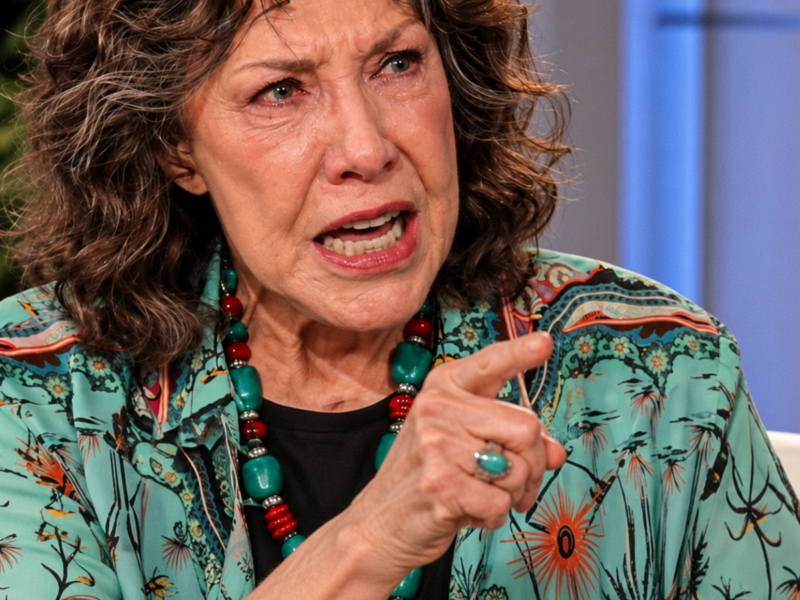
At 87, Lily Tomlin Finally BREAKS Her Silence on Walking Off The Dick Cavett Show
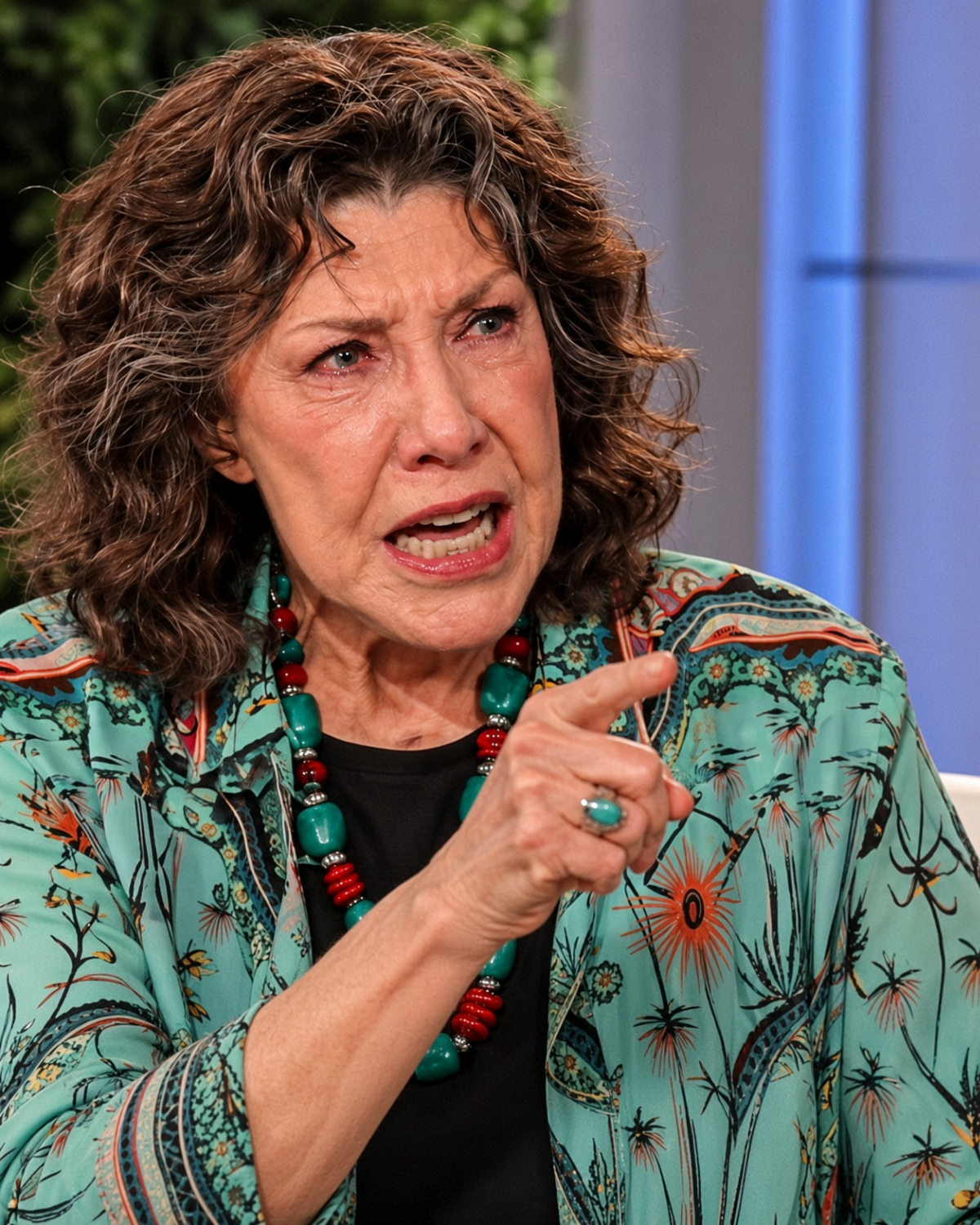
The studio lights were still burning on Stage 6 at CBS when the woman America knew as Ernestine the telephone operator simply stood up and walked away. It was March 31, 1972, a Friday night in New York, and the air outside the Ed Sullivan Theater carried the damp chill of early spring. Inside, nobody was laughing anymore.
Lily Tomlin was 32 years old, a Grammy winner, a rising star, and a woman who had just heard one sentence too many.
She didn’t yell. She didn’t argue. She didn’t throw a glass of water in anyone’s face the way a Hollywood script might have demanded. She just stood, smoothed her skirt, and crossed the floor of the most intellectually dangerous talk show in America while the cameras kept rolling.
The man she left behind was Chad Everett, the handsome star of CBS’s Medical Center, who had just compared his wife to the horses and dogs on his ranch.
And sitting behind the desk, watching his carefully constructed conversation collapse in real time, was Dick Cavett himself, a host who had built an entire career on the belief that smart people talking could be fascinating television.
He was about to find out what happened when one of those smart people decided she was done talking.
What nobody in that studio understood, what nobody in America understood, was that Lily Tomlin wasn’t just walking away from a bad joke. She was walking toward something. A life. A love. A version of herself that wouldn’t fully emerge for another forty years.
But that night, all anyone saw was a woman leaving.
—
The Dick Cavett Show was never supposed to last. When it premiered in 1968, television executives gave it a summer replacement slot and assumed it would disappear quietly. Instead, it became the thinking person’s late-night destination, a place where Norman Mailer and Gore Vidal could almost come to blows, where Lester Maddox could storm off the set with ten minutes left in the broadcast, and where a health food advocate named J.I. Rodale could die of a heart attack while the cameras were still running.
Cavett himself was the unlikely architect of all this chaos. A Nebraska-born former stand-up comedian with a Yale education and a gift for language, he had none of Johnny Carson’s polished Midwestern charm. What he had instead was curiosity, a willingness to let silence hang in the air, and an almost reckless confidence that interesting people would eventually say interesting things if you just gave them room.
Sometimes they said things that were too interesting.
The Mailer-Vidal confrontation in December 1971 had become the stuff of television legend. The two writers had been feuding for years, and Vidal had recently compared Mailer to Charles Manson in print. According to accounts of the taping, Mailer arrived at the studio already boiling, and the situation turned physical backstage when he allegedly headbutted Vidal before the cameras even started rolling.
On air, the conversation became a verbal knife fight. Mailer projected enormous self-importance, challenging Vidal repeatedly, while Vidal responded with the kind of withering wit that had made him famous. Janet Flanner, the veteran journalist sitting between them, eventually expressed her frustration with two men behaving as though nobody else in the room mattered.
Cavett responded with humor because humor was his best weapon when guests became difficult. But underneath the jokes was a very real problem. He was trying to keep three strong personalities in the same conversation while two of them were clearly more interested in settling a personal score than answering questions.
That was the show. That was the tightrope Cavett walked every night.
Then there was Lester Maddox. In December 1970, the former Georgia governor appeared alongside football star Jim Brown and author Truman Capote. Maddox was a controversial political figure with a long association with segregationist politics, and the discussion eventually turned toward race and the people who supported him.
During the conversation, Cavett referred to Maddox’s supporters using a word the governor found deeply offensive. Maddox took serious offense. He believed Cavett was deliberately insulting the people of Georgia and demanded an apology.
Cavett attempted to clarify what he meant, explaining that he was not saying every person who supported Maddox was a bigot. But the clarification was not enough for the governor. With roughly ten minutes still remaining in the broadcast, Maddox stood up and walked away from the set.
That moment was not quietly edited out of existence. It became part of the show’s identity. The confrontation generated enormous attention, and Cavett later recalled receiving thousands of pieces of mail over the incident. Maddox would even return to the program years later, showing just how strange and unpredictable the relationship between controversy and television could become.
And then there was J.I. Rodale.
In June 1971, the health and organic food advocate appeared as a guest. Rodale was known for promoting healthy living and had become an influential voice in the natural food movement. During his appearance, he spoke confidently about his health and even talked about living to the age of 100.
But after his interview ended, Rodale remained on the set while Cavett began speaking with another guest, journalist Pete Hamill. Then something changed. Rodale suddenly slumped over and began making a sound that initially sounded like snoring.
The people around him did not immediately understand what was happening. According to accounts of the incident, Cavett initially thought Rodale might simply be joking or pretending to be bored. But it soon became clear that this was not a television stunt. Rodale had suffered a fatal heart attack. He was 72 years old.
The cameras had been running. The entire thing had happened during the taping of a television program that was supposed to air later that day. Instead, the episode was never broadcast. The following night’s program included Cavett discussing what had happened, but the original recording remained unseen for decades.
By the time Lily Tomlin arrived on Cavett’s stage in March 1972, the show had already established itself as a place where celebrities could not always predict what would happen once the cameras started rolling.
But Tomlin was not coming into a quiet environment either. She was a rapidly rising comedy star known for characters that challenged social expectations and for a style that gave her enormous control over the material she performed. By this point, she had already experienced several talk show conversations where women were treated differently from men. And she had become increasingly frustrated with the casual sexism that could appear in television interviews.
What happened next would last only a few minutes, but it would become one of the most replayed moments from the Dick Cavett Show.
—
By the time Lily Tomlin appeared on The Dick Cavett Show in 1972, she was already too successful to be treated like an unknown comedian looking for her big break. At 32, she was a Grammy-winning star with a growing reputation for comedy that could be funny one moment and deeply uncomfortable the next.
But sitting beside Chad Everett that night, Tomlin found herself in a conversation that touched a nerve she had been dealing with throughout her career. And before the cameras stopped rolling, a woman who had spent years making America laugh would make a decision that turned an ordinary talk show appearance into a lasting controversy.
In 1972, Lily Tomlin was at an important point in her career. Her work on Rowan and Martin’s Laugh-In had made her one of television’s biggest comedy personalities. But her success came from much more than simply appearing on a popular show.
Tomlin had created characters that were unlike the typical female comedy roles of the period. There was Ernestine, the arrogant telephone operator who treated customers as though they were an inconvenience. Then there was Edith Ann, the five-year-old who sat in an oversized chair and delivered surprisingly thoughtful observations about life.
Tomlin could take ordinary characters and turn them into sharp commentary about society, authority, and the way people treated one another. She was also establishing herself outside television. Her 1971 comedy album, This Is a Recording, became a major success and won the Grammy Award for best comedy recording.
So when she appeared on Cavett’s program on March 31, 1972, she was there as an established performer promoting her follow-up comedy album, And That’s the Truth.
The man sitting beside her could hardly have represented a more traditional form of Hollywood success. Chad Everett was the handsome, established television leading man best known for playing Dr. Joe Gannon on the CBS medical drama Medical Center. He had built the kind of career that made him a familiar face in millions of American homes, and his image was very different from Tomlin’s more unconventional approach to comedy.
At first, their differences might have simply made for an interesting television conversation. But the tension started almost immediately.
Accounts of the appearance describe Everett presenting Tomlin with a woman’s undergarment as a joke. When they sat down, Everett introduced an inappropriate joke involving Tomlin before the interview had really begun. But Tomlin did not immediately walk away. Instead, she tried to continue with the appearance despite the awkward direction it was taking.
Eventually, she began telling a story about the early part of her career. It was not the kind of story designed to get a laugh.
Tomlin recalled an audition from her struggling years when she felt she had been treated with casual disrespect by a powerful man in the entertainment industry. She described being dismissed and even being called by the wrong name, Miss Tomkins, as she was effectively shown the door.
For Tomlin, the memory clearly carried emotional weight. She recalled being so frustrated by the experience that she refused to leave immediately and eventually broke down in tears before a talent coordinator escorted her out.
Tomlin was explaining what it felt like to enter an industry as a young woman and discover that talent alone did not guarantee respect. The experience was humiliating, but it was part of the reality she had encountered while trying to make a name for herself.
Then Everett shifted the conversation toward his own experience in Hollywood. He began telling a story about how he had ended up with the professional name Chad Everett instead of the name he had been born with, Raymond Lee Crampton.
The story involved Warner Brothers executives and a disagreement over the name he would use professionally. Everett recalled the negotiations becoming heated and described throwing a football inside an executive’s office, breaking a framed picture in the process.
On its own, it was the kind of colorful Hollywood story that could easily become a funny anecdote on a talk show. But coming immediately after Tomlin’s emotional story, the contrast was striking.
She had just been describing an experience that left her humiliated and crying. Everett was recounting a confrontation with Hollywood executives in which his own defiance became part of the story. The two experiences revealed something about the very different ways men and women could move through the entertainment industry.
Tomlin had been talking about being dismissed. Everett was talking about demanding his way. And neither seemed particularly interested in meeting the other in the middle.
The conversation eventually moved toward relationships and marriage, where the tension became even more obvious. Everett expressed views about husbands and wives that Tomlin strongly challenged, including language suggesting that a wife could be considered the property of her husband.
For Tomlin, this was not simply another funny disagreement between two celebrities. The remark landed in a cultural moment when American women were increasingly challenging traditional expectations about marriage, work, and their place in society. The women’s liberation movement was gaining visibility, and questions about whether women should be expected to submit to traditional male authority were becoming impossible to ignore.
Tomlin’s entire comedic style was built around exposing some of those contradictions. So now she was sitting on a television stage listening to a successful male actor express an attitude that she clearly found unacceptable, and she had a choice.
She could argue with him. She could laugh it off. Or she could leave.
—
What happened next lasted only moments but it completely changed the atmosphere of the studio.
Everett was talking casually about his ranch and the animals he kept there when he made a comparison that turned his wife into part of the same list as his horses and dogs.
Cavett immediately recognized how badly the remark had landed and gave Everett an obvious opportunity to correct himself. Instead, Everett leaned further into the joke, and that was the moment Lily Tomlin decided she had heard enough.
The conversation had moved to Everett’s life away from Hollywood, particularly his ranch and the animals he kept there. He began casually describing the different creatures on his property, listing his horses and dogs, before adding his wife to the same inventory.
The audience reacted with scattered laughter, but it was the uncomfortable kind. There was a pause in the room because everyone could hear the implication, even if Everett appeared completely comfortable with it.
Cavett noticed it, too. Rather than allowing the remark to pass without comment, the host gently pointed out that Everett might want to reconsider the order in which he had presented those things. It was essentially a rescue attempt. Cavett was giving him an easy opportunity to recognize that he had crossed a line, laugh it off differently, and move the conversation forward.
Everett had every opportunity to take it, but he didn’t. Instead, he reinforced the comparison, making it clear that he intended the remark as a joke about his wife being among the things he owned. He even elevated her above the animals in his own deliberately provocative way, describing her as the most attractive of the creatures under his ownership.
That was the point at which the humor disappeared.
Lily Tomlin was sitting only a short distance away, and her reaction was immediate. She turned toward Everett, visibly stunned by what she had just heard, and challenged the basic idea behind his statement. How could he talk about owning another human being, particularly his wife?
Everett did not retract the comment. There was no attempt to clarify that he had simply made a badly worded joke. Instead, he maintained the position behind the joke, leaving Tomlin with a very simple choice.
Stay and continue the interview, or leave.
She chose to leave.
Tomlin calmly indicated that she was going, stood from her seat, and walked across the studio. She simply removed herself from the conversation and walked off the set.
The simplicity of the moment was part of what made it so powerful. The studio had been filled with the familiar sounds of a television talk show, laughter, conversation, and the occasional awkward pause. Then, almost instantly, the atmosphere changed. Tomlin was gone, and everyone else was left sitting there trying to work out what had just happened.
Cavett appeared genuinely caught off guard. He initially seemed to believe Tomlin might return, almost as though he interpreted her departure as another part of the comedy rather than a serious protest. His reaction became increasingly nervous as the reality of the situation settled in. He tried to reassure the audience that he cared about Tomlin and suggested that she might simply be playing around, but she did not come back.
That left Everett to deal with the uncomfortable silence. And instead of stepping back, his response became increasingly defensive. He began explaining his marriage in terms that reinforced the traditional relationship model Tomlin had just objected to. He presented his wife as someone who was perfectly comfortable being supported and looked after by her husband, making the point that she had no desire to reverse those traditional roles.
The more he explained, however, the more obvious the cultural divide became. Everett was defending a model of marriage that many Americans of his generation regarded as perfectly normal. The husband as provider, the wife as dependent, and the man as the person with authority.
Tomlin, meanwhile, represented a growing generation of women who were beginning to question whether those assumptions should remain unquestioned. And rather than simply accepting her disagreement, Everett also attempted to undermine the seriousness of her reaction with jokes and insinuations about Tomlin herself.
That response only made the moment more revealing. Tomlin had not attacked Everett personally. She had objected to the idea expressed through his joke. But once she left, the conversation shifted toward explaining why she was the problem for objecting in the first place.
That pattern was hardly unusual in the cultural climate of the early 1970s. The women’s liberation movement was challenging traditional ideas about marriage, employment, and power. Women were increasingly speaking publicly about the ways they had been treated, while entertainers like Tomlin were using comedy to expose attitudes that had previously been accepted without much question.
So when Tomlin walked away from Cavett’s stage, the incident quickly became bigger than one uncomfortable exchange between two celebrities. It became symbolic.
Later accounts of Tomlin’s career frequently returned to the incident, describing it as one of the clearest examples of her willingness to act on her feminist convictions rather than simply perform them. A 1977 Time profile recalled that she had even surprised herself by walking off the show.
But the reaction was never going to be unanimous. Some viewers saw Tomlin as courageous, a woman who had refused to sit politely through a remark she considered degrading. Feminists and supporters of the women’s movement could see why the moment resonated so strongly.
Others viewed the incident very differently. To them, Everett had made a joke, Tomlin had taken it too seriously, and walking away from a national television program seemed excessive. The same qualities that made Tomlin fearless to her supporters could make her appear difficult or overly confrontational to people who believed women were expected to simply laugh along.
That division is precisely why the moment survived. Had Tomlin simply argued with Everett, the exchange might have become another forgotten television disagreement. Instead, she physically removed herself from the situation. And by doing so, she created an image that was almost impossible to misunderstand.
A successful woman sitting on a major television program, hearing something she believed crossed a line, and deciding that she did not have to remain there simply because the cameras were still running.
More than five decades later, the footage still carries that same uncomfortable tension. But surprisingly, the incident did not destroy her career. If anything, Lily Tomlin’s life after that night became even more interesting.
—
Walking off The Dick Cavett Show could have been disastrous for Lily Tomlin. She was only 32, still building the kind of career that depended heavily on television executives, studio relationships, and a public image that could easily be turned against her.
But what the audience could not see that night was that Tomlin was already protecting another part of her life just as carefully as she was protecting her career. And in the years that followed, the decision she made on Cavett’s stage would come to look very different from the impulsive act some people believed it was.
In 1972, a performer could not assume that challenging a powerful man on national television would simply be forgotten the next morning. Tomlin was already famous, but she was not untouchable. The entertainment industry was still heavily controlled by executives and gatekeepers who could decide which performers received the next television appearance, which projects received studio backing, and which personalities were considered easy to work with.
A woman who became known as difficult, overly political, or unpredictable could quickly find herself facing fewer opportunities. And Tomlin had just walked away from a nationally televised interview.
There was no guarantee that everyone would admire her for it. Some people could have interpreted the incident as evidence that she was too sensitive. Others could have decided that she was too outspoken. For a performer whose career was expanding beyond Laugh-In into recordings, television, and eventually film, that kind of reputation could have been dangerous.
But there was another layer to Tomlin’s situation that the audience could not possibly have known. One year before the Cavett appearance, in 1971, Tomlin had met writer Jane Wagner. Their relationship would eventually become one of the most important partnerships of Tomlin’s entire life.
Wagner was not simply her romantic partner. She became a creative collaborator whose writing helped shape some of Tomlin’s most celebrated work. But in 1972, their relationship existed in a completely different cultural environment from the one we know today.
Same-gender relationships were still heavily stigmatized. And for a major television personality at the beginning of a career, openly acknowledging such a relationship could carry enormous professional and personal consequences. Tomlin, therefore, had another reason to be cautious about attracting unnecessary attention.
She was already challenging traditional ideas about women. The last thing she needed was for the entertainment press to begin digging aggressively into her private life.
And this is where the story of the Cavett walkout becomes more complicated. Tomlin’s silence was not necessarily evidence that she was ashamed of her relationship with Wagner. Quite the opposite.
Decades later, Tomlin explained that she and Wagner had never really lived as though their relationship did not exist. They simply did not make a formal public declaration about their relationship.
The clearest example came just three years after the Cavett incident. By 1975, Tomlin’s career had reached another major turning point. She had received critical acclaim for her dramatic performance in Robert Altman’s Nashville, including an Academy Award nomination. Her profile was growing, and Time magazine offered her something that was extraordinarily valuable for a performer at that point in her career: its cover.
But there was a condition. According to Tomlin’s later recollections, the magazine wanted her to publicly acknowledge that she was queer as part of the cover story. For Tomlin, that created an uncomfortable choice.
She could take one of the most prestigious forms of mainstream recognition available to an entertainer and allow her love life to become the central story. Or she could refuse and wait for an opportunity to be recognized primarily for her work.
She chose the second option, later revealing that she did not want to be presented primarily as a queer celebrity. She wanted the attention to be on what she had accomplished as a comedian and actress. She also understood how different the consequences could have been in the mid-1970s, when openly queer performers still faced enormous prejudice.
And there was a deeply personal reason for her caution as well. Her mother was still alive. Tomlin later explained that her mother was a Southern woman with very conservative religious beliefs and that she was concerned about the effect a public announcement could have on her.
That meant the decision was never simply about career strategy. It involved family, privacy, love, and the very real consequences that could come from making something deeply personal public before she was ready.
Ironically, Tomlin would eventually get the Time cover anyway. In 1977, she appeared on the cover as the new queen of comedy, this time with the focus firmly on her career and achievements rather than her love life. It was in many ways the recognition she had wanted all along, to be celebrated because of what she had created and accomplished.
And while the relationship with Wagner remained known within parts of Hollywood, the two continued building their lives and creative partnership without allowing the press to completely dictate the terms.
The world, however, was changing. The woman who had walked away from Cavett’s stage at 32 eventually reached a point where she no longer needed to protect herself in quite the same way. Tomlin and Wagner remained together for more than four decades before legally marrying on December 31, 2013.
By then, the cultural landscape had changed dramatically from the America they had known when they first met. Their relationship, which had once required careful navigation of public scrutiny, could finally be celebrated openly.
Tomlin had spent her career refusing to accept the idea that women should simply play along when they were being diminished. She challenged those attitudes through comedy, through her characters, through her work, and on that night in 1972, through one very simple act.
Surprisingly, Tomlin herself has never treated the decision as one of the great mistakes of her career. When reflecting on that night years later, she described the walkout as an unusually pure and instinctive act, something she did without carefully planning the consequences or calculating what it might do to her career.
In her recollection, the decision felt almost as though something beyond her own conscious planning had guided her away from the stage.
—
The phone calls started before the show even finished taping. CBS switchboards in New York and Los Angeles lit up with viewers who had heard something in Tomlin’s silence that they recognized. Some called to complain. Some called to thank her. A few called just to ask if what they had seen was real.
It was real. And it was about to become a problem.
Dick Cavett’s producers huddled in the control room after the taping, trying to figure out what to do with the footage. The walkout had been captured from multiple angles. The audio was clean. The moment was unmistakable. Tomlin had stood up, crossed the stage, and disappeared through the same door that guests used when they arrived.
There was no footage of her in the hallway. No cameras followed her. She was simply gone.
Cavett himself was shaken. He had spent years navigating difficult guests, but this was different. Tomlin hadn’t stormed off in anger or stormed off as a stunt. She had simply decided that the conversation was no longer worth her presence.
That kind of quiet departure was harder to explain than a shouting match. It left a vacuum that the rest of the show had to fill.
Everett, for his part, seemed genuinely confused by the reaction. He kept talking, kept explaining, kept trying to reframe the moment as a misunderstanding. But every word he said made the situation worse. He was digging a hole with a shovel made of his own certainty.
The episode aired as planned. There was no attempt to hide what had happened. The walkout was part of the broadcast, and by the next morning, it was part of the cultural conversation.
Newspapers across the country picked up the story. The New York Times ran a brief item. The Los Angeles Times followed with a longer piece. Television columnists weighed in, some praising Tomlin’s courage, others questioning her professionalism.
The letters started arriving within days. CBS received thousands of pieces of mail about the incident, according to later accounts. Some viewers wrote to say they would never watch Tomlin again. Others wrote to say they had never admired her more.
Tomlin herself said very little. She didn’t grant interviews about the walkout. She didn’t try to explain her decision or defend it. She simply went back to work.
That silence was itself a statement. In an era when talk shows demanded that guests explain themselves, Tomlin refused. She had said what she needed to say by leaving, and she wasn’t going to spend the next six months repeating it.
The entertainment industry watched carefully. Would Tomlin be punished for her defiance? Would the offers stop coming? Would she be labeled difficult and pushed to the margins?
The answer, surprisingly, was no. The offers kept coming. The career kept growing. And the woman who had walked off Cavett’s stage at 32 would go on to become one of the most respected performers of her generation.
But the walkout never quite disappeared. It followed her, the way certain moments follow certain people. Every profile, every interview, every retrospective eventually returned to that night in 1972. What did it mean? What did it say about Tomlin? What did it say about the culture that had produced both the joke and the reaction?
The answers were never simple. They still aren’t.
—
The numbers tell part of the story. In 1972, when Tomlin walked off that stage, women in America earned approximately 58 cents for every dollar earned by men, according to Labor Department data from that era. The Equal Rights Amendment had passed Congress the previous year but was still fighting for ratification. The women’s liberation movement was visible, vocal, and deeply controversial.
The cultural stakes were enormous. A woman who challenged male authority in public was not simply expressing an opinion. She was making a political statement, whether she intended to or not. Tomlin understood this. She had been making political statements through her comedy for years, whether it was Ernestine’s condescension or Edith Ann’s unexpected wisdom.
But the walkout was different. It wasn’t a character. It wasn’t a joke. It was Lily Tomlin herself, deciding in real time that she had heard enough.
That authenticity was what made the moment so powerful. And that authenticity was also what made it so dangerous. A woman who acted on her convictions could be dismissed as emotional, oversensitive, or difficult. A woman who laughed along could be praised as a good sport.
Tomlin chose the first path, and she paid a price for it. Not a career-ending price, but a real one. There were executives who remembered. There were producers who hesitated. There were conversations that didn’t happen because someone decided Tomlin might be too much trouble.
But there were also opportunities that came because of the walkout. Writers who admired her courage. Directors who wanted to work with someone who took her principles seriously. Audiences who saw themselves in her refusal to sit quietly through something demeaning.
The walkout became part of Tomlin’s brand, whether she wanted it to or not. It was cited in feminist manifestos. It was discussed in women’s studies classes. It was referenced in articles about the intersection of comedy and politics.
And it was always there, in the background, whenever Tomlin gave an interview. The question would come, eventually. What do you remember about that night? Do you regret it? Would you do it again?
Tomlin’s answers evolved over the years. In the 1970s, she was careful, measured, unwilling to turn the walkout into a political platform. In the 1980s, she was more reflective, acknowledging that the moment had been instinctive rather than calculated. In the 1990s and beyond, she became more candid, willing to discuss the personal and professional context that had shaped her decision.
But she never fully explained it. Not completely. Some part of that night remained hers alone, a private moment that had become public property but had never quite been surrendered.
—
The ranch in question, the one where Chad Everett kept his horses and dogs and, apparently, his wife, was located in the hills above Los Angeles. It was the kind of property that symbolized a certain kind of Hollywood success: sprawling, expensive, and carefully maintained.
Everett had built his career playing doctors and lawmen, characters who embodied traditional American masculinity. On Medical Center, he was Dr. Joe Gannon, a compassionate but firm physician who solved problems with a combination of medical expertise and personal authority.
Off-screen, he cultivated an image that matched his on-screen persona. He was the rugged leading man, the family man, the guy who could ride horses and fix fences and keep his household in order.
That image was part of what made the walkout so jarring. When Everett joked about owning his wife, he was drawing on a cultural script that had been familiar to American audiences for generations. The husband as head of household. The wife as helpmate. The family as a hierarchy with the man at the top.
That script had worked for a long time. It had been reinforced by television shows, movies, advertisements, and sermons. It had been written into law and embedded in economic structures. It had been treated as natural, inevitable, and beyond question.
But by 1972, that script was being challenged. The women’s liberation movement had made the personal political. Feminists were arguing that marriage was not simply a private arrangement but a power structure that could be examined, criticized, and changed.
Tomlin was part of that challenge. Her comedy had always contained a political edge, even when it was wrapped in laughter. Ernestine’s condescension toward customers was a commentary on bureaucracy and power. Edith Ann’s innocent observations were a way of exposing adult hypocrisy.
So when Everett made his joke about ownership, Tomlin heard more than just a bad punchline. She heard an entire worldview that she had spent her career resisting. And she decided, in that moment, that she didn’t have to sit there and listen to it.
The walkout wasn’t planned. It wasn’t scripted. It was a reaction, a decision made in real time by a woman who had spent years learning to trust her own instincts.
That’s what makes it so powerful. It wasn’t a performance. It was a choice.
—
The aftermath of the walkout revealed something important about American culture in 1972. The reaction split along lines that would become increasingly familiar in the decades that followed.
Some viewers saw Tomlin as a hero. They wrote letters praising her courage. They told their friends about the moment. They clipped newspaper articles and saved them in scrapbooks.
Other viewers saw Tomlin as a troublemaker. They wrote letters complaining about her rudeness. They called her ungrateful for the opportunity to appear on national television. They suggested she should have laughed it off and moved on.
The split wasn’t just about the joke. It was about what the joke represented. For some Americans, Everett’s remark was harmless humor, the kind of thing that had been said a thousand times before without consequence. For others, it was a reminder of everything that needed to change.
Tomlin found herself at the center of that divide. She hadn’t asked for it. She hadn’t planned it. But she was there, and she had to navigate it.
Her strategy was simple: she didn’t engage. She didn’t argue with her critics. She didn’t try to convert them. She simply kept working, kept creating, kept building a career that was based on her talent rather than her politics.
That strategy worked. Over the next decade, Tomlin became one of the most versatile performers in America. She moved from television to film to Broadway, from comedy to drama, from character work to leading roles. She won awards. She earned respect. She built a body of work that would stand the test of time.
But the walkout was always there, in the background. It was part of her story, whether she wanted it to be or not.
And as the years passed, the meaning of that moment shifted. What had seemed controversial in 1972 became less so in 1982, and even less so in 1992. By the time Tomlin married Jane Wagner in 2013, the idea that a woman should be able to walk away from a conversation she found demeaning was no longer radical. It was common sense.
The culture had caught up with her. Or perhaps she had helped the culture catch up.
—
The marriage in 2013 was a quiet affair, as these things go. Tomlin and Wagner had been together for more than four decades by then. They had built a life together, a creative partnership together, and a body of work together.
The wedding was not a political statement. It was a personal celebration. But it was also a reminder of how much had changed since 1972, when the idea of two women building a life together was something that had to be protected rather than celebrated.
Tomlin had spent her career navigating that tension. She had been public about her work and private about her relationship. She had refused to let the press dictate the terms of her life. She had made choices that protected her family, her partner, and herself.
The walkout on The Dick Cavett Show was part of that navigation. It was a moment when Tomlin had to decide what she was willing to accept and what she was not. She decided that she was not willing to sit through a conversation that treated her as less than equal.
That decision cost her something. It always does. But it also gave her something. It gave her a clearer sense of who she was and what she stood for.
And that clarity would serve her well in the decades that followed.
—
The footage of the walkout is still available, if you know where to look. It’s grainy, the way television from 1972 always is. The colors are muted. The sound quality is imperfect.
But the moment itself is unmistakable. Tomlin stands up. She smooths her skirt. She walks across the stage. She disappears through the door.
Cavett watches her go. Everett watches her go. The audience watches her go.
And then, for a few seconds, nobody knows what to do.
That’s the moment that matters. The pause. The uncertainty. The recognition that something has happened that cannot be undone.
Tomlin didn’t plan it. She didn’t script it. She simply responded to a situation in a way that felt right to her.
That’s what makes it a hinge. That’s what makes it a moment that changed the conversation.
Not just the conversation on that stage, on that night, in 1972. But the larger conversation about what women could say, what women could do, and what women could refuse to accept.
Tomlin walked off that stage, and in doing so, she walked into a different kind of career. A career built on her own terms. A career that didn’t require her to laugh at jokes she didn’t find funny. A career that allowed her to be exactly who she was.
That’s the legacy of that night. Not the controversy. Not the headlines. Not the letters. But the possibility that opened up when one woman decided that she didn’t have to stay.
—
Decades later, reflecting on that night, Tomlin described the walkout as something that surprised even her. She hadn’t planned it. She hadn’t calculated the consequences. She had simply acted.
There was something almost mystical in the way she described it. As though some part of her had known, before her conscious mind caught up, that staying was not an option.
That’s how pivotal moments often feel. They don’t announce themselves. They don’t come with warning labels. They arrive in the middle of ordinary situations and demand that we choose.
Tomlin chose. She stood up. She walked away. She kept walking.
And the rest of her life, the life that included Nashville and The Late Show and Grace and Frankie and a marriage that lasted until death did them part, that life was built on the foundation of that choice.
Not because the walkout defined her. But because it revealed her. It showed who she was when the cameras were rolling and the pressure was on. It showed that she was willing to risk discomfort, criticism, and professional consequences in order to stay true to herself.
That’s not a small thing. It never is.
—
The Dick Cavett Show ended its original run in 1975, but its legacy continued. The show had demonstrated that television could be intelligent, unpredictable, and alive in ways that most late-night programming never attempted.
The Mailer-Vidal confrontation. The Maddox walkout. The Rodale death. The Tomlin exit. These moments became part of television history, studied and analyzed and debated for decades.
But the Tomlin moment was different. It wasn’t just a confrontation between two guests. It was a confrontation between two worldviews. And it happened at a time when the culture was still deciding which worldview would prevail.
The answer, of course, was both and neither. Traditional gender roles didn’t disappear. But they were no longer beyond question. Women didn’t stop facing sexism. But they gained new tools for resisting it.
Tomlin was one of those tools. Her comedy, her characters, her career, and her walkout all contributed to a larger cultural shift. She didn’t do it alone. She was part of a movement, a generation, a moment.
But she did it her way. And that made all the difference.
—
The hinge of the story, the thing that holds it all together, is the idea that a single moment can change everything. Not because it’s dramatic. Not because it’s planned. But because it’s honest.
Tomlin’s walkout was honest. It was a response to a situation that felt wrong, and it was expressed in a way that felt right. That honesty is what made it resonate. That honesty is what made it last.
And that honesty is what makes it worth remembering.
The woman who walked off that stage in 1972 is now in her eighties. She has lived a long life, a full life, a life that has included triumphs and challenges and everything in between.
But that moment on The Dick Cavett Show is still part of her story. It always will be. It’s the moment when she decided that she didn’t have to stay.
And sometimes, the most powerful thing you can do is leave.
—
The studio lights are off now. The Ed Sullivan Theater has been renovated and repurposed. The Dick Cavett Show is a memory, preserved on grainy videotape and in the recollections of those who watched.
But the moment remains. It remains in the way Tomlin’s fans talk about her. It remains in the way feminists cite her as an example. It remains in the way anyone who has ever walked away from something demeaning remembers that they are not alone.
That’s the power of a hinge. It connects the past to the present. It shows that what happened then matters now. It reminds us that small moments can have large consequences.
Tomlin walked off that stage in 1972. She kept walking. She’s still walking.
And she’s never looked back.
Disclaimer: This story is entirely fictional and created for entertainment purposes only. It does not represent any organization or individual, nor does it encourage inappropriate behavior. The content was generated with AI assistance.