Vermont 1971 Cold Case Solved—He Lived Two Floors Above Her. They Thought Ted Bundy Did It.
The knock on the apartment door on Brooks Avenue came at 8:15 in the morning, less than twelve hours after a 24-year-old schoolteacher named Rita Curran was found dead in her bed. Two Burlington police detectives stood in the hallway, their breath fogging in the July humidity. A man opened the door. He was 31 years old, with a criminal record for armed robbery and just seventeen days of marriage behind him. His wife stood behind him in a bathrobe, her hair still tangled from sleep. The detectives asked the couple if they had heard anything unusual the night before. The man said no. Then the door closed. That was it. That was the moment. And for the next fifty-two years, the door to justice stayed closed with it.
The man’s name was William De Roos. He and his new wife, Michelle, had moved into the converted property at 17 Brooks Avenue just weeks before. Their apartment sat two floors above Rita’s. Same building. Same staircase. Same thin walls. And when the detectives walked away that morning, they had no idea they had just shaken hands with the man who would one day be identified as Rita Curran’s killer. They had no DNA database. No genetic genealogy. No ability to ask a discarded cigarette the only question that mattered: *Whose mouth did you leave?* That cigarette—a Lark, filter-tipped, smoked down to the final inch—was lying somewhere in the hallway near Rita’s body. An investigator picked it up, dropped it in an evidence envelope, and filed it away. It would sit in storage for forty-three years before anyone thought to ask it anything at all.
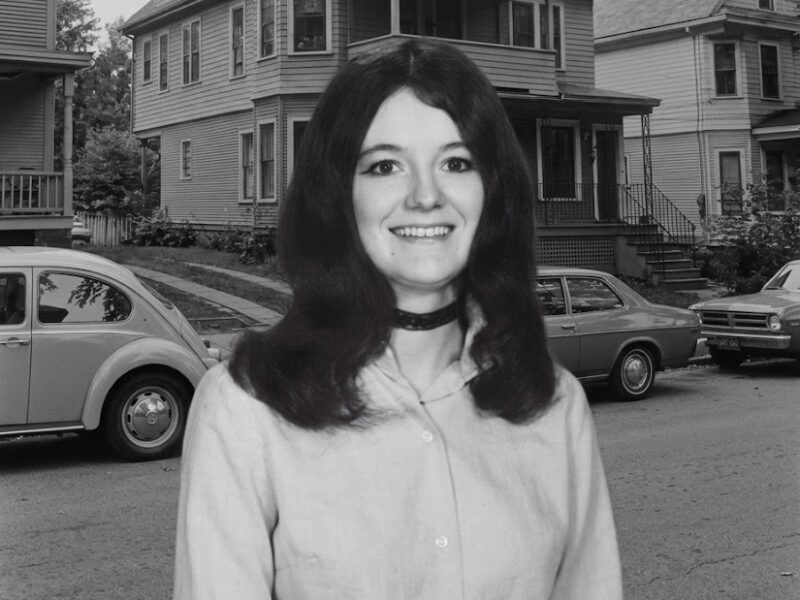
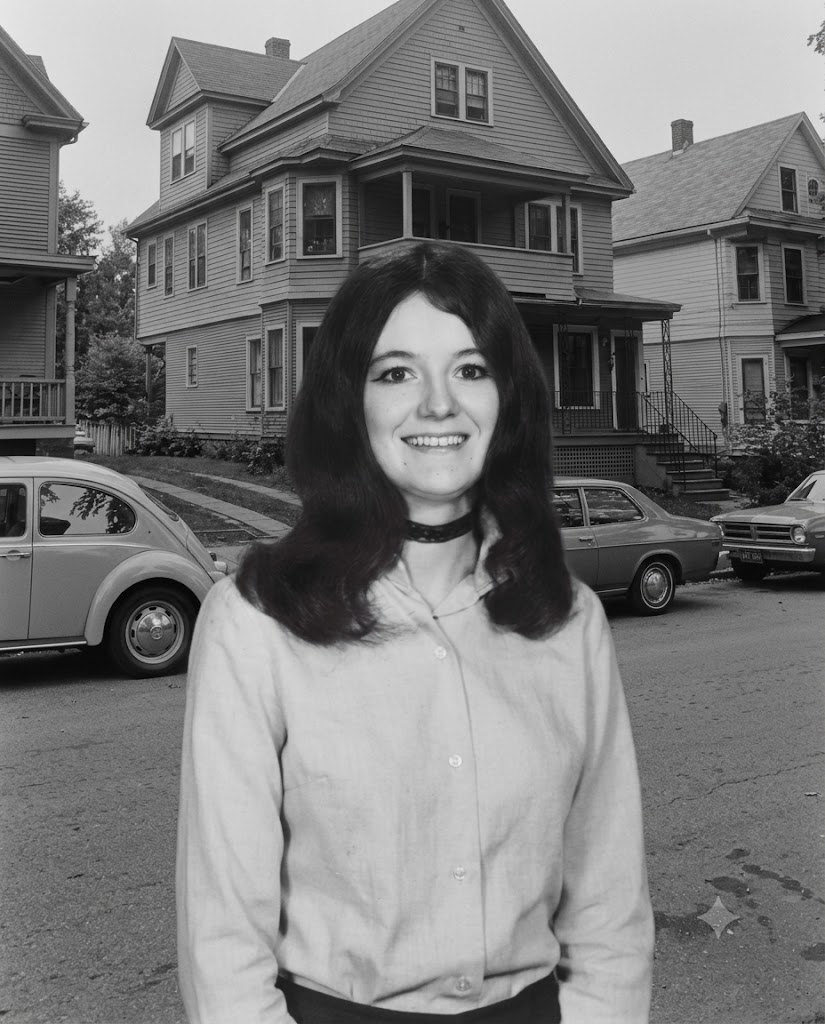
Rita Curran was not a case number. She was a daughter. A sister. A second-grade teacher from Milton, Vermont, who had grown up in a family that half the town knew by name. Her father, Thomas Curran Sr., ran the zoning office and worked at IBM. The family owned a diner and rental cabins on Arrowhead Mountain Lake. Rita had graduated from Trinity College and started graduate courses at the University of Vermont. She loved music. She was quiet—almost painfully shy, her parents said—the kind of young woman who never drew attention to herself. In June of 1971, she moved out of her parents’ house for the first time. She found an ad in the Burlington Free Press for a room on Brooks Avenue with three roommates she barely knew. It seemed like a good fit for the summer. It was the first big decision of her adult life. Six weeks later, it was the last one she would ever make.
On the night of July 19, 1971, Rita’s roommates left the apartment to eat at a restaurant on Route 7 in Shelburne. Rita stayed behind. She was alone. The window was roughly seventy minutes long—that’s the number that would echo through five decades of investigative files. Seventy minutes in which someone entered her bedroom, assaulted her, and took her life. There was no forced entry. The door was unlocked. Whoever came inside didn’t need to break anything. They simply walked in. They simply had an opportunity. And they took it. By the early morning hours of July 20, Rita’s roommates returned home. One of them discovered her. The police were called. Burlington officers arrived and began processing the scene. The evidence told them something important: the killer hadn’t needed to force his way in. He’d just needed to know the door would be open. And one person living in that building had a particularly important connection to that seventy-minute window.
“He said he never left the apartment,” Michelle would tell investigators more than fifty years later. “He told me to say that if they came back.” But in July of 1971, nobody knew that yet. What police knew was simpler: a young woman was dead. Her neighbors were being questioned. And William De Roos was one of them. De Roos had a record—a previous armed robbery conviction. He was a smoker. He had married Michelle on July 5, just two weeks and one day before Rita’s death. And according to the account Michelle would eventually give, De Roos and his new wife had argued that night. At some point, he left the apartment. A cool-down walk, he called it. Investigators would eventually determine that he had been away from his apartment during part of the exact same window in which Rita was believed to have been attacked. But that wasn’t what police knew the morning after the crime. What they knew was what the couple told them: De Roos had been home all night. Michelle had backed him up. She was young. She had been married to him for less than three weeks. And she had been told what to say.
The investigation in 1971 moved the way investigations moved back then—knocking on doors, chasing tips, running background checks. About a week after Rita’s death, a confidential informant came forward and spoke with two of the detectives on the case. The informant described William De Roos as someone capable of committing a violent crime. That information was documented. It went into the file. But there was another detail in the same record that canceled it out. De Roos already had an alibi. He and Michelle had told investigators he had remained inside their apartment all night. So even though his name had surfaced in connection with the investigation, the alibi gave police a reason not to pursue him as the person responsible. An informant’s statement on one side. A married couple’s account on the other. There was no DNA result waiting to break the tie. There was no computer screen about to flash a name. There was just a file, and a cigarette, and a young woman who had been buried on Friday, July 24, 1971, at St. Anne’s Church and Cemetery in Milton. Nearly 300 people attended her funeral, including several plainclothes police officers. The same day, the state’s attorney overseeing the case—Patrick Leahy, who would later become a longtime U.S. senator—announced a media blackout on further news related to the investigation. The case stayed open. The leads ran out. The years passed. Rita’s name remained in police files. Her family continued to live with the unanswered question.
Then came the theory. It started with geography. Ted Bundy had been born in Burlington, Vermont—specifically, at the Elizabeth Lund Home for unwed mothers. The motel where Rita worked as a maid during the summer months was located near that same building. There were superficial similarities between Rita’s case and some of the crimes later associated with Bundy. That was enough for some people to wonder: *Could Bundy have been responsible?* The theory gained traction years after Rita’s death. Retired FBI agent John Bassett became convinced that Bundy should be considered. Author Ann Rule discussed the possibility in her 1980 book, *The Stranger Beside Me*. The theory was compelling. Compelling is not the same as proven. There was no solid evidence placing Ted Bundy in Burlington on the night Rita died. None. But the theory became strong enough that Rita’s family eventually wanted an answer from Bundy himself. While Bundy was on death row in Florida, Rita’s sister Mary sent him information about the case and asked if he had been responsible. Bundy did not give the family the answer they wanted. Years later, investigators questioned him about Rita’s death. Shortly before his execution in 1989, Bundy again denied being responsible for what had happened to Rita. For years, the Bundy theory remained attached to Rita’s name—one of the most recognizable explanations for a case that otherwise had no clear answer. But there was a problem with the theory that would eventually become impossible to ignore. There was evidence. And that evidence did not point toward Ted Bundy.
The Lark cigarette had been sitting in evidence storage for decades. A small, ordinary object from a night in 1971. At the time it was collected, it couldn’t identify the person who smoked it. But the evidence had survived. And eventually, technology caught up with it. In 2014, Burlington police reopened the case for forensic testing. Investigators sent the preserved evidence for DNA analysis. The cigarette was among the items tested. For the first time, the case produced something investigators in 1971 could never have obtained: a DNA profile. But there was still a problem. The profile didn’t come back with a name. It only established that it was a male profile. When investigators searched law enforcement DNA databases, there was no match. The science had given them a profile. It had not given them a person. This is where the difference between DNA testing and identification becomes important. Finding DNA is one thing. Connecting it to a specific person is another. The profile from Rita’s case wasn’t sitting inside a law enforcement database under a name. There was no direct hit. No computer screen suddenly displaying an identity. Instead, investigators had a biological clue but no name. The file went back on the shelf. But this time, it had something it hadn’t had before. It had a question. What if the DNA didn’t match a suspect but a relative? What if the identity of Rita’s killer was hidden not inside a police database but inside a family tree?
In 2019, Burlington police decided to look at the case differently. Not as an old case. Not as a file that had already been investigated. But as if Rita had just been found. A new team of detectives, crime scene technicians, and investigators began going back through the evidence. They reviewed the original reports, reconsidered old leads, and looked again at the people who had been investigated in 1971. They asked a question that modern technology had made possible: *What evidence had been collected back then that could mean something different today?* One item stood out. The cigarette. The profile extracted from it in 2014 had already been searched against law enforcement databases with no match. The person might never have been arrested. He might never have had his DNA entered into a criminal database. Or he might have lived an entirely different life after leaving Burlington. The DNA could tell investigators where to look, but it couldn’t tell them where the answer was. Not yet. Genetic genealogy offered another possibility. Instead of searching only for the person whose DNA was sitting in the evidence, investigators could search for relatives. The principle is relatively simple. A person’s DNA contains pieces inherited from their parents. Those pieces can be shared with siblings, cousins, and more distant relatives. If enough relatives can be identified, investigators can begin building a family tree. And eventually, the branches can narrow. This was different from CODIS, the FBI’s criminal DNA database, which was designed primarily to compare profiles already held by law enforcement. Genetic genealogy worked from a different direction. It asked: *If we don’t know who this person is, can we find people who are related to him?*
Burlington investigators worked with genetic genealogy experts, including CeCe Moore of Parabon NanoLabs. The crime scene DNA was analyzed using genetic genealogy databases where people had voluntarily submitted their genetic information. The results didn’t immediately produce a name. Instead, they produced relatives. Some connected through one side of a family. Others pointing toward another. This is where genetic genealogy becomes detective work. The scientists weren’t simply looking for one matching person. They were looking for relationships. Who were these people? How were they connected? Who were their parents? Who were their grandparents? And if investigators followed those branches far enough, where did they lead? The genealogy team began constructing family trees, tracing relatives backward through generations, and then working forward again. One branch narrowed. Then another. Eventually, the possibilities began to collapse toward a single family. A family connected to a man who had lived in Burlington in 1971. On Brooks Avenue. A man investigators had spoken to the morning after Rita’s death. His name was William De Roos.
De Roos had not appeared out of nowhere. His name had been in the original investigation. But in 1971, investigators had no reason to connect him to the DNA. Now they had something they had never had before: a genetic trail. And it was pointing toward the man who had lived two floors above Rita. That discovery immediately changed the meaning of an old piece of information. De Roos and Michelle had been living on Brooks Avenue when Rita was killed. They had been married only about two weeks. And De Roos had left their apartment that night after an argument with Michelle. But investigators still needed to know whether the genetic connection was actually pointing to the right man. They needed more than a family tree. They needed corroboration. Investigators located a living half-brother of De Roos. His DNA provided another opportunity to test the genealogy hypothesis. If the genetic profile from the cigarette belonged to someone from the De Roos family, a close relative could provide an important comparison. The result strengthened the connection. The DNA trail wasn’t simply pointing toward a random person with a similar name. It was pointing toward William De Roos’s family. But there was still another question. Where had William De Roos actually been on the night Rita died?
That question brought investigators back to the story they had been told in 1971. And this time, there was someone who could tell them something different. His former wife. Michelle. More than fifty years had passed since the murder. Michelle had lived an entirely different life. She had eventually left De Roos. She no longer lived in Vermont. In 2022, Burlington detectives located her in Oregon. Detectives showed her photographs of Rita Curran. Michelle remarked that Rita was beautiful but said she didn’t recognize her and didn’t remember ever socializing with the other tenants in the building on Brooks Avenue. In September of that year, they interviewed her again. This time, Michelle told investigators something very different. She said that she and De Roos had argued on the night Rita died. And that he had left their apartment. Gone out for what she described as a walk to cool off. Rita’s roommates had been away from the apartment during part of the same period. For the first time, investigators had a witness account placing De Roos outside his apartment during a window of time that mattered to Rita’s case. Michelle’s account went further. She told detectives that when De Roos returned, she was already asleep. The next morning, police came to their door. They told the couple about Rita. And when police asked whether they had heard or seen anything, De Roos denied knowing anything unusual. After the officers left, Michelle said, De Roos told her that if police came back, she should say he had been home the entire night. Michelle told investigators that she followed his instructions. She was young. She had been married to him for only a short time. And she had been told what to say.
Michelle’s later account is evidence. But it is still an account given more than fifty years after the events. Investigators did not simply accept every detail without question. They compared her story with the physical evidence—the DNA, the genealogy, the original investigation, and what they could establish about De Roos’s life in 1971. According to Detective Thomas Chenette, investigators did not believe Michelle had knowingly participated in Rita’s killing. Instead, they believed she had been protecting her new husband because of his criminal history. She was young. She had been married to him for only a short time. And she had been told what to say. Whether every detail of her memory was perfect after more than five decades was impossible to know. But one part of her story was especially important. It contradicted the alibi she had given investigators in 1971. The man she had once said never left the apartment had actually left. Now investigators had a different version. And the pieces were beginning to align.
A male DNA profile from a cigarette found at Rita’s apartment. Genetic relatives pointing toward William De Roos. A half-brother whose DNA supported the family connection. A man who lived two floors above Rita. And a former wife who now said he had been away from the apartment that night. There was another piece of biological evidence that would provide an even stronger connection between the DNA from the cigarette and Rita herself. A piece of evidence that had also been sitting in storage. Rita’s housecoat. Rita had been wearing a red and white housecoat when she was attacked. During the struggle, the garment had been torn. Buttons had been pulled from it. Investigators had preserved the clothing. For decades, it was simply another piece of evidence from a case that had gone nowhere. But modern forensic technology had changed what investigators could ask of it. The housecoat was sent for additional testing. This time, for touch DNA. When someone grips or pulls fabric, microscopic biological material can sometimes be left behind. Modern testing can recover some of that material even when the original event happened decades earlier. Investigators focused on the area of the housecoat where the garment appeared to have been gripped and torn. The laboratory recovered a mixture of DNA from several people. Two of the profiles were especially important. One belonged to Rita. The other matched the DNA profile obtained from the cigarette. The same profile investigators had traced through genetic genealogy to William De Roos. That changed the whole narrative around the investigation. The cigarette had connected De Roos’s DNA to the crime scene. Now investigators had the same DNA profile associated with Rita’s clothing. The evidence was no longer resting on a single cigarette. It was becoming a chain.
William De Roos was a smoker. The cigarette had been found inside Rita’s apartment near her body. Taken individually, each piece of evidence raised questions. Together, investigators believed they formed a compelling case. Burlington police ultimately said they were confident De Roos was responsible for Rita’s death. William De Roos was not a random stranger who appeared in a genealogy database decades later. He had lived in Burlington. He had lived in the same property as Rita. He had been interviewed shortly after her death. He had a criminal history. And he had left his apartment during the critical window of time. But what happened to him after Burlington is almost as unusual as the investigation itself. After Rita’s death, William De Roos didn’t remain in Vermont. He and Michelle eventually left. The marriage ended. De Roos’s life took a completely different direction. At some point, he moved to Thailand, where he became a Buddhist monk—adopting a very different life from the one he had lived in Vermont. Eventually, he returned to the United States and settled in California. He remarried. According to investigators, he became known in some circles as a countercultural figure and spiritual teacher. To people who encountered him later in life, the man living in California could have seemed very far removed from the young man who had lived in Burlington in 1971. But investigators were now looking backward. And the further they looked into his history, the more information they found. Detectives located another woman who had been married to De Roos after he left Vermont. She described a very different side of him. Sudden outbursts of violence. Incidents in which he had physically harmed people. Those accounts did not prove that De Roos had killed Rita. Investigators could not use a history of violence as a substitute for evidence. But they provided additional context about the man they were now investigating. The strongest evidence remained the evidence from 1971. The cigarette. The DNA. The housecoat. The timeline. And Michelle’s changed account.
When Burlington detectives finally connected the DNA to De Roos, they discovered something they could not change. Their suspect was already dead. William De Roos died in 1986 at the age of 46 from a drug overdose in a San Francisco hotel room. There would be no arrest. No interrogation. No courtroom. No opportunity to confront him with the evidence. No chance for investigators to ask him the questions that had remained unanswered since 1971. By the time science finally gave Burlington police his name, William De Roos had been gone for nearly four decades. The man investigators now believe was responsible had not been discovered through a confession. He hadn’t been identified by a witness. He hadn’t been caught by a new fingerprint. He hadn’t suddenly appeared in a criminal database. He had been found because investigators went back to evidence collected in 1971. A cigarette. A piece of clothing. And a DNA profile that had spent years without a name. The evidence had waited longer than the suspect had lived. And eventually, it outlasted him.
By early 2023, Burlington police had assembled the pieces. Investigators presented their findings for review. Chittenden County State’s Attorney Sarah George reviewed the paperwork. According to Burlington police, the evidence established probable cause for aggravated first-degree murder. There was only one problem. There was nobody left to prosecute. On February 21, 2023, Burlington Police Chief Jon Murad stood before reporters. The department announced that it had solved one of the city’s oldest cold cases. Rita Curran’s family had finally been given an answer. Investigators said William De Roos was responsible for Rita’s death. And they explained how modern science had brought them to him. The DNA recovered from the cigarette connected through genetic genealogy to De Roos’s family. A living half-brother’s supporting DNA evidence. DNA from Rita’s housecoat matching the profile recovered from the cigarette. And Michelle’s account—given more than five decades after Rita’s death—that the alibi she and De Roos had given police in 1971 was not true. For investigators, these weren’t separate stories. They were pieces of the same puzzle. And the 2023 supplemental report concluded that the Detective Service Bureau was unanimously certain that the sole perpetrator of Rita Curran’s murder was William De Roos.
For Rita’s family, the announcement carried a complicated kind of relief. There was no celebration. Nothing could give them back the woman they lost in 1971. Her sister Mary had spent decades wondering whether they would ever know what happened. At one point, the family had even told investigators that they didn’t expect a resolution in their lifetime. Now, more than five decades later, they were finally hearing a name. But there was one more thing Rita’s family wanted people to remember. Not just how she died. But who she was. In the years after the case was solved, people who learned Rita’s story began remembering the young woman behind the headlines. Her family found a way to turn some of the attention surrounding the case toward something positive. Money raised in Rita’s memory was directed toward helping others. Because while nothing could change what happened to Rita, her family could still choose what happened next. Her story could end with more than a name in a police announcement. It could continue through the people who remembered her. Rita’s story reminds us that time doesn’t necessarily erase evidence. Sometimes, it simply takes technology long enough to understand it. The cigarette waited fifty-two years to speak. When it finally did, it told the truth. And the truth, even when it arrives decades late, still counts for something. It still closes a door that was left open for far too long.









