The Lifestyle of Taraji P. Henson 2026 ★ House Tour, Single Mother, Son, Cars, Net Worth
**Part 1**
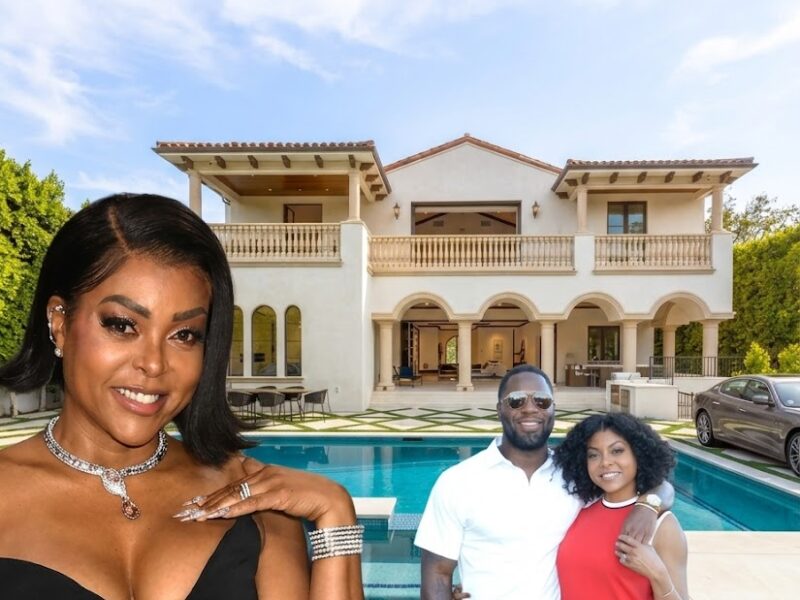
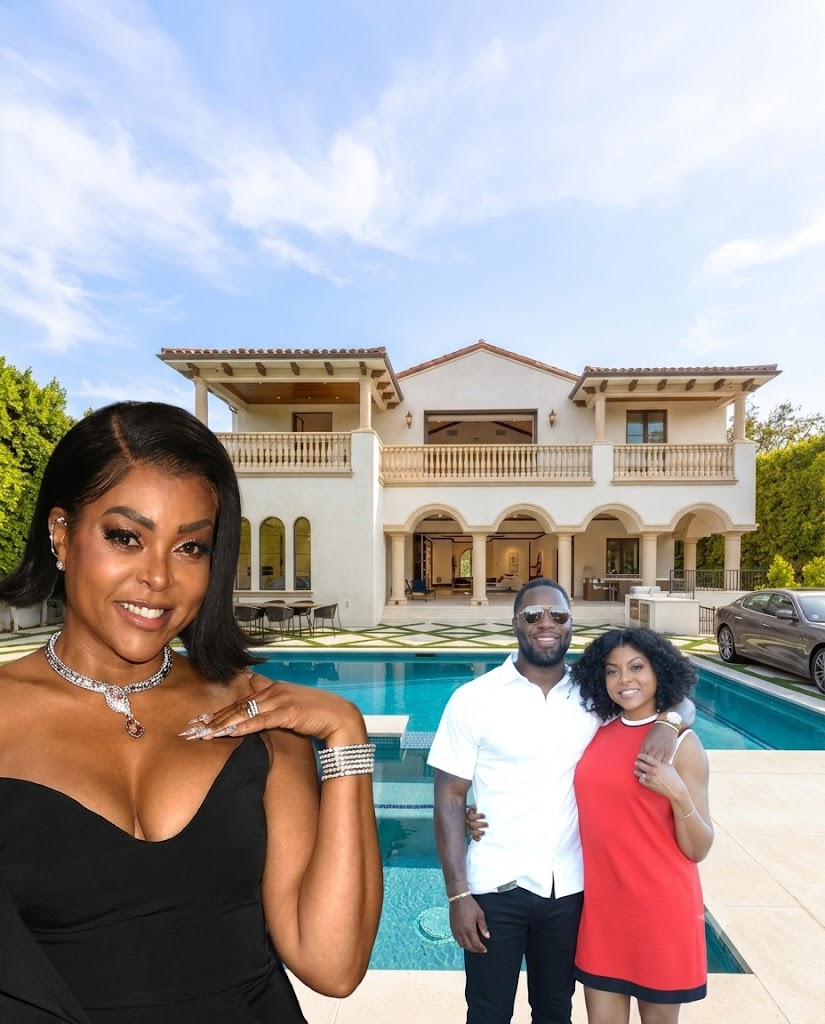
The first thing you noticed about the house on Hidden Hills wasn’t the gate—it was the silence. A heavy, expensive quiet, the kind that costs $15 million and comes with its own ZIP code.
Taraji P. Henson stood in the grand foyer that February morning in 2026, barefoot on the cool stone, a cup of coffee going cold in her hand. The fireplace in the formal living room hadn’t been lit in weeks.
She was thinking about $700. That’s what she had when she drove into Los Angeles. Seven hundred dollars, a baby on her hip, and a conviction that refused to die.
“You know what they don’t tell you about the top?” she said, mostly to herself. “The air’s thin. And everybody up here is real quiet about how they got here.”
She set the cup down on the imported stone island—the one that cost more than her first car—and walked the length of the gourmet kitchen. Professional-grade appliances. Custom wood cabinetry. A prep island that could seat six and had, exactly twice.
Her phone buzzed. Her son, Marcel.
“Ma. You eat yet?”
“I’m standing in a kitchen that cost more than my first apartment building, and you’re asking me if I ate?”
“That’s not an answer.”
She laughed. It was the same laugh from thirty years ago, the one that filled a dinner cruise ship where she sang and danced for tips and tuition.
“I ate,” she lied.
“You lied.”
“I ate a little.”
“That’s still a lie.”
The thing about Taraji P. Henson—the thing the magazines never quite get right—is that the $30 million net worth, the Golden Globe, the Oscar nomination, the $175,000 per episode—none of it ever traveled alone. It all came wrapped in a $700 decision and a $6 million hillside and a son who still called to check if she’d eaten.
She walked to the panoramic windows. The sun was coming up over the valley, spilling gold across a temperature-controlled infinity pool that seemed to pour straight into the hills below. A Rolls-Royce Ghost sat in the garage—$350,000 of handcrafted leather and polished wood—and beside it, the sensible Mercedes S-Class and the family-ready Lexus LX.
“All this,” she said, “and I still can’t sleep past six.”
—
**Part 2**
The rejection letter came when she was seventeen.
A prestigious performing arts high school in Washington, D.C., had said no. Just like that. No. The letter was one page. It might as well have been a brick.
“Baby, you want to cry about it or you want to do something about it?” her father asked. Boris Lawrence Henson—a metal fabricator who’d come home from military service carrying battles nobody could see—didn’t believe in soft landings.
“I want to cry about it,” she said.
“Then cry. Then do something.”
She cried for twenty minutes. Then she enrolled in public school, then a university, then—when the universe yanked the wheel—North Carolina A&T, and finally Howard University. Theater. The thing her gut kept pointing her toward even when the map said otherwise.
Then came the test that society had already graded in advance. She was pregnant. Young. Single. The voices were loud and unanimous: *That dream is over.*
“Over?” she said to a friend in the Howard dorm. “Over is a word for people who quit. I don’t know that word.”
She worked two jobs—a secretary at the Pentagon by day, a singing and dancing waitress on a dinner cruise ship by night—while attending acting classes and raising her son. Sleep was a rumor. Coffee was a food group. The $700 she eventually carried to Los Angeles wasn’t savings—it was everything. Every last thing.
And that’s the part the lifestyle tours never show you. The $15 million Hidden Hills estate has a foyer with a fireplace. The $700 car ride to California had a gas station map and a toddler in the backseat.
“People see the Ghost and they think it’s about the car,” she said. “It’s not. It’s about the bus I took to auditions for four years. It’s about the shoes I wore thin walking from one casting office to the next.”
She walked to the master suite—the one with dual vanities, the deep soaking tub, the oversized glass shower with high-pressure heads. The private sanctuary. The place where the noise of the industry gets left at the door.
Her phone buzzed again. Not Marcel this time.
A reporter. Again. Asking about the pay disparity comments she’d made—the ones that had sparked a massive industry conversation and drawn fire from powerful insiders who called her “disruptive.”
She typed three words back: *Not going anywhere.*
“Disruptive,” she said, testing the word. “You know what’s disruptive? Getting paid less for the same work. That’s the disruption. I’m just the one with the nerve to say it out loud.”
—
**Part 3**
The Atlanta house came first, in a way.
Not in time—in purpose. The $3 million residence in one of Atlanta’s upscale, quiet neighborhoods was the family anchor, the place with the wide entry hall and the intricate ceiling molding and the chef’s kitchen designed as the beating heart of a home. Large central island. Elevated bar seating. Meals that stretched to midnight.
“That house is where the real conversations happen,” she said. “You can’t have a real conversation in a room with twelve-foot ceilings and a view of the valley. You have to be close. Close enough to pass the bread.”
The Hollywood Hills property—the $6 million haven—was the opposite. Sleek, mid-century modern, a sunken living room wrapped in panoramic windows, an infinity-edge pool that made the hills look like they belonged to her.
“This one’s for the woman I became,” she said. “That one’s for the girl I was.”
In that sunken living room, she’d had the conversation that still stung. Kelvin Hayden. The engagement. The headline romance. The night it ended.
“We loved each other,” she said, and her voice caught, the way it always did when honesty got there before composure. “We did. And sometimes love isn’t enough. Sometimes two good people are standing in the wrong doorway, and one of them has to walk through alone.”
She didn’t cry when she said it. That was the grace part. The maturity part. The part that said: *I can lose and still stand.*
“When the engagement ended, I called my son,” she said. “I said, ‘Marcel. It didn’t work.’ And he said, ‘Ma. Neither did the first one. You’re still here.'”
She laughed. “That boy. That boy is my greatest work. Not the Golden Globe. Not the Oscar nomination. Marcel.”
The numbers were staggering—$175,000 per episode for *Empire*, the $30 million net worth, the $15 million estate, the $350,000 Rolls-Royce—but the number she kept returning to was $700. The crucible number. The one that proved the rest was possible.
“Every dollar over that $700,” she said, “was a decision. Not luck. A decision.”
—
**Part 4**
The pay disparity fight started in a room she wasn’t supposed to enter.
“I was told I was being ungrateful,” she said, tears standing in her eyes, and the room—wherever it was, whichever interview—went completely silent. “Grateful for what? Grateful that my check says less for the same work? Grateful that the woman behind me will get less too, because I stayed quiet?”
The industry pushed back. Insiders called it “disruptive.” One prominent voice suggested she should be “more strategic” about her advocacy.
“So I doubled down,” she said. “That’s the thing about coming from nothing. You’re not afraid of losing something you already know how to live without.”
She founded the Boris Lawrence Henson Foundation—named for her father, the man who taught her to stand in her truth—dedicated to eradicating the stigma around mental health in marginalized communities. Therapy. Resources. Support for people the system had historically overlooked.
“My father fought his battles quietly,” she said. “I’m fighting mine out loud. That’s the difference between us. He had to be quiet. I get to be loud.”
She kept the physical reminders close. The $90,000 Lexus LX in the garage—rugged, reliable, family-ready—was the car she drove when she needed to feel like a mother first and a star second. The Mercedes S-Class was the office between sets, the mobile decompression chamber with the massaging seats and the climate control that could outlast a Los Angeles heat wave.
And the Ghost. The $350,000 Ghost. She rode in it to premieres and award shows, and sometimes—rarely—she rode in it nowhere at all. Just drove. Just to feel the quiet, the world outside fading away.
“People think the Ghost is a flex,” she said. “It’s not. It’s a reminder. You spent years on a bus. Now you get to ride on a cloud. That’s not vanity. That’s a receipt.”
—
**Part 5**
The call came on a Tuesday.
“Ma. The foundation’s numbers came in.”
Marcel had been helping run the numbers—the grants, the therapy stipends, the mental health resources the Boris Lawrence Henson Foundation had funded that year. The totals were on the screen.
“You know what this means?” he asked.
“That I spent the money right.”
“That you spent the money *right*,” he agreed.
She sat on the covered patio of the Hidden Hills estate—the resort-like backyard with the sparkling pool and the elegant loungers—and let it land. The $15 million house. The $6 million hillside. The $3 million oasis. The $350,000 car. The $700 beginning.
“You know what I want for you?” she said, and her son—grown now, her greatest pride—waited. “I want you to never have to hear ‘no’ the way I heard it. And I want you to know how to hear it anyway. So when it comes, you’ll know what to do with it.”
“I’ll call you,” Marcel said.
“You’ll call me.”
The $700 had become $30 million. The $30 million had become a foundation, a legacy, a son who still checked if his mother had eaten. The fireplace in the formal living room was lit that night—finally—and the house in Hidden Hills held its silence like a promise kept.
The cold coffee sat on the island. She’d never finished it. There was always another call, another fight, another generation waiting for the door to open.
She opened it anyway.