The Lifestyle of Mighty Sparrow ★ House Tour, Cause of Death, 9 Children, Wife, Cars, Net Worth
The last thing Slinger Francisco ever said to his daughter in New York was a joke about the weather. He was 91, propped against the pillows in a Manhattan hospital room on September 27, 2026, the autumn light thin and gray through the glass.
“You know,” he told her, “in Laventille the rain smells like mango leaves. Here it smells like a taxi.” She laughed. He laughed. That was the Mighty Sparrow even at the end, turning a small ache into a lyric nobody had written yet.
He passed that Sunday evening, surrounded by family, after a brief illness he met with the same quiet dignity he had carried his whole life. There was no scandal, no catastrophe, no dramatic final act.
Just the slow, gentle closing of a book that had held more than most. And when the news broke from Port of Spain to Brooklyn, from London to Toronto, a global calypso family that numbered in the millions went silent, then began to sing.
To understand what was lost, you have to go back to where it started. Born July 9, 1935, in Grand Roy, a small fishing village on the coast of Grenada, Slinger Francisco entered a world of warm community and cold economics.
His mother, a woman of formidable strength and deep spiritual conviction, taught him that poverty was a circumstance and not an identity, that his spirit had no ceiling even when the roof leaked. When he was barely one year old, the family crossed to Trinidad in search of something better.
They landed in Laventille, a rugged hill district overlooking Port of Spain, a place of vibrant culture and brutal scarcity, where daily life was a relentless negotiation for resources.
The streets were unforgiving to a boy with a Grenadian accent, and the taunts of neighborhood kids followed him everywhere. He didn’t fight back with his fists. He fought back with his voice, sharpening his wit and his tongue into weapons, and the church choir gave that voice a disciplined foundation.
“The boys would call me names,” he later recalled. “I would go home and write a verse. By morning I had a song and they still had nothing.” That early alchemy, hurt into melody, would define him.
His mother’s lessons anchored him when poverty threatened to crush his ambitions, and he learned to watch everything: the political hypocrisies, the wage theft, the daily indignities of the working class. He was gathering raw material, though nobody knew yet what he would build with it.
He began performing in the early 1950s as Little Sparrow, a wiry young man with a rapid-fire delivery and a magnetic stage presence that immediately set him apart from the veterans.
Then came 1956, and a song called “Jean and Dinah,” which exploded across the Carnival season, captured the Road March title, and won him his first Calypso Monarch crown. In one season, the outsider had become the standard.
He revolutionized the form, filling it with theatricality, incisive social commentary, and rhythms that demanded attention. He took on political corruption and economic disparity, becoming the fearless voice of the Caribbean working class, and in 1957 he did something no calypsonian had dared.
He boycotted Carnival entirely to protest the meager prize money, releasing “Carnival Boycott,” a scathing critique that permanently changed the economics of the art form. “They thought I wanted fame,” he said. “I wanted the man behind the counter to pay my brothers what their songs were worth.”
That move made him not just an entertainer but a cultural revolutionary. Through the 1960s and 70s his dominance was absolute: eight Road March titles, eleven Calypso Monarch crowns, a record that still stands, and a catalog that crossed the Caribbean and echoed through London and the arenas of North America.
He signed international recording contracts, sold millions of albums, and amassed real wealth. His lyrical clashes with other calypso greats became legend, thrilling audiences and raising the competitive bar for everyone.
Among his most cherished honors were the Hummingbird Medal Silver, the Chaconia Medal Gold, and the Order of the Republic of Trinidad and Tobago, the nation’s highest honor. The University of the West Indies conferred on him an honorary Doctor of Letters, cementing his status as a master storyteller and literary giant.
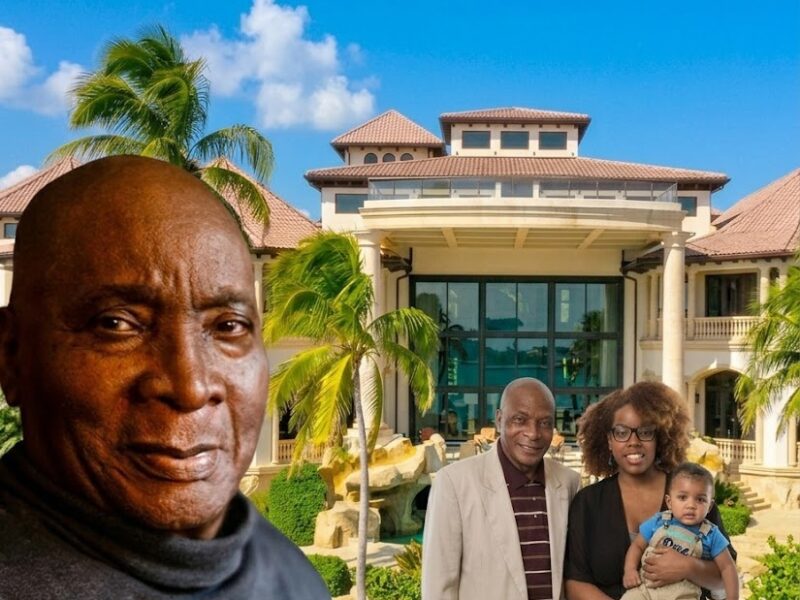
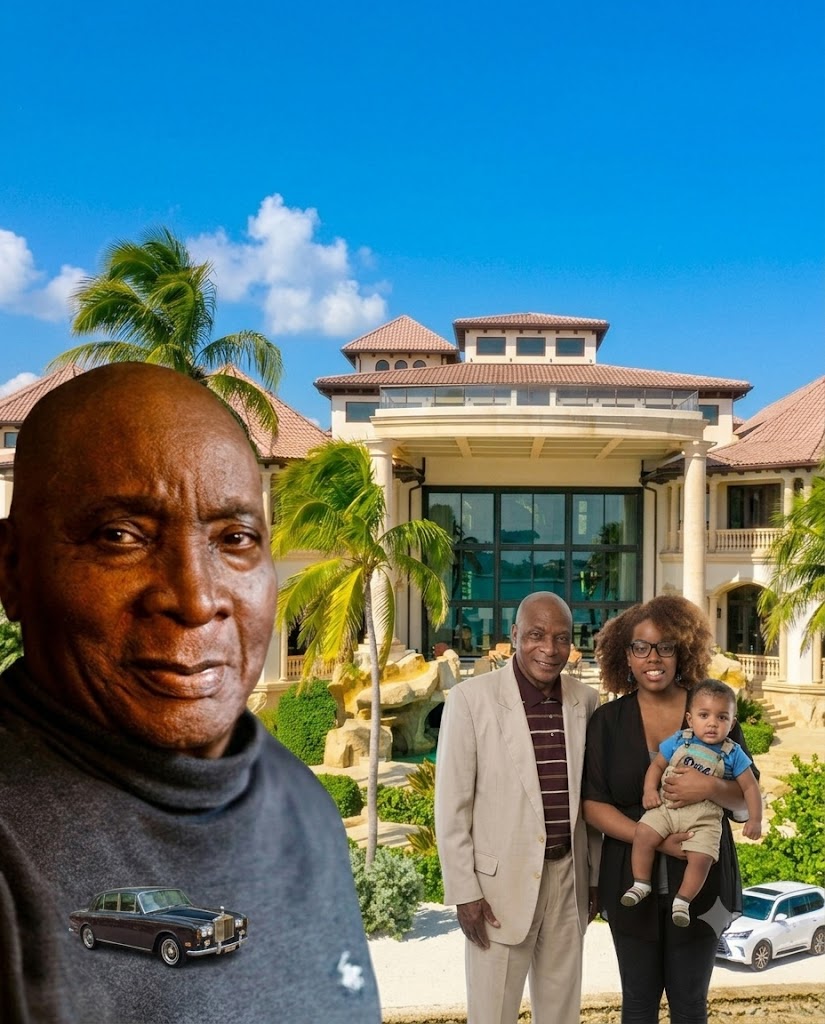
The money that followed the music was real, and he spent it the way a man who once went hungry spends it: deliberately, and beautifully. His Caribbean Pinnacle Estate in the ultra-exclusive hills of Maraval, valued at $4.5 million, was his tropical sanctuary, entered through a pivoting front door into a great room with soaring vaulted ceilings and retractable floor-to-ceiling glass that dissolved the line between inside and jungle.
The chef’s kitchen revolved around a monumental island of imported Brazilian quartzite, outfitted with double convection ovens, a built-in teppanyaki grill, and flush-mounted induction cooktops. Adjacent, beneath a cascading crystal chandelier, the formal dining room was built for gatherings that lasted until sunrise.
The primary suite offered a custom floating bed platform and a smart-glass privacy partition, while the en-suite bath rivaled any five-star resort: a steam shower with multiple body jets, dual marble vanities, and a freestanding soaking tub positioned to catch the distant city lights.
But the centerpiece was the infinity-edge pool, which created the illusion of water pouring straight into the valley below, flanked by a sunken lounge with a smokeless fire pit and a covered bar. “I used to fetch water up a hill,” he said, standing at that edge. “Now the water falls off my hill. God has a sense of humor.”
His Beverly Hills Sanctuary, a $3.2 million West Coast anchor, offered a different architecture entirely, sleek modernism and refined luxury. Wide-plank European oak grounded the main level, where an open-plan living room was anchored by a dual-sided linear fireplace in textured slate that divided the seating from a quiet office.
The kitchen featured handleless matte cabinetry, appliances integrated so seamlessly they disappeared, and a waterfall-edge breakfast bar carved from textured soapstone. A floating glass-and-steel staircase led to guest suites with automated climate controls, rainfall showers, and radiant heated floors.
The primary bedroom occupied a secluded wing with motorized blackout blinds, ambient cove lighting, and an upholstered headboard wall, its bathroom holding an oversized glass wet room, a double trough sink with brushed metal fixtures, and a sunken heated tub. Outside, a geometric mosaic-tiled pool sat behind thick privacy hedges, a hidden aquatic escape in the middle of one of the world’s most bustling neighborhoods.
The Florida Sunset Haven, at $1.8 million, was the warm, serene getaway inside a gated Fort Lauderdale community, built for effortless coastal living. Custom tray ceilings, sliding pocket doors, double dishwashers, an integrated espresso machine, and expansive granite counters made it the family’s favorite gathering place.
The primary suite opened directly to the patio, and its bathroom was a masterclass in restoration: a jetted therapeutic tub, a dual-nozzle walk-in shower with digital temperature controls, and custom-lit vanity mirrors.
Guest bedrooms sat on the opposite wing for maximum privacy. “The children can argue,” he said, “and I will not hear one word.” That house was where the grandchildren learned to swim, and where he was, for a few weeks a year, simply Grandpa.
His taste in cars was not the taste of a young man but of an elder statesman who had earned every mile. Modern high-speed sports cars held no appeal. The crown jewel of his garage was a classic 1961 Rolls-Royce Phantom V, valued around $500,000, a rolling piece of history from the exact era he first achieved global stardom.
With hand-crafted wood veneers and plush rear seating that felt like velvet, it was built for chauffeur journeys, carrying him to galas and award ceremonies with stately grace. “This car,” he liked to say, “does not drive. It arrives.”
Next came a meticulously restored 1959 Cadillac DeVille, worth roughly $150,000, a drivable tribute to the flamboyant soul of the mid-century music scene. Those sweeping tail fins and that massive chrome grille captured the theatrical spirit of his stage shows, and the deeply cushioned bench seats offered real comfort for a man in his late 80s.
He cherished it for leisurely weekend drives, nostalgia wrapped around him like a coat. Rounding out the collection was a modern Lexus LS, about $90,000, his low-profile daily driver. It was chosen for practicality and accessibility, with a soundproofed cabin that sealed out the noise of the street and supportive seating designed to relieve joint pressure.
It carried him to family gatherings and quiet errands with dignity, proof that a king can also prefer a quiet ride. The assets were magnificent, but they were only a fraction of the man, because his deepest wealth was always in the connections he kept.
At his core he was devoted to his family and his roots. His marriage was the cornerstone of his stability, a grounded, loving sanctuary away from the relentless demands of global tours, and together with his wife he built a tightly knit household.
He celebrated the births of his nine children, and eventually the milestones of grandchildren, and his home was always loud with extended family, laughter, and the rich culinary traditions of the Caribbean. “Fame is a noisy room,” he said. “Family is the kitchen. That’s where the food is.”
His personal life was not without friction. Like many artists of his magnitude, he occasionally stood at the center of controversy, facing criticism for the provocative, sometimes controversial lyrics of his early calypsos that challenged conservative norms and sparked intense public debate.
He never shied from the fire. Calypso, he argued publicly, is the unvarnished voice of the people, and it demands to be heard in all its raw truth. He defended his work with remarkable grace, often addressing the public directly, and he never surrendered his commitment to artistic freedom.
Beyond his family, his dedication to his community was legendary. He was passionately involved in organizations preserving steel pan and calypso for future generations, funded scholarships for young musicians in Trinidad and Tobago, and poured himself into mentorship programs, passing down his knowledge of lyricism and stagecraft.
He was honored repeatedly not only for his music but for his philanthropy and his unyielding dedication to Caribbean unity. “I never forgot the hill,” he said. “I just built a road so the next ones can walk down.”
Then the rhythm of that extraordinary life reached its final measure. On Sunday, September 27, 2026, Slinger Francisco, the Mighty Sparrow, died peacefully in New York at 91, surrounded by his devoted family.
His passing followed a brief illness faced with the same quiet strength that had characterized his entire life. The shock wave was immediate and global, from the crowded streets of Port of Spain to the Caribbean diaspora in London, Toronto, and New York.
The family’s official statement expressed deep sorrow but also immense gratitude for the outpouring of love, noting that while his physical presence was gone, his spirit would forever resonate in the hearts of those who loved him and in the timeless music he left behind.
Tributes poured in from heads of state, fellow legends, and countless fans whose lives his art had touched. Flags flew at half-mast across the Caribbean, honoring a man who did more to export the region’s culture than any diplomat ever could.
Radio stations around the world dedicated full days of uninterrupted broadcasting to his catalog, creating a global symphony of his greatest works. His death marked the end of an era, a definitive closing chapter on the golden age of calypso.
But finality cannot erase magnitude. He took the local sounds of a small island and elevated them into a respected, globally recognized art form. He challenged oppressive systems, celebrated the beauty of Caribbean life, and created a soundtrack for millions.
And there is one last scene that his family keeps returning to. Weeks after the funeral, his daughter was going through a drawer in the New York apartment and found a folded slip of paper in his handwriting, a single verse, unfinished, about rain and taxi cabs and mango leaves.
At the bottom he had written the line he’d spoken to her that last afternoon, the one that had made her laugh. She read it twice, then walked to the window. It was raining, softly, and for a moment the whole city smelled like Laventille.
That was the real inheritance, not the estates or the Rolls or the crowns, but a voice that turned ordinary weather into something worth singing about. And somewhere, in a kitchen full of family, a grandchild was already humming the tune.
He died a true king, resting after a lifetime of giving the world his voice, his passion, and his soul, and the music, as it always did, went on.









