
The Lifestyle of Melba Moore 2026 ★ House Tour, Single Mom, Children, Cars, Net Worth
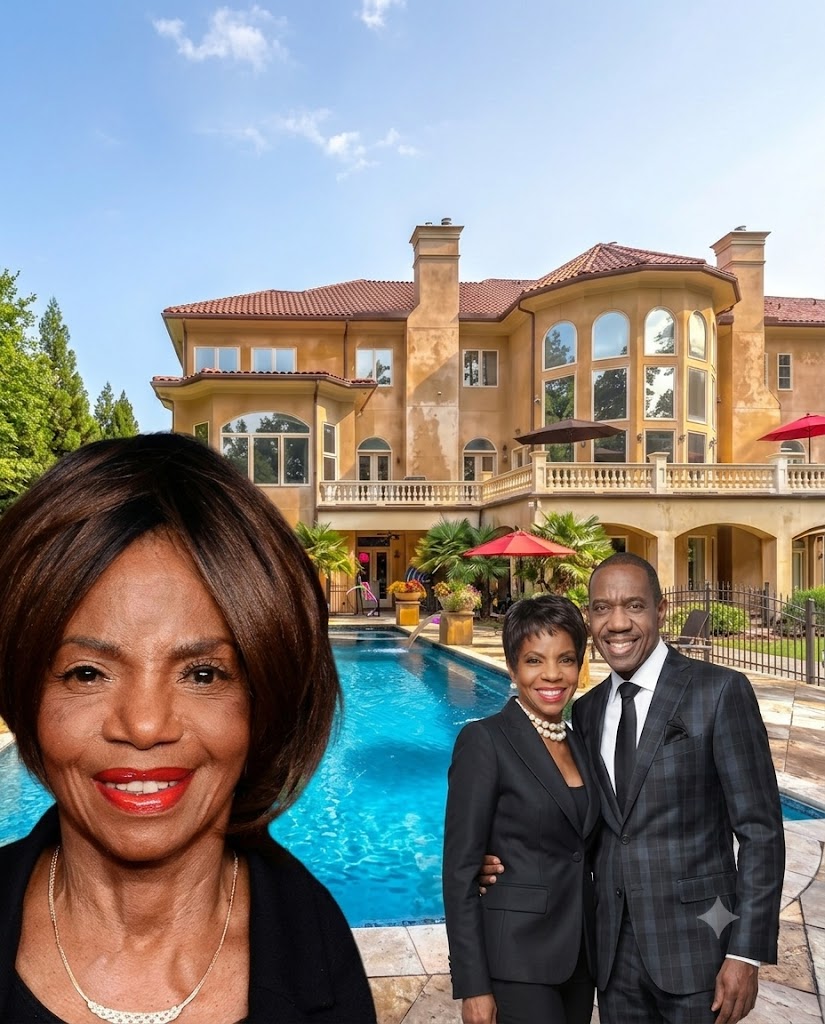
The double-height foyer was the first thing visitors saw, a sweeping staircase with wrought-iron railings drawing every eye upward toward crown molding that caught the Atlanta afternoon light.
Melba Moore stood at the base of those stairs in 2026, one hand resting on the newel post, and remembered a time when she couldn’t afford the bus fare to an audition.
“People see the chandelier and the pool and the Range Rover,” she said, her voice carrying that unmistakable Broadway resonance. “They don’t see the years I spent practicing in unheated rooms in Newark, wondering if I’d ever eat a hot meal on a Tuesday.”
The house stretched behind her, all $1.5 million of it, a curated monument to a career that had broken barriers and shattered glass ceilings.
She touched the iron railing, and her fingers traced the cold metal as if it were a rosary.
Her phone buzzed on the marble console table—her daughter Charlie, checking in from Los Angeles.
“Mom, did you eat breakfast?” Charlie’s text read.
Melba laughed, a deep, warm sound that filled the foyer. “I’m seventy-nine years old, baby. I’ve been eating breakfast since before you were born.”
She sent the reply and slipped the phone into her pocket, but the question lingered.
It was the same question her mother, Gertrude Melba Smith, used to ask her every morning in Harlem, back when the family was struggling to make ends meet and the world seemed determined to keep a young Black girl from dreaming.
The world had tried to keep her down.
It had tried in the segregated theaters of the 1960s, where she learned to channel rejection into resonance.
It had tried in 1991, when a divorce and a financial betrayal left her nearly destitute, relying on public assistance to support her daughter.
And it had tried every time she stepped onto a stage where someone said she didn’t belong.
But Melba Moore had a secret weapon: the belief her mother had drilled into her—that talent alone was never enough, that it had to be matched with an unbreakable will to survive.
“Gertrude used to tell me, ‘Baby, you can’t just be good. You gotta be undeniable,'” Melba said, settling into a sunlit sitting room off the kitchen.
The room was warm, filled with family photographs and a piano that had belonged to her stepfather, Clement Leroy Mormon.
She ran her fingers over the keys but didn’t play. “I think about her every day. Every single day.”
The kitchen behind her was a chef’s dream, with dual oversized islands, custom cabinetry that concealed state-of-the-art appliances, and a butler’s pantry stocked with her favorite teas.
She pointed to the island where she ate most of her meals. “I don’t need the formal dining room for myself. I sit right here, look out at the pool, and remember that I used to dream about a kitchen like this.”
The formal dining room, with its cascading crystal chandelier and expansive table, was reserved for the people she loved.
“Industry friends, family, the young artists who come to me for advice,” she said. “I feed them, I listen to them, and I tell them the truth: this business will break you if you don’t know who you are.”
She paused. “I know who I am. It took me a long time, but I know.”
The living area featured a floor-to-ceiling natural stone fireplace that anchored the room, and smart home technology was discreetly integrated throughout.
“I can control everything with my voice,” she said, demonstrating by dimming the lights. “But the fireplace? That’s manual. I like to build the fire myself. It reminds me of the winters in Newark when we huddled around the radiator.”
She laughed at the memory. “We didn’t have a fireplace. We had a radiator that clanked like a drum machine. But we had music. We always had music.”
Her primary suite was a serene retreat with a private sitting area and a spa-inspired en-suite bathroom featuring dual vanities, a glass-enclosed steam shower, and a freestanding soaking tub positioned to capture sweeping views of the landscape.
“I take my tea in that tub every night,” she said. “It’s my ritual. It’s how I tell my body, ‘You made it through another day.'”
The sliding glass pocket doors opened to a backyard anchored by a pool with a cascading waterfall and submerged lounging ledges.
Sunken seating areas and built-in fire pits surrounded the water.
“I host gatherings here,” she said. “Not big parties. Small ones. The kind where people can take off their shoes and be real.”
The New Jersey sanctuary, a $1.2 million property, was her connection to her roots.
“It’s where I go when I need to remember where I came from,” she said.
The open-concept home featured floor-to-ceiling glass walls that offered panoramic views of the surrounding woodlands.
The interior was minimalist, with clean lines, natural wood accents, and polished concrete floors.
“It’s a gallery,” she said. “But not for art. For peace.”
The sunken living room featured a suspended fireplace that served as both a heat source and a piece of modern art.
She pointed to the breakfast nook. “That’s where I have my morning coffee. I watch the deer walk through the trees, and I think about how far I’ve come.”
The primary bedroom featured vaulted ceilings and a private balcony, while the bathroom had a sprawling dual-headed shower system.
Outside, a zero-edge pool seemed to spill directly into the tree canopy below.
“I don’t need to be in the city to feel alive,” she said. “I need to be where I can hear myself think.”
The Florida coastal haven, a $1 million retreat, was her escape from the northern winters.
“It’s where I go when I need the sun,” she said. “And I need the sun.”
The interior featured high vaulted ceilings with exposed natural wooden beams and expansive picture windows that framed the tropical landscape.
The main living space was anchored by a massive natural stone fireplace that provided grounding warmth to the open, breezy layout.
The coastal kitchen featured custom shaker-style cabinetry, premium stone countertops, island seating, and a large farmhouse sink.
Oversized lounge areas were placed throughout the home, designed for deep relaxation and intimate family conversations.
“The breeze comes through here,” she said, standing by the window. “You can feel it. It’s like the house is breathing.”
Her primary bedroom offered sweeping views of the tropical foliage, and the en-suite bathroom featured a large soaking tub and bespoke metallic fixtures she had selected herself.
“I picked every fixture,” she said. “Every handle. Every tile. This is my house. Not a designer’s house. Mine.”
The garage was a curated collection of three vehicles, each chosen for a specific purpose.
The Range Rover Autobiography, valued at $185,000, was her sanctuary on wheels.
“I don’t drive myself often,” she said. “But when I do, I want to feel like I’m floating. The seats massage you. The glass filters out the noise. It’s like being in a first-class lounge.”
The Cadillac Escalade, at $135,000, was her family vehicle.
“When Charlie visits, we take the Escalade,” she said. “It holds everything. Her luggage, my luggage, the groceries. And the ride is so smooth you forget you’re on a road.”
The Audi A8, at $110,000, was her daily driver.
“It’s understated,” she said. “I can run errands without drawing attention. Sometimes I just want to be a regular person, you know? I want to go to the grocery store and buy my own tea.”
She paused. “But I also want to be comfortable. I’ve earned comfortable.”
The cars were a symbol of something deeper.
“I grew up without a car,” she said. “We took the bus. We walked. We depended on other people. Now I have three vehicles, and I don’t take any of them for granted.”
She touched the Range Rover’s steering wheel. “This is what resilience looks like. It’s not just the money. It’s the freedom. It’s knowing that if I want to leave, I can leave. If I want to stay, I can stay.”
Her phone buzzed again. Charlie.
“Mom, I’m booking a flight for next weekend. I want to see the Atlanta house.”
Melba smiled. “Come. I’ll make your favorite.”
She put the phone down and looked around the garage. “Charlie is my greatest achievement. Not the Tony. Not the Grammy nominations. Not the Hollywood Walk of Fame star. Charlie.”
She paused. “I almost lost everything when her father and I divorced. The financial fraud, the forged signatures, the public humiliation—it stripped me down to nothing. But I had Charlie. And I had my faith.”
The divorce in 1991 had been a public spectacle, a heart-wrenching turn of events that revealed her ex-husband’s entanglement in a massive financial fraud scheme.
Her signature had been repeatedly forged on crucial financial documents without her consent or knowledge.
“I found out I was broke when I tried to pay for groceries,” she said. “The card was declined. I called the bank, and they told me the accounts were empty. I stood in the grocery store parking lot and cried.”
She paused. “Then I went home, looked at Charlie, and said, ‘We’re going to be okay.’ And we were. But it took years.”
The scandal had rocked the entertainment world, and the public scrutiny was nearly unbearable.
“I faced it,” she said. “I didn’t hide. I told the truth. I fought to clear my name. And I won.”
She reconnected deeply with her faith during that dark period, finding solace and a renewed sense of purpose.
“I used my struggles to fuel my return to the stage,” she said. “Every night, I walked out under those lights and I sang like my life depended on it. Because it did.”
Her advocacy work had been a constant throughout her career.
She was a tireless advocate for civil rights and had been heavily involved in numerous charitable organizations dedicated to uplifting underprivileged youth across the nation.
One of her most passionate cultural contributions was her years-long effort to have the historic Black national anthem, “Lift Every Voice and Sing,” officially entered into the United States congressional record.
“That song is our story,” she said. “It’s our pain, our hope, our resilience. It needed to be recognized.”
Her contributions were immortalized when she received a long-overdue star on the Hollywood Walk of Fame.
“I didn’t get it when I was young,” she said. “I got it when I was old enough to appreciate it. That’s the way it should be.”
The house in Atlanta was quiet now.
The sun was setting, casting long shadows across the pool.
Melba stood by the sliding glass doors and watched the water ripple.
“I used to dream about a house like this,” she said. “I used to lie in bed in Newark and imagine a pool, a fireplace, a staircase that went up forever. And now I have it.”
She paused. “But the house isn’t the dream. The dream is the peace. The dream is knowing that I survived. The dream is knowing that my daughter is proud of me.”
Her phone buzzed one more time. Charlie.
“Mom, I love you. See you next weekend.”
Melba typed back: “I love you more. Bring your appetite.”
She put the phone down and walked toward the staircase, her hand trailing along the wrought-iron railing.
“I’m not done yet,” she said. “I’ve got more music to make. More young artists to mentor. More life to live.”
She paused at the top of the stairs. “My mother told me that talent alone was never enough. She was right. But I had the talent, and I had the will. And I’m still here.”
The chandelier in the foyer caught the last light of the day, casting a warm glow across the marble floor.
Melba Moore looked down at the house she had built, the life she had reclaimed, and smiled.
“I’m still here,” she said again, softer this time. “And I’m not going anywhere.”









