Texas 1984 Double Homicide Cold Case Solved — They Were Supposed to Take Him to the Doctor
On the morning of March 5th, 1984, Jack Kennedy stood at the front window of his Houston home and watched the street for a car that never came. The doctor’s appointment was set for ten, and his daughters were supposed to take him. Thirty-three-year-old Yilene and twenty-three-year-old Lily lived just around the corner in the Heights, close enough that Jack could walk it in minutes if he had to. He checked the clock. He checked it again. No call. No explanation. In Houston Heights back then, people knew their neighbors and knew their routines, and a missed appointment was usually just a missed appointment. But something about the silence that morning felt different.
Jack waited as long as a concerned father could reasonably wait. Then he put on his jacket and walked around the corner toward Yilene’s small house on East 12th Street. The front door was open. That was the first thing he noticed. Not ajar. Not cracked. Open, the way a door stays open when someone has been moving things in or out. Jack stepped inside, and the ordinary Monday morning he had been living in for thirty-three years ended in a single breath. He found both of his daughters. Lily had been shot. Yilene had been shot, too, but the evidence told a longer, harder story. She had been physically and sexually assaulted before she died. An ordinary Monday had become something no parent should ever have to endure.
But what Jack Kennedy found inside that house was only the beginning. Because someone had been seen near Yilene’s home around the time of the murders, someone who had been close enough to speak to a neighbor, someone who gave a simple explanation for why he was there and then walked away with a bag in his hand. For more than three decades, the Kennedy family would wait to learn who had taken Yilene and Lily from them. The answer, when it finally came, would lead investigators back toward a name that had been closer to the case than anyone realized.
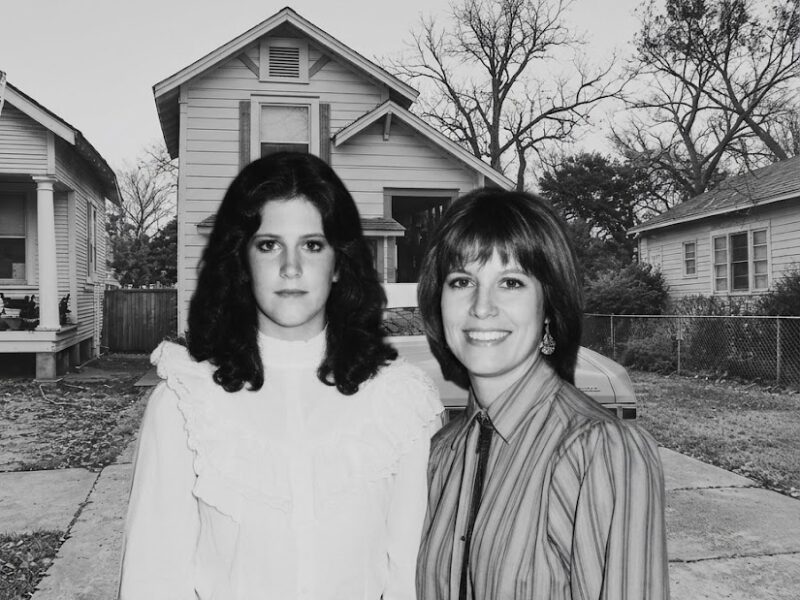
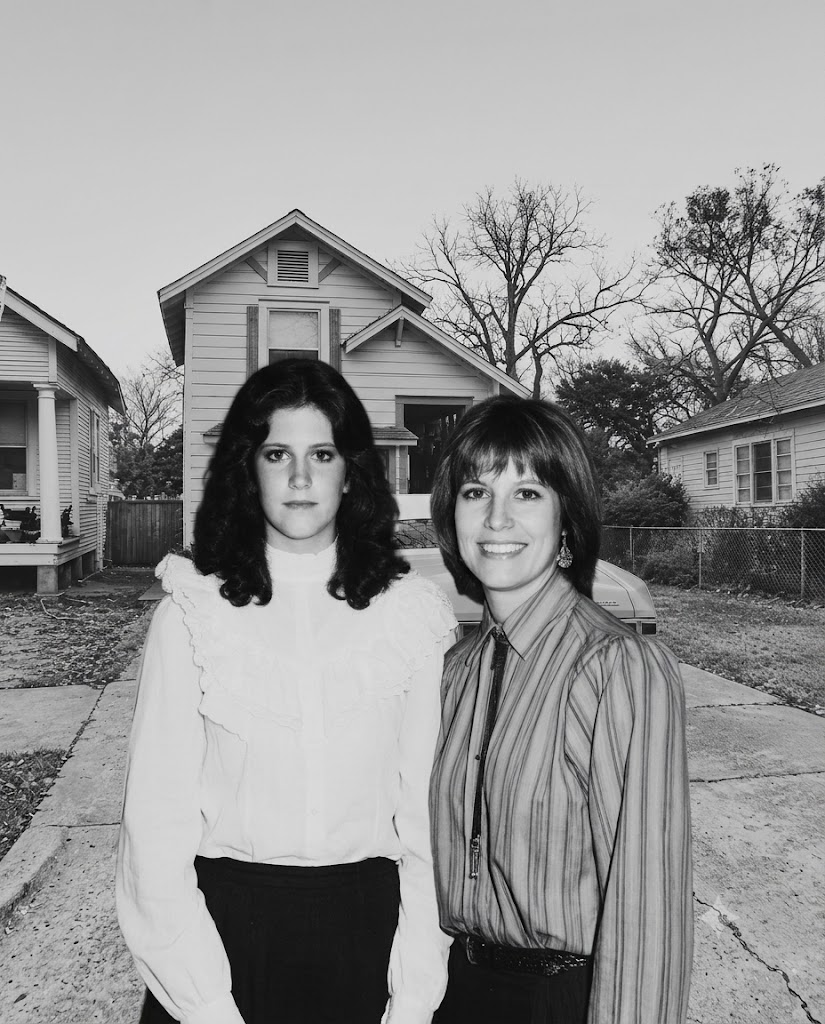
Before we talk about evidence and suspects and the discovery that changed this investigation, we need to understand who these two sisters were. Yilene Fay Kennedy was born on January 22nd, 1951, and was thirty-three years old at the time of her murder. She was creative. She worked with stained glass, had an interest in interior decorating, and expressed that creativity throughout her home. People who knew her remembered someone who enjoyed being around others. She liked dancing. She liked live music. Living in Houston’s Heights neighborhood suited her perfectly, because it was a place where she could walk from home to nearby clubs and spend an evening listening to music.
But one of Yilene’s greatest interests was clothing. She operated a vintage clothing store in the Heights, and relatives later described that work as something much more meaningful to her than simply earning a living. She loved searching for unusual pieces. Her goal, according to one family member, was to find the most unique clothing she could. That business brought her into regular contact with dealers, collectors, competitors, and other people involved in Houston’s used and antique clothing trade. Yilene sometimes kept jewelry in her home. She also kept cash there. To most people, that would have meant very little. But to someone familiar with her business, it may have suggested that Yilene’s house contained things worth taking.
Her younger sister, Lily Dale Kennedy, was born on August 27th, 1960, and was twenty-three years old, just a few months away from turning twenty-four. Ten years separated the sisters. Lily had previously worked as a key punch operator, one of those data processing jobs that were common before personal computers transformed office work. At the time of her death, she was unemployed and had recently moved into Yilene’s home. The surviving public record tells us far less about Lily’s personality and daily life than it tells us about her older sister, and that absence is worth acknowledging. Cold cases often leave us with pages of information about evidence and suspects and court proceedings while preserving surprisingly little about the people whose lives were actually lost.
What we do know is that Lily was only twenty-three. She was still at an age when much of adult life should have been ahead of her. And for whatever reason had brought her to that point, she was staying with her older sister in the small house on East 12th Street. There was also something troubling that had happened before the murders. According to later reporting, sometime in the weeks before March 5th, a man driving a pickup truck fired several shots at Yilene’s house. Investigators never publicly established that the shooting was connected to what happened later. It may have been connected. It may have been completely unrelated. No one could say with certainty, but in hindsight it became one more disturbing event surrounding a house where something far worse was about to happen.
On March 5th, Jack Kennedy had no reason to know any of that when he walked toward his daughter’s home. He was expecting a ride to the doctor. Instead, he walked into a scene that would remain with the Kennedy family for the rest of their lives. Family members later described the reaction in those first hours. One relative was shaking uncontrollably and crying so hard she could barely stand. Jack had discovered both of his daughters dead. Lily had been shot, and investigators believed her death came quickly. There were no defensive wounds on her hands, and the evidence suggested that she may have had little or no opportunity to understand what was happening before she was attacked.
What happened to Yilene was different. She had also been shot, but investigators found evidence that she had suffered a much more prolonged attack. She had been physically assaulted and sexually assaulted. Family members would later come to believe that much of the violence had been directed specifically toward Yilene. One relative, Deborah Petroski, believed Yilene had been the primary target and that Lily’s death may even have been intended to cause Yilene additional suffering. That was the family’s interpretation of the crime. What investigators could examine directly was the house, and the condition of that house raised immediate questions.
People who knew Yilene described her as an exceptionally neat and tidy person. She kept her surroundings in order. But when investigators entered her home, they found rooms that had been rummaged through. Drawers had been emptied. Property was missing. At first glance, it looked like robbery could have been part of what happened. But there was a problem. Five hundred dollars in cash had been left behind. Jewelry was still sitting in plain sight. Whoever had searched that house had taken some things while ignoring other obvious valuables. That raised the possibility that the person responsible had not simply entered the house looking for anything that could be sold. Perhaps he wanted something specific.
There was another important detail. Investigators found no sign of forced entry. Years later, former investigator Bob Delan said that detail suggested the sisters may have known whoever entered the house. Or at the very least, they had felt comfortable enough to open the door. If that was true, then whatever happened inside Yilene’s home may have begun with something completely ordinary. A knock. A familiar face. Someone being allowed inside. And then at some point everything changed.
Investigators soon learned about something that had happened outside the house. A neighbor had seen a man leaving the area around Yilene’s home. The man was carrying what was described as a duffel bag. The neighbor thought something about the situation looked suspicious. Suspicious enough that he confronted the man, and that decision would become one of the most haunting moments in the entire investigation. The neighbor asked what he was doing. The man didn’t panic. He didn’t run. Instead, he offered a simple explanation. He said his wife had thrown him out of the house. The belongings in the bag, he claimed, were his. At that moment, the explanation apparently sounded reasonable enough. The neighbor let him go.
There is no reason to blame that witness. In fact, he did more than many people might have done. He noticed something unusual. He approached a stranger. He asked a direct question. What he could not have known was what had happened inside that house. There were no police cars outside. No yellow tape. No investigators. No indication that two women were already dead. As far as the neighbor knew, he had encountered a man carrying his belongings after an argument at home. So the stranger walked away. Later, after the bodies were discovered, that brief encounter looked entirely different for police. The witness provided something useful: a description. Eventually, investigators had a composite sketch. But a sketch is not a name. And without a name, the man with the bag became another piece of evidence that seemed to point somewhere without ever arriving. That conversation had lasted only moments. Its consequences would linger for decades.
Detectives began looking through Yilene’s life. They examined the earlier shooting at her house. They looked into people connected with her vintage clothing business. Former investigator Bob Delan later explained that while Yilene herself was not known to be involved in drugs, some people around the used clothing world caused investigators concern because of associations with drug dealing. Police also explored another theory. Yilene had an ex-boyfriend. Investigators considered whether he may have been involved in stealing drugs from certain people and whether someone seeking revenge against him had instead gone after women connected to his life. It was a possibility, but it did not lead police to the person responsible. And as often happens in cold cases, the passing of time became part of the investigation.
Days became weeks. Weeks became months. Months became years. For Jack and Rose Kennedy, time did not answer the question that mattered most. Who had killed their daughters? Rose continued talking publicly about the case. She did not want Yilene and Lily forgotten. When the sisters were buried in Hockley, Texas, their family made a deliberate decision about what would appear on their grave markers. One word: murdered. Rose reportedly did not want someone passing those graves years later and assuming the two sisters had died together in an accident. She wanted people to understand that something had been done to them. And while investigators searched for answers, other members of the family lived with another fear. The person responsible was still out there, unnamed, unaccounted for. The family could not know where he was living, who he was speaking to, or whether he might hurt someone else.
Thirty-one years is an enormous amount of time. Long enough for neighborhoods to change. Long enough for investigators to retire. Long enough for young relatives to grow older and have families of their own. And during those years, Jack and Rose Kennedy never received the answer they had been waiting for. Both of them died before anyone was arrested. Jack, the father who had walked into his daughter’s home that morning. Rose, the mother who kept speaking about the case and made certain the truth was preserved on her daughters’ graves. Neither lived long enough to hear the name investigators would eventually uncover. Whatever resolution came, it came too late for the two parents who had waited the longest.
In 2009, twenty-five years after the murders, the Houston Police Department’s homicide cold case unit reopened the Kennedy case. By then, forensic science had changed dramatically. Evidence that had been collected in 1984 could now be examined in ways that investigators at the time could not have imagined. Police returned to evidence preserved from Yilene’s sexual assault examination. Back in 1984, testing could establish certain basic facts. What it could not do was take biological material from an unknown person and reliably identify that individual through modern DNA profiling. By 2009, that had changed. Investigators were able to develop a male DNA profile from evidence collected after Yilene’s death. For the first time in twenty-five years, detectives had a genetic profile connected to the case.
They entered it into CODIS, the national DNA database used by law enforcement to compare unknown profiles with DNA already on file. If the profile matched someone in the system, investigators might finally have a name. They waited for the result. There was no match. After a quarter of a century, science had given police something the original investigators never possessed, but it still could not tell them who the man was. The profile remained in the database, and the case remained open. Five more years passed. Then, in late 2014, investigators received something the DNA database had never been able to provide. A name.
The information came from an unrelated source. A man facing a lengthy sentence in an Indiana criminal case claimed to know something about the Kennedy murders. According to an account later presented in court through his attorney and prosecutors, the informant said that back in 1984, a man named Edmund Degan had come to him carrying a duffel bag. The informant claimed Degan told him he had killed two people. He also alleged that Degan asked for a hammer, broke apart a revolver, disposed of pieces of the weapon, and later burned other items, including women’s wallets and papers. Those were the informant’s allegations. Police had not independently witnessed any of that. And because the information came from someone facing his own criminal consequences, investigators had every reason to examine the story carefully rather than simply accept it.
But after thirty years, they finally had something they had been missing. A person to investigate: Edmund Bogard Degan. Detectives began looking into him, and almost immediately something unexpected emerged. Degan’s name was not entirely new to the Kennedy case. Police determined that he had actually been questioned back in 1984 as a background witness. His name had been in the investigation almost from the beginning. He simply had not been treated as a suspect. There was more. Degan knew Yilene. He had been involved in the wholesale side of the used clothing trade and by some accounts competed directly with her in that business. He reportedly told investigators that he had seen Yilene roughly a week before she was murdered. When the Kennedy family eventually learned his name, Yilene and Lily’s niece, Jacquelyn Elliot, said her uncle immediately recognized it. He had met Edmund Degan before. After decades of imagining an unknown stranger, investigators were now examining someone who had connections to Yilene’s professional world, someone who knew her personally, and someone whose name had been sitting quietly in the old case file.
Now, there was one test that could move the case beyond recollections and allegations. Investigators needed Degan’s DNA. Police asked Edmund Degan to provide a DNA sample. He agreed. On December 26th, 2014, investigators received the laboratory report. The conclusion was that Degan could not be excluded as the source of the male DNA recovered from Yilene’s sexual assault evidence. Investigators described the result as a high-probability match. After thirty years, the unknown DNA profile finally had a name associated with it. On January 14th, 2015, fifty-seven-year-old Edmund Bogard Degan was arrested and charged with capital murder in connection with the deaths of Yilene and Lily Kennedy. He denied killing anyone. According to investigators, Degan told them, “I promise you I did not kill anyone. I don’t care what anybody says.”
But even with the DNA result, prosecutors faced a difficult case. The DNA connected Degan to the biological evidence recovered from Yilene. It did not by itself explain everything that had happened inside the house. It did not tell investigators who fired each shot. It did not establish a motive, and it did not automatically prove every allegation surrounding both deaths. More than thirty years had passed. Physical evidence was limited. Witnesses had aged. Some people connected to the case were already dead. The lead prosecutor was candid with the Kennedy family about those difficulties. A DNA connection to the sexual assault evidence was powerful, but proving murder beyond a reasonable doubt in a courtroom required prosecutors to think about the entire case, not one piece of it. That reality would shape what happened next.
The case did not ultimately go before a jury. On February 20th, 2017, Edmund Degan entered a guilty plea, but the plea was for the murder of Yilene Kennedy. The sexual assault charges were not pursued as part of the agreement, and Lily Kennedy’s murder was not separately charged under the final resolution of the case. For the Kennedy family, that distinction mattered deeply. Jacquelyn Elliot later put it plainly: “My aunt Lily is the unnamed victim in all of this.” At sentencing, Degan was given an opportunity to speak. His statement was brief. “I am truly sorry,” he said. But Degan never provided investigators with a public explanation for why Yilene had been killed. And he never admitted responsibility for Lily’s death. So even after an arrest, a DNA connection, and a guilty plea, one of the most basic questions remained unresolved. Why?
Jacquelyn Elliot developed her own theory. She made clear that it was her belief, not something Degan had confessed to and not something proven in court. She believed Degan may have gone to Yilene’s house looking for cocaine. He thought she was hiding it in connection with her ex-boyfriend. In that theory, whatever happened inside the house escalated when Degan did not find what he expected. There were pieces of the case that seemed consistent with such a possibility. The house had been searched. Cash and jewelry had been left behind. Investigators had previously looked into people around Yilene who had associations with drugs. But those facts do not turn the theory into certainty. The surviving evidence does not allow us to say exactly what brought the killer to Yilene’s door that day.
Degan received a fifteen-year sentence. After a case that had remained unresolved for more than three decades, members of the Kennedy family found the length of that sentence difficult to accept. Jacquelyn Elliot later said she had been taken aback by it. To her, a human life was worth far more than fifteen years, and the family would soon learn that Degan would not serve even that full amount of time. Because the murders had occurred in 1984, Degan’s sentence was affected by an older Texas sentencing provision applying to offenses from that period. According to the Kennedy family’s later public efforts, the provision meant that good behavior in prison could lead to release without Degan serving the entire fifteen-year sentence.
In 2021, Jacquelyn Elliot wrote publicly about the situation. By then, the family had already lived through nearly four decades without Yilene and Lily. Birthdays. Christmas. Family gatherings. Ordinary days when the sisters should have been there and were not. Elliot warned that Degan was expected to be released on December 1st of that year. And in December 2021, Edmund Degan was released after serving less than seven years. Another Kennedy relative, also named Jack Kennedy, spoke publicly about what the release meant to the family. He could not understand how a sentence for such a violent crime could result in so little actual time behind bars.
The frustration was not simply about a number. For the family, it was about time itself. Yilene and Lily had been gone since 1984. Their parents had died without knowing who was responsible. The investigation had taken thirty-one years to produce an arrest. And after all of that waiting, the man who pleaded guilty to Yilene’s murder spent less than seven years in prison. No legal outcome could return what the Kennedy family had lost. But the length of time Degan actually served left relatives feeling that the case had ended without anything resembling the closure they had once imagined.
More than four decades after Yilene and Lily Kennedy were killed, there are questions the public record still cannot answer with certainty. What brought someone to Yilene’s house that morning? Investigators believed robbery may have played a role. Yilene dealt in used and antique clothing. She kept jewelry in her home. Property was taken. The house had been searched, and Degan had known Yilene through the same general business world. That creates several possibilities. Perhaps whoever entered the house already knew there were items worth taking. Perhaps familiarity helped him get through the door. Perhaps he was searching for one specific thing. Perhaps a robbery turned violent when something went wrong. Or perhaps the violence was intended from the beginning and the disorder inside the house served another purpose. We cannot responsibly choose among those possibilities when the surviving evidence does not settle the question.
The earlier shooting at Yilene’s home remains another unresolved piece of the story. Was it related? Investigators never established that publicly. The theories involving Yilene’s ex-boyfriend and people connected to drugs were investigated, but they did not produce the answer at the time, and Degan himself never provided a motive. So this is not a case where every question was finally answered. What investigators ultimately obtained was a name, a DNA connection, an arrest, and eventually a guilty plea for Yilene’s murder. For Lily, the legal resolution was even less complete. And for the Kennedy family, knowing the name of the man connected to the case could never erase the decades that came before it.
There is one detail from this case that remains difficult to forget. A neighbor saw a man leaving the area around Yilene’s home with a bag. He became suspicious. He stopped him. He asked what was going on, and the man offered an explanation ordinary enough to work. His wife had thrown him out. The belongings were his. So the neighbor let him continue down the street. For decades, investigators had that story. A man. A bag. A conversation. A composite sketch. But no name. The neighbor could not possibly have known what had happened inside the house. And there is something unsettling in how ordinary the encounter must have seemed at the time. There was no dramatic chase. No screaming. No obvious sign that a violent crime had just occurred. Just one person asking another person a question on a Houston street and a believable answer.
For thirty-one years, that encounter remained one of the closest moments the investigation had to the person police believed was leaving the scene. In the end, however, the eyewitness did not solve the case. Neither did the composite sketch. Neither did the earlier shooting, nor did the many theories investigators followed through Yilene’s relationships and business contacts. What eventually changed everything was evidence collected in 1984 and preserved long enough for science to catch up with it. Twenty-five years after the murders, that evidence produced a DNA profile. And even then, the profile sat without a name. Only after someone came forward years later did investigators finally have a person to compare against it.
Sometimes cold cases are solved because one extraordinary discovery changes everything overnight. This one was different. The answer arrived in pieces. A witness from 1984. Evidence preserved for decades. New technology. An old name. A late tip. And finally a DNA comparison. It took all of those pieces spread across more than thirty years before investigators could make an arrest. But when you strip away all the years, the evidence, the court proceedings, and the unanswered questions, this story still begins with something painfully ordinary. A father waiting for his daughters.
It is Monday morning, March 5th, 1984. Jack Kennedy has a doctor’s appointment. His daughters are supposed to take him. He waits. They are late. Maybe at first he is annoyed, then concerned. There is no phone call. So Jack walks around the corner, a short walk he has probably made before. He reaches Yilene’s house. The door is open. And before he crosses that threshold, Jack Kennedy has no idea that his life has already changed forever. He does not know that the doctor’s appointment no longer matters. He does not know that the next several decades of his family’s life will be shaped by questions beginning inside that house. And he does not know that he and Rose will both die before investigators finally attach a name to the man they believe was responsible.
That may be the most painful part of a cold case. Justice moves according to evidence, technology, witnesses, prosecutors, and time. Families do not get to live according to that schedule. They simply have to wait. Yilene Fay Kennedy was thirty-three years old. She was an artist, a vintage clothing dealer, a woman who enjoyed music and dancing and creativity and the neighborhood she had chosen as home. Lily Dale Kennedy was twenty-three. A younger sister who had recently moved in with Yilene and whose life story deserved far more pages than the surviving record gave her. They were daughters. They were sisters. They belonged to a family that spent decades refusing to allow what happened to them to be forgotten. And whatever brought someone through Yilene’s door on March 5th, 1984, Yilene and Lily deserve to be remembered for far more than the terrible thing that happened inside that house.
The duffel bag. That’s the detail that stays. A man walking down a Houston street on a Monday morning, carrying a bag, offering a story so ordinary it worked. For thirty-one years, that bag was the closest thing investigators had to a name. Then it became a piece of evidence in a courtroom. And finally, it became something else entirely: a reminder that the truth can sit in plain sight for decades, waiting for someone to ask the right question at the right time. The neighbor asked. The informant talked. The DNA matched. And somewhere in all of that, a family that had waited since 1984 finally heard a name. It wasn’t enough. It was never going to be enough. But it was an answer. And after thirty-one years, an answer was all they had left to ask for.
—









