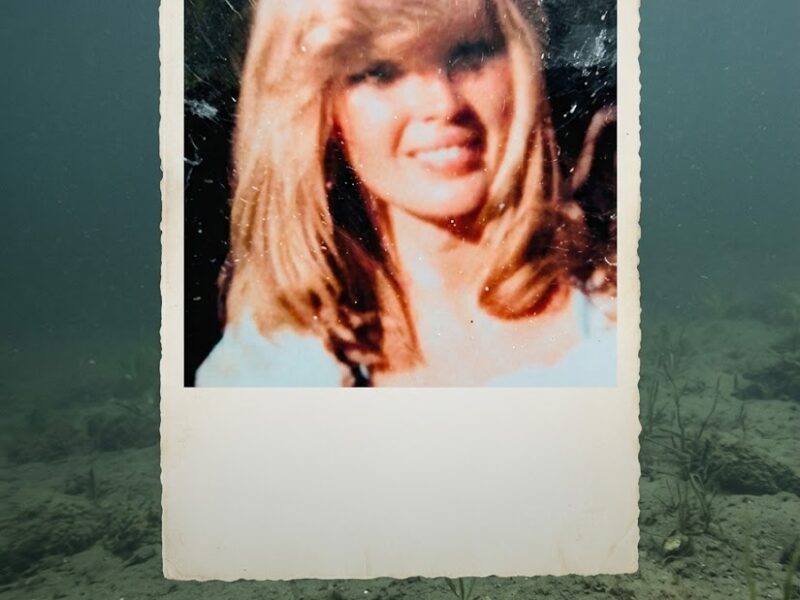
She Vanished 44 Years Ago—A Car Beneath the Water Seemed to Hold the Answer
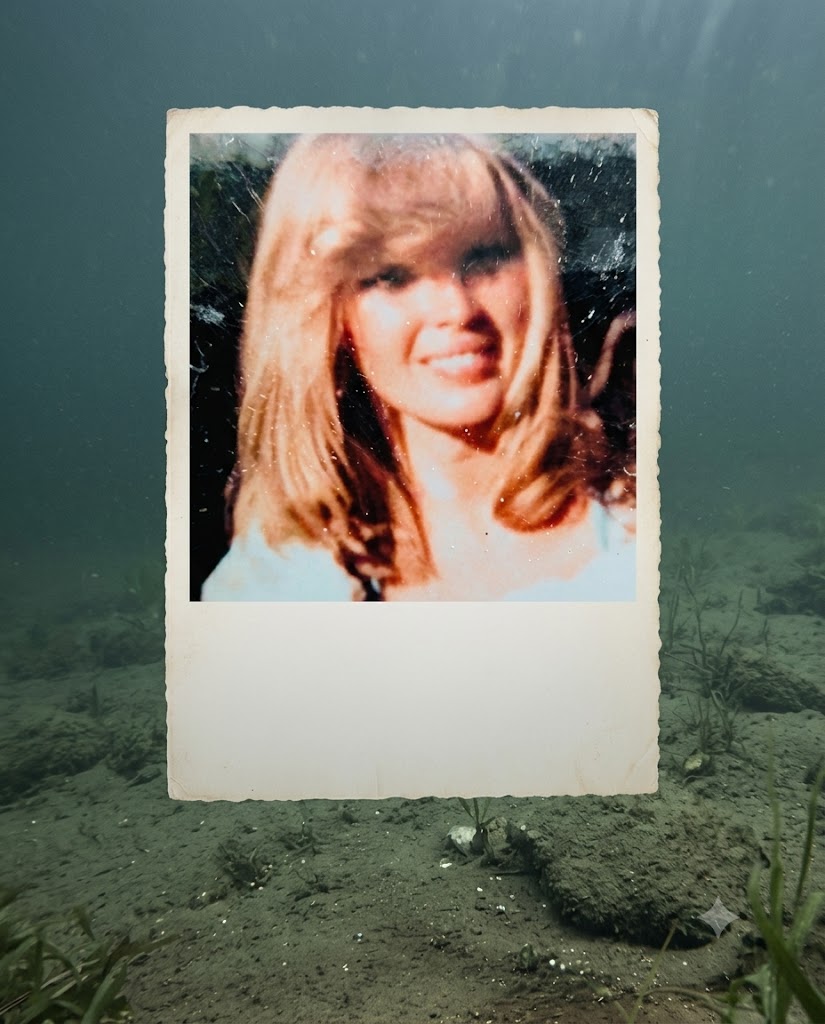
The July Fourth heat of 1982 had barely cooled when the garage door at the Kawash home in Englewood Cliffs, New Jersey, failed to rumble shut. It was a sound so ordinary—a mechanical groan and clatter—that its absence was a silent scream. Kelly Kawash, just ten years old, lay awake listening for it, waiting for her mother, Theresa, to return. That garage door never closed. Four decades later, the silence of that night still echoes, a mystery buried deeper than any riverbed. “I just want to know what happened to her,” Kelly says now, her voice carrying the weight of forty-four years. “I want to put her to rest.”
On that Independence Day weekend, Theresa Kawash, thirty-six, vanished without a trace. She was in the throes of a bitter divorce from her husband, Edward, who owned a string of eleven salons across the region. With her went her 1979 Nissan 280Z, a two-door sports car with a distinctive gold interior. Neither has been seen since. For Kelly, the years have been a blur of rumor and unanswered questions. “I remember waiting to hear the garage door close… and I never heard that garage door close,” she recalls. “In my heart, I always knew that she wouldn’t have left by her own choice.”
Investigators at the time quickly focused on the divorce, which was anything but civil. Theresa had confided in her lawyer and a court official that she possessed secret business documents—records from her husband and his partners that contained damaging legal issues. Just days before she disappeared, she blurted out in court that she had proof. “There was a lot to lose in this divorce,” Doug Bishop says. Bishop is the founder of United Search Corps, a nonprofit that specializes in long-term missing person’s cold cases and underwater recovery. “Teresa was using the copy of the books that she had as leverage.” The stakes were high in a town where, as Bishop notes, a few families controlled everything. Could those documents be a motive for making someone disappear?
A crucial piece of evidence emerged from the family’s maid. She told police that after Theresa vanished, the green shag rug from her bedroom was missing. Furthermore, she noticed the vacuum cleaner had been moved—a task only she typically performed. “A green shag rug was missing from her room,” Bishop explains. “Investigators theorized something happened in the home. The rug was used to help conceal the body.” The case file suggested a violent act, a concealment, and a late-night disposal of both a body and a vehicle. The main suspect theories have always revolved around her husband, his brother, or one of his business partners—figures connected to a 1982 New Jersey underworld that, as Bishop puts it, “ran the region.”
For Kelly, the lack of answers has been a life sentence of its own. She described feeling a strange pull to the water, a connection she couldn’t explain. “I would take walks all the time down to Palisade Park, down by the boat basin,” she says. “I felt like maybe some answers were there.” It was this detail that brought Doug Bishop and his team to the banks of the Hudson River, just blocks from where the Kawash family lived. After meeting with the Palisades Parkway Police and studying historical maps, they launched a search of the region’s waterways: the Hudson, the Harlem, the Hackensack, Overpeck Creek, and Lake Mohawk, an hour away, where Edward had once owned a cabin. They were hunting for the submerged silhouette of a 280Z. “I’ve found thousands of cars underwater,” Bishop says. “I’ve never found a 280Z.”
After two days of deep scans in the Hudson, a day and night in the Harlem, and a pass through the Hackensack, their sonar picked up dozens of targets—a train car, tractors, over seventy vehicles in all—but none were the sports car. The team then moved to Overpeck Creek, a shallow, man-made body of water dammed in the 1950s. “It’s like one of the last main puzzles before we have to go check Lake Mohawk,” Bishop says. He wasn’t expecting much. The creek averaged only three feet in depth. But as the boat drifted near the shore, the Garmin Live Scope screen flickered with a new image. It was a car. A very old, rusted car frame, sitting in just six feet of water.
“Wow. There it is. It’s right under us,” Bishop says, his voice tight with anticipation. The sonar showed a two-door vehicle with a single window. “It’s definitely a car,” he confirms. But was it a 280Z? The size seemed a bit large, and the location—a field that was once open land—seemed an odd dumping ground. Still, he needed a closer look. He cast a magnet, confirming it was metallic, then geared up. The water temperature was a bath-like 92 degrees. He dove down, a tether line connecting him to the surface, his hands sifting through the silt. He found no remains, but he did find parts: a piece of the dash and, most promising, a plastic tail light lens. On the shore, the team identified it as a part for a late-70s Datsun 280Z.
“This is definitely a crime scene until we know differently,” Bishop says, the gravity of the moment sinking in. He was less than two miles from Theresa’s home. The car was the same year, same make, same model. It even appeared to have a gold interior. His mind raced, trying to manage the rising tide of hope and caution. He made a call to Kelly. “I wanted to call you to let you know that we found something,” he told her gently. “But we don’t know what we have found yet.” He promised to keep her updated, vowing to shield her from the inevitable whirlwind of speculation and misreporting. “I care a lot,” he told her. “And I’m not going to let you be harmed by that.”
The operation escalated immediately. Bishop reached out to Jamal, head of the New Jersey State Police Missing Persons Unit. “I found a 1977 280Z underwater,” Bishop told him. “Same car Terresa Kawash went missing in.” The next day, a multi-agency task force descended on Overpeck Creek, including the Bergen County Prosecutor’s Office, SWAT dive teams, and a towing company. As the divers prepared, Bishop and Jamal dug into the vehicle’s registration. The plate they’d found, pulled from the muck, was traced. The results were staggering. “The car is registered,” Bishop says, disbelief creeping into his voice. “It was registered to a soldier for the Colombo crime family at the time Terry disappeared.”
A tidal wave of questions followed. The information in the original 1982 case file, it turned out, was fiction. “The tag that’s been in the case file does never exist,” Bishop reveals. “The VIN number that was in the case file… never existed.” It didn’t match the plate or VIN for the car they had just found. Why would a mob soldier’s car be dumped less than two miles from where Theresa Kawash vanished on the same night she disappeared? Why was the paperwork in the original file wrong? “It’s another plot twist,” Bishop says, his voice a mix of frustration and fascination. “But right now, the rabbit hole is just sunk through into another rabbit hole.” Did a business partner, or the husband himself, use a car belonging to a connected figure? Or was it all a coincidence, a separate crime from a separate world?
The answer came the next day, as the car was finally pulled from its watery grave. The tow truck’s winch groaned, and the rusted, algae-covered hulk of the sports car emerged, water cascading from its frame. It was remarkably intact, a testament to the preservation powers of the shallow, oxygen-poor creek. The team of experts examined it closely, checking the dimensions, the wheelbase, the subtle characteristics that define a vehicle. They turned to Bishop with the verdict. It was a 1977 Datsun 280Z. It had been underwater for over forty years. But it was not Theresa’s car. The dimensions were wrong, the features didn’t match. “As far as we know right now, this vehicle has nothing to do with the case that we were on,” Bishop confirms.
The roller coaster of the past few days had finally come to a halt. They had found an old car, a mob-connected car, a car with a fraudulent history, but not the car. The investigation into the car’s true origin would continue, and the prosecutor’s office was determined to follow every new lead it had generated. For Kelly, the waiting continued. The false hope, a ghost of a possibility, had been dashed once more. Yet, the search was not over. “Just because this isn’t the car doesn’t mean we’re done,” Bishop says, a new fire in his eyes. “In fact, we’re just getting started. We have more question marks than we even started with in the beginning.” The anchor of the search remains the same: a green shag rug, a missing garage door sound, and a daughter’s unwavering love.
The biggest bombshell was that the car wasn’t hers. But for an investigator, days like this are everything. It’s another step forward, another piece of the puzzle, even if it doesn’t fit the picture you originally imagined. The team had cleared the Hudson, the Harlem, and the Hackensack. They had eliminated Overpeck Creek. They were one step closer to Lake Mohawk, the next pinpoint on the map of a forty-four-year-old mystery. For Kelly, the desire is simple and profound. “I just want to know that she’s passed on in this life,” she says softly. “To have that closure is my goal.” The only way to get there is to find the car, to find Theresa, and to finally let that garage door close, at last, on a chapter of her life that has been held open for far too long. The search continues, and Doug Bishop is not done.









