Rich Host Told an Old Black Carpenter “Use the Side Door”—He Didn’t Argue, He Made One Phone Call..
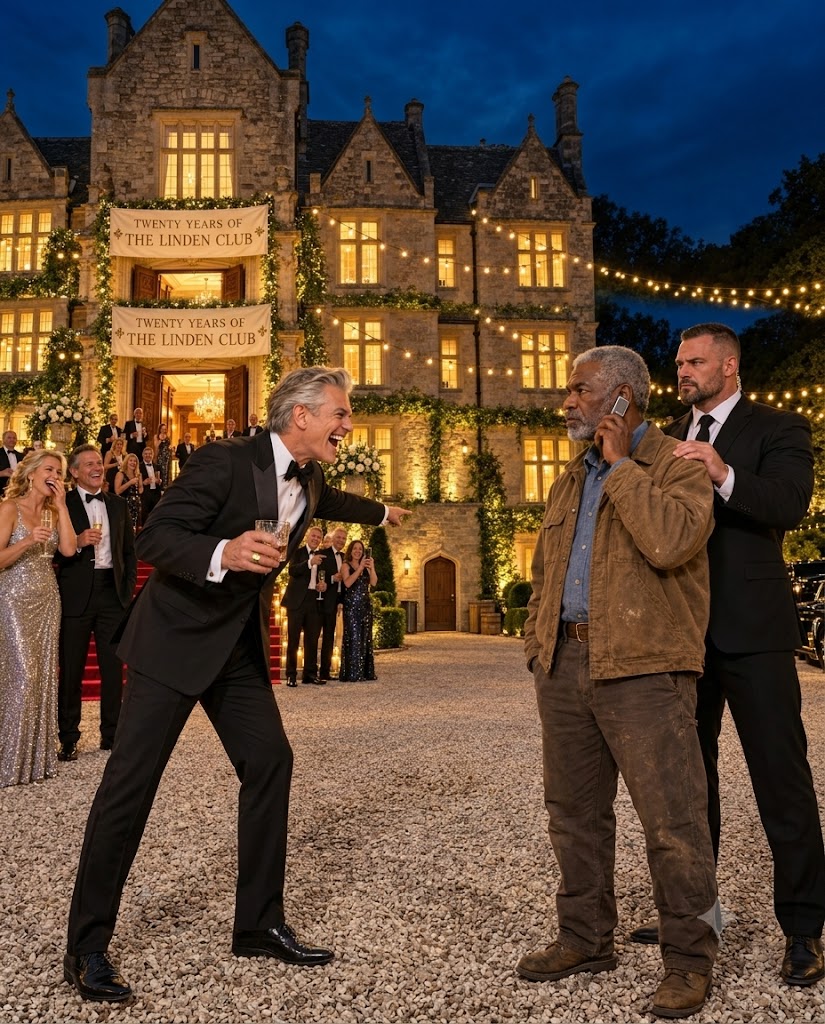
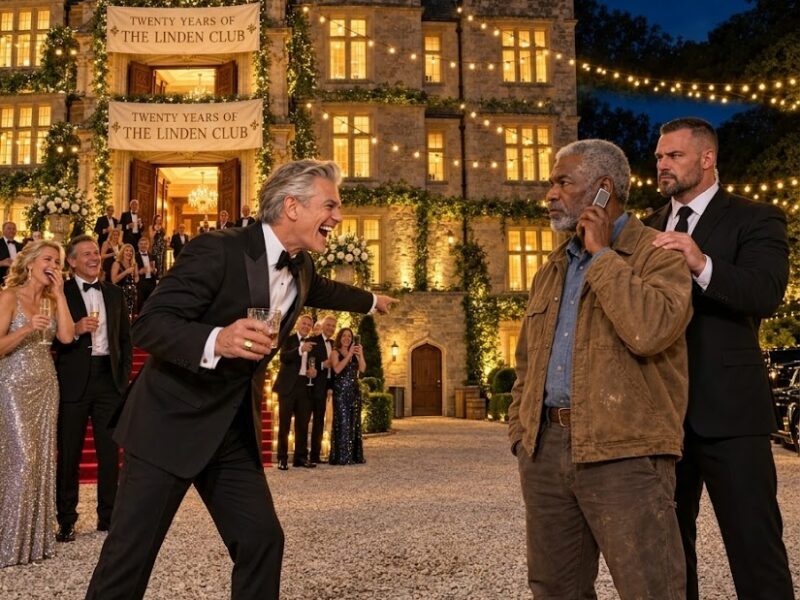
The evening air carried the scent of jasmine and expensive cologne as Brooks stood at the threshold of Lynden Hall.
He wore work boots that had seen thirty years of sawdust and a canvas jacket that still smelled faintly of linseed oil.
Inside, two hundred guests in black tie laughed over champagne flutes, their voices rising like music from another world.
“Evening, sir. Name?”
The hostess at the podium didn’t look up from her tablet.
“Brooks.”
She scrolled.
“Brooks. Brooks. Not a member, not staff.”
A woman in a sequined gown leaned over.
“Is he with the caterers? Because they go around.”
The hostess pressed her earpiece.
“One second, ma’am. Oh, here. Brooks, guest of the trust.”
“No. Plus one. Just you.”
“Just me.”
“Sir, you’re in the doorway.”
“Sorry, ma’am. Good door.”
He stepped inside, and the marble floor gleamed beneath his boots like a frozen lake.
A man in a tuxedo nearly collided with him, spilling a drop of scotch on the polished stone.
“Whoa. Watch the floor, pal.”
The man snorted and walked away without looking back.
Brooks knelt, pulled a cloth from his pocket, and wiped the spill clean.
“Did somebody call a plumber on a Saturday night?”
Laughter rippled through the nearest circle of guests.
“Overtime. Good for him.”
More laughter.
Brooks stood slowly, his knees protesting the motion, and looked up at the grand staircase that curved toward the second floor like the spine of some great sleeping animal.
He had built that staircase.
Every riser, every tread, every bolt hidden beneath the walnut veneer.
“Deliveries go around back.”
A woman in emerald silk stood before him, her eyes narrowed.
“Honey, are you lost?”
“No, ma’am.”
“Then he heard about the buffet. Leftovers go out at midnight.”
Laughter again.
“Careful with that. It’s older than you.”
“Not by much.”
She smiled without warmth and moved on.
Brooks checked his watch.
Eight-fifty.
Ten minutes until the attorney arrived.
Ten minutes until the deal that had been twenty years in the making would either close or collapse.
He reached into his pocket and touched the flip phone there, its plastic casing worn smooth by years of use.
He had bought it at a Walmart in 2009 and never seen a reason to replace it.
The screen still worked.
The battery still held.
That was enough.
“Two minutes on the slides.”
A voice boomed through the ballroom, and the crowd began to shift toward the terrace doors.
“Good evening, sir. Are you with a vendor? I can walk you to the loading dock.”
A young man in a vest had appeared at Brooks’s elbow, his smile practiced and polite.
“I’m a guest.”
“Guest of the trust. Welcome.”
“Thank you.”
“What brings you tonight?”
“Wanted to see what the house turned into.”
The young man nodded as if this made perfect sense and moved on to the next arrival.
Brooks walked slowly through the rooms he had rebuilt, his fingers trailing along the wainscoting he had sanded and stained, the crown molding he had cut and fitted by hand.
He remembered the day the roof had caved in on the east wing, the rain pouring through the rotting beams like a waterfall.
He remembered the smell of wet plaster and old timber.
He remembered the bank loan that had kept him awake for three years.
“Nia, sweetheart, Grant’s about to start.”
A woman’s voice called across the terrace, and a young girl in a yellow dress ran toward the sliding doors.
Brooks followed the crowd outside, where two hundred chairs faced a raised platform beneath a canopy of string lights.
The lawn stretched toward the tree line, manicured and perfect, the fountain at its center throwing arcs of water into the night air.
He had rebuilt that fountain too.
Every stone, every pipe, every nozzle.
“Folks, can I get everybody outside? Everybody.”
The crowd settled, champagne glasses raised, conversations fading to a murmur.
A man in a midnight-blue tuxedo stepped onto the platform, his silver hair catching the light.
“Twenty years.”
His voice carried without a microphone, trained by decades of boardrooms and banquets.
“Can you believe that? Twenty years we’ve been the best kept secret in Virginia.”
Applause.
“And twenty years we’ve been renters.”
A ripple of laughter.
“Tonight, that’s over.”
The murmur grew louder.
“At nine o’clock, the trust attorney walks through that front door and I sign fourteen million dollars.”
He paused for effect.
“Most of it courtesy of my friend Harold Vance.”
A man in the front row raised his hand and waved, his face flushed with champagne and pride.
“After tonight, Lynden Hall is ours.”
The applause was deafening.
“Members only. Forever.”
Brooks stood at the edge of the crowd, his hands in his pockets, watching the man who had just promised to buy a house he didn’t own from a trust he didn’t understand.
The man stepped down from the platform and moved through the crowd, shaking hands, accepting congratulations.
He stopped when he saw Brooks.
“Hang on, sir. You with the tube?”
He gestured at the rolled drawings tucked under Brooks’s arm.
“This is a private party. If you’re here for a job, I’m not mad at you. Kitchen’s around the left. Use the side door.”
Brooks looked at him for a long moment.
“I’ve used that door plenty of times.”
His voice was quiet but clear.
“Tonight, I came in the front.”
The man’s smile tightened.
“Did you?”
He turned to an aide.
“Stair section, 2002. He brought a bid. You here to fix the gutters? Ask for references.”
The aide laughed.
“Ask for references.”
Brooks unrolled the top drawing and held it up.
“Here’s my review.”
The drawing showed the grand staircase in precise architectural detail, every dimension noted, every joint specified.
The man’s eyes flicked to it and away.
“Nia. Nia, what are you doing?”
The little girl in the yellow dress was kneeling by the fountain, pulling wet paper from the water.
“They’re old. They’re getting wet.”
“That’s the point. Get up. You’re on the clock.”
The girl’s mother hurried over, pulling her away, but not before Brooks saw the drawings in her hands.
His drawings.
The ones he had brought to show the structural work he had done.
The ones that proved the staircase was sound.
“He’s going in.”
Someone pointed at Brooks as he walked toward the fountain.
“Look at him go.”
He reached into the water and pulled out the soaked papers, one by one, laying them carefully on the stone edge.
“Flat. Keep them flat.”
“I’ve got them.”
A young woman appeared beside him, helping to spread the drawings across the stone.
“I’ve seen you.”
Brooks looked at her.
She was maybe twenty-five, with paint on her fingers and a name tag that read “Nia.”
“You’re the one who did the restoration work.”
It wasn’t a question.
“Eight-fifty.”
The man in the blue tuxedo was back, his voice sharp.
“Get the dormer out here. The attorney’s here in ten minutes. I am not signing a fourteen million dollar deal with a man dripping on my terrace.”
He turned to Brooks.
“Mr. Whitworth, walk this gentleman out. Side door. He says he knows the way.”
A large man in a security uniform stepped forward.
“Sir, he’s on the list. He’s a guest of—”
“I don’t care what list. Out.”
Brooks looked at the man in the blue tuxedo.
“I’ll go with him. One phone call first.”
He pulled out the flip phone and opened it with a flick of his thumb.
“Calling a cab.”
Laughter rippled through the nearest guests.
“Is that a flip phone? Where’d he get that?”
“A museum.”
More laughter.
Brooks dialed a number from memory and held the phone to his ear.
“Dez. I’m inside. Front door. Come on in.”
He closed the phone and slipped it back into his pocket.
The man in the blue tuxedo watched him with a mixture of amusement and irritation.
“Go front.”
He gestured toward the entrance.
“Heads up. Gray Mercedes at the gate. Driver says he’s Mr. Hail.”
The crowd shifted.
“That’s our lawyer. Everybody inside.”
The man in the blue tuxedo straightened his tie and moved toward the entrance, the crowd parting before him.
“Mr. Hail, welcome. Right on time. The table’s set up in the library. The pen’s ready.”
Brooks followed at a distance, watching the man who thought he was buying a house greet the attorney who would close the deal.
In the library, a long table had been set with two chairs, a bottle of water, and a leather folder containing the purchase agreement.
“Mr. Brooks.”
The attorney turned and saw him.
“Are those your drawings?”
He pointed to the wet papers Brooks still carried.
“They were in the fountain.”
“Who put them in the fountain?”
The attorney looked at the man in the blue tuxedo.
“Mr. Hail, you know the handyman?”
The attorney’s expression changed.
“He owns this house.”
Silence fell over the room like a dropped curtain.
“Oh.”
The man in the blue tuxedo laughed, but it was thin and forced.
“Is this a bit?”
“Who let him in?”
The hostess from the entrance appeared in the doorway.
“He’s on the list, sir. Guest of the trust. Came over Thursday from Mr. Hail’s office. I put him on it. I put him on it.”
The man in the blue tuxedo turned to the attorney.
“Mr. Hail, six months I’ve been negotiating with you. You never said one word about a—”
“You never asked who the trust was.”
The attorney’s voice was calm and even.
“You asked what it cost. You said give you an hour.”
“I said give me till nine. It’s nine. Okay. Let’s say I buy that. Every page I’ve signed says RB Trust. So, who’s RB? You, Robert, Ray?”
“RB isn’t me.”
“Then who?”
The attorney looked at Brooks.
“Sir, would you lift the cap off that post? Lift it straight up. It isn’t glued.”
Brooks walked to the newel post at the base of the staircase and gripped the decorative cap.
“It’s a post. It doesn’t come off.”
The man in the blue tuxedo crossed his arms.
Brooks twisted and pulled, and the cap came free with a soft pop.
Underneath, carved into the wood and sealed beneath layers of varnish, were initials and a date.
“RB. 2004.”
“Anybody can carve a—”
“It’s under the varnish, Grant. Same finish as the rail.”
The man in the blue tuxedo stepped closer, his face pale.
“Who’s Ruth Brooks?”
“My mother.”
Brooks’s voice was quiet but the room was silent enough that everyone heard.
“She cleaned this house twenty-two years for the Lynons. Floors, silver, that rail. She never once came in the front.”
The murmur that rose from the crowd was like the sound of wind through trees.
“Oh, come on.”
“It was in the first archive box.”
The attorney opened his briefcase and pulled out a folder.
“Somebody wrote on the back, ‘Restoration crew, 2004.'”
“I’ve had your face on my laptop for three weeks.”
The man in the blue tuxedo pointed at Brooks.
“So, he worked on the house. Great. Lots of people worked on the house. How does a carpenter own a fourteen million dollar mansion?”
The attorney looked at him with something close to pity.
“In 2002, the county seized this house for back taxes. Roof gone, stairs rotted. They had a demolition date.”
He paused.
“He put in every dollar he had, took a bank loan on top, bought it on the courthouse steps. His crew rebuilt it. Two years.”
“And then—”
“And then the money ran out, so he leased it twenty years to pay off the bank.”
The woman in emerald silk stepped forward.
“Why hide his name?”
“Ma’am, nobody was going to lease a mansion from a Black carpenter. Not in 2004. So we called it a trust.”
She looked at the man in the blue tuxedo.
“So, we’ve been paying rent to him—”
“Every month on time. I’ll give you that.”
The man in the blue tuxedo straightened his jacket.
“Fine. Then you’re the man I talked to. Good. That’s simpler. Fourteen million is still on the table. Fifteen if that’s what this takes. Name your number.”
Brooks looked at him.
“The lease runs out in thirty days.”
“I know when the lease runs out. I had Dez bring two sets of papers. One to sell, one if I didn’t. I’m sixty-three. My knees are done with ladders. Then sign.”
He pushed the folder toward Brooks.
“Wanted to walk in first. Front door. Like a guest. See what twenty years made of it.”
Brooks didn’t move.
“When I was nine, a man stood on those steps and showed me which door was mine. Tonight you showed me the same door.”
He sighed.
“Mr. Brooks, it’s a number. Give me a number.”
“I’m not selling.”
“Sixteen.”
“And I’m not renewing.”
The room went still.
“Thirty days from now. That front door opens. Anybody who wants to walk in, no charge. A museum. A house with the door open.”
The man in the blue tuxedo’s face darkened.
“Let me tell you what you just did. You’ve got two hundred members in this room. Twenty years of us. The biggest donors in Richmond. You think you can run this place without us? On what? Sawdust?”
“I’ll have this house back before spring.”
He turned to the hostess.
“And you? You’re done. You were fishing trash out of a fountain on my night. Clear your desk.”
“Mr. Brooks, I’ll file the assembly permit with the county first thing tomorrow.”
“Thank you, Dez.”
The attorney nodded and began packing his briefcase.
“Mr. Brooks.”
A new voice came from the doorway.
A woman in a county uniform stood there, a clipboard in her hand.
“Captain Price, County Fire Marshal. I’ve got a complaint on this address.”
The man in the blue tuxedo turned.
“Filed by whom?”
“The Lynen Club. Main staircase structurally altered without permit. 2003. Steel concealed in wood. No record on file.”
She looked at Brooks.
“They moved out three weeks ago. They took the chandelier. Their crew pulled up the stair runner on the way out. They photographed this.”
She held up a photo showing the underside of the staircase, where steel plates were visible beneath the wood.
“That’s my steel.”
“I believe it’s somebody’s. Question is whether anybody signed off on it. County system shows nothing before 2006.”
“Because the county didn’t scan anything before 2006.”
“Then the paper’s in a warehouse in Chesterfield. Two weeks to pull.”
“We have an assembly permit issued in hand—”
“For a building I can sign off on. Till I can, that staircase is closed and your permit suspended.”
The man in the blue tuxedo’s face went red.
“We open at ten.”
“Then you’ve got an hour and forty minutes to show me paper.”
“This is retaliation, Captain.”
“Could be. Retaliation can still be right about steel. Show me paper.”
Brooks stepped forward.
“Nia. Flat like he said. Under books for a month. Water takes out ink. It doesn’t take out a seal, but paper says what paper says.”
The young woman looked at him.
“Where’s the steel?”
“Both stringers, half-inch plate. Starts at the third riser, runs to the landing, bolted every sixteen inches.”
“Sixteen. Sixteen. You’re landing. That’s a cantilever off a 1911 brick wall. What’s carrying it? Because it isn’t the brick.”
“No, ma’am. Brick would crack. There’s a steel column inside the bottom post. Goes down through the floor to a footing in the basement.”
“Why steel? Why not just new wood?”
“The old stringers were rotted through. The county wanted it down. Steel was the only way it stayed up.”
Captain Price looked at the photo, then at Brooks, then at the staircase.
“Complaints unfounded. Permits reinstated. Max occupancy two hundred forty. Count them at the door.”
She turned to leave, then stopped.
“Wristbands. Two hundred forty. Who pulled these out of a fountain?”
“We did.”
“Keep them out of fountains.”
She snorted and walked out.
The man in the blue tuxedo stood in the center of the library, his face a mask of controlled fury.
Brooks knelt by the fountain and began carefully arranging the dried drawings on the stone edge.
“It’s for sparse.”
Nia appeared beside him.
“You can go up.”
“I’m good.”
She looked at the drawings.
“Who made this?”
“EB. That’s you.”
“That’s me. With your hands. Like no machine.”
“A few machines. Mostly hands.”
“Where’d you learn that?”
“Out there.”
He gestured toward the workshop beyond the kitchen.
“Starts Monday, four o’clock. Doesn’t cost anything.”
“My grandma cleaned houses like this over in Windsor Farms. She always had to go in the back.”
“What’s her name?”
“Lores.”
“Bring Lores. She comes in the front.”
Nia smiled.
“I’m not here to get in.”
“Okay.”
She hesitated.
“I called you a plumber in front of everybody. I laughed when he threw your drawings. I don’t have a reason. I just didn’t want to say sorry in an email.”
Brooks looked at her.
“Line’s moving pretty fast.”
He gestured toward the entrance, where guests were beginning to leave.
“Mr. Hail called. Grant Whitfield wants twenty minutes. He’s bringing Harold Vance.”
“Out back by the fountain.”
“But the side door—”
“The front’s for the line.”
Brooks walked around to the back of the house, where the fountain threw its arcs of water into the night air.
The man in the blue tuxedo—Grant Whitfield—stood there with Harold Vance, the man who had waved from the front row.
“Mr. Brooks. Nice turnout. Congratulations on the fire marshal.”
“Mr. Whitfield.”
“I’ll be quick. Twenty million cash. Yeah. Harold’s bank wires it by three today.”
Brooks looked at Harold Vance.
“Oh god, you heard Paul.”
“That’s what this house cost to run. We paid it twenty years. So I know nine hundred thousand a year plus eleven in property tax.”
Grant Whitfield spread his hands.
“You’re letting people in for free. Two winners. That’s what you’ve got. Then the county takes it for taxes like in 2002. Back on the courthouse steps. And I’ll be standing there. And I’ll pay a lot less than twenty.”
He stepped closer.
“I’m not your enemy here. I’m the only buyer you’re going to get. Sign and put your mother’s name on a plaque in the library. I’ll pay for the plaque.”
He turned to his aide.
“Dez, your pen.”
Brooks looked at him.
“Club staff, thirty-eight people. That’s a club. Wine cellar. Climate control. Heating the ballroom all winter for Saturday dances. Valet. Linens. Kitchen. Golf cart lease. Club.”
“You still have a roof.”
“I do. Roof, boilers, insurance, tax, two people on the door. Three hundred forty thousand. That’s a house with the door open. And no money coming in.”
He paused.
“Four restoration jobs signed, two hundred ten. Eleven bids out. My company’s carried more than that every year since 2004. And the banks paid. Twenty years of your rent paid it. You priced the club, Mr. Whitfield. I’m keeping a house.”
Harold Vance stepped forward.
“Twenty million cash today. Nobody walks away from that.”
Brooks looked at him.
“I was here that night. Right about where I’m standing. I laughed.”
Harold Vance’s face changed.
“Harold, everybody laughed. It was a party.”
“Before we talk about my money, Grant, you owe Mr. Brooks an apology.”
Grant Whitfield stiffened.
“Of course. Mr. Brooks, if anything said that night offended you, I’m sorry. It was a long night.”
“That’s not an apology. Say what you did, Harold.”
Harold Vance looked at the ground.
“You took his drawings. You threw them in this fountain. Say it.”
“Fine. I shouldn’t have touched his property.”
“And? And what? And what were they?”
“They were old papers, Harold. They were trash. He walked into a black tie event in work boots. He’s lucky I didn’t call the police.”
Brooks looked at him.
“Those old papers are why this place is open today. The fire marshal signed off on them this morning. You told me so yourself on the phone an hour ago. You were angry about it.”
Harold Vance looked at Grant Whitfield.
“My name goes on a lot of deals. It doesn’t go next to that. I’m out.”
“You signed a commitment letter subject to my approval. Read it again.”
Harold Vance turned and walked away.
Grant Whitfield stood alone by the fountain, the water arching behind him like a curtain.
“Mr. Brooks. Mr. Vance. Mr. Whitfield.”
Brooks turned toward the front of the house.
“Front doors open. Same as for everybody. Monday, four o’clock.”
He looked at the crowd that had gathered.
“Look. Four o’clock.”
He closed his eyes for a moment.
“Lord, forgive us for the times we judged a person by their boots, their hands, or the door they came through. Teach us to see what you see. Be near to everyone who was ever sent around the side and give them the strength to walk in the front. Make our hearts humble and our homes open. Let us build things that outlast us and put your name inside them. And when we have more than we need, show us whose door to open next. In Jesus’ name. Amen.”
He opened his eyes and looked at the house.
The front door stood open, light spilling out onto the steps.
He walked toward it, his boots quiet on the stone path.
He had built this house.
He had saved this house.
And now, for the first time in twenty years, he was going to walk through the front door as its owner.
Not as a guest.
Not as a worker.
As the man who had kept it standing when everyone else wanted to tear it down.
The flip phone in his pocket felt heavy, but he didn’t reach for it.
Not tonight.
Tonight, the phone could wait.
Tonight, the door was open.
And for the first time in his life, Brooks walked through it without being told to use the side.
—
The morning sun came through the library windows at an angle that made the dust motes dance like tiny stars.
Brooks sat at the long table where the purchase agreement had been laid out the night before, but now there were no contracts, no pens, no attorneys.
Just a cup of black coffee and the dried drawings spread across the surface.
He ran his fingers over the lines he had drawn twenty years ago, when his hands were younger and his back didn’t ache after a long day.
The staircase design was meticulous, every measurement precise, every joint specified down to the sixteenth of an inch.
He had drawn it on a kitchen table in a house he was renting, using a pencil he’d bought at the hardware store and a ruler that had belonged to his father.
His mother had sat across from him, drinking tea, watching him work.
She had cleaned this house for twenty-two years.
She had polished these floors, dusted these shelves, washed these windows.
She had never once come in the front door.
The Lynons had been kind enough, in their way.
They paid her on time.
They gave her Christmas bonuses.
They even let her use the kitchen to heat her lunch.
But the front door was for them.
The side door was for her.
That was the arrangement.
That was the world.
Brooks had been nine years old the first time he understood what that meant.
He had come to pick his mother up after her shift, and a man in a suit had stood on the steps and pointed to the alley.
“Deliveries go around back.”
His mother had taken his hand and walked around to the side door without a word.
She never complained.
She never argued.
She just went where she was told.
But Brooks remembered.
He remembered the way the man had looked at him, like he was something that had wandered in from the street.
He remembered the way his mother had squeezed his hand, like she was trying to protect him from something she couldn’t name.
He remembered the way the front door had looked, tall and imposing, with its brass handle gleaming in the sun.
He had promised himself, standing there in the alley, that one day he would walk through that door.
Not as a delivery boy.
Not as a worker.
As someone who belonged.
It had taken him thirty years to keep that promise.
But he had kept it.
The coffee had gone cold, but he drank it anyway.
He stood and gathered the drawings, rolling them carefully and tucking them under his arm.
He walked through the house, checking the rooms, making sure everything was ready for Monday.
The museum would open at four o’clock.
Free admission.
No reservations.
No membership fees.
Just a house with the door open.
He had spent the night thinking about what his mother would say if she could see this.
She had died in 2018, peaceful in her sleep, at the age of seventy-nine.
She had never known that he owned the house she had cleaned.
He had never told her.
He had wanted to, but the words never came.
How do you tell someone that the house they spent twenty-two years cleaning now belongs to their son?
How do you explain that the side door she always used is now the front door for everyone?
He hadn’t found the words.
So he had kept it to himself.
And now she was gone, and the house was his, and the door was open.
He wondered if she would be proud.
He hoped so.
He walked out to the workshop behind the kitchen, where his tools hung on pegboards in neat rows.
The smell of sawdust and oil was comforting, familiar.
This was where he had spent the last twenty years, building things, fixing things, making things whole.
His company had grown from a one-man operation to a crew of forty, but he still came here every day.
He still picked up a hammer and felt the weight of it in his hand.
He still smelled the wood and knew what it needed.
He was a carpenter.
That was who he was.
That was who he would always be.
The flip phone in his pocket vibrated.
He pulled it out and looked at the screen.
It was Dez, the attorney.
“Mr. Brooks. I’ve got the assembly permit filed. County approved it this morning.”
“Thank you, Dez.”
“Also, I wanted to let you know that Grant Whitfield has been in touch with three other potential buyers. None of them are moving forward.”
Brooks smiled.
“I’m not surprised.”
“Harold Vance made some calls. Word is out that the Lynen Club is done. The members are scattering.”
“Let them scatter.”
“Are you sure about this, Mr. Brooks? Fourteen million dollars. Sixteen million. Twenty million. That’s a lot of money to walk away from.”
Brooks looked at the house through the workshop window.
“It’s not about the money, Dez. It never was.”
“Then what is it about?”
“It’s about the door.”
There was a long pause on the other end.
“I don’t understand.”
“You don’t have to. Just file the permit and let me know when it’s approved.”
“It’s already approved.”
“Good. I’ll see you Monday.”
He closed the phone and slipped it back into his pocket.
He walked back into the house and stood in the foyer, looking up at the grand staircase.
He had built that staircase.
He had saved that staircase.
And now, thanks to the fire marshal, the world knew it.
The steel he had hidden inside the wood was the same steel that had kept the house standing when the county wanted to tear it down.
It was the same steel that had made the Lynen Club’s complaint unfounded.
It was the same steel that had proven, once and for all, that this house was sound.
That it was worth saving.
That it was worth keeping.
He walked up the stairs slowly, his hand on the railing, feeling the smooth wood beneath his palm.
At the top, he turned and looked down at the foyer.
The front door was visible from here, tall and imposing, with its brass handle gleaming in the morning light.
He had walked through that door last night.
He would walk through it again on Monday.
And every day after that.
Because it was his door now.
And he was going to keep it open.
—
Monday came with a sky so blue it looked painted.
Brooks arrived at the house at three o’clock, an hour before the doors were set to open.
He wore his work boots and his canvas jacket, the same outfit he had worn to the party on Saturday night.
But this time, no one told him to use the side door.
This time, he walked right up to the front entrance and pushed it open.
The foyer was empty, quiet, the morning light streaming through the transom window above the door.
He walked through the rooms, checking everything one last time.
The library was ready, the books arranged on the shelves, the reading chairs positioned by the windows.
The ballroom was ready, the floor polished, the chandelier hanging from the ceiling like a constellation of crystal.
The kitchen was ready, the counters clean, the appliances humming.
The workshop was ready, the tools hung on the pegboards, the workbenches clear.
Everything was ready.
At three-thirty, Nia arrived.
She wore jeans and a t-shirt, her hair pulled back in a ponytail.
“Mr. Brooks. I’m here.”
“Call me Brooks. Or EB. Whatever you want.”
“Brooks. I brought the drawings.”
She held up a portfolio.
“The ones from the fountain?”
“The ones I dried. And some new ones. I’ve been working on them.”
He took the portfolio and opened it.
The drawings were beautiful, precise, full of life.
She had talent.
Real talent.
“These are good, Nia. Really good.”
She smiled.
“I want to learn. That’s why I’m here.”
“You’re here to learn?”
“I’m here to work. But I want to learn too.”
He looked at her.
“What do you want to learn?”
“Everything. How to read the drawings. How to cut the wood. How to fit the joints. How to make things that last.”
He nodded.
“Start with the basics. Grab a hammer.”
She looked around.
“Where?”
“Workshop. Back of the house.”
She followed him through the kitchen and out to the workshop.
He handed her a hammer.
“This is a sixteen-ounce framing hammer. Feel the weight.”
She took it and held it.
“It’s heavier than I thought.”
“That’s the point. The weight does the work. You just guide it.”
He showed her how to hold it, how to swing it, how to let the weight of the head drive the nail home.
She tried it on a scrap piece of wood.
The first swing was wild.
The second was better.
The third drove the nail straight and true.
“Good. Again.”
She worked for an hour, driving nails into scrap wood, learning the feel of the hammer, the rhythm of the swing.
At four o’clock, the front door bell rang.
Brooks set down his hammer and walked to the foyer.
The first visitors were a family of four—two parents and two children, all dressed in their Sunday best.
“Welcome. Come in.”
The father looked around, confused.
“Is this a museum?”
“It’s a house. With the door open. Look around. Touch things. Ask questions.”
The children ran toward the staircase.
“Can we go up?”
“Go up. All the way to the top.”
They ran up the stairs, their laughter echoing through the house.
The parents followed more slowly, looking at the woodwork, the molding, the details.
“Who built this?”
“I did.”
The father looked at him.
“You’re a carpenter?”
“I am.”
“This is incredible work.”
“Thank you.”
More visitors arrived.
A group of college students, sketching the architecture.
An elderly couple, holding hands, remembering the house from decades ago.
A woman with a camera, taking photos of every detail.
Brooks walked among them, answering questions, telling stories.
He told them about the day he bought the house at the courthouse auction.
He told them about the bank loan that had kept him awake for three years.
He told them about the crew that had helped him rebuild it.
He told them about his mother, who had cleaned the house for twenty-two years.
He told them about the side door.
And the front door.
And the difference between them.
At five o’clock, he had counted two hundred forty visitors.
The maximum occupancy.
He stood at the door and turned away the next group.
“Come back tomorrow. We’re at capacity.”
They looked disappointed but understanding.
“Thank you for opening the door.”
“Thank you for walking through it.”
He closed the door at five-thirty and walked back through the house.
The rooms were quiet again, the visitors gone, the light fading.
He found Nia in the workshop, still hammering nails into scrap wood.
“You’re still here.”
“I want to get it right.”
He watched her swing the hammer.
Her form was better now.
Her swings were more controlled.
Her nails were going in straight.
“You’re getting it.”
She smiled.
“Can I come back tomorrow?”
“Tomorrow. And the day after. And the day after that.”
“Really?”
“Really. Four o’clock. Don’t be late.”
“I won’t.”
He left the workshop and walked back to the foyer.
The front door was closed, but the light from the transom window still streamed through.
He stood there for a moment, looking at the door.
He had walked through it today.
Two hundred forty people had walked through it today.
And tomorrow, two hundred forty more would walk through it.
And the day after that.
And the day after that.
Because the door was open.
And it was going to stay open.
He reached into his pocket and touched the flip phone.
He didn’t need to make a call tonight.
Tonight, the work was done.
Tonight, the door was open.
Tonight, he was home.
—
The weeks passed, and the house became a place people came to not just to see, but to be.
The museum was free, but the visitors brought something with them—curiosity, wonder, respect.
They came in twos and threes, in families and groups, in school buses and tour vans.
They came from Richmond, from Norfolk, from Charlottesville, from Washington.
They came from all over Virginia, and from states beyond.
They came to see the house.
They came to see the staircase.
They came to see the door.
Brooks was there every day, from four o’clock until five-thirty, greeting visitors, answering questions, telling stories.
He told them about the steel in the staircase.
He told them about the drawings in the fountain.
He told them about the flip phone in his pocket.
He told them about his mother.
He told them about the side door.
And the front door.
And the difference between them.
Nia was there too, learning the craft, growing more skilled with each passing day.
She learned to read the drawings.
She learned to cut the wood.
She learned to fit the joints.
She learned to make things that last.
She was good.
She was very good.
And Brooks knew that one day, she would be better than him.
That was the point.
That was always the point.
To teach someone to do what you do, and then to do it better.
To pass the knowledge on.
To keep the craft alive.
To keep the door open.
One afternoon, a man in a suit arrived at the house.
He was older, with gray hair and a careful way of moving.
He stood at the front door and looked up at the house.
Brooks came out to greet him.
“Can I help you?”
“I’m looking for Brooks.”
“You found him.”
The man looked at him.
“I’m Robert Lynon. I owned this house before the county seized it.”
Brooks looked at him for a long moment.
“Come in.”
They walked through the foyer, into the library, and sat in the reading chairs by the window.
Robert Lynon looked around the room.
“It’s beautiful.”
“It is.”
“I didn’t think it could be saved.”
“It can be saved. It was saved.”
“I heard what you did. At the party. With the trust. With the fire marshal.”
“You heard right.”
“I wanted to apologize.”
Brooks looked at him.
“For what?”
“For the side door. For my father. For the way we treated your mother.”
Brooks was quiet for a moment.
“She never complained.”
“I know. That’s what makes it worse.”
They sat in silence for a while, the afternoon light streaming through the windows.
“I’m glad you kept it.”
Robert Lynon stood.
“I’m glad too.”
He walked to the door and paused.
“Mr. Brooks?”
“Yes?”
“Thank you for opening the door.”
Brooks nodded.
“Thank you for walking through it.”
Robert Lynon left, and Brooks stood at the door and watched him go.
He walked back through the house, checking the rooms, making sure everything was in order.
He found Nia in the workshop, working on a new drawing.
“What’s that?”
“It’s the fountain. I’m redesigning it.”
He looked at the drawing.
It was good.
It was very good.
“Why the fountain?”
“Because that’s where the story started. With the drawings in the water.”
He smiled.
“Keep going.”
She kept going.
He left the workshop and walked back to the foyer.
The front door was open, the afternoon light streaming in.
He stood there for a moment, looking out at the lawn, the fountain, the tree line.
He had built this house.
He had saved this house.
And now, it was a place where people came to learn, to wonder, to be.
It was a house with the door open.
And it was going to stay that way.
He reached into his pocket and touched the flip phone.
He didn’t need to make a call.
Not today.
Not ever again.
The phone had served its purpose.
It had made the one call that mattered.
The call that had brought the attorney.
The call that had changed everything.
But now, the work was done.
The door was open.
And Brooks was home.
—
The years passed, and the house became a landmark.
People came from all over the country to see it.
They came to see the staircase.
They came to see the fountain.
They came to see the door.
Brooks was there every day, from four o’clock until five-thirty, greeting visitors, answering questions, telling stories.
He grew older.
His knees ached more.
His back hurt more.
His hands weren’t as steady as they used to be.
But he was still there.
Still working.
Still teaching.
Still keeping the door open.
Nia grew too.
She became a master carpenter.
She took over the workshop.
She taught the classes.
She kept the craft alive.
She was better than him.
Just as he had known she would be.
One day, Brooks stood at the front door and watched the visitors come in.
He counted them.
Two hundred forty.
The maximum occupancy.
He smiled.
He closed the door at five-thirty and walked back through the house.
The rooms were quiet, the visitors gone, the light fading.
He walked up the grand staircase, his hand on the railing, feeling the smooth wood beneath his palm.
At the top, he turned and looked down at the foyer.
The front door was visible from here, tall and imposing, with its brass handle gleaming in the evening light.
He had walked through that door a thousand times.
He would walk through it a thousand times more.
Because it was his door.
And it was open.
And it was going to stay open.
He reached into his pocket and touched the flip phone.
It was old now.
The plastic casing was cracked.
The screen was scratched.
But it still worked.
The battery still held.
That was enough.
He didn’t need to make a call.
Not tonight.
Not ever again.
The phone had served its purpose.
It had made the one call that mattered.
The call that had brought the attorney.
The call that had changed everything.
But now, the work was done.
The door was open.
And Brooks was home.
He stood at the top of the staircase and looked down at the house he had built, the house he had saved, the house he had opened.
He thought about his mother.
He thought about the side door.
He thought about the front door.
He thought about the difference between them.
And he smiled.
Because the difference was gone.
The door was open.
And everyone was welcome.
Just as it should be.
Just as it always should have been.
He walked down the stairs slowly, his hand on the railing, feeling the smooth wood beneath his palm.
He walked through the foyer and out the front door.
He stood on the steps and looked out at the lawn, the fountain, the tree line.
The evening air carried the scent of jasmine and the sound of laughter from the visitors who were leaving.
He breathed it in.
He smiled.
He went back inside.
He closed the door.
But not for long.
Tomorrow, at four o’clock, it would open again.
And the visitors would come.
And the door would stay open.
Because that was the point.
That was always the point.
To keep the door open.
To let people in.
To show them what was possible.
To show them that the front door belongs to everyone.
Not just the ones who were born to it.
Not just the ones who were invited.
But everyone.
Anyone.
Whoever walks up the path.
Whoever knocks on the door.
Whoever wants to come in.
The door is open.
And it’s going to stay that way.
Forever.
—
The story of Brooks and Lynden Hall spread.
It was written about in newspapers.
It was featured on television.
It was taught in schools.
It became a symbol.
A symbol of what was possible when someone refused to accept the world as it was.
A symbol of what was possible when someone kept their promise.
A symbol of what was possible when someone kept the door open.
Brooks didn’t care about the fame.
He didn’t care about the attention.
He cared about the work.
He cared about the house.
He cared about the door.
And he cared about the people who walked through it.
Every day, he stood at the front door and greeted them.
Every day, he told them the story.
Every day, he showed them the staircase.
Every day, he showed them the fountain.
Every day, he showed them the drawings.
Every day, he showed them the flip phone.
And every day, he told them about his mother.
And the side door.
And the front door.
And the difference between them.
And how the difference was gone.
Because the door was open.
And it was going to stay open.
Forever.
—
One evening, long after the sun had set, Brooks stood alone in the foyer.
The house was quiet.
The visitors were gone.
The lights were dim.
He walked through the rooms, his footsteps echoing on the hardwood floors.
He walked into the library and sat in the reading chair by the window.
He looked out at the lawn, the fountain, the tree line.
He thought about the journey.
The courthouse auction.
The bank loan.
The twenty years of leasing.
The party.
The drawings in the fountain.
The fire marshal.
The steel in the staircase.
The flip phone.
The one call.
The door.
He thought about his mother.
He thought about the side door.
He thought about the front door.
He thought about the difference between them.
And he smiled.
Because the difference was gone.
The door was open.
And everyone was welcome.
Just as it should be.
Just as it always should have been.
He stood and walked to the front door.
He opened it and stepped outside.
He stood on the steps and looked out at the night.
The stars were bright.
The air was cool.
The house was quiet.
He breathed it in.
He smiled.
He went back inside.
He closed the door.
But not for long.
Tomorrow, at four o’clock, it would open again.
And the visitors would come.
And the door would stay open.
Because that was the point.
That was always the point.
To keep the door open.
To let people in.
To show them what was possible.
To show them that the front door belongs to everyone.
Not just the ones who were born to it.
Not just the ones who were invited.
But everyone.
Anyone.
Whoever walks up the path.
Whoever knocks on the door.
Whoever wants to come in.
The door is open.
And it’s going to stay that way.
Forever.
—
The flip phone sat on the workbench in the workshop, its plastic casing worn smooth, its screen scratched but still working.
Brooks looked at it every day.
He didn’t need to make a call.
Not anymore.
The call had been made.
The door had been opened.
The house had been saved.
The story had been told.
And now, the work continued.
Not with a phone call.
But with a hammer.
With a saw.
With a pencil.
With a drawing.
With a lesson.
With a student.
With a door.
Open.
Forever.
—
Nia found the flip phone on the workbench one morning.
She picked it up and looked at it.
It was old.
The plastic casing was cracked.
The screen was scratched.
But it still worked.
The battery still held.
She opened it and looked at the screen.
There was only one number stored in the memory.
Dez.
The attorney.
The one call.
The call that had changed everything.
She looked at Brooks.
“Is this it?”
He looked at the phone.
“That’s it.”
“The one call?”
“The one call.”
She held it in her hand.
“It’s so small.”
“It doesn’t need to be big. It just needs to work.”
She closed it and set it back on the workbench.
“Can I keep it?”
He looked at her.
“Why?”
“To remember. To remind me that one call can change everything.”
He smiled.
“Keep it.”
She took the phone and put it in her pocket.
She walked out of the workshop and into the house.
She walked through the foyer and to the front door.
She opened it and stepped outside.
She stood on the steps and looked out at the lawn, the fountain, the tree line.
The morning sun was bright.
The air was cool.
The house was quiet.
She breathed it in.
She smiled.
She went back inside.
She closed the door.
But not for long.
At four o’clock, it would open again.
And the visitors would come.
And the door would stay open.
Because that was the point.
That was always the point.
To keep the door open.
To let people in.
To show them what was possible.
To show them that the front door belongs to everyone.
Not just the ones who were born to it.
Not just the ones who were invited.
But everyone.
Anyone.
Whoever walks up the path.
Whoever knocks on the door.
Whoever wants to come in.
The door is open.
And it’s going to stay that way.
Forever.
—
Brooks watched her from the workshop window.
He smiled.
She had learned.
She had grown.
She had become.
She was the future.
And the future was bright.
Because the door was open.
And it was going to stay open.
Forever.
He turned back to the workbench.
There was work to do.
There were drawings to make.
There were lessons to teach.
There were doors to open.
He picked up his hammer.
He felt the weight of it in his hand.
He smiled.
He went to work.
Because that was the point.
That was always the point.
To keep working.
To keep building.
To keep teaching.
To keep the door open.
Forever.
—
The house stood on the hill, its front door open, its lights on, its welcome clear.
People came.
People learned.
People grew.
People changed.
Because the door was open.
And it was going to stay open.
Forever.
Brooks stood at the top of the grand staircase and looked down at the foyer.
The front door was visible from here, tall and imposing, with its brass handle gleaming in the light.
He had walked through that door a thousand times.
He would walk through it a thousand times more.
Because it was his door.
And it was open.
And it was going to stay open.
Forever.
He reached into his pocket.
The flip phone was gone.
He had given it to Nia.
But he didn’t need it.
Not anymore.
The call had been made.
The door had been opened.
The house had been saved.
The story had been told.
And now, the work continued.
With a hammer.
With a saw.
With a pencil.
With a drawing.
With a lesson.
With a student.
With a door.
Open.
Forever.
He walked down the stairs slowly, his hand on the railing, feeling the smooth wood beneath his palm.
He walked through the foyer and out the front door.
He stood on the steps and looked out at the lawn, the fountain, the tree line.
The evening air carried the scent of jasmine and the sound of laughter from the visitors who were leaving.
He breathed it in.
He smiled.
He went back inside.
He closed the door.
But not for long.
Tomorrow, at four o’clock, it would open again.
And the visitors would come.
And the door would stay open.
Because that was the point.
That was always the point.
To keep the door open.
To let people in.
To show them what was possible.
To show them that the front door belongs to everyone.
Not just the ones who were born to it.
Not just the ones who were invited.
But everyone.
Anyone.
Whoever walks up the path.
Whoever knocks on the door.
Whoever wants to come in.
The door is open.
And it’s going to stay that way.
Forever.
—
And so it was.
And so it would always be.
The door open.
The house standing.
The story told.
The lesson learned.
The craft passed on.
The promise kept.
The mother remembered.
The side door forgotten.
The front door open.
Forever.
—
Brooks sat in the reading chair by the library window, a cup of black coffee in his hand, the afternoon light streaming through the glass.
The house was quiet.
The visitors had gone.
The day was done.
He looked out at the lawn, the fountain, the tree line.
He thought about the journey.
The long journey.
The hard journey.
The journey that had brought him here.
To this house.
To this chair.
To this moment.
He thought about his mother.
He thought about the side door.
He thought about the front door.
He thought about the difference between them.
And he smiled.
Because the difference was gone.
The door was open.
And everyone was welcome.
Just as it should be.
Just as it always should have been.
He drank his coffee.
It was cold.
He drank it anyway.
He stood and walked to the front door.
He opened it and stepped outside.
He stood on the steps and looked out at the night.
The stars were bright.
The air was cool.
The house was quiet.
He breathed it in.
He smiled.
He went back inside.
He closed the door.
But not for long.
Tomorrow, at four o’clock, it would open again.
And the visitors would come.
And the door would stay open.
Because that was the point.
That was always the point.
To keep the door open.
To let people in.
To show them what was possible.
To show them that the front door belongs to everyone.
Not just the ones who were born to it.
Not just the ones who were invited.
But everyone.
Anyone.
Whoever walks up the path.
Whoever knocks on the door.
Whoever wants to come in.
The door is open.
And it’s going to stay that way.
Forever.
—
The end.
But not really.
Because the door is still open.
And the visitors still come.
And the story is still told.
And the lesson is still learned.
And the craft is still passed on.
And the promise is still kept.
And the mother is still remembered.
And the side door is still forgotten.
And the front door is still open.
Forever.
—
Brooks’s story became a legend.
Not the kind of legend that is written in books.
But the kind of legend that is lived in houses.
In doors.
In staircases.
In fountains.
In workshops.
In lessons.
In students.
In the quiet moments when someone walks through a front door for the first time and realizes that they belong.
That they were always meant to be here.
That the door was always meant to be open.
For them.
For everyone.
Forever.
—
The flip phone sat in Nia’s pocket, its plastic casing worn smooth, its screen scratched but still working.
She carried it every day.
Not to make calls.
But to remember.
To remember the one call.
The call that had changed everything.
The call that had opened the door.
The call that had saved the house.
The call that had told the story.
The call that had kept the promise.
The call that had honored the mother.
The call that had forgotten the side door.
The call that had opened the front door.
Forever.
She touched it sometimes, when she was working, when she was teaching, when she was building.
She touched it to remember.
She touched it to stay grounded.
She touched it to know that one call can change everything.
One call.
One moment.
One decision.
One door.
Open.
Forever.
—
The house stood on the hill, its front door open, its lights on, its welcome clear.
People came.
People learned.
People grew.
People changed.
Because the door was open.
And it was going to stay open.
Forever.
Brooks was gone now.
He had passed away peacefully in his sleep, at the age of eighty-three.
But the house remained.
The door remained.
The story remained.
The lesson remained.
The craft remained.
The promise remained.
The memory remained.
The mother remained.
The side door was forgotten.
The front door was open.
Forever.
—
Nia stood at the top of the grand staircase and looked down at the foyer.
The front door was visible from here, tall and imposing, with its brass handle gleaming in the light.
She had walked through that door a thousand times.
She would walk through it a thousand times more.
Because it was her door now.
And it was open.
And it was going to stay open.
Forever.
She reached into her pocket and touched the flip phone.
It was old now.
The plastic casing was cracked.
The screen was scratched.
But it still worked.
The battery still held.
That was enough.
She didn’t need to make a call.
Not today.
Not ever again.
The phone had served its purpose.
It had made the one call that mattered.
The call that had brought the attorney.
The call that had changed everything.
But now, the work continued.
Not with a phone call.
But with a hammer.
With a saw.
With a pencil.
With a drawing.
With a lesson.
With a student.
With a door.
Open.
Forever.
She walked down the stairs slowly, her hand on the railing, feeling the smooth wood beneath her palm.
She walked through the foyer and out the front door.
She stood on the steps and looked out at the lawn, the fountain, the tree line.
The evening air carried the scent of jasmine and the sound of laughter from the visitors who were leaving.
She breathed it in.
She smiled.
She went back inside.
She closed the door.
But not for long.
Tomorrow, at four o’clock, it would open again.
And the visitors would come.
And the door would stay open.
Because that was the point.
That was always the point.
To keep the door open.
To let people in.
To show them what was possible.
To show them that the front door belongs to everyone.
Not just the ones who were born to it.
Not just the ones who were invited.
But everyone.
Anyone.
Whoever walks up the path.
Whoever knocks on the door.
Whoever wants to come in.
The door is open.
And it’s going to stay that way.
Forever.
—
And so it was.
And so it would always be.
The door open.
The house standing.
The story told.
The lesson learned.
The craft passed on.
The promise kept.
The mother remembered.
The side door forgotten.
The front door open.
Forever.
—
This is the story of Brooks.
This is the story of Lynden Hall.
This is the story of the side door.
This is the story of the front door.
This is the story of the difference between them.
And how the difference is gone.
Because the door is open.
And it’s going to stay open.
Forever.
—
If you ever find yourself standing in front of a closed door, wondering if you belong, wondering if you’re welcome, wondering if you should use the side entrance instead…
Remember Brooks.
Remember the flip phone.
Remember the one call.
Remember the door.
Open.
Forever.
—
Because everyone belongs at the front door.
Everyone.
Always.
Forever.
—
The end.
(For now.)
(But the door is still open.)
(And the visitors still come.)
(And the story is still told.)
(And the lesson is still learned.)
(And the craft is still passed on.)
(And the promise is still kept.)
(And the mother is still remembered.)
(And the side door is still forgotten.)
(And the front door is still open.)
(Forever.)









