My Fiancée Abandoned Me at the Altar for Being “Poor”—Then Her Father Discovered I Owned the Wedding Hotel
## Part 1
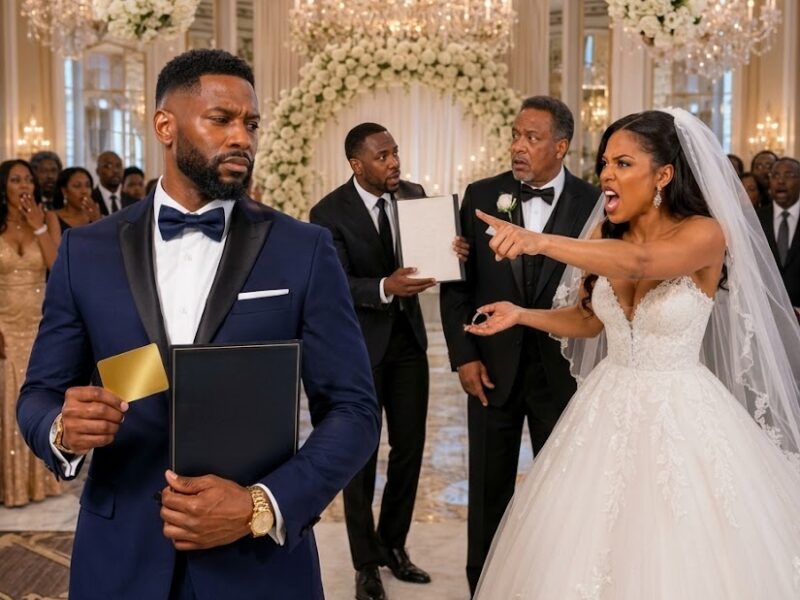
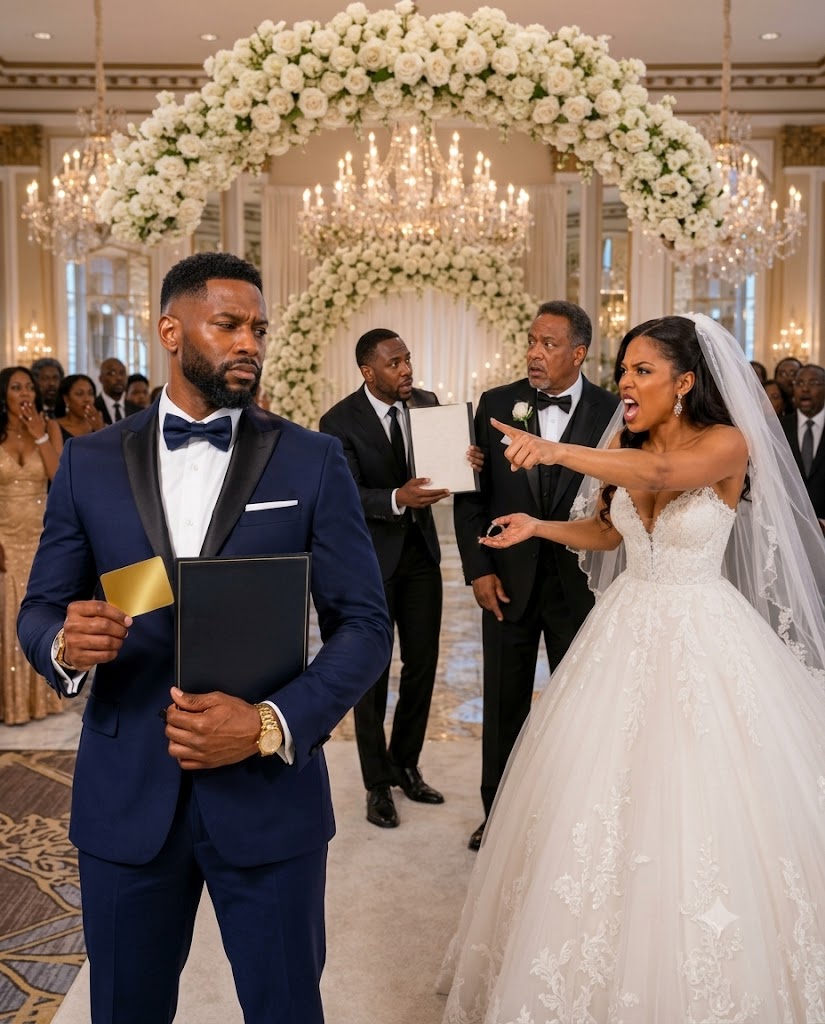
The Marlow Crown Ballroom held 284 guests that Saturday night, and every single one of them watched me walk away from the altar.
My fiancée had just publicly humiliated me in front of her family, her friends, and a room full of people who had spent the last four years treating me like a temporary inconvenience. Her father, Harrison Cross, had orchestrated the entire spectacle with the calm precision of a man closing on a distressed property. He never raised his voice. Men like Harrison rarely needed to.
He had spent thirty-five years making people move with a glance, a signature, or a quiet threat disguised as reasonable advice. Humiliating me at his daughter’s wedding was simply another transaction to him, completed with the efficiency of a man who had decided years earlier that I was beneath his family.
Vivian’s announcement merely made his private judgment public.
I buttoned my jacket and walked past the white orchids that Vivian had chosen after I told her I preferred something simpler. I passed the bandstand, the champagne display, and the long mirrored wall we had argued about decorating. Nobody stopped me. The security guards didn’t touch me—Nora Delgado had made certain of that—but they walked behind me all the way into the corridor because Harrison had asked them to.
I allowed the performance to continue.
To anyone looking from the outside, Harrison’s assessment of me had evidence behind it. I worked as an independent operations consultant. I rented a two-bedroom apartment in Bellport. I drove a six-year-old SUV. My name had never appeared beside a charity gala, a development tower, a political fundraiser, or one of the private clubs Harrison considered proof that a person had arrived.
Using his scale for measuring men, I barely registered.
Which made what happened next almost absurd.
Harrison Cross had just ordered guards to remove me from the ballroom of a hotel I owned.
The stranger question—the one he would eventually lose sleep over—was why I had allowed him to do it. Some truths only become visible after people believe they’ve already won.
—
I had never told Vivian what I owned.
That silence began as instinct and became deliberate. For four years, through vacations, arguments, birthdays, Sunday breakfasts, and long drives when confession would have taken one sentence, I kept that part of my life locked away.
I was not embarrassed by the money. I was afraid of what the money could change.
Once someone knows that choosing you comes with access to a fortune, you can never return to the moment before they knew. Every kiss carries a question. Every argument carries a calculation. Every reconciliation carries a silent audit of what you might be worth.
My maternal grandfather, Samuel Whitlock, started Whitlock Arc Hospitality in 1971 with a failing seaside inn north of Monterey. He mortgaged everything he had, renovated half the rooms himself, and spent his first winter answering the front desk phone because he could not afford overnight staff.
By the time he died, that one property had become forty-seven hotels, resorts, private residences, and conference destinations spread across nine countries. At the company’s last independent valuation, Whitlock Arc was worth a little over $18.6 billion.
That number sounded enormous even to me. But my grandfather never spoke about the company as though it were a monument to himself. He spoke about plumbing failures, employee turnover, guest complaints, and whether a property felt welcoming when someone walked through the door.
My parents died when I was ten, killed by a drunk driver on Highway 17. Samuel raised me afterward in the same cedar-sided house he had owned before anyone considered him wealthy. I grew up around money without growing up impressed by it.
My grandfather wore old watches, repaired his shoes, and drove cars until the mechanics begged him to stop. When I reached my late twenties and the succession plan began moving toward me, I surprised almost everyone around the board table by saying I did not want to become the public face of Whitlock Arc immediately.
I remained involved. I reviewed acquisitions, challenged budgets, joined strategy calls under confidentiality agreements, and met privately with senior executives. But I asked the board to keep the ownership transition quiet until the legal transfer was complete.
I wanted a few years in which I could build a life whose shape did not depend on people knowing what I would someday control.
So I created a consulting practice focused on hotel operations and service systems. It was legitimate work, and I was good at it. The business paid my rent, funded my travel, and gave me a reason to wake up that did not come from inheritance.
That was the man Vivian met.
—
My friend Miles Bennett introduced us.
Miles and I had been roommates during graduate school, and ours was the kind of friendship built on a useful absence of ceremony. Miles designed lighting systems for luxury restaurants, resorts, and theaters. He was thirty-six, broad-shouldered, perpetually underdressed for expensive rooms, and incapable of pretending to like something merely because someone influential had paid for it.
He had worked inside several Whitlock Arc properties without ever realizing whose company they belonged to. For most of our friendship, Miles knew only that my grandfather had done well in hospitality. I had never given him a number.
I had certainly never told him that one day the company would be mine.
Vivian entered my life at the opening of a photography exhibit. Miles insisted I attend because one of his clients had sponsored it. She stood near the far wall in a dark green dress, studying a photograph of an abandoned amusement pier, while everyone around her studied one another.
We talked until the gallery staff started stacking glasses.
Vivian was thirty at the time, with dark auburn hair she wore just below her shoulders and a habit of narrowing her eyes when she was thinking instead of when she was annoyed, though people often confused the two. She worked as a curator for a small contemporary arts foundation and seemed genuinely interested in ideas that did not convert easily into money.
At one point she asked me whether I thought disappointment made people more realistic or simply more afraid.
It was such an oddly specific question that I laughed before answering. I told her disappointment did both, depending on whether you let it teach you or define you.
She stared at the photograph again and said, “My father would say disappointment is what happens when you prepare badly.”
That was the first time Harrison Cross entered a conversation between us.
—
Over the next few years I learned that Harrison did not merely have opinions about Vivian’s life. He had an architecture for it.
He was sixty-three, silver-haired, lean, and immaculately dressed even at family lunches. Cross Meridian Development had made him one of the most recognizable real estate figures on the Pacific Coast. He had built marina districts, luxury condominiums, office towers, and enough political relationships to make obstacles disappear before other developers knew they existed.
Vivian understood some of the ways he controlled her and missed others. Away from him, she was funny, skeptical, and curious. She loved ugly roadside diners, old documentaries, and museums that smelled faintly of dust.
Around Harrison, something in her tightened.
Her answers became more careful. Her posture changed. She seemed to edit herself in real time. I fell in love with the woman who appeared when nobody in her family was evaluating her. For too long, I assumed that woman would eventually become the only one.
Margaret Sloan called me five weeks before the wedding.
She had represented my grandfather for twenty-eight years and had the kind of measured voice that made even catastrophic news sound administratively manageable. I was at my kitchen counter answering emails when she said the final succession filings had been accepted and the trustees had released the last restrictions.
“As of 9:12 this morning,” she explained, “every controlling share previously held in trust belongs to you.”
Whitlock Arc Hospitality, its subsidiaries, its real estate portfolio, operating companies, licensing rights, development ventures, and investment arm were legally under my ownership. The board had ratified me as executive chairman in the same package. She confirmed the latest enterprise valuation—$18.6 billion—without altering her tone.
My coffee sat untouched beside my laptop.
Margaret reminded me that communications had prepared a public announcement. Financial papers would run it. Hospitality journals would profile the succession. My name would go from nearly invisible to unavoidable within a day.
I told her not yet.
She was silent for half a second and then said, “I assumed you might say that.”
She did not argue.
—
That night I drove across town to Miles’s loft and told him everything.
For once in his life, he had no immediate comment. He stood in the middle of his kitchen holding a bottle of rye, staring at me as though I had confessed to maintaining a second family.
Finally, he said, “Whitlock Arc?”
I nodded.
“The Whitlock Arc that owns the Bellwether in Aspen?”
Another nod.
He set the bottle down. “I spent fourteen months fighting with their procurement department over imported brass fixtures. Apparently for your company.”
He poured two drinks anyway. Then he informed me that his firm had billed Whitlock Arc nearly $310,000 in the past year. And that, as my closest friend, he found it personally offensive that I had allowed him to complain about my own purchasing department in my living room without identifying the conflict of interest.
After he finished insulting me, he became serious.
He said something else had been bothering him. Vivian had changed during the last six months. Not suddenly—if the shift had been sudden, I would have noticed it sooner. It was gradual, the way a shoreline disappears during a rising tide.
She had started saying “my family thinks” where she used to say “I think.” She referred to the wedding as something that needed to reflect the Cross name. She had stopped challenging Harrison when he interrupted me. When her father criticized my consulting work as small-scale, Vivian no longer defended it.
She changed the subject.
Miles had blamed wedding stress. Hearing about the inheritance made him reconsider.
“What are you going to tell her?” he asked.
“Nothing yet.”
He leaned back against the counter. “You’re going to marry her without telling her?”
“I’m going to give her the chance to marry me while she believes I’m exactly the man she already knows.”
Miles stared into his glass. “That can go very well.”
“I know.”
“It can also go catastrophically.”
“I know that, too.”
He looked at me for several seconds. “Then understand what you’re actually asking for.”
“If you give someone a clean opportunity to show you what matters to them, sometimes they give you a clean answer.”
—
The month before the wedding looked normal from a distance.
Invitations had gone out. Menus were finalized. Vivian’s mother argued about flowers. Harrison’s attorneys sent me a prenuptial agreement so aggressive it almost became funny. The document assumed I was entering the marriage with limited assets and potentially unlimited appetite.
It separated Vivian’s trusts, future inheritances, family investments, residences, and any appreciation tied to them. It even contained a clause limiting my ability to claim an interest in certain properties if I contributed labor toward improvements.
I read all forty-one pages and forwarded them to Margaret.
She called twenty minutes later. “Do they know who they sent this to?”
“No.”
There was a pause. “I see.”
I asked whether anything inside it was unreasonable enough to contest.
“Not if you enjoy irony.”
I signed nothing.
Then smaller decisions began vanishing from my control. Harrison moved two of my tables farther from the dance floor to accommodate investors he wanted seated prominently. Vivian approved a revised ceremony schedule without asking me. The toast I had planned was removed because Harrison wanted time for a presentation honoring a family foundation.
When I asked Vivian why she had agreed to it, she gave me the distracted smile of someone managing too many tasks.
“It’s one evening, Caleb. Dad has people flying in. We’re trying to keep everything smooth.”
The problem was not the schedule. It was the ease with which she had stopped considering whether I should have a say.
Miles called after seeing the updated seating chart through one of the vendors.
“I’m going to say something annoying.”
“You usually do.”
“This stopped being your wedding sometime in July.”
“That is annoying.”
“I’m not blaming her. I’m telling you what it looks like.”
—
Nine days before the ceremony, Vivian and I met with the Marlow Crown’s event director to review the final production plan.
Her name was Nora Delgado. She was forty-six, sharp-eyed, meticulous, and had worked for Whitlock Arc for thirteen years. Vivian knew none of that.
I did.
Halfway through the meeting, Nora looked up from her tablet and met my eyes. The recognition lasted less than a second. Two years earlier, she had attended a confidential succession briefing for senior property managers. My photograph had been included.
I gave the smallest possible nod. She returned to discussing table linens with Vivian as though I were any other groom worried about floral placement.
That is one of the strange things about keeping your identity private inside a company built around discretion. Good hotel employees know how much information passes through a lobby without becoming anyone else’s business.
I drove home from the Marlow Crown alone that afternoon.
I could have ended the secrecy before reaching my apartment. I could have called Vivian, asked her to meet me, handed her the documents, and watched the entire balance of our relationship change in real time.
I remembered something Margaret had told me years earlier when we first discussed anonymity. There is only one period in your life when people can know you before they know your balance sheet. Once it’s gone, it’s gone.
I thought about Miles’s warning. I thought about Harrison’s prenup. I thought about Vivian agreeing to remove my toast because her father wanted another six minutes.
And I said nothing.
—
On my wedding day, I entered the Marlow Crown carrying the same unanswered question I had carried for months.
I stood beneath a ceiling restored with money from a capital plan I had approved. I waited beside staff whose salaries ultimately came from a company I now controlled. I watched guests drink champagne from cellars listed among my assets.
And I waited to see whether Vivian would choose the man she believed had little to offer beyond himself.
She did not.
The ceremony was scheduled for 6:30. At 6:15, the ballroom was almost completely full. Most of the guests came through Vivian’s family—developers, bankers, attorneys, city officials, investors. People Harrison had known for decades.
Some treated the evening like a wedding. Others circulated with the practiced alertness of people who considered every gathering an opportunity to position themselves.
Miles sat several rows back on the aisle. I had placed him there intentionally—near enough to see faces, far enough from the Cross family that nobody would notice his reactions.
Standing at the front, I did not feel nervous. I felt tired. There is a kind of exhaustion that comes from waiting for a truth you suspect is already on its way.
The musicians began. Vivian appeared at the rear doors beside Harrison.
She wore an ivory satin gown with narrow sleeves and no train. Her hair was pinned loosely at the back, and for one sharp instant, she looked exactly like the woman I had met beside that photograph four years earlier.
Harrison walked beside her as though escorting her into a merger he had personally negotiated.
When they reached the front, Vivian turned toward me. Something in her expression softened. For perhaps three seconds, the room disappeared.
I saw the woman who had eaten pancakes with me at midnight after her first major exhibition failed. The woman who once drove three hours because I told her I was having a bad week. The woman who had laughed so hard at a terrible movie that she spilled wine on my couch.
Then Harrison sat down. Vivian looked at him, and whatever lived in that glance replaced everything else.
The officiant had barely begun when Vivian whispered, “Wait.”
He stopped.
Her hand shook as she reached for the microphone. The ballroom became so quiet I could hear fabric moving when someone crossed their legs in the second row.
Vivian faced the guests instead of me.
“I can’t continue,” she said. “I’m sorry. I know this is painful, and I know this is humiliating, but I can’t stand here and make vows when I’m not certain this is the life I’m supposed to choose.”
I watched Harrison rise before she finished. That told me more than the speech itself. He had known—maybe not every word, but he had known.
He moved beside her and took control of the moment with the confidence of a man stepping into a meeting he had prepared for.
“No parent wants to see his child reach this point,” he told the room. “But sometimes love requires clarity.”
Then he looked at me.
He said Vivian had been raised with obligations that extended beyond personal feelings. He talked about compatibility, stability, legacy, and responsibility. He described marriage as a union of lives that required comparable foundations.
The language was polished. The meaning was simple.
I was beneath her.
Harrison said he bore me no ill will, which might have been convincing if he had not spent four years making his contempt obvious in increasingly expensive restaurants. Then came the line about my name meaning nothing in the circles Vivian inhabited. Then my lack of standing. Then my uncertain future.
Finally, he lifted his hand toward security. “Mr. Foster should be given whatever assistance he needs collecting his belongings and leaving the property.”
I looked at Vivian. Her microphone hung beside her hip. Her eyes were fixed somewhere beyond me.
I waited.
She said nothing.
That silence was her answer.
—
I buttoned my jacket and walked away from the altar.
I passed Harrison’s investment partners. I passed the white orchids Vivian had changed her mind about after I told her I preferred something simpler. I passed the bandstand, the champagne display, and the long mirrored wall we had argued about decorating.
Nobody stopped me. The guards did not actually touch me—Nora had made certain of that—but they walked behind me all the way into the corridor because Harrison had asked them to.
And I allowed the performance to continue.
Miles caught up less than a minute later. For a while we walked without speaking.
Finally, he said, “I’m sorry.”
“Don’t be. I wanted to be wrong.”
“I know. You still could have told her.”
“I know.”
We stopped beside a tall window overlooking the courtyard fountains. I took out my phone and called Margaret Sloan. She answered on the second ring.
“Caleb?”
“I need one confirmation.”
Her tone changed immediately. “Go ahead.”
“The Whitlock Arc transfer. No outstanding contingencies. No revocable approvals. No remaining trustee authority.”
“Correct.”
“And the Marlow Crown is included in the operating portfolio under my controlling interest.”
“Yes. Everything is final.”
She paused. “Did something happen tonight?”
“The wedding didn’t.”
Another pause. “I see. I’ll explain tomorrow. I’ll make myself available.”
I ended the call. Miles had heard enough to understand why I called.
“So,” he said, “what now?”
“I need you to go back inside.”
His eyebrows lifted. “Why?”
“Stay until everyone leaves. Don’t confront anybody. Don’t defend me. Listen.”
“To what?”
“To what people say after they think the person they were talking about is gone.”
Miles studied my face, then he nodded. “You want names?”
“I want patterns.”
“That sounds ominous.”
“It isn’t.”
“That sounded ominous, too.”
He went back through the ballroom doors. That was Miles. He did not need to understand every beam in a structure before trusting that the architect had accounted for gravity.
—
There was one more reason I had not reacted inside the ballroom.
Earlier that week, Margaret’s office had sent me a confidential memo concerning an approach to Whitlock Arc Capital, our investment and development division. For nearly a year, an outside real estate group had been using intermediaries to explore a joint venture involving a chain of waterfront residential projects.
The group wanted Whitlock Arc to provide a major cash injection and attach our hospitality brand to the developments. In exchange, we would receive minority ownership and preferred returns.
At first, the inquiries had been intentionally vague. Then our legal team traced the intermediaries. The company behind them was Cross Meridian Development.
Harrison’s company.
Our analysts had done what they did before any investment of that size. They examined public filings, debt instruments, subsidiary records, litigation exposure, refinancing schedules, construction liabilities, and partner obligations.
The resulting picture did not resemble the one Harrison was showing the market.
Cross Meridian was carrying enormous debt across three subsidiaries. Several loans would need refinancing within fourteen months. Two major developments were behind schedule. A set of revenue projections being shown to potential investors relied on sales assumptions that our analysts described as aggressive to the point of instability.
Nothing suggested imminent collapse. But the company was vulnerable, and Harrison needed new capital badly.
That meant the man who had spent years treating me as though I were trying to climb into his family for financial advantage had quietly spent months trying to persuade my company to rescue his balance sheet.
He just did not know it was my company.
He did not know the owner of the capital he needed had been standing across from his daughter. He did not know the man he had ordered out of the Marlow Crown controlled the Marlow Crown.
I stood beside the window after Miles left, watching groundskeepers adjust lanterns around the courtyard because the evening schedule continued even though my wedding had ended.
Then I messaged Margaret. I asked for the complete Cross Meridian due diligence file—every intermediary, every proposal, every set of projections, every inquiry made to Whitlock Arc during the previous two years.
And then I left the hotel through a side entrance.
—
For the next three weeks, Harrison behaved exactly as Miles predicted. He took control of the narrative.
A regional business magazine published an interview in which he discussed protecting family integrity and the importance of making difficult decisions before temporary emotion caused permanent consequences. He never mentioned my name. He did not have to. People who mattered to him already knew who the unnamed former fiancé was.
Vivian made no statement. Neither of us called the other.
Meanwhile, Cross Meridian continued pursuing Whitlock Arc.
The formal investment proposal reached my office eighteen days after the wedding. It requested $540 million in capital commitments across two phases, along with a branding partnership and optional expansion funding.
I read all eighty-seven pages.
Then Harrison’s representative requested a formal dinner with Whitlock Arc’s executive team to mark what he described as the final stage before strategic alignment.
He chose the Marlow Crown.
Of course he did.
Harrison Cross booked a celebration inside a hotel he had thrown me out of to announce progress on a deal controlled by the man he had thrown out.
I accepted.
Miles called the night before the dinner.
“One of my vendor contacts says Cross invited reporters.”
“He did.”
“And lenders?”
“Yes.”
“And three pension fund people?”
“I saw the guest list.”
“You know he thinks this deal is happening.”
“I know.”
Miles was quiet. “Do you want me there?”
“Yes.”
“For moral support?”
“No.”
“Good. I’m terrible at moral support.”
“I need you to watch. The same assignment as the wedding.”
“The same assignment.”
“Gray suit?”
“Wear whatever you want.”
“It’s a business ambush, Caleb. Presentation matters.”
“It’s not an ambush.”
“It definitely sounds like an ambush.”
—
I arrived at the Marlow Crown at 7:50 the following evening. This time I used the front doors.
Nora stood near reception speaking with a banquet captain. She looked at me once and gave the slightest nod. No surprise. No performance. Just recognition.
At 8:00 the ballroom doors closed. Harrison stood on a low stage beneath a screen displaying both the Cross Meridian and Whitlock Arc logos. He looked restored. In command.
For three weeks he had been moving through his world as a man who believed one embarrassing family episode was behind him and one transformative business victory was ahead. He thanked investors for attending. He praised Whitlock Arc’s vision. He described Cross Meridian as a company entering its most ambitious chapter.
Then the doors opened.
Whitlock Arc’s acting CEO entered first. Our chief investment officer followed, then Margaret, then six members of the senior leadership team. The room’s attention shifted toward them.
I walked in last.
At first Harrison looked irritated, not alarmed. His expression suggested he assumed some employee had failed to check the guest list.
Then the CEO crossed the ballroom directly toward me.
He stopped in front of me. “Mr. Foster,” he said clearly. “The board has completed its recommendation regarding Cross Meridian. We’re ready for your decision whenever you are.”
The silence changed.
Harrison’s eyes moved from the CEO to me. Behind him, the presentation screen went dark. Then a new title appeared: Whitlock Arc Hospitality—Ownership and Executive Leadership.
Beneath it was my photograph.
Caleb Foster, Owner and Executive Chairman.
No one needed an explanation.
The reaction traveled through the room in waves. People near the screen understood first, then those watching them understood. A banker at the front table actually removed his glasses and wiped them before looking again. One reporter immediately reached for her phone. Someone near the back whispered something loud enough to make three heads turn toward Harrison.
Miles stood beside a column with his hands folded, making an admirable attempt to look surprised.
Harrison remained on stage. The microphone hung loosely in one hand. For a long time he stared at my name. Then he looked at me.
I could almost see the calculations moving behind his eyes. The apartment he had mocked. The consulting work he had dismissed. The prenup, the wedding, the security guards, the hotel, the investment proposal, months of intermediaries trying to reach the ownership group of a company he desperately needed, and the man he had never considered important enough to investigate properly.
His face changed. Not dramatically—Harrison was too disciplined for that. But certainty left it.
He came down from the stage. People moved aside before he reached me.
“We need to speak privately.” His voice was low. The room was quieter.
“I don’t think we do,” I said.
His jaw tightened. “This concerns family matters.”
“The last time you wanted to discuss family matters, you chose a microphone.”
A few people looked down. Harrison glanced around and understood that everyone had heard me. He switched strategies immediately.
“You deliberately concealed material facts about yourself throughout your relationship with my daughter.” The sentence came out clean and controlled. “You allowed Vivian and this family to make life-altering decisions while withholding information that any reasonable person would consider relevant.”
There it was. Reframing. The talent that had helped Harrison turn failed negotiations into strategic withdrawals and delayed projects into phased opportunities.
“You presented yourself as a man of modest means,” he continued.
“No,” I said. “You decided I was a man of modest means. You never corrected that impression. You never asked.”
His eyes sharpened. “You expect people to believe that distinction matters.”
“I expect people to understand the difference between lying and refusing to advertise.”
He looked ready to answer. I continued.
“Since we’re discussing material omissions, though, I have a question.”
His expression changed again.
“Did Cross Meridian disclose its full consolidated debt exposure when it approached Whitlock Arc for half a billion dollars?”
Nobody moved. Harrison said nothing.
“Did your proposal include the refinancing risk attached to the Harbor West subsidiaries?”
His face hardened. “Those are confidential matters.”
“So is my net worth.”
That ended the exchange.
—
Vivian sat near the left side of the ballroom. I had known she was there since I entered, though I had avoided looking directly at her.
When I finally did, she looked nothing like the woman at the altar. No composure. No rehearsed certainty. Her hands were locked together in her lap, and her face had gone pale.
For the first time in four years, Vivian looked at me as though she genuinely had no idea who I was.
Miles remained near the wall. His expression said he was storing every detail for later.
Harrison stepped away and made a phone call. The clipped fragments suggested his attorney was on the other end.
Margaret approached me. “Our response package is complete,” she said quietly.
“I know. If Cross challenges the process, we can file by morning. I expect he will.”
“So do I.”
She moved on.
Harrison’s celebration ended without a celebration. There was no signed agreement. No partnership announcement. No handshake photograph beneath the logos. No triumphant press release.
The guests remained for another forty minutes, mostly because leaving immediately would have made their fascination too obvious. Nora and her staff converted the evening into an ordinary dinner with extraordinary efficiency.
I left before dessert.
Miles followed me outside. We walked almost a block before he spoke.
“I owe you an apology.”
“For what?”
“A month ago, I thought the secrecy was becoming self-indulgent.”
“That sounds like something you would say.”
“I did say it. Just not to you.”
“Very brave.”
“I thought you should have confronted Harrison before the wedding. Then I thought you should have confronted Vivian after it. And now—” He glanced back at the hotel. “Now I think confrontation would have given Harrison something he didn’t deserve.”
“What?”
“Preparation.”
We walked another few steps. Then Miles said, “The strangest part wasn’t seeing him realize you own the company.”
“What was?”
“He still thinks he’s the injured party.”
I looked at him.
“I’m serious. Did you see his face? He wasn’t thinking, ‘I misjudged this man.’ He was thinking, ‘This man allowed me to misjudge him.'”
Miles shoved his hands into his pockets. “In Harrison’s version of reality, nothing is ever the consequence of Harrison. Things happen to Harrison.”
I remembered that sentence for a long time.
—
Within forty-eight hours, Harrison’s attorneys filed two claims.
The first alleged that I had engaged in deliberate concealment during a relationship carrying foreseeable financial consequences. The second challenged the Whitlock Arc succession itself, arguing that the final ownership transfer required additional independent review because certain internal governance disclosures had allegedly been incomplete.
Margaret read the filings and almost smiled. “The second claim is for newspapers,” she said. “And the first? For his pride.”
The succession challenge died quickly. My grandfather had spent seven years preparing the transfer. Three outside law firms had reviewed it. Independent trustees had approved each stage. Tax authorities had signed off on the relevant structures. Every controlling document had been witnessed, audited, notarized, and reviewed again.
Harrison’s legal team could make noise. They could not make a flaw appear where none existed.
The concealment claim lasted slightly longer.
Margaret produced years of emails, tax disclosures connected to shared expenses, leasing documents, travel records, and testimony. I had never told Vivian I was poor. I had never claimed to lack investments. I had never fabricated a salary. My consulting income was real. The apartment was mine. The car was mine.
Every answer I had given regarding my work had been truthful.
The case depended on converting silence into fraud. The judge declined to do that.
The real damage to Harrison came from somewhere else.
Because Cross Meridian had argued that my undisclosed financial interests created improper leverage over business negotiations, its own financial relationship with Whitlock Arc became relevant during discovery. That opened the due diligence file.
Our analysts had not built the file to punish Harrison. They had built it because no responsible company invests $540 million without understanding where the money is going. The documents showed debt hidden across subsidiaries, aggressive revenue recognition, refinancing obligations omitted from presentation materials, and several performance ratios that looked healthy only because liabilities were being excluded from the headline calculations.
None of that had been invented by my legal team. Cross Meridian’s own records supported it.
Once those documents entered the court record, reporters found them. Then regulators did.
Five weeks later, the Securities and Exchange Commission announced that it had opened a preliminary inquiry into Cross Meridian’s investor disclosures. Harrison’s lawyers called the timing suspicious. The court record made the timeline easy to verify.
Whitlock Arc formally rejected the investment proposal. Margaret’s letter was less than a page. It stated that after completing financial, legal, and strategic due diligence, Whitlock Arc had determined that the proposed partnership did not meet the company’s risk requirements.
Nothing personal. Nothing theatrical.
Harrison had built his career on understanding what formal language meant underneath the surface. He understood that letter perfectly.
The financial press did, too.
—
Vivian called me seven weeks after the dinner.
I was in my office reviewing plans for a mountain property outside Denver when her name appeared on my phone. For several seconds, I watched it ring. Then I answered.
“Hi.”
“Hi.”
Her voice sounded smaller than I remembered. She asked if I would meet her. I said yes.
We chose a coffee shop in a neighborhood where neither of us had history. No first dates. No favorite tables. No memories waiting in the corners.
She was already seated when I arrived. Vivian wore jeans, a gray sweater, and almost no makeup. Her hair was shorter than it had been at the wedding. A cappuccino sat untouched in front of her.
“I’m sorry,” she said before I fully sat down.
No explanation first. No defense. Just that.
I believed her.
She told me she had spent the previous weeks examining every decision she had made during the year leading to the wedding. She talked about Harrison. About growing up with a father who made his approval feel like oxygen. About how disagreement in her family was never punished openly. Instead, warmth disappeared. Invitations changed. Conversations ended. Opportunities evaporated until cooperation felt easier than resistance.
She said she had always considered herself independent because Harrison rarely told her, “You must.” He did not have to. He had taught her what happened when she did not.
The closer the wedding came, the more frightened she became that marrying me would mean leaving the structure that had defined her whole life. Harrison fed that fear carefully. He told her I would resent her money, that I would eventually depend on it, that our ambitions were incompatible, that attraction was not enough to bridge different levels of life.
Vivian said she argued at first, then she argued less. Then she began repeating his language. By the time she stood at the altar, she no longer knew which conclusions belonged to him and which belonged to her.
I listened. She deserved to finish. So did whatever remained between us.
Then she said the one thing I knew would eventually come.
“If I had known—” She stopped.
I waited.
“If I had known who you really were, I wouldn’t have done it.” Her eyes filled, but she did not look away. “If I had known about Whitlock Arc, if I had understood your position, if I had known that all the things my father said about you were wrong, I would have married you.”
There was no cruelty in her voice. That almost made it harder.
She meant it as proof that her decision had been based on false information. She hoped it would reopen something.
Instead, it closed the last remaining gap.
I nodded. “I believe you.”
Her expression changed. “Then you understand.”
“I do, Vivian. That’s why we can’t go back.”
She stared at me.
I kept my voice quiet. “If knowing I had billions would have changed your answer, then your answer was never really about me.”
Her mouth tightened. “That’s not fair.”
“I’m not trying to make it fair.”
“You hid something enormous.”
“Yes.”
“For four years.”
“Yes.”
“How was I supposed to understand your life?”
“You understood enough to decide I wasn’t worth choosing.”
She looked down.
I did not enjoy saying it. I had not arranged any of this to punish her. There had been no secret pleasure in the wedding, the dinner, the legal fight, or the public revelation. For four years, I had hoped that when pressure finally came, Vivian would trust the life we had built more than the status her father demanded.
She did not.
That did not make her evil. It made the answer clear.
“I loved you,” she said.
“I know.”
“I still do.”
I looked at her for a long moment. “I loved you, too.”
She waited for something after that—an exception, a condition, a path back.
I could not give her one. Not because I wanted her to suffer. Because rebuilding our relationship would require me to spend the rest of my life wondering whether she had returned for me or for the version of me that had appeared on that ballroom screen.
Eventually, she nodded. She wrapped both hands around her coffee.
“I wish you had told me.”
“I know.”
She looked through the window. “I wish I had been someone you didn’t need to test.”
“So do I.”
I left first.
—
In the car, I called Miles. He answered immediately.
“Well?”
“It’s over.”
He exhaled. “You okay?”
“I’m fine.”
“That wasn’t the question.”
I rested my head against the seat. “I’m tired.”
“That sounds closer.”
“The kind of tired you feel when you’ve been waiting for something to end, and then one day it finally does.”
Miles was quiet. “Yeah,” he said. “That sounds about right.”
He asked what I was doing next. I told him I had a board meeting Friday, a refinancing package to review, and the opening of a new Whitlock Arc property in San Diego in three weeks.
“I’m going to the opening.”
Miles became suspiciously casual. “Interesting.”
“What?”
“Nothing.”
“Miles.”
“My studio may have handled part of the lighting package.”
“Of course it did.”
“The atrium fixture required four engineers, two lifts, and seventy-three hours of my personal suffering. I’ll inspect it carefully. I don’t want special treatment.”
“You just called specifically to demand special attention.”
“Attention is different from treatment. I’ll judge it on its merits.”
“That is literally all I have ever asked of you.”
—
I drove back through Bellport. Traffic lights, grocery stores, parents collecting kids from practice. A man washing the windows of a closed bakery. Nothing on those streets suggested that I owned forty-seven hotels or controlled assets worth more money than I would ever personally spend.
I thought about my grandfather.
Samuel Whitlock could walk into one of his own properties and spend twenty minutes talking to a dishwasher without introducing himself as the owner. He did not do it as a performance of humility. He simply did not believe ownership made him more human than anyone else.
When I was sixteen, he once told me, “A title tells people what you control. It doesn’t tell them what you’re worth.”
At sixteen, I thought it was one more grandfather sentence I would pretend to understand. Years later, I finally did.
I had spent four years wondering whether someone could love me without being impressed by what stood behind my name. The answer hurt, but uncertainty had hurt longer.
There is a strange freedom in receiving the answer you were afraid to hear. Painful truth has edges. You can see where it ends. False hope does not.
The Marlow Crown appeared beside the freeway as I headed home, its upper floors glowing against the evening sky. For months, that building had been the center of everything. The engagement, the humiliation, the revelation, the collapse of Harrison’s certainty.
My exit was two lanes to the right. I stayed left.
—
Some people walk away from you convinced they understand what they are rejecting. Sometimes they discover later that they measured the wrong thing.
Harrison believed worth announced itself through influence, property, invitations, and names people recognized. Vivian believed she could separate love from that system until the moment she was asked to choose between them.
My grandfather had understood something simpler. Real value does not become real when a room applauds it. It was there before anyone noticed.
And the people worth building a life with are the ones who can see enough of you before the titles, money, and power appear—and still decide that you are worth choosing.
I had waited four years for that decision.
In the end, I got my answer. It was not the one I wanted. But it was the one I needed.
—
## Part 2
Three months after the coffee shop, I stood in the atrium of the new Whitlock Arc property in San Diego, watching Miles inspect a lighting fixture that had cost more than most people’s annual salaries.
He circled it twice, squinted at the angles, and pulled out a small flashlight to check the beam patterns. A hotel executive hovered nearby, clearly uncertain whether to intervene. I shook my head slightly, and the executive retreated.
“It’s acceptable,” Miles announced finally.
“High praise.”
“The overlap in sector four is off by maybe two degrees, but I’ll fix it next time I’m in town.”
“You’re not staying for the opening dinner?”
“I have standards, Caleb. And a flight to catch.”
He clapped me on the shoulder and walked toward the exit, already pulling out his phone to complain about something to someone else. That was Miles. He had shown up, delivered his verdict, and moved on.
I envied that about him.
—
The opening itself was uneventful in the best possible way. Local officials made speeches. Investors shook hands. The hospitality press took photographs of the lobby, the restaurant, and the rooftop bar with its view of the Pacific.
Nobody mentioned Harrison Cross. Nobody mentioned the wedding. The Marlow Crown incident had faded from industry gossip, replaced by newer scandals and fresher humiliations.
But the SEC inquiry into Cross Meridian had not faded. It had expanded.
Two subsidiaries had filed for bankruptcy protection. Three major lenders had called in loans. Harrison had resigned as CEO, citing health concerns, though the financial press reported that the board had forced him out in a desperate attempt to stabilize the company’s image.
I had not orchestrated any of it. That was the part people found hardest to believe. They assumed I had weaponized my position to destroy him. They assumed the timing was too convenient to be coincidence.
But all I had done was tell the truth when asked. The rest was arithmetic.
Cross Meridian had been fragile long before I entered the picture. Harrison had built his empire on leverage, optimism, and the assumption that he could always find another investor before the bill came due. He had just never expected the bill to come from someone he had dismissed as irrelevant.
—
The week after the San Diego opening, I received a letter at my office.
No return address. No letterhead. Just my name in handwriting I recognized—sharp, angular, the kind of script that had been drilled into someone at an expensive boarding school decades earlier.
Harrison.
I opened it.
The letter was two paragraphs long. He did not apologize. He did not ask for anything. He simply stated that he had underestimated me, that he accepted the consequences of his actions, and that he hoped I would not hold Vivian responsible for decisions that had ultimately been his.
No signature. No closing. Just those two paragraphs on heavy cream paper.
I read it twice, then placed it in the drawer with the prenup and the due diligence file and the other artifacts of a life I had left behind.
Margaret asked me once whether I planned to respond.
“No,” I said.
She nodded as though that were the only reasonable answer.
—
Six months later, I saw Vivian again.
It was at a gallery opening in San Francisco—a small show for emerging photographers, the kind of event she had loved before her father’s world swallowed her. I had not known she would be there. I had been invited because one of my hotel properties had sponsored the exhibit.
She was standing near the far wall, studying a photograph of an empty highway at dusk.
For a moment, I considered leaving. But that would have been cowardice dressed as discretion. So I walked over and stood beside her.
“Hi,” I said.
She turned. Her expression flickered—surprise, then something softer, then something guarded.
“Hi.”
We stood there in silence for a while, both looking at the photograph.
“She’s good,” Vivian said finally. “The photographer. She understands how to make emptiness feel intentional.”
“That’s harder than it looks.”
“It is.”
Another pause.
“I read about the SEC inquiry,” she said. “And the bankruptcies.”
“I know.”
“I’m not going to pretend he didn’t deserve it.”
“You don’t have to pretend anything.”
She looked at me then, really looked at me, the way she used to before her father’s voice started drowning out her own.
“I’m in therapy,” she said. “Real therapy. Not the kind where you talk about your feelings for an hour and then go back to the same life.”
“That’s good.”
“It’s hard.”
“I imagine it is.”
She smiled—not the distracted smile from the wedding planning, not the guarded smile from the coffee shop, but something smaller and more honest.
“I’m not asking for anything,” she said. “I just wanted you to know.”
I nodded.
We stayed at the gallery for another hour, not together exactly, but not apart either. We looked at photographs. We made small talk about the wine and the lighting. When she left, she touched my arm once—a brief, almost accidental gesture—and then she was gone.
I did not follow her.
—
That night, I called Miles.
“How was the thing?”
“Fine. I saw Vivian.”
A pause. “How was that?”
“Strange. Good, I think.”
“Are you okay?”
“I am.”
“You sound surprised.”
“Maybe I am.”
He was quiet for a moment. “You know, for a guy who owns forty-seven hotels, you spend a lot of time thinking about whether people like you for the right reasons.”
“That’s the whole problem, isn’t it?”
“No. The problem is you think there’s a version of you that exists without the money. There isn’t. The money is part of you. It’s not the only part, but it’s there. The trick isn’t finding someone who doesn’t care about it. The trick is finding someone who sees it clearly and still chooses you.”
I let that sit.
“When did you get so wise?”
“I’ve always been wise. You just never listened.”
“I’m listening now.”
“Good. Now go to bed. You have a board meeting tomorrow.”
He hung up before I could respond.
—
The board meeting was routine. Acquisitions, budgets, staffing, a new property in Portugal that needed my approval. I listened, asked questions, made decisions.
At the end, Margaret lingered in the conference room.
“You seem different,” she said.
“Do I?”
“Lighter. Less like you’re waiting for something.”
“I think I stopped waiting.”
She nodded. “Good. It was never a good look on you.”
I laughed—actually laughed, the kind that surprised me.
“Margaret, has anyone ever told you that you’re terrifying?”
“Frequently. Usually as a compliment.”
“It is.”
She gathered her papers and left. I stayed in the conference room for a while, looking out the window at the city below.
—
Six more months passed.
I dated, casually, without expectation. A woman I met at a charity event. A colleague from a partner hotel group. Nobody lasted more than a few weeks. Not because they were wrong, but because I was still learning how to be right.
I stopped hiding what I owned. It came up naturally now—in conversations, in introductions, in the small disclosures that once felt like confessions. Most people handled it fine. A few treated me differently, and I learned to notice the shift immediately.
The ones who mattered didn’t shift.
—
Vivian and I spoke occasionally. Not often. Not about the wedding or her father or the things we had lost. Just small updates, the way acquaintances do. She had left her curator job and started consulting for small arts organizations. She was traveling more. She sounded lighter in a way that had nothing to do with me.
I was glad.
—
One afternoon, nearly two years after the wedding, I sat in my grandfather’s old office at the Bellport house—the cedar-sided house where I had grown up, where he had told me that a title tells people what you control but not what you’re worth.
The house was mine now. I had kept it exactly as he left it. Old watches. Repaired shoes. A refrigerator that hummed too loudly.
I thought about the question Vivian had asked me at that first gallery show, the night we met.
Do you think disappointment makes people more realistic or simply more afraid?
I had answered then that it did both, depending on whether you let it teach you or define you. I had believed that answer. I still did.
But I understood something else now.
Disappointment had taught me that the right person doesn’t need to be tested. They don’t need to be given a clean opportunity to prove what matters to them. They show you every day, in small ways, in the way they look at you when they think you’re not watching.
Vivian had never been that person. Not because she was cruel or shallow or unworthy. Because she had been shaped by a system that valued the wrong things, and when the moment came to choose, she chose the system.
I had spent four years hoping she would choose differently. I had spent another year learning to accept that she hadn’t.
And now, sitting in my grandfather’s office, with the evening light coming through the window and the sound of the ocean somewhere in the distance, I realized I was no longer disappointed.
I was just grateful.
Grateful that the truth had come out. Grateful that I had not married someone who would have spent our life together measuring me against her father’s standards. Grateful that the answer, however painful, had been clear.
—
I drove to the Marlow Crown that evening.
Not for a meeting. Not for an event. Just to walk through the lobby and remember.
The hotel was busy—a wedding, ironically, in the same ballroom where my own had collapsed. I stood near the entrance and watched guests arrive, laughing and nervous and full of hope.
Nora Delgado appeared beside me.
“Mr. Foster.”
“Nora.”
She stood with me for a moment, watching the crowd.
“It’s good to see you here,” she said. “Not running away from it.”
“I’m not running anymore.”
She nodded. “That’s what I thought.”
She walked back toward the reception desk, and I stayed a few minutes longer, watching the wedding guests disappear into the ballroom.
Then I left.
The exit was two lanes to the right. This time, I took it.
—
There are moments in life when the truth arrives after the decision has already been made. The wedding. The dinner. The legal filings. The coffee shop. The gallery.
Each one taught me something about the difference between being valued and being seen. Harrison had valued nothing but position. Vivian had valued the idea of independence until she was asked to practice it.
And I had valued a version of love that required proof.
The proof came. It was not what I expected. But it was enough.
I had spent years wondering whether someone could love me without being impressed by what stood behind my name. The answer was yes. The answer was also that such love was rare and could not be manufactured or tested into existence.
It had to be chosen.
And when it was chosen, it had to be trusted.
I was still learning that part. But I was getting better.
—
## Part 3
The second time I saw Vivian after the gallery was at a restaurant in Napa Valley.
I was there for a weekend retreat with some of the senior Whitlock Arc executives. She was there with a group of friends from her new consulting work—arts administrators, museum directors, people who spent their days thinking about culture rather than profit.
We spotted each other across the room. She smiled. I smiled back.
Neither of us approached.
It was not avoidance. It was something else—an acknowledgment that we had reached the end of whatever story we had been writing together. The pages after the ending did not need to be written.
I raised my glass slightly. She did the same.
Then we returned to our separate tables and our separate lives.
—
The SEC inquiry concluded eleven months after it began.
Cross Meridian was fined $47 million for disclosure violations. Three former executives, including Harrison, were barred from serving as officers of public companies. The company itself was broken up and sold for parts.
Harrison Cross, the man who had built marina districts and office towers and enough political relationships to make obstacles disappear, ended his career in a conference room with his attorney and a stack of settlement documents.
I read about it in the financial press. I felt nothing. Not satisfaction, not pity. Just the mild acknowledgment that consequences had arrived where consequences were due.
Margaret asked if I wanted to make a statement.
“No.”
“Do you want to do anything?”
“No.”
She nodded and moved on to the next item on the agenda.
—
A year after that, I met someone.
Her name was Elena. She was a landscape architect, thirty-four, with sun-bleached hair and hands that were always dirty from working in soil. We met at a fundraiser for a coastal restoration project—one of those events where people with money stand around feeling guilty while people with expertise explain how the money will be spent.
Elena was one of the experts. She spent the first hour of the event ignoring me because she was arguing with a contractor about drainage.
When she finally noticed me, she said, “You look like someone who’s never dug a hole in his life.”
“Not a productive one.”
“Honest. I like that.”
We talked for three hours. Not about money, not about hotels, not about the complicated architecture of my life. About soil erosion, native plants, the way the coastline had changed over the past century.
She knew nothing about Whitlock Arc. She had never heard of Harrison Cross or the Marlow Crown or the wedding that had collapsed in front of 284 witnesses.
And when I told her, two months into whatever we were becoming, she listened and then said, “That’s a lot. I’m sorry you went through that.”
Not “I can’t believe you own forty-seven hotels.” Not “Why didn’t you tell me sooner?” Just acknowledgment, and then the question of what we were going to have for dinner.
I learned something from that.
The people worth choosing don’t need to be tested. They don’t need to be given a clean opportunity to show what matters to them. They show you every day, in small ways, in the way they ask about your day and the way they listen to the answer.
Elena and I were not a grand romance. We were something quieter and more durable—two people who had lived enough to know what they wanted and were willing to build it slowly.
We moved in together eighteen months after we met. We bought a house with a garden she designed herself. I planted trees. She taught me to dig holes that were actually productive.
—
One evening, sitting on our porch as the sun went down, Elena asked me about the wedding.
“Does it still bother you?”
“Less than it used to.”
“Do you ever wonder what would have happened if she’d chosen differently?”
“I used to. Not anymore.”
“Why not?”
I thought about it.
“Because if she had chosen differently, I would have spent the rest of my life wondering whether she chose me or the version of me that appeared on that screen. That’s not a marriage. That’s a hostage situation.”
Elena nodded. She had a way of listening that made me feel like I was being heard rather than evaluated.
“For what it’s worth,” she said, “I think you did the right thing.”
“The hiding?”
“The waiting. The testing. The giving her a chance to prove herself without the money as a variable.”
“It still cost me four years.”
“Maybe. Or maybe it saved you from thirty.”
I looked at her. She was watching the last of the light disappear behind the trees.
“There’s a version of that story where you marry her and spend the next three decades watching her turn into her father,” she said. “Where you have kids and she teaches them to measure people the way he measured you. Where you wake up at fifty-five and realize you’ve been living in someone else’s architecture your whole life.”
I had not thought of it that way.
“That’s darker than I usually go.”
“Sometimes dark is useful.”
—
The Marlow Crown was sold four years after the wedding.
Not because I needed the money. Because I was tired of the memories, and because Nora Delgado had been promoted to a regional vice president role that no longer required her to manage that property.
The sale was handled by Margaret’s office. The new owners planned to renovate the ballroom—new lighting, new floors, new flowers. The white orchids would be replaced by something else. The mirrored wall would be torn down and replaced by windows.
I approved the sale without visiting the property one last time.
Some buildings are meant to be left behind.
—
The last time I saw Harrison was at a charity event in San Francisco, six years after everything.
He was old now—seventy-three, thinner than I remembered, moving carefully through the crowd as though afraid someone might bump into him. The years since the SEC settlement had not been kind. His company was gone. His reputation was finished. His health, according to the whispers I had heard, was not good.
He spotted me across the room. For a moment, I thought he would pretend not to see me.
Then he walked over.
“Foster.”
“Harrison.”
We stood there, two men who had once been connected by a woman and a wedding and a humiliation that had become public history.
“I read about your company,” he said. “The expansion in Europe. It’s impressive.”
“Thank you.”
He nodded. He looked like he wanted to say something else—an apology, maybe, or an explanation, or one of the polished sentences he had spent his career perfecting.
Instead, he said, “Take care of yourself.”
And then he walked away.
I watched him cross the room, the man who had once ordered security guards to remove me from my own hotel, now walking carefully through a crowd that no longer cared who he was.
It was not satisfying. It was not anything.
It was just an ending.
—
I told Elena about it that night.
She listened, then said, “Do you think he meant it?”
“The ‘take care’?”
“Yeah.”
“I don’t know. Maybe. People change, or they don’t. Either way, it doesn’t matter.”
“It mattered once.”
“Everything matters once.”
She nodded and leaned against me. The garden outside our window was dark now, the trees I had planted six years ago reaching up toward a sky I could not see.
—
There is a version of this story where I get revenge.
Where I destroy Harrison, humiliate Vivian, burn down the world that rejected me and dance on the ashes. Where every person who ever underestimated me kneels at my feet and begs for forgiveness.
That version would be satisfying in a movie.
It would be hollow in a life.
What actually happened was quieter. A wedding ended. A truth came out. A father lost his company and his reputation. A daughter went to therapy and rebuilt herself. A man who had spent years hiding his worth learned to stop hiding.
And at the end of it, there was a porch, and a garden, and a person who asked about my day because she actually wanted to know.
That was the real ending. Not the triumph. The quiet.
—
I think about my grandfather sometimes, sitting on that porch as the evening comes on.
A title tells people what you control. It doesn’t tell them what you’re worth.
He had known that. He had lived it. And he had left me the company and the fortune and the legacy, but more importantly, he had left me the wisdom.
Worth is not measured by the applause of a room. It is not proved by the size of a ballroom or the number of guests or the value of a portfolio.
It is measured by the people who see you clearly and choose you anyway.
The people who don’t need to be tested.
The people who stay.
—
The Marlow Crown is gone now. The building is still there, but the hotel is something else—a different brand, a different company, a different chapter.
Sometimes I drive past it when I’m in the area. I don’t stop. I just look at the windows and remember.
Not the wedding. Not the humiliation. Not the screams of a wedding that collapsed.
The night I walked out.
The night I realized that being underestimated was not the same as being invisible.
The night I understood that the truth would eventually come out, not because I forced it, but because it was already true.
—
Elena asked me once if I ever regretted the way I handled things. The waiting. The silence. The decision to let Vivian prove herself without the money as a variable.
I thought about it for a long time.
“No,” I said finally. “I regret that it took so long. I regret that I didn’t see the signs sooner. But I don’t regret giving her the chance.”
“Even though it cost you?”
“Maybe it didn’t cost me. Maybe it gave me.”
She looked at me, waiting.
“The chance to know. The chance to move on. The chance to find someone who didn’t need a test to prove what she already was.”
Elena smiled. She had dirt under her fingernails from a morning spent in the garden. Her hair was pulled back, and her face was bare, and she looked nothing like the women at the charity events who spent hours preparing to be seen.
She looked like someone who didn’t need a test.
—
That is the part people miss.
The truth does not always arrive with fireworks. Sometimes it arrives in the silence after the wedding, in the walk down the corridor, in the empty ballroom and the untouched champagne.
Sometimes it arrives in the understanding that the person who left you was not the person you should have been with. That the humiliation was not a punishment but a clarification. That the life you thought you wanted was not the life you were meant to build.
The Marlow Crown Ballroom held 284 people that Saturday night.
Almost every one of them watched me walk away from the altar.
What they didn’t know—what they couldn’t have known—was that I wasn’t walking away from anything.
I was walking toward something.
It took years to arrive.
But I arrived.
—
There is no dramatic final scene. No confrontation, no revelation, no moment where everything changes.
Just a porch, and a garden, and the sound of someone I love laughing at something I said.
Just a life, built slowly, by someone who learned to stop testing and start trusting.
Just a truth, finally accepted: that the people worth building a life with are the ones who see you before the titles and the money and the power—and still decide you are worth choosing.
I was chosen.
Not by Vivian.
By myself.
And that was the ending I had been waiting for all along.
The sunset over the Marlow Crown turned the sky amber. I stood by the window and watched it fade, one slow inch at a time. Behind me, the ballroom had emptied. Nora’s staff were clearing glasses. The world resumed its ordinary motion.
I did not love her less.
But I had spent four years waiting for her to see enough of me before the titles appeared. I had given her every chance to choose the man, not the balance sheet. She had answered. The answer was no.
And when she called, weeks later, to say that knowing my net worth would have changed her mind? That was the final door closing. A clean confirmation. Not a weapon—just a fact.
I had spent four years wondering whether someone could love me without being impressed by what stood behind my name. The answer hurt, but uncertainty had hurt longer. Painful truth has edges. False hope does not.
The auditorium lights above me flickered on. I checked my phone. Margaret had texted: “Board meeting tomorrow at 9. We’ll review the refinancing package.”
I typed back: “Confirmed.”
Then I walked through the Marlow Crown’s lobby, past the front desk, past the security guard who had once escorted me out with a practiced, apologetic silence. He didn’t recognize me now. He only saw a man in a clean suit, leaving through the front doors.
The exit was two lanes to the right. The freeway ran north. I merged with the traffic, and I did not look back.









