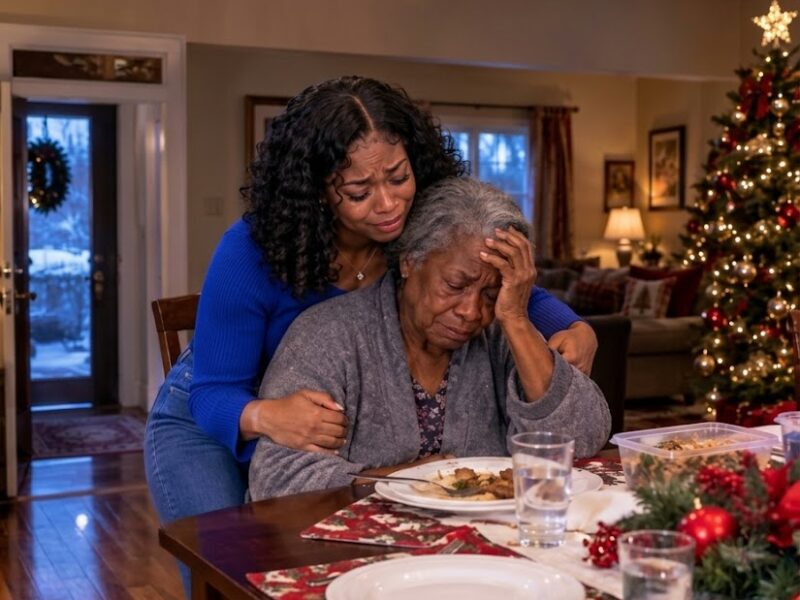
I Came Home for Christmas to an Empty House—Except Grandma Was Eating Leftovers Alone
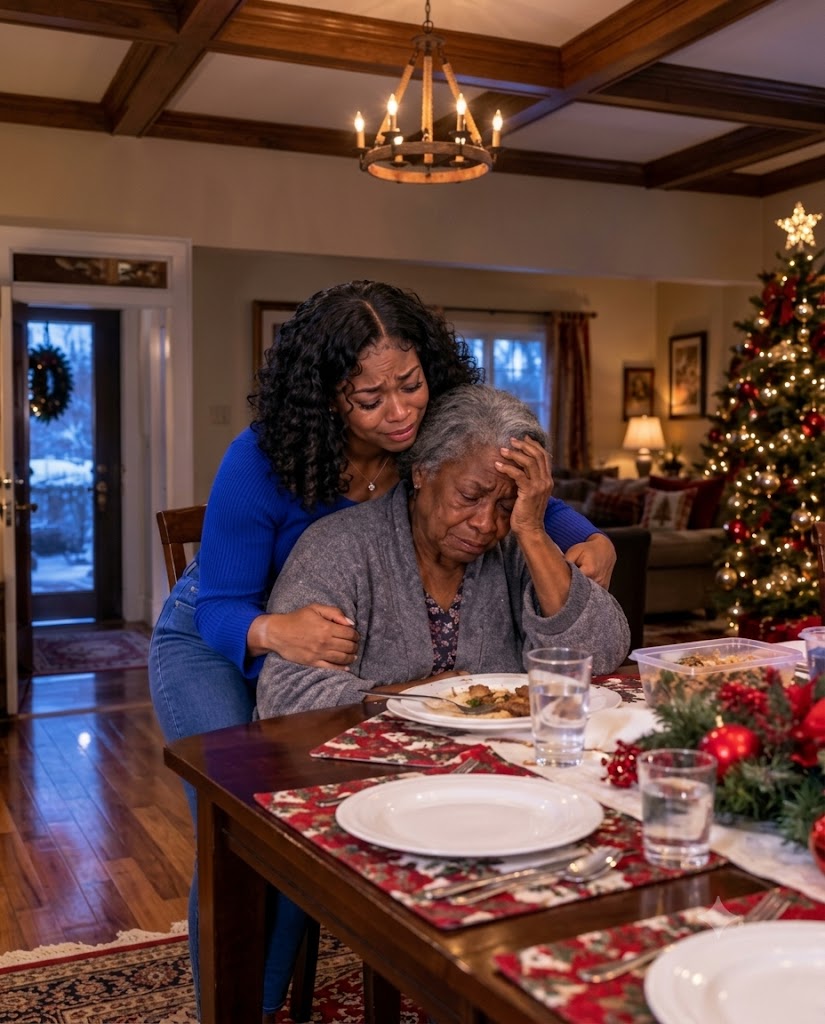
I came home for Christmas expecting the house to be full of laughter, warm food, and the people I loved.
But the house was completely empty, except for Grandma eating leftovers in silence.
The porch light was off, which should have been my first clue.
Every year of my childhood, that light stayed on from Thanksgiving through New Year’s, a small yellow promise that said somebody was waiting up for you.
I parked my rental car behind a drift of old snow and sat there for a minute with the engine running, watching the dark windows, telling myself maybe everyone was in the backyard or maybe they’d gone to a late church service.
The truth was simpler and colder.
Nobody was home except the one person who had never once left me waiting.
I let myself in with the key I’d kept on my ring since college, and the door creaked the way it always did, and the smell of cinnamon and turkey hit me before my eyes adjusted.
Then I saw her.
My eighty-year-old grandmother, sitting alone at a table set for six, eating leftover turkey off a plate that had gone cold hours ago.
Tears were running down her face while a perfectly decorated Christmas tree glowed behind her, and she didn’t even hear me come in until I said her name.
Grandma.
She looked up fast, wiped her cheeks with the back of her hand, and smiled like she’d been caught doing something wrong.
Millie, she said. You’re supposed to be in Denver.
I drove through the night, I said. I wanted to surprise everybody.
The house hummed with nothing but the refrigerator and the soft scrape of her fork.
I pulled out the chair beside her and sat down, and that’s when I noticed the untouched Christmas plates, the unopened presents, and one envelope sitting beside her plate.
And suddenly I realized this wasn’t about Christmas at all.
The envelope was the first thing I couldn’t stop looking at.
I wanted to pick it up immediately, but something about the way Grandma kept her hand resting over it made me hesitate.
She looked exhausted, not just tired from being alone, but worn down in a way I had never seen before.
Grandma, where is everybody? I asked again, softer this time.
She lowered her eyes to her plate and moved a piece of turkey around with her fork.
They had plans, sweetheart.
On Christmas? I asked.
She gave me a small smile that didn’t reach her eyes.
People get busy.
I knew that wasn’t true. Not about my family. Not on Christmas.
Growing up, Christmas had always belonged to Grandma.
She was the one who woke before sunrise, put cinnamon rolls in the oven, checked the turkey three times, and complained that nobody ate enough.
She had a way of making even an ordinary house feel like the safest place in the world.
When I was eight, she let me sleep beside the Christmas tree because I was convinced Santa would only come if I stayed awake.
When I was sixteen, she stayed up until two in the morning listening to me cry over my first broken heart.
When I left for college, she packed food into my car until there wasn’t room for another container.
And every Christmas after I moved away for work, she said the same thing on the phone.
Just come home when you can, Millie. The house doesn’t feel right without you.
That was why I had driven through the night this year. I hadn’t even told them I was coming. I wanted to surprise everyone.
I had imagined walking through that front door and hearing my mother’s voice from the kitchen, my father’s laugh from the living room, my brother Cullen arguing about football, my sister Waverly complaining about somebody’s gift, and Grandma telling everyone to stop shouting.
Instead, there was only the hum of the refrigerator and the soft scrape of Grandma’s fork against a plate.
I looked toward the kitchen.
Where’s Mom?
Grandma shrugged. Probably with Waverly. And Dad with them.
Cullen?
She paused. Millie, please. It’s Christmas.
That answer bothered me more than anything else could have.
She wasn’t answering my questions. She was protecting them.
I stood and walked toward the kitchen. The food sitting on the counter looked untouched.
A glazed ham, roasted vegetables, mashed potatoes, rolls, pies, and a casserole Grandma had made every Christmas since I was little.
Beside it were six empty serving dishes, as if someone had prepared an entire meal expecting a crowd.
I opened the refrigerator. There were containers of food stacked neatly inside, but most of them had been opened and barely touched.
Grandma, I called, why is all this food here?
She didn’t answer.
I turned around and saw her staring at the Christmas tree.
There were presents underneath it. At least six of them. Some had handwritten names on them.
I walked closer. One said Cullen. Another said Waverly. One said Maribel. One said Everett.
Grandma had even wrapped a small box for me, although she hadn’t known I was coming.
My throat tightened.
You bought all their gifts? I asked.
Of course.
Even though they weren’t coming?
She looked down. I thought they might.
There was something about that sentence that hurt more than I expected.
Grandma had spent the morning waiting for people who had already decided not to come.
I sat beside her again.
Did Mom tell you they weren’t coming?
Grandma nodded slowly. She said everyone had made other plans.
What plans?
I don’t know.
Did she tell you where they were?
Grandma’s fingers tightened around the edge of her napkin. No.
I stared at her. Grandma, that’s not normal.
She finally looked at me. Please don’t make trouble.
I almost laughed, but there was nothing funny about it.
I’m not trying to make trouble. I’m trying to understand why my grandmother is eating yesterday’s leftovers alone on Christmas while the rest of the family is somewhere else.
She looked away again. Sometimes people need space.
From you? I asked.
She didn’t answer. That silence said enough.
I reached for the envelope beside her plate. What’s this?
Grandma’s hand moved quickly, covering it. Nothing.
Then why were you hiding it?
I wasn’t hiding it.
Grandma. I kept my voice gentle. Look at me.
She did. Her eyes were wet.
It’s just paperwork.
What kind of paperwork?
She swallowed. Your mother brought it.
My stomach tightened. What did she want you to sign?
Grandma’s expression changed. For a few seconds, she looked much older than eighty.
She said it was for my protection.
I didn’t touch the envelope again. And did you sign it?
Grandma shook her head. No.
I waited.
Why not?
She looked toward the hallway as though she was afraid someone might hear us, even though the house was empty.
Because something didn’t feel right.
That was the first honest thing she’d said since I arrived.
I leaned closer. What didn’t feel right?
Grandma rubbed her forehead. I don’t know anymore. Your mother says I’m becoming forgetful. Maybe she’s right.
No, I said immediately. Don’t do that.
Do what?
Don’t let them make you doubt yourself.
She stared at me for a long moment, and then a tear slipped down her cheek.
I wiped it away with my thumb the way she had done for me countless times when I was a child.
You’re not a burden, I whispered. And you’re not crazy.
Grandma closed her eyes. I never said I was crazy.
You didn’t have to.
She gave a weak smile, but it disappeared quickly.
I went back to the kitchen and began putting together a fresh plate for her.
She protested that she wasn’t hungry, but I ignored her. I warmed the turkey, made fresh mashed potatoes, poured her a glass of water, and brought everything back to the table.
She watched me quietly. You always were stubborn, she said.
I learned from you.
For the first time that afternoon, she smiled. It lasted only a second, but I needed it.
While she ate, I began looking around the dining room, and that’s when I noticed something else.
The table was decorated for six people, but only one chair had actually been used.
There were six folded napkins, six glasses, six sets of silverware, and on one side of the table sat a small handwritten card.
I picked it up. It simply said Christmas dinner, 6 p.m.
There was no date, no location, nothing else.
Grandma, when was this supposed to happen?
She stopped eating. Tonight.
I looked at the clock. It was already after eight.
They were supposed to be here at six.
Grandma nodded.
I felt something cold settle in my chest. They hadn’t simply forgotten her. They hadn’t accidentally missed dinner.
Someone had set this table expecting six people and then allowed an eighty-year-old woman to sit alone for hours waiting for them.
I pulled out my phone. I hadn’t planned to call my mother yet, but I couldn’t stop myself.
I dialed Maribel. It rang four times before she answered.
Millie. Her voice sounded surprised.
Hi, Mom.
There was a pause. You’re home.
Yes.
Another pause. You should have told us.
I looked at Grandma sitting quietly across from me. I thought I’d surprise everyone.
Well, we’re not home.
I noticed. Her voice changed slightly.
Your grandmother told you.
She didn’t have to. I walked into an empty house.
Millie, don’t start.
Start what? Making this into something it isn’t.
I kept my voice calm. Why didn’t anyone come for Christmas dinner?
We had other plans.
What plans?
That’s not your concern.
I almost asked why it wasn’t my concern when Grandma was sitting alone on Christmas, but I stopped myself.
Mom, Grandma made dinner.
I’m sure she did.
She waited for everyone.
Silence. Then my mother sighed.
Millie, she’s getting older. She doesn’t always understand when plans change.
I looked at Grandma again. She had stopped eating.
Did you tell her the plans changed?
Of course.
When?
I don’t remember.
That answer made my grip tighten around the phone.
Mom, where are you?
With the family.
Where?
At Waverly’s.
I knew Waverly had recently moved into a new place, but I hadn’t known there was a Christmas gathering there.
Everyone’s there? I asked.
Most of us.
Grandma wasn’t invited.
My mother’s silence lasted just long enough to answer the question.
It was complicated, she finally said. She’s better off resting.
I looked at Grandma’s plate. Leftover turkey, cold vegetables, a glass of water. One person sitting at a table prepared for six.
Okay, I said.
My mother sounded relieved. Good. Just don’t upset her.
I won’t.
I ended the call.
I didn’t tell Grandma what Mom had said. I didn’t tell her that everyone was together at Waverly’s house. I didn’t tell her that they had chosen to leave her behind.
Not yet. I wasn’t going to break her heart with something I hadn’t fully understood.
Instead, I picked up the envelope again.
This time, Grandma didn’t stop me.
Read it, she whispered.
I opened it carefully. The first page looked like ordinary paperwork.
Then I saw a familiar name. Cullen.
Underneath it was a reference to Grandma’s house.
I read the page twice. My hands became cold.
Grandma, I said slowly. Why is Cullen’s name on a document about your house?
She looked at me, and for the first time that evening, I saw fear in her eyes.
I was hoping you wouldn’t find that yet.
I looked back down at the paper. Suddenly, the empty house didn’t feel empty anymore.
It felt like the aftermath of something, something my family had been planning long before I came home.
I looked at the document again, hoping I had misunderstood what I was seeing.
Maybe Cullen’s name was there because he had helped Grandma with something. Maybe it was an old form, some routine paperwork that meant nothing.
I wanted desperately for that to be true.
What is this? I asked.
Grandma reached across the table and gently took the paper from my hands.
Your mother said it was nothing important.
Grandma, this has your address on it.
She folded the document once and placed it beside her plate. I know.
And Cullen’s name is on it.
She sighed. I know that, too.
I leaned back in my chair, trying to slow down my thoughts.
Just an hour earlier, I had walked into this house expecting to complain about a missed Christmas dinner.
Now I was sitting across from the woman who raised me, staring at paperwork that appeared to involve her home.
Why didn’t you tell me? I asked.
Grandma looked toward the Christmas tree. Because I didn’t want you fighting with your mother.
That sentence landed heavily.
You were willing to sit here alone on Christmas so I wouldn’t fight with Mom?
Families have disagreements, Millie.
This isn’t a disagreement. My voice came out sharper than I intended. I softened it immediately. I’m sorry. I just don’t understand.
Grandma rubbed her hands together. Your mother says I’m getting older. She says there are things I shouldn’t have to worry about anymore. Bills, banking, repairs, paperwork. She offered to help.
When? Last year?
I remembered that period. Maribel had called me several times saying Grandma needed more support.
At the time, I had been working on a major project and traveling constantly. I had asked Mom to keep me updated.
She always told me everything was fine.
Did you give Mom access to your accounts? I asked.
Grandma nodded. She said it would make things easier.
All of them? Some? Which ones?
She looked uncomfortable. Checking. Savings. The account for the house.
I stared at her. Grandma, why would you give her access to everything?
Because she’s my daughter.
There was no accusation in her voice. Just trust.
And somehow that made me angrier than if she had blamed my mother.
I stood and walked toward the kitchen because I needed a moment.
I opened the cabinet beneath the counter and found a stack of bills held together with a rubber band.
Electricity, water, property insurance, grocery receipts, medical bills. Everything was mixed together.
I carried the stack to the table.
When was the last time you paid these yourself?
Grandma thought for a moment. I don’t know who pays them now. Maribel.
I separated the papers one by one. Several had handwritten notes in the margins. Some were marked paid, others weren’t.
Then I noticed something strange.
The amount Grandma normally paid for electricity had almost doubled over the previous months. Water was higher, too.
But she lived alone. Her habits hadn’t changed.
Has anyone been staying here? I asked.
Grandma looked away. Sometimes.
Who? Cullen? Waverly? Your mother and father? All of them?
She nodded. Not all at once.
I remembered the six plates, six glasses, six chairs. Suddenly, the empty house made a different kind of sense.
They hadn’t forgotten Grandma. They had been using her house whenever it suited them.
And then they had somehow decided she didn’t deserve a place at their Christmas gathering.
I picked up another paper. It was a bank statement. The account balance was much lower than I expected.
I checked the previous month’s statement. Then the month before that.
My heart began beating faster.
Grandma, how much money did you have in savings before Mom started helping you?
She looked confused. Why?
Please.
She gave me an approximate amount. I calculated quickly in my head.
The difference was enormous.
Where did all of this go? I asked.
Grandma’s face tightened. Your mother said there were repairs.
What repairs?
The roof. The plumbing. Some work around the house.
I looked around the dining room. The roof was old but intact. The plumbing worked. The kitchen had the same cabinets I remembered from childhood.
Nothing about the house suggested that tens of thousands of dollars had been spent on repairs.
Grandma, did you see receipts?
She shook her head. Your mother handled them.
I put the statement down. I wanted to call Maribel right then. I wanted to demand an explanation, but I remembered the look on Grandma’s face when I had mentioned fighting with Mom.
She wasn’t afraid of the truth. She was afraid of what the truth would do to her family.
So instead, I asked one question.
Do you know how much Cullen has received from you?
Grandma looked down. Your brother needed help.
How much?
I don’t remember.
Did he pay you back?
Silence. I knew the answer.
I opened the banking app on Grandma’s tablet. She had left it on the counter earlier. The login was already active.
I hesitated before touching it. Is it okay if I look?
Grandma nodded. I don’t understand those things anyway.
That sentence bothered me. My grandmother had balanced a household budget for forty years.
She had paid bills, raised children, maintained a home, and managed every Christmas without anyone’s help.
Someone had convinced her that she couldn’t understand her own money.
I started going through the transactions.
At first, they looked ordinary. Groceries, utilities, insurance.
Then I saw a large transfer. Eight thousand five hundred dollars.
The recipient was listed under Cullen’s business name.
I looked at Grandma. Did you give Cullen eight thousand five hundred dollars?
She frowned. Maybe. He said his equipment broke.
I scrolled further. Another transfer. Twelve thousand dollars. This one was several months later.
Then another. Four thousand seven hundred dollars.
Then a payment to a wedding vendor. Waverly? I whispered.
Grandma leaned closer. What?
This payment. Did you pay this?
She squinted at the screen. I don’t know.
I kept scrolling. There were restaurant charges, hotel charges, clothing purchases, and several payments that didn’t appear to have anything to do with Grandma’s household.
I took screenshots of everything and sent copies to myself.
Grandma watched me. Millie, please don’t make this worse.
I looked at her. I’m not making anything worse.
Your mother will be furious.
Why?
She didn’t answer. I knew why.
Because my mother had become accustomed to being the person who controlled the information.
And now I was looking directly at the numbers.
I called Maribel. She answered on the second ring.
What do you need? Her tone was already defensive.
I’m looking through Grandma’s bank statements.
Silence. Why?
Because I found several large transfers.
Millie, we’ve already discussed this.
No, Mom. We haven’t.
Your grandmother needs help managing her finances.
That doesn’t explain why Cullen received eight thousand five hundred dollars.
He needed it.
And the twelve thousand?
Family expenses.
What family expense?
I don’t have to justify every transaction to you.
I looked at Grandma. She was staring at me, frightened.
I lowered my voice. Does Grandma know about these payments?
My mother exhaled slowly. Your grandmother agreed to them.
She doesn’t remember.
Exactly. That’s why she needs us.
That sentence made something inside me go completely still.
What did you just say?
Millie, you’re twisting this.
No, I’m listening.
You live away. You come home for one holiday and suddenly you think you understand everything.
I don’t think I understand everything. I looked at the paperwork on the table. That’s why I’m asking questions.
My mother became quiet. Then she said, Stay out of things that don’t concern you.
I almost laughed. She’s my grandmother, and you’re my mother. Then why did you leave her alone on Christmas?
There was a long silence. She wasn’t alone. She had a peaceful evening.
I looked at the plate of cold leftovers in front of her. She waited until eight.
Millie, she made dinner for six people.
We changed plans.
You changed plans without telling her?
She knew.
I looked at Grandma. Her eyes were wet again.
Okay, I said.
My mother seemed satisfied. Good. Then don’t turn this into something dramatic.
She hung up.
I set my phone down. Grandma whispered, Are you angry?
I took her hand. I’m angry at what happened. Not at you.
She squeezed my fingers. I should have told you.
You don’t have to protect me from my own family.
She looked at the envelope again. There is more.
My heart tightened. More than the money?
She nodded. The paper you found wasn’t the only document your mother brought.
I reached for the envelope. What else is in here?
Grandma hesitated. Then she handed it to me.
I opened the second page. It was a draft agreement concerning the house. Cullen’s name appeared again.
This time there was no mistaking what it meant. The document proposed transferring control of the property to him under certain conditions.
I read it twice.
Did you sign this?
No.
Did Mom ask you to?
She said it was only temporary.
Temporary?
She said Cullen needed security for his business.
I looked at the date. It had been prepared only weeks earlier.
Grandma, your house is worth a lot of money.
I know.
Does Cullen know what it’s worth?
She nodded. He said the family should keep it.
I felt a chill move through me. Keep it for who?
Grandma’s eyes filled with tears. He said it would eventually be his anyway.
I closed my eyes for a second.
There it was. The thing nobody had said aloud.
They weren’t simply taking money. They were positioning themselves for the house.
I looked around the room at the Christmas decorations Grandma had carefully arranged. The tree, the gifts, the six plates.
Everything suddenly looked different.
They had left her alone because they were angry with her. They had spent her money because they believed they were entitled to it.
And they wanted her house because they had already started imagining their lives after she was gone.
But there was one question I still couldn’t answer. Why had Grandma refused to sign?
I looked at her. What made you say no?
She stared at the Christmas tree for several seconds before answering. Because someone warned me.
Who?
Grandma’s voice dropped almost to a whisper. A man named Benson.
I recognized the name immediately. Your attorney?
She nodded. He told me never to sign anything your mother brought me without letting him read it first.
I leaned forward. When did you talk to him?
Grandma looked toward the hallway. Before Thanksgiving.
And what did he tell you?
She swallowed. He told me I needed to keep my original documents somewhere safe.
I stared at her. Where are they?
Grandma didn’t answer immediately. Then she slowly pushed her chair back. Come with me.
She walked toward the hallway, one hand against the wall for support. I followed her.
She stopped outside the small room where my grandfather had kept his old tools and sewing supplies.
She opened a drawer I had never seen her use. Beneath a stack of folded fabric was a small metal box.
Grandma lifted it carefully and brought it to the table.
Your mother doesn’t know about this, she said.
She placed the key in my palm. Neither does Cullen.
I looked at the locked box and then at my grandmother. What’s inside?
Grandma’s eyes met mine. Everything I was afraid to lose.
I unlocked it. The lid opened with a soft metallic click.
And the first thing I saw was the original deed to Grandma’s house.
Underneath it were bank statements, copies of emails, handwritten notes, and a letter from Benson dated two weeks before Christmas.
I picked up the letter. My hands were shaking now, because suddenly I understood something I hadn’t understood when I walked through that front door.
Grandma wasn’t completely unaware of what her family had been doing. She had been quietly preparing for the possibility that one day she’d have to prove it.
And if that letter contained what I suspected it might, Christmas wasn’t going to end with an argument around a dining table.
It was going to expose everything my family had spent a year trying to hide.
I stared at Benson’s letter for several seconds before I finally unfolded it completely.
My eyes moved slowly across the page, and with every sentence, the uneasy feeling in my stomach grew heavier.
Benson had written that Grandma should not sign, transfer, authorize, or surrender control of any property or financial account without independent legal review.
He had also advised her to keep her original documents somewhere only she could access.
But the sentence that stopped me cold was near the bottom.
Benson had written that Grandma had told him she was being repeatedly pressured by a family member to change the ownership arrangements for her home.
I looked at Grandma. You told him someone was pressuring you?
She nodded. I didn’t know what else to do.
Why didn’t you tell me? I asked.
Her eyes dropped. Because I thought you would come home angry.
I took a slow breath. Grandma, I am angry. But I’m not angry with you.
She reached for my hand. Your mother is still my daughter. And you’re still her mother.
I said that doesn’t give her the right to decide what happens to your life.
Grandma looked toward the window. Snow had started falling outside. Thin white flakes disappearing against the darkness.
I kept hoping they would remember who I was before they started seeing what I owned.
That sentence broke something inside me.
I pulled my chair closer. Then we’re going to make sure they remember.
She gave me a tired smile. How?
By finding out exactly what happened.
I picked up the bank statements again, but this time I wasn’t simply looking for suspicious charges. I wanted a complete picture.
I opened the metal box and sorted everything into separate piles. Property documents, banking records, medical paperwork, correspondence, notes.
There were receipts dating back nearly a year. Some were ordinary. Others weren’t.
Grandma had written dates beside several of them in her own handwriting.
Maribel came by again, asked about the house. Cullen says he needs a larger loan. Waverly says Grandma should help because she won’t need the money forever.
I read that last sentence twice. Waverly said this?
Grandma nodded. She apologized afterward, but she said it.
I kept sorting. Then I found another note. December third. Maribel brought papers again, said everyone expects me to do the right thing for the family.
I looked up. She brought the documents more than once?
Three times.
My jaw tightened. And every time you refused?
Yes.
What happened after the last time?
Grandma was quiet for a moment. She stopped asking me directly.
And started doing what?
Grandma’s eyes moved toward the Christmas tree. She stopped calling.
I suddenly understood the empty house in a way I hadn’t before.
This wasn’t the result of a family argument that had happened last week. It was the final stage of something that had been building quietly for months.
When did they stop visiting? I asked.
After Thanksgiving. All of them. Mostly.
But Cullen still came?
She nodded. He came with paperwork.
And Waverly?
She called when she needed something.
And Mom?
Grandma gave a small sad laugh. Your mother came when she thought I might sign.
I sat back. I felt a strange combination of anger and sadness.
My grandmother had spent years believing that family meant showing up for each other. Now her children were showing up only when there was something they wanted.
I reached for my phone. I’m calling Benson.
Grandma looked nervous. Tonight?
Yes.
It’s Christmas.
Exactly.
Benson answered after the third ring. His voice was calm and professional.
I introduced myself and explained that I had found Grandma alone, discovered the financial records, and found the property documents.
He listened without interrupting. When I finished, he asked one question. Does your grandmother still have the original deed?
Yes.
And has she signed anything transferring ownership?
No.
There was a pause. Good.
What does that mean? I asked.
It means we have time to protect her interests properly.
He told me he could meet us the following morning. I thanked him and ended the call.
Grandma looked relieved, but I could still see fear in her expression.
Millie, I don’t want this to destroy the family.
Grandma, they’re the ones who created this situation.
I know.
Then why are you still worried about them?
She looked at me with tears in her eyes. Because they’re my children.
I didn’t have an answer for that.
Maybe there are some kinds of love that don’t disappear even after someone hurts you. Maybe that’s what makes betrayal so painful.
You don’t stop loving someone just because they stop treating you well.
I put the documents back into the metal box. We’re going to do this carefully, I said. No screaming, no accusations, no threats. We’re going to let the facts speak.
Grandma nodded.
The next morning, Benson arrived just after nine.
He was a tall man in his early sixties with silver hair, a dark wool coat, and the quiet manner of someone who didn’t need to raise his voice to be taken seriously.
He greeted Grandma first. They spoke privately for several minutes before he joined me at the dining table.
I handed him the property documents and bank statements. He studied them carefully.
Every so often, he asked Grandma a question. Did she authorize this transfer? Did she understand this document? Did she receive this money back? Did anyone explain this clause?
Grandma answered as honestly as she could. Sometimes she remembered. Sometimes she didn’t.
Benson never pressured her when she couldn’t remember. Instead, he marked the item and moved on.
Finally, he closed the folder.
Your grandmother’s house is hers, he said. Based on what I’m seeing, nothing you’ve shown me establishes that ownership was legally transferred.
I felt some relief, but Benson wasn’t finished.
The financial records are a separate matter.
He explained that we shouldn’t jump to conclusions simply because a transaction looked suspicious. Some payments might have been authorized. Others might have been legitimate family assistance.
What mattered was establishing what Grandma actually approved and what she understood she was authorizing.
That distinction was important to me. I didn’t want revenge based on assumptions. I wanted the truth.
Benson recommended that Grandma immediately change her banking access, revoke any unnecessary permissions, and have future financial decisions handled directly with him or another independent professional she trusted.
Grandma agreed.
Then Benson turned to the property documents. There’s something else you should know.
He pointed to the draft agreement involving Cullen.
This isn’t simply a document giving him a future interest in the house. It appears designed to give him significant control if certain conditions were met.
I felt my stomach drop. What conditions?
Benson explained them. If Grandma became unable to manage certain affairs, Cullen could potentially gain authority under the proposed arrangement.
It wasn’t ownership in the simplest sense, but it was enough control to make me understand why he had been so interested in getting Grandma to sign.
Who prepared this? I asked.
Benson looked at the document. The draft appears to have originated from someone representing Cullen.
Not Grandma’s attorney?
No.
I looked at Grandma. She was staring at her hands.
Did Mom tell you this would give Cullen control?
No, she whispered. She told me it was just a way to protect the house.
My anger returned, but I kept it contained.
Benson gathered the papers. Don’t confront them yet.
I looked at him. Why not?
Because you don’t know what they will do when they realize you understand what they’ve been attempting.
That sentence stayed with me for months.
My family had believed Grandma was confused and vulnerable. They believed nobody was watching.
They had no idea she had kept copies. They didn’t know I had come home. And they certainly didn’t know Benson was involved.
What should we do? I asked.
Benson gave us a plan. Grandma would formally secure her finances and property documents. Any questionable transactions would be documented and reviewed. The bank would be contacted. The proposed property agreement would not be signed.
And most importantly, Grandma would stop discussing her finances with anyone who wasn’t authorized to handle them.
I nodded. It was simple. It was factual. It was nothing like the emotional confrontation I had imagined.
And somehow that made it stronger.
After Benson left, Grandma and I sat quietly in the kitchen. She stared at the untouched Christmas cookies on the counter.
Do you think they’ll ever forgive me? she asked.
For what?
For saying no.
I reached across the table. You didn’t do anything wrong.
They think I did.
Then they can think that.
She looked at me. You’re different from your mother.
I wasn’t sure whether that was a compliment or a warning.
How?
You ask questions.
She smiled faintly. Your mother used to ask questions, too. But somewhere along the way, she started asking questions only when she already knew the answer she wanted.
I looked down. That was exactly what I had been noticing.
Maribel didn’t want to know what Grandma wanted. She wanted Grandma to agree with what Maribel had already decided.
My phone buzzed. A message from my mother.
Are you really staying at Grandma’s?
I stared at it. I didn’t answer immediately.
Another message arrived. We need to talk.
Then another. Don’t make this harder than it needs to be.
I showed Grandma the screen. Her shoulders dropped. She’s angry.
Probably.
What are you going to say?
I thought for a moment. Then I typed three words.
I’m listening, Mom.
I sent it. Less than a minute later, her response appeared.
Come to Waverly’s at noon. Everyone will be there.
I looked at Grandma. Everyone.
She nodded slowly. Then I suppose Christmas isn’t over after all.
I slipped the phone into my pocket. No, I said. I think it’s finally beginning.
We didn’t know what they planned to say. Maybe they would deny everything. Maybe they would blame Grandma. Maybe they would accuse me of interfering.
But for the first time since I walked through that empty house, I wasn’t afraid of what they might say.
Because now Grandma had her documents. She had independent legal advice. And I had the truth sitting in a metal box on the table.
What my family didn’t know was that I had also found one final document at the bottom of that box. One Grandma hadn’t mentioned to Benson yet.
I picked it up before we left. It was a handwritten note from my grandfather, written years before he died.
And the words on that page made me realize the house might have been worth far more to my family than money.
I unfolded the note carefully, afraid that even one tear from my eyes might blur something important.
My grandfather’s handwriting was unmistakable. The first line read, If you are reading this, someone has probably decided Grandma’s kindness means she can be pushed aside.
I looked at Grandma, and she lowered her eyes.
The note explained that years earlier, my grandfather had learned the property had become valuable because of a planned development project nearby.
He had warned Grandma never to let anyone pressure her into transferring the house, because people who had ignored the property for decades might suddenly become very interested once they understood what it was worth.
I felt my stomach tighten.
That explained the strange paperwork. It explained why my mother suddenly cared so much about Grandma’s finances. It explained why my brother had apparently started talking about the house as though it already belonged to him.
But there was more.
My grandfather had written down the name of an attorney he trusted and instructed Grandma to keep the original deed separate from every other document.
At the bottom, he had written, Millie knows this house is home. If they try to turn it into an asset, she will understand what I meant.
I read that sentence twice.
My grandfather had been gone for years. Yet somehow, it felt like he had left that message specifically for the moment I was standing in.
Grandma reached for my hand. He knew them better than I did, she whispered.
I squeezed her fingers. Then we’re going to follow what he wanted.
At noon, we drove to my sister’s house together.
I could feel Grandma trembling beside me, so I kept one hand over hers at every red light.
When we pulled into the driveway, there were several cars outside. My mother’s SUV, my brother’s truck, two cars belonging to relatives who apparently had been invited to witness whatever conversation my family had planned.
I immediately understood something. They weren’t expecting a discussion. They were expecting an audience.
Inside, my mother was sitting in the living room beside my sister. My brother stood near the fireplace with his arms folded.
The moment we walked in, every conversation stopped.
My mother looked at Grandma, then at me, and her expression hardened.
You actually brought her here? she asked.
I stared at her. She was invited, wasn’t she?
My mother looked away.
Grandma slowly removed her coat and sat down. Nobody offered her anything to drink. Nobody asked how she was feeling.
They simply watched her like she was the problem that had arrived late.
My brother finally spoke. We need to talk about the house.
Not Grandma. Not Christmas. The house.
I sat beside Grandma. Then talk.
My sister leaned forward. Everyone is worried about her living alone.
Grandma frowned. I’m sitting right here.
I know, my sister said gently, almost rehearsed. But you’ve been forgetting things.
Grandma looked at me. I didn’t need to ask what she was thinking.
The same family members who had left her alone on Christmas were suddenly very concerned about her memory.
My mother placed a folder on the coffee table. We’ve discussed moving Grandma somewhere safer, she said. And we’ve already looked into options.
Grandma stared at the folder. No, she said quietly.
My brother sighed. Grandma, nobody is trying to take anything from you.
I almost laughed, because that was exactly what people said when they were afraid you had discovered what they were taking.
I reached into my bag and placed a copy of the attorney’s letter on the table.
My mother froze. My brother stopped moving. My sister’s smile disappeared.
Before Grandma signs anything, I said calmly, an independent attorney is going to review every document.
My mother stared at the letter. You called an attorney?
Yes.
You had no right.
I looked at her. It’s Grandma’s house.
The room became completely silent.
Then my brother reached for the folder and pulled it closer. You don’t understand what’s happening.
I understand enough.
No, Millie. He snapped. You came home for a few days and suddenly think you know everything.
I looked at Grandma. She was staring at the floor.
That was when I realized something heartbreaking. They had spent so much time telling her she was confused that she had started doubting herself.
I turned toward her. Grandma, look at me.
She slowly lifted her eyes.
You’re not confused about whether this is your home, are you?
Her lips trembled. No.
Do you want to sell it?
No.
Do you want to give it to anyone?
She shook her head. No.
My mother immediately interrupted. She doesn’t understand the financial situation.
I stood up. Then let’s understand it together.
I opened my folder and laid the bank statements across the table one by one.
The transfers. The restaurant charges. The hotel payment. The expensive purchases. The withdrawals.
Grandma couldn’t explain.
My brother’s face changed when he saw the dates. My mother reached for the papers. I moved them away.
These aren’t accusations, I said. They’re questions.
My brother looked at my mother. That tiny glance told me more than either of them could have said.
Then my mother whispered, You don’t know why those transactions happened.
Then explain them.
Nobody answered.
Grandma looked at the statements, then suddenly pointed to one transaction. That wasn’t me.
My heart dropped. What?
She touched the page with a shaking finger. That money was supposed to pay for my roof repair.
I looked at the amount. The money had gone somewhere else.
My brother swallowed. Maybe the contractor changed the payment method.
Grandma shook her head. I never approved that.
I felt something inside me become completely still.
Until that moment, I had been hoping there was some explanation. Now I knew there was something we needed to uncover.
I gathered the documents and stood. We’re done discussing this without professional review.
My mother stood too. You’re destroying this family.
I looked at Grandma. She was crying silently.
Then I looked back at my mother. No, I said. I’m stopping you from destroying her.
Nobody spoke as Grandma and I walked toward the door.
But just before we stepped outside, my brother said something that made me stop.
You really think that old house belongs to you?
I slowly turned around. It doesn’t belong to me.
I held Grandma’s hand. It belongs to her.
And for the first time that day, Grandma smiled.
But neither of us knew yet that the bank records we just uncovered were only the beginning.
And the next document waiting in my grandfather’s box would reveal exactly where the missing money had gone.
That question stayed with me all the way home. Where had the missing money gone?
I knew we couldn’t leave that question unanswered, especially after seeing the fear on my brother’s face.
The moment Grandma and I returned to her house, I went straight to the metal box my grandfather had left behind.
I carefully checked every envelope until I found a small sealed packet tucked underneath the deed.
Inside was a copy of an old bank letter and a handwritten note.
The bank letter showed that my grandfather had created a separate account years earlier and placed money into it specifically for Grandma’s care and the maintenance of the house.
But the account had been accessed recently.
Grandma stared at the page. I never gave them permission.
I called the attorney immediately.
He reviewed the documents and told us the next steps would have to be handled formally.
Grandma’s financial access was secured. Questionable authorizations were challenged. And the original property documents were placed somewhere safe.
Most importantly, Grandma finally had someone protecting her interests instead of people deciding what was best for her.
A few days later, my mother came to the house alone.
She didn’t look angry anymore. She looked exhausted.
I never meant for things to go this far, she said.
I didn’t answer immediately.
Grandma sat across from her. Why did you leave me alone on Christmas?
My mother began crying.
She said she believed Grandma was becoming too difficult to manage. She admitted the family had discussed the house and that my brother believed selling or transferring it could solve everyone’s financial problems.
Grandma listened quietly.
Then she said something I will never forget.
You were worried about the house being empty, but you never noticed that I was.
My mother covered her face.
I didn’t feel victorious. I felt sad, because revenge had never been what Grandma needed.
She needed her family to remember that she was a person before she was an owner of valuable property.
The financial investigation continued, and the questionable transactions were documented and addressed through the proper channels.
My brother was no longer allowed to treat Grandma’s money like family money. My sister stopped asking about the house. And the paperwork my mother had once pushed toward Grandma was never signed.
Christmas came again the following year.
This time, the house was full. There were lights around the windows, music playing softly, and Grandma sitting at the head of the table.
She wasn’t eating leftovers alone. She was laughing.
I looked around at everyone and realized something had changed permanently.
The house hadn’t become more valuable because someone discovered its market price. It had become more valuable because Grandma finally felt safe inside it again.
Before dinner, she handed me my grandfather’s old note. You should keep this, she said.
I smiled. I think you should.
She shook her head. No. He wrote it for the person who would remember what mattered.
I held the paper against my chest, and I finally understood.
Sometimes the people we trust most are the ones who teach us the hardest lessons.
Millie didn’t fight for revenge. She fought so Grandma could keep her home, her dignity, and her voice.
And that quiet victory meant everything.









