Her Stepdad Warned, “Never Talk to Bikers”—Then the Motorcycle Club Discovered Why
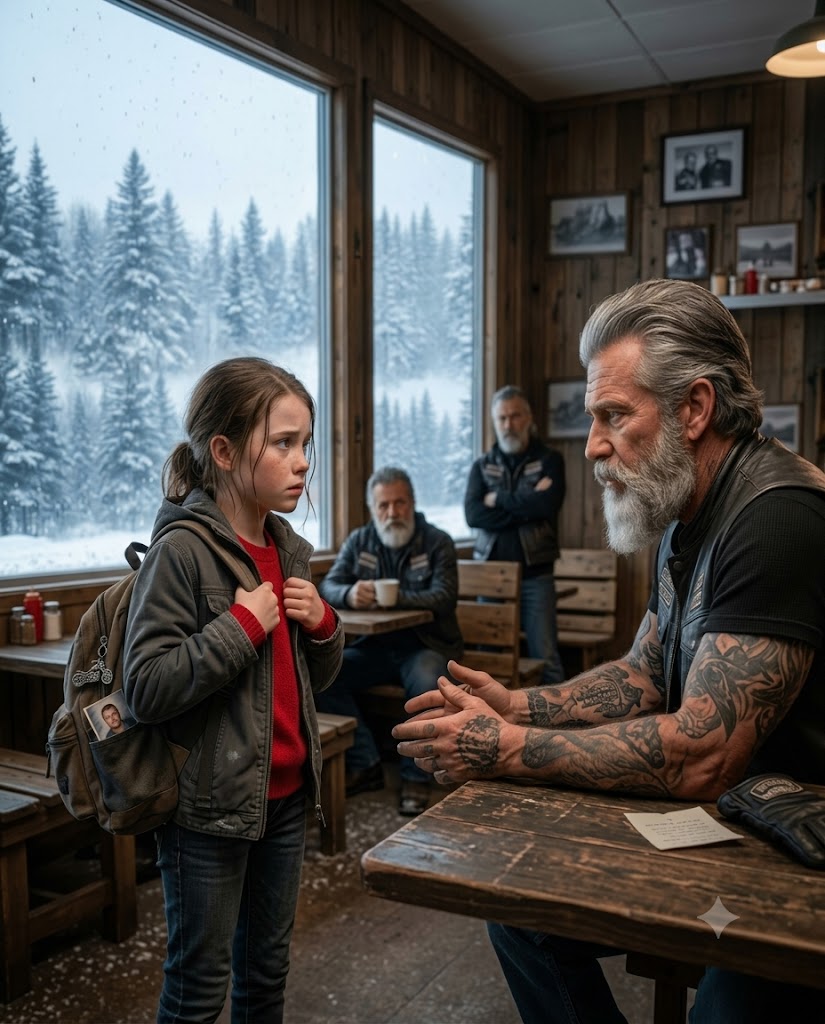
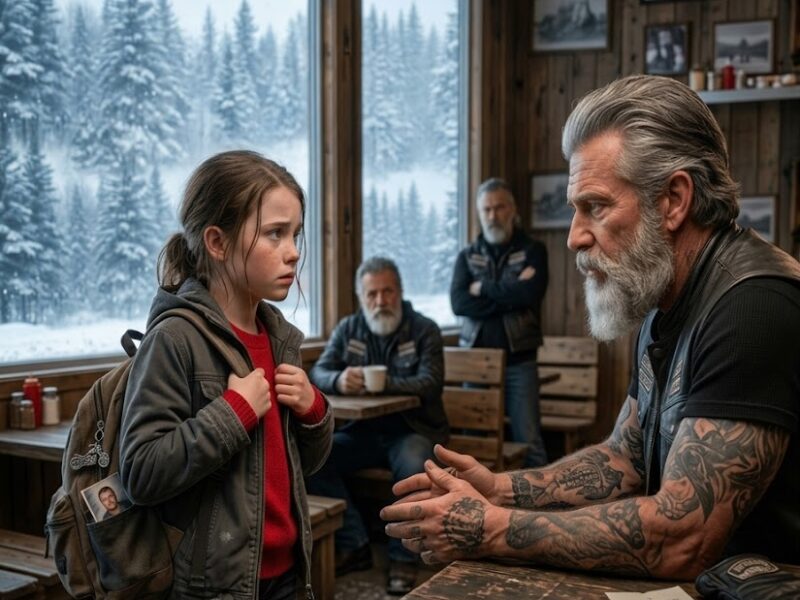
She stood at the edge of the lot with a voice barely above a breath. “He said men with beards are dangerous, but I wanted to see.”
A twelve-year-old testing a world she’d been warned to fear. A biker club caught off guard by a whisper that carried more courage than most adults ever show.
What happens when truth meets indoctrination and kindness answers fear?
The Grayline Riders were used to being watched. People slowed their cars to stare at the bikes. Neighbors peeked through curtains when engines rumbled to life.
But the girl across the street was different. She didn’t hide, didn’t pretend she wasn’t looking.
She sat openly on a faded plastic chair on her porch, legs swinging back and forth like she was keeping time to some secret rhythm only she could hear. Every day after school, she appeared.
Same chair, same position, same quiet fascination. The men waved sometimes. She never waved back.
She just stared, eyes tracking each bike as if memorizing the sound of every engine. Weeks passed like that, and the riders eventually learned to accept her as part of the scenery, like the mailbox that leaned to one side or the stray cat that haunted the trash bins.
Fox noticed her first. He had the instincts of a former teacher. He could read tension in shoulders, fear in posture, curiosity in silence.
The girl didn’t look afraid. She looked conflicted, like she wanted to understand something no one had explained properly.
Mama Deb saw it, too. From the clubhouse kitchen window, she’d watch the girl twisting the hem of her shirt or tapping her foot in quick little bursts, like nervous habits she was trying to smother.
“That child’s got something on her mind,” she muttered more than once while slicing onions. “And people don’t sit and stare that long unless they’re trying to solve a puzzle.”
The answer came one warm afternoon when the girl finally crossed the road. The clubhouse yard was quiet. Engine noise fading. Most of the men inside grabbing drinks.
Fox was wiping down his handlebars when he saw her step onto the gravel. She moved like someone expecting the ground to bite.
Her hair was tied in a crooked ponytail. Her backpack slung too low on her shoulders. She stopped three feet from him and lifted her chin with a determination that didn’t match the fear in her eyes.
“Hi,” Fox said gently.
She swallowed, took a shaky breath, and whispered, “He says men with beards are dangerous.” Her fingers fidgeted at the strap of her backpack. “I just wanted to see if it was true.”
Fox blinked. Of all the things he expected, that wasn’t on the list. He wasn’t offended, more surprised by how earnestly she seemed to mean it.
“Well,” he said, touching his beard with a half grin, “I guess you’ll have to decide for yourself.”
Before she could reply, Mama Deb pushed open the clubhouse door and stepped outside with the authority of someone who had raised kids, grandkids, and half the riders by sheer force of personality.
“Sweetheart,” she said, her voice warm. “You look thirsty. You like orange soda?”
The girl nodded. It was the smallest, quickest nod Fox had ever seen.
“Come on then. You can sit where it’s shady.”
Mama Deb didn’t ask questions, didn’t demand explanations. She just placed a cold soda into the girl’s hand and let her perch at the edge of a picnic table like a bird afraid of spooking itself.
The girl didn’t drink it at first. She held the can with both hands as if the cold metal was an anchor.
“What’s your name, sweetheart?” Mama Deb eventually asked.
“Eva,” she said, so softly it almost didn’t register.
Fox walked by and casually set a comic book on the bench beside her. He didn’t push it toward her. He simply left it there, the way you leave a door open for someone who isn’t sure they’re allowed inside.
Eva’s eyes flicked to it, then back to her soda, then finally tentatively to Fox.
“You can read it if you want,” he said with a shrug. “Or not. It’s yours either way.”
She hesitated, then picked it up. Something softened in her, in the quiet way kids learn who they can breathe around. Someone offering something without wanting anything in return.
Eva stayed for fifteen minutes that day, then thirty the next. Over the following week, she kept coming back, always crossing the street with the same anxious courage, always sitting a little closer to the group.
She didn’t speak much, but she listened to everything. Engine talk, morning complaints, weekend plans. The riders didn’t smother her with questions. They simply let her exist in their space, the way a kid should be allowed to exist. Safely, freely, without fear of breaking a rule she didn’t understand.
On the seventh afternoon, as she helped Mama Deb stack cups, Eva finally offered something without being asked.
“My stepdad says you’re criminals,” she murmured, eyes down. “He says people with beards, people who ride, they only hurt others.”
Fox set down his rag. Mama Deb paused mid-reach. Eva looked up with the smallest, most conflicted expression. A child realizing that two worlds can’t both be true.
“But you’re not like that,” she said. “None of you are.”
And that’s when the riders understood. She wasn’t just curious. She was trying to untangle a lie she’d been raised to fear.
Eva settled into the clubhouse routine with the kind of ease that only comes from wanting to belong. She didn’t burst through doors or demand attention. She drifted in quietly, like sunlight slipping through curtains.
And somehow, without anyone discussing it, the riders adjusted to her presence. Conversations softened when she entered. Rough jokes paused mid-sentence. Even Wolf, loud, impatient, incapable of whispering, lowered his voice when she walked past.
Most days she went straight to Mama Deb. The older woman kept her hands busy and her heart open. An ideal combination for kids who didn’t know how to ask for help.
Eva wiped counters, organized soda crates, and arranged napkin holders with the fierce concentration of someone who took pride in small tasks. Fox offered her facts about engines and road maps whenever she lingered near the bikes.
Tater pretended not to care, but grumbled when she wasn’t around to critique his beard braids. Young recruits, normally desperate to impress the older riders, found themselves polishing tables or running errands just so they could say, “Let me help, too.”
But beneath all that warmth, the riders sensed something shifting at Eva’s house. She began flinching at sudden noises. She checked the time constantly, refusing to stay past five o’clock.
Once, when a bike backfired in the distance, she jumped hard enough to spill a tray of cups. Mama Deb knelt beside her, helping her pick them up without comment. But her worried glance toward Fox said everything.
One Sunday morning, Eva arrived earlier than usual. She looked tired, her ponytail uneven as if she’d rushed out. She walked straight to the kitchen, washed her hands without being asked, and started cracking eggs into a bowl.
Mama Deb waited a good five minutes before gently asking, “You hungry, sweetheart?”
Eva shrugged. “I had to get out early today.”
There was no defiance in her tone, only the careful neutrality of a child who had learned to move without drawing attention. Fox and Tater exchanged looks. They didn’t push. For kids like Eva, silence wasn’t avoidance. It was protection.
Still, the shifts were noticed. She began clutching her phone like a shield. She checked the front windows as though expecting someone to burst in.
And when she spoke about home, she described rules that tightened every week. Restrictions on friends, on TV shows, on how she could spend her free time. They weren’t punishments for misbehavior. They were fences built to keep her world small.
One afternoon, as she sorted soda cans by color—a task she invented for herself—she blurted a question without looking up.
“Do your beards ever scare people?”
Tater paused mid-grumble. Fox leaned back in his chair.
“Sometimes,” Fox answered, keeping his tone light. “But fear and respect aren’t the same thing. People can decide what they believe, you know?”
Eva bit her lip. “Not everyone.”
She didn’t elaborate. The riders didn’t ask, but the sentence stayed with them long after she left.
Lori’s entrance into the story came almost by accident. It happened on a Friday after school. Eva was helping Mama Deb refill sugar jars when the clubhouse door creaked open again.
A woman hesitated in the doorway, mid-thirties, shoulders drawn tight, wearing an expression that mixed worry with embarrassment. Eva froze.
“Mom?” she whispered.
Lori gave a small apologetic smile. “Hi, sweetheart. You weren’t home. I thought maybe you were here.”
The riders stiffened, not defensively, just uncertain. Parents could be unpredictable, especially ones who didn’t know the club or its intentions.
Eva stepped closer to her mother, but not in fear—more like someone bracing for a misunderstanding.
“I’m sorry,” Lori said to Mama Deb. “I didn’t know she came here so often. I just wanted to check she was okay.”
Mama Deb wiped her hands on a towel and extended one as if greeting a neighbor at a bake sale. “She’s more than okay. She’s helpful, polite, and she makes the boys behave better than any rule I’ve ever written.”
Lori let out a breath that sounded like she’d been holding it for days. Then she sat gingerly, like sitting itself required permission.
Eva hovered beside her until Mama Deb nudged her toward Fox. “Go help him carry those boxes, honey. Let me talk to your mama.”
Eva didn’t look convinced, but she obeyed. Lori watched her daughter cross the room, shoulders slowly loosening, steps lighter than they ever seemed at home.
That’s when the questions began. Not aggressive, not accusatory, just the kind of quiet curiosity that comes from someone trying to rewrite their understanding of the world.
“She seems comfortable here,” Lori murmured.
Mama Deb nodded. “Kids know when a place is safe. They know before adults do.”
Lori’s eyes glistened. “She’s been nervous lately,” she admitted. “Jumping at sounds, asking strange questions. I didn’t understand why.”
Tater walked by with a crate of sodas. Lori flinched at the rumble of bottles clinking. He noticed, slowed, and offered a gentle nod.
The smallest gesture, yet it made her blink in surprise, as if she’d expected roughness but found courtesy instead.
Throughout the afternoon, Lori kept watching Eva laugh quietly at a joke Fox made. She watched her daughter braid a small section of Tater’s beard while he pretended to grumble. She watched her relax in ways she rarely saw at home.
By the time she stood to leave, Lori’s expression had changed. The fear was still there, but something new pushed beside it—an uncomfortable, necessary curiosity.
Thinking for herself—for someone living under Ryan’s rules—was its own quiet rebellion.
As Eva hugged Mama Deb goodbye, Lori lingered at the door, her voice barely above a whisper. “I think she feels safer here than she ever says out loud.”
The words weren’t a confession, but they loosened something inside her, an old knot beginning to give way.
Lori returned the next afternoon. Not as a visitor checking on a child, not as someone reluctantly stepping into unfamiliar territory. She arrived with the fragile look of a woman carrying something she couldn’t hold alone anymore.
She hovered in the doorway until Mama Deb waved her in with a warm, unspoken you’re welcome here. Eva was already helping arrange bowls for the evening meal, humming softly under her breath.
When she spotted her mother, she lit up with a joy that surprised even her. “Mom, you came back.”
Lori nodded, smoothing her jacket as if trying to steady herself. “Yeah, thought I’d keep you company for a bit.”
The riders offered their quiet greetings. Tater grunted but motioned to an empty chair. Fox gave a small nod from across the room. No pressure, just space.
Mama Deb placed a mug of tea in front of Lori. “Sit. Talk if you want. Sit quietly if you don’t. Both are fine.”
For a while, Lori said nothing. She listened to Eva chat with Wolf about the difference between road vibrations and engine rumble. She watched the girl laugh when Wolf exaggerated about dropping a wrench into a puddle the size of a lake.
Eva’s shoulders loosened in a way Lori hadn’t seen in months.
Finally, Lori spoke. “He’s been different,” she murmured.
Mama Deb knew exactly who she meant, but she let Lori reach the words herself.
“Ryan,” Lori continued, eyes fixed on her tea. “He doesn’t yell. That’s what everyone thinks. Controlling men always yell, but he doesn’t need to. He just narrows her world, one rule at a time.”
Fox, who had walked past, paused to tie a rope on a crate but stayed within earshot.
“He tells her who’s dangerous,” Lori said softly. “Who she should avoid. Who she’s allowed to trust.”
Eva, hearing her name in the tone only a worried parent uses, glanced over. Lori gave her a small, reassuring smile, but the girl stayed near Wolf, pretending not to listen while listening to every word.
“He’s not violent,” Lori said quickly, almost defensively. “He just sets the temperature in the house, and when it drops, everyone freezes.”
Mama Deb reached across the table and squeezed her hand. “Control doesn’t need fists to leave marks.”
Lori’s breath hitched. She looked around the room, at the men sanding down a table leg, at Fox showing Eva how to tighten a bolt without stripping it, at Tater sitting rigidly still so the girl could braid another bead into his beard.
“They’re kinder than he said,” Lori whispered.
“He always insisted men like them were dangerous, unpredictable, the kind who’d turn on you. And yet your daughter walks in here and doesn’t shrink.”
Mama Deb said, “That tells me he’s afraid of something else.”
Lori swallowed. “She’s been asking too many questions at home. About why she can’t visit friends, why she can’t stay out past four, why she has to avoid certain people. Ryan doesn’t like questions.”
“That’s because questions unravel things,” Fox said quietly from the doorway.
Lori startled. She hadn’t realized he’d been listening, but his expression wasn’t judgmental.
“I used to teach,” he explained. “Kids who weren’t allowed to question anything. They’re the ones who fear their own thoughts.”
The words hit Lori harder than he intended.
“But once she started spending time here, her questions stopped sounding like risks and started sounding like instincts she’d been forced to ignore.”
There it was—the turning point, the thing she’d been circling around since she first walked into the clubhouse.
Eva approached then, timidly placing her hands on her mother’s arm. “Mom, can I tell them?”
Lori froze. Her pulse quickened. She hadn’t planned for this, but when she looked at Eva, at her trembling lip and braced shoulders, she nodded.
“Tell them, sweetheart. It’s okay.”
Eva lowered her voice. “He doesn’t want us going anywhere, even to Grandma’s. He says the world is full of people who want to hurt us, especially people with beards.”
Tater let out a sound that was half scuff, half heartache.
Eva kept going, her eyes fixed on her shoes. “He hides Mom’s keys sometimes. He checks my phone. If I laugh too loud, he says I’m attracting attention. If I ask why I can’t go places, he says it’s for our safety, but it never feels like safety.”
Lori closed her eyes. Saying it out loud made the truth unbearable, but also undeniable.
“He keeps us isolated,” she whispered. “Not because he’s protecting us, but because he needs us to stay afraid.”
The riders didn’t react with outrage or promises of revenge. They didn’t posture or rise from their chairs. They simply shifted—subtle, deliberate—into a quiet formation around the table, as if creating a circle without making it obvious.
Fox stepped closer. “You’re not alone. You don’t have to untangle this by yourself.”
Mama Deb added, “There are people who can help. Legal aid counselors, neighbors who’ve been through the same thing. If you want names, if you want guidance, we can give you that. No pressure.”
Lori looked stunned, not by the offer itself, but by the lack of judgment in their faces. No one blamed her. No one demanded that she act immediately.
They simply gave her the one thing she hadn’t had in years—a safe decision.
Eva leaned into her mother’s side. “Mom, we don’t have to keep living scared.”
The room fell into a gentle silence, one that wasn’t heavy, but full of possibility. Lori inhaled shakily, as though drawing her first steady breath in a long time.
“Okay,” she whispered. “I think I’m ready to talk about options.”
And that was enough. The riders didn’t cheer or celebrate. They simply nodded, as if acknowledging a battle plan quietly falling into place. A choice had been made—small, quiet, but powerful. The kind that changes the path of an entire family.
Lori didn’t return the next day, or the day after. The riders didn’t push, didn’t speculate, didn’t track her down. They simply stayed available. An open door. A steady presence. The opposite of everything Ryan used against her.
Eva came by after school each day, quieter than usual, but no longer jumpy. Routine became her anchor. Stacking napkins, checking the fridge for missing items, braiding Tater’s beard while he pretended to sigh dramatically.
On Friday evening, just as Fox began locking the side gate, a familiar figure appeared at the edge of the parking lot. Lori approached slowly, coat wrapped tight even though the weather wasn’t cold.
She looked exhausted, but there was something else in her expression. Resolve flickering beneath the strain.
“Is now a bad time?” she asked.
Mama Deb wiped her hands on a towel. “There’s never a bad time.”
They guided Lori to the picnic table near the back wall, away from the noise of clinking tools. Eva sat beside her, fingers laced with her mother’s.
Lori exhaled shakily. “He noticed,” she murmured. “The questions. The fact that Eva wasn’t afraid anymore.”
Fox pulled out a chair across from her but didn’t sit until she nodded permission.
“Did he hurt either of you?” he asked gently.
“No, but he started checking everything. My bag, Eva’s room. He unplugged the Wi-Fi, said we were being influenced by people who didn’t understand his standards.”
Lori rubbed her temples. “The temperature dropped again. Not anger—just that cold, quiet pressure he’s so good at.”
The riders exchanged glances. They knew the type. They’d seen men like Ryan before. The kind who didn’t need fists to dominate a household.
“I don’t want to fight,” Lori said quickly, anticipating their concern. “I just want a way out that won’t make things worse.”
Mama Deb placed a folder on the table. She’d prepared it days ago, waiting for this moment. Inside were names—attorneys who handled coercive control cases, women’s support networks, people who could help her document incidents properly.
Lori flipped through the papers with a trembling hand. “You did all this for us?”
“For you,” Mama Deb corrected. “And for your girl. You don’t have to jump. Just know there’s a net.”
Lori’s shoulders lowered. A single tear slipped down her cheek, but she didn’t look away. She wasn’t embarrassed. She was processing the idea that the world was bigger and kinder than one man’s fear-driven rules.
Over the next week, quiet steps began to take shape. Lori met with one of the advocates in a small café two towns over. She learned what counted as evidence, how to file for temporary lodging without triggering retaliation, how to create a safety plan that didn’t involve dramatic confrontations.
Eva stayed mostly with Mama Deb during those afternoons, learning to crack eggs one-handed and bossing the recruits around as if she’d been born to give marching orders. There was lightness in her now—something blooming.
But the real shift came the following Thursday. Eva burst through the clubhouse door with flushed cheeks.
“He found out,” she breathed. “He saw the pamphlet in Mom’s purse.”
Fox set down the wrench in his hand. “Is she safe?”
“She left the house. She said she’d meet me here.”
Five to ten minutes later, Lori appeared at the entrance. No bruises, no visible harm, but her expression confirmed everything. Ryan hadn’t screamed, but he’d done something worse. He demanded obedience. He tried to pull the world back into the size of his palm.
Tater stepped outside and watched the street carefully, arms crossed, present but not confrontational. Wolf stayed near the door, ready but calm. They weren’t preparing for a showdown. They were ensuring Lori and Eva felt protected.
Lori sat heavily at the table, staring at her hands. “He told me I was being influenced, that kindness was a trap. He spoke so calmly, it chilled me more than shouting ever could.”
Eva pressed her forehead to her mother’s shoulder. “But you know that’s not true. Mom, you know it.”
Lori looked up then, eyes glossy, jaw tight. “I do.”
That small sentence changed everything.
“We can get you somewhere safe tonight,” Mama Deb said. “A place he doesn’t know about.”
Lori hesitated only a moment before nodding.
Fox drove them to a safe transitional home run by a local community group. No patches, no motorcycles—just his pickup truck and a quiet promise that they weren’t alone. He stayed in the parking lot until the lights inside confirmed Lori and Eva had checked in.
Through the windshield, he watched their silhouettes at the reception desk, two figures stepping into a room where no one measured their worth by obedience.
He didn’t tell the riders everything when he returned. He didn’t need to. They saw it in the way he exhaled—relief mixed with fury at the world that had cornered a woman for so long.
Two weeks later, Lori and Eva stood at the clubhouse door again. Not afraid, not hiding—just visiting.
Lori looked healthier, like someone who’d begun to sleep through the night without bracing for something. Eva carried a small notebook filled with recipes Mama Deb had been teaching her.
“Is Sunday breakfast happening?” Eva asked shyly.
Tater groaned theatrically. “Only if someone braids my beard. It’s a disaster without supervision.”
Eva giggled and immediately got to work. The riders gathered around her with a protective softness that hadn’t existed months ago.
Lori watched, hands tucked into her pockets, eyes warm. “She feels safe here,” she murmured to Mama Deb.
“She is safe here,” Mama Deb replied.
Eva finished the braid and held up a bead. “This one means bravery,” she said. “I read that somewhere.”
Tater snorted. “Put it on, kid. I’ll take it.”
As she clipped the bead into place, Eva smiled in a way that erased the last shadows of Ryan’s control. The fear he planted didn’t vanish in one night, but its roots were finally exposed.
And from that moment on, Eva and Lori chose rooms where they weren’t scared to laugh.
Stories like this remind us how powerful it is when someone chooses curiosity over fear, and how much strength it takes to leave a life shaped by intimidation. If you were in Lori or Eva’s shoes, what moment would have moved you to reach out for help? Share your thoughts below, and if this story touched you, don’t forget to like, share, and subscribe to Embrace the Journey for more stories that honor courage in quiet places. See you in our next video.









