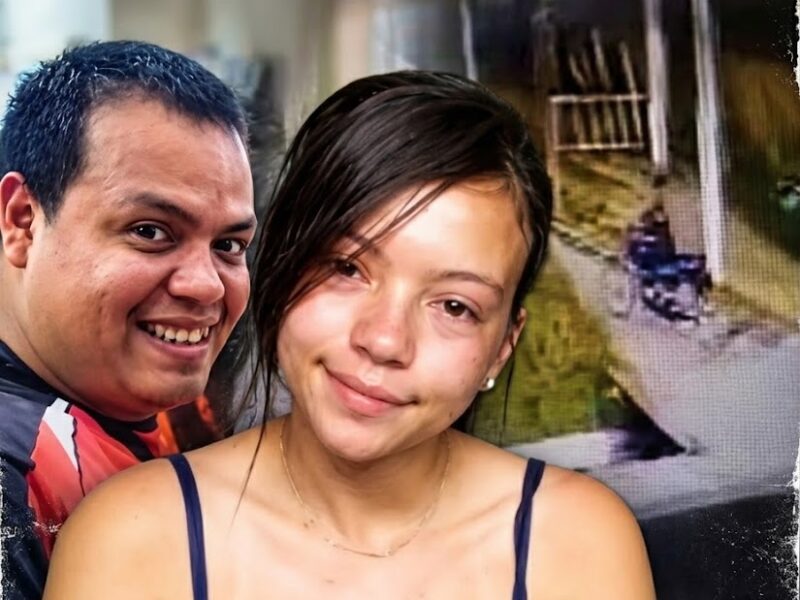
Her own uncle burned her alive and then pretended to search for her
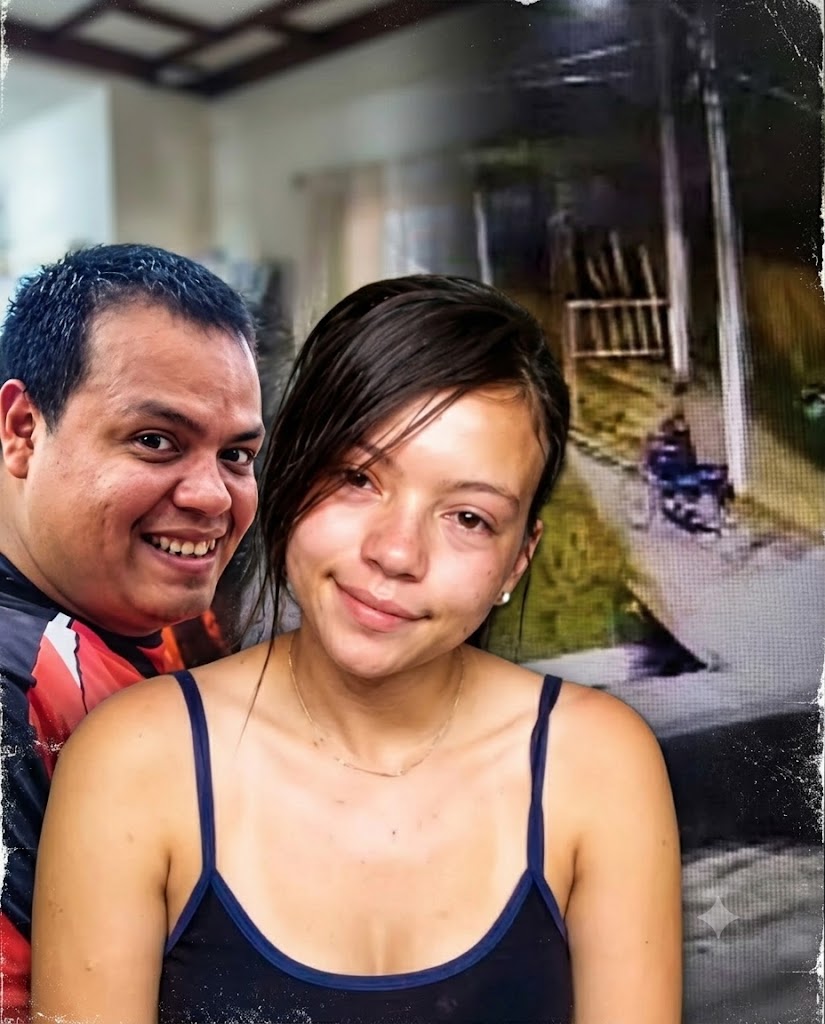
The call came into the 911 dispatch center just after 7:40 on the morning of February 5, 2020.
A farmer on a dirt road off the highway had found something in a lonely field near the old Rustrian property, outside the village of Chichimecas in Villacanales, about 31 miles from Ciudad Quetzal.
What he found did not look human at first.
It looked like a shape the fire had left behind.
Police units rolled out with their lights off, because there was nothing to rush toward.
The body was completely charred, curled into a position no living person holds.
There was no wallet, no phone, no schoolbag, no face.
The medical examiner’s office would later say the remains had been exposed directly to flame long enough to make visual identification impossible.
No one at the scene could say who she was.
No one at the scene could say what had been done to her.
But 31 miles away, in Ciudad Quetzal, a different kind of clock had already started ticking.
A 12-year-old girl had not come home.
Her name was Chelsea Paola Hernández Escalante.
She had left for school the morning before and never arrived.
Her parents had spent the night calling everyone they knew.
By dawn, they were at the police station, and the alert system for missing children — Guatemala’s version of an Amber Alert — was already moving through the wires.
The burned body in the field and the missing girl in the city were two separate files for less than a day.
Then a dental record closed the distance between them.
Chelsea had been to the dentist just days before she vanished.
Forensic odontologists compared those records to the teeth inside the burned remains.
The match came back positive.
A week after the body was found, the police confirmed what Chelsea’s family had already begun to fear.
The girl in the field was their girl.
That was the moment the search stopped being a rescue and became a hunt.
And the hunt would lead, step by step, to a man who had been standing beside the family the whole time, handing out posters and wiping his eyes.
His name was Edgar Leonel Marroquín Barrera.
He was 31 years old.
He was married to one of Chelsea’s aunts.
And to Chelsea, he was the uncle who showed up, the uncle who helped, the uncle who once received a handmade card on Father’s Day that said, in a child’s careful handwriting, that he was like a second dad.
The story of what happened to Chelsea is not a story about a stranger in a dark alley.
It is a story about a man who knew the lock on the door, the schedule of the house, and the trust of the child inside it.
It is also a story about a number.
That number is 30 percent.
And before this story is over, you will understand why 30 percent was the detail that made a courtroom go silent.
—
Chelsea was born in 2008 in Ciudad Quetzal, in the municipality of San Juan Sacatepéquez, in the department of Guatemala.
She was the older of two children.
Her father, Franklin Hernández, was an officer with the National Civil Police.
Her mother, Heidy Escalante, worked long hours, and the family leaned on a tight circle of grandparents, aunts, uncles, and cousins who lived in the same community.
Chelsea grew up inside that circle.
She was the kind of kid who made the circle bigger.
Teachers remembered her as bright and respectful, the student who helped the kid next to her without being asked.
Neighbors remembered her as the girl who said good morning to everyone, even the people who never said it back.
At home, she helped with chores and looked after her little brother.
When both parents were working and no adult was free, it was Chelsea who walked her brother to school.
She was 12, and she carried that responsibility like a badge.
Her father adored her.
Franklin would come home from a shift and find her waiting at the door, and she would run to him and wrap her arms around his waist.
He called her the princess of the house.
He liked to say she ran the place, and the rest of them just paid the rent.
There was one dream Chelsea talked about more than any other.
Her fifteenth birthday.
She was three years away from it, but she had already decided it was going to be enormous.
She wanted a dress, a party, music, and every single person she loved in one room.
Her parents had started saving.
They had started planning.
They had started arguing, in the affectionate way families argue, about the guest list and the food and whether the party should be in the yard or at a hall.
That party never happened.
But the planning for it is part of this story, because it shows you exactly what was taken.
Chelsea also had a new bedding set that year, a pink comforter with white flowers.
She loved it.
She made her bed every morning, which is not a thing most 12-year-olds do, and she would smooth the comforter with both hands before she left for school.
Her mother would later remember that comforter as one of the small, ordinary details of a life that had not yet been interrupted.
The fire would take almost everything else.
—
The man the family called Uncle Edgar was a regular presence in that house.
He was 31, married to one of Heidy’s sisters, and by all appearances a responsible man.
Franklin knew him as a good husband, a decent guy, someone who showed up when family showed up.
The children trusted him.
Chelsea and her brother made him cards for his birthday, for Christmas, for Father’s Day.
One of those cards called him a second father.
The family kept it.
They kept it because it was sweet, because it was proof of how close the children felt to him, because it was the kind of thing you put in a drawer and find years later and smile.
No one in that family had a reason to fear Edgar.
That is the part of this story that is hardest to hold in your head.
The danger did not come from outside the circle.
The danger was already inside it.
—
The night before Chelsea disappeared was an ordinary night.
The family ate dinner together.
They made Chelsea’s favorite food, because her father was about to leave for his shift at the police station, and the house liked to send him off with something good.
Franklin ate, kissed his daughter, and went to work.
That was the last time he saw her alive.
The next morning, February 4, Heidy left early for work.
Chelsea stayed behind to finish getting ready for school.
According to some accounts, Heidy had arranged for a relative to help get the children to class that morning, though it was never entirely clear who had been asked to do it.
At around 7 a.m., Chelsea was running late.
She still needed to walk her little brother to school first, and then get herself to her own classes.
That was the plan.
Then Edgar appeared.
He offered to take the boy to school on his motorcycle.
It was a small favor.
It was the kind of favor family members do for each other all the time.
Nothing about it raised an alarm.
Chelsea stayed at the house.
She was supposed to leave for school a few minutes later.
She never arrived.
—
The hours between 7 a.m. and 3 p.m. are the black hole in this case.
Nobody in the family knew anything was wrong until the afternoon, when they came home and realized Chelsea had not been to class and no one had seen her all day.
They started searching the neighborhood.
They called friends, classmates, teachers.
Nothing.
They went to the police and filed a missing-person report, and the Alba-Keneth alert went out.
Hundreds of posters went up across the city with Chelsea’s face on them.
The description said she was 12 years old, about 4 foot 9, thin, with brown hair and brown eyes.
It said she was last seen wearing her school uniform: a blue skirt, a white blouse, and black shoes.
The alert spread across social media.
Neighbors joined the search.
So did family.
So did Edgar.
He was photographed with the others, walking the streets, asking questions, looking concerned.
Some accounts later said that on the afternoon of the search, someone saw him standing by his vehicle, crying.
At that point, no one had any evidence pointing to a specific person.
Why would they?
He was family.
He was helping.
—
That night, the burned body was still unidentified in Villacanales.
The next morning, when the news of the discovery reached the investigators, the pieces still did not fit together, because the condition of the remains made identification impossible at first glance.
The police could not say the body was Chelsea’s.
The police could not say it wasn’t.
They sent the remains to the National Institute of Forensic Sciences, the country’s medical examiner system, and the slow work of identification began.
That work was possible because of a routine dental appointment.
Chelsea had seen a dentist days before she disappeared.
The forensic odontologists pulled those records, compared them to the teeth in the burned remains, and got a match.
On February 11, 2020, the authorities confirmed it.
The body in the field belonged to Chelsea Paola Hernández Escalante.
The investigation changed that day.
It was no longer a search.
It was a homicide case.
—
The first real break came from a child.
Chelsea’s little brother told investigators what had happened that morning.
Edgar had offered to take him to school on the motorcycle.
He had not taken him all the way.
He had dropped the boy roughly halfway there and said he had something urgent to do.
The investigators pulled the surveillance footage from the area.
At 7:10 a.m., the cameras showed Edgar returning to the house where Chelsea was.
At 8:20 a.m., the cameras showed a red sedan linked to Edgar leaving the property.
The footage could not show what happened inside the house.
It could not show where Chelsea was during those 70 minutes.
But for the first time, the investigators had a sequence.
A man takes a child partway to school, turns around, comes back to the house where a 12-year-old girl is alone, and then leaves in a car more than an hour later.
That was the first thread, and it pulled tight.
The red sedan was seized and sent to forensics.
Detectives began tracing Edgar’s movements for the rest of that day, and the trail led them to a restaurant in Zone 9 where he worked.
He had arrived around 10 a.m.
Coworkers remembered something odd about him that day.
He kept leaving the building.
He went out to the parking lot about once an hour, opened the trunk of his car, looked inside, and closed it again.
He also asked for permission to leave work early.
Some media reports said a witness saw him put a gas can and matches in the trunk, though the authorities never confirmed that detail, and it was never treated as a proven fact in court.
What was proven was the route.
After leaving work, Edgar’s movements took him in the direction of the field in Villacanales, where Chelsea’s body was later found.
—
As the investigation moved forward, the family began to re-examine its own memories.
Franklin, Chelsea’s father, would later say that Edgar had always paid a lot of attention to Chelsea.
At the time, he had thought it was almost obsessive.
But he had never had proof of anything, and his only priority had been finding his daughter, so he had pushed the feeling down.
He was not the only one who noticed something.
Edgar’s wife later told investigators that on the day Chelsea disappeared, her husband called her 17 times.
She had been asleep and had not answered.
Seventeen calls.
That number would come back in court.
—
After the identification of the body, Edgar’s behavior changed.
He stopped being seen around the community the way he had been before.
Reports surfaced of a conversation he had with another relative in which he admitted being involved in Chelsea’s death and threatened to take his own life.
On Sunday, February 16, 2020, at around 9 p.m., Edgar walked into a police station voluntarily.
He confessed to his responsibility in Chelsea’s disappearance and death.
There was no arrest warrant out for him yet.
He was not formally arrested that night.
But he was kept in police custody because he had threatened to kill himself, and the police were not going to hand him back to his family and read about him in the morning.
That night, he told his story.
It was an accident, he said.
He had hit Chelsea with the motorcycle by mistake.
He had panicked.
He was afraid her family would attack him, so he put her body in the trunk of the red sedan, drove her to a remote field, and burned her.
That was his version.
He had admitted to what he did afterward.
The question was whether the first part was true.
—
The prosecutor’s office did not believe the accident story.
The evidence did not fit it.
A man who accidentally hits a child he claims to love does not put that child in a trunk, drive 31 miles, and set her on fire.
Or if he does, the law has a word for that, and the word is not accident.
But proving what really happened was hard, because fire destroys evidence.
The remains were so badly burned that the medical examiner could not establish a precise cause of death.
The carbonization also meant the experts could not confirm or rule out a sexual assault.
The prosecution explored that possibility as a theory during the investigation.
Edgar denied it.
The forensic analysis could not prove it.
So it never became a proven fact in court.
What the prosecution had was a pattern: a man who inserted himself into the search, a man whose movements put him at the house, a man who left work early and drove toward the field, and a man whose own confession admitted to burning the body.
On February 20, 2020, Edgar was formally charged with femicide, Guatemala’s enhanced murder charge for gender-based killings.
At the hearing, he refused to testify before the judge.
He was ordered held in pretrial detention.
Then the world shut down.
COVID-19 slowed the courts to a crawl.
The case sat for months.
On January 8, 2021, the defense got a significant win when a lower court decided to provisionally close the case.
The judge said the prosecution had failed to specify an exact cause of death.
The Ministry of Public Prosecution responded that the inability to determine a cause of death was a direct result of the condition of the body — the body the defendant had burned.
The prosecution appealed.
The organizations acting as complainants in the case also objected.
The closure decision caused an uproar in Ciudad Quetzal.
On February 6, 2021, dozens of family members, friends, and neighbors marched through the streets to demand that the case stay open.
Franklin spoke publicly about his daughter.
He talked about how hard it was to accept that the man he had considered part of his family for years was now accused of killing her.
The appeals court eventually reversed the closure.
Edgar would have to stand trial.
It would take three more years for that trial to begin.
—
In mid-February 2024, four years after Chelsea’s death, the trial opened before the Second Tribunal for Femicide Crimes.
The courtroom was crowded with family, with activists, with reporters.
The first witnesses were the forensic experts.
They explained what they had been able to determine and what they had not.
The degree of carbonization had made it impossible to establish the exact cause of death.
It had also made it impossible to confirm or rule out a sexual assault.
The experts described the injuries they had observed and the presence of soot in the airways.
Then the prosecution began presenting the physical evidence.
There were the burned fragments of a comforter from Chelsea’s bedding set, the pink one with white flowers.
That comforter was part of a set that had been in the house.
Its presence in the case was tied to the movement of the body, to the car, to the field.
It was a small, ordinary object that had become a piece of evidence.
Then came the result that changed the room.
A blood analysis detected approximately 30 percent carboxyhemoglobin.
Carboxyhemoglobin forms when a person inhales carbon monoxide.
For the forensic specialists, the result meant something very specific.
Chelsea had breathed smoke.
She was still breathing when she was exposed to the fire.
Sit with that for a moment.
The defense story was that Edgar had accidentally killed her, panicked, and then burned a body.
The blood test said the body was not a body when the fire reached her.
She was alive.
That single number, 30 percent, contradicted the entire accident narrative in a way that no argument could soften.
If she had died in a motorcycle accident, her blood would not have been carrying carbon monoxide from the fire.
If she had died on impact, she would not have inhaled smoke.
The fire did not consume a corpse.
The fire consumed a living child.
—
The trial continued.
Edgar’s wife testified.
She confirmed the 17 calls on the day Chelsea disappeared.
She said she had been asleep and had not answered them.
She described the relationship between Edgar and Chelsea as good.
Other family members took the stand.
A psychiatrist who had evaluated Edgar also testified.
Her conclusion was careful but devastating.
She said his behavior after the fact was not compatible with the reaction you would expect from a man who had accidentally hit a child he cared about.
If that had really happened, the normal response would have been to call for help, to call 911, to get the child to an emergency room.
Instead, he had driven her away and set her on fire.
The prosecution’s theory was straightforward.
Edgar had returned to the house after dropping off Chelsea’s brother.
He had taken Chelsea in the red sedan.
His movements placed him on the road to Villacanales.
The body had been burned and left in a remote spot.
The investigation had not been able to reconstruct every minute of those hours.
It had not been able to establish the exact cause of death.
It had not been able to prove a sexual assault.
But it had proven one thing beyond doubt.
Chelsea was still breathing when the fire was lit.
For the prosecution, that fact alone made the accident story impossible.
—
On April 22, 2024, the prosecution made its sentencing argument.
The state asked for 50 years in prison, arguing that there had been premeditation.
One of the complainant organizations also asked for the maximum sentence.
Its argument was that Edgar had exploited Chelsea’s vulnerability — a 12-year-old girl, alone at home because her parents were at work, who trusted him because he was family.
The private prosecution maintained the theory of a possible sexual assault and argued that the fire may have been used to destroy evidence, though that had never been proven forensically.
The prosecution also asked the court to consider aggravating circumstances: treachery, premeditation, deceit, abuse of superiority, and cruelty.
Before the sentence was handed down, Edgar addressed the court.
He asked for forgiveness.
He said he was sorry for what he had done.
But he kept insisting that he had not killed Chelsea.
—
On April 29, 2024, the Second Tribunal for Femicide Crimes announced its verdict.
Guilty.
The judges rejected the defense’s version of events.
They found that Edgar had tried to destroy evidence and move the body to avoid being connected to what happened.
They noted that he had joined the search for Chelsea while knowing exactly what had happened to her.
That detail seemed to weigh on the court as much as anything else.
A man who burns a child and then hands out posters with her face on them is not a man who panicked.
He is a man who calculated.
Edgar Leonel Marroquín Barrera was sentenced to 33 years in prison.
The sentence was declared non-commutable, meaning it could not be reduced or converted into something lesser.
It was less than the 50 years the prosecution had requested.
It was still, for the family, a kind of answer.
—
After the verdict, the court held a hearing on reparations.
The measures went beyond the usual.
Chelsea’s parents and her little brother were ordered enrolled in state social programs.
They were granted access to medical and psychological care as collateral victims.
One of the complainant organizations asked for compensation of 50,000 quetzales, roughly $6,500.
The court also ordered broader measures.
Campaigns for the protection of children.
Events in Chelsea’s memory.
A scholarship for girls with limited resources in Ciudad Quetzal.
A memorial element in her community.
And monthly therapy sessions for Edgar for three years.
That last one struck some people as strange.
But the court was treating him as a person who would one day return to society, and the law sometimes asks the system to try to fix what it can.
The family did not object.
They had other things on their minds.
—
Exactly one year after the conviction, on April 29, 2025, family members, organizations, and institutional representatives gathered in the park in Ciudad Quetzal.
They unveiled a plaque in Chelsea’s memory.
It was one of the reparations measures ordered by the court.
Five years after her death, her name returned to the place where she had grown up.
This time, it was not a missing-person poster.
It was public memory.
—
Chelsea spent her childhood surrounded by people she loved and people she trusted.
That is exactly why her case matters.
The lesson is not that strangers are dangerous.
The lesson is that danger sometimes wears a familiar face, and the only protection a child has is the vigilance of the adults around her.
A community has to be able to see the risk when it appears inside the circle.
That is harder than it sounds, because the circle is where we stop looking.
Chelsea had imagined her future around a celebration she never got to live.
Her fifteenth birthday.
The dress, the party, the music, the people she loved in one room.
Her name is now attached to a scholarship for girls in Ciudad Quetzal.
It is attached to a plaque in a park.
It is attached to a lesson that other families will have to learn the way her family learned it, which is to say, the hardest way.
None of that changes what happened.
None of it answers the questions the investigation could not close.
But it means her name is not only tied to the way she died.
It is tied to the place where she grew up.
And to a future she did not get to build.
—
The pink comforter with the white flowers was taken apart by the fire, and a fragment of it ended up in a courtroom, held up as evidence of a journey no child should ever take.
At the end, in the park, there was a bench and a plaque and a scholarship, and the comforter was gone, but the pattern of it — the small, ordinary tenderness of a girl who made her bed every morning — was still there in the way people talked about her.
That is what the fire could not burn.
Not the truth.
Not the number 30.
Not the memory of a girl who ran to the door when her father came home.
—
Chelsea Paola Hernández Escalante was 12 years old.
She wanted a quinceañera.
She never got one.
Her uncle said it was an accident.
The blood test said she was breathing when the fire was lit.
The court said guilty.
The sentence was 33 years.
The plaque in the park says her name.
And the scholarship says that other girls from Ciudad Quetzal can still build the future she did not get to live.









