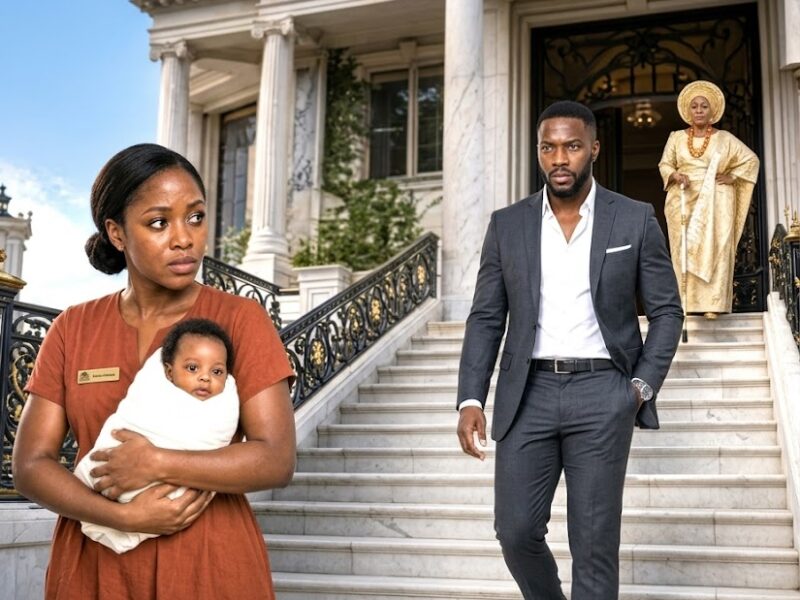
Her Husband Abandoned Her at the Hospital in Labor—Then an Old Bracelet Revealed She Was the Missing Heiress
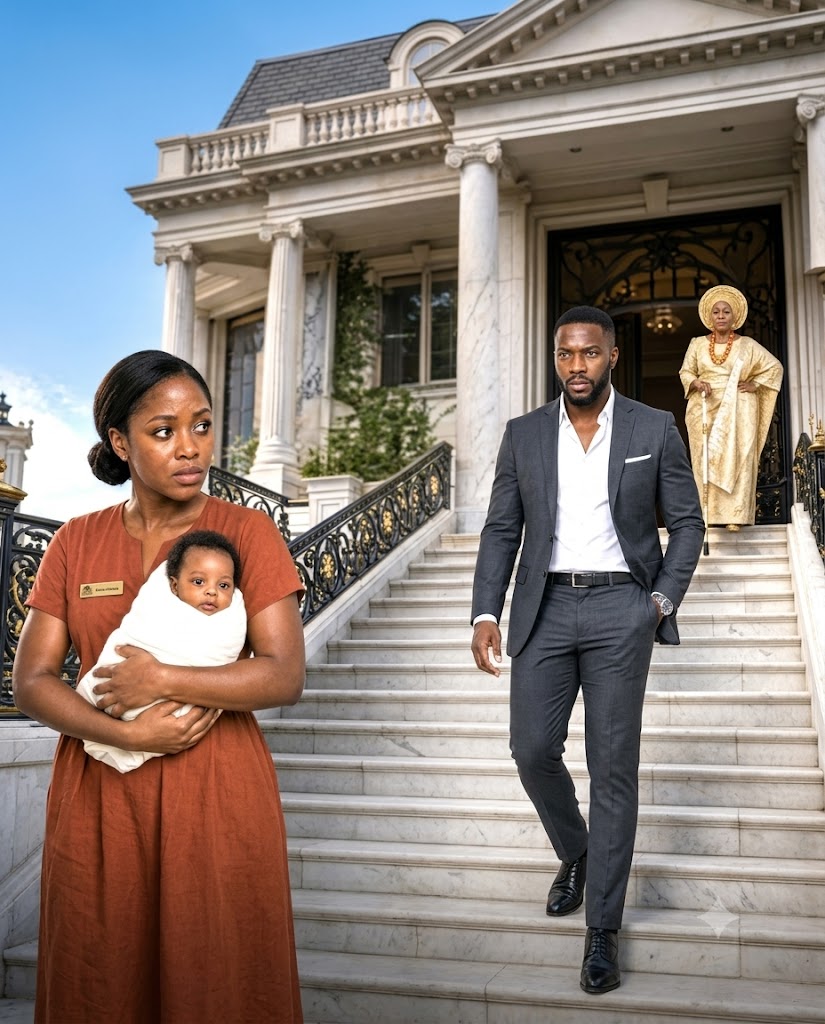
The labor monitor beeped like a metronome counting down to disaster, and all Maya could think about was the 47 missed calls from her husband that had gone straight to voicemail.
She had been in Room 312 at Cedars-Sinai for six hours, her body contracting and releasing in waves that stole her breath, while the nurse kept checking her dilation and saying words like “almost there” and “you’re doing great” to a woman whose wedding ring felt like a lie around her finger.
The text had come through at 2:47 AM, just as her contractions hit seven minutes apart: *I’m sorry. I can’t do this. The baby isn’t mine.*
She had read it three times before the words actually landed, before the room spun and the nurse had to grab her arm and tell her to breathe, breathe, breathe.
But Maya had been breathing her whole life, and look where it had gotten her.
“You need to call someone,” the nurse said softly, her name tag reading *Jennifer* and her eyes reading *pity*. “Is there a family member we can reach?”
Maya thought of her grandmother, seventy-three years old and three thousand miles away in Seattle, her heart held together by medication and prayer.
She thought of her mother, who had died when Maya was sixteen, leaving behind a daughter who had learned to build walls so high that even she couldn’t climb them.
“I’ll be fine,” Maya said, her voice cracking on the lie. “I’ve been fine before.”
The truth was, Maya had never been fine.
She had been surviving, which was different, a fact she had learned in the foster system at age twelve when survival meant not crying when the other kids stole her food, and at age sixteen when survival meant working two jobs while finishing high school, and at age twenty-four when she met Daniel Okafor and thought maybe, just maybe, she had finally found the place where she could stop running.
Daniel had been handsome in that way that made women look twice and regret it later, with a smile that promised everything and a bank account that promised more.
He had come from money—old money, the kind that had names on buildings and portraits in hallways—and he had chosen Maya, the girl with no pedigree, no trust fund, no family connections, because, he said, she was *real*.
“You’re the only genuine thing in my life,” he had told her on their third date, holding her hand across a candlelit table at a restaurant where the appetizers cost more than her monthly rent. “Everyone else wants something from me. You just want me.”
Except that wasn’t true.
Maya wanted safety, she wanted belonging, she wanted to believe that love could be a shelter instead of a storm.
And for a while, Daniel had given her all of that, or at least the appearance of it, until the infertility diagnosis had come and suddenly the man who had promised to love her through anything started looking at her like she was a problem to be solved.
The IVF treatments had been his idea.
“We’ll make this work,” he had said, his hand on her knee in the fertility specialist’s office, his voice so confident that Maya had almost believed him. “We’ll have a child. Our child. Nothing is going to stop us.”
Nothing except a switched sample, a bribed nurse, and a family so determined to control their bloodline that they would steal a stranger’s child to do it.
But Maya didn’t know any of that yet.
All she knew, as the contractions intensified and the nurse told her it was time to push, was that she was about to bring a baby into the world, and the man who had promised to be there was gone.
—
“Okay, Maya, on the next contraction, I need you to push,” Dr. Chen said, her voice calm and professional, as if this were just another Tuesday night delivery and not the moment Maya’s entire life was splitting in two.
“I can’t,” Maya gasped, her body trembling with exhaustion and fear. “I can’t do this alone.”
“You’re not alone,” Jennifer said, squeezing her hand. “We’re right here with you. You’re so close.”
Maya pushed, and the pain was blinding, white-hot, like her body was being torn apart from the inside out.
She pushed again, and somewhere in the haze of agony, she heard a cry—not her own, but small and fierce and alive.
“It’s a boy,” Dr. Chen announced, and Maya felt something crack open inside her chest, something she had been protecting for so long that she had forgotten it was there.
“A boy,” she whispered, tears streaming down her face as the nurse placed the tiny, squirming creature on her chest. “I have a son.”
He was perfect, with dark hair and dark eyes and fingers so small they could barely wrap around her pinky.
He was perfect, and he was hers, and nothing—not Daniel’s abandonment, not the fear clawing at her throat, not the knowledge that she was about to walk out of this hospital as a single mother with no safety net—nothing was going to take him away from her.
“What’s his name?” Jennifer asked softly.
Maya looked down at the baby, at the way his eyes seemed to focus on her face as if he already knew her, as if he had been waiting for her his whole life.
“Ethan,” she said. “His name is Ethan.”
—
The divorce papers arrived three days later, delivered by a courier who couldn’t meet Maya’s eyes as he handed her the envelope.
She opened it in the hospital room while Ethan slept in the bassinet beside her, his tiny chest rising and falling with the rhythm of a peace he didn’t yet know was fragile.
*Irreconcilable differences*, the papers said, as if Daniel’s text message—*The baby isn’t mine*—hadn’t been a confession rather than a grievance.
*Waiver of parental rights*, they said, as if Daniel had ever intended to be a father in anything but name.
*Settlement offer: $50,000*, they said, as if Maya’s son could be bought and sold like a piece of furniture in a house Daniel no longer wanted to live in.
She was still staring at the papers when her phone buzzed with a text from an unknown number: *Congratulations on the baby. He looks just like his father.*
Maya frowned, her thumb hovering over the screen.
She didn’t recognize the number, and the message made no sense—Daniel had made it very clear that he wanted nothing to do with Ethan, that he didn’t believe the child was his.
Unless someone else knew something she didn’t.
—
The first time Maya saw the man who would change everything, she was standing in the lobby of Nwabueze Industries, clutching Ethan’s carrier and trying not to look as terrified as she felt.
She had come to return the settlement check, to tell Daniel’s family that she wanted nothing from them—not their money, not their name, not their carefully constructed lies.
But the receptionist had looked at her like she was a ghost, and then a man had emerged from the elevator, tall and imposing and wearing a suit that probably cost more than Maya’s entire apartment.
“Miss Adaora,” he said, and his voice was deep and commanding, the kind of voice that expected to be obeyed. “I’ve been expecting you.”
“I’m sorry,” Maya said, her grip tightening on Ethan’s carrier. “I think you have me confused with someone else. My name is Maya.”
The man’s eyes flickered with something—surprise, maybe, or recognition—before his expression smoothed into a mask of polite indifference.
“Of course,” he said. “My mistake. I’m Kofi Nwabueze. Daniel’s brother.”
Maya felt the blood drain from her face.
Daniel had never mentioned a brother.
He had told her he was an only child, that his parents were dead, that he had no family except her.
But standing in front of her was a man who shared Daniel’s sharp jaw and dark eyes, a man whose presence filled the entire lobby like a storm about to break.
“I don’t understand,” Maya said. “Daniel said—”
“Daniel said many things,” Kofi interrupted, his voice cold. “Most of them were lies. But I’m not here to talk about my brother. I’m here to talk about your son.”
Maya’s heart lurched in her chest.
“What about my son?”
Kofi’s eyes dropped to the carrier, to Ethan’s sleeping face, and something in his expression shifted—a crack in the armor, a glimpse of something raw and wounded underneath.
“He’s mine,” Kofi said. “Biologically. The sample that was used in your IVF treatment—it was mine, not Daniel’s. Someone switched it.”
The words hit Maya like a physical blow, and for a moment, she couldn’t breathe.
“That’s impossible,” she whispered. “I saw the paperwork. I saw Daniel’s name on the sample.”
“Paperwork can be forged,” Kofi said. “Names can be changed. But DNA doesn’t lie. I had a test run after I learned what happened. Your son—Ethan—he’s a Nwabueze heir. He’s my blood.”
Maya shook her head, refusing to accept what she was hearing.
“Why would someone do that? Why would anyone switch the samples?”
Kofi’s jaw tightened, and for a moment, he looked away, as if the answer was too painful to speak aloud.
“Because someone wanted to control this family,” he said. “Someone wanted to make sure that the heir to the Nwabueze fortune was someone they could manipulate, someone they could claim as their own. And they used you to do it.”
Maya thought of Daniel’s text message, of the way he had abandoned her without a second thought, of the divorce papers that had arrived before she had even left the hospital.
“Daniel knew,” she said, the realization settling over her like a shroud. “He knew the baby wasn’t his. That’s why he left.”
Kofi nodded slowly.
“Daniel was part of it. He agreed to the switch, to the deception, because he was promised something in return—money, power, a place in the family business. But he was never supposed to be the father. He was just a pawn.”
“A pawn in what?”
Kofi’s eyes met hers, and in them, Maya saw something she recognized—the same exhaustion, the same wariness, the same bone-deep weariness of someone who had been fighting a battle they never asked to fight.
“In a war for control of this family,” he said. “And you and your son are right in the middle of it.”
—
The Nwabueze estate was a sprawling compound in the hills above Los Angeles, a fortress of glass and steel and old money that made Maya feel like she had stepped into another world.
Kofi had brought her here after the DNA test confirmed what he already knew—that Ethan was his son, that the sample had been switched, that Maya had been used as an unwitting surrogate for a family she had never met.
“You’ll stay here,” Kofi said, leading her through the marble foyer, past the security guards and the house staff who watched her with curious, assessing eyes. “It’s the safest place for you and the baby.”
“I don’t need your protection,” Maya said, her voice sharper than she intended. “I’ve been taking care of myself my whole life.”
Kofi stopped walking and turned to face her, his expression unreadable.
“I don’t doubt that,” he said. “But you’re not just taking care of yourself anymore. You’re taking care of my son. And there are people in this family who would rather see him disappear than let him inherit what’s rightfully his.”
Maya’s blood ran cold.
“Are you threatening me?”
“I’m warning you,” Kofi said. “There’s a difference.”
He led her to a suite on the second floor, a set of rooms that were larger than her entire apartment, with a nursery already prepared—a crib, a changing table, toys and clothes and everything a baby could possibly need.
“I had this set up before you arrived,” Kofi said, and there was something almost defensive in his tone. “I didn’t know if you would come, but I wanted to be ready.”
Maya stared at the nursery, at the evidence of a life she had never imagined for herself, and felt something twist in her chest—gratitude and resentment and confusion all tangled together.
“Why are you doing this?” she asked. “Why do you care about a child you’ve never met?”
Kofi was silent for a long moment, his gaze fixed on the crib, on the tiny blankets and the stuffed animals arranged with military precision.
“Because I know what it’s like to be discarded,” he said finally. “To be told that you don’t matter, that your blood doesn’t count, that you’re not worthy of the name you carry. I won’t let that happen to my son.”
Maya looked at him, really looked at him, and saw for the first time the cracks in his composure—the grief, the anger, the desperate determination of a man who had been hurt and was trying not to pass that hurt on.
“Okay,” she said. “We’ll stay. But I have conditions.”
Kofi raised an eyebrow.
“Name them.”
“I’m not your prisoner, and I’m not your employee. I’m Ethan’s mother, and I’ll raise him the way I see fit. You can be part of his life, but you don’t get to control me.”
Kofi’s lips twitched, almost a smile.
“Anything else?”
“I want to know who did this. Who switched the samples, who paid off the clinic, who tried to steal my son. And I want them to pay.”
Kofi nodded slowly.
“That makes two of us.”
—
The first clue came three weeks later, when Maya was sorting through the boxes of baby gifts that had arrived from various Nwabueze relatives she had never met.
Most of the gifts were generic—clothes, blankets, toys—but one box contained something that made her blood run cold.
It was a photograph, old and faded, of a woman holding a baby, with a handwritten note on the back: *For Ethan, from your grandmother. She would have loved to meet you.*
Maya didn’t recognize the woman in the photo, but she recognized the baby—or rather, she recognized the baby’s eyes, dark and deep and identical to Ethan’s.
She brought the photo to Kofi, who was in his study, reviewing documents for the upcoming board meeting.
“Who is this?” Maya asked, placing the photo on his desk.
Kofi looked at it, and his face went pale.
“Where did you get this?”
“It was in one of the gifts. Someone sent it.”
Kofi picked up the photo, his hands trembling slightly.
“This is my mother,” he said. “And the baby is me.”
Maya frowned.
“Why would someone send this to Ethan?”
Kofi didn’t answer, but his silence spoke volumes.
“There’s something you’re not telling me,” Maya said. “Something about your family, about why someone would want to switch the samples in the first place.”
Kofi set the photo down carefully, as if it were made of glass.
“My mother died when I was three years old,” he said. “She was murdered. The person who killed her was never caught, but everyone in the family knew who was responsible.”
“Who?”
“My aunt. Adaeze Nwabueze. She wanted control of the family fortune, and my mother was in her way. After my mother died, Adaeze became the matriarch of the family, and she has ruled with an iron fist ever since.”
Maya felt a chill run down her spine.
“And you think she’s the one who switched the samples?”
“I know she is,” Kofi said. “She paid off the nurse at the clinic, arranged for Daniel to be the one to swap the samples, and planned to raise Ethan as her own puppet—a heir she could control, a child who would inherit the Nwabueze fortune under her influence.”
“But why me? Why not just use a surrogate from the family?”
“Because she needed someone expendable,” Kofi said. “Someone with no connections, no power, no one who would fight for the child. You were perfect—a single mother with no family, no money, no way to challenge her. She thought she could take Ethan from you and you would have no recourse.”
Maya’s hands clenched into fists.
“She underestimated me.”
Kofi looked at her, and there was something like admiration in his eyes.
“Yes,” he said. “She did.”
—
The confrontation happened at the annual Nwabueze family gala, a black-tie event that drew hundreds of guests to the estate.
Maya had spent weeks preparing, gathering evidence, building a case that would expose Adaeze’s crimes and clear her own name.
She had the nurse’s testimony, recorded on her phone—the woman had broken down during a private meeting, confessing everything in exchange for immunity.
She had the financial records, showing payments from a shell company owned by Adaeze to the clinic where the samples had been switched.
She had the photograph, the one that proved Adaeze had been targeting Kofi’s bloodline for decades.
And she had the truth, which was the most powerful weapon of all.
“Are you ready?” Kofi asked, standing beside her in the hallway outside the ballroom.
“No,” Maya said honestly. “But I’m doing it anyway.”
Kofi reached for her hand, and she let him take it—a small gesture, but one that meant more than words.
“For what it’s worth,” he said, “I’m proud of you.”
Maya looked at him, at the man who had started as a stranger and become something more—an ally, a partner, maybe even a friend.
“Let’s go expose a monster,” she said.
—
The ballroom fell silent as Maya walked to the podium, Ethan in her arms and Kofi at her side.
Adaeze was seated at the head table, resplendent in diamonds and silk, her smile faltering as she saw who was approaching.
“What is the meaning of this?” Adaeze demanded, her voice sharp. “This is a private event.”
“It’s a family event,” Maya said, her voice steady. “And I’m here to talk about family—specifically, about what you did to mine.”
She laid out the evidence, piece by piece, the nurse’s confession playing over the speakers, the financial records projected on the screen behind her.
The guests gasped, whispered, turned to stare at Adaeze with horror and disgust.
When Maya finished, the silence was deafening.
“This is absurd,” Adaeze said, but her voice was shaking. “Lies. All of it.”
“The DNA test says otherwise,” Kofi said. “Ethan is my son. And you tried to steal him, just like you stole everything else in this family.”
Adaeze’s eyes darted around the room, looking for allies, finding none.
“I did what was necessary,” she hissed. “To protect this family. To ensure our legacy.”
“You didn’t protect anything,” Maya said. “You destroyed lives. You stole a child. You murdered your own sister-in-law. And now, you’re going to pay.”
The police arrived minutes later, summoned by Kofi before the gala began.
Adaeze was led away in handcuffs, her diamonds glittering under the chandeliers as she screamed threats and curses at everyone who had wronged her.
But Maya wasn’t listening.
She was holding Ethan, her son, the child who had been switched but never truly lost.
And for the first time in a long time, she felt like she was exactly where she was supposed to be.
—
Six months later, Maya stood in the nursery of the Nwabueze estate, watching Ethan sleep.
He had grown so much in such a short time—from a tiny, helpless infant to a curious, active baby who seemed determined to explore every corner of his world.
Kofi appeared in the doorway, leaning against the frame with a cup of coffee in his hand.
“He’s out cold,” he said. “Finally.”
Maya smiled, brushing a strand of hair from Ethan’s forehead.
“He wore himself out. He’s been practicing his crawling all day.”
Kofi walked over to stand beside her, looking down at their son with an expression that still surprised Maya sometimes—soft, tender, almost vulnerable.
“I never thought I would have this,” he said quietly. “A family. A child. Someone to come home to.”
Maya looked at him, at the man who had been a stranger and become a partner, a co-parent, a person she trusted more than she had ever trusted anyone.
“You deserve it,” she said. “We both do.”
Kofi turned to face her, and there was something in his eyes that made her heart beat faster.
“Maya,” he said, “I know we started this for Ethan, but somewhere along the way, it became more than that. At least for me.”
Maya felt her breath catch in her throat.
“What are you saying?”
Kofi reached for her hand, his fingers warm and steady against hers.
“I’m saying that I love you. Not because you’re Ethan’s mother, but because you’re you—brave, stubborn, brilliant, infuriating in the best possible way. I love you, and I want to spend my life proving it to you, if you’ll let me.”
Maya stared at him, her mind racing, her heart pounding.
She had spent so long building walls, protecting herself, expecting to be abandoned.
But Kofi had never abandoned her. He had stood by her, fought for her, believed in her when no one else did.
“I love you too,” she said, and the words felt like a release, like a door opening, like the first breath of air after drowning.
Kofi smiled, a real smile, the kind that reached his eyes and softened his entire face.
“Then let’s build something together,” he said. “Something real. Something that can’t be switched or stolen or taken away.”
Maya nodded, tears streaming down her face.
“Yes,” she said. “Let’s.”
—
The wedding was small, intimate, held in the garden of the Nwabueze estate with only family and close friends in attendance.
Maya wore a simple white dress, her grandmother’s pearls around her neck, and carried Ethan down the aisle in her arms.
Kofi waited for her at the altar, his eyes bright with tears he didn’t bother to hide.
“This beadwork,” the officiant said, holding up the traditional Nwabueze wedding beads, “has been passed down through generations, tied on the firstborn of every Nwabueze heir. Today, we tie it on Ethan, and we celebrate the family that was almost stolen but never truly lost.”
Maya watched as Kofi carefully tied the beads around Ethan’s tiny wrist, his hands trembling slightly.
“He’s ours,” Kofi whispered, looking at Maya with a love so fierce it took her breath away. “He was always ours.”
Maya nodded, her heart so full it felt like it might burst.
“Yes,” she said. “And nothing will ever take him away.”
The guests applauded, the sun shone down, and Maya felt something she had never felt before—not just happiness, but peace.
The kind of peace that comes from knowing you are exactly where you belong.
The kind of peace that comes from finally, finally being home.
*They switched the heir, hoping to erase him. Instead, they gave a discarded woman her son, her worth, and her crown. Blood can be switched. A mother’s love cannot.*









