Her Billionaire Husband Rejected Her for Giving Birth to a Girl—Then the Board Revealed Who Truly Owned His Empire
The rain hammered against the hospital windows like fists demanding entry, each drop a tiny percussion of judgment against the glass. Nia pressed her newborn daughter to her chest, counting the perfect fingers, the rosebud mouth, the impossibly small heartbeat that had already become her entire world
. She had carried this child through nine months of hope, through prenatal vitamins and nursery preparations, through the quiet conversations she’d had with her growing belly about the kind of life they would build together. The door swung open with enough force to send the IV stand wobbling, and Malikica swept in like a winter storm given human form.
“You told me we would finally have an heir,” she said, her voice carrying the cold precision of a woman who had never once questioned her own authority. “Instead, you gave this family a girl.” The words landed like stones dropped into still water, ripples of poison spreading outward. “She is healthy, strong, and perfect.
” Nia’s arms tightened around her daughter, a reflex born of instincts she hadn’t known she possessed until this moment. “How can you stand there and call her a failure?” Malikica’s heels clicked against the linoleum as she approached the bed, her designer handbag swinging like a pendulum counting down to something terrible. “Do you understand what you have done? This family name needed a son to survive.”
Dawit appeared in the doorway, his expensive suit rumpled from hours in the waiting room, his face a mask of exhaustion and something else—something that looked terrifyingly like agreement. “Mother, please,” he said, but his voice lacked conviction, lacked the steel Nia had once believed lived in his spine. “She just gave birth hours ago. This is not the time for this.” Malikica didn’t even turn to acknowledge her son.
“I have waited years for a grandson,” she continued, each word a surgical incision designed to wound precisely. “You have failed this family completely.” Nia felt something crack inside her chest, a fault line opening beneath everything she had believed about love and family and the man she had married. “Nia, I carried life for nine months,” she said, and her voice surprised her with its steadiness.
“I will not beg you to love your own granddaughter.” Dawit stepped further into the room, his hands raised in a gesture of surrender that made Nia’s stomach turn. “Nia, she is exhausted,” he said, as if her exhaustion were the problem, as if the hours of labor and the tearing of her body were the inconvenience here. “Mother, lower your voice before the entire hospital hears you.” Malikica’s laugh was a sharp, brittle thing. “Let them hear,” she said, spreading her arms as if welcoming an audience. “Let them know the heir we prayed for will never come from her.”
The baby stirred against Nia’s chest, a small, mewling sound that should have been met with tenderness but instead seemed to fuel Malikica’s fury. “Then remember this moment, Malikica,” Nia said, and she watched something flicker in her mother-in-law’s eyes—surprise, perhaps, that her daughter-in-law had dared to use her name like a weapon. “Because you will regret every cruel word you spoke tonight.
” Malikica’s composure returned instantly, her face settling into the familiar lines of contempt that Nia had learned to read over three years of marriage. “Pack her things,” she ordered, and two staff members materialized from the hallway like ghosts summoned by a cruel mistress. “I will not have disappointment living under my roof another night.” Nia watched as her clothes were pulled from the closet, her few personal items swept into bags with the efficiency of people who had done this before.
“You are ordering staff to throw my clothes like trash,” she said, and the words felt surreal, like dialogue from a movie she hadn’t agreed to star in. “Have you lost all dignity?” Dawit moved then, finally, his hand reaching out to stop one of the staff members. “Mother, stop this humiliation,” he said, and for one breathless moment, Nia thought he might actually choose her. “She is my wife. You cannot discard her like this.”
—
Malikica turned on her son with the full force of her displeasure, and Nia watched Dawit shrink beneath it, watched the man she had married become a boy again, desperate for his mother’s approval. “She brought shame when she could not produce an heir,” Malikica said, and her voice had gone quiet now, the quiet of absolute certainty. “The staff must see consequences.” She gestured broadly, encompassing the room, the hallway, the entire hospital. “Let them watch. Let everyone see how a billionaire treats a woman who just gave birth.” Nia felt the baby squirm again, and she looked down at her daughter’s face—so new, so unblemished by the cruelty of the world she had just entered. “You had one duty, one,” Malikica continued, her voice rising again. “And you failed. Dawit needs a wife who understands legacy.” Nia looked up at her husband, searching his face for something—anything—that resembled the man who had promised to love her through sickness and health, through better and worse. “Nia, please say something,” Dawit said, and his voice cracked. “Tell her you will try again. Give me words to defend you.”
—
The silence that followed was the loudest thing Nia had ever heard. She looked at her husband, really looked at him, and saw the truth she had been avoiding for three years—that she had never been his partner, only his accessory, only his hope for something he actually wanted. “I will not apologize for my daughter’s existence to earn a place in this house,” Nia said, and each word was a nail in the coffin of her marriage. Malikica’s smile was triumphant, the smile of a woman who had won a war she had been fighting since the day her son brought home a woman she hadn’t chosen. “Then leave,” she said, and the word hung in the air like a verdict. “Take your few things and learn what life is without our name protecting you.” Nia began to move, her body screaming in protest, her stitches pulling, but she would not—could not—stay in this room another second. “Choose now, Dawit,” Malikica commanded, and Nia paused, her daughter in her arms, her heart pounding. “Your mother, your empire, or a woman who cannot give you sons.”
—
Dawit’s face contorted with something that might have been pain if he had been capable of feeling anything beyond his own comfort. “You are asking me to divorce my wife days after she gave birth,” he said, and his voice had a whining quality that Nia had never noticed before, a petulance that made her wonder how she had ever found him attractive. “Mother, be reasonable.” Malikica pulled papers from her bag, documents Nia recognized as the dissolution of marriage paperwork that had been prepared, waiting, a trap set long before this night. “Reason is protecting billions,” she said, and she held the papers out to her son like a treat to a dog. “Sign these papers and I will double your shares tomorrow.” Nia felt the world tilt, felt everything she had believed about her life shifting into a new, terrible configuration. “Dawit, look at me,” she said, and she waited until his eyes met hers. “If you sign anything tonight, you sign away who you claim to be.” Malikica moved between them, her presence a wall, a barrier, an ending. “He knows what happens if he leaves with you,” she said, and her voice was almost gentle, which was somehow worse. “No fortune, no company, nothing at all.”
—
The baby began to cry, a thin, reedy sound that cut through the tension like a blade, and Nia felt her milk let down, felt her body responding to her daughter’s need even as her world fell apart. “Nia, I am trapped,” Dawit said, and his eyes were wet, and he looked so genuinely miserable that Nia almost felt sorry for him. “My entire life, my employees, everything depends on her approval.” The words landed like punches, each one knocking the breath from her lungs. “And I depended on you to stand when it mattered,” Nia said, and her voice broke on the last word. “That was my entire mistake, wasn’t it?” Dawit reached for her, and she flinched away, her body recoiling from his touch as if he were poison. “If you leave tonight, I will find you later,” he said, and the promise sounded hollow, a currency he had already proven he would not honor. “I swear I will make this right somehow.”
—
Nia laughed, and the sound was terrible, a broken thing that echoed off the hospital walls. “I didn’t lose your family today,” she said, and she looked at Dawit with something that had moved beyond anger into a strange, crystalline clarity. “I lost the man I thought loved me more than money.” She gathered the few things the staff had missed—her purse, her phone, the tiny outfit she had packed for the baby’s homecoming—and she moved toward the door. “I do not want your jewelry, your gifts, or your pity,” she said, and she didn’t look back at Malikica, couldn’t bear to see the triumph on that face. “I want my dignity intact.” Dawit followed her, his hand reaching out again, his voice desperate. “At least take the car,” he said. “Take money. Please do not walk into this storm alone tonight.” Nia paused at the threshold, the hospital’s fluorescent light giving way to the darkness of the hallway beyond. “I walked into your family with love,” she said, and she adjusted her daughter in her arms. “I will walk out of it with the same love for myself.”
—
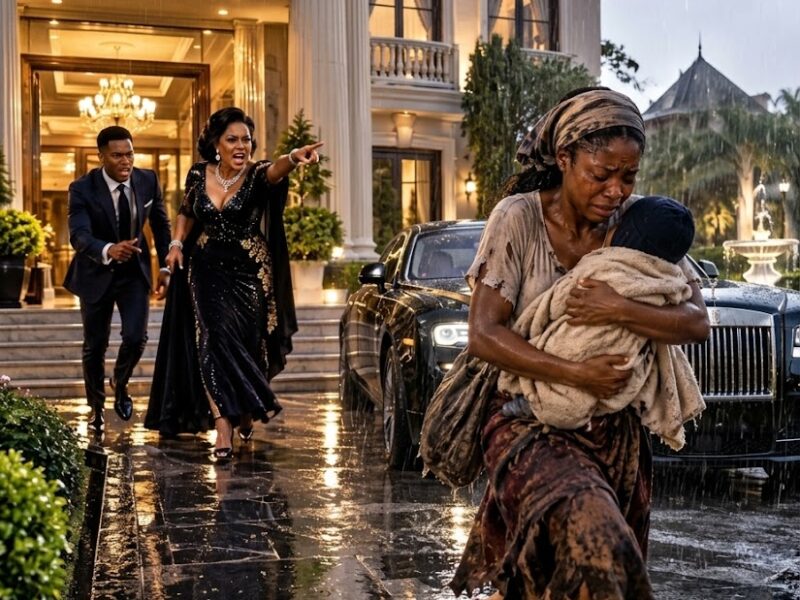
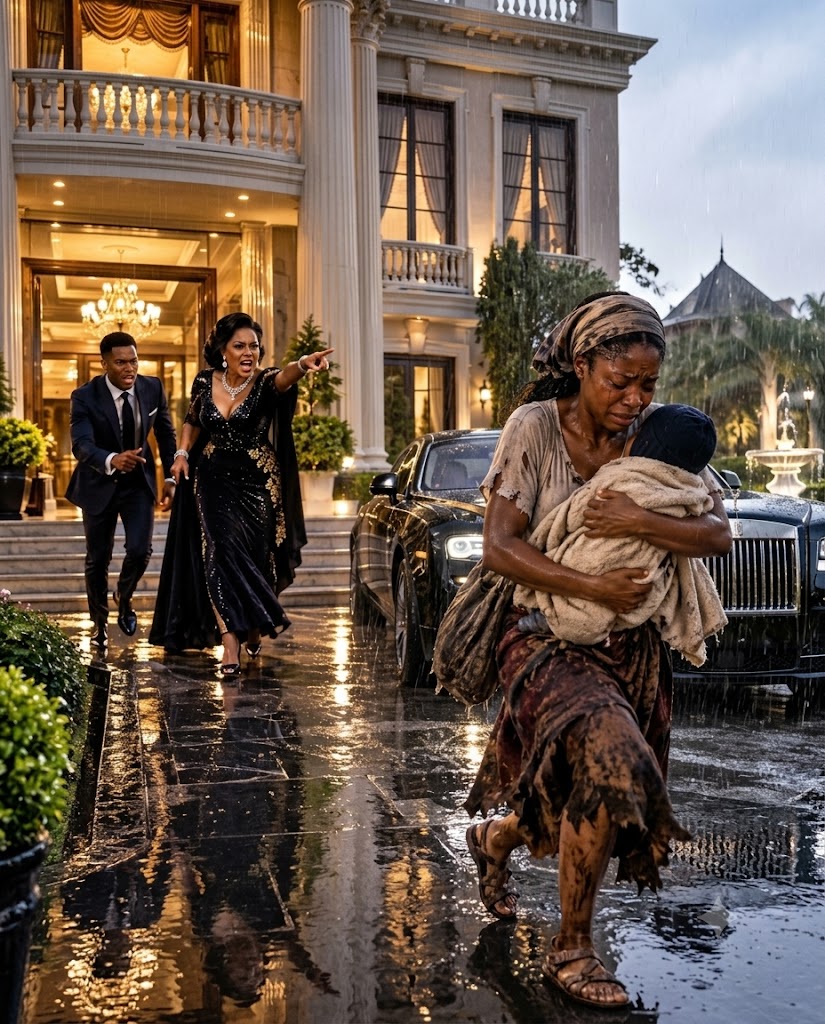
The rain was waiting for her, as if the sky itself had been holding its breath until this moment. Nia stood at the hospital entrance, her daughter tucked against her chest beneath her thin coat, and she watched the storm rage with a kind of detached wonder. “Nia, the rain is brutal,” Dawit said, appearing beside her with a raincoat that she knew better than to accept. “My mother is watching. Show her we are not completely heartless.” Nia turned to look at him, this man who had been her husband, who had held her hand during prenatal appointments, who had cried when they heard the heartbeat for the first time. “Your mother is watching?” she repeated, and she felt something cold settle in her chest. “Then let her watch a woman survive without her permission tonight.” She stepped into the rain, and the water hit her face like a benediction, like a baptism, like the beginning of something new. Behind her, she heard Malikica’s voice, sharp and cutting even through the storm. “Malikica,” Dawit said, and there was something in his voice—defeat, perhaps, or the first stirrings of realization. “This should be a moment you find delight in.”
—
The rain soaked through Nia’s clothes within seconds, plastering her hair to her skull, making her shiver so hard her teeth chattered. She held her daughter close, shielding the baby’s face with her own body, and she began to walk. “Mother sees victory now,” Dawit called after her, and his voice was fading, swallowed by the storm. “But she does not see what she is truly losing tonight.” Nia didn’t turn around, didn’t dignify his words with a response. “Nia,” he called, one last time, and she heard the break in his voice, the crack of something human beneath all the wealth and cowardice. She stopped, not because she wanted to hear what he had to say, but because she wanted him to hear her. “Tell your daughter one day that her mother left in the rain but never bowed at all,” she said, and then she kept walking, her feet splashing through puddles that reflected the streetlights like shattered stars. Behind her, she heard Malikica’s voice one final time. “She will be forgotten by morning,” the old woman said, and the words were almost lost to the wind. “Rain always makes the weak disappear without a trace.”
—
But Nia didn’t disappear. She walked for blocks, her body screaming, her daughter sleeping against her chest as if she knew she was safe, as if she knew her mother would move mountains to protect her. She found a motel with a flickering vacancy sign, and she paid with the emergency cash she kept hidden in her purse—a habit her father had taught her, a lesson about always having an exit that she had never thought she would need. The room smelled like bleach and despair, but the door locked, and the bed was dry, and her daughter was alive and healthy and perfect. Nia stripped off her wet clothes, wrapped herself and her baby in the thin motel blankets, and she cried. She cried for the marriage she had believed in, for the man she had loved, for the future she had imagined. And then, when the tears were done, she pulled out her phone and she started making plans.
—
The weeks that followed were a blur of survival, of finding an apartment with the little money she had saved, of navigating the bureaucracy of single motherhood without a partner or a village. Nia had grown up without wealth, had worked her way through college, had built a career as a graphic designer before she met Dawit. She had let herself be convinced that his world could be her world, that money and status were the same as security and love. She had been wrong. She found work at a small design studio, and she found childcare at a community center, and she found a strength she hadn’t known she possessed. Her daughter—she named her Amara, which meant “grace” in a language her father had taught her—grew and thrived, unaware of the drama that had surrounded her birth. And Nia thought, sometimes, about Dawit, about the promises he had made, about the way he had let her walk into the rain alone. She thought about him less and less as the months passed, the memory of his face growing fuzzy, the sound of his voice fading like a song she could no longer quite remember.
—
It was three months after that night when Tendai appeared at her door, a tall man with kind eyes and a briefcase that looked expensive enough to pay her rent for a year. “Miss Nia,” he said, and his voice was gentle, respectful. “I am Tendai, your late father’s attorney. Something important has waited for you.” Nia stared at him, her mind struggling to process his words. “My father has been gone two years,” she said, and she felt the familiar ache of grief that she had learned to carry with her. “Whatever he left, I asked not to be contacted about it.” Tendai nodded, as if he had expected this response. “You instructed us to hold everything except a small emergency stipend that paid your apartment when you left,” he said, and Nia remembered—remembered the money that had appeared in her account when she had needed it most. “I married without his money because I wanted love that wasn’t bought,” she said, and the words felt ironic now, bitter in a way she hadn’t anticipated. “That was my choice and he respected that.”
—
Tendai stepped inside, and Nia led him to the small table where she and Amara ate their meals. “Which is why he created a private trust,” he said, and he opened his briefcase, pulling out documents that made Nia’s head spin. “An inheritance you never had to earn.” Nia sat down heavily, her legs suddenly unable to support her. “Are you saying there is still an inheritance after all this time?” she asked, and her voice came out as a whisper. “After I have struggled alone?” Tendai nodded, his expression kind. “Not just an inheritance,” he said. “Properties, investments, and assets worth more than you can imagine.” Nia looked at the documents spread across her table, and she thought of the motel room, the rain, the words Malikica had spoken. “How much?” she asked, and then, because that felt too mercenary, “Tendai, please speak plainly. I need to understand what you are telling me.”
—
Tendai leaned back in his chair, and there was something in his eyes—satisfaction, perhaps, or the pleasure of delivering good news after so much bad. “Enough to buy the mansion that threw you into the rain times over,” he said. “And more.” Nia felt the world tilt again, but this time it was tilting in her favor. “Your father, Chief Akin, owned coastal estates, vineyards, logistics shares, and prime city property,” Tendai continued, and Nia’s mind struggled to reconcile this man with the father she remembered. “He never spoke of wealth like this,” she said, and her voice was small. “He taught me to work, to be humble, to earn everything.” Tendai nodded. “That humility was the condition,” he said. “He made you heir only if you learned to live without it.”
—
Nia thought about her father then, really thought about him, and she remembered the lessons he had taught her—about hard work, about integrity, about the importance of standing on your own two feet. She remembered the way he had looked at her when she told him she was marrying Dawit, the worry in his eyes that she had dismissed as overprotectiveness. “So while Malikica called me a gold digger,” she said, and she felt a laugh building in her chest, “I was quietly heir to more than her entire empire.” Tendai smiled. “Precisely,” he said. “And if we activate the trust today, you control everything by week’s end.” Nia looked at Amara, who was playing on a blanket on the floor, and she thought about what this money could mean—not for revenge, but for security. “Nia, I do not want revenge,” she said, and the words surprised her even as she spoke them. “I want security and a way to help women like me.”
—
Tendai nodded, and something in his expression shifted—respect, perhaps, or relief. “Then let me suggest a foundation,” he said. “Wealth with purpose heals faster than revenge ever will.” Nia thought about the women she had met in the months since she left Dawit—women who had been discarded, dismissed, treated as less than because of their gender or their circumstances. “With one signature, Miss Akin,” Tendai said, “you become one of the most powerful women in the city.” Nia picked up the pen, and she thought about her father, about the legacy he had left her, about the lessons he had taught. She signed her name, and she felt something shift—not just in her bank account, but in her soul.
—
Six months after that night in the rain, Malikica’s mansion had become a mausoleum of unspoken grief. Dawit wandered its halls like a ghost, his suit hanging loosely on a frame that had grown thin, his eyes hollow with something that might have been regret. “You have moped for months, Dawit,” Malikica said, finding him in the study where he spent most of his days now, staring at nothing. “I have found you a suitable new wife from a good family.” Dawit looked up, and for a moment, something flickered in his eyes—anger, perhaps, or grief. “A new wife?” he repeated, and his voice was flat. “My wife is somewhere in this city alone because we threw her out.”
—
Malikica waved her hand dismissively, the gesture she had used his entire life to make his concerns disappear. “She was not suitable,” she said. “Wealth needs heirs, not sentiment. You will understand with time, son.” Dawit stood, and for the first time in months, something like life animated his features. “Madam, forgiveness,” a voice said, and they both turned to find Leedi, the housekeeper who had served the family for twenty years. “But Mrs. Nia never raised her voice, even when you raised yours cruelly.” Malikica’s eyes narrowed. “Leedi, know your place,” she said, her voice ice. “I pay you to clean, not to lecture me about that woman.” But Dawit stepped forward, his hand raised. “No, let her speak,” he said, and his voice carried an authority that had been absent for months. “She is the only one here honest enough to say what I feel.”
—
Leedi nodded, her chin lifted with a dignity that Malikica had never expected from a servant. “The house has been cold since she left, sir,” she said, and her voice was quiet but steady. “Even the walls feel her absence every night.” Dawit turned to his mother, and there was something in his eyes that she had never seen before—a hardness, a judgment. “Cold,” he repeated. “I kept this family powerful while you chase a memory that will never return,” Malikica said, but her voice had lost some of its certainty. “I have hired people to find her,” Dawit said. “Every lead vanishes. It is as if she disappeared completely.”
—
The gala was the social event of the season, a fundraiser for a foundation that had appeared seemingly overnight and had already made waves in the city’s philanthropic circles. Dawit attended because his mother insisted, because appearances mattered, because the company needed the connections. He stood in the corner, nursing a glass of champagne, when the announcement came. “Ladies and gentlemen,” the host said, “please welcome the founder and chairwoman, Miss Nia Akin, our host tonight.” Dawit’s glass slipped from his fingers, shattering on the marble floor. “Good evening,” a voice said, and it was her voice, the voice he had heard in his dreams for six months. “Thank you for supporting mothers who were told they were not enough.”
—
Malikica grabbed Dawit’s arm, her fingers digging in with a strength that surprised him. “That voice, Dawit,” she hissed. “That is Nia.” But Dawit was already moving, already pushing through the crowd, already trying to reach the stage where a woman who looked like his wife but carried herself like a queen was speaking to a room full of admirers. “Why is everyone standing for the woman we discarded?” Malikica demanded, but no one was listening to her. “My God, it is her,” Dawit breathed. “Look how they look at her. As if she owns this entire world.” Malikica’s face had gone pale, her composure cracking for the first time in Dawit’s memory. “Impossible,” she said. “She left with one suitcase in the rain. How is she on that stage tonight?”
—
“Six months ago, I left a house with nothing,” Nia said, and her voice carried through the ballroom with the ease of someone who had found her power. “Tonight, I welcome you into a home for many.” The applause was thunderous, and Dawit felt tears streaming down his face, tears he couldn’t stop, tears he didn’t want to stop. “Miss Akin has secured the Harbor Estate for mothers,” the host continued. “Please join me in thanking her vision.” Malikica appeared at Dawit’s side, her face a mask of controlled fury. “Tendai,” she said, spotting the attorney in the crowd. “Explain immediately. Why does this foundation treat Nia like its absolute owner tonight?”
—
Tendai turned to face them, and there was something in his expression—satisfaction, perhaps, or the quiet pleasure of a man who had been waiting for this moment. “Because she is, Malikica,” he said. “The Akin Foundation fully funds tonight and owns the Harbor Estate.” Malikica’s face went white. “The Harbor Estate,” she repeated. “That historic property has been untouchable for decades. That cannot be true.” Dawit turned to his mother, and for the first time, he saw her not as the powerful matriarch who had controlled his life, but as an old woman whose power was slipping away. “Mother, what is she saying?” he asked. “Nia owns that estate. The one you said we could never afford.”
—
Tendai pulled out a document, and he read from it with the calm precision of a man who had been waiting months for this moment. “She owns it, the vineyards, and thirty percent of the logistics company your family leases trucks from,” he said. Dawit felt the floor drop out from under him. “We leased from Akin Holdings,” he said, and his voice was barely a whisper. “We have been paying rent to the girl we threw away.” Malikica grabbed the document, scanning it with desperate eyes. “We called her helpless, penniless, dependent,” Tendai said. “While she quietly owned half your supply chain.”
—
Dawit thought about the months since Nia had left, about the letters he had written and never sent, about the private investigators he had hired and fired, about the way he had let his mother convince him that he had done nothing wrong. “She never used it against you,” Tendai continued. “Even after the rain, she never raised her price or cut supply.” Malikica’s hands were shaking. “And the mansion,” she said, her voice cracking. “Tell me our mansion is not part of this humiliation too, Tendai.” Tendai’s smile was thin. “That, I believe, is a conversation for another time.”
—
Nia found Dawit in a quiet corner of the gala, away from the crowd, away from the cameras, away from his mother. “Nia, please,” he said, and his voice was raw, desperate. “Just five minutes. I have rehearsed this apology every night since you left.” Nia looked at him, and she felt something she hadn’t expected—not anger, not love, but a kind of distant pity. “You had a lifetime to speak when it mattered,” she said. “Why should five minutes change anything now?” Dawit’s face crumpled. “Dawit, silent,” he said, and the words seemed to cost him something. “You handed me to the rain. Silence would have been kinder than that active betrayal.”
—
Dawit nodded, and tears streamed down his face. “I know,” he said. “I chose wealth and comfort over the woman who loved me without any wealth at all.” Nia watched him, and she remembered the night in the hospital, the way he had stood there and let his mother tear her apart. “I begged you with my eyes that night,” she said. “You looked away. Do you remember how that felt?” Dawit covered his face with his hands. “Every hour,” he said, his voice muffled. “I see your suitcase, your dress in the rain, my mother’s voice, my shame.”
—
Nia let the silence stretch between them, let him sit in his discomfort, let him feel a fraction of what she had felt that night. “Shame does not rebuild trust, Dawit,” she said finally. “What exactly are you asking me to give you now?” Dawit looked up, and his eyes were red, his face blotchy, his composure completely gone. “Not love,” he said. “Just a chance to earn forgiveness. I was the one who abandoned you when you needed me.” Nia studied him, looking for the man she had married, looking for something worth saving. “I came to say what my pride has choked for months,” a voice said, and they both turned to find Malikica standing behind them, her face a study in forced humility.
—
“I was cruel beyond reason,” Malikica said, and the words seemed to cost her something, seemed to be dragged from somewhere deep inside her. “Cruel,” Nia repeated. “You threw a recovering mother into a storm because her child was not male.” Malikica nodded, and for the first time, Nia saw something like genuine remorse in her eyes. “I obsessed over a male heir until I could not see the worthy woman already in my house.” Nia felt the anger rising in her chest, the familiar heat of remembered pain. “You did not just fail to see me,” she said. “You ordered staff to erase me like a stain to hide.”
—
Malikica’s composure cracked, and Nia saw something she had never expected—tears. “My own mother was cast aside for bearing girls,” Malikica said, and her voice was barely a whisper. “I swore I would never be that weak again.” Nia stared at her, and something shifted in her understanding. “So you became what hurt you,” she said. “You wounded my daughter to avenge your own old wound.” Malikica nodded, and the tears were flowing freely now. “Yes,” she said. “And now I stand here broken, asking forgiveness from the daughter I should have cherished.”
—
Nia looked at this woman who had caused her so much pain, and she felt something she hadn’t expected—not forgiveness, not yet, but understanding. “Do you hear yourself for the first time?” she asked. “You sound like a mother instead of a master.” Malikica reached out, her hand trembling. “I have lost my son’s respect and my soul,” she said. “Please, Nia, do not leave me in this darkness.” Nia was silent for a long moment, and then she spoke. “I will forgive you, Malikica,” she said. “But forgiveness will never mean forgetting what you taught me.”
—
Malikica’s eyes widened. “Tell me what you need,” she said. “Money, apology, public honor. I will give everything you demand.” Nia shook her head. “I need you to ensure no woman in your house is ever measured by the gender of her child,” she said. Dawit stepped forward, his face wet with tears. “She is right,” he said. “Mother, love requires courage, not silence. I failed that test completely that night.” Nia turned to him, and her voice was cool. “And you, Dawit, courage is not a speech after months. It is a choice made when it costs.”
—
“We will change,” Malikica said, and her voice had a desperate quality, the voice of a woman who had finally realized what she stood to lose. “I will fund your foundation, honor your daughter, correct our entire legacy.” Nia looked at her, and she thought about all the women who had been discarded, all the daughters who had been dismissed, all the mothers who had been made to feel less than. “Words are easy in moonlight,” she said. “Show me in daylight when no cameras or guilt are watching you.” Dawit stepped forward. “Give us tasks, conditions, proof,” he said. “We will not waste this second chance if you grant it.”
—
Nia considered them both—the woman who had wounded her, the man who had abandoned her—and she made a decision. “Then meet me tomorrow at my office,” she said. “Bring humility, not lawyers. We will discuss real consequences.” She turned to leave, and then she stopped. “But words must honor my daughter, who you dismissed before you ever held her with love.” She gestured to the crowd, to the staff, to the family members who had gathered to watch the confrontation. “Staff, family, please listen.”
—
Malikica stepped forward, and her voice carried through the ballroom with the authority she had spent a lifetime cultivating. “I publicly apologize to Nia for my shameful behavior that night,” she said. “I dismissed a blessing because I was blinded by an old fear of being irrelevant without grandsons.” Dawit stepped beside her, his hand on his mother’s arm. “And I enabled her,” he said. “I chose my inheritance over my wife, and I lost both in doing so.” Nia watched them, and she felt something loosen in her chest—not forgiveness, not yet, but the possibility of it.
—
“You both measured a newborn’s worth by gender,” Nia said. “That thinking must die in this house today.” Malikica nodded, and there was something in her expression that Nia had never seen before—humility. “It will,” she said. “I am rewriting my will. Equal inheritance, equal respect, equal voice for every grandchild forever.” Leedi stepped forward from the crowd of staff, her eyes wet with tears. “Madam Nia,” she said, “on behalf of the staff, we wept that rainy night. We welcome justice at last.”
—
Nia looked at Leedi, and she remembered the housekeeper’s kindness during her marriage, the small gestures of support that had helped her survive. “I have asked Leedi to forgive me most,” Malikica said. “She saw my cruelty and kept your memory alive here.” Leedi nodded, her chin lifted. “I accept your apology, Malikica,” she said. “But trust is built daily. Today is only the first brick, nothing more.” Nia smiled, and for the first time in months, the smile felt genuine.
—
The foundation grew, and with it, Nia’s purpose. “This foundation began with one night in the rain,” she said at the one-year anniversary gala, standing on the same stage where she had first appeared. “Today, it shelters three hundred mothers and counting.” The applause was thunderous, and Nia let it wash over her, let it fill the spaces that had once been hollow with grief. “Thanks to Nia’s leadership,” the host said, “we provide housing, legal aid, and scholarships for rejected mothers and daughters.”
—
Malikica stepped forward, and Nia watched her with cautious hope. “And today I humbly add my family’s pledge,” Malikica said, her voice steady. “Ten million dollars in my granddaughter’s honored name.” Nia felt tears prick her eyes, and she looked at Amara, who was sitting in the front row, clapping her small hands with delight. “Malikica,” Nia said, “when you left me in the rain, I never imagined you would one day stand beside me here.” Malikica nodded, her eyes wet. “I never imagined I could be prouder of a granddaughter than any grandson,” she said. “You taught me that truth.”
—
The foundation’s work expanded, and Nia found herself at the center of a movement she had never intended to start. “Miss Akin has also secured the historic Harbor Estate as permanent housing for mothers in transition,” the host announced, and Nia thought about the women who would find shelter there, the children who would grow up knowing they were valued. “I once thought legacy was a surname,” Nia said, and she looked out at the crowd, at the faces of women who had been told they were not enough. “Today I learn legacy is how many lives you lift with love.”
—
Dawit appeared at her office one morning, his suit replaced by jeans and a simple shirt, his face open in a way she had never seen before. “I have resigned as CEO effective immediately,” he said, and Nia felt her eyebrows rise. “My mother’s company must learn accountability without me protecting it.” Nia studied him, looking for the catch, the hidden motive. “Dawit, you cannot do this,” Malikica said, appearing behind him, her voice sharp with alarm. “This company is your birthright. I built it for you alone, son.”
—
Dawit turned to his mother, and there was something in his eyes that Nia had never seen before—resolve. “You built it on control,” he said. “I want to rebuild myself on character.” Nia watched the exchange, and she felt something shift in her understanding of the man she had married. “Dawit, this is a huge sacrifice,” she said. “Are you doing this for me or for the man you want to become?” Dawit met her eyes, and his gaze was steady. “For the man who should have carried you inside that rainy night instead of watching you leave.”
—
Malikica stepped forward, her face a mask of confusion and fear. “You have nothing,” she said. “Why throw away everything for a prideful gesture now?” Dawit shook his head. “Because if Nia ever trusts me again, it must be because I chose integrity over luxury freely.” Nia nodded slowly, and she felt something she hadn’t expected—respect. “I respect this, Dawit,” she said. “But do not expect my trust to return because you signed one letter today.”
—
Dawit nodded, and there was no resentment in his expression, only acceptance. “I expect nothing,” he said. “I will work at the foundation unpaid until my actions finally speak louder than apologies.” Malikica stepped forward, her composure cracking. “This is my mother,” Dawit said, and his voice was gentle. “She told my father I was a disappointment because I was not a son.” Nia felt her breath catch. “Malikica, I did not know,” she said.
—
Malikica’s face crumpled, and for the first time, Nia saw the wounded girl beneath the cruel woman. “You carried that wound for fifty years and never spoke of it,” Nia said. Malikica nodded, tears streaming down her face. “I swore no daughter-in-law would make me feel powerless again,” she said. “So I became the one who wounds.” Nia reached out, and she took Malikica’s hand. “Pain passed down becomes tradition unless someone brave enough stops it,” she said. “That is what we must do.”
—
Malikica looked at Dawit, and then at Nia. “But honesty can tell Dawit what you just told me,” Nia said. “He needs to understand, not just obey you.” Dawit stepped forward, his face open with something that looked like hope. “I checked my bank accounts this morning,” he said. “Even my wealth cannot buy back that rainy night.” Malikica looked at him, and her voice was small. “Now, will you hate me less if you know I was once the girl thrown aside for being female, too?”
—
Nia watched the exchange, and she felt something heal inside her. “I never hated you, Malikica,” she said. “I pitied that power made you forget you were once that helpless girl.” Malikica’s eyes widened. “Then help me become a grandmother my granddaughter will not fear,” she said. “Teach me how to be soft again.” Nia nodded, and she felt the first genuine warmth toward her mother-in-law that she had ever experienced.
—
The news came three months later, delivered by a grim-faced Tendai. “Malikica’s mansion has been in secret default for eight months,” he said, and Nia felt the world tilt once again. “The bank will auction it on Friday.” Nia stared at him. “Does Dawit know?” she asked. Tendai shook his head. “Malikica hid it from him. After you left, investors pulled out. She borrowed to keep appearances intact.”
—
Nia found Malikica in the mansion’s garden, sitting on a bench that overlooked the roses she had never once stopped to admire. “The debt is twelve million dollars short,” Malikica said, and her voice was hollow. “Without payment, the family loses the estate by week’s end completely.” Nia sat beside her, and she thought about the night in the rain, the words Malikica had spoken, the pain she had caused. “And if I do nothing,” Nia said, “the rain finally evicts you as you evicted me.”
—
Malikica nodded, and her eyes were wet. “It would be justice,” she said. “I would deserve to stand in the rain I forced you to walk through alone.” Nia was silent for a long moment, and then she spoke. “Legally, I could buy the debt for half its value and own the mansion outright,” she said. Malikica’s eyes widened. “But I could do something no one expects.”
—
Tendai called the bank, and Nia watched as the papers were drawn up, as the debt was cleared, as the mansion was returned to the family trust with a clause that would protect it forever. “This draft clears the full twelve million plus penalties,” Tendai said, handing Nia the documents. “The mansion is secure, debt-free today.” Nia signed, and she felt something settle inside her—not revenge, not satisfaction, but peace.
—
Malikica stared at her, her face a mask of shock. “You are saving the house that humiliated you after we showed you no mercy at all,” she said. “You could have bought it, owned us, humiliated us as we humiliated you. Why didn’t you, Nia?” Nia looked at the mansion, at the garden, at the roses that bloomed without awareness of the drama that surrounded them. “Because becoming you would have meant the rain actually defeated me,” she said. “I refused to become what hurt me.”
—
Malikica’s composure crumbled, and she wept openly, her shoulders shaking with sobs that seemed to come from somewhere deep and long-buried. “How do we repay twelve million?” she asked, her voice broken. “We have nothing left worthy enough to offer you in return.” Nia handed her the deed. “Repay by respecting every woman under that roof,” she said. “By teaching your staff, friends, family that daughters are heirs.”
—
Malikica took the deed, and she held it like something sacred. “We will,” she said, her voice fierce with determination. “I swear on my father’s name.” Nia nodded. “Then sign this deed,” she said. “The house returns to the family trust with a clause. It can never evict a mother again.” Malikica signed, and the pen shook in her hand, and when she was done, she looked at Nia with something that looked almost like worship.
—
The confession came six months later, during a family dinner that had become a regular occurrence. “Nia, Dawit,” Malikica said, and her voice was heavy with the weight of what she was about to say. “I must confess the ugliest truth.” Nia set down her fork, and she felt Dawit tense beside her. “I paid a doctor to say Nia could not bear sons,” Malikica said. “I needed justification to remove her. I chose a lie over admitting my fear of girls continuing.”
—
The words hung in the air like smoke, and Nia felt the world tilt for what seemed like the hundredth time. “You told staff I was barren of sons,” she said, and her voice was barely a whisper. “While I was still recovering from giving birth to your granddaughter.” Malikica nodded, tears streaming down her face. “I did,” she said. “And Dawit, I told your board Nia demanded money to leave. Both lies to protect my pride.”
—
Dawit pushed back from the table, his face a study in shock and rage. “So every humiliation was built on your fabrication,” he said. “My wife left while you invented reasons to hate her.” Malikica nodded, and she looked at Nia with something that looked like desperation. “Malikica, this truth changes everything,” Dawit said. “Why confess now when you could have kept lying forever?”
—
Malikica’s voice was small, broken. “Because Tendai found the original clean report in your father’s files,” she said. “Nia’s father had it safeguarded always.” Nia felt tears prick her eyes, and she thought about her father, about the man who had protected her even from beyond the grave. “My father kept the truth,” she said. “Even after death, he protected me from a lie I never knew existed until now.”
—
Two years had passed since that night in the rain, and Nia stood at the foundation’s annual gala, looking out at a crowd that had gathered to celebrate what they had built together. “Two years ago, I walked into rain with one suitcase,” she said, and she felt the weight of those words, the truth of them. “Today I walk beside you without fear of judgment.” The applause was thunderous, and Nia let it wash over her, let it fill her with gratitude for the journey that had brought her here.
—
Malikica stepped forward, her face transformed by the work she had done, the lessons she had learned. “And I, who once worshiped grandsons, now teach every visitor that my granddaughter is my greatest legacy,” she said, and she looked at Amara, who was sitting in the front row, her small face bright with pride. Nia felt tears stream down her face, and she didn’t bother to wipe them away.
—
Dawit stood beside her, and though they were not remarried, there was something between them that had been rebuilt—not love, not yet, but respect, friendship, a partnership forged in the fire of their shared past. “I did not win Nia back with promises,” he said, addressing the crowd. “I earned her friendship by showing up every single day consistently.” Nia nodded, and she reached for his hand, a gesture of solidarity rather than romance.
—
“We are not remarried,” Nia said, and her voice carried through the ballroom with the ease of someone who had found her truth. “We are rebuilt. Friendship, co-parenting with respect, and honest boundaries now guide us.” Dawit nodded, and there was something in his expression that looked like peace. “I was forgiven without being excused,” he said. “That mercy taught me more than any punishment ever could.”
—
Malikica stepped forward, her face transformed by the work she had done. “Nia, my mother now runs the foundation’s mentorship for grandmothers,” Dawit said. “She teaches what she once refused to learn.” Malikica nodded, and there was something in her expression that looked like humility. “I forgave because my daughter deserves a family free of bitterness,” Nia said. “But I forgave on my terms, not theirs. And we honor those terms daily.”
—
The mansion now housed mothers, not just memories of cruelty, and Nia walked its halls with a sense of peace that she had never expected to find there. “The mansion now houses mothers, not just memories of my cruelty,” Malikica said, and her voice was filled with gratitude. “Sometimes the person you throw away in the rain is the very person who returns to shelter you.” Nia nodded, and she thought about the night in the rain, the way it had felt like the end of everything, when really it had been the beginning.
—
Amara grew, surrounded by women who had been discarded and had found their way to the foundation, surrounded by a grandmother who had learned to love her, surrounded by a father who was learning to be the man he should have been. Nia watched her daughter play in the garden of the mansion that had once rejected her, and she felt a sense of peace that she had never thought she would find.
—
“Remember that,” Malikica said, finishing her speech, and the crowd applauded, and Nia felt the weight of the journey she had traveled, the distance between the woman who had walked into the rain and the woman who stood on this stage. “Thank you for being a part of this amazing journey,” Nia said, and her voice was filled with gratitude. “We are growing together. Keep sharing the hope.”
—
The rain fell softly outside the mansion windows, but inside, there was warmth, there was light, there was a family that had been broken and had rebuilt itself into something stronger. Nia looked at Amara, at Dawit, at Malikica, and she thought about the night that had started it all. She thought about the rain, and she smiled, because she had survived it, and she had thrived, and she had become exactly who she was meant to be.
—
**THE END**









