
He Threw Out the Wife Who Built His Food Empire—Then Every Kitchen Stopped Cooking
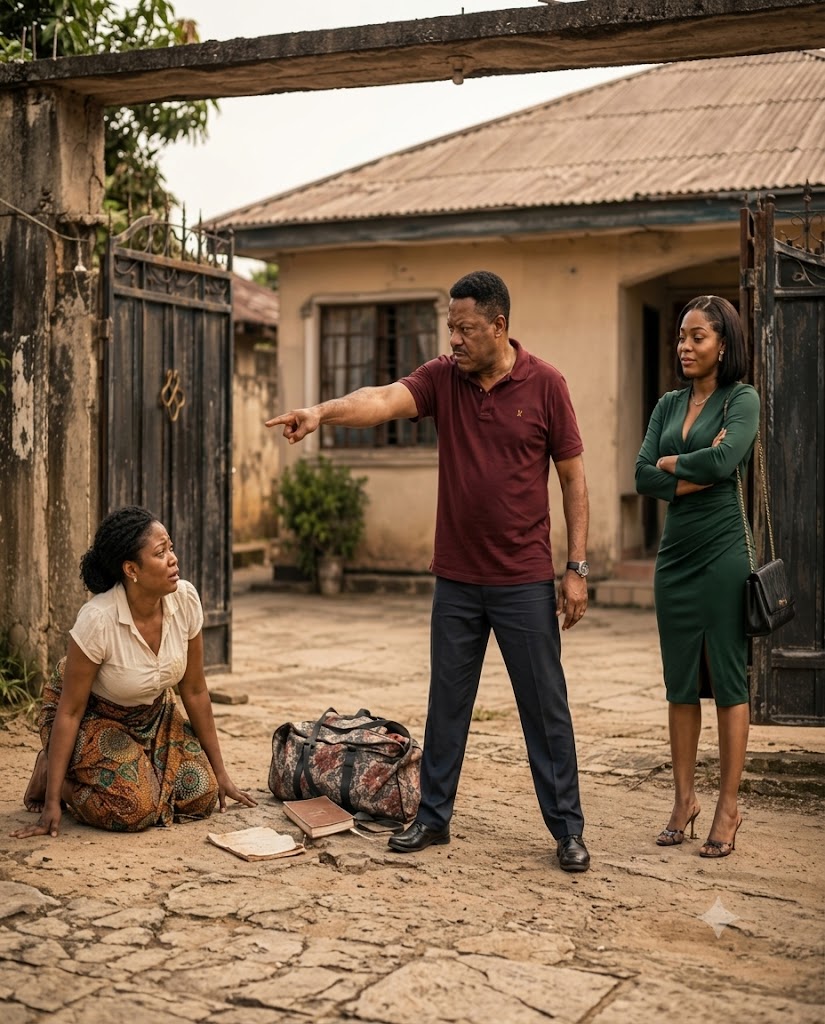
The rain had stopped an hour ago, but the streets of Houston still shone like wet glass under the streetlights. Ngozi stood on the front porch of the house she had turned into a home, clutching a black trash bag that held everything she could carry. Six years of marriage, and it fit into one bag.
Her husband, Chidi, stood in the doorway with his arms crossed, his jaw tight. He would not look at her. He looked past her, at the driveway, at the neighbor’s fence, at anything that was not her face.
“You did this,” he said. “Not me. You went through my phone.”
“I never unlocked it, Chidi.” Her voice was steady, but her hands were not. “Your messages appeared on the screen while you were in the shower. I saw the transfer. I saw her name.”
He did not deny it. He did not explain. He simply stepped back and closed the door, and the sound of the lock clicking into place was the loudest thing Ngozi had ever heard.
She walked to her car, a ten-year-old Honda with a cracked taillight, and sat behind the wheel without starting the engine. The clock on the dashboard read 11:47 PM. She had nowhere to go. Her mother was dead. Her father was in Nigeria, and she had not spoken to him in years. Her friends were Chidi’s friends, and she knew whose side they would take.
She opened the glove compartment and pulled out a small, worn notebook with a cracked leather cover. Her mother’s handwriting filled every page, recipes written in blue ink that had faded to gray. Ngozi pressed the notebook to her chest and closed her eyes.
“Whatever is truly mine, Lord, let it come with me,” she whispered. “Give me strength to walk out with my head high.”
She started the engine and drove.
—
Two weeks earlier, the argument had started over money. It always started over money.
“Ngozi, how many times must I ask where Saturday’s money went?” Chidi stood in the kitchen doorway, holding a bank statement like it was evidence in a trial.
“I gave you every dollar from that event myself, Chidi.” She did not look up from the pot she was stirring. The pepper soup needed attention, and she had learned long ago that Chidi’s moods were like Houston weather—unpredictable and often violent.
“Then explain why the account is short again this month.”
“I cook for every client, Chidi. I don’t touch the money.”
“Someone is touching it, and it isn’t disappearing on its own.”
“Then show me the ledger. Let us look together.”
“Some expenses are mine to manage, not yours to question.”
“Every expense in this house is mine to question, Chidi.” She finally turned to face him, the wooden spoon still in her hand. “I built this business with you. I cooked every meal that kept it alive.”
“You are pushing me tonight, Ngozi.” His voice dropped to that low, dangerous register she had learned to fear. “I am warning you.”
She said nothing. She turned back to the pot. That night, she slept in the guest room with the door locked.
—
The phone screen had been a accident. Or maybe it was not an accident at all. Maybe it was the answer to a prayer she had been too afraid to pray.
Chidi had left his phone on the kitchen counter while he showered. Ngozi was wiping down the counters when the screen lit up. A message from someone named Funmi Adeyemi.
*Transfer successful. Monthly rent payment.*
She stared at it. She read it again. Then she scrolled up, and she saw the history—months of transfers, always on the first of the month, always the same amount. Six years of marriage, and she had never once suspected.
When Chidi came out of the bathroom, she was sitting at the kitchen table with his phone in front of her.
“Who is Funmi, Chidi? And why are you paying Funmi’s rent?”
His face changed. She had seen him angry, she had seen him tired, but she had never seen him look like a man caught in a trap.
“You went through my phone? That is what this is about?”
“I never unlocked it. Your messages appeared on the screen. Now answer me.”
“It is not what you think, Ngozi. It is complicated.”
“Complicated enough to starve this house every single month?”
“Watch your tone. This is still my house.”
“How long, Chidi?”
He said nothing.
“How long has this been going on?”
“Does it matter now? You already have your answer.”
“It matters to me. Say it plainly for once.”
“Since you no longer trust me, pack your things before morning.”
“You are choosing her over this marriage. Say it, Chidi.”
He did not say it. He did not have to. He walked out of the kitchen and slammed the bedroom door, and Ngozi sat alone at the table with her mother’s notebook in her lap and tears she refused to let fall.
—
The first night was the hardest.
She checked into a motel off the freeway, the kind with flickering neon and a parking lot full of trucks. The room smelled like bleach and old cigarettes. She locked the door, drew the curtains, and sat on the edge of the bed without turning on the light.
She did not scream. She did not break. She had promised herself that much.
In the morning, she drove to a diner and ordered coffee she could not afford. She opened her mother’s notebook and read the first recipe—jollof rice, the way her mother had made it for every birthday, every wedding, every funeral. The pages were stained with oil and memories.
“Okay, Mama,” she whispered. “Help me carry what you started.”
She spent the next three days applying for jobs. She had no references, no resume, no proof that she had spent six years running a catering business. She had only her hands, and she was not sure that was enough.
On the fourth day, she walked into a small grocery store on the east side of the city. She needed rice, tomatoes, peppers—just enough to cook one meal, just enough to remember who she was. The store was crowded and loud, and the owner was an older woman with sharp eyes and a kind smile.
Ngozi found the ingredients she needed and brought them to the counter. The woman looked at her for a long moment.
“You know pepper soup?” the woman asked.
Ngozi blinked. “Yes, ma’am.”
“Your face is telling me you know it. Your hands are telling me something else. What is your name?”
“Ngozi. Ngozi Okonjo.”
“Madam Ade.” The woman held out her hand. “You look like a woman who has not eaten today.”
“I have not eaten since last night, ma’am.”
“Then come. Food first. Everything else can wait.”
Ngozi hesitated. “I cannot ask a stranger to feed me.”
“You did not ask. I offered.” Madam Ade smiled. “Come.”
—
The store had a small kitchen in the back, and Madam Ade led her there. The stove was old, the pots were dented, but the smell was familiar. Ngozi stood in the middle of the room and felt something loosen in her chest.
“Whose handwriting is this?” Madam Ade asked, picking up the notebook Ngozi had set on the counter.
“My mother’s. She wrote every recipe before she died.”
Madam Ade flipped through the pages slowly. “She wrote with care. You can tell a lot about a person by how they write their recipes.”
“She taught me everything I know.”
“And what do you know, Ngozi?”
“I know how to cook.”
“Then cook.”
Ngozi cooked. She made pepper soup, the way her mother had taught her, and she did not measure anything. She tasted as she went, adjusting the heat, the salt, the spice. When she was finished, she poured the soup into two bowls and set one in front of Madam Ade.
Madam Ade took a spoonful. She closed her eyes. She was silent for a long moment.
“You know this pot well,” she said finally. “Where did you learn?”
“My mother, Madam. I have cooked since I was young.”
“Why is a woman with hands like this carrying a packed bag?”
Ngozi looked down at the table. “My husband put me out this morning.”
“Did he give you somewhere safe to go?”
“He gave me nothing, Madam. Not even an explanation that made sense.”
Madam Ade set down her spoon. “Come and stay with me tonight. I have a room above the store. It is small, but it is clean and warm.”
“Madam, you do not even know me.”
“I know enough. Hungry, hurting, and too proud to ask.”
Ngozi wanted to refuse. She wanted to say she was fine, that she would figure it out, that she did not need charity. But she was tired, and she was scared, and the soup was warm in her belly.
“Thank you, Madam,” she said. “For everything. Truly.”
—
The room above the store was small, but it had a window that looked out over the street. Ngozi lay on the narrow bed and stared at the ceiling. She thought about Chidi, about the house, about the business she had built with her own hands.
“He said clients came for his name, not my cooking,” she said.
Madam Ade was standing in the doorway with a blanket. “Then why did he need you in that kitchen every day?”
“I don’t know anymore, Madam. I feel foolish for staying so long.”
“Foolish is loving someone. It is not the same as failing.”
“Then why does it feel like I lost everything?”
“Because you have not yet seen what you still have.”
“What do I still have, Madam? Tell me plainly.”
“Hands that fed a business he could not run without you.” Madam Ade set the blanket on the bed. “Tomorrow, come to my store. Let those hands work again.”
Ngozi sat up. “Tomorrow, Madam, I will be there before sunrise.”
—
She was there before sunrise.
Madam Ade handed her an apron and pointed to the kitchen. “One week, Ngozi. Show me what those hands can do.”
Ngozi put on the apron. She tied it tight. She walked into the kitchen and stood in front of the stove, and she felt like she had come home.
The first day, she cooked forty catering trays. She had never done that before, not in one day, not in that kitchen. But she worked without stopping, tasting and adjusting, and when the trays were lined up on the counter, Madam Ade looked at her with something like wonder.
“We have never done this,” Madam Ade said.
“I have cooked for bigger events than this, Madam. Trust me.”
The second day, the clients came back. They asked for the same dishes. They asked who had cooked them. Madam Ade told them the truth: a woman named Ngozi.
The third day, a client called to say the food was the best they had ever had. They wanted the same menu again next month.
“Wonderful,” Ngozi said. “We did it.”
“Yes,” Madam Ade said. “What a relief.”
“Then we will be ready for them, Madam. Together.”
—
Seven days passed. On the seventh day, Madam Ade sat Ngozi down at the small table in the back of the store.
“The trial is over,” she said. “This stall is yours to help run now.”
Ngozi stared at her. “I don’t know how to thank you for this, Madam.”
“When your own door opens, hold it for another woman.”
“One day, Madam, I will do exactly that.”
—
Across town, Chidi’s business was falling apart.
The first cancellation came two weeks after Ngozi left. The client said the food was not the same. The second cancellation came a week later. The third came three days after that.
“Another cancellation?” Chidi stood in the kitchen of his catering business, staring at the order sheet. “That is the third client this month.”
“We used her exact measurements,” Funmi said. “Every single one. Same pot. Same pepper. The exact measurements on her recipe cards.”
“So why does it taste like a stranger cooked it?”
The assistants said nothing. Tolu, the head cook, kept his eyes on the floor.
“Customers have complained since Madam Ngozi left,” he said quietly. “We have her cards. Follow them exactly and stop worrying.”
“We follow every card,” Funmi snapped. “The food still comes out different.”
“Ngozi only followed these cards. It is not the card, Funmi. It is knowing when to stop.”
Chidi rubbed his temples. “Three cancellations, Funmi. What is happening in that kitchen?”
“The assistants are careless. That is the real problem.”
“Tolu says they follow every ingredient exactly. We cannot afford to lose another client.”
“Give me the Adaze order. I will prove myself with it.”
“That order matters, Funmi. Do not gamble with it.”
—
The Adaze order was a disaster.
Funmi plated the food before it was ready. Tolu warned her, but she did not listen. The client arrived, tasted the food, and demanded a full refund.
“This is not what I paid for,” the client said. “Not even close.”
“I assure you, Madam, the recipe was followed exactly.”
“Then the recipe is not the problem. Something else has changed. I want a full refund, and I want it tomorrow.”
Funmi tried to argue, but the client was already walking away.
“Tell Chidi I expect his call,” she said over her shoulder.
—
The biggest contract came three weeks later. Chidi had been chasing it for months—a corporate account that would have kept his business afloat for a year. He brought Funmi to the meeting. He promised her food would be perfect.
It was not.
The client called the next day. “Chidi, I have to be honest. The last three deliveries disappointed us.”
“Please, sir, do not cancel because of these recent complaints.”
“My decision is made. We are ending the contract today.”
Chidi hung up the phone and sat in silence. Funmi was standing in the doorway.
“I am leaving, Chidi,” she said. “I cannot keep taking her blame.”
“Tolu, you have done nothing wrong here.”
“Madam Ngozi should never have been let go. What should we call it, Madam? It needs a proper name.”
Chidi did not answer. He was looking at the recipe cards on the counter, the ones Ngozi had written in her careful hand.
—
Six months later, Ngozi opened her own restaurant.
She called it Ngozi’s Kitchen. Madam Ade helped her find the space, a small storefront on a busy street with big windows and a sign that Ngozi painted herself. On the day they signed the lease, Madam Ade handed her a pen.
“Your name goes on the door,” she said. “Not mine.”
“I would not be signing anything without you, Madam.”
“Now sign it, and tomorrow we secure the shop we inspected.”
Ngozi signed. Her hand was steady.
—
The restaurant was busy from the first day. Word spread quickly. The woman who had cooked for Chidi’s clients for six years was cooking for herself now, and her food was better than ever.
One afternoon, a woman walked in and stood at the counter. She was well-dressed, with a sharp gaze and a folder in her hand.
“Someone told me the woman who cooked Chidi’s food now works here,” she said.
Ngozi looked up. “You came all this way just to find me, Madam?”
“I have an event coming. I want your hands on it.”
“Then I will make sure it is worth the trip.”
—
Chidi’s business closed three months later.
He had no clients left. He had no money. Funmi had left him. The house was empty, and the silence was louder than any argument he had ever had with Ngozi.
He sat in the kitchen—her kitchen—and stared at the recipe cards. He had followed them exactly. He had measured every ingredient. He had done everything she had done.
But the food still tasted wrong.
“It is not the card,” he said to no one. “It is knowing when to stop.”
—
Ngozi was in her office when the phone rang.
“Madam Ade,” she said. “Good afternoon.”
“Ngozi, I have someone here who wants to see you.”
“Who is it?”
A pause. “Your husband.”
Ngozi set down her pen. She looked out the window at the street, at the people walking by, at the life she had built without him.
“Send him in,” she said.
—
Chidi walked into Ngozi’s Kitchen with his hat in his hands. He looked older. He looked tired. He looked like a man who had lost everything.
“I came to say I am sorry, Ngozi,” he said.
“Sorry?” She did not raise her voice. “After everything, you walked in here just to say sorry? Say what you came to say, Chidi.”
“The business is finished. I have lost everything. I hoped you could come back and cook again.”
Ngozi laughed. It was not a cruel laugh, but it was not a kind one either.
“So the apology was for my hands, not my heart. Now I understand exactly why you are here. I will not rebuild what you broke, Chidi.”
“Ngozi, please. I have nowhere else to turn.”
“Then you will start again the way I had to.”
He was silent for a moment. Then he looked up. “There is something else I need to ask you. Could we try again, Ngozi? As husband and wife?”
Ngozi stood up. She walked around her desk and stood in front of him.
“I have already filed for our divorce, Chidi. That door closed the night you chose her.” She paused. “I forgive what you did to me. Forgiveness does not return me to the house where you erased me.”
He nodded slowly. “Thank you, Ngozi. For more than I deserve.”
“Take care of yourself, Chidi. I mean that.”
He walked out. Ngozi watched him go, and she did not cry. She had cried enough.
—
The next month, Ngozi opened a training kitchen.
She called it the Second Chance Kitchen. It was a place for women starting over, women who had lost everything, women who needed someone to believe in them.
On the first day, a young woman walked in. She was carrying a bag, and she looked like she had not slept in days.
“Good morning, Madam. Is this the training kitchen?”
“It is. What is your name, my dear?”
“Chioma, Madam. I have nowhere else to learn.”
Ngozi smiled. “Someone once let me in with far less than you have. Come. This apron is yours now. Wear it well.”
Chioma took the apron. “I promise to make you proud, Madam Ngozi.”
Ngozi watched her tie the apron, and she remembered the morning she had stood in Madam Ade’s kitchen, before sunrise, with nothing but her hands and her mother’s notebook.
She opened the notebook and looked at the first page. Her mother’s handwriting, faded but still legible.
“Whatever is truly mine, Lord, let it come with me.”
Ngozi closed the notebook. She had carried it with her. She had carried everything that was truly hers.
And now she was home.
—
The restaurant was full by noon. Ngozi stood in the kitchen, tasting the soup, adjusting the heat. She did not need to look at the recipe cards. She knew the food by heart.
She thought about Chidi, about the house, about the six years she had spent cooking for a man who never saw her. She thought about the transfer, about Funmi, about the night she walked out with a trash bag and a broken heart.
She thought about Madam Ade, who had fed her when she was hungry and given her a room when she had nowhere to go.
She thought about Chioma, who was learning to cook, who was learning to stand on her own.
She thought about her mother, who had written every recipe with care, who had taught her that hands could heal as well as hurt.
Ngozi tasted the soup again. It was perfect.
“Order up,” she called.
And the kitchen moved, and the food went out, and the woman who had lost everything smiled.
Because she had not lost everything. She had only lost what was never hers to keep.
The rest—the hands, the heart, the knowledge—had been hers all along.
—
Three years later, Ngozi’s Kitchen had two locations.
The Second Chance Kitchen had trained forty women. Some of them had opened their own restaurants. Some of them had gone to work in other kitchens. Some of them had simply learned to cook for their families and had found a new kind of confidence.
Ngozi sat in her office and looked at the photograph on her desk. It was a picture of her mother, standing in a kitchen in Lagos, holding a wooden spoon.
“Thank you, Mama,” she said. “For everything.”
She picked up her pen and wrote a note to Chioma, who was now the head chef at the second location.
*Keep tasting. Keep adjusting. Never measure what you can feel.*
She signed her name and set the note aside.
Then she walked out into the kitchen and started cooking.
—
The phone rang one afternoon. Ngozi answered it without looking at the screen.
“Ngozi’s Kitchen. How may I help you?”
There was a pause. Then a familiar voice.
“Ngozi. It’s Chidi.”
She was silent for a moment. “What do you want?”
“I just wanted to tell you that I am doing better. I got a job. I am cooking again.”
“That is good to hear.”
“I learned something, Ngozi. I learned that you cannot follow a recipe if you do not understand the person who wrote it.”
Ngozi looked at her mother’s notebook on the shelf. She thought about the recipes, about the care in every stroke of the pen.
“No,” she said. “You cannot.”
“I am sorry. I know I said it before, but I am saying it again. I am sorry for what I did.”
“I know.”
“I hope you are happy, Ngozi. I really do.”
“I am.”
“Goodbye.”
“Goodbye, Chidi.”
She hung up the phone and went back to work.
—
The rain had stopped. The streets were dry. Ngozi stood in the kitchen of her restaurant, surrounded by the sounds and smells of food cooking, and she felt something she had not felt in years.
Peace.
She looked at the recipe cards on the counter, the ones she had written in her own hand.
She looked at the apron hanging on the hook, the one Chioma had worn that morning.
She looked at the photograph of her mother, smiling in a kitchen in Lagos.
“Whatever is truly mine, Lord,” she whispered. “Let it come with me.”
And it had.
—
The story spread. People came from all over the city to eat at Ngozi’s Kitchen. They came for the food, but they stayed for the story. The woman who had been thrown out by her husband, who had started over with nothing, who had built an empire with her own hands.
Ngozi did not like to tell the story. She liked to cook. But when people asked, she told them the truth.
“Someone once did the same for me,” she said. “Many years ago.”
And then she told them about Madam Ade, who had fed her when she was hungry and given her a room when she had nowhere to go.
“Now it is my turn,” she said. “Now I hold the door open for someone else.”
—
Chioma graduated from the Second Chance Kitchen on a Friday afternoon.
She stood in front of the other women, wearing her white apron, holding a certificate that Ngozi had signed.
“I came here with nothing,” Chioma said. “I had no money, no job, no hope. But Madam Ngozi looked at me and saw something I could not see in myself.”
Ngozi stood in the back of the room, her arms crossed, a small smile on her face.
“She taught me to cook,” Chioma continued. “But she taught me something else too. She taught me that you can lose everything and still have everything that matters. She taught me that your hands are yours. Your heart is yours. No one can take those from you.”
The room was silent.
“I will never forget what she did for me,” Chioma said. “And one day, I will do the same for someone else.”
Ngozi nodded. That was all she needed to hear.
—
The house was quiet.
Chidi sat alone in the living room, staring at the recipe cards on the coffee table. He had sold the business. He had sold the house. He had sold everything, and now he was renting a small apartment on the other side of town.
He picked up one of the recipe cards and read it. Ngozi’s handwriting, careful and precise.
*Jollof Rice. Ingredients: rice, tomatoes, peppers, onions, oil, salt, pepper, thyme, bay leaves. Method: heat oil, add onions, cook until soft…*
He had followed it exactly. He had measured everything. But the food had never tasted the same.
“It is not the card,” he said out loud. “It is knowing when to stop.”
He set the card down and looked at the photograph on the shelf. It was a picture of Ngozi, standing in their old kitchen, holding a wooden spoon. She was laughing.
He had not seen her laugh like that in years.
He had not seen her laugh at all.
He put the photograph in a drawer and closed it.
—
Ngozi was in the kitchen when Madam Ade walked in.
“Madam,” Ngozi said, wiping her hands on her apron. “I did not expect you today.”
“I came to see how you are doing.”
“I am well. Busy. Happy.”
“Good.” Madam Ade sat down at the small table in the corner. “I heard about Chidi.”
Ngozi nodded. “He called me. He said he is cooking again.”
“And you?”
“I am fine. I told him I forgave him.”
Madam Ade raised an eyebrow. “You forgave him?”
“I did not say I would go back to him. I said I forgave him. There is a difference.”
Madam Ade smiled. “You have learned well.”
“I had a good teacher.”
“No,” Madam Ade said. “You had good hands. And a good heart. That is not something anyone can teach.”
Ngozi sat down across from her. “Madam, I have been meaning to ask you something.”
“What is it?”
“That first night, when you found me in your store—why did you help me? You did not know me.”
Madam Ade was silent for a moment. Then she said, “Someone once did the same for me. Many years ago.”
“What happened to you, Madam?”
Madam Ade looked out the window. “That is a story for another night, Ngozi.”
Ngozi nodded. She understood.
—
The restaurant was closing for the night. Ngozi locked the front door and turned off the lights. She walked through the dining room, past the tables and chairs, past the photographs on the wall.
She stopped in front of one photograph. It was a picture of her mother, standing in a kitchen in Lagos, holding a wooden spoon.
“I did it, Mama,” she said. “I carried what you started.”
She walked into the kitchen and turned off the stove. She wiped down the counters. She hung her apron on the hook.
Then she walked out the back door and into the night.
The sky was clear. The stars were out. Houston was quiet.
Ngozi got into her car and drove home.
Home. The word felt different now. It did not mean a house with a man who did not love her. It did not mean a marriage that had been a lie. It meant a small apartment with a comfortable bed and a bookshelf full of cookbooks. It meant a place where she could be herself.
She unlocked the door and walked inside. She hung up her keys. She kicked off her shoes.
Then she sat down on the couch and opened her mother’s notebook.
She turned to the first page. She read the recipe for jollof rice. She read the recipe for pepper soup. She read every recipe in the book, one by one, and she remembered.
She remembered her mother’s hands guiding hers. She remembered the smell of food cooking in their small kitchen in Lagos. She remembered the day her mother had given her the notebook, a few weeks before she died.
“These are yours now,” her mother had said. “They are all I have to give you.”
They were enough. They had always been enough.
Ngozi closed the notebook and set it on the coffee table. She lay back on the couch and closed her eyes.
“Thank you, Mama,” she whispered. “For everything.”
And she slept, and she dreamed of food, and she woke up ready to cook again.
—
The next morning, Ngozi arrived at the restaurant before sunrise.
She unlocked the door and turned on the lights. She tied on her apron and stood in the kitchen.
She thought about the six years she had spent cooking for Chidi. She thought about the night she had walked out with a trash bag and a broken heart. She thought about Madam Ade, who had fed her and housed her and believed in her.
She thought about Chioma, who was learning to cook, who was learning to stand on her own.
She thought about all the women who would come after her.
She picked up a knife and started chopping onions. The sound was steady and rhythmic, like a heartbeat.
“Order up,” she said, and the kitchen came alive.
—
The story was not over. It never would be.
Ngozi’s Kitchen would grow. The Second Chance Kitchen would train more women. Chioma would open her own restaurant. Madam Ade would retire and move to Florida, and Ngozi would visit her every winter.
Chidi would fade into the background, a memory of a man who had lost everything because he could not see what he had.
And Ngozi would keep cooking.
She would keep tasting and adjusting. She would keep teaching and learning. She would keep holding the door open for the women who came after her.
Because that was what her mother had taught her.
That was what Madam Ade had taught her.
That was what she had learned in the six years she had spent cooking for a man who never saw her.
You cannot measure love with a recipe card. You cannot follow a formula and expect it to taste like home.
You have to feel it. You have to know it. You have to put your hands on it and adjust until it is right.
And when you lose everything, you have to remember that the most important things were never his to take.
Your hands. Your heart. Your knowledge.
Those are yours.
Those have always been yours.
—
The rain started again.
Ngozi stood in the kitchen of her restaurant and listened to it fall. She thought about the night she had walked out of Chidi’s house, the rain shining on the streets like wet glass.
She thought about the motel room with the flickering neon. She thought about the diner where she had ordered coffee she could not afford. She thought about the grocery store where Madam Ade had found her.
She thought about the first meal she had cooked in Madam Ade’s kitchen. Pepper soup. The way her mother had taught her.
She tasted the soup on the stove. It was perfect.
She poured it into a bowl and set it on the counter.
“Order up,” she said.
And the kitchen moved, and the food went out, and the woman who had lost everything smiled.
Because she had not lost everything.
She had only lost what was never hers to keep.
The rest was hers.
And it always would be.
—
Ngozi walked out of the kitchen and into the dining room. The lunch crowd was arriving. The tables were filling up. The servers were moving, and the food was coming out, and the air was full of the smell of spices and the sound of laughter.
She stood in the doorway for a moment and watched.
This was her restaurant. This was her life. This was the woman she had become.
She thought about the girl who had come to America with nothing but a notebook and a dream. She thought about the woman who had married a man who did not see her. She thought about the wife who had walked out with a trash bag and a broken heart.
She thought about the woman who had rebuilt herself, one meal at a time.
She smiled.
Then she turned and walked back into the kitchen.
“Order up,” she said again.
And the kitchen came alive.
—
The story was not about Chidi. It was never about Chidi.
It was about Ngozi. It was about the hands that had fed a business he could not run without her. It was about the heart that had kept going when everything else had fallen apart. It was about the knowledge that could not be written on a recipe card, the kind of knowing that came from years of standing in front of a stove, tasting and adjusting, learning and growing.
It was about the woman who had lost everything and found herself.
It was about the woman who had been thrown out and had built an empire.
It was about the woman who had been erased and had written her own name on the door.
It was about Ngozi.
And it always would be.
—
She was in the kitchen when the phone rang.
“Ngozi’s Kitchen. How may I help you?”
“Ngozi? It’s Chioma.”
“Chioma! How are you?”
“I am good. I am calling because I have news.”
“Tell me.”
“I am opening my own restaurant. I found a space. I signed the lease this morning.”
Ngozi felt her heart swell. “Chioma, that is wonderful.”
“I wanted to thank you. For everything. For believing in me. For teaching me.”
“You did the work, Chioma. I just showed you the door.”
“You held it open, Madam Ngozi. That is what you said. When your own door opens, hold it for another woman.”
Ngozi smiled. “And now you are holding it open for someone else.”
“I am. I am going to start a training kitchen too. Just like yours.”
“Good. That is good.”
“I will make you proud, Madam Ngozi.”
“You already have, Chioma. You already have.”
—
Ngozi hung up the phone and stood in the kitchen. She looked at the recipe cards on the counter. She looked at the apron on the hook. She looked at the photograph of her mother on the shelf.
She thought about the six years she had spent cooking for Chidi. She thought about the night she had walked out. She thought about the transfer, the phone, the name Funmi.
She thought about all of it.
And she felt nothing but gratitude.
Because if Chidi had not thrown her out, she would never have found Madam Ade. She would never have opened Ngozi’s Kitchen. She would never have started the Second Chance Kitchen. She would never have met Chioma.
She would never have found herself.
She picked up her mother’s notebook and opened it to the first page.
*Jollof Rice. Ingredients: rice, tomatoes, peppers, onions, oil, salt, pepper, thyme, bay leaves.*
She read the recipe. She knew it by heart.
But she read it anyway.
Because it was not just a recipe. It was a memory. It was a promise. It was a legacy.
It was her mother’s handwriting. It was her mother’s love. It was her mother’s hands, guiding hers.
She closed the notebook and set it on the shelf.
Then she picked up a knife and started chopping onions.
The sound was steady and rhythmic, like a heartbeat.
“Order up,” she said.
And the kitchen came alive.
—
The rain had stopped. The streets were dry. Ngozi stood in the kitchen of her restaurant, surrounded by the sounds and smells of food cooking, and she felt something she had not felt in years.
Peace.
She looked at the recipe cards on the counter, the ones she had written in her own hand.
She looked at the apron hanging on the hook, the one Chioma had worn that morning.
She looked at the photograph of her mother, smiling in a kitchen in Lagos.
“Whatever is truly mine, Lord,” she whispered. “Let it come with me.”
And it had.
—
The End.









