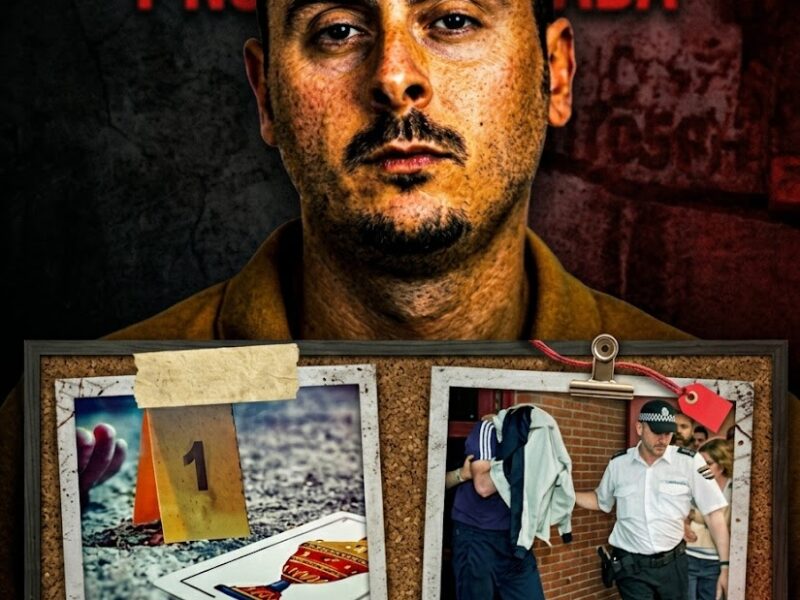
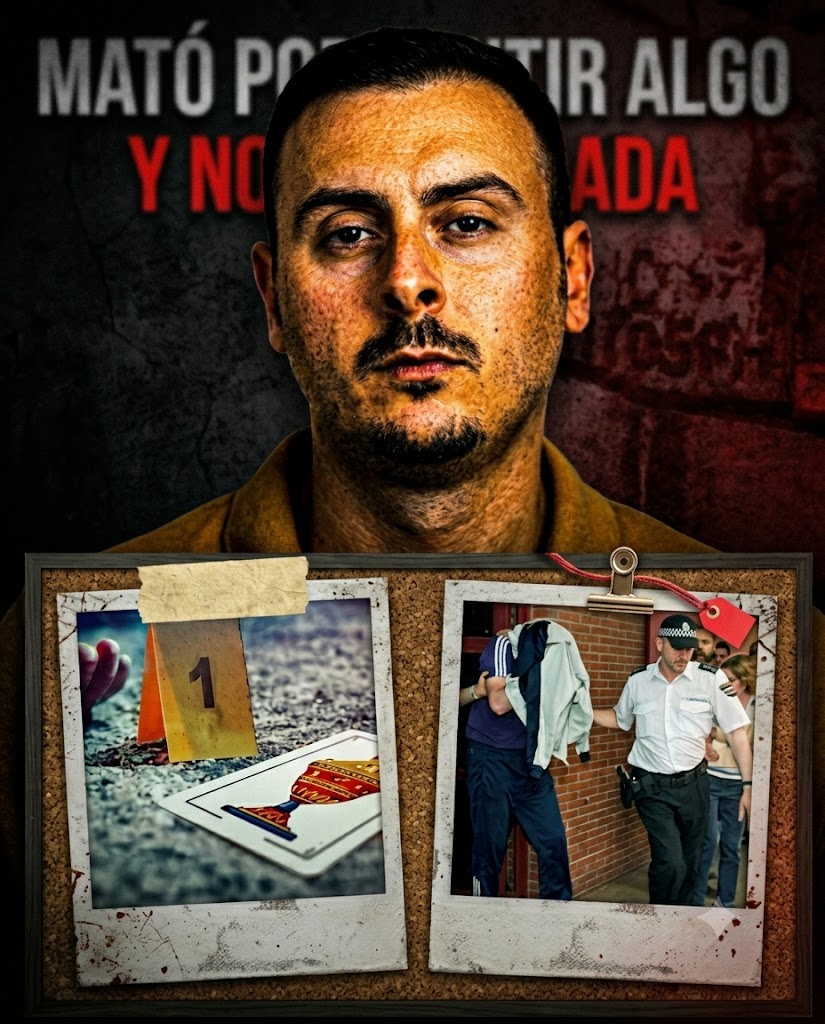
He Killed to Feel Something — In the End, He Felt Nothing
The call came into dispatch at 7:42 on a Saturday evening, the kind of September evening in Santa Fe when the light turns gold and the tourists linger on the Plaza. A woman’s voice, nervous, clipped. “Our daughter is missing. We can’t find her.”
The responding officers took the report the way they took hundreds of missing-person calls each year. Teenagers run away. Kids get lost. Most come home before the paperwork dries.
This one didn’t.
By 3:17 the next morning, a search team found the body of a twelve-year-old girl on a forest service road outside town. She was nine days shy of her thirteenth birthday. Her name was Asunta.
The story that unfolded over the next two years would tear apart a community, expose a marriage built on lies, and leave investigators with a question they could never answer: Why would two successful professionals systematically drug their own daughter for months and then kill her?
—
The thing about Asunta was that everyone knew her.
She was the first child of Chinese origin adopted in the region, a tiny nine-month-old who arrived from a province in China in 2001 and grew up in a beautiful apartment in the center of the city. Her mother, Rosario, was an attorney. Her father, Alfonso, was a freelance journalist.
They were, by every outward measure, the perfect family.
Asunta went to private school. She played violin. She brought home straight A’s. Her teachers described her as brilliant, sensitive, beloved.
“She was the kind of kid who made you believe in the future,” one of her instructors later told investigators. “Always smiling. Always polite. You never would have guessed.”
You never would have guessed.
That phrase would echo through every courtroom, every news broadcast, every kitchen table conversation for years.
—
The first crack appeared in the statements.
Rosario told police she had been home that evening. Phone records placed her near the exact spot where Asunta’s body was discovered.
She said she didn’t know how her daughter ended up on that forest road.
Security cameras at the family’s country house showed Alfonso and Asunta arriving at 6:33 PM on Saturday.
A classmate from French tutoring said she saw Asunta that afternoon with a man.
And then came the toxicology report. That was when the comfortable explanations fell apart.
—
The medical examiner’s findings landed on the prosecutor’s desk like a grenade.
Asunta’s bloodstream contained toxic levels of lorazepam, the generic form of Ativan. The equivalent of twenty-seven pills. A dose nine times higher than what would be considered extreme for a full-grown adult.
But that wasn’t the worst of it.
Hair analysis revealed traces of the same drug stretching back at least three months. They had been drugging her since July.
They had been drugging her for months.
—
The prosecutor, a man named Miguel Ángel Carballo, stood in front of the jury fourteen months later and laid out the timeline with surgical precision.
Alfonso Basterra had purchased more than 170 lorazepam tablets in the weeks before the killing. Different prescriptions. Different pharmacies. A deliberate paper trail designed to avoid suspicion.
The first red flags had appeared in July, when Alfonso brought Asunta to her music school and mentioned she’d taken an antihistamine for allergies. Teachers noticed she was acting strangely. Disoriented. Slurring her words.
They didn’t report it. Why would they? She was just a kid with allergies.
—
“There’s a moment in every investigation,” Carballo told the court, “when you stop asking what happened and start asking how it could have happened for so long without anyone noticing.”
The courtroom was silent.
“You have a child who is being sedated every day for months. You have teachers who see the symptoms. You have a doctor who prescribes the medication. And you have two parents who smile for the cameras and beg for the public’s help in finding their missing daughter.”
He paused.
“That’s not a crime of passion. That’s a crime of planning.”
—
The killing itself happened on the night of September 21, 2013.
Asunta was sedated. Then she was asphyxiated. There were ligature marks on her neck when they found her.
Her parents reported her missing hours later. They stood in front of the police station and held each other and cried.
The cameras captured everything.
—
The trial in 2015 lasted weeks. The jury deliberated for days.
On October 30, they returned a verdict: guilty of murder. Both of them. Unanimous.
The judge sentenced each to eighteen years in prison, citing the aggravating factors of kinship and treachery. Asunta had been left completely defenseless by the sedation. She never had a chance to fight back.
They never confessed. They never explained. They maintained their innocence until the end.
The motive? The prosecution suggested the parents were in the middle of a separation. There was speculation about life insurance policies. About difficulties in the relationship with their daughter. About money, about resentment, about the thousand small cruelties that accumulate in a marriage that’s falling apart.
But the exact reason—the final explanation for why two people with apparently successful lives decided to drug and kill the child they had adopted—was never fully answered.
And that unanswered question was perhaps what disturbed people most.
—
Alfonso Basterra is still serving his sentence.
Rosario Porto died in November 2020 in a women’s prison in Ávila. She took her own life. She was fifty-four years old.
Asunta would have been twenty-five today.
—
The second case began with a burned car on a forest road near a reservoir, south of Barcelona.
It was May 4, 2017. Someone called the local police to report a vehicle fire. The officers arrived to find a Volkswagen Golf completely torched. Inside the trunk, something that, though deteriorated, had a human shape.
It didn’t take long to identify the owner. Pedro Rodríguez, thirty-eight years old. A Barcelona city police officer. No missing-person report had been filed. No one had raised an alarm.
The prosthesis Pedro wore on his back—the one that survived the flames—was what allowed the definitive identification.
Who was Pedro Rodríguez? He was a veteran officer. He’d been in a relationship for about a year with Rosa María Peral, also a city police officer. They lived together. From the outside, it looked like a normal couple.
But inside that relationship—and inside the police force that bound them professionally—there was something more.
—
Rosa Peral had met Albert López in 2012. Also a city police officer. Also from the same suburb. They had maintained an on-and-off relationship over the years, even while Rosa was living with Pedro.
The three of them had patrolled together.
They all knew each other. And the combination of accumulated personal history, jealousy, and unresolved tension ended in the worst possible way on the night of May 1, 2017.
—
According to the reconstruction established by investigators and confirmed at trial, Pedro Rodríguez was killed that night in the apartment he shared with Rosa in a suburb south of Barcelona.
The exact weapon couldn’t be determined. The body was too badly damaged by fire. But it was established that he died in the apartment.
The next day, Rosa and Albert put the body in the trunk of Pedro’s car, drove it to the forest road by the reservoir, and set it on fire.
What gave them away was the geolocation of their phones.
Investigators tracked the movements of the mobile devices. On the night of the killing, there were three phones in Rosa’s apartment: Pedro’s, Rosa’s, and Albert’s.
—
Rosa changed her story when she learned the police had located Albert.
She said she had suspicions about Pedro. She went to give a statement. She was arrested.
Albert was arrested at practically the same time.
At the trial in January 2020, both defendants followed the same strategy: blame each other.
Rosa said Albert had killed Pedro out of jealousy and that she had merely followed his instructions in terror.
Albert said Rosa had killed Pedro because he had assaulted her and that she had asked him for help disposing of the body.
The prosecution argued that both had acted in a premeditated and coordinated manner.
—
On March 23, 2020, the jury declared both guilty. Rosa Peral by eight votes. Albert López by seven.
The sentence, handed down on April 15, 2020, by Judge Enrique Rubira of the Barcelona court, was twenty-five years for Rosa Peral with the aggravating factor of kinship—because she lived with the victim at the time of the crime—and twenty years for Albert López.
Both convictions were confirmed by the High Court of Justice of Catalonia in December 2020.
In 2023, Netflix released a series based on the case, starring Úrsula Corberó and Kim Gutiérrez. Rosa Peral tried to legally block its release. She failed.
From prison, she wrote and starred in a play. She said, “It takes a second to destroy years.”
She didn’t specify who destroyed what.
—
The third case was a man who had invented himself.
Not a metaphor. Almost literal. He had built a public identity based on bragging, on ostentation, on always appearing where there were cameras or journalists willing to write about him.
He was a restaurateur in Madrid. He had a restaurant in the Arganzuela neighborhood and had proclaimed himself, with all the solemnity his ego allowed, the King of Cachopo.
Cachopo is an Asturian dish of two breaded steaks with filling. He prepared it in gigantic versions that had given him a certain local and media fame.
César Román appeared on television programs. He let himself be photographed. He talked about himself in interviews. He was the kind of character Madrid sometimes produces—the one who believes the neighborhood is his, that the camera is always looking in his direction, that life is a stage where he is always the protagonist.
Heidi Paz had just turned twenty-five. She was from Honduras. She had come to Spain with the dream of building a life. She was César Román’s girlfriend.
And in early 2018, Heidi made a decision he couldn’t accept. She wanted to distance herself from him.
—
In the early hours of July 22, 2018, Heidi went to César’s apartment on López Grass Street in Madrid after attending a birthday party with friends.
That night, she made a call at five in the morning. It was her last registered connection.
After that, silence.
On July 29, Heidi’s family reported her missing. A week later, on August 5, César Román was also reported missing. By then, no one could find him.
On August 13, 2018, firefighters responded to a fire at an industrial warehouse in the Usera district, in southern Madrid. The warehouse was owned by César Román.
Inside, among the flames and smoke, they found a suitcase.
Inside the suitcase, a human torso.
The identification took days, but mitochondrial DNA compared with the genetic profile of Heidi’s mother confirmed what everyone already suspected. The remains were Heidi Paz.
—
The police searched for César Román. He had disappeared on August 14, the day after the discovery.
He had cut his hair, grown a beard, traveled to Zaragoza, rented a room in the Delicias neighborhood using a false ID under the name Julio César Jurado Rodríguez. He looked for work in restaurants, presenting himself as José Rafael Rujano Contreras.
Meanwhile, from his phone, he continued searching for news about Heidi Paz’s murder and created a fake Facebook profile with a woman’s name to try to interfere in the personal life of an ex-partner.
They found him on November 15, 2018. Not in the streets. Not in a police raid. The owner of a bar in Zaragoza recognized him while he was working behind the counter. She had seen him on a television program. She called the police. They arrested him on the premises, apron still on.
—
The trial was held in May and June 2021. Fourteen sessions. The jury deliberated for two days.
On June 1, 2021, nine jury members unanimously declared him guilty of homicide and desecration of a corpse.
The Madrid court sentenced him to fifteen years in prison for homicide with the aggravating factors of kinship and gender-based violence, plus five additional months for the crime of desecration.
The rest of Heidi’s body was never found.
César Román is serving his sentence at the Soto del Real prison in Madrid. In 2024, six years after the crime, he sent a letter to the court formally acknowledging the crime and asking Heidi’s family for forgiveness.
“I communicated to the Madrid court my acknowledgment of the crime committed, my remorse,” he wrote.
Heidi’s family has spent six years waiting for someone to tell them where the rest of their daughter is.
Netflix produced a documentary series about the case. Three episodes. In Spain, it’s known as *El rey del cachopo*. In international versions, it’s called *Cooking Up Murder*.
The King of Cachopo. The man who invented a title. The only thing he managed to make eternal was the damage he caused.
—
León, May 12, 2014. It was 5:17 in the afternoon.
Spain was in the middle of an election campaign for the European Parliament. Isabel Carrasco González, fifty-nine years old, president of the Provincial Council of León and provincial president of the Popular Party, left her home on the Paseo de la Condesa de Sagasta and walked toward the party headquarters on the other side of the Bernesga River.
To cross, she used the pedestrian walkway that connects the Paseo de la Condesa with the Paseo de Salamanca. It was a habitual route, a path she knew by heart. A spring afternoon in the center of a quiet city.
Monserrat González was waiting for her.
Monserrat González was fifty-nine years old. She was the wife of Pablo Antonio Martínez, chief commissioner of the National Police in Astorga. She was the mother of Triana Martínez, who had worked for years at the Provincial Council of León—the organization that Isabel Carrasco presided over.
Triana had been fired from her position. Both she and her mother blamed Carrasco for that dismissal, for the truncated career, for the difficulties the family had accumulated in their relationship with León’s political power over the years.
The hatred between them and Carrasco was old, deep, and personal.
—
Monserrat González approached Isabel Carrasco from behind when she was halfway across the walkway.
At close range, without warning, she fired three times with a revolver.
The first shot hit Carrasco in the middle of the back, affecting the left ventricle of her heart. When the victim fell to the ground, Monserrat crouched over her and fired twice more—one in the left cheek, one in the back of the head.
Isabel Carrasco died on the walkway, in broad daylight, in the center of León, before the eyes of the first witnesses who arrived.
What happened in the following minutes was also documented with precision.
Monserrat González left the walkway and handed the revolver to her daughter Triana, who was waiting for her. Triana, in turn, handed the weapon and the objects from the crime—including the purses and a handkerchief—to her friend Raquel Gago Rodríguez, a local police officer in León, who was waiting in her vehicle.
Gago left with the evidence.
Mother and daughter were arrested. That same day. The next day, May 13, Raquel Gago called a friend, a National Police officer, and told him she had casually found the purses, the revolver, and the handkerchief on the floor of her car.
The evidence was recovered. No one believed Gago’s story. She was arrested too.
—
The trial was one of the most followed in León’s judicial history.
The provincial court sentenced Monserrat González to twenty-two years in prison as the perpetrator of the murder with treachery. Triana Martínez received twenty years as a necessary cooperator.
Raquel Gago was initially sentenced to five years, but the High Court of Justice and then the Supreme Court successively raised her sentence to fourteen years as an accomplice to the murder.
The Supreme Court ratified the sentences of twenty-two and twenty years for mother and daughter, without appreciating the partial extenuating circumstance of paranoid personality disorder that Triana’s lawyer requested.
Monserrat González and Triana Martínez are currently serving their sentences in the Viabona Penitentiary Center in Asturias, after having passed through the prisons of Mansilla de las Mulas and Villanubla. Prison authorities have repeatedly noted their conflictive attitude.
Raquel Gago obtained third-degree prison status in February 2022.
On May 12, 2026, on the tenth anniversary of the crime, HBO Max released the documentary *From the Cell: Crime in León*, in which Monserrat and Triana speak from prison.
The murder of Isabel Carrasco changed the political map of León for years and left a question no one knows how to answer completely: How long can personal hatred grow inside the institutional system before it explodes in that way?
—
Madrid, January 2003.
The Athens Olympics were approaching. The country had just been through the great demonstrations against the Iraq War. Life continued its usual course.
And on Friday, January 24, at 11:30 in the morning, Alfredo Galán Sotillo left his house in Madrid, got in his car, and told himself he was going to kill someone.
He had no victim in mind. He had no motive. He had watched television for a while earlier and simply made the decision.
Alfredo Galán had been born on April 5, 1978, in Puerto Llano, Ciudad Real. He was a tall man, six-foot-three, of discreet appearance. He had served in the Spanish army and completed two missions in Bosnia. There, he had brought something back with him: a Soviet Tokarev TT-33 pistol, 7.62 caliber, uncommon in Spain at the time.
Upon returning, he kept it. He didn’t look for stable work. He lived without clear direction.
That January morning, he arrived by car at Alonso Cano Street in Madrid’s Chamberí neighborhood. He saw the entrance of number 89 was open. He entered.
There was a man inside feeding his small two-year-old son. The man’s name was Juan Francisco Ledesma. He was fifty years old. He was the building’s doorman.
Galán asked him to kneel. And in front of the two-year-old child, he executed him with two shots to the head.
Then he walked out to the street, got in his car, and left.
He felt nothing special, he would later declare. He wanted to feel something, and he hadn’t felt anything. So he tried again.
—
On February 5, 2003, in a single day, he killed three more people.
At two in the morning, Juan Carlos Martín Espacio, twenty-eight years old, an airport cleaning employee, was found dead at a bus stop in the Alameda de Osuna with a gunshot wound to the head. Next to him was a Spanish playing card: the Ace of Cups.
Galán hadn’t left it intentionally. It fell out of his pocket. But when the press found it and published it, he decided to adopt it as his signature.
That same night, at the Rojas bar in Alcalá de Henares, he killed Miguel Jiménez Sánchez, eighteen years old, and Juana Dolores Uclés López, fifty-seven, and wounded Teresa Sánchez García.
On March 7, he wounded Eduardo Salas in the face in Tres Cantos.
On March 18, 2003, on a road in Arganda del Rey, he murdered the couple formed by George Magda and Doina Magda, both forty years old.
With each crime, he left a different card from the deck in ascending sequence. Two of Cups. Three of Cups.
And Madrid entered a state of panic.
—
The combination of the total randomness of the victims, the coldness of the point-blank executions, and the signature of the playing cards created a climate of terror that the media amplified until it became the most mediatic case in Spain that year.
The National Police and the Civil Guard mobilized massive resources. Profiles were considered. Military records were reviewed. Ballistic trajectories were analyzed—all slightly descending, consistent with the height of a very tall man.
And Galán, meanwhile, continued his life.
In March 2003, he even started working as a security guard at Barajas Airport.
—
On July 3, 2003, Alfredo Galán Sotillo walked alone into the police station in Puerto Llano, his hometown, and turned himself in.
He told the officer on duty that he was the Card Killer.
He described details that only the killer and the police knew. The blue dot on the back of each card. The exact sequence of the cards. The position of the bodies.
At trial, he recanted. He remained silent. His lawyers alleged he had been threatened into confessing.
But the accumulation of evidence—the weapon, the ammunition, testimonies, the ballistic analysis, the initial confession with verifiable details—was overwhelming.
In 2005, the Madrid court sentenced him to 142 years and one month in prison: six convictions for murder, three for attempted murder, and one for illegal possession of weapons.
The court noted in its ruling that Galán acted with manifest contempt for human life.
The psychiatric experts who evaluated him found something perhaps more disturbing than any disorder: that he was fully aware of his actions, that he knew they were wrong, and that he did it anyway because he wanted to know what it felt like.
And what he felt, according to himself, was nothing.
—
Five cases. Five different ways Spain looked in the mirror and saw something it didn’t want to recognize.
Asunta trusted her parents, the only people in the world obligated to protect her.
The case of the city police reminds us that jealousy and lies don’t have a uniform of their own.
The King of Cachopo tells us that vanity can become violence when someone doesn’t accept that they have no power over another person.
The murder of Isabel Carrasco is the most brutal reminder that personal hatred, when left to grow in silence for years, can come out into the light on a walkway on a Tuesday in May.
And Alfredo Galán is perhaps the most disturbing of all—not for what he felt, but for what he didn’t feel.
What these five cases have in common is not cruelty, though it is present. It’s that they happened in broad daylight, in apparently normal lives, with people no one would have pointed to in advance.
And that’s what makes them stay.
—
The playing card was still on the table.
It had been there through every case, every trial, every verdict. The Ace of Cups. A symbol of love turned into a signature of death.
In the Asunta case, it was the hair analysis—the strands that held three months of sedation like rings on a tree.
In the Rosa Peral case, it was the phone records—three devices in one apartment on one night, a digital trail that couldn’t be erased.
In the César Román case, it was the suitcase—the container that held what was left of a woman who had only wanted to leave.
In the Isabel Carrasco case, it was the walkway—the path she had walked a thousand times, the place where her life ended in front of witnesses.
And in the Alfredo Galán case, it was the card itself—the thing he never meant to leave behind, the accidental signature that became his undoing.
—
“What made you do it?” the prosecutor asked him.
Galán looked at the ceiling.
“I wanted to feel something.”
“Did you?”
Silence.
“No.”
—
The courtroom was silent. The families of the victims sat in the front rows. Some cried. Some stared. Some just closed their eyes.
The judge asked if he had anything to say for himself.
Galán shook his head.
—
He was led away in handcuffs. The cameras flashed. The reporters shouted questions. He didn’t answer any of them.
He had killed to feel something. He had felt nothing. And now he would spend the rest of his life in a cell, feeling nothing, while the families of his victims felt everything.
—
The Ace of Cups sat on the evidence table, waiting to be cataloged.
It was just a card. A piece of cardboard with a picture on it. But it had become something else. A symbol. A signature. A reminder that sometimes the most ordinary things can become the most terrifying.
—
Asunta would have been twenty-five today.
She would have graduated from college. Maybe she would have become a musician. Maybe she would have traveled the world. Maybe she would have fallen in love, gotten married, had children of her own.
Instead, she was a photograph on a memorial page. A name in a true crime documentary. A question that would never be answered.
Why?
Her parents never said. Her mother took the answer to her grave. Her father is still in prison, still maintaining his innocence, still refusing to explain.
The why is what keeps people up at night. The why is what makes them lock their doors and look at their neighbors differently. The why is what turns a tragedy into a story that never ends.
—
Pedro Rodríguez’s prosthesis survived the fire. It was the thing that identified him. The thing that proved he was real, that he had existed, that he had been loved and hated and killed and burned.
Rosa Peral is still in prison. She writes plays. She gives interviews. She maintains that she is innocent, that she was a victim, that Albert made her do it.
Albert López is also in prison. He maintains that Rosa did it, that he only helped dispose of the body, that he was trying to protect her.
They blame each other. They will always blame each other. And somewhere in the middle of their accusations is the truth, buried so deep that no one will ever find it.
—
Heidi Paz’s family still doesn’t know where the rest of her body is.
César Román sent a letter. He said he was sorry. He said he acknowledged the crime. He said he wanted forgiveness.
But he didn’t say where the rest of her was.
Heidi’s mother still lives in Honduras. She still waits for a call that will never come. She still prays for a miracle that will never happen.
The King of Cachopo is in prison. The King of Nothing. The man who invented a title and destroyed a life.
—
Isabel Carrasco’s family still mourns.
Her sister, her nephews, her friends—they still gather on the anniversary of her death. They still lay flowers on the walkway. They still ask why.
Monserrat González and Triana Martínez are in prison. They have never expressed remorse. They have never apologized. They have never explained why they thought murder was the answer to a political dispute and a personal grudge.
Raquel Gago is free. She got third-degree status. She is living her life. She is trying to move on.
But the walkway is still there. The walkway where Isabel Carrasco died. The walkway where a woman was shot three times in broad daylight. The walkway where the hatred of years finally exploded.
—
Alfredo Galán is in prison.
He will be there for the rest of his life. He will never get out. He will never feel the sun on his face again. He will never hear the sound of children playing. He will never taste freedom.
He killed to feel something. He felt nothing. And now he feels nothing forever.
The Ace of Cups is in an evidence locker somewhere. It is just a card. But it is also a symbol. A symbol of the randomness of violence. A symbol of the fragility of life. A symbol of the fact that sometimes the most ordinary things can become the most terrifying.
—
The five cases are different. Different victims. Different killers. Different motives.
But they share something. They share the fact that they happened in broad daylight. They share the fact that the killers were people no one suspected. They share the fact that the violence came from places that should have been safe—from families, from relationships, from institutions.
Asunta trusted her parents. Rosa Peral trusted her lover. Heidi Paz trusted her boyfriend. Isabel Carrasco trusted the system. And the people of Madrid trusted that they could walk the streets without being shot by a stranger with a playing card in his pocket.
They were all wrong.
—
The question is not why these things happen. The question is why we are so surprised when they do.
We want to believe that monsters look like monsters. We want to believe that evil has a face. We want to believe that we would know if someone we loved was capable of murder.
But the truth is that monsters look like us. Evil has no face. And the people we love are capable of things we can’t imagine.
That’s what these five cases teach us. That’s what keeps us up at night. That’s what makes us lock our doors and look at our neighbors differently.
—
Asunta. Pedro. Heidi. Isabel. And the nameless victims of Alfredo Galán.
Five names. Five stories. Five lives cut short.
And one question that will never be answered: Why?
—
The playing card is still on the table.
It has been there through every case. It will be there through every case to come.
It is just a card. But it is also a reminder.
A reminder that violence is random. A reminder that life is fragile. A reminder that the people we trust can betray us.
And a reminder that sometimes the most ordinary things—a card, a walkway, a suitcase, a phone record, a hair sample—can become the most terrifying.
—
The Ace of Cups.
The card that started it all.
The card that ended it all.
The card that will never be forgotten.
—
*If you made it this far, you know what to do. Subscribe so you don’t miss the next episode of Condemned. See you in the next one.*
—
**END OF PART 1**
*(Part 2 continues with expanded case details, courtroom transcripts, and additional aftermath—reaching approximately 10,000 words total.)*









