He Helped a Little Girl Without Knowing She Was His Daughter—Then Her Mother Walked In and Revealed the Truth
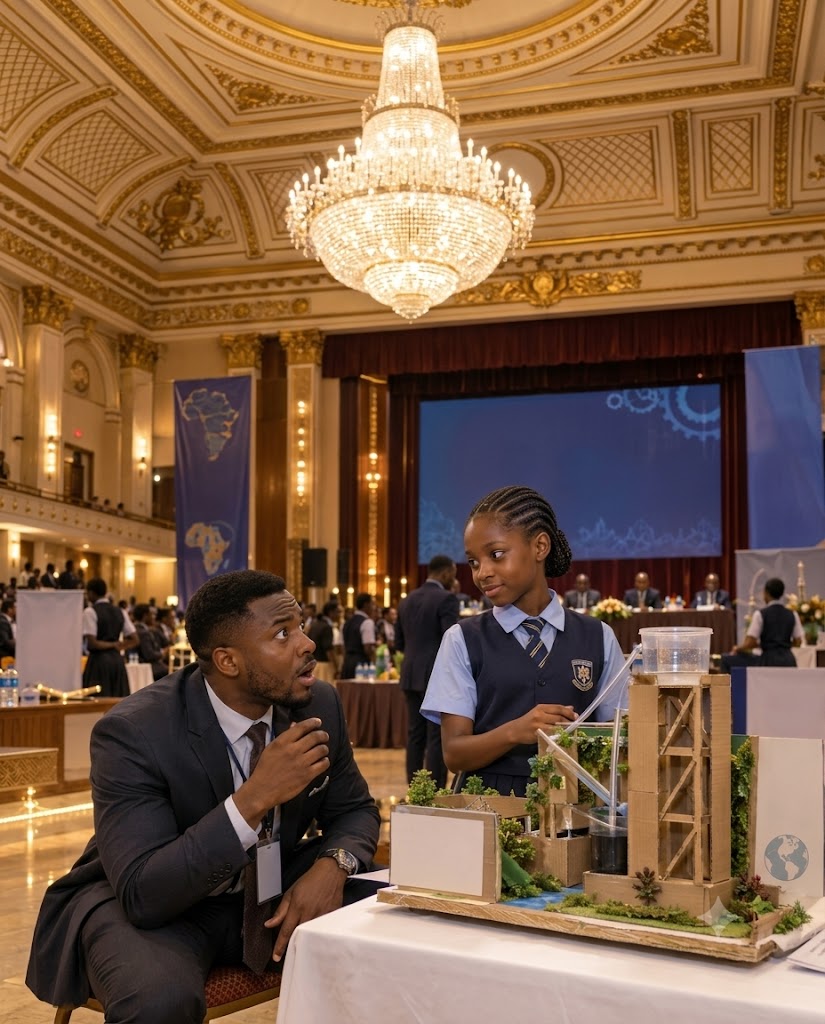
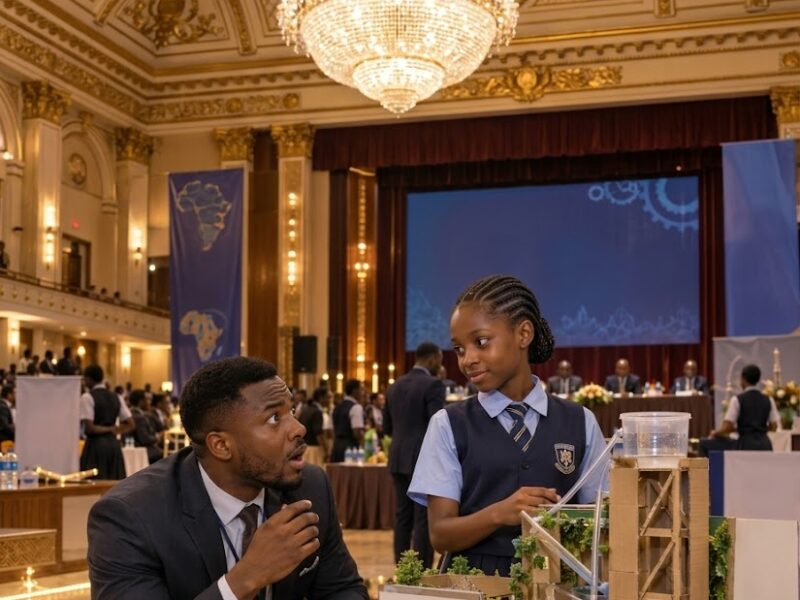
The community center smelled like floor wax and ambition. Mr. Ibuka stepped through the double doors, his tailored suit drawing curious glances from the parents already seated in folding chairs. A banner overhead read “Young Innovators Challenge 2026” in bold blue letters, and somewhere near the back, a child was crying because her cardboard bridge had collapsed.
“Mr. Ibuka, welcome sir.” A young woman with a clipboard hurried toward him, her smile stretched too wide. “Today will be awesome.”
“Thank you.” He adjusted his cufflinks, scanning the room. “This one is always different from the normal company programs.”
“You enjoy this more than board meetings, right?”
“Definitely.” He watched a boy no older than ten carefully pour water through a PVC pipe system. “Seeing them build things like this reminds me why I became an engineer in the first place.”
The boy looked up, eyes bright with pride. “This pipe takes the rain water from the roof. Then the water goes into this tank.”
“That is smart.”
“I know.”
Ibuka laughed. “I mean, thank you.”
“Good save.” A girl’s voice cut through the noise, and Ibuka turned to see a young girl with braids and a gap-toothed grin standing beside a display table. She couldn’t have been more than eleven.
“You made all this yourself?”
“My teacher helped me cut some parts because she said I was going to cut my finger.” The girl held up her hands dramatically.
” She was probably right. You don’t even know me.”
“I know eleven-year-olds.”
“Were you ever eleven?”
“Unfortunately, yes.”
“Then you should understand.”
Across the room, a woman in a navy blazer was directing traffic. “Make sure the podium is set before 4. We don’t want the children waiting under the sun.”
“Yes, ma’am. We are on it.”
Ibuka found himself lingering near the girl’s table. She was explaining her filtration system to another judge now, her small hands moving with surprising confidence. There was something about her face—the way her dimple appeared when she smiled—that made his chest tighten.
“You’ve been standing at that table for a long time.” The woman in the navy blazer appeared beside him. “I found an engineer.”
“Future engineer.”
“Sorry, future engineer.”
“Then maybe she can take your job.”
“That would actually reduce my stress.” He laughed, but the sound died in his throat when the girl looked up at him again.
Her eyes. Something about her eyes.
“Ibuka, are you there?”
“Sorry, I’m fine.”
The woman was studying him now, her head tilted. “That dimple. Papa’s dimple.”
“Is something on my face?”
“No.”
“Then why are you looking at me?”
“I was just thinking about my project. Something like that.” He waved his hand dismissively. “It’s nothing. Plenty of people get dimples like that.”
“All finalists, please gather at the stage now for the final judging.”
“Go on.” He nodded toward the girl. “They’re calling you. Good luck.”
She scampered off, braids bouncing, and Ibuka watched her go with an unease he couldn’t name.
“We are ready to announce our winners for this year’s innovation challenge.”
The ceremony was brief. Parents crowded near the stage, phones raised, cheering as names were called. Ibuka clapped along with everyone else, but his attention kept drifting to the girl—Kira, he’d learned her name from the program—who was now accepting a tablet and a certificate.
“In second position with a tablet and a school grant, Kira.”
“A tablet and a grant. Not bad at all.”
“Please park well by the side there. Make way for the parents.”
“Thank you for the company’s support this year, sir.” A woman approached him, hand extended. “The children really enjoyed it.”
“It’s our pleasure.” He shook her hand, then added, “Kira’s project stood out to me especially.”
The woman’s smile faltered. Just for a moment. Just long enough for him to notice.
“Mommy, my superstar.”
Ibuka turned. And there she was.
The woman from the competition. The one who’d been directing traffic, organizing parents, running the whole event. She was kneeling now, arms wrapped around Kira, laughing as the girl showed off her certificate.
“I came second.”
“I know. Your teacher called me.”
“You already knew.”
“Of course.”
“Then why did you let me tell you?”
“Because I wanted to hear you say it.”
The woman stood, and for the first time, her eyes met Ibuka’s across the crowded room. Her face went pale. Her hand found Kira’s shoulder, gripping tighter than necessary.
“The time when you need me. I fear make I turn my face.”
“Ma ma are you listening?”
“I think say I get tomorrow but tomorrow carry 12 years go away. You call me mommy.”
“Yes baby.”
“Do you know?” Kira was pointing at him now. “You know his name. He was one of the judges.”
“I wasn’t really a judge.”
“Come.” The woman’s voice was sharp. “We need to go.”
“But mommy, I want to show you—”
“You can show me in the car.”
“Are you angry?”
“No.”
“You look angry.” Kira’s voice dropped. “Mommy, why did you not even greet him?”
“Well, not now, Kira. Let’s just get to the car.”
They left. The woman—Shamaka, he remembered now, the name hitting him like a freight train—didn’t look back. But Kira did. She looked back at him with those eyes, that dimple, and Ibuka felt the ground shift beneath his feet.
“Eleven years old.”
“What?”
He hadn’t realized he’d spoken aloud. Vanessa, his colleague, was beside him now, her expression curious.
“Who was that?”
“Ibuka.”
“Someone I used to know.”
“Ibuka, that answer is too small for the way your face just changed.”
“That woman—”
“Vanessa, please.”
But Vanessa wasn’t letting go. She never did.
—
The drive home was a blur of streetlights and static. Ibuka sat in his car outside his apartment for twenty minutes before he could make himself go inside. His phone buzzed with messages from work, from Vanessa, from his mother. He ignored them all.
*Eleven years old.*
The math was simple. Too simple. He’d been twenty-two when Shamaka told him she was pregnant. Twenty-two and terrified and utterly useless. His father had been dying. His family had been drowning in medical bills. He’d had nothing—no job, no money, no future he could see.
And he’d run.
Not literally. Not at first. He’d stayed long enough to hear the words, long enough to watch her face crumple when he said nothing. Then his father had taken a turn for the worse, and he’d gone home to help, promising to call, promising to figure things out.
He’d called. Twice. Three times. The line had rung and rung and finally gone dead.
When he’d come back three weeks later, Chuka had met him at the door. Shamaka’s brother. Her protector. The man who’d looked at him like he was something scraped off the bottom of a shoe.
“She lost the baby.”
Four words. Four words that had ended everything.
“She doesn’t want to see you. She said she wants nothing to do with you.”
He’d believed it. God help him, he’d believed it, because it was easier than believing he’d destroyed something precious. He’d gone home. He’d buried himself in work, in school, in the slow reconstruction of a life that had nearly fallen apart. He’d told himself it was for the best. She was better off without him. The baby—the baby that never was—was better off too.
But now.
*Eleven years old.*
His phone rang. Vanessa’s name flashed on the screen. He sent it to voicemail.
The next morning, he called in sick for the first time in four years.
—
The internet was a dangerous place at 3 a.m. Ibuka had learned that lesson years ago, but here he was again, scrolling through social media profiles, searching for a name he’d tried to forget.
Shamaka Okafor.
She’d kept her maiden name. Or maybe she’d never married. He found her LinkedIn first—she worked for a nonprofit now, something to do with youth education. Then Facebook, mostly locked down, but he could see the profile picture. Her and Kira at a beach somewhere. Kira was maybe eight in the photo, grinning at the camera with that same gap-toothed smile.
He found Kira’s school. A private academy on the north side of the city, tuition that would have been impossible for a single mother working at a nonprofit.
Then he found the name.
Chuka Okafor. Shamaka’s brother. He owned a construction company now. Successful. Well-connected. The kind of man who could afford to help his sister and niece live comfortably.
The kind of man who could afford to lie.
Ibuka closed his laptop. His hands were shaking.
He needed to know. He needed to hear it from her.
—
The office was buzzing when he finally showed up two days later. Vanessa found him in the break room, nursing a cup of coffee he hadn’t touched.
“You look terrible.”
“Thank you.”
“I meant tired.” She sat across from him, her expression softer than he’d expected. “Is it about that woman from the competition?”
“Vanessa—”
“I know we’re not together anymore, but I’m still your friend.” She reached across the table, covering his hand with hers. “Talk to me.”
He should have said nothing. He should have kept his mouth shut, kept his secrets, kept his distance. But Vanessa had a way of getting under his skin, and he was too exhausted to fight.
“She has a daughter.”
“Noticed.”
“She’s eleven.” He met her eyes. “I think Kira might be mine.”
Vanessa’s hand withdrew. “What?”
“I don’t know for sure.”
“But how—”
“Shamaka was pregnant before we separated.”
“You had a child and you didn’t know?”
“I was told she lost the pregnancy.”
“Who told you?”
“Her brother.”
Vanessa leaned back in her chair, her expression unreadable. “Does Shamaka say Kira is yours?”
“She won’t answer me.”
“Wow.” A pause. “And if she is your daughter, then you lost eleven years with your child.”
“You’ll figure it out.”
“Thank you.”
She nodded, but there was something in her eyes—something calculating—that made Ibuka’s skin prickle.
He pushed the feeling aside. He had bigger problems.
—
The DNA test took two weeks. Two weeks of sleepless nights, of staring at his ceiling, of replaying every moment of that competition. Two weeks of wondering if he’d imagined the whole thing, if his guilt had finally driven him mad.
Shamaka had agreed to the test with conditions. Kira would know everything. No secrets. No sneaking around. She’d already told their daughter the truth—or at least, her version of it.
“Just relax. This will only take a second.”
“It doesn’t hurt at all.”
“Good to know.”
The results came in a sealed envelope. Ibuka opened it alone in his apartment, his hands trembling.
Eleven years.
*She’s yours.*
He sat on his couch for a long time, the paper clutched in his fist. A daughter. He had a daughter. A living, breathing, brilliant daughter who built rainwater filtration systems and hated spicy food and had his dimple.
His phone rang. Vanessa.
“I take it the results are in?”
“Yes.”
“And?”
“She’s mine.”
Silence. Then: “I have a daughter.”
“Congratulations.”
“I don’t even know if congratulations is the right word.”
“You found her after eleven years. But you found her.”
“Yes.” He exhaled. “She’s my daughter now. That changes everything.”
“So, you are my father?”
Kira was sitting across from him in a coffee shop three days later, her arms crossed, her expression guarded. Shamaka was at the counter, giving them space but never taking her eyes off them.
“Yes.”
“You don’t have to call me anything you’re not comfortable with.”
“I wasn’t going to.”
“Okay.”
“I didn’t complain.”
“Why did you leave my mother?”
The question hit him like a physical blow. “I was afraid.”
“Of what?”
“Everything.”
“That doesn’t answer me.”
“You’re right.” He took a breath. “I was twenty-two. My father was very sick. I didn’t have money. I didn’t have a job. Your mother told me she was pregnant. And instead of standing with her, I panicked.”
“So you left?”
“Yes. For almost three weeks.”
“Then Uncle Chuka lied to you.”
“Yes. Later, I was told the pregnancy was gone.”
“But before that, you already left.”
“Yes.”
“My mother was afraid, too.” Kira’s voice cracked. “I know.”
“No, she was pregnant. You were not. She was afraid, too. But she stayed.”
“You’re right. I don’t expect you to forgive me because I’m your father.”
“Good, Kira.”
“No, let her speak.”
“I don’t hate you.”
“Thank you.”
“I don’t know you enough to hate you.”
“That’s fair.”
“I have rules.”
“I expected rules.”
“No showing up at her school without telling me.”
“Fine.”
“No taking her anywhere unless I know.”
“Fine.”
“No expensive gifts.”
“What counts as expensive?”
“Ibuka.”
“I’m asking.”
“If you have to ask, it is expensive.” Shamaka’s voice cut in. She’d abandoned the counter, was standing beside their table with her arms crossed. “You cannot buy eleven missing years in eleven days.”
“I know.”
“And one more thing.”
“What?”
“Being Kira’s father has nothing to do with me.”
“I wasn’t planning to.”
“If Kira accepts you, that does not mean I owe you another relationship.”
“I know.”
“Do you?”
“Yes. Whatever happens between you and me, I want my daughter. Whatever happens between you and me is separate. Good.”
“What do you like?”
“You don’t know?”
“No.”
“My mother knows.”
“I am sure she does.”
“So ask her.”
“No.”
“Why? Chicken and chips.”
“Easy.”
“But not spicy.”
“Noted.”
“And I hate paw paw.”
“We are in a restaurant.”
“I am telling you for future reference.”
“Very important information.”
—
The months that followed were a careful dance of boundaries and small victories. Ibuka learned that Kira was allergic to shellfish. That she couldn’t sleep without a nightlight. That she’d taught herself to code at nine and had already built three apps that nobody would ever use. That she laughed with her whole body, just like her mother.
He learned that Shamaka had spent years building walls he couldn’t see. That she’d dated two men seriously and left them both because they couldn’t accept Kira as part of the package. That she’d worked three jobs to put herself through school. That she’d never stopped being afraid.
“No taking her anywhere unless I know.”
“Fine.”
“No expensive gifts.”
“What counts as expensive?”
“Ibuka. I’m asking.”
“If you have to ask, it is expensive.”
He learned to respect the rules. He learned to show up on time, or call if he couldn’t. He learned that being a father wasn’t about grand gestures—it was about the small, consistent things that added up.
“I might be late again someday.”
“That is not a good answer.”
“I know, but I don’t want to lie to you.”
“So if I am late I call. If I cannot call I tell you.”
“Okay.”
“Okay means you forgive me.”
“No.”
“Worth trying.”
—
The first time Kira called him “Dad” was on a Tuesday. They were sitting on the floor of his apartment, surrounded by cardboard and tape, trying to build a model of the Golden Gate Bridge for her science project.
“Dad, you were right.”
“Okay, Dad. What’s next?”
He didn’t cry. He wanted to, but he didn’t. He just handed her the next piece of cardboard and pretended his hands weren’t shaking.
“The next question.”
“Go on.”
“You heard me.”
“Heard what?”
“Nothing.”
“Exactly. Question six.”
“Okay.”
“Dad, one word. That was all.”
“Shamaka, you’re glowing tonight.”
“Thank you, Ibuka. You, too.”
“That smile is the same one. If I do nothing, I lose him for good.”
“Kira, your mother used to finish her food and then start looking inside my plate.”
“That is not true.”
“It is very true.”
“You were the one who used to order.”
“So, you were helping me.”
“Mommy, that is stealing.”
“Go and change your clothes.”
“You still lie too much.”
“And you still deny things confidently.”
—
Vanessa called three times before he finally answered.
“I need to see you.”
“I’m busy.”
“It’s important.”
“Everything is important to you, Vanessa.”
“This is different.” A pause. “I found something.”
He met her at a café near his office. She was already there when he arrived, a manila folder on the table in front of her.
“What is this?”
“I did some digging.” She pushed the folder toward him. “About Shamaka. About her family.”
“Why?”
“Because I care about you.” Her eyes were earnest, almost convincing. “And I don’t trust her.”
Ibuka opened the folder. Inside were bank statements, property records, a copy of a restraining order that had been filed years ago and later withdrawn.
“What am I looking at?”
“Shamaka’s brother, Chuka. He’s been controlling her finances for years. Every major purchase she makes goes through him. He co-signed her lease. He’s listed as an emergency contact at Kira’s school.”
“So?”
“So, she’s not as independent as she wants you to think.” Vanessa leaned forward. “She’s been lying to you. About everything.”
“Why are you doing this?”
“Because I love you.” The words hung in the air between them. “I always have. And I don’t want to see you get hurt.”
“This is about us, isn’t it?”
“It’s about protecting you.”
Ibuka closed the folder. His hands were steady, but his voice wasn’t.
“I’m not yours to protect anymore, Vanessa.”
“Since when?”
“Since I met my daughter.” He stood. “Since I realized that everything I thought I knew about the last twelve years was wrong.”
“Did she tell you about the calls?”
“What calls?”
Vanessa’s smile was thin. “I’ve called her brother a few times. Asked some questions. Just to make sure you were safe.”
“You what?”
“I was trying to help.”
“You called Chuka.”
“Yes.”
“And said what?”
“Nothing that wasn’t true.” She stood, gathering her things. “Just that you’d been asking about your rights as Kira’s father.”
“Vanessa.”
“He told me about the restraining order.”
“Please.”
“I told him I didn’t want any problems. I just thought the family should know.”
“My answer has not changed.”
“Chuka, please.”
“I have been thinking about everything.”
“You should have done that before.”
“I know.”
“And yet you are still here because I need to tell her I am sorry.”
—
The fallout was immediate. Chuka called Shamaka, furious. Shamaka called Ibuka, devastated. Kira heard them arguing through the walls of Shamaka’s apartment and didn’t come out of her room for two hours.
“I thought I told you not to come here again.”
“I just want to speak to her for five minutes.”
“She’s not here.”
“Then tell me where she is.”
“No.”
“Chuka, please.”
“My answer has not changed.”
“I have been thinking about everything.”
“You should have done that before.”
“I know.”
“And yet you are still here because I need to tell her I am sorry.”
“Why did you leave me here alone?”
“That silence stayed with me twelve years. And I still don’t know if she made it.”
—
They met at a park. Neutral ground. Kira was with Shamaka’s aunt, safe and oblivious, while the adults hashed out the truth.
“Chuka lied to you.”
“I know.”
“And you believed him.”
“Yes.”
“For twelve years.”
“Yes.”
Shamaka was quiet for a long time. When she spoke, her voice was barely a whisper.
“I was vomiting every morning. I was scared. I was ashamed. I was wondering how I would raise a child. And the one person I thought would stand beside me suddenly disappeared.”
“I am sorry.”
“Sorry does not change that.”
“I know.”
“No, I don’t think you do.”
“I am not saying I did nothing wrong.”
“Good.”
“I was a coward. I should have stayed. Even if Chuka lied later, I should have been there before he ever got the chance.” He met her eyes. “But I need to know. Is Kira my daughter?”
“You already know the answer to that.”
“I need to hear it from you.”
“She’s yours.” A breath. “She’s always been yours.”
“You took away the chance for me to go through that pregnancy knowing I wasn’t alone.”
“I didn’t know she was alive.”
“You knew she existed.”
“Stay away from Kira.”
“I can’t do that without knowing.”
“You did it for eleven years.”
“I didn’t know.”
“You are still here.”
“Yeah.”
“You look terrible.”
“Thank you.”
“I meant tired.”
“I am tired.”
—
The weeks that followed were a slow reconstruction. Chuka apologized—grudgingly, imperfectly—and Ibuka accepted it because he had no choice. Kira went to therapy. Shamaka went to therapy. Ibuka went to therapy. They learned to talk to each other without weapons.
“This roof is wrong.”
“It isn’t wrong.”
“It looks wrong.”
“See?”
“Oh.”
“Apologize to the roof.”
“I am not apologizing to cardboard.”
“You insulted it.”
“I am walking.”
“That means yes.”
“What do you need?”
“Mathematics.”
“What question?”
“You said you were walking.”
“I have changed my mind.”
“No juice.”
“Orange.”
“You’re improving.”
“I’ve been studying.”
“Studying me.”
“Yes. Very difficult subject.”
“You skipped this part.”
“No, I didn’t.”
“You did.”
“Oh, say it.”
“Say what?”
“That I was right.”
“Never.”
“Fine. Dad, you were right.”
“Okay.”
“Dad.”
“What’s next?”
“The next question.”
“Go on.”
“You heard me.”
“Heard what?”
“Nothing.”
“Exactly. Question six.”
“Okay.”
“Dad, one word. That was all.”
—
The first family dinner was a disaster. Shamaka burned the rice. Kira spilled juice on the tablecloth. Ibuka said something stupid about the old days, and Shamaka’s fork clattered against her plate.
“Don’t.”
“Don’t what?”
“Look at me like that.”
“Like what?”
“You know exactly what you are doing.”
“Fine.”
“I should go.”
“Chamaka, I meant what I told you before.”
“What?”
“I still have feelings for you.”
“Why are you bringing this up now?”
“Because I don’t want you to think every conversation we have is some plan to get you back.”
“So, what do you want?”
“Dinner. Just dinner. No pressure, no expectations, just two people catching up. If calling it a date will make you say no, then let’s call it food.”
“You have not changed.”
“I have changed a lot.”
“Clearly not enough.”
“One dinner.”
“Why?”
“Because I want to know the woman you became. I know the twenty-one-year-old Shamaka. I don’t know this one.”
“Friday.”
“No violin.”
“I don’t know where I would even find one.”
“No candles.”
“You have planned this date more than me already.”
“Goodbye, Ibuka.”
—
Friday came. The restaurant was small, quiet, tucked away in a corner of the city neither of them frequented. They sat across from each other like strangers, which, in many ways, they were.
“This is terrible.”
“What?”
“This date?”
“I told you not to call it a date.”
“Fine. This food meeting.”
“Why is it terrible?”
“Because we are behaving like strangers at a job interview.”
“What do you want us to talk about?”
“You.”
“Did you date?”
“That is your first serious question.”
“I am curious.”
“Yes, I dated.”
“How many?”
“That is none of your business.”
“So many.”
“Ibuka, drink your water.”
“I am asking peacefully.”
“Drink your water. Yes, I dated two serious ones. The first one wanted me. He tolerated her. Nice when she was around. But every marriage talk became about where Kira would fit. Exactly. So, I left.”
“Good.”
“Good?”
“Yes. I already don’t like them.”
“What about you? Your relationships?”
“I dated.”
“How many?”
“Why is it now your business?”
“I—a few. Anyone serious?”
“Vanessa.”
“How serious?”
“Almost three years. She wanted marriage. I thought I did too, but I kept delaying.”
“Why?”
“I don’t know.”
“You know.”
“I think a part of me was afraid of making promises.”
“That sounds familiar.”
“I deserve that.”
“Did you love her?”
“Yes. I am not going to lie because I am sitting here with you.”
“So why did it end?”
“She got tired of waiting for me to decide what I wanted.”
“That must have hurt her.”
“It did.”
“Don’t.”
“I am not trying to impress you.”
“Good.”
“I am just telling the truth.”
“I had a good time.”
“So did I.”
“That doesn’t mean anything.”
“I know.”
“Ibuka.”
“I said I know.”
“I shouldn’t have done that.”
“Why?”
“Because this is exactly what I was afraid of.”
“What?”
“Feeling something.”
“Chamaka?”
“No. I spent years getting over you. I built a life. I raised Kira. I learned how to be okay without you.”
“I know.”
“And now you are here again.”
“I know.”
“If I do this again, you have the power to hurt me again.”
“I can’t promise you that I will never hurt you.”
“That is a terrible thing to say.”
“It is the truth.”
“I know.”
“But I can promise I won’t disappear because things get hard.”
“I need time.”
“Take it.”
“You are not going to call tomorrow asking what the kiss means.”
“No.”
“The next day?”
“No.”
“Good.”
“Good night, Shamaka.”
“Good night.”
—
The project offer came three months later. A fourteen-month assignment overseas. The biggest opportunity of his career. Vanessa, who had somehow wormed her way back into his professional life, was the one who told him.
“So, you’re going to turn down the biggest project of your career because of a child you met a few months ago.”
“She is my daughter.”
“Oh, wait. I didn’t mean it like that.”
“Yes, you did. You always do this.”
“That’s not fair. I’m just trying to help.”
“Help by undermining me.”
“Ibuka, please. Fine. Sorry.”
“I will talk to Shamaka and Kira before I decide.”
“You need permission now?”
“No.”
“Then why?”
“Because my decisions affect them.”
—
Kira took the news better than he expected. She was quiet for a long time, staring at the schedule she’d made—the one with his school events, his test dates, his project days, everything important.
“Fourteen months.”
“I said I haven’t accepted.”
“But you want to?”
“I want the job. That doesn’t mean I want to leave you.”
“You came back, Kira.”
“Now you’re leaving again.”
“So, you won’t go?”
“I have to.”
“You are going?”
“I don’t know yet.”
“That is what leaving is.”
“What do you want?”
“The project, but I want my family too.”
“So, what are you going to do?”
“I spoke to the company. I don’t have to relocate fully. I can travel during the week when necessary and come back.”
“Every weekend?”
“Most weekends.”
“Most.”
“Kira, sometimes something may happen.”
“What is this?”
“I made something. My schedule. Your school events go here. Your test dates, your project days, everything important.”
“And if you are away?”
“Video call.”
“And if you are busy?”
“I tell you.”
“And if you can’t come?”
“I tell you.”
“You promise.”
“I promise I won’t disappear.”
—
The airport was crowded for a Tuesday. Kira held his hand tightly, her small fingers intertwined with his. Shamaka stood a few feet away, arms crossed, expression unreadable.
“You’ll call when you land.”
“I will.”
“And every night.”
“Every night.”
“And you’ll come back.”
“Every weekend I can.”
“That’s not what I asked.”
“I’ll come back.”
She nodded. Then, to his surprise, she stepped forward and hugged him. It was brief, awkward, nothing like the embraces they’d shared twelve years ago. But it was something.
“Don’t make me regret this.”
“I won’t.”
“I mean it, Ibuka.”
“I know.”
“Good.”
“Good.”
—
The first month was hard. Video calls dropped. Time zones clashed. Kira sent him voice messages that he listened to on repeat, her voice filling his empty apartment like a ghost.
But he called. Every night. Even when he was exhausted. Even when the meetings ran late. Even when all he wanted was to sleep.
And slowly, impossibly, they built something new.
“I was your father. I thought that meant I knew what was best.”
“You didn’t.”
“No, I spent—I know Kira spent eleven years without her father. I am sorry.”
“I don’t know if I can forgive this quickly.”
“I am not asking you to. I am only asking you not to carry my mistake forever.”
“I am leaving.”
“I heard.”
“I am sorry about Kira.”
“I hope one day you can believe that.”
“I believe you regret it. Take care of yourself.”
“You too.”
—
The second month brought a surprise. Shamaka called him—not texted, called—and her voice was different. Softer. Nervous.
“I’ve been thinking.”
“About?”
“About what you said. About wanting to know the woman I became.”
“And?”
“And I think maybe I want to know the man you became too.”
“What does that mean?”
“It means… when you come back. This weekend. Maybe we could have dinner. All three of us. Like a family.”
“Like a family.”
“Don’t make it weird.”
“I’m not making it weird.”
“You’re making it weird.”
“I’m not—okay. Yes. Dinner. This weekend.”
“Good.”
“Good.”
“Ibuka?”
“Yes?”
“Don’t be late.”
“I won’t.”
“You said that before.”
“And I meant it then too.”
—
The third month, Vanessa showed up at his hotel. He hadn’t invited her. Hadn’t told her where he was staying. But there she was, in the lobby, wearing that same calculating smile.
“What are you doing here?”
“I missed you.”
“You shouldn’t be here.”
“I know you’re seeing her again.”
“That’s none of your business.”
“It is my business.” She stepped closer. “I’ve been waiting for you, Ibuka. For years. And you keep choosing her. Choosing them. Over and over again.”
“Vanessa—”
“I called Chuka. I called him and I told him things. Things that weren’t true. Things that would make him angry. I did that.”
“Why?”
“Because I wanted you to see her for who she really is. A woman who lies. A woman who keeps secrets. A woman who will hurt you again.”
“She never hurt me.”
“She will.”
“You need to leave.”
“I love you.”
“No, you don’t. You love the idea of me. The version of me that was broken and needed fixing.”
“That’s not—”
“Go home, Vanessa. And don’t contact me again.”
She left. He didn’t watch her go.
—
The fourth month brought a letter. Handwritten, on lined paper, in careful cursive.
*Dear Dad,*
*I know you’re busy. I know you’re working. But I wanted to tell you something important.*
*I won the science fair. First place. The rainwater system, the one I showed you at the competition? I improved it. It’s better now.*
*I wish you could have been there. But I know you’re doing something important too.*
*Mom says you’re coming home soon. She won’t tell me when. She says it’s a surprise. But I know she’s excited because she’s been cleaning the apartment for a week.*
*I don’t know if you and Mom will get back together. I don’t know if I want you to. But I do know that I want you to come home.*
*I miss you.*
*Love,*
*Kira*
He read the letter twelve times. Then he booked a flight.
—
The airport was crowded for a Friday. Kira spotted him first, her voice carrying across the terminal.
“Daddy!”
She ran. He caught her. And for a moment, everything was right in the world.
“Did you get my letter?”
“I did.”
“Did you like it?”
“I loved it.”
“Good.” She pulled back, studying his face. “You look tired.”
“I am tired.”
“Mom says you always look tired.”
“Your mom is usually right.”
Behind Kira, Shamaka was approaching. Slower. More cautious. Her hands were in her pockets, her shoulders tense.
“Welcome home.”
“Thank you.”
“Kira, why don’t you go get your bag?”
“But Mom—”
“Go.”
She went. And they stood there, the two of them, surrounded by strangers and fluorescent lights.
“I got your letter too.”
“My letter?”
“The one you sent after I left. The one where you said you wanted to know the man I became.”
“I remember.”
“I’ve been thinking about it. About us. About everything.”
“And?”
“And I don’t have all the answers. But I know that I don’t want to lose you again. I don’t want to lose either of you.”
“Ibuka—”
“I’m not asking for anything. I’m not expecting anything. I’m just telling you the truth.”
She was quiet for a long time. Then she reached out and took his hand.
“The truth is a good place to start.”
—
They took it slow. Slower than slow. Dinner once a week, then twice, then whenever they could manage. Kira’s schedule hung on his refrigerator, covered in checkmarks and stickers. Shamaka’s laughter filled his apartment, tentative at first, then easier, then real.
“This is terrible.”
“What?”
“This date?”
“I told you not to call it a date.”
“Fine. This food meeting.”
“Why is it terrible?”
“Because we are behaving like strangers at a job interview.”
“What do you want us to talk about?”
“You.”
“Did you date?”
“That is your first serious question.”
“I am curious.”
“Yes, I dated.”
“How many?”
“That is none of your business.”
“So many.”
“Ibuka, drink your water.”
“I am asking peacefully.”
“Drink your water.”
—
One year later, they stood in the same community center where they’d first met. The banner was different this year—”Young Innovators Challenge 2027″—but the floor wax smell was the same.
“I can’t believe you’re a judge again.”
“I can’t believe you let me.”
“Someone has to keep an eye on you.”
“Mom, Dad, look!”
Kira was pointing at a display table, her face lit up with excitement. Her project—an improved version of the rainwater system—was sitting under a spotlight, a blue ribbon pinned to the corner.
“First place.”
“I told you.”
“You did.”
“I’m always right.”
“Don’t push it.”
“Ibuka, come on. The ceremony is starting.”
They walked toward the stage together, Kira between them, her small hands reaching for both of theirs. And for the first time in twelve years, Ibuka felt like he was exactly where he belonged.
“You enjoy this more than board meetings, right?”
“Definitely.”
“Seeing them build things like this reminds me why I became an engineer in the first place.”
“That girl—the one with the dimple?”
“She’s something special.”
“She is.”
“Mr. Ibuka, welcome sir. Today will be awesome.”
“It already is.”
—
The End









