
He Divorced His “Janitor” Wife for Embarrassing Him—Then the Board Revealed She Owned His $80 Billion Company
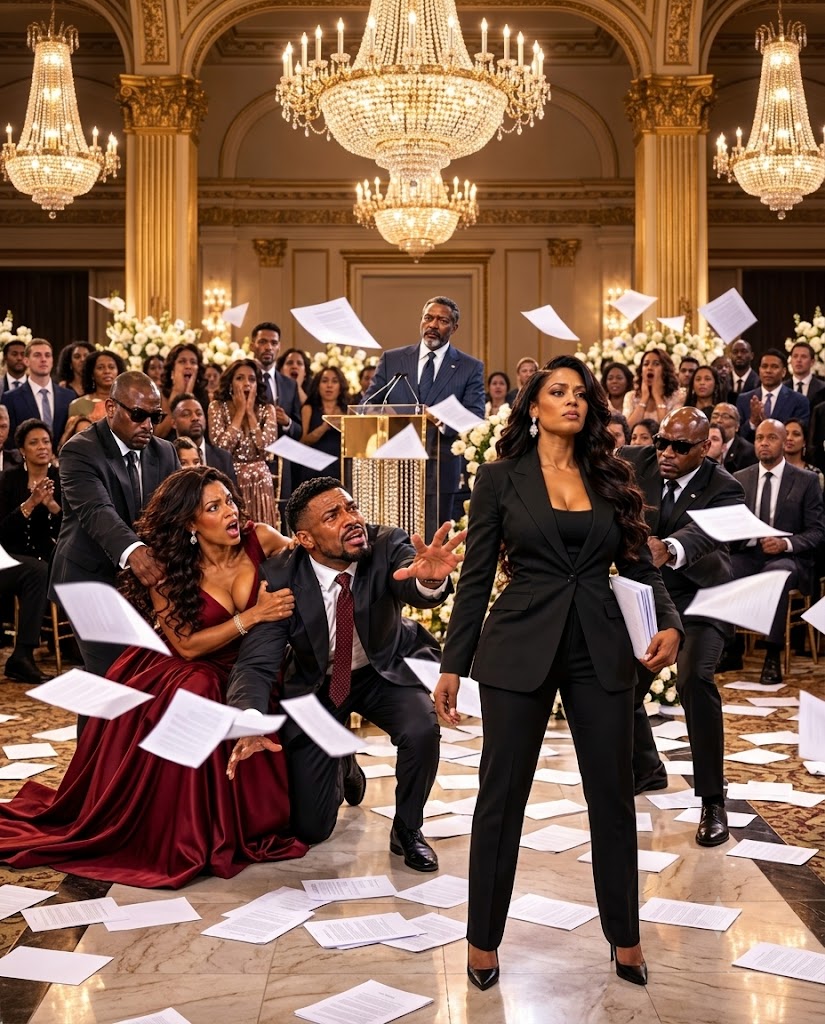
The divorce papers hit the polished marble floor of the Aegis Omniorp executive lobby like a slap that echoed through every corner of the seventy-second floor.
Cassian Vale stood there in his tailored navy suit, a $2,400 Italian fabric that Zora had quietly paid for six months ago when his credit card had been declined at the register.
He did not know that.
He never knew anything.
“You have thirty seconds to sign,” he said, his voice carrying that particular tone men use when they have finally convinced themselves they deserve something they never earned. “I’m regional director now. I don’t have time for dead weight.”
Zora’s hands were still damp from the industrial bleach she used to clean the executive restrooms three floors below where her husband now stood, wearing shoes she had bought him, holding papers she had unknowingly funded.
The irony would have been poetic if it were not so cruel.
“Cassian, please,” she whispered, her voice barely audible over the hum of the climate-controlled air that kept the building’s elite comfortable while she scrubbed their toilets. “Couldn’t you wait until we were home?”
“This is my world now,” he said, gesturing to the glass walls, the city skyline stretching behind him like a kingdom he believed he had conquered. “You’re not worth the privacy.”
A woman in a cream Chanel suit approached, her heels clicking against the floor with the precision of someone who had never known what it meant to work for minimum wage.
The woman wrinkled her nose as if she had encountered something unpleasant on the bottom of her shoe.
“My God,” she said, “the smell of industrial bleach is absolutely nauseating. Who on earth is this creature blocking our way?”
Cassian did not even glance at his wife of eight years.
“I have no idea,” he said. “Just some invisible cleaning lady.”
The woman laughed, a sound like breaking glass, and looped her arm through Cassian’s.
“Come on, baby. Let’s celebrate.”
Zora reached out, her fingers brushing the sleeve of the suit she had paid for.
“Cassian, wait. Please. I love you.”
He turned then, and for a moment, something flickered in his eyes, something that might have been shame if he had possessed the capacity for it.
“What is going on?” he said, his voice cold enough to frost the windows. “You are pathetic, Zora. Just sign the damn papers and disappear from my life.”
—
The elevator doors closed behind him, and Zora stood alone in the lobby, the divorce papers clutched against her chest like a wound she was trying to hold closed.
A man in a gray suit emerged from a side office, his presence commanding the kind of attention that came not from wealth but from something deeper, something earned.
He had been watching.
He had been watching for years.
“Mrs. Vale,” he said, his voice gentle in a way that made her want to cry. “I am going to change the tech world. We’ve lost 20 percent of our market share this quarter because we’ve been operating without your insight.”
Zora looked up, confused.
“I’m a janitor,” she said. “I don’t know anything about tech.”
The man smiled, and it was the smile of someone who had waited a very long time for this moment.
“You are Zora Vale. You hold four patents in adaptive neural architecture. You dropped out of MIT because your husband needed someone to support his dreams. I refuse to let your talent die.”
He handed her a card.
“You are going to build an empire, Zora. Do not tell that parasite you live with. Build your fortress first. He has no idea, but he just fired himself from an $80 billion empire.”
—
The Addison mansion sat on twelve acres of manicured lawn in the hills above the city, a monument to old money and older secrets.
Kimberly Addison stood in the kitchen, her hands deep in bread dough, when her aunt’s voice cut through the morning like a blade.
“How dare you talk back to me?”
Kimberly did not turn around.
“I asked you to stay in the kitchen,” Aunt Beatrice continued, her heels clicking against the tile. “What were you doing hovering around Julian Sterling? Didn’t I ask you not to speak to him?”
Kimberly’s fingers tightened around the dough.
“I wasn’t hovering,” she said quietly. “I was serving dinner.”
“Don’t you dare talk back to me,” Beatrice hissed. “No wonder your mother and father left you. You will never learn, will you?”
The words hit Kimberly like they always did, a familiar ache that had long since become part of her architecture.
Her parents had died when she was twelve, leaving her in the care of relatives who viewed her as an obligation rather than a blessing.
She had learned to make herself small.
She had learned to disappear.
But something was different now.
Something had been different since the night Julian Sterling had looked at her with those eyes that seemed to see past every wall she had ever built.
“Don’t worry about Kimberly,” she heard her cousin Kemi say from the dining room. “She’s insignificant. Julian only had his eyes on me.”
Kimberly pressed her palms into the dough, feeling it give beneath her hands.
She did not know that in less than twelve days, everything would change.
She did not know that the man who had asked her to dinner, the man she had refused without hesitation, was about to uncover a truth that would shatter the Addison family’s carefully constructed illusion.
—
Julian Sterling sat in his corner office on the forty-fifth floor of Sterling Tower, reviewing the documents his team had compiled.
The Addison family’s financial records told a story of slow, systematic theft, of a fortune being drained one transaction at a time.
“Sir,” his assistant said, standing in the doorway, “I have everything you requested on the Addison family.”
“And Kimberly?”
A pause.
“Her parents established a trust before they died. It was supposed to transfer to her when she turned twenty-five.”
“Supposed to?”
“The trust was dissolved six years ago. The assets were absorbed into Addison Holdings.”
Julian’s jaw tightened.
“They stole from their own niece.”
“It appears so, sir.”
He stood, walking to the window that overlooked the city, the same city where a woman named Zora Vale had once scrubbed toilets while her husband paraded around in suits she had paid for.
The world was full of people who took from those who had less, who convinced themselves that power was permission.
Julian had spent his entire career proving them wrong.
“Prepare the documentation,” he said. “I want to meet the person who signed off on that dissolution.”
—
Daniel Okoro stood at his mother’s bedside, watching her sleep.
The hospital room was small, the equipment beeping in steady rhythm, a reminder that life was fragile and time was precious.
He had spent the last six years working odd jobs, carrying firewood to market, doing whatever he could to keep a roof over their heads.
He had never known his father, had never known that the man who had left them had also left behind an empire.
“Mr. Okoro?”
Daniel turned to find a woman in a dark suit standing in the doorway.
“My name is Grace. I worked for your father.”
Daniel’s heart stopped.
“My father died when I was a child.”
“Yes. But before he died, he made arrangements. There is something you need to know.”
—
The funeral was small, the way Daniel’s mother had wanted it.
She had lived quietly, loved fiercely, and asked for nothing more than to be remembered.
Daniel stood alone at the graveside, the weight of orphanhood settling onto his shoulders like a coat that did not fit.
“I’m sorry for your loss.”
He turned to find a woman he had never seen before, her eyes kind, her presence somehow familiar.
“I’m Grace. Your mother was my friend.”
Daniel nodded, unable to speak.
“Your father left you something, Daniel. Something more than you know.”
He had heard this before, from the lawyer who had handled his mother’s affairs, from the strangers who had sent condolences.
But no one had ever told him what.
“There is a house,” Grace said. “And there is more.”
—
The mansion stood at the end of a long gravel drive, its windows dark, its gardens overgrown.
Daniel stepped out of Grace’s car and felt something shift inside him, a recognition that had nothing to do with memory.
“This was your father’s,” Grace said. “And now it’s yours.”
Daniel walked toward the front door, his footsteps echoing in the silence.
A man in his sixties opened the door before Daniel could knock.
“Welcome home, Master Daniel.”
Daniel stared.
“I’ve been waiting a very long time to meet you.”
“Who are you?”
“My name is Okoro. I served your father for thirty years.”
—
The interior of the mansion was frozen in time, furniture covered in white sheets, chandeliers dim with dust.
“Your father wanted you to grow up without the weight of his money,” Okoro explained as they walked through the halls. “Wealth should reveal a man’s character, not create it.”
Daniel stopped at a portrait hanging in the main hallway.
A man with his eyes, his jaw, his hands.
“That’s him.”
“Yes.”
“Why didn’t anyone tell me?”
“Your father believed you would find your way here when you were ready.”
Daniel touched the frame, feeling the cool glass beneath his fingers.
“What happened to this place?”
Okoro’s expression darkened.
“There are people who have been trying to take what belongs to you. They thought you would never come.”
—
Victor Ez sat in his office, reviewing the documents that would change everything.
The Okoro estate was the largest private property in the city, a sprawling empire of luxury homes, commercial land, farmland, and investments worth billions.
And it all belonged to a boy who had spent his life carrying firewood.
Not for much longer.
“Is everything in place?” he asked his associate.
“Yes. The forged documents are ready. Once we create enough doubt, we can force a sale.”
Victor smiled.
“And the girl?”
“Amara has already ended the engagement. She believes Daniel is poor.”
“Perfect.”
—
Daniel sat in the old library, his father’s will spread before him.
“There are conditions,” Grace said. “Moral conditions.”
“What kind?”
“Your father wanted to ensure you were truly ready. It’s about character.”
Daniel read the words his father had left for him, the instructions that would determine whether he inherited everything or nothing.
“Why did he make this so difficult?”
“Because he knew what wealth does to men who are not ready for it.”
Daniel closed his eyes.
“I don’t want her to regret leaving me because of money.”
“Then don’t tell her. Let her choice remain her choice.”
—
The charity gala was the event of the season, a gathering of the city’s elite in their finest clothes and finest lies.
Daniel stood at the entrance, wearing a suit that fit him perfectly, tailored to his frame by the estate’s personal tailor.
No one recognized him.
No one knew who he was.
“Mr. Okoro,” a woman said, approaching him with a glass of champagne. “I don’t believe we’ve met.”
“We haven’t.”
“I’m Victoria Laurent. My husband Victor has been very interested in your family’s estate.”
Daniel’s expression did not change.
“Is that so?”
“Perhaps we could discuss a business arrangement.”
Daniel smiled, the kind of smile that did not reach his eyes.
“I don’t think that will be necessary.”
—
The stage was set, the lights bright, the crowd expectant.
Victor Ez stepped to the podium, his voice carrying through the ballroom with the confidence of a man who believed he had already won.
“Thank you all for joining us on this very special evening. Tonight, I formally declare the announcement of the rightful heir to the city’s largest private estate.”
The crowd murmured.
“Daniel Okoro.”
Nothing happened.
Victor’s smile faltered.
“I said, Daniel Okoro.”
The doors at the back of the ballroom opened.
Daniel walked through them, flanked by Grace and Okoro, the original estate records in his hands.
“This cannot be true,” Victor said.
“It is true,” Grace replied, her voice calm. “Continuous records confirm Daniel’s rightful claim.”
“Say something,” Victor hissed to Collins, his associate. “Tell them the documents are forged.”
Collins stepped forward, his face pale.
“The documents were completely fabricated,” he said. “By Victor Ez.”
The ballroom erupted.
—
Daniel stood on the stage, looking out at the faces of the people who had tried to steal his birthright.
“You tried to take what belonged to my family,” he said. “I could use my wealth to hurt you. I won’t. The evidence goes to the authorities. They will decide what happens next.”
Victor’s face twisted with rage.
“You think you’ve won?”
“I don’t think anything. I know.”
—
Kimberly Addison stood in the corner of the ballroom, watching the scene unfold.
She had not wanted to come tonight, had not wanted to face Julian Sterling after refusing his invitation.
But something in his eyes when he had asked her to dinner had lingered, a question she had not known how to answer.
“You should smile more.”
She turned to find him standing beside her.
“How do you know I’m not smiling?”
“Because you sound like someone who has too many secrets.”
“Maybe I do.”
“Then I’ll have to discover them.”
—
The days that followed were a blur of legal filings and press conferences, of evidence being presented and arrests being made.
Victor Ez was charged with fraud, forgery, and attempted theft of an estate worth $4.2 billion.
Collins was offered immunity in exchange for his testimony.
The Addison family’s theft of Kimberly’s trust was uncovered, the assets traced and frozen.
And through it all, Daniel Okoro stood at the center of a storm he had not asked for, carrying the weight of a fortune he had never wanted.
—
Amara stood outside his door on the morning of the gala, her wedding dress still on, her makeup streaked with tears.
“Daniel, I was wrong.”
He looked at her, this woman he had loved for so long, this woman who had chosen a lie over the truth.
“I believe you.”
“Can you forgive me?”
“Forgiveness is possible. Trust takes longer.”
She nodded, understanding.
“I still love you.”
“I loved you too. But you made your choice when you believed I had nothing.”
—
The estate was different now.
Daniel had ordered the east wing converted into a training center, a place where young people from the surrounding communities could learn trades and skills.
“I want part of it turned into homes,” he told Okoro. “For families who need them.”
“Your father would have been proud.”
“I hope so.”
—
Kimberly sat in the garden of the Addison mansion, watching the sun set over the hills.
She had not spoken to her aunt since the gala, had not returned any of Kemi’s calls.
The trust that had been stolen from her had been restored, a fortune she had never known she possessed.
But that was not what kept her awake at night.
It was Julian Sterling, and the way he had looked at her like she was the only person in the room.
“You know,” a voice said behind her, “I was told you worked here.”
She turned to find Julian standing at the edge of the garden, a smile playing at the corners of his mouth.
“I did.”
“And now?”
“Now I’m figuring out what comes next.”
He sat beside her on the bench, close enough that she could feel the warmth of his presence.
“Maybe I could help with that.”
“How?”
“Dinner. Tonight. Somewhere far from here.”
Kimberly laughed, the first real laugh she had allowed herself in years.
“You’re persistent.”
“I know what I want.”
“And what’s that?”
He looked at her, and she felt something shift inside her, a door opening that she had kept locked for so long.
“Right now? Just dinner. The rest we can figure out together.”
—
Daniel stood on the balcony of his father’s mansion, looking out over the city lights.
So much had changed in so little time.
He had gone from carrying firewood to carrying a fortune, from being invisible to being seen by everyone.
But the truth was, he had always been valuable.
He had just needed someone to show him.
“Sir?”
He turned to find Okoro in the doorway.
“There’s something you should see.”
—
The envelope was thick, the handwriting familiar.
Daniel opened it slowly, his heart pounding.
Inside was a letter from his father, written years before his death, addressed to the son he would never meet.
*My dearest Daniel,*
*If you are reading this, then you have found your way home.*
*I am sorry I could not be there to see you grow, to teach you the things a father should teach a son.*
*But I want you to know that everything I did, I did for you.*
*Not the money. The money is just a tool.*
*What I wanted to give you was the freedom to choose who you would become.*
*I hope you chose well.*
*I hope you chose to be kind.*
*I hope you chose to be brave.*
*I hope you chose to be the kind of man who gives away his last dollar to a stranger in need, because that is the kind of man who truly understands wealth.*
*I love you, my son.*
*I always have.*
*Your father,*
*Edward Okoro*
—
Daniel read the letter twice, three times, the words burning themselves into his memory.
He had spent his whole life believing he had been abandoned, believing he was worth nothing.
But his father had been watching.
His father had been protecting him.
And now, standing at the window of a mansion that could belong to anyone but belonged to him, Daniel understood.
The money was never the point.
The point was what you did with what you were given.
The point was who you became when the world tried to make you small.
—
The training center opened three months later, a gleaming facility in the heart of the city.
Daniel stood at the entrance, watching young people file through the doors, their faces bright with hope.
“Sir?”
He turned to find a young boy, maybe twelve years old, holding a notebook.
“Were you always rich?”
Daniel smiled.
“Maybe. But I didn’t become valuable when I became rich.”
“What do you mean?”
“Money can change your position in life. It cannot change the worth of a person.”
The boy nodded, understanding something that most adults never learned.
“Thank you, sir.”
“Don’t thank me. Just remember.”
—
Amara walked through the training center, her heels clicking against the polished floor.
She had not seen Daniel in months, had not spoken to him since the morning she had chosen lies over truth.
But she had heard about what he was doing, the homes he was building, the lives he was changing.
She had heard that he was happy.
And she had learned to be okay with that.
—
The wedding had been small, just family and close friends.
Kimberly wore a simple white dress, her hair down, her eyes bright with joy.
Julian stood beside her, his hand in hers, his smile wide.
“I told you I was persistent.”
“You were.”
“And you said no.”
“I changed my mind.”
He laughed, pulling her closer.
“Best decision you ever made.”
—
Zora Vale stood at the window of her office on the hundredth floor of Vale Tower, looking out over the city she had built from nothing.
She had started with nothing.
She had ended with everything.
And somewhere along the way, she had learned that the only thing that mattered was who you became when no one was watching.
Her assistant knocked on the door.
“Madam Chairman, the board is ready for you.”
She turned, her suit impeccable, her presence commanding.
The janitor’s uniform was gone.
But she had never forgotten what it felt like to be invisible.
—
Cassian Vale sat in a small apartment, his television playing the news.
He had lost everything.
The job, the money, the woman who had paid for his suits and his dreams.
He had spent his days applying for jobs, his applications rejected, his name blacklisted from every major corporation in the city.
And then the news came on.
“Billionaire tech mogul Zora Vale announces the launch of a new initiative to support working mothers in STEM fields.”
He stared at the screen, at the face he had once known, at the woman he had thrown away.
She was smiling.
She was thriving.
And he was nothing.
—
The letter arrived on a Tuesday, plain white envelope, no return address.
Zora opened it slowly, her heart steady, her mind clear.
*I made a mistake.*
*I didn’t know what I had until I lost it.*
*I’m sorry.*
*Cassian*
She read it once, twice, then folded it carefully and placed it in a drawer.
Some things could not be forgiven.
Some things could only be released.
—
Daniel stood at his father’s grave, the letter in his pocket, the sun setting behind him.
“I found it,” he said. “The life you wanted me to have.”
The wind rustled through the trees, the leaves whispering secrets he would never fully understand.
“I hope I made you proud.”
—
He turned to leave, and there she was.
Amara, standing at the edge of the cemetery, a bouquet of white lilies in her arms.
“Daniel.”
“Amara.”
She walked toward him, her steps uncertain, her heart open.
“I know I don’t deserve another chance.”
“You don’t.”
“I know.”
He looked at her, this woman he had loved, this woman who had hurt him.
And he felt something he had not expected.
Peace.
“I forgave you a long time ago,” he said. “But forgiveness doesn’t mean we go back.”
“I know.”
“It means we move forward. Separately.”
She nodded, tears streaming down her face.
“I understand.”
He reached out, taking the lilies from her hands.
“These were my mother’s favorite.”
“I know.”
He placed them on his father’s grave, then turned and walked away.
—
The sun set on the city, casting long shadows across the streets where Daniel had once carried firewood to market.
He had walked those streets as a boy, never knowing what awaited him.
He had become a man in a mansion he had never expected to own, surrounded by people who saw him for who he truly was.
And somewhere, in a tower that touched the sky, a woman named Zora Vale was building an empire from the ashes of a marriage that had tried to destroy her.
They had both learned the same lesson.
The world would try to tell you what you were worth.
But only you could decide whether to believe it.
—
The photograph sat on Daniel’s desk, a faded image of a man he had never known.
His father, young and smiling, standing in front of the mansion that would one day be his.
*Wealth should reveal a man’s character, not create it.*
Daniel had spent his whole life thinking he had nothing.
But he had always had character.
He had always had worth.
And now, finally, he had the power to prove it.
—
*The End*
—
The old man walked slowly through the streets of the city, his coat worn, his shoes scuffed, his eyes tired.
He had once been someone important.
He had once had a wife who loved him, a home that belonged to him, a future that stretched before him like a road without end.
But he had thrown it all away.
He had believed he deserved more, that the woman who had sacrificed everything for him was nothing more than dead weight.
He had been wrong.
The news had been full of her lately, the janitor who had become a billionaire, the woman who had built an empire from nothing.
He had read every article, watched every interview, hoping to see regret in her eyes.
But there had been nothing.
Only peace.
Only purpose.
Only the quiet confidence of someone who had finally found their place in the world.
He stopped at a street corner, watching the lights of Vale Tower flicker on in the evening darkness.
She was up there somewhere, running the company she had built, living the life she had earned.
And he was down here, alone, invisible.
He had called her a janitor.
He had called her dead weight.
But she had been the weight that kept him grounded, the hands that held him up, the heart that believed in him when he could not believe in himself.
And he had thrown it all away.
The old man turned and walked into the night, disappearing into the crowd of strangers who would never know his name.
—
The training center had been open for a year when Daniel received the letter.
It was from a young woman, a single mother who had enrolled in the program after losing her job at a textile factory.
She had learned coding, had found a position at a tech startup, had built a new life for herself and her daughter.
*Thank you for believing in me when no one else did.*
*You didn’t just give me a job. You gave me dignity.*
*You gave me hope.*
*I will never forget what you did for me.*
Daniel read the letter three times, then placed it in the drawer with all the others.
This was why he had opened the training center.
This was why he had used his wealth to build homes, to fund scholarships, to create opportunities for people the world had forgotten.
Because he had been one of them.
He had been invisible.
He had been worth nothing in the eyes of the world.
But someone had believed in him.
Someone had shown him that he was more than the sum of his circumstances.
And now he would do the same for others.
—
The gala was an annual event, a gathering of the city’s most powerful people in their finest clothes and finest pretensions.
Daniel attended every year, not because he enjoyed the attention, but because it was an opportunity to remind the world that wealth was not about what you had.
It was about what you did with it.
“Mr. Okoro,” a woman said, approaching him with a glass of champagne. “I don’t believe we’ve met.”
“We haven’t.”
“I’m Victoria Laurent. My husband Victor has been very interested in your family’s estate.”
Daniel’s expression did not change.
“Victor Ez is in federal prison.”
The woman’s smile faltered.
“I’m sorry?”
“I believe you heard me.”
He walked away, leaving her standing alone in the crowd.
—
The years passed, as years do.
Daniel Okoro became a legend in the city, a man who had turned a fortune into a legacy.
He funded schools, built hospitals, created jobs.
He never married, but he was never alone.
He had friends who loved him, employees who respected him, strangers who had been touched by his generosity.
And every year, on the anniversary of his mother’s death, he would visit her grave and leave a single white lily.
“Thank you,” he would whisper. “For everything you taught me.”
—
Kimberly Addison became Kimberly Sterling, a name that carried weight in circles that had once dismissed her as insignificant.
She and Julian had three children, each of them taught from birth that their worth was not in their name or their wealth, but in their character.
“Mommy,” her daughter asked one evening, “why did you marry Daddy?”
Kimberly smiled, thinking of the night in the garden, the way he had looked at her like she was the only person in the world.
“Because he saw me.”
“What does that mean?”
“It means he saw who I really was, not who everyone else thought I should be.”
—
Zora Vale never remarried.
She had learned, in the years since her divorce, that she did not need a partner to feel complete.
She had her work, her purpose, her empire.
She had the satisfaction of knowing that she had built something from nothing, that she had proven the world wrong.
But sometimes, late at night, she would think of the woman she had been.
The woman who had dropped out of MIT to support her husband’s dreams.
The woman who had scrubbed toilets to pay the bills.
The woman who had believed, with all her heart, that love would be enough.
That woman was gone now.
But she had not been forgotten.
—
The letter arrived on a Tuesday, plain white envelope, no return address.
Zora opened it slowly, her heart steady, her mind clear.
*I made a mistake.*
*I didn’t know what I had until I lost it.*
*I’m sorry.*
*Cassian*
She read it once, twice, then folded it carefully and placed it in a drawer.
Some things could not be forgiven.
Some things could only be released.
—
The old man walked slowly through the streets of the city, his coat worn, his shoes scuffed, his eyes tired.
He had once been someone important.
He had once had a wife who loved him, a home that belonged to him, a future that stretched before him like a road without end.
But he had thrown it all away.
He had believed he deserved more, that the woman who had sacrificed everything for him was nothing more than dead weight.
He had been wrong.
The news had been full of her lately, the janitor who had become a billionaire, the woman who had built an empire from nothing.
He had read every article, watched every interview, hoping to see regret in her eyes.
But there had been nothing.
Only peace.
Only purpose.
Only the quiet confidence of someone who had finally found their place in the world.
He stopped at a street corner, watching the lights of Vale Tower flicker on in the evening darkness.
She was up there somewhere, running the company she had built, living the life she had earned.
And he was down here, alone, invisible.
He had called her a janitor.
He had called her dead weight.
But she had been the weight that kept him grounded, the hands that held him up, the heart that believed in him when he could not believe in himself.
And he had thrown it all away.
The old man turned and walked into the night, disappearing into the crowd of strangers who would never know his name.
—
The city never slept, its lights burning through the darkness like a promise that tomorrow would be better than today.
And somewhere in the heart of that city, in a tower that touched the sky, a woman sat at her desk, looking out at the world she had conquered.
She had been invisible once.
She had been worthless in the eyes of the man who had promised to love her.
But she had risen from the ashes of that broken promise, had built something that could never be taken from her.
She had become the billionaire behind an $80 billion empire.
And she had done it all without him.
—
The photograph sat on Daniel’s desk, a faded image of a man he had never known.
His father, young and smiling, standing in front of the mansion that would one day be his.
*Wealth should reveal a man’s character, not create it.*
Daniel had spent his whole life thinking he had nothing.
But he had always had character.
He had always had worth.
And now, finally, he had the power to prove it.
—
*The End*









