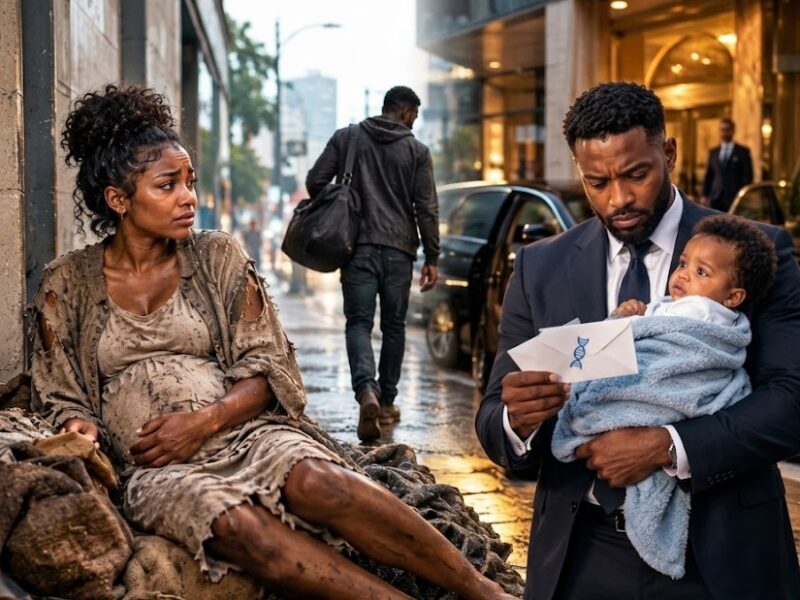
He Abandoned His Pregnant Wife Without Looking Back—Then the Truth About Her Baby Brought Him to His Knees
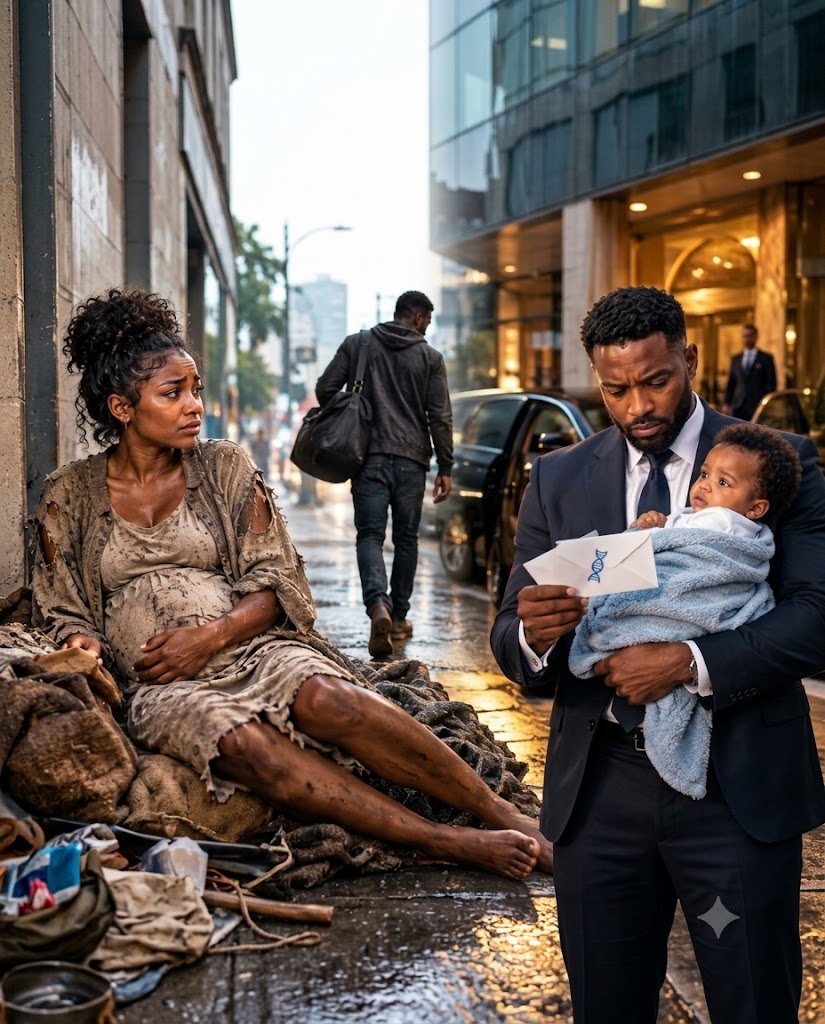
The suitcase wouldn’t close.
Nadia pressed both palms against the faded floral fabric, her pregnant belly making it impossible to kneel properly on the bedroom floor. She tried again, but the zipper caught on a tiny yellow sweater she’d bought three weeks ago at a consignment shop on Maple Street.
She’d paid $4.50 for it.
The sweater had seemed like a promise then.
Now it felt like evidence of something she couldn’t prove.
“Please, little one, just stay calm for mommy,” she whispered, one hand moving to her stomach where the baby kicked against her ribs.
Outside, thunder rolled across the Ohio sky, and the first drops of rain hit the bedroom window like tiny fingers asking to be let in.
The front door opened downstairs.
Gabriel was home early.
—
Nadia’s heart hammered against her chest as she heard his footsteps on the stairs—heavy, deliberate, nothing like the way he used to bound up two at a time when he brought her dinner from the Thai place on Fifth.
She’d fallen in love with that sound.
Now it terrified her.
“You’re packing,” Gabriel said from the doorway.
It wasn’t a question.
“I can explain—”
“Don’t.” He held up his hand, and something in his voice made the baby kick again, harder this time. “Don’t make me ask you twice.”
The envelope in his other hand caught the dim light from the hallway.
He dropped it at her feet.
A medical report slid out across the hardwood floor, stopping just inches from her suitcase. The clinic’s letterhead was unmistakable—she’d stared at that same logo for three hours in the waiting room last month.
“I don’t understand this,” Nadia said, though she understood perfectly.
The words on the page were clear enough.
“It means I can’t have children,” Gabriel said. Each word landed like a stone dropped into still water. “But we’re having a child.”
“No.” Nadia shook her head, her hand pressing harder against her stomach. “You’re having a child.”
The baby moved beneath her palm.
For a moment, neither of them spoke.
—
“Be careful what you say next,” Gabriel warned, and Nadia saw something she’d never seen in his eyes before—not anger, not even betrayal.
Fear.
“Whose baby is it?”
The question hung in the air between them like smoke from a fire neither of them had started.
“Yours,” she said.
Her voice cracked on the word.
“The doctor says that’s impossible.”
“Then we speak to another doctor.”
“I already spoke to him.” Gabriel’s jaw tightened. “I needed the truth.”
“And you decided you wouldn’t find it here.”
It wasn’t a question.
Gabriel didn’t answer.
—
“Gabriel.”
He turned toward the window, where the rain was now coming down in sheets. Below, on the street, a black sedan idled at the curb—the driver’s silhouette visible through the passenger window.
“The driver is waiting,” he said.
“A driver?”
“I thought it would be easier.”
“Easier for who?”
“Nadia, please.” He finally looked at her again. “Nobody wants a scene.”
She followed his gaze to the suitcase on the floor—the suitcase that wouldn’t close, the suitcase that held everything she owned in this house they’d bought together just fourteen months ago.
A house with a nursery they’d painted pale green.
A nursery with an empty crib.
—
“Look at me,” Gabriel said.
She did.
He stared at the suitcase.
“Gabriel, have I ever given you a reason to believe I would do this?”
The question was a test—she knew it, and he knew it.
“No.”
“Then why are my clothes on the floor?”
“Because I don’t know what to believe anymore.”
Outside, thunder rolled across the sky like a warning.
Nadia pulled the suitcase upright, the yellow sweater still visible through the partially open zipper. She dragged it toward the door.
“I’ll carry that.”
“You don’t get to carry the bag after deciding we should leave.”
Gabriel’s hand moved toward her stomach—toward the baby inside her—and for one terrible second, Nadia thought he might actually touch her.
His palm hovered just inches away.
Then he pulled it away.
—
“His hand remained there for one second,” she would tell Ruth later, weeks later, when the bakery had become her only safe place. “Then he pulled it away.”
But that was later.
Right now, Nadia opened the front door herself.
The rain hit her face like a thousand tiny accusations, soaking through her thin cotton dress in seconds. By the time she reached the gate, her hair was plastered to her scalp and water was running into her eyes.
She couldn’t tell if she was crying.
She couldn’t tell much of anything anymore.
—
“Where are we going, madam?” the driver asked as she slid into the back seat.
His name was Patrick—she’d heard Gabriel call him that on the phone a dozen times, negotiating pickup times and waiting instructions.
“Away from here, Patrick.”
She opened her mouth to say more.
Nothing came out.
“Madame?”
She looked up at the house one last time.
The curtains moved in the upstairs bedroom.
Then they closed.
“Just drive.”
—
Three weeks later, Nadia stood outside a small bakery on the corner of Elm and Third, reading a handwritten notice taped to the glass door.
**HELP WANTED—EXPERIENCE PREFERRED**
She checked her reflection in the glass, smoothed her dress over her stomach—now unmistakably pregnant at seven months—and pushed open the door.
“We’re not open yet,” called a voice from somewhere in the back.
“I came about the job.”
The woman who emerged from the kitchen was in her late fifties, with gray-streaked hair pulled back in a practical bun and flour dusting the front of her apron.
“I can work,” Nadia added quickly. “I haven’t said anything yet.”
“I know that look.”
“What look?”
“The one people give me before they remember they’ve already hired someone.”
Nadia’s hand moved to her stomach.
She didn’t mean to.
But the woman noticed anyway.
“How far along are you?”
“Seven months.”
“You cut it close.”
“I didn’t have a choice.”
—
For a long moment, the woman just looked at her—really looked at her—and Nadia felt like she was being measured against some invisible standard she couldn’t see.
“And what can you do?”
“Cook, clean, keep records. Speak to customers, whatever you need.”
“Can you bake a little?”
“That usually means no.”
For the first time that morning, Nadia almost smiled.
“My banana bread is good.”
“Everybody thinks their banana bread is good.”
“Then let mine argue for itself.”
The woman raised an eyebrow.
“What’s your name?”
“Nadia.”
“I’m Ruth.”
She gestured toward a small table by the window.
“Sit down.”
“If you’re about to say no, I’d rather stand.”
“I’m about to give you breakfast.”
“I didn’t come to beg.”
“And I didn’t ask you to.”
—
Nadia sat.
Ruth brought her a plate with two slices of banana bread—the real kind, dense and warm, with walnuts scattered through like tiny surprises—and a cup of coffee that she immediately replaced with tea.
“You shouldn’t have caffeine,” she said when Nadia looked up. “Not that far along.”
Nadia took one bite.
Then another.
Ruth quietly pushed a second piece across the table.
“Where are you staying?”
“With a friend.”
It was not entirely a lie.
The friend—a college roommate named Jenna—had let her stay for eight nights in her guest room before her husband started asking questions about how long this arrangement would last.
The last two nights, Nadia had slept in a room above a noisy bar on the south side of town.
She’d paid $40 a night in cash.
She had $127 left.
“And after the baby comes, I’ll figure it out.”
“You’ve been figuring out a lot lately.”
“I just need one person to let me work before deciding what I cannot do.”
Ruth was quiet for a moment.
Then she nodded toward the kitchen.
“There are bananas on the shelf.”
—
The small room above the bakery became Nadia’s first shelter from the storm.
It had a narrow bed with a clean blue sheet, a window that looked out over the alley, and a radiator that clanked like it was trying to communicate in Morse code.
It was the most beautiful thing Nadia had ever seen.
“Your bread,” Ruth said the next morning, setting three overripe bananas on the counter. “Let’s hear its arguments.”
An hour later, Ruth caught a slice.
An hour after that, she caught another.
“Well,” she said, chewing slowly. “You start tomorrow.”
“Don’t cry over a bakery job.”
“I’m not.”
“You’re doing a very wet impression of someone who is.”
Nadia laughed—actually laughed—and wiped her eyes with the back of her hand.
Then Ruth’s eyes moved toward the suitcase still sitting by the door.
“And there’s a room upstairs.”
“I can pay—”
“We’ll discuss that after you’ve slept.”
—
That night, Nadia lay on the narrow bed beneath the clean blue sheet.
Downstairs, trays clattered.
She could hear Ruth closing up, humming something off-key, and—further away—the sounds of the city settling into evening.
She placed both hands on her stomach.
“We found somewhere,” she whispered. “It’s small.”
The baby kicked.
“Yes, I know you’re small, too.”
Another kick.
For the first time in weeks, Nadia slept without keeping her shoes on.
—
Across the city, Gabriel stood in an empty bedroom.
The nursery was exactly as Nadia had left it—pale green walls, white crib, a mobile with little yellow stars hanging motionless above the mattress.
He’d been standing there for twenty minutes.
He didn’t know why.
A tiny yellow sweater lay behind the wardrobe, half-hidden by a stray blanket. He bent down and picked it up, his fingers tracing the tiny sleeves.
“You haven’t eaten,” his sister Celeste said from the doorway.
“I’m not hungry.”
“You can’t keep doing this.”
Gabriel stared at the sweater.
“She bought this before we knew if it was a boy or a girl.”
Celeste’s expression didn’t change.
“She said yellow belongs to everybody.”
“You did what you had to do.”
Gabriel turned.
“Did I?”
“The report was clear.”
“Then why do I feel like I’ve made a mistake?”
“Because you loved her.”
He looked down at the sweater again.
“I still do.”
—
Before Celeste could answer, Gabriel’s phone rang.
He glanced at the screen—the office.
“Yes, I understand, but we need more time.”
He listened.
“We need your signature on the expansion agreement.”
“Send it to the legal team. They’ve already seen the first draft.”
More listening.
“Then they can see the final one.”
A pause.
“You’ve become difficult to reach.”
“I’ve had other things on my mind.”
“That’s why you have us.”
Gabriel’s jaw tightened.
“Yes, I can put that away.”
He hung up.
For a long moment, he just stood there, the yellow sweater still clutched in his hand.
Then he put it back behind the wardrobe where he’d found it.
—
By the end of Nadia’s first week at the bakery, the banana bread sold out before noon.
By the second week, customers were asking for her by name.
“Twenty years I’ve been here,” Ruth complained, but there was no real bite in her voice. “You arrive and suddenly nobody remembers my cakes.”
“They remember your cakes.”
“They ask for the pregnant woman’s bread.”
“That’s not the same thing.”
“It’s close enough.”
—
By the third week, Ruth had stopped pretending to be annoyed.
By the fourth week, she’d given Nadia a key to the front door and a raise she hadn’t asked for.
“It won’t fit on a sign,” Nadia said, staring at the numbers Ruth had written on a napkin.
“Chair, I’m fine.”
“That wasn’t a question.”
“There’s a chair right there.”
“This one.” Ruth pointed to a weathered armchair in the corner of the kitchen—the one with the stuffing coming out of one arm and a permanent indentation shaped like Ruth’s body.
“It’s ugly.”
“It’s comfortable.”
“It’s both.”
“Sit down.”
Nadia sat.
For a few moments, everything felt ordinary—the warmth of the oven, the smell of rising dough, the distant sound of traffic on Elm Street.
Then the bakery door opened.
Her shoes clicked against the floor.
Nadia’s hand stopped moving.
Ruth looked between them.
“Can I help you?”
—
Celeste stood in the doorway like she’d stepped out of a magazine—designer coat, perfectly styled hair, heels that probably cost more than Nadia’s entire wardrobe.
She didn’t look at Ruth.
She looked at Nadia.
“I need to speak to Nadia.”
“We’re walking.”
“It won’t take long.”
Nadia wiped her hands on her apron.
“It’s okay, Ruth.”
—
The bell above the door chimed as they stepped outside.
The afternoon sun was bright, almost aggressive, and Nadia had to squint.
“So this is where you are.”
“Yes.”
“Gabriel doesn’t know I came.”
“Then you’ve both learned to make decisions.”
Celeste’s jaw tightened.
“I have something for you.”
She pulled an envelope from her bag—thick, cream-colored, the kind of stationery that probably had a watermark.
“There’s enough here for rent, medical expenses, somewhere comfortable.”
“What do you want?”
“Nothing.”
“Then leave it and go.”
“There it is.”
Nadia stared at her.
“There’s also a simple agreement.”
“What agreement?”
“That you won’t approach Gabriel with claims about the child.”
—
The bakery door opened behind them.
Ruth stepped out, a tray still in her hands.
She looked at the envelope.
She looked at Celeste.
Then she set the tray down on the nearest table and crossed her arms.
“Take your envelope.”
Nadia didn’t move.
“Nadia, be practical.”
“I am.”
“He needs peace.”
“So does his son.”
For the first time, Celeste seemed to lose her words.
“A boy.”
“Yes.”
The silence stretched between them like a rubber band about to snap.
“Does that change the price?” Nadia asked quietly. “Don’t be cruel.”
“Take the money.”
“Some things are better left alone.”
“Then stop coming here.”
—
When Celeste was gone, Ruth locked the door for lunch.
“Who was that?”
“His sister.”
“And the paper?”
“I don’t know.”
Ruth waited.
“I mean—” Nadia shook her head. “If they’re so certain this isn’t his baby, why do they need me to sign anything?”
Ruth didn’t have an answer.
But her expression said she was thinking the same thing.
—
That evening, Celeste met Victor in an underground parking garage on the west side of the city.
The fluorescent lights buzzed overhead.
“She refused,” Celeste said.
“Of course she did.”
“You said she would take the money.”
“I said desperate people usually take money.”
Celeste’s heels clicked against the concrete as she paced.
“She’s not desperate. She’s angry.”
“Then we have a problem.”
“She’s having a boy.”
Victor’s expression didn’t change.
“Gabriel always wanted a son.”
“Then it’s fortunate he doesn’t believe this one is his.”
—
Celeste stopped pacing.
“What if she asks for a test after the birth?”
“Has she?”
“Not yet.”
“Then stop giving her reasons to think.”
“You told me the medical report would end this.”
“It did. She’s out of the house.”
“He’s still asking questions.”
“Then keep him occupied until he signs.”
“And afterward?”
Victor smiled—a thin, humorless expression that didn’t reach his eyes.
“Afterward, your brother can make as many family decisions as he likes.”
—
A week later, Nadia found Gabriel standing outside the bakery.
She stopped on the bottom stair, one hand on the railing, the other pressed against the small of her back where the weight of the baby had started to ache.
He looked thinner.
She hated that she noticed.
“How did you find me?”
“Celeste said she saw you here.”
“Did she tell you what she brought?”
“Money and a paper.”
“What paper?”
“You should ask her.”
Gabriel ran a hand through his hair—a gesture she’d seen him make a thousand times, usually when he was frustrated with a client or a contractor or the city’s permitting office.
“Nadia, I came to see if you’re okay.”
—
“I don’t know.”
“That makes two of us.”
She almost smiled.
Then she remembered the suitcase.
“What do you want, Gabriel?”
“I want to understand.”
“Then come with me to another doctor.”
“I’ve already been tested.”
“Then test again.”
He looked away.
“You came here hoping I would make you feel less guilty.”
“That isn’t fair.”
“No,” she agreed. “But it’s true.”
—
The bakery door opened behind her.
Ruth appeared with two cups of tea.
“I thought you might need these,” she said, handing one to Nadia and—after a moment’s hesitation—one to Gabriel.
“Thank you,” he said.
Ruth nodded.
Then she went back inside.
Gabriel stared at the cup in his hands.
“Is it a boy?”
“Yes.”
“Have you chosen a name?”
Noah.
The name they had chosen together, back when they still believed in a future that included a nursery with yellow stars and a crib that would never be empty.
“Yes,” Nadia said. “Noah.”
—
Gabriel’s phone rang.
He glanced at the screen—the clinic.
“I need another appointment,” he said when he answered.
Nadia watched his face as he listened.
“When were you last here?” the receptionist asked.
“Six weeks ago. Let me transfer you.”
Music played.
Then the line disconnected.
Gabriel called again.
This time, nobody answered.
—
Nadia woke before dawn with a pain low in her stomach.
She sat up, waited.
The pain came again—stronger this time, a tightening that wrapped around her back and squeezed.
“Not yet, little one.”
She reached for the glass of water on the nightstand.
Another pain.
She looked down.
Blood.
“I think something’s wrong.”
—
Ruth was already dressed when Nadia knocked on her door.
“We’re going to the hospital.”
“The shop—”
“Can bake itself.”
“How far along?” the ER nurse asked as they wheeled Nadia through the doors.
“Thirty-five weeks.”
“Any bleeding?”
“Yes.”
The nurse’s expression didn’t change, but her pace quickened.
“I’m right here,” Ruth said, jogging to keep up. “I’m not going anywhere.”
—
The next hour became voices, footsteps, bright lights.
“Check her vitals now.”
“Set up a saline drip.”
“Will he be okay?”
“We’re going to take care of both of you.”
“That isn’t what I asked.”
“He may need help with his breathing at first. Our newborn team is ready.”
Nadia nodded, tears slipping toward her ears.
“Look at me.”
She looked at Ruth.
“I’m scared.”
“I know.”
“What if he thinks I didn’t keep him safe?”
“He knows your voice. That’s what he knows.”
—
They took Nadia through the doors.
Ruth stayed behind, holding a bag with tiny clothes inside—clothes she’d bought two days ago at a consignment shop on Maple Street.
An hour later, Gabriel arrived at the bakery.
The shutters were down.
“You looking for Ruth?” a neighbor called from across the street.
“Nadia?”
“They went to the hospital. Baby’s coming.”
Gabriel’s face went pale.
“How is she?”
“In surgery.”
“And the baby?”
“We’re waiting.”
“Does she need anything?”
“Yes.”
—
Nadia’s son arrived early, small and fragile, but surrounded by determined people.
“You have been believed,” Ruth whispered to the tiny form in the incubator, though she wasn’t sure she believed it herself.
Before Gabriel could respond to anything—before he could even process what was happening—the doors opened.
“Mother is recovering. The baby is receiving support in the newborn unit.”
“Can we see them?”
“One at a time.”
“Is he going to be all right?”
“The doctor will speak with the family.”
The nurse paused.
“Now you’ll have to decide if that includes you.”
—
Nadia woke to the soft sound of a machine.
Her first movement was toward her stomach.
My baby.
“He’s here,” Ruth said from the chair beside her bed. “He’s being looked after.”
“Did you see him?”
“Yes.”
“Is he beautiful?”
“Very angry. Very small. Beautiful.”
“I didn’t hear him.”
“He made sure everyone else did.”
—
Noah lay beneath a light, a tiny hat covering his head, his chest rising and falling with the help of a machine that beeped in steady rhythm.
Gabriel stood outside the newborn unit, his palms pressed against the glass.
He watched Nadia speak to the baby.
He watched her smile through tears.
Then she saw him.
Her smile disappeared.
“Not now.”
“Nadia—”
“I just wanted—” She stopped. “I just wanted to hold him.”
“You will.”
“Not now.”
—
One suspicious phone call revealed that the medical truth might have been manipulated.
Gabriel was walking through the hospital lobby when he heard a familiar voice.
“Gabriel?”
He turned.
Dr. Camo stood near the elevators, a coffee cup in one hand.
“I thought that was you. Are you visiting someone?”
“I don’t know how to answer that.”
The doctor’s expression shifted.
“Is everything all right?”
Gabriel hesitated.
Then he pulled the medical report from his jacket pocket—the one he’d been carrying for weeks, the one that had ended his marriage.
“I need you to look at this.”
—
Dr. Camo read the page.
Then read it again.
“Who gave you this?”
“Your clinic.”
“When?”
“Six weeks ago.”
The doctor’s face went very still.
“What is it?”
“Come with me.”
They found an empty waiting room. Dr. Camo spread the report on a table.
“This has my name on it.”
“Yes.”
“But I didn’t sign it.”
“What?”
“And I would not tell a patient this meant fatherhood was impossible on the basis of one report.”
“The man I spoke to said—”
“What man?”
“On the phone. He explained the results.”
“Did you call our main number?”
“I—” Gabriel stopped. “Celeste arranged it.”
The room became very quiet.
“We need to check your actual records.”
—
A baby was crying somewhere down the hall.
Gabriel did not know if it was Noah.
For the first time, he understood that the report in his hand might be the least terrible thing he had believed.
—
The clinic sent the original record that afternoon.
The sample number matched.
Page by page, the evidence showed Gabriel that Nadia had been deceived as well.
“The original result does not support what you were told,” Dr. Camo said. “We’re opening an internal investigation.”
“So I can have children.”
“This record gives us no basis to say you cannot.”
Gabriel pressed his hands over his mouth.
It did not prove Noah was his.
It proved he had thrown Nadia out because of a lie.
—
He went to the bakery that evening.
Nadia was sitting in the armchair in the corner, Noah asleep in her arms.
“I need to tell you something.”
“Let him speak.”
Ruth stood in the doorway, arms crossed.
“One of these was changed,” Gabriel said.
“What do you mean?”
“The report I showed you wasn’t the real result.”
Nadia read the pages slowly.
Then she looked at him.
“So now you believe me?”
“I believe I was lied to.”
“That wasn’t my question.”
“Nadia, I’m sorry.”
“I asked you to see another doctor.”
“I know.”
“I stood in your doorway carrying your child and asked you to check.”
“I know.”
“You had six weeks. I had six weeks, too. Mine were different.”
Gabriel could not speak.
—
“We’ll do a proper paternity test,” he said finally.
“You don’t have to prove anything.”
“Yes, I do. Because somebody did this, and I want the truth written somewhere they cannot talk over it.”
They arranged the test through an accredited laboratory with their identities checked and samples collected properly.
Their newborn became the quiet center of a family still struggling to heal.
Nadia signed her consent.
Gabriel signed his.
Neither spoke while the nurse swabbed Noah’s cheek.
“You’ve done nothing wrong,” Nadia whispered.
Gabriel knew she was speaking to Noah.
It hurt anyway.
—
Noah came off breathing support two days later.
“You caused a lot of trouble for someone who cannot hold his own head up,” Ruth told him.
“He gets that from your side.”
“My side?”
“Stubborn people. Terrible patients.”
“The apple doesn’t fall far.”
“Several sizes.”
“I didn’t know.”
“For once, you asked the right person at the shop.”
Ruth looked at Gabriel.
“Can I hold him?”
—
She placed the baby carefully in his arms.
Gabriel stared down at the tiny face, the tiny fingers, the tiny everything.
“He looks disappointed in me.”
“Good judgment starts early.”
For a moment, the room felt like something they had lost.
Then Gabriel’s phone lit up.
—
“Does she know about the reports?” Victor asked.
“Not yet.”
“Keep it that way.”
“Why?”
“Because when she brought me that agreement, she wasn’t trying to protect you from uncertainty.”
Gabriel’s grip tightened on the phone.
“She was trying to stop you from finding out.”
—
“How is Nadia?” Celeste asked when Gabriel called her that night.
“Recovering. And the baby?”
“He’s improving.”
“I’m glad.”
“Are you?”
“Why would you ask that?”
“Did you offer her money to give up any claim involving me?”
“I was protecting you. From a baby. From being used.”
“Who gave you the number for the doctor I spoke to?”
“What?”
“The doctor. Who gave you his number?”
“The clinic.”
“Which person?”
“I don’t remember.” Celeste’s voice hardened. “I’ve spent weeks holding this family together while you’ve barely functioned.”
“That isn’t an answer.”
“It’s the only one you’re getting tonight.”
—
Gabriel waited until her door closed.
When the laboratory finally called three days later, he was sitting in his car outside the bakery, watching the light in Nadia’s window.
The results were clear.
Noah was his.
He read the report once.
Then again.
Even as the truth emerged, Nadia still had to fight to keep what was hers.
“Nadia,” he said when she opened the door. “He was yours when I stood in the rain.”
She didn’t speak.
“He was yours when you came to the bakery.”
“I know.”
“He was yours before this paper.”
Ruth looked away, giving them what privacy she could.
“What do you need me to do?” Gabriel asked.
“Find out who decided my son should grow up without his father.”
“And Gabriel?”
“Yes?”
“Finding the truth won’t undo what you chose.”
“I know.”
This time, he sounded as though he did.
—
## Part 2
Ruth had moved the narrow bed against the wall and borrowed a cot from her niece.
“You did all this?”
“The old curtains were ugly.”
Nadia hugged her with one arm, holding Noah with the other.
“Careful, I’m still your employer.”
“You haven’t paid me this week.”
“You haven’t baked.”
“I will do it tomorrow.”
—
Life became feeding, washing, sleeping badly, and learning Noah’s different cries.
Gabriel changed diapers with the serious expression of a man repairing an engine.
“He’s mocking you,” Ruth observed.
“He’s a baby.”
“A very judgmental baby.”
—
Old plans and secret arrangements showed how long the deception had been growing.
“The room is small,” Gabriel said one evening, looking around the apartment above the bakery.
“It has never made me feel unwanted.”
He brought groceries when asked, took Noah while Nadia slept, left when she said it was time.
“The clinic found who accessed my records.”
“Who?”
“A records administrator. He copied the original file and sent it outside the clinic.”
“To Celeste.”
“To Victor.”
“Who is Victor?”
“My finance director.”
“What does your finance director want with my baby?”
“I don’t think this started with the baby.”
—
The review had uncovered payments to companies Gabriel did not recognize.
The new agreement would send much more.
He had told Victor he wanted a fresh financial review before making long-term plans for his family.
A week later, Celeste suggested a general health check.
She arranged the clinic visit.
She collected the results.
“So while we were fighting, he wanted me distracted.”
“And Celeste?”
“I don’t know how much she understood.”
“She understood enough to pack my clothes.”
“Yes.”
—
A courier stood outside with an envelope.
No return address.
Nadia’s name on the front.
Inside was a photograph.
She was standing at the hospital entrance holding Noah.
On the back, someone had written six words.
**Naughty Elizabeth protecting her child.**
Ruth carried it upstairs.
Nobody spoke for several seconds.
“Who took that?”
“We’re reporting it.”
“Gabriel, who was near my son?”
“I don’t know. But we’re not waiting to find out.”
—
Police took the photograph and their statements.
Ruth checked the upstairs windows twice that night.
Nadia sat on the bed listening to every sound.
A motorbike passed.
She stood.
“You need sleep.”
“I slept in that house believing I was safe.”
“This is my house.”
“That photograph was taken in daylight.”
Ruth sat beside her.
For once, she had no quick answer.
—
Downstairs, Gabriel remained at a table after closing.
“Don’t confront Victor again,” his lawyer said. “Preserve everything.”
“What about my sister?”
“The same applies.”
“I understand.”
Then a message arrived from an unknown number.
**You have been believed.**
—
Gabriel confronted the cruel instruction that had turned his family against itself.
“I want to explain what happened,” Celeste said.
Gabriel showed her phone to his lawyer before replying.
“I thought it was a private family matter.”
The officer waited.
“Victor said your sister needed a copy of your record and changing it. He sent me the replacement page.”
“You knew it was false.”
“Yes.”
“Did you pretend to be a doctor on the phone?”
“Yes.”
Peter handed over his phone.
Messages, payments, instructions.
Gabriel stared at a line on the screen.
**Make sure he understands the pregnancy cannot be his.**
“Do you need a moment?”
“My son didn’t get one. He’s small. He was early.”
“May I?”
“No.”
—
“I heard about the test,” Celeste said when she came to the bakery.
Gabriel told me.
“And?”
“I didn’t know.”
“What?”
“Didn’t you know that it would become all this?”
“You watched me leave pregnant. What did you think it was then?”
“I thought he would lose himself in you.”
“So you made sure he lost us.”
“He stopped asking my opinion. He was changing things.”
“Not proved that the danger was no longer—”
“He was talking about building a home. It was my home, too.”
“You could have said you were afraid.”
“He wouldn’t have listened.”
“So you gave him something cruel enough to hear.”
“Did Victor pay someone to watch us?”
“I don’t know.”
“Then find something you do know. Take it to the police.”
“I can’t.”
“Why? He’s threatening you.”
“I shouldn’t have come.”
“You were brave when I was the one who had nowhere to go. Try being brave now.”
—
“Who’s there?”
No answer.
Upstairs, Nadia heard a heavy knock.
Then Ruth called her name.
“Nadia.”
She picked up her phone and called 911.
Ruth ran upstairs and pushed a chest against the bedroom door.
“Please, sweetheart, please.”
—
After the bakery was attacked, everyone understood how far the conflict had gone.
“What phone?”
“I don’t know.”
“Tell our brother to stop.”
“They’re inside.”
“Are you safe?”
Then outside, an alarm began to sound.
The neighboring shopkeeper shouted.
Footsteps ran across the bakery floor.
A door slammed.
By the time police arrived, the intruder was gone.
Flour covered the floor.
A tray lay bent beside the oven.
“Loosen your arm, love.”
“Are you hurt?”
“Noah—”
“He’s okay. They knew where he sleeps.”
“Get the bag.”
“Where do you want to go?”
“Somewhere they don’t know.”
—
A temporary place was arranged with help from the police and Gabriel’s lawyer.
Ruth went with them.
“Check the straps again.”
“I checked.”
“I think the stroller—”
“Again.”
He checked.
Nobody told her she was overreacting.
—
Celeste could no longer ignore the consequences of the choices made in her damaged bakery.
Nadia had sent it without a message.
**Someone broke into the bakery. I heard there was a newborn upstairs.**
“I didn’t tell anyone to hurt a child.”
“So you sent them.”
Victor said nothing.
“What were they looking for?”
“Your brother has copies of messages that belong to me at a bakery. He spends enough time there.”
“You’re out of control.”
“No, your brother is. And unless you want your name beside mine in every statement—”
“How?”
“Find out where they moved.”
“Celeste, I heard you.”
There were too many to pretend she had misunderstood.
—
The suggestion to the family’s disappointment finally gave way to Nadia.
The payment disguised as a consulting fee.
Celeste began saving everything.
An hour later, Victor called again.
She let it ring.
Then he sent a message.
**Don’t make another bad decision.**
Celeste picked up her keys.
At the police station, she stood at the front desk for almost a minute before speaking.
“I need to make a statement.”
“About what?”
“My brother. A false medical report and what I helped do to his family.”
—
Nadia sat in the temporary apartment staring at an unopened packet of flour.
“I thought you might want something familiar.”
“The bakery is broken.”
“The back door is broken. The oven glass can be replaced.”
“What if customers stop coming?”
“Then I’ll stand outside and insult them until they come back.”
“You don’t have to bake today.”
“I know.”
“You don’t have to be brave every minute.”
“I’m tired of being afraid.”
“Then do one thing fear doesn’t get to choose.”
Nadia opened the flour.
—
The documents contained no condition that could silence Nadia or take away her freedom.
Her first loaf burned.
She stared at it.
Then began to laugh.
Ruth joined her.
“Your mother has disappointed everyone.”
“What happened?”
“Celeste went to the police. She gave them the messages, everything she had.”
“And Victor?”
“They’re looking for him.”
“She knew the report was false. She says she didn’t know about the break-in, but she helped with the report and the agreement.”
For a while, only Noah could be heard.
“Did she tell the truth because she was sorry?”
“I don’t know.”
“At least that answer is honest.”
—
Victor was stopped that evening while trying to leave the city.
The records, the messages, and the statement gave investigators more than one version of the same story.
There were interviews, statements, more waiting.
No single phone call made all of it disappear.
But the threat stopped.
The bakery door was repaired.
And one morning, Nadia opened the curtains without first checking the street.
“What?”
“Nothing.”
“What now?”
“Only what we discussed.”
There were no conditions about where Nadia lived, no agreement requiring silence, no promise she had to make in return.
She read every page.
Gabriel waited.
—
Slowly, the bakery grew into a business strong enough to support a hopeful future.
“Yes.”
“Instead of letting someone hand you my life in an envelope.”
“Yes.”
“Thank you for getting it done.”
“Can I ask you something?”
“You can ask.”
“Will you ever forgive me?”
“I don’t know.”
Gabriel’s face tightened, but he nodded.
“I used to think forgiveness meant we would go back to how things were.”
“And now?”
“I don’t want to go back to being a woman who had nowhere to go when you stopped believing her.”
“I might just give it all away.”
“You won’t.”
“You’re making sure of that?”
“Yes.”
He sat quietly.
For once, he did not try to improve the answer.
—
Months passed.
Noah grew heavier.
Ruth complained that he was eating the profits without having tasted a single cake.
Birthday boxes, office breakfasts, wedding favors that kept them awake too late.
“What’s this?”
“My savings.”
“For what?”
“The empty shop next door.”
Customers returned, orders increased, and Nadia reclaimed the life she had nearly lost.
“We need space.”
“You’ve already thought about this.”
“I’ve measured it.”
“With whose permission?”
“The landlords.”
“And you didn’t tell me.”
“I wanted the numbers to make sense first.”
They did.
Not enough for everything.
Enough to begin.
—
They made a plan.
Bought a used oven, painted the walls themselves.
“You can do that, Connor.”
“You should have won a cheaper one.”
He rolled up his sleeves.
Noah watched from his seat, waving both hands as though supervising.
—
On opening morning, Nadia stood outside the new shop.
Customers were already waiting.
“You’re blocking the entrance.”
“I’m looking.”
“You can look while selling again.”
“I’m allowed only until 9:00.”
“We’re busy after 9.”
Gabriel began to understand how many precious moments fear had stolen from him.
“Look what we made.”
“You did this.”
“We did.”
Ruth immediately pretended to check the door hinge.
—
Nadia stiffened at the sight of the envelope.
Gabriel noticed but waited.
There were no explanations about jealousy, no request to speak on her behalf, only an admission and an apology.
At the end, Celeste had written that she understood Nadia might never answer.
“Well, she finally wrote something that didn’t ask me to give anything up.”
“Are you going to reply?”
“Not today.”
She placed it in a drawer.
Then she went back to work.
—
For a while they worked in comfortable silence.
“He laughed today.”
“I know. You sent me four videos.”
“It was a good laugh. The first three were him sneezing.”
“I was building toward it.”
“I missed so much.”
“You did.”
“I know I can’t get it back.”
“No.”
“Would you have dinner with me sometime? As Noah’s parents?”
“If that’s what you want.”
“And if that’s all it ever is, then I’ll still be his father and I’ll still show up.”
The answer did not repair the past, but it left the future in her hands.
“Dinner.”
“Yes.”
—
With morning orders waiting, Nadia left the door open to a life built on courage and hope.
“Ruth won’t babysit all night.”
“Of course.”
“And don’t arrive with flowers large enough to hide behind.”
“What about small flowers?”
“We’ll see.”
—
Upstairs, Noah began to cry.
Nadia was already standing.
They reached the stairs together.
This time neither stepped away.
He slept with one hand open beside his face.
His fingers closed around hers.
They needed papers to understand who you were.
“Nadia, are you up there?”
Downstairs, Ruth called her name.
There were orders to prepare for the morning.
Bread to mix, a life waiting.
Nadia switched on the small lamp and left the bedroom door open.
—
The truth about Noah changed who stood beside her.
But she had already begun changing her own life.
She had arrived at a locked future with a suitcase and nowhere to sleep.
Now there was a key in her pocket, her name above a door, and a little boy who would never wonder whether his mother wanted him.
This time when she stepped outside, she knew exactly where she was going.
—
**THE END**









