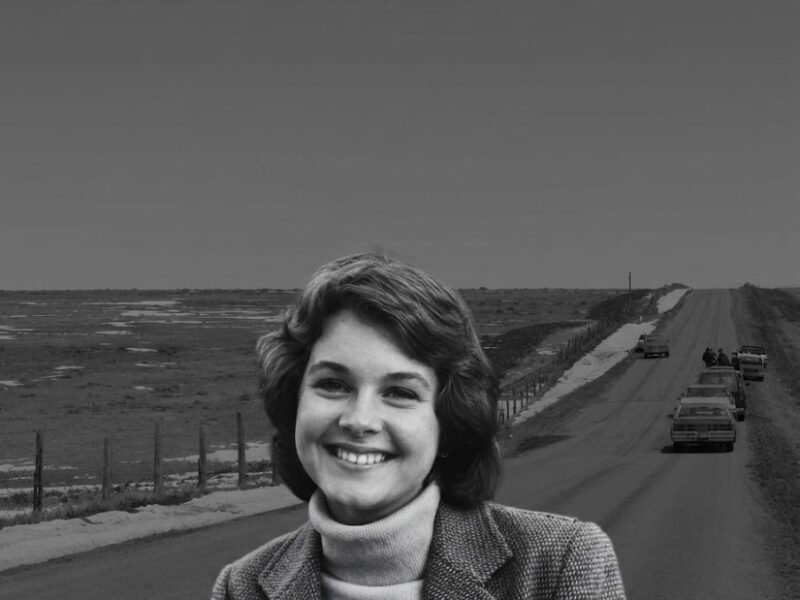
Colorado 1980 Cold Case Solved—She Got Off the Bus. She Never Made It Home
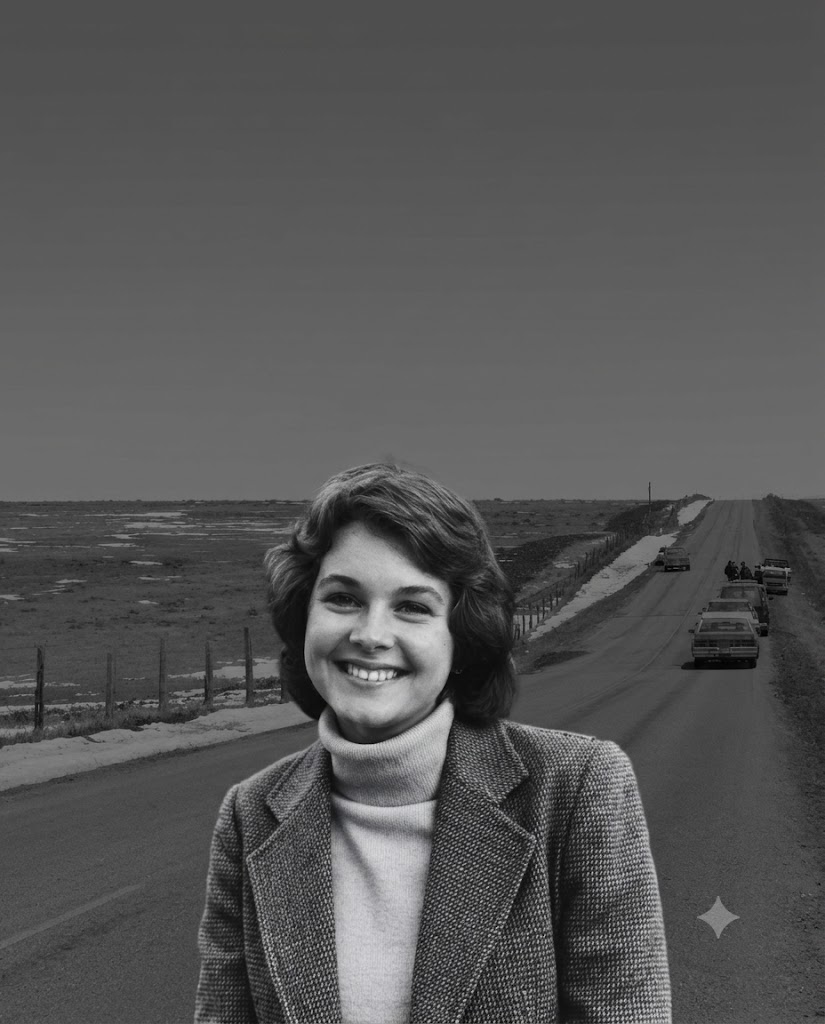
The air that evening was cold enough to see your breath, the kind of Colorado chill that settles into your bones and makes you walk a little faster. A young woman stepped off the bus at her usual stop near South Broadway and Union Avenue in Englewood, just south of Denver. She had made this five-block walk home a dozen times in the two weeks since she had arrived. The streetlights hummed. A car passed. Somewhere, a dog barked. She never made it through the front door.
By 10:30 that night, her aunt knew something was wrong enough to call the police. The search began in those first critical hours, officers canvassing the neighborhood, checking the bus route, hoping speed alone might be enough. It wasn’t. The next morning, January 17, 1980, her body was found in a remote, snow-covered field in Douglas County. She had been abducted after stepping off that bus, assaulted, and stabbed. Her hands had been bound behind her back. She was 21 years old. The man who took her wouldn’t have a name for 40 years.
This is the story of how a Colorado radio intern’s disappearance went cold for four decades, and how a piece of evidence nobody could use at the time finally caught up with a man who thought he’d outrun it. This is the story of a gap so strange, so patient, that it took a technology not yet invented to close it.
Her name was Helen Pruzinski. She grew up in Massachusetts, the kind of kid who knew early what she wanted. Journalism, not the idea of it, the actual work. Deadlines, tape decks, chasing a story until it held together. Back home, she sang in the choir. People who knew her described her the same way again and again, even decades later. Warm, funny, easy to like, the kind of person who left an impression in a short conversation.
She was a senior at Wheaton College, a small liberal arts school in Massachusetts, when the offer came through. An internship at KHOW, one of Denver’s established talk radio stations. Real newsroom experience. Two time zones from her dorm room. The kind of opportunity a journalism student spends years chasing and rarely gets handed before graduation. For a college senior who wanted to report the news for a living, it was close to a dream placement, a working newsroom, real deadlines, a byline that meant something. She said yes without much hesitation.
In January of 1980, she flew out to Colorado and moved in with her aunt and uncle in Englewood, a quiet suburb just south of Denver. A safe arrangement, or so it must have seemed, family close by. A short bus ride to the station downtown. By some accounts, she was staying there alongside a friend as well, sharing the adjustment of a new city with someone her own age. By every account, she made an impression fast at the station. Bright, funny, the kind of intern a newsroom actually notices, even in just two weeks.
Years later, the sheriff who’d eventually close her case would describe her simply as a young woman who wanted to be part of something bigger than herself, decent and warm, the kind of person people remembered clearly even after decades had passed. She’d been in Colorado a little over two weeks. On the evening of January 16, 1980, Helen finished her shift at KHOW and caught her usual bus home. The same route, the same stop, blocks from her aunt and uncle’s house near South Broadway and Union Avenue, a walk she’d made without incident every night since she’d arrived. She got off the bus a little after 6:00. She didn’t call. She didn’t show up for dinner.
The search started that night. Officers canvassed the neighborhood, checked the bus route, and worked through the first most critical hours, the way any missing person’s case demands, fast, and with the hope that speed alone might be enough to bring her home before anything worse had happened. Police kept questioning people and working the area throughout that first day and the one that followed. It didn’t take long to end. The next morning, January 17, Helen’s body was found in a remote snow-covered field in Douglas County, south of the city, open, isolated ground. The kind of place someone could count on not being disturbed for hours.
She had been abducted after stepping off that bus, violated in the cruelest way a person can be harmed, and stabbed. Her hands had been bound behind her back. A colleague from the radio station, a journalist who’d worked alongside her, was the one who had to identify her. He’d covered violent crime for years by that point in his career. He’d never had to do that for someone he actually knew. KHOW put up reward money for information. Nobody came forward with anything usable.
Investigators worked with a witness who, under hypnosis, helped a sketch artist put together a composite, a man with dark hair, light eyes, and a mustache. That sketch would circulate for years. It never led anywhere solid. Here’s the thing that’s easy to miss looking back from where we are now. In 1980, the investigators working this case did something that mattered more than anyone could have known at the time. They collected biological evidence from the scene, and they preserved it properly, carefully, the way you’d want it done if you had any idea it might matter nearly 40 years later. They just had nothing to do with it yet.
DNA profiling as a forensic tool didn’t exist in 1980. It wouldn’t exist for another seven years. CODIS, the national database that lets police run crime scene DNA against convicted offenders, wouldn’t come online until the mid-1990s. And even once it did, it could only ever be as good as the samples already sitting inside it. A DNA profile is only useful if the person it belongs to has already been forced to give a sample for something else, somewhere else, for some other crime. So detectives did what detectives in 1980 could do. They knocked on doors.
Over the years that followed, more than a hundred investigators across more than two dozen agencies and organizations would touch this case in one way or another, interviewing hundreds of people, co-workers, neighbors, men with records, men without them. Investigators went back to the file more than once. In 1997, someone pulled it again. In 2013, again. In 2017, again. Each time they ran the preserved evidence against whatever new offender databases existed by then. Each time nothing.
The man they were looking for wasn’t hiding in the way we usually picture it. He wasn’t off-grid. He wasn’t invisible. He had a record. In 1975, a man named Curtis Allen White was convicted of first-degree rape in Arkansas at knife point. He served time. He was released on parole in early 1979. And when he got out, a former prison counselor, someone who’d worked with him while he was incarcerated, invited him to come stay with his family in Littleton, Colorado. White moved to Colorado in 1979 and moved in with the counselor’s family in Littleton. By 1980, he’d relocated to an address in Englewood, one that put him just blocks from where Helen got off the bus every evening.
He was briefly taken back into custody for a parole violation in 1981, but he wasn’t incarcerated at the time of the murder. He was out living nearby. One name among the hundreds investigators worked through in the weeks after Helen’s death. Nothing at the time tied him to the crime. There was no database in existence that could have connected a name in a parole file to a sample of evidence sitting quietly in a locker. He was just 22 years old that January. Later that same year, 1980, White married an old girlfriend from Arkansas. The marriage lasted 30 days. By 1982, two years after the murder, Curtis Allen White had relocated to Florida and there he legally changed his name. He became James Curtis Clanton and then he simply continued living.
He married again, divorced again. He worked landscaping jobs for a while, then moved into long haul trucking. He settled in a small town called Lake Butler in Union County, Florida. He’d go on to be arrested twice more for domestic violence, once in 1998 and again in 2001. None of those arrests connected back to a name he hadn’t used in decades, for a crime more than a thousand miles away in a state he’d left behind entirely. To every officer, court clerk, and background check that crossed his path in Florida for the next 30 plus years, he was simply James Curtis Clanton, a man with a couple of domestic disputes on his record. Nothing more. Nothing that would ever prompt anyone to look backward at a name he hadn’t answered to since 1982.
That’s the gap this case is really about. Not a mastermind who erased himself, a parolee who changed his name for reasons that had nothing to do with evading a murder charge nobody had linked him to, and who then simply outlasted the technology that could have caught him. Every year that passed was a year the trail got colder and his old name got quieter. For Helen’s family, each reopening of the file in 1997, in 2013, in 2017 meant living through the same cycle all over again, a call from a detective, a flicker of hope that this might finally be the time technology had caught up, and then eventually silence. They did that for the better part of four decades without ever getting to put a face or a name to the person responsible.
Let this thought sit with you for a second. For most of 40 years, the man who killed Helen Pruzinski wasn’t running from anything. He was just living a new name, a new state, a quiet life, while a family nearly 2,000 miles away kept waiting for a phone call that didn’t come for four decades. By 2018, Douglas County detectives had run out of conventional options. The evidence from the crime scene still didn’t match anything in CODIS. It never would because the man they wanted had never been required to submit a sample for the offenses on his record that predated the database’s existence. So, they tried something new.
A few years earlier, in April of 2018, investigators in California had cracked a decades-old string of murders, the Golden State Killer case, using a method nobody in law enforcement had really tried before at scale. Uploading crime scene DNA to public genealogy websites, the same ones ordinary people used to find long-lost relatives. Within about two years of that first case, the same technique had helped identify roughly a hundred suspects and unidentified victims in cold cases across the country. From decades-old rapes to murders nobody thought would ever be solved.
Douglas County detectives partnered with genetic genealogist CeCe Moore and her team at Parabon NanoLabs along with a firm called United Data Connect and uploaded the 1980 DNA profile to a public database called GEDmatch. Here’s how it actually works, and it’s slower and stranger than people expect. The crime scene DNA doesn’t match anyone directly. What it matches is pieces of people, distant cousins, who happened to upload their own DNA results, looking for their own family history. People with no idea their curiosity about a great-grandparent was about to help solve a murder.
Moore would later explain that the amount of shared DNA needed to start pulling a thread like this is smaller than most people assume. A shared segment covering less than one percent of a person’s genome could be enough to identify a meaningful family connection, a genetic thread so thin it would have been useless to investigators working this same case even a decade earlier. From those partial matches, genealogists build out a family tree, branch by branch, marriage records, birth records, obituaries, census data. They’re not looking for a name at first. They’re looking for the shape of a family, tracing forward through generations until one shape narrows down to a single living person who fits everything, right generation, right geography, right window of time.
It took months of painstaking work, cross-referencing names against records that in some cases were decades old themselves. Genealogists rule out branches one at a time, a cousin who was too young, a family line that simply didn’t fit the geography of a Colorado bus stop in 1980. What’s left after enough branches are cut away isn’t a confirmed suspect. It’s a short list of names worth a much closer look. Eventually, the tree led investigators to a man who on paper had nothing to do with Helen Pruzinski. James Curtis Clanton, 62 years old, living in Lake Butler, Florida, driving trucks for a living.
Nobody in Douglas County had heard that name before. But when detectives dug into his history, they found the name underneath it. Curtis Allen White, the parolee who’d lived a few blocks from a bus stop on South Broadway in 1980. A family tree built by strangers, none of whom knew Helen’s name, had just done what 40 years of police work couldn’t. A name on a family tree isn’t proof. Genealogy can point investigators toward a person, but it can’t put them in a courtroom. For that, detectives needed Clanton’s actual DNA collected the right way without ever letting him know he was being watched.
So, two Douglas County investigators flew to Florida for six days. They followed James Curtis Clanton. They watched his routine. They waited for an opportunity that wouldn’t tip him off. The break came at a bar. Clanton ordered bottles of beer and poured them into a mug like he had plenty of nights before. Investigators would go on to collect three mugs tied to his visit. They’d also flagged a milk jug they believed he might have thrown away, hoping it would carry a usable sample. It didn’t, but one of the beer mugs he’d been seen using at the bar did.
According to the arrest affidavit, the DNA pulled from those mugs was sent back to Colorado and compared against the evidence preserved from the crime scene in 1980. The same sample nobody could do anything with for nearly 40 years. It matched. On December 11, 2019, James Curtis Clanton was arrested near his home in Florida without incident. He waived extradition. Two days later, on the drive to the airport to be flown back to Colorado, he reportedly began confessing to the investigators sitting beside him before he’d even landed in Denver.
At his first court appearance on December 16, he answered District Court Judge Theresa Slade’s questions in a hushed, barely audible voice, nodding along, sitting calmly through the whole thing, a strange, quiet contrast to what he was there to answer for. At a press conference announcing the arrest, Douglas County Sheriff Tony Spurlock talked about who Helen had been, a young woman just starting her life. Someone who wanted to be a journalist, who wanted to be part of something bigger than herself.
In February of 2020, at what was supposed to be a routine preliminary hearing, Clanton changed course. He pleaded guilty to first-degree murder. No trial, no jury. Douglas County District Attorney George Brauchler would later note that a case that had taken 40 years to build reached its resolution in about 15 minutes inside a courtroom that morning. The product, he said, of years of unrelenting work by the sheriff’s office and the genealogy team that had finally cracked it open.
The sentencing hearing itself should have happened months earlier. It didn’t because by the spring of 2020, courtrooms across the country were shutting down or moving online as the coronavirus pandemic took hold and Douglas County’s was no exception. So the family that had already waited four decades waited a little longer. That July, finally, delayed for months by the pandemic, Clanton appeared by video from jail for sentencing.
Helen’s sister Janet addressed him directly, the first time in 40 years anyone in that family had gotten the chance to. She spoke about the weight her family had carried for decades, about parents who didn’t live to see this day, about what it meant to finally have an arrest, a conviction, something that could be called justice even this late. She said it gave her some peace knowing he was behind bars, but that closure wasn’t really the word for it because Helen still wasn’t there.
Clanton was sentenced to life in prison with the possibility of parole after 20 years. He didn’t speak at his own sentencing. His attorney read a statement of apology on his behalf. Forty years is a long time to wait for 15 minutes.
Here’s what stays with me about this one. Nobody in this story was careless. Not the 1980 investigators who preserved evidence they had no way to use yet. Not the family who never stopped calling decade after decade asking if there was anything new. The system wasn’t broken. It was just years ahead of the tools it needed. The gap Curtis Allen White exploited wasn’t cleverness. It was time. He didn’t outsmart anyone. He just outlasted the technology that would have caught him, changed his name, and let nearly 40 years do the rest of the work for him.
A knife-point conviction in Arkansas. A parole board that let him move across the country. A counselor who wanted to help a man he thought had changed. A quiet street a few blocks from a bus stop. None of it added up to anything until a stranger’s curiosity about their own family tree gave investigators the one thing they’d never had. A shape to search for. What finally closed that gap wasn’t a confession or a lucky tip or a break in the case. It was a piece of evidence that had been sitting in a locker since before some of you watching this were born, waiting for a version of forensic science that hadn’t been invented yet to finally arrive.
Detective Shannon Jensen, who had spent years quietly keeping this file alive through every dead end, said around the time of the arrest that she was already working two more cold cases the same way, using the same patient method of letting strangers’ family trees do what four decades of legwork couldn’t. More than a hundred investigators across more than two dozen agencies had touched this case since 1980. Detectives who worked it in the 1990s retired without an answer. Detectives who reopened it in the 2000s ran out of leads all over again. It took a technology none of them had access to, arriving decades after the crime, to finally give the file to someone who could close it.
Helen Pruzinski came to Colorado for two weeks and never got the career she’d worked for. She never got to finish that internship, never got to build the byline she’d flown nearly 2,000 miles to start earning. But the evidence collected the night she died did eventually get its day, 39 years, 11 months, and change later. It waited longer than most of the people who first collected it were still around to see it resolved, and it was still enough in the end to put the right name in front of a judge.
The bus stop is still there, near South Broadway and Union Avenue. The streetlights still hum. The cold still settles into your bones. But the gap that let a man walk through it for four decades has finally closed, not with a bang, but with a mug of beer, a family tree built by strangers, and a piece of evidence that waited, patient as snow, for the science to catch up.









