
Brother Valentino’s Final Hours😢CAUSE OF DEATH, Wife, Son, Life & Legacy of the People’s Calypsonian
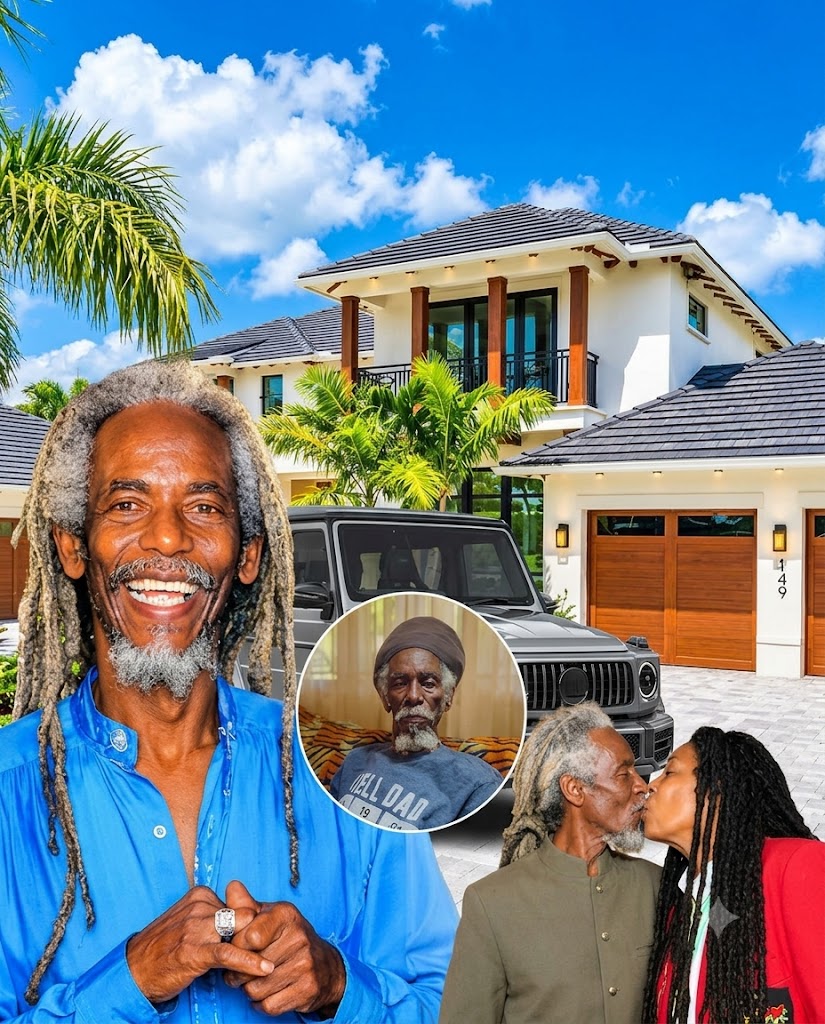
The phone rang at 6:30 a.m. on October 21st, 2026, and Aid Phillip answered it the way any son answers a call from the hospital where he works—half-awake, half-hoping it was nothing. It was something. He walked the same corridors he knew by heart, past the oncology wing, past the nurses who nodded without meeting his eyes, until he reached his father’s room at Sangre Grande Hospital. Emrold Anthony Phillip, the man the Caribbean knew as Brother Valentino, lay exhausted, his breathing labored, his eyes closed. “Dad,” Aid called out, identifying himself as his son, and the silence that followed told him everything he feared. Just weeks earlier, the region had mourned Mighty Sparrow; now the calypso fraternity was bracing for another giant to fall.
The numbers tell the story of what was stolen. Valentino was 85 years old, born July 7th, 1941, in Cherry Hill, Grenada, and he had spent roughly six decades turning calypso into a weapon for the people. There was no emergency room drama, no 911 call, no police report to file—just a quiet admission on the Sunday before, a family hoping for a different ending, and a doctor from oncology who called Aid into an office before the words could even be finished. By 11:58 a.m., Brother Valentino was gone. His wife, Peggy Castanada Phillip—a world champion netball athlete who once competed against Australia and New Zealand—was in Barbados when the news reached her. She began preparing to return. The family, eight children in all, had been holding its breath for days.
“He was a warm-hearted, simple gentleman,” Aid would later say, remembering the small comforts: his father’s favorite foods, a refreshing glass of lime juice on a hot day. That image—the lime juice, the ordinary pleasure—is the object that travels through this story like a refrain, first as a memory shared, then as evidence of who he really was, and finally as a symbol of the people’s calypsonian himself: something simple, something sustaining, something that never needed a trophy to matter. Here is a man whose voice challenged authority and celebrated black consciousness, and yet his son remembers him reaching for a glass of lime juice. That is not a contradiction. That is the whole point.
What connects Brother Valentino to Mighty Sparrow and Lord Kitchener is not just geography or genre—it is lineage. His parents collected records by Kitchener and Lord Christo, and as a boy he absorbed a tradition that treated calypso as national identity, public discussion, and the preserved experience of Caribbean people. Sparrow inspired his ambition, showing how a calypsonian could combine entertainment with powerful storytelling. Kitchener gave him a door. When the young performer auditioned for Kitchener’s Caravan Calypso Tent under the name Robin, it was Kitchener who handed him the stage name Valentino, which became his musical identity before he evolved into Lord Valentino and, eventually, Brother Valentino. The tent was a training ground—a place to develop craft, introduce compositions, connect with audiences—and Valentino used it to build a voice that was unmistakably his own.
His journey was not a straight line. When his father died, his education was interrupted, and he worked as a printer, an electrician, a mechanic, an apprentice tailor. In the tailor shop, the radio played calypso, and he listened while he worked, studying how a song could carry an argument. By the early 1960s, he was pursuing his own musical ambitions, determined to establish himself in the art form. The Calypso Tent offered him a professional stage, but the moment that made him the people’s calypsonian arrived in 1970, when Trinidad and Tobago was experiencing intense debates about racial inequality, economic opportunity, political leadership, and black identity. Across the country, people were demanding dignity, justice, and greater influence over their future, and Valentino answered through his music. His 1971 composition “No Revolution” helped establish him as a prominent voice for black consciousness, confronting difficult realities and encouraging listeners to think critically about society. That commitment earned him the title the People’s Calypsonian.
For Valentino, calypso was never simply about making people dance. It was a means of questioning authority, highlighting inequality, and expressing the hopes and frustrations of ordinary citizens. He believed musicians had a responsibility to their communities; he wanted audiences to hear more than an entertaining melody, to consider the issues shaping their lives. That conviction remained central to his identity throughout his career. It is the hinge on which his legacy turns: entertainment was the vehicle, but conscience was the engine.
Away from the stage, the man behind the headlines was a husband and father who kept his private life private. He was married to Peggy Castanada Phillip, an accomplished athlete who was part of Trinidad and Tobago’s world champion netball team that competed against Australia and New Zealand. Reports following his death indicated that he was survived by his wife and eight children. His son Aid later spoke publicly about his father’s final hours, sharing personal memories of a man who was much more than a celebrated performer. To his supporters, Valentino was a cultural icon. To his family, he was a husband and father whose everyday presence mattered far more than awards or public recognition. Those two truths sit side by side—and the second one is the one that keeps a son walking hospital corridors at dawn.
In the days leading up to his death, Valentino’s health had deteriorated. Reports attributed his illness to cancer, a fact that turned hope into a countdown. According to Aid, Valentino had been admitted to Sangre Grande Hospital on the preceding Sunday, and the family continued to hope that he would recover. On the morning of October 21st, Aid visited at approximately 6:30 a.m. and found him exhausted, with labored breathing and his eyes closed. Aid called out to him, identifying himself as his son, and the sight left him fearing that his father might be nearing the end. Later, while Aid was back at work at the same hospital, a doctor from the oncology department called him to the office. Before the doctor could finish speaking, Aid understood what the news meant. Brother Valentino had died at approximately 11:58 a.m. His wife, Peggy, was in Barbados at the time, and Aid recalled informing her of the devastating news as she began preparing to return.
There was another painful detail. The University of Trinidad and Tobago had planned to honor Valentino at the National Academy for the Performing Arts on November 17th. His son had hoped his father would live long enough to receive the recognition personally. After his death, Aid vowed to collect the honor on his behalf. That is the second appearance of the object: not the lime juice this time, but the promise of recognition deferred—a glass of recognition that arrives too late, and a son who decides to carry it home anyway. A vow is a strange inheritance. It is not money; it is obligation, and it is the kind of obligation that turns grief into purpose.
Tributes soon followed from across Trinidad and Tobago’s cultural community. The Trinbago Unified Calypsonians Organization remembered Valentino as a fearless voice whose social commentary captured the struggles, hopes, and experiences of generations. The Ministry of Culture and Community Development also paid tribute, with Minister Michelle Benjamin recognizing him as a voice for the voiceless, a conscience for the nation, and a keeper of its stories. The timing made the loss particularly painful. Trinidad and Tobago had only recently mourned Mighty Sparrow, another giant whose influence transformed calypso and inspired generations of performers. Valentino had appeared on television in September to reflect on Sparrow’s life and legacy. Just weeks later, the fraternity found itself mourning Valentino, too. Sparrow’s son, Sancho Francisco, extended condolences to Valentino’s family. The connections between these artists reflect the shared history of calypso: Sparrow inspired Valentino, Lord Kitchener helped shape his early career, and performers such as Black Stalin shared his commitment to using music as a vehicle for social commentary. Each contributed differently to the tradition, demonstrating that calypso could entertain, challenge, and preserve the stories of Caribbean society.
The numbers that matter here are not the championship totals or the trophies, though the lack of them is itself a kind of evidence. The number that matters is 85 years, and within those years, six decades of songs, one wife, eight children, and one son who walked into a hospital room at 6:30 a.m. and understood that the voice he had known his whole life was about to go quiet. There were no missed calls in the frantic sense—just one doctor’s summons, one office visit, one sentence that ended before it began. That is how death often arrives for the people’s calypsonian: not with a revolution, but with a doctor who cannot finish speaking.
The final hours were ordinary in the way that only the most consequential hours can be. There was a Sunday admission. There was a Monday of hoping. There was a Tuesday morning visit, a son calling out, a father’s eyes closed. There was a doctor, an office, a realization. There was a phone call to Barbados. There was a family preparing to return. And there was the University of Trinidad and Tobago’s planned honor on November 17th, waiting in the future like a stage that would no longer hold the man it was built to celebrate. Aid vowed to collect it on his father’s behalf, and that vow is the third appearance of the object: the lime juice, the deferred honor, the son who carries the glass. The people’s calypsonian was never measured solely by trophies or championship titles. His legacy was built on conviction, cultural contribution, and the courage to address difficult subjects through song. That is what a son inherits when the trophies are not the point.
Brother Valentino’s death leaves a significant gap in the calypso fraternity, but his message lives on through his music. He used his voice to challenge injustice, celebrate black consciousness, and remind audiences that ordinary people deserved to be heard. He was a son of Grenada, a cultural son of Trinidad and Tobago, a husband, a father, and a calypsonian who believed music carried a responsibility to society. As the Caribbean mourns another of its great voices, Valentino’s life reminds us that the most enduring artists do more than entertain. They challenge generations to think, question, and remember. Rest in peace, Brother Valentino, the people’s calypsonian. Your voice may be silent, but your message will continue to speak.









