Baby Girl Vanished in 2002—Seventeen Years Later, Her Mother Saw Something Unmistakable on TV
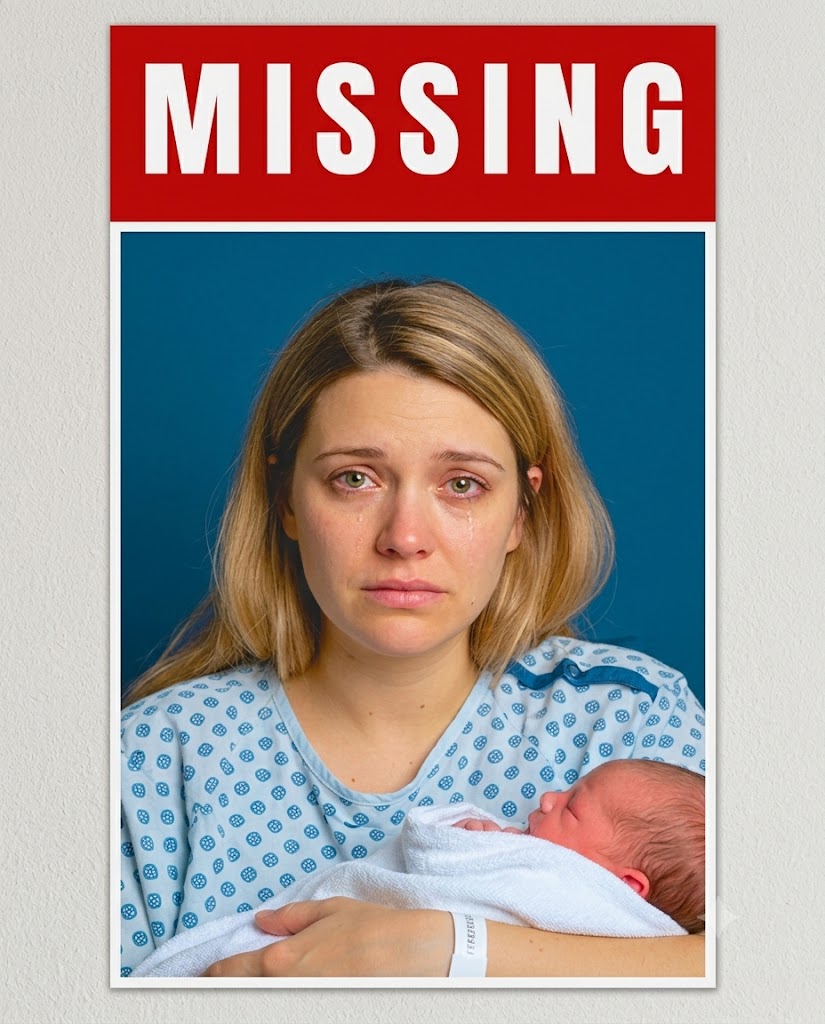
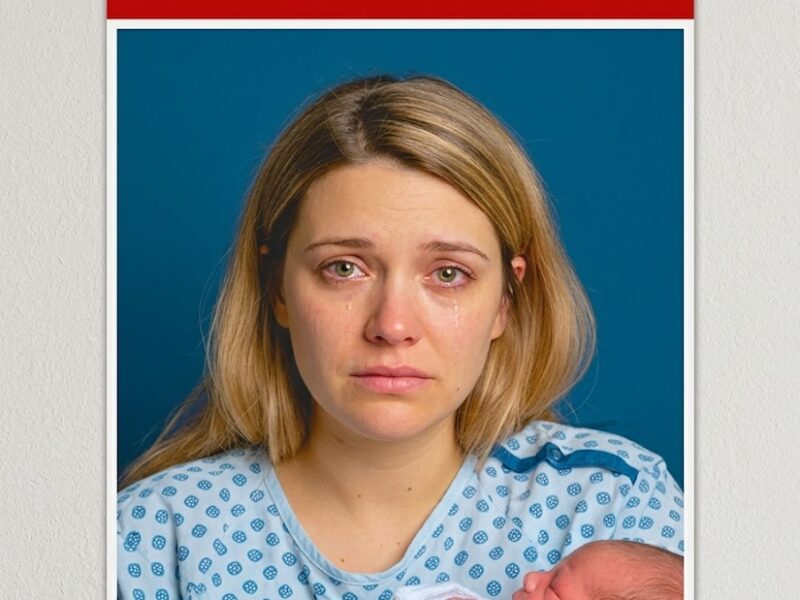
The fluorescent lights of Grady Memorial Hospital hummed like a tired lullaby as Sarah Bennett clutched her newborn daughter to her chest. March 15, 2002, had started with pain and ended with the kind of joy that made every contraction worth it. The baby’s tiny fingers curled around Sarah’s thumb, and for three precious minutes, the world was perfect. Then a nurse in a crisp white uniform appeared at the bedside, her face professionally neutral. “I need to take her for routine tests,” the nurse said, reaching for the bundle in Sarah’s arms. “Just a few minutes.” Sarah hesitated, a primal instinct flickering somewhere deep in her exhausted body. But she trusted the hospital. She trusted the system. She nodded and watched the nurse carry her daughter through the door. That was the last time she ever saw her baby alive, or so they told her.
Two hours later, a doctor entered the recovery room, his eyes fixed on the linoleum floor. He couldn’t look at her. Sarah would remember that detail for the rest of her life. “Mrs. Bennett, I’m sorry to inform you that your baby has passed away.” The words hit her chest like a physical blow, knocking the air from her lungs. She screamed, begged, demanded to see her daughter. The doctor shook his head. “It’s better if you don’t see her like this.” They never showed her the body. They never gave her a clear explanation. They never let her say goodbye. Just a death certificate and a white casket that she was never allowed to open.
For seventeen years, Sarah lived with a hole in her heart that nothing could fill. She visited an empty grave on the fifteenth of every month, talking to a daughter who existed only in memory. She stayed in a marriage that had become two strangers sharing the same grief. She worked her cleaning job like a ghost, moving through offices and hallways without truly being present. Then in June 2019, a television news report froze the blood in her veins and shattered everything she thought she knew about that day in 2002.
“Baby theft scandal rocks the nation,” the reporter announced, standing in front of archival footage of hospitals from decades past. “Hundreds of cases documented over the past three decades.” Sarah’s hand trembled as she set down the kitchen knife she’d been using to chop vegetables. The reporter continued, explaining how corrupt nurses and doctors had stolen newborns from vulnerable mothers and sold them to couples desperate for children. The mothers were told their babies had died. Death certificates were falsified. Evidence was buried.
Sarah sank onto the couch, her mind racing through the details of her own nightmare. The stern nurse who took Emily for tests. The vague excuses. The body they never showed her. The medical records that took six months to obtain and contained almost nothing. It all fit. Every terrible piece clicked into place like a lock finally finding its key. Her daughter hadn’t died. Her daughter had been stolen.
When Michael walked through the front door half an hour later, he found his wife shaking on the couch, tears streaming down her face. “Sarah, what happened?” he asked, dropping his bag and rushing to her side. She pointed at the television, now showing a commercial for laundry detergent. “Michael,” she said, her voice barely a whisper, “I think Emily didn’t die. I think someone took her.”
The next few months were a blur of research and phone calls and bureaucratic dead ends. Sarah found an organization called Mothers Seeking Justice, a small nonprofit that helped families affected by infant abduction. The woman who answered the phone listened patiently as Sarah recounted every detail of that day, from the nurse’s stern face to the doctor’s refusal to let her see the body. “Your case sounds very similar to others we’ve documented,” the woman said. “We have a DNA testing program. If your daughter is alive and searching for her biological parents, we might be able to find her.”
Sarah didn’t hesitate. Two weeks later, she sat in a small laboratory on the outskirts of Atlanta, a sterile swab scraping against the inside of her cheek. Michael sat beside her, holding her hand, his own sample already collected. “How long does it take?” Sarah asked the technician. “Depends,” the young woman replied. “If there’s an immediate match, we could know in weeks. If not, months. Or years.” Sarah nodded, though she barely heard the words. She was already imagining the impossible. A daughter who was alive. A daughter who might be looking for her, too.
Three months passed with no word. Sarah checked her phone obsessively, jumping at every notification, every unknown number. Michael tried to keep her grounded. “We may never know,” he said one night, his voice gentle but firm. “You have to prepare yourself for that possibility.” Sarah nodded, but in her heart, she felt something. A certainty that defied logic. Emily was out there. She had to be.
Then on a Tuesday afternoon in September, Sarah’s phone rang while she was mopping the floor of a downtown office building. Unknown number. She almost didn’t answer, assuming it was another telemarketer. But something made her swipe the screen. “Hello, Mrs. Bennett? This is the DNA lab calling. We need you to come in as soon as possible.” Sarah dropped the mop. It clattered against the floor, leaving a puddle of soapy water spreading across the linoleum. “Why? What happened?” There was a pause on the other end of the line. “We have results. We need to speak with you in person.”
Sarah’s hands shook as she called Michael. He left the auto shop immediately, arriving at the lab just fifteen minutes after her. They sat in a small office across from a man in his fifties with wire-rimmed glasses who introduced himself as the lab director. “Mrs. Bennett, Mr. Bennett,” he began, looking at a file on his desk. “We found a match. A 99.9 percent match.” The room spun. Sarah grabbed Michael’s arm to steady herself. “What does that mean?” Michael asked, his voice cracking. “It means we found someone whose DNA matches yours. With 99.9 percent certainty, that person is your biological daughter.”
Sarah burst into tears, sobs that came from somewhere deeper than her lungs. “Where is she?” she managed to ask between gasps. “Where’s my daughter?” The director explained that the young woman had also registered in the system, searching for her biological parents. She suspected she had been illegally adopted. Her name was Jessica. She was seventeen years old. She lived twenty minutes away in a suburb of Atlanta.
“Can we meet her?” Sarah asked, her voice urgent. “Can we see her?” The director nodded carefully. “There’s a process. We have to contact her first. She has to agree.” Sarah didn’t care about the process. She didn’t care about anything except the fact that her daughter was alive. That after seventeen years of grief and emptiness and monthly visits to an empty grave, her daughter was real.
Three days later, the lab called again. Jessica wanted to meet them. She had given permission to share her phone number. Sarah held the small slip of paper in her trembling hands, staring at the digits as if they might disappear. “Are you going to call her?” Michael asked. Sarah nodded, though fear gripped her chest. What would she say? How do you start a conversation with the daughter who was stolen from you seventeen years ago?
She waited until evening, wanting to be calm, wanting to choose her words carefully. At 8:00 p.m., she dialed the number. It rang once. Twice. Three times. Sarah was certain no one would answer. Then she heard a voice. A young voice. A voice that made her cry before she could even speak. “Hello?” Sarah couldn’t form words. They stuck in her throat like stones. “Hello?” the voice repeated. “Jessica,” Sarah finally managed. “Are you… are you Sarah?” The question broke something inside her. “Yes. Yes, it’s me. I’m your… I’m your mom.”
They both cried for a full minute, neither speaking, just listening to the sound of each other’s breath through the phone. Finally, Jessica spoke. “I can’t believe this is real.” “Me neither,” Sarah said. “I’ve waited seventeen years to hear your voice.”
They talked for two hours that night. Jessica explained that she had grown up with a couple in a suburb of Atlanta. They told her she was adopted, but the details never quite added up. The stories changed. The paperwork was always missing. She didn’t look like them. When she turned fifteen, she confronted her adoptive parents, and they finally admitted the truth. They had bought her through an intermediary, told it was a private adoption, and never questioned the lack of legal documents. Jessica had spent two years investigating, searching, trying to understand who she really was. When she learned about the DNA program, she registered immediately.
“I always knew something wasn’t right,” Jessica told Sarah. “But I never imagined this. I never imagined my biological parents were looking for me.” “I never stopped looking for you,” Sarah said. “Not a single day in seventeen years.”
They agreed to meet in person three days later at a park in downtown Atlanta. Sarah barely slept those three nights. She went through her old things, finding the hospital bracelet she had worn that day, the one that said “Baby Girl Bennett.” She had kept it all these years, tucked away in a box with the tiny pink onesie she had bought for Emily, still with tags on it, never worn. Michael found her sitting on the floor of the yellow room surrounded by baby clothes and old photographs, crying.
“You okay?” he asked, sitting down beside her. “I’m scared,” Sarah admitted. “What if she doesn’t like me? What if I say the wrong thing? What if…” “Sarah,” Michael interrupted, his voice firm but gentle. “She called you ‘mom’ on the phone. She called you ‘mom.'” Sarah nodded. He was right. Jessica had already chosen to love her.
The day arrived. Saturday afternoon. The park was full of families, children playing on swings, couples walking hand in hand. Sarah and Michael arrived early, sitting on a bench near the entrance. Sarah checked her phone every thirty seconds. “She’s going to come,” Michael kept saying. “Relax.” At 3:00 p.m., Sarah saw a young woman approaching. Long brown hair. Hazel eyes. Slender build. She looked like Sarah had looked at that age. Sarah stood up, her legs trembling. The young woman approached timidly. “Sarah?” she asked. Sarah nodded, unable to speak. They stared at each other for a moment. Seventeen years of pain. Seventeen years of searching. Seventeen years of waiting. Everything led to this moment. Then Sarah opened her arms, and Jessica ran to her. They hugged, cried, held each other like they were never going to let go. “My baby,” Sarah sobbed. “My Emily. My girl.” “Mom,” Jessica cried. It was the first time she had called her that in person, and it sounded perfect.
Michael hugged them both. The three of them cried together. People in the park stopped and stared. Some smiled. Some cried too. They didn’t know the story, but they could feel the emotion radiating from that bench.
They spent hours in the park, talking, getting to know each other, sharing stories. Sarah showed Jessica photos from when she was pregnant, photos of the yellow room they had prepared, photos of the empty grave they had visited every month. “You visited a grave?” Jessica asked, tears streaming down her cheeks. “For seventeen years,” Sarah said. “Every month. On the fifteenth. I brought flowers. I talked to you. I told you about my day. About how much I missed you.” Jessica cried harder. “I’m so sorry you went through that.” “It’s not your fault,” Sarah said quickly. “None of this is your fault.”
Jessica showed Sarah photos of herself growing up. Her first day of school, a gap-toothed smile, a backpack too big for her small body. Birthday parties. Middle school graduation. Sarah had missed all of it. “I wish I could have been there,” she said. “You’re here now,” Jessica replied. “That’s what matters.”
“We named you Emily,” Sarah told her. “That was your name.” “Emily,” Jessica repeated. “I like it.” “But Jessica is beautiful too,” Sarah added. “It’s who you are now.” Jessica smiled. “Maybe I can be both. Emily Jessica.”
As the afternoon turned to evening, they realized they had been talking for five hours. The park was emptying. The sun was setting. “I should probably go,” Jessica said reluctantly. “Can we see you again?” Sarah asked. “Soon?” “Yes,” Jessica said. “Definitely yes.” They exchanged numbers and made plans to meet again.
As Jessica was leaving, Sarah called out. “Jessica.” Jessica turned. “Thank you,” Sarah said. “Thank you for being brave enough to search. Thank you for wanting to meet us. Thank you for… existing.” Jessica ran back and hugged Sarah one more time. “Thank you for never giving up,” she whispered.
The following weeks were a delicate dance of getting to know each other. Coffee shops, restaurants, long walks through the city. Little by little, they built a relationship. It wasn’t easy. There was a lot to process, a lot of pain, a lot of confusion. But there was also love. And that love was enough to start.
Sarah learned that Jessica was studying to be a teacher. She loved children and wanted to work in an elementary school. “I think it’s because I always felt like something was missing,” Jessica explained. “I want to help kids feel safe, feel loved.” Sarah’s heart broke and swelled at the same time.
Jessica learned about Sarah too. About the years of grief, the depression, the strain on her marriage, the monthly visits to the grave. “I’m sorry you suffered so much,” Jessica said one day. “Don’t be sorry,” Sarah replied. “It brought me to you. That makes it all worth it.”
But Sarah wanted justice. She wanted to know who had stolen her baby, and she wanted them to pay. With the help of Mothers Seeking Justice, Sarah filed a formal complaint with the Atlanta Police Department. This time, they took her case seriously. They had DNA proof. They had testimony. The investigation led them to a retired nurse named Margaret Wilson, now fifty-seven years old and living quietly in a suburb outside the city.
When detectives interrogated Margaret, she denied everything at first. But the evidence was overwhelming. Hospital records. Testimonies from other families. Proof of money transfers. Finally, Margaret confessed. She had been part of a baby trafficking ring that operated in several Atlanta hospitals for years. Doctors, nurses, administrators, all involved. They told poor mothers their babies had died, falsified death certificates, and sold the newborns to couples who couldn’t adopt legally. Buyers paid between $50,000 and $100,000 per baby. Everyone made money except the mothers who lost their children.
The trial came months later. Sarah attended every day, sitting in the courtroom, staring at Margaret Wilson. Margaret looked old and tired and small, nothing like the powerful figure from Sarah’s nightmares. When it was Sarah’s turn to speak, she stood up and walked to the front of the courtroom. “Why?” she asked Margaret directly. “Why did you do this to us?” Margaret didn’t look her in the eyes. “I needed the money.” “Money?” Sarah’s voice rose. “You destroyed my life for money. You made me bury an empty casket. You made me grieve for seventeen years for a child who was alive.”
The judge had to calm Sarah down. She took a breath and continued. “You stole my daughter’s first steps, her first words, her first day of school. You stole birthdays, Christmases, bedtime stories. You stole seventeen years of her life and mine. And for what? Money?” Margaret was crying now, but Sarah felt no sympathy. “I hope you think about what you did every single day,” Sarah said. “I hope it haunts you. Because it will haunt me forever.”
Margaret was sentenced to fifteen years in prison. Others involved were also arrested and convicted. The doctor who signed the death certificate. The administrators who helped hide records. But for Sarah, no sentence would be enough. They had stolen seventeen years with her daughter. That could never be recovered.
After the trial, Sarah and Jessica grew even closer. Jessica started calling Sarah “Mom Sarah” to distinguish her from her adoptive mother, Linda. Sarah was okay with that. She didn’t want to replace anyone. She just wanted to be part of Jessica’s life.
One day, Jessica brought Linda to meet Sarah. It was awkward at first. Two mothers of the same child, sitting across from each other in a coffee shop. “I’m sorry,” Linda said finally. “We didn’t know. They told us it was a legal adoption. Private. We never imagined…” “You raised her,” Sarah said. “You loved her. I can see that. And I’m grateful for that.” Linda started crying. “I was so scared you’d hate me. That you’d try to take her away.” “I could never hate you,” Sarah said. “You gave her a good life. You were there when I couldn’t be. Not by choice. But still.” The two women talked for hours, finding common ground in their love for Jessica.
Michael and Jessica also developed a relationship. Michael taught her things about mechanics. Jessica listened, fascinated. “I think I inherited your hands,” she told him once. “I like fixing things.” Michael cried when he heard that. They started working on an old car together in Michael’s shop on weekends. Jessica would come over, and they’d spend hours working side by side, not talking much, just being together.
A year after their reunion, Jessica decided to move in with Sarah and Michael. It wasn’t an easy decision. She still loved Linda and Robert, but she needed time with her biological family too. Sarah transformed the yellow room. After seventeen years of being closed, it finally had purpose. They painted it again. Jessica chose light blue. New furniture. Decorations Jessica liked. It was Emily’s room, as it always should have been.
The first night Jessica slept in that room, Sarah sat next to her bed, just like she would have done seventeen years ago. “Good night, my love,” she said. “Good night, Mom,” Jessica responded. Sarah cried, but they were tears of happiness. Her baby was home.
Finally.
Sarah and Jessica’s case made national news. Media covered the story. News shows, newspapers, online articles. “Mother Reunited with Stolen Daughter After 17 Years.” Sarah gave interviews, not for fame, but because she wanted other families to know there was hope. “If you suspect your baby was stolen, don’t give up,” she would say. “Register in the DNA system. Seek help. The truth might be closer than you think.”
Thanks to her story, dozens of other families were encouraged to get DNA tests. Some found their children. Sarah received letters, emails, messages from mothers all over the country. “Thank you for sharing your story. You gave me hope.” “Because of you, I found my son.”
In 2021, two years after reuniting with Jessica, Sarah left her cleaning job. She started working full-time with Mothers Seeking Justice. She helped other mothers, gave them hope, showed them that recovery was possible. “We lost seventeen years,” she would tell other mothers. “But I’m not going to lose another day.”
Michael was happier too. He had his daughter back. His marriage with Sarah improved. They became partners again, not just companions in grief. They started going on dates again. Movies, dinners, long walks. They rediscovered each other. “I forgot how much I loved you,” Michael said one night. “I never forgot,” Sarah replied. “I just forgot how to show it.”
Jessica finished high school with honors. She applied to colleges and got accepted to the University of Georgia. She decided to study social work. “I want to help families like ours,” she said. Sarah couldn’t have been prouder.
In March 2022, twenty years after Emily’s birth, the family had a celebration. It wasn’t a sad birthday at an empty grave. It was a party at their home with family and friends. Linda and Robert came. Sarah’s mother. Michael’s parents. Cousins. Friends. Everyone who had been part of the journey. Jessica blew out candles on a cake that said “Emily Jessica – 20 Years.” “Make a wish,” Sarah told her. Jessica closed her eyes and blew out the candles. When she opened her eyes, she said, “I don’t need to make wishes anymore. Everything I wanted is right here.”
That night, when everyone had left, Sarah sat in the living room with Michael and Jessica. She looked at her daughter. She wasn’t a baby anymore. She was a young woman. Intelligent. Strong. Beautiful. They had lost so many years. First steps. First words. First days of school. All of that was gone. But they had the future. And that was enough.
“I love you, Emily,” Sarah said. “I love you, Mom,” Jessica responded.
And in that moment, Sarah knew that everything they had been through had been worth it. The pain. The search. The years of tears. Everything had led to this moment. Their family was finally complete.
This story shows us that a mother’s love never dies. That hope can survive even in the deepest darkness. And that sometimes the truth is closer than we imagine. Sarah Bennett lost seventeen years with her daughter. But she never lost faith. And in the end, that faith was rewarded.
If this story moved you, think about all the families still searching. All the mothers wondering if their babies really died. All the children wondering who their real parents are. The truth exists. And it deserves to be discovered. Because miracles are possible. And it’s never too late to find the truth.
The fluorescent lights of Grady Memorial Hospital still hum in Sarah’s memory sometimes. The nurse in the crisp white uniform. The baby’s tiny fingers curling around her thumb. Three precious minutes of perfect joy before everything fell apart. But now, when Sarah remembers that day, she doesn’t just remember the loss. She remembers the reunion. The park bench. The young woman with long brown hair and hazel eyes running toward her. The word “Mom” spoken through tears.
And she knows that some stories don’t end in tragedy. Some stories end in miracles.









