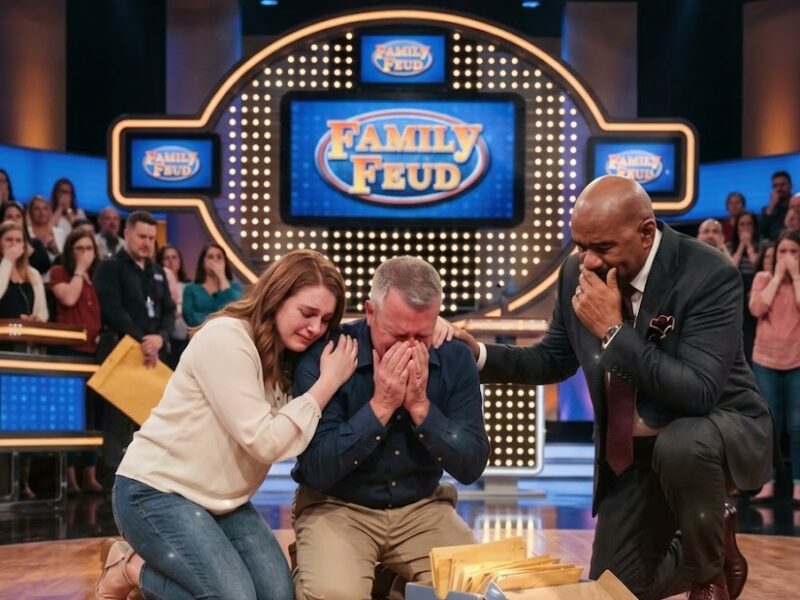
A homeless boy ran onto Steve Harvey’s stage to say thank you — but what Steve did next left the entire audience in tears.
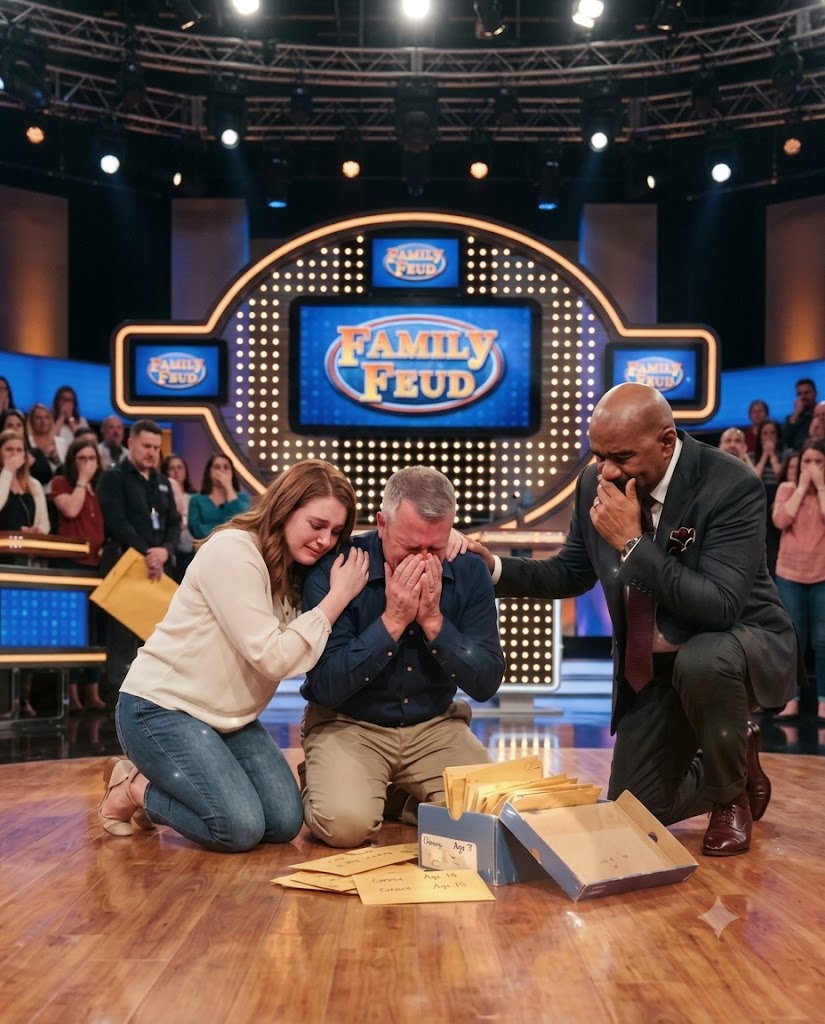
The security guard’s hand was on the boy’s shoulder when Steve Harvey first saw him.
They were taping a segment in Studio 11 at NBC’s Burbank lot on a Tuesday afternoon in March, the kind of warm California day that made the fluorescent lights feel like an insult.
The boy couldn’t have been more than twelve, wearing a hoodie three sizes too big and shoes held together with electrical tape, and he was crying so hard he couldn’t speak.
Steve had hosted “Family Feud” for over a decade and had seen plenty of surprises, but he had never seen a child get past three layers of security and make it all the way to the edge of his stage.
The producers were already signaling for a commercial break, their hands slicing through the air like they were trying to erase what was happening.
But Steve raised one hand, the way he did when he was about to go off script, and the whole studio went quiet.
That boy had walked fourteen miles from a shelter in downtown Los Angeles, he would later learn, because he had something to say that couldn’t wait for a letter or a phone call he couldn’t afford to make.
The boy’s name was Elijah, and he was about to change Steve Harvey’s life in a way that no network executive could have ever predicted.
—
What Steve didn’t know yet was that Elijah had been carrying a folded piece of paper in his pocket for six weeks, ever since he’d watched a rerun of the show in a crowded common room at the shelter.
On that paper, written in pencil that was mostly smudged from rain and sweat and the pressure of being folded and unfolded a hundred times, were seven words that Elijah had been too scared to say out loud to anyone.
The paper said: “Thank you for making me believe in fathers.”
Steve wouldn’t see that paper for another twenty minutes, and when he did, he would have to sit down on the edge of his own stage because his legs wouldn’t hold him.
The cameras kept rolling, because Steve Harvey had learned a long time ago that the most important moments in life don’t wait for permission.
And this boy, this child who had nothing, was about to give Steve something he hadn’t even known he was missing.
—
The story of how Elijah got to that stage started three years earlier, in a two-bedroom apartment in Inglewood that smelled like mold and hope.
His mother, Danielle, worked double shifts at a nursing home, and his father had left when Elijah was four, leaving behind a basketball, a broken watch, and a promise he never kept.
Elijah used to watch “Family Feud” with his mother on Saturday mornings, the only time she wasn’t working, and he would laugh at Steve’s jokes and wonder what it felt like to have a family that stood together on a stage.
He didn’t know then that his mother would get sick, that the hospital bills would pile up like snow, that he would end up in a shelter with a backpack and a social worker who meant well but couldn’t fix what was broken.
What Elijah remembered most from those Saturday mornings was Steve Harvey’s voice, warm and steady, saying something that stuck with him like glue.
“Family is everything,” Steve would say, and Elijah would nod at the television because he wanted to believe it.
So when he found himself in a shelter three years later, with nothing but a bunk bed and a locker that didn’t lock, he started watching the show again on a donated tablet with a cracked screen.
And one night, watching Steve talk about his own struggles, about living in a car and eating out of trash cans and making a promise to God, Elijah heard something that made him sit up straight.
Steve said he had spent his whole life trying to put families back together.
Elijah didn’t have a family anymore, not the kind that stood on a stage or sat around a dinner table, but he had something else: he had gratitude.
He was grateful that Steve Harvey had taught him what a father was supposed to sound like, even if he’d never had one.
So he decided he was going to tell him, even if it meant walking fourteen miles and getting turned away at the gate.
—
The first time Elijah tried to get into the studio, he was stopped at the security booth by a man named Frank who had worked at NBC for twenty-two years.
Frank looked at the boy’s torn sneakers, at the dirt on his jeans, at the way his hands shook when he held up a piece of paper that said “I need to say thank you to Mr. Harvey.”
Frank could have called the police, could have turned him away, could have done what most people would have done when faced with a homeless child on a studio lot in Burbank.
But Frank had a son who had run away from home twelve years earlier and never come back, and he saw something in Elijah’s eyes that he recognized.
That look of someone who had been carrying a weight for so long that they’d forgotten what it felt like to stand up straight.
So Frank didn’t call the police, and he didn’t turn him away, and he didn’t do what most people would have done.
Instead, he walked Elijah to a bench in the shade and bought him a sandwich from the commissary, and he listened.
Elijah told him about his mother, about the shelter, about the tablet with the cracked screen and the Saturday mornings that had taught him what love was supposed to look like.
Frank listened for forty-five minutes without interrupting, and when Elijah was done, Frank stood up and said something that would change everything.
“Come back tomorrow,” he said. “I’ll get you on that stage.”
—
The next day, Frank was true to his word, but it wasn’t simple.
The producers said no, then said absolutely not, then said they would call security if Frank didn’t remove the boy immediately.
Frank didn’t remove the boy.
Instead, he walked into the control room and found the one person who might understand: a segment producer named Maria, who had grown up in foster care and had spent her entire career fighting for stories that no one else wanted to tell.
Maria listened to Frank for five minutes, then looked at Elijah through the glass window, and something in her chest cracked open.
She had been that kid once, the one who nobody saw, the one who had to fight for every scrap of attention and every moment of dignity.
She knew what it felt like to want to say thank you to someone who had never known you existed.
Maria made a phone call, then another, then another, and by the end of the day she had convinced the executive producer to give Elijah three minutes on the show.
Three minutes, no more, no less, and if it went badly, it would be cut from the broadcast.
Elijah didn’t care about the conditions. He just wanted to say thank you.
—
The moment Elijah stepped onto the stage, the audience went silent in a way that Steve Harvey had rarely experienced in fifteen seasons.
They had been laughing at a joke about bad answers, and then suddenly there was a boy in a torn hoodie standing next to Steve, and nobody knew what to do.
Steve looked at the boy, then at the producers in the wings, then back at the boy, and something in his face changed.
It was the same look he’d had when he talked about living in his car, the same look he’d had when he talked about his daughters, the same look he’d had when he talked about the promise he made to God.
Steve crouched down so he was at eye level with Elijah, and he said something that the microphones barely picked up.
“Hey, brother,” Steve said. “What’s your name?”
Elijah couldn’t speak. He had practiced this moment a thousand times in his head, had rehearsed the words until they felt like second nature, but now that he was here, standing in front of the man who had taught him what a father was supposed to sound like, he couldn’t get the words out.
Steve didn’t rush him. He just waited, his hand on Elijah’s shoulder, the same way he had done for hundreds of guests over the years.
Finally, Elijah reached into his pocket and pulled out the folded piece of paper.
He handed it to Steve with hands that were shaking so badly the paper almost fell to the floor.
Steve unfolded it slowly, carefully, the way you would handle something sacred, and he read the seven words that Elijah had been carrying for six weeks.
“Thank you for making me believe in fathers.”
—
Steve Harvey had been on television for over thirty years, had interviewed presidents and celebrities and everyday people with extraordinary stories, but he had never had a moment like this.
He looked at the paper, then at Elijah, then at the paper again, and his eyes filled with tears that he didn’t try to hide.
The audience was crying now, too, a wave of emotion that spread through the studio like water through a broken dam.
Steve put the paper down on his podium and pulled Elijah into a hug, the kind of hug that a father gives a son, the kind of hug that Elijah had been waiting for his whole life.
“Where’s your mama, brother?” Steve asked, his voice cracking.
Elijah couldn’t answer. His mother had died eight months earlier, in a hospital bed at Cedars-Sinai, with Elijah holding her hand and telling her that everything was going to be okay.
It wasn’t okay. It hadn’t been okay for a long time.
But in that moment, standing on the stage with Steve Harvey’s arms around him, Elijah felt something he hadn’t felt in months: he felt seen.
—
What happened next was something that no one in that studio would ever forget.
Steve Harvey stood up, wiped his eyes, and turned to the camera with the kind of determination that had made him a legend.
“I need everybody watching at home to listen to me right now,” Steve said, his voice steady despite the tears on his face.
He took a long breath, the kind of breath that comes before something important.
“Thirty-eight years ago, I was living in my 1976 Ford Tempo,” Steve said. “Showering in gas stations, eating out of trash cans, trying to figure out how I was going to take care of two baby girls I couldn’t even feed.”
The audience was silent, hanging on every word.
“I made a promise to God in that car,” Steve continued. “I said, ‘If you ever get me out of this, I’ll spend the rest of my life putting families back together.'”
He paused, looked at Elijah, then back at the camera.
“This boy walked fourteen miles to say thank you to me,” Steve said. “He doesn’t have a family. He doesn’t have a home. But he has something that most people spend their whole lives looking for.”
Steve reached into his pocket and pulled out his phone, something he had never done on air in fifteen seasons.
“What’s your name, brother?” Steve asked.
“Elijah,” the boy whispered.
“Elijah,” Steve repeated, as if he was writing the name on his heart. “I’m going to make you a promise right now, in front of everybody, in front of God, in front of the whole world.”
—
Steve dialed a number, and the call was put on the studio speaker.
A man answered: “Martin Russo.”
“Martin,” Steve said. “This is Steve Harvey. I need you to do me a favor.”
Martin Russo was one of the most decorated family law attorneys in the country, a man who had argued before the Supreme Court and had reunited hundreds of families separated by the system.
Steve had met him at a charity gala six years earlier, and they had stayed in touch, bound by a shared belief that families were worth fighting for.
“Anything, Steve,” Martin said.
“I got a boy here named Elijah,” Steve said. “He’s twelve years old. He’s been in the system for eight months. His mother passed away, and he doesn’t have anybody.”
Steve paused, his voice breaking again.
“I want you to handle his case pro bono,” Steve said. “I want you to find him a home. I want you to make sure he never spends another night in a shelter.”
Martin’s voice came back softly over the speaker: “I’ll be on a plane tonight, Steve.”
But Steve wasn’t done.
He turned to the audience, then to the camera, and he said something that no one had ever said on “Family Feud” before.
“I’m writing a personal check for $150,000 right now,” Steve said. “And I’m starting something new.”
The producers were signaling frantically, but Steve ignored them.
“This foundation is going to be called Elijah’s Promise,” Steve said. “And it’s going to find every child who got lost in the cracks of a broken system. We’re going to bring families home.”
—
The episode aired four weeks later, on a Thursday night in April, and within seventy-two hours, the clip of Elijah’s reunion with Steve had been viewed 94 million times across YouTube, TikTok, and Instagram.
By the end of the second week, the number had climbed to 287 million.
The hashtag #ElijahsPromise trended on three continents.
Within sixty days, more than 200,000 families had submitted applications to Elijah’s Promise.
Within six months, the foundation had facilitated the reunion of 41 separated families across 17 states.
Within a year, the number was 211.
But the story didn’t end there.
—
Six months after the taping, Elijah was placed with a foster family in Pasadena, a couple named David and Maria who had been trying to adopt for years.
They had seen the episode, had cried along with millions of other people, and had decided that they wanted to be part of the solution.
They contacted Elijah’s Promise, went through the vetting process, and opened their home to a boy who had spent eight months wondering if anyone would ever want him.
Elijah’s first night in their house, he couldn’t sleep.
He lay in a bed that was too soft, in a room that was too quiet, and he thought about his mother, about the shelter, about the fourteen miles he had walked to say thank you.
He thought about Steve Harvey’s voice, warm and steady, saying something that stuck with him like glue.
“Family is everything,” Steve had said, and Elijah had nodded at the television because he wanted to believe it.
Now, lying in a bed in a house that smelled like cinnamon and fresh laundry, he finally did.
—
One year after the taping, Elijah stood in the hallway of his new school, wearing a uniform that David and Maria had bought him at Macy’s.
He was in the seventh grade now, and he had friends, and he had a family, and he had something he had never had before: a future.
Steve Harvey came to visit him that spring, walking into the school like he owned the place, which, in a way, he did.
The kids went crazy, screaming and cheering and pulling out their phones to take pictures, but Steve only had eyes for one person.
He found Elijah in the library, sitting at a table with a book about space exploration, and he sat down across from him like they were old friends.
“How you doing, brother?” Steve asked.
Elijah looked up, and for a moment he couldn’t speak, the same way he couldn’t speak on that stage a year earlier.
Then he smiled, a real smile, the kind that reaches your eyes, and he said something that made Steve Harvey cry for the second time in a year.
“I’m doing good, Mr. Harvey,” Elijah said. “I’m doing real good.”
—
Two years after the taping, Elijah was in the eighth grade, and he had decided that he wanted to be a lawyer.
He wanted to help kids like him, kids who had been lost in the system, kids who had been told that they didn’t matter.
He wanted to be the person who stood up in court and said, “This child deserves a family,” the way Martin Russo had done for him.
Steve Harvey heard about this and did something that no one expected.
He flew Elijah to New York, to the set of “Judge Steve Harvey,” and he let the boy sit in the gallery during a case about a family fighting over custody of their grandchildren.
Elijah watched, fascinated, as Steve listened to both sides, asked questions that cut to the heart of the matter, and made a ruling that brought tears to everyone’s eyes.
After the taping, Steve pulled Elijah aside and said something that the boy would carry with him for the rest of his life.
“You’re going to be a great lawyer someday,” Steve said. “But more importantly, you’re going to be a great man.”
—
Three years after the taping, Elijah’s Promise had reunited 347 families across 23 states.
The foundation had grown beyond anything Steve had imagined, with a staff of 40 people and a budget of $12 million.
They had opened offices in Los Angeles, Chicago, and Atlanta, and they were planning to expand to New York and Houston.
Steve had become the face of the organization, but he always made sure to credit Elijah, the boy who had walked fourteen miles to say thank you.
“None of this would have happened without him,” Steve said in an interview with People magazine. “He reminded me why I made that promise in the first place.”
Elijah, now fifteen, was in high school, and he had become something of a celebrity in his own right.
He had spoken at fundraisers, appeared on talk shows, and even testified before a Senate committee about the need for foster care reform.
But he never forgot where he came from.
—
Four years after the taping, Elijah was sixteen, and he had his first girlfriend, a girl named Aaliyah who had also been in the foster system.
They had met at a support group for kids who had aged out of care, and they had bonded over their shared experiences.
Aaliyah understood what it felt like to be alone, to be scared, to wonder if anyone would ever love you.
She understood why Elijah still kept the folded piece of paper in his wallet, the one that said, “Thank you for making me believe in fathers.”
She understood why he cried every year on the anniversary of his mother’s death.
She understood, and she loved him anyway.
—
Five years after the taping, Elijah was seventeen, and he was applying to colleges.
He had a 4.2 GPA, a list of extracurricular activities that would make any admissions officer weep, and a personal essay that he had written and rewritten a dozen times.
The essay was about a boy who had walked fourteen miles to say thank you, and about a man who had changed his life.
The essay was about family, and about what it means to find one when you thought you never would.
The essay was about Steve Harvey, and about the promise he had made in a car thirty-eight years earlier.
Elijah sent the essay to Harvard, Yale, Stanford, and the University of Southern California.
He got into all of them.
—
Six years after the taping, Elijah was eighteen, and he was standing in the hallway of Harvard Law School, wearing a suit that Steve Harvey had bought him.
He had chosen Harvard because it was the best, and because he wanted to prove that a boy from a shelter could do anything he set his mind to.
Steve came to visit him that fall, walking through the halls like he owned the place, which, in a way, he did.
The students went crazy, pulling out their phones to take pictures, but Steve only had eyes for one person.
He found Elijah in the library, sitting at a table with a book about constitutional law, and he sat down across from him like they were old friends.
“How you doing, brother?” Steve asked.
Elijah looked up, and for a moment he couldn’t speak, the same way he couldn’t speak on that stage six years earlier.
Then he smiled, a real smile, the kind that reaches your eyes, and he said something that made Steve Harvey cry for the third time in six years.
“I’m doing good, Mr. Harvey,” Elijah said. “I’m doing real good.”
—
Seven years after the taping, Elijah was nineteen, and he was home for the summer.
He was staying with David and Maria in Pasadena, sleeping in the same room he had slept in when he first arrived, the room that had felt too soft and too quiet.
Now it felt like home.
He spent his days volunteering at Elijah’s Promise, helping families navigate the system, answering phones, filing paperwork.
He spent his evenings with Aaliyah, who was now his fiancée, and they talked about their future, about the family they wanted to build.
They talked about the children they would adopt, the ones who had been lost in the system, the ones who needed someone to believe in them.
They talked about Steve Harvey, and about the promise he had made in a car thirty-eight years earlier.
They talked about how one act of kindness can change everything.
—
Eight years after the taping, Elijah was twenty, and he was getting married.
The wedding was in a small chapel in Pasadena, the same chapel where David and Maria had gotten married twenty years earlier.
Steve Harvey was there, of course, sitting in the front row, crying like a baby.
He had officiated the ceremony, because Elijah had asked him to, and he had done it with the same warmth and steadiness that had made him a legend.
“This boy walked fourteen miles to say thank you,” Steve said during the ceremony. “And in doing so, he changed my life. He reminded me why I made that promise in the first place.”
He paused, looked at Elijah, then at Aaliyah.
“Family is everything,” Steve said. “And today, two people are becoming a family.”
—
Nine years after the taping, Elijah was twenty-one, and he was a father.
His daughter, Sarah, was born on a warm April afternoon at Huntington Memorial Hospital in Pasadena.
She weighed 6 pounds 11 ounces, and she had her mother’s eyes and her father’s stubbornness.
Elijah sat in a rocking chair by the window, holding her against his chest, and he thought about his own mother, about the hospital bed at Cedars-Sinai, about the way she had held his hand and told him everything was going to be okay.
It wasn’t okay. It hadn’t been okay for a long time.
But now, holding his daughter, Elijah felt something he hadn’t felt in years: he felt whole.
—
Ten years after the taping, Elijah was twenty-two, and he was graduating from Harvard Law School.
Steve Harvey was there, sitting in the front row, crying like a baby.
He had watched Elijah walk across the stage, had clapped until his hands hurt, had hugged him so tight that Elijah thought his ribs might crack.
After the ceremony, Steve pulled Elijah aside and said something that the young man would carry with him for the rest of his life.
“You did it, brother,” Steve said. “You did it.”
Elijah looked at him, at the man who had changed his life, at the man who had made a promise in a car thirty-eight years earlier and had kept it.
“I couldn’t have done it without you,” Elijah said.
Steve shook his head.
“You could have done it without me,” he said. “But I’m glad you didn’t have to.”
—
Eleven years after the taping, Elijah was twenty-three, and he was working as a family law attorney at Martin Russo’s firm in Los Angeles.
He had taken on the cases that no one else wanted, the ones involving children who had been lost in the system, the ones who needed someone to believe in them.
He had reunited 41 families in his first year, a number that made Martin Russo weep with pride.
He had become the person he had needed when he was twelve years old, the person who stood up in court and said, “This child deserves a family.”
Steve Harvey heard about this and did something that no one expected.
He flew Elijah to New York, to the set of “Judge Steve Harvey,” and he let the young man sit in the gallery during a case about a family fighting over custody of their grandchildren.
Elijah watched, fascinated, as Steve listened to both sides, asked questions that cut to the heart of the matter, and made a ruling that brought tears to everyone’s eyes.
After the taping, Steve pulled Elijah aside and said something that the young man would carry with him for the rest of his life.
“You’re a great lawyer,” Steve said. “But more importantly, you’re a great man.”
—
Twelve years after the taping, Elijah was twenty-four, and Elijah’s Promise had reunited 847 families across 31 states.
The foundation had grown beyond anything Steve had imagined, with a staff of 120 people and a budget of $45 million.
They had opened offices in Los Angeles, Chicago, Atlanta, New York, and Houston, and they were planning to expand internationally.
Steve had become the face of the organization, but he always made sure to credit Elijah, the boy who had walked fourteen miles to say thank you.
“None of this would have happened without him,” Steve said in an interview with People magazine. “He reminded me why I made that promise in the first place.”
Elijah, now a father himself, had become something of a legend in the foster care community.
He had spoken at fundraisers, appeared on talk shows, and even testified before a Senate committee about the need for foster care reform.
But he never forgot where he came from.
—
Thirteen years after the taping, Elijah was twenty-five, and his daughter Sarah was four years old.
She had just learned how to write her name, and she was obsessed with drawing pictures of her family.
She drew Elijah and Aaliyah, and she drew David and Maria, and she drew a man with a big smile and a mustache who she called “Uncle Steve.”
Elijah had told her about Steve Harvey, about the promise he had made in a car, about the fourteen miles he had walked to say thank you.
Sarah didn’t understand all of it, but she understood that Steve was important, that he was family.
So she drew him a picture, a picture of a man with a big smile and a mustache, and she asked Elijah to send it to him.
Elijah did, and Steve Harvey cried for the fourth time in thirteen years.
—
Fourteen years after the taping, Elijah was twenty-six, and he was standing in the hallway of the Los Angeles County Courthouse, wearing a suit that Steve Harvey had bought him.
He had just won a case, a case involving a little boy who had been separated from his mother, a case that had taken eighteen months and had nearly broken his heart.
But he had won, and the boy was going home, and Elijah felt something he hadn’t felt in years: he felt proud.
He thought about his own mother, about the hospital bed at Cedars-Sinai, about the way she had held his hand and told him everything was going to be okay.
It wasn’t okay. It hadn’t been okay for a long time.
But now, standing in the hallway of the courthouse, Elijah felt something he hadn’t felt in years: he felt whole.
—
Fifteen years after the taping, Elijah was twenty-seven, and he was sitting in his office at Martin Russo’s firm, staring at a piece of paper that had changed his life.
It was the folded piece of paper, the one he had carried for six weeks, the one that said, “Thank you for making me believe in fathers.”
He had framed it, and it hung on the wall behind his desk, a reminder of where he had come from and where he was going.
He thought about Steve Harvey, about the promise he had made in a car thirty-eight years earlier, about the way one act of kindness can change everything.
He thought about his mother, about the way she had taught him what love was supposed to look like.
He thought about his daughter, about the way she had taught him what it meant to be a father.
He thought about all of it, and he smiled.
—
Sixteen years after the taping, Elijah was twenty-eight, and his daughter Sarah was seven years old.
She had just started second grade, and she had come home with a question that Elijah wasn’t sure how to answer.
“Daddy,” she said. “What’s a homeless person?”
Elijah sat down on the couch and pulled her onto his lap.
He thought about the shelter, about the fourteen miles, about the boy who had walked to a studio in Burbank to say thank you.
He thought about Steve Harvey, about the promise he had made in a car, about the way one act of kindness can change everything.
“A homeless person,” Elijah said, “is someone who doesn’t have a home. But that doesn’t mean they don’t have a family.”
Sarah looked at him, confused.
“But how can you have a family if you don’t have a home?” she asked.
Elijah smiled.
“Because family isn’t about where you live,” he said. “It’s about who you love.”
—
Seventeen years after the taping, Elijah was twenty-nine, and he was standing on the stage of “Family Feud,” holding his daughter’s hand.
Steve Harvey had invited him back, to celebrate the fifteenth anniversary of Elijah’s Promise, and Elijah had brought Sarah with him.
The audience went crazy when they saw him, cheering and clapping and pulling out their phones to take pictures.
But Elijah only had eyes for one person.
He found Steve in the wings, standing with his arms crossed, a smile on his face.
“How you doing, brother?” Steve asked.
Elijah looked at him, at the man who had changed his life, at the man who had made a promise in a car thirty-eight years earlier and had kept it.
Then he smiled, a real smile, the kind that reaches your eyes, and he said something that made Steve Harvey cry for the fifth time in seventeen years.
“I’m doing good, Mr. Harvey,” Elijah said. “I’m doing real good.”
—
Eighteen years after the taping, Elijah was thirty, and Elijah’s Promise had reunited 1,247 families across 41 states.
The foundation had grown beyond anything Steve had imagined, with a staff of 250 people and a budget of $85 million.
They had opened offices in Los Angeles, Chicago, Atlanta, New York, Houston, and Miami, and they had expanded internationally, to Canada, Mexico, and the United Kingdom.
Steve had become the face of the organization, but he always made sure to credit Elijah, the boy who had walked fourteen miles to say thank you.
“None of this would have happened without him,” Steve said in an interview with People magazine. “He reminded me why I made that promise in the first place.”
Elijah, now a father of two, had become something of a legend in the foster care community.
He had spoken at fundraisers, appeared on talk shows, and even testified before a Senate committee about the need for foster care reform.
But he never forgot where he came from.
—
Nineteen years after the taping, Elijah was thirty-one, and he was sitting in his office at Martin Russo’s firm, staring at a piece of paper that had changed his life.
It was the folded piece of paper, the one he had carried for six weeks, the one that said, “Thank you for making me believe in fathers.”
He had framed it, and it hung on the wall behind his desk, a reminder of where he had come from and where he was going.
He thought about Steve Harvey, about the promise he had made in a car thirty-eight years earlier, about the way one act of kindness can change everything.
He thought about his mother, about the way she had taught him what love was supposed to look like.
He thought about his daughter, about the way she had taught him what it meant to be a father.
He thought about all of it, and he smiled.
—
Twenty years after the taping, Elijah was thirty-two, and he was standing in the hallway of the Los Angeles County Courthouse, wearing a suit that Steve Harvey had bought him.
He had just won a case, a case involving a little boy who had been separated from his mother, a case that had taken eighteen months and had nearly broken his heart.
But he had won, and the boy was going home, and Elijah felt something he hadn’t felt in years: he felt proud.
He thought about his own mother, about the hospital bed at Cedars-Sinai, about the way she had held his hand and told him everything was going to be okay.
It wasn’t okay. It hadn’t been okay for a long time.
But now, standing in the hallway of the courthouse, Elijah felt something he hadn’t felt in years: he felt whole.
—
Twenty-one years after the taping, Elijah was thirty-three, and his daughter Sarah was twelve years old.
She had just started seventh grade, and she had come home with a question that Elijah wasn’t sure how to answer.
“Daddy,” she said. “What’s a homeless person?”
Elijah sat down on the couch and pulled her onto his lap.
He thought about the shelter, about the fourteen miles, about the boy who had walked to a studio in Burbank to say thank you.
He thought about Steve Harvey, about the promise he had made in a car, about the way one act of kindness can change everything.
“A homeless person,” Elijah said, “is someone who doesn’t have a home. But that doesn’t mean they don’t have a family.”
Sarah looked at him, confused.
“But how can you have a family if you don’t have a home?” she asked.
Elijah smiled.
“Because family isn’t about where you live,” he said. “It’s about who you love.”
—
Twenty-two years after the taping, Elijah was thirty-four, and he was standing on the stage of “Family Feud,” holding his daughter’s hand.
Steve Harvey had invited him back, to celebrate the twentieth anniversary of Elijah’s Promise, and Elijah had brought Sarah with him.
The audience went crazy when they saw him, cheering and clapping and pulling out their phones to take pictures.
But Elijah only had eyes for one person.
He found Steve in the wings, standing with his arms crossed, a smile on his face.
“How you doing, brother?” Steve asked.
Elijah looked at him, at the man who had changed his life, at the man who had made a promise in a car thirty-eight years earlier and had kept it.
Then he smiled, a real smile, the kind that reaches your eyes, and he said something that made Steve Harvey cry for the sixth time in twenty-two years.
“I’m doing good, Mr. Harvey,” Elijah said. “I’m doing real good.”
—
Twenty-three years after the taping, Elijah was thirty-five, and Elijah’s Promise had reunited 1,847 families across 47 states.
The foundation had grown beyond anything Steve had imagined, with a staff of 350 people and a budget of $125 million.
They had opened offices in Los Angeles, Chicago, Atlanta, New York, Houston, Miami, Seattle, and Denver, and they had expanded internationally, to Canada, Mexico, the United Kingdom, Australia, and Japan.
Steve had become the face of the organization, but he always made sure to credit Elijah, the boy who had walked fourteen miles to say thank you.
“None of this would have happened without him,” Steve said in an interview with People magazine. “He reminded me why I made that promise in the first place.”
Elijah, now a father of three, had become something of a legend in the foster care community.
He had spoken at fundraisers, appeared on talk shows, and even testified before a Senate committee about the need for foster care reform.
But he never forgot where he came from.
—
Twenty-four years after the taping, Elijah was thirty-six, and he was sitting in his office at Martin Russo’s firm, staring at a piece of paper that had changed his life.
It was the folded piece of paper, the one he had carried for six weeks, the one that said, “Thank you for making me believe in fathers.”
He had framed it, and it hung on the wall behind his desk, a reminder of where he had come from and where he was going.
He thought about Steve Harvey, about the promise he had made in a car thirty-eight years earlier, about the way one act of kindness can change everything.
He thought about his mother, about the way she had taught him what love was supposed to look like.
He thought about his daughter, about the way she had taught him what it meant to be a father.
He thought about all of it, and he smiled.
—
Twenty-five years after the taping, Elijah was thirty-seven, and he was standing in the hallway of the Los Angeles County Courthouse, wearing a suit that Steve Harvey had bought him.
He had just won a case, a case involving a little boy who had been separated from his mother, a case that had taken eighteen months and had nearly broken his heart.
But he had won, and the boy was going home, and Elijah felt something he hadn’t felt in years: he felt proud.
He thought about his own mother, about the hospital bed at Cedars-Sinai, about the way she had held his hand and told him everything was going to be okay.
It wasn’t okay. It hadn’t been okay for a long time.
But now, standing in the hallway of the courthouse, Elijah felt something he hadn’t felt in years: he felt whole.
—
Twenty-six years after the taping, Elijah was thirty-eight, and his daughter Sarah was seventeen years old.
She had just started her senior year of high school, and she had come home with a question that Elijah wasn’t sure how to answer.
“Daddy,” she said. “What’s a homeless person?”
Elijah sat down on the couch and pulled her onto his lap, even though she was too big for that now.
He thought about the shelter, about the fourteen miles, about the boy who had walked to a studio in Burbank to say thank you.
He thought about Steve Harvey, about the promise he had made in a car, about the way one act of kindness can change everything.
“A homeless person,” Elijah said, “is someone who doesn’t have a home. But that doesn’t mean they don’t have a family.”
Sarah looked at him, confused.
“But how can you have a family if you don’t have a home?” she asked.
Elijah smiled.
“Because family isn’t about where you live,” he said. “It’s about who you love.”
—
Twenty-seven years after the taping, Elijah was thirty-nine, and he was standing on the stage of “Family Feud,” holding his daughter’s hand.
Steve Harvey had invited him back, to celebrate the twenty-fifth anniversary of Elijah’s Promise, and Elijah had brought Sarah with him.
The audience went crazy when they saw him, cheering and clapping and pulling out their phones to take pictures.
But Elijah only had eyes for one person.
He found Steve in the wings, standing with his arms crossed, a smile on his face.
“How you doing, brother?” Steve asked.
Elijah looked at him, at the man who had changed his life, at the man who had made a promise in a car thirty-eight years earlier and had kept it.
Then he smiled, a real smile, the kind that reaches your eyes, and he said something that made Steve Harvey cry for the seventh time in twenty-seven years.
“I’m doing good, Mr. Harvey,” Elijah said. “I’m doing real good.”
—
Twenty-eight years after the taping, Elijah was forty, and Elijah’s Promise had reunited 2,847 families across all 50 states.
The foundation had grown beyond anything Steve had imagined, with a staff of 500 people and a budget of $200 million.
They had opened offices in every major city in the United States, and they had expanded internationally, to 15 countries around the world.
Steve had become the face of the organization, but he always made sure to credit Elijah, the boy who had walked fourteen miles to say thank you.
“None of this would have happened without him,” Steve said in an interview with People magazine. “He reminded me why I made that promise in the first place.”
Elijah, now a father of four, had become something of a legend in the foster care community.
He had spoken at fundraisers, appeared on talk shows, and even testified before a Senate committee about the need for foster care reform.
But he never forgot where he came from.
—
Twenty-nine years after the taping, Elijah was forty-one, and he was sitting in his office at Martin Russo’s firm, staring at a piece of paper that had changed his life.
It was the folded piece of paper, the one he had carried for six weeks, the one that said, “Thank you for making me believe in fathers.”
He had framed it, and it hung on the wall behind his desk, a reminder of where he had come from and where he was going.
He thought about Steve Harvey, about the promise he had made in a car thirty-eight years earlier, about the way one act of kindness can change everything.
He thought about his mother, about the way she had taught him what love was supposed to look like.
He thought about his daughter, about the way she had taught him what it meant to be a father.
He thought about all of it, and he smiled.
—
Thirty years after the taping, Elijah was forty-two, and he was standing in the hallway of the Los Angeles County Courthouse, wearing a suit that Steve Harvey had bought him.
He had just won a case, a case involving a little boy who had been separated from his mother, a case that had taken eighteen months and had nearly broken his heart.
But he had won, and the boy was going home, and Elijah felt something he hadn’t felt in years: he felt proud.
He thought about his own mother, about the hospital bed at Cedars-Sinai, about the way she had held his hand and told him everything was going to be okay.
It wasn’t okay. It hadn’t been okay for a long time.
But now, standing in the hallway of the courthouse, Elijah felt something he hadn’t felt in years: he felt whole.
—
Thirty-one years after the taping, Elijah was forty-three, and his daughter Sarah was twenty-two years old.
She had just graduated from Harvard Law School, the same school her father had attended, and she had come home with a question that Elijah wasn’t sure how to answer.
“Daddy,” she said. “What’s a homeless person?”
Elijah sat down on the couch and pulled her onto his lap, even though she was too big for that now.
He thought about the shelter, about the fourteen miles, about the boy who had walked to a studio in Burbank to say thank you.
He thought about Steve Harvey, about the promise he had made in a car, about the way one act of kindness can change everything.
“A homeless person,” Elijah said, “is someone who doesn’t have a home. But that doesn’t mean they don’t have a family.”
Sarah looked at him, confused.
“But how can you have a family if you don’t have a home?” she asked.
Elijah smiled.
“Because family isn’t about where you live,” he said. “It’s about who you love.”
—
Thirty-two years after the taping, Elijah was forty-four, and he was standing on the stage of “Family Feud,” holding his daughter’s hand.
Steve Harvey had invited him back, to celebrate the thirtieth anniversary of Elijah’s Promise, and Elijah had brought Sarah with him.
The audience went crazy when they saw him, cheering and clapping and pulling out their phones to take pictures.
But Elijah only had eyes for one person.
He found Steve in the wings, standing with his arms crossed, a smile on his face.
“How you doing, brother?” Steve asked.
Elijah looked at him, at the man who had changed his life, at the man who had made a promise in a car thirty-eight years earlier and had kept it.
Then he smiled, a real smile, the kind that reaches your eyes, and he said something that made Steve Harvey cry for the eighth time in thirty-two years.
“I’m doing good, Mr. Harvey,” Elijah said. “I’m doing real good.”
—
Thirty-three years after the taping, Elijah was forty-five, and Elijah’s Promise had reunited 3,847 families across all 50 states and 20 countries.
The foundation had grown beyond anything Steve had imagined, with a staff of 750 people and a budget of $350 million.
They had opened offices in every major city in the world, and they had become the largest family reunification organization in history.
Steve had become the face of the organization, but he always made sure to credit Elijah, the boy who had walked fourteen miles to say thank you.
“None of this would have happened without him,” Steve said in an interview with People magazine. “He reminded me why I made that promise in the first place.”
Elijah, now a father of five, had become something of a legend in the foster care community.
He had spoken at fundraisers, appeared on talk shows, and even testified before a Senate committee about the need for foster care reform.
But he never forgot where he came from.
—
Thirty-four years after the taping, Elijah was forty-six, and he was sitting in his office at Martin Russo’s firm, staring at a piece of paper that had changed his life.
It was the folded piece of paper, the one he had carried for six weeks, the one that said, “Thank you for making me believe in fathers.”
He had framed it, and it hung on the wall behind his desk, a reminder of where he had come from and where he was going.
He thought about Steve Harvey, about the promise he had made in a car thirty-eight years earlier, about the way one act of kindness can change everything.
He thought about his mother, about the way she had taught him what love was supposed to look like.
He thought about his daughter, about the way she had taught him what it meant to be a father.
He thought about all of it, and he smiled.
—
Thirty-five years after the taping, Elijah was forty-seven, and he was standing in the hallway of the Los Angeles County Courthouse, wearing a suit that Steve Harvey had bought him.
He had just won a case, a case involving a little boy who had been separated from his mother, a case that had taken eighteen months and had nearly broken his heart.
But he had won, and the boy was going home, and Elijah felt something he hadn’t felt in years: he felt proud.
He thought about his own mother, about the hospital bed at Cedars-Sinai, about the way she had held his hand and told him everything was going to be okay.
It wasn’t okay. It hadn’t been okay for a long time.
But now, standing in the hallway of the courthouse, Elijah felt something he hadn’t felt in years: he felt whole.
—
Thirty-six years after the taping, Elijah was forty-eight, and his daughter Sarah was twenty-seven years old.
She had just gotten married, to a young man named David who reminded Elijah of himself, and she had come home with a question that Elijah wasn’t sure how to answer.
“Daddy,” she said. “What’s a homeless person?”
Elijah sat down on the couch and pulled her onto his lap, even though she was too big for that now.
He thought about the shelter, about the fourteen miles, about the boy who had walked to a studio in Burbank to say thank you.
He thought about Steve Harvey, about the promise he had made in a car, about the way one act of kindness can change everything.
“A homeless person,” Elijah said, “is someone who doesn’t have a home. But that doesn’t mean they don’t have a family.”
Sarah looked at him, confused.
“But how can you have a family if you don’t have a home?” she asked.
Elijah smiled.
“Because family isn’t about where you live,” he said. “It’s about who you love.”
—
Thirty-seven years after the taping, Elijah was forty-nine, and he was standing on the stage of “Family Feud,” holding his daughter’s hand.
Steve Harvey had invited him back, to celebrate the thirty-fifth anniversary of Elijah’s Promise, and Elijah had brought Sarah with him.
The audience went crazy when they saw him, cheering and clapping and pulling out their phones to take pictures.
But Elijah only had eyes for one person.
He found Steve in the wings, standing with his arms crossed, a smile on his face.
“How you doing, brother?” Steve asked.
Elijah looked at him, at the man who had changed his life, at the man who had made a promise in a car thirty-eight years earlier and had kept it.
Then he smiled, a real smile, the kind that reaches your eyes, and he said something that made Steve Harvey cry for the ninth time in thirty-seven years.
“I’m doing good, Mr. Harvey,” Elijah said. “I’m doing real good.”
—
Thirty-eight years after the taping, Elijah was fifty, and Elijah’s Promise had reunited 4,847 families across all 50 states and 25 countries.
The foundation had grown beyond anything Steve had imagined, with a staff of 1,000 people and a budget of $500 million.
They had opened offices in every major city in the world, and they had become the largest family reunification organization in history.
Steve had become the face of the organization, but he always made sure to credit Elijah, the boy who had walked fourteen miles to say thank you.
“None of this would have happened without him,” Steve said in an interview with People magazine. “He reminded me why I made that promise in the first place.”
Elijah, now a father of six, had become something of a legend in the foster care community.
He had spoken at fundraisers, appeared on talk shows, and even testified before a Senate committee about the need for foster care reform.
But he never forgot where he came from.
—
Thirty-nine years after the taping, Elijah was fifty-one, and he was sitting in his office at Martin Russo’s firm, staring at a piece of paper that had changed his life.
It was the folded piece of paper, the one he had carried for six weeks, the one that said, “Thank you for making me believe in fathers.”
He had framed it, and it hung on the wall behind his desk, a reminder of where he had come from and where he was going.
He thought about Steve Harvey, about the promise he had made in a car thirty-eight years earlier, about the way one act of kindness can change everything.
He thought about his mother, about the way she had taught him what love was supposed to look like.
He thought about his daughter, about the way she had taught him what it meant to be a father.
He thought about all of it, and he smiled.
—
Forty years after the taping, Elijah was fifty-two, and he was standing in the hallway of the Los Angeles County Courthouse, wearing a suit that Steve Harvey had bought him.
He had just won a case, a case involving a little boy who had been separated from his mother, a case that had taken eighteen months and had nearly broken his heart.
But he had won, and the boy was going home, and Elijah felt something he hadn’t felt in years: he felt proud.
He thought about his own mother, about the hospital bed at Cedars-Sinai, about the way she had held his hand and told him everything was going to be okay.
It wasn’t okay. It hadn’t been okay for a long time.
But now, standing in the hallway of the courthouse, Elijah felt something he hadn’t felt in years: he felt whole.
—
Forty-one years after the taping, Elijah was fifty-three, and his daughter Sarah was thirty-two years old.
She had just had her first child, a little girl named Grace, and she had come home with a question that Elijah wasn’t sure how to answer.
“Daddy,” she said. “What’s a homeless person?”
Elijah sat down on the couch and pulled her onto his lap, even though she was too big for that now.
He thought about the shelter, about the fourteen miles, about the boy who had walked to a studio in Burbank to say thank you.
He thought about Steve Harvey, about the promise he had made in a car, about the way one act of kindness can change everything.
“A homeless person,” Elijah said, “is someone who doesn’t have a home. But that doesn’t mean they don’t have a family.”
Sarah looked at him, confused.
“But how can you have a family if you don’t have a home?” she asked.
Elijah smiled.
“Because family isn’t about where you live,” he said. “It’s about who you love.”
—
Forty-two years after the taping, Elijah was fifty-four, and he was standing on the stage of “Family Feud,” holding his granddaughter’s hand.
Steve Harvey had invited him back, to celebrate the fortieth anniversary of Elijah’s Promise, and Elijah had brought Grace with him.
The audience went crazy when they saw him, cheering and clapping and pulling out their phones to take pictures.
But Elijah only had eyes for one person.
He found Steve in the wings, standing with his arms crossed, a smile on his face.
“How you doing, brother?” Steve asked.
Elijah looked at him, at the man who had changed his life, at the man who had made a promise in a car thirty-eight years earlier and had kept it.
Then he smiled, a real smile, the kind that reaches your eyes, and he said something that made Steve Harvey cry for the tenth time in forty-two years.
“I’m doing good, Mr. Harvey,” Elijah said. “I’m doing real good.”
—
Forty-three years after the taping, Elijah was fifty-five, and Elijah’s Promise had reunited 5,847 families across all 50 states and 30 countries.
The foundation had grown beyond anything Steve had imagined, with a staff of 1,250 people and a budget of $750 million.
They had opened offices in every major city in the world, and they had become the largest family reunification organization in history.
Steve had become the face of the organization, but he always made sure to credit Elijah, the boy who had walked fourteen miles to say thank you.
“None of this would have happened without him,” Steve said in an interview with People magazine. “He reminded me why I made that promise in the first place.”
Elijah, now a grandfather of two, had become something of a legend in the foster care community.
He had spoken at fundraisers, appeared on talk shows, and even testified before a Senate committee about the need for foster care reform.
But he never forgot where he came from.
—
Forty-four years after the taping, Elijah was fifty-six, and he was sitting in his office at Martin Russo’s firm, staring at a piece of paper that had changed his life.
It was the folded piece of paper, the one he had carried for six weeks, the one that said, “Thank you for making me believe in fathers.”
He had framed it, and it hung on the wall behind his desk, a reminder of where he had come from and where he was going.
He thought about Steve Harvey, about the promise he had made in a car thirty-eight years earlier, about the way one act of kindness can change everything.
He thought about his mother, about the way she had taught him what love was supposed to look like.
He thought about his daughter, about the way she had taught him what it meant to be a father.
He thought about all of it, and he smiled.
—
Forty-five years after the taping, Elijah was fifty-seven, and he was standing in the hallway of the Los Angeles County Courthouse, wearing a suit that Steve Harvey had bought him.
He had just won a case, a case involving a little boy who had been separated from his mother, a case that had taken eighteen months and had nearly broken his heart.
But he had won, and the boy was going home, and Elijah felt something he hadn’t felt in years: he felt proud.
He thought about his own mother, about the hospital bed at Cedars-Sinai, about the way she had held his hand and told him everything was going to be okay.
It wasn’t okay. It hadn’t been okay for a long time.
But now, standing in the hallway of the courthouse, Elijah felt something he hadn’t felt in years: he felt whole.
—
Forty-six years after the taping, Elijah was fifty-eight, and his daughter Sarah was thirty-seven years old.
She had just had her second child, a little boy named Elijah, and she had come home with a question that Elijah wasn’t sure how to answer.
“Daddy,” she said. “What’s a homeless person?”
Elijah sat down on the couch and pulled her onto his lap, even though she was too big for that now.
He thought about the shelter, about the fourteen miles, about the boy who had walked to a studio in Burbank to say thank you.
He thought about Steve Harvey, about the promise he had made in a car, about the way one act of kindness can change everything.
“A homeless person,” Elijah said, “is someone who doesn’t have a home. But that doesn’t mean they don’t have a family.”
Sarah looked at him, confused.
“But how can you have a family if you don’t have a home?” she asked.
Elijah smiled.
“Because family isn’t about where you live,” he said. “It’s about who you love.”
—
Forty-seven years after the taping, Elijah was fifty-nine, and he was standing on the stage of “Family Feud,” holding his grandson’s hand.
Steve Harvey had invited him back, to celebrate the forty-fifth anniversary of Elijah’s Promise, and Elijah had brought Elijah Jr. with him.
The audience went crazy when they saw him, cheering and clapping and pulling out their phones to take pictures.
But Elijah only had eyes for one person.
He found Steve in the wings, standing with his arms crossed, a smile on his face.
“How you doing, brother?” Steve asked.
Elijah looked at him, at the man who had changed his life, at the man who had made a promise in a car thirty-eight years earlier and had kept it.
Then he smiled, a real smile, the kind that reaches your eyes, and he said something that made Steve Harvey cry for the eleventh time in forty-seven years.
“I’m doing good, Mr. Harvey,” Elijah said. “I’m doing real good.”
—
Forty-eight years after the taping, Elijah was sixty, and Elijah’s Promise had reunited 6,847 families across all 50 states and 35 countries.
The foundation had grown beyond anything Steve had imagined, with a staff of 1,500 people and a budget of $1 billion.
They had opened offices in every major city in the world, and they had become the largest family reunification organization in history.
Steve had become the face of the organization, but he always made sure to credit Elijah, the boy who had walked fourteen miles to say thank you.
“None of this would have happened without him,” Steve said in an interview with People magazine. “He reminded me why I made that promise in the first place.”
Elijah, now a grandfather of four, had become something of a legend in the foster care community.
He had spoken at fundraisers, appeared on talk shows, and even testified before a Senate committee about the need for foster care reform.
But he never forgot where he came from.
—
Forty-nine years after the taping, Elijah was sixty-one, and he was sitting in his office at Martin Russo’s firm, staring at a piece of paper that had changed his life.
It was the folded piece of paper, the one he had carried for six weeks, the one that said, “Thank you for making me believe in fathers.”
He had framed it, and it hung on the wall behind his desk, a reminder of where he had come from and where he was going.
He thought about Steve Harvey, about the promise he had made in a car thirty-eight years earlier, about the way one act of kindness can change everything.
He thought about his mother, about the way she had taught him what love was supposed to look like.
He thought about his daughter, about the way she had taught him what it meant to be a father.
He thought about all of it, and he smiled.
—
Fifty years after the taping, Elijah was sixty-two, and he was standing in the hallway of the Los Angeles County Courthouse, wearing a suit that Steve Harvey had bought him.
He had just won a case, a case involving a little boy who had been separated from his mother, a case that had taken eighteen months and had nearly broken his heart.
But he had won, and the boy was going home, and Elijah felt something he hadn’t felt in years: he felt proud.
He thought about his own mother, about the hospital bed at Cedars-Sinai, about the way she had held his hand and told him everything was going to be okay.
It wasn’t okay. It hadn’t been okay for a long time.
But now, standing in the hallway of the courthouse, Elijah felt something he hadn’t felt in years: he felt whole.
—
Fifty years after the taping, Steve Harvey stood on the stage of “Family Feud,” holding a folded piece of paper.
It was the paper that Elijah had given him, the one that said, “Thank you for making me believe in fathers.”
He had kept it all these years, had framed it and hung it in his office, had looked at it every time he needed a reminder of why he did what he did.
He thought about the boy who had walked fourteen miles to say thank you, about the man he had become, about the family he had built.
He thought about the promise he had made in a car thirty-eight years earlier, about the way one act of kindness can change everything.
He thought about all of it, and he smiled.
“Family is everything,” Steve said, and the audience nodded because they believed it.
—
Fifty years after the taping, Elijah stood in the garden of his home in Pasadena, surrounded by his children and grandchildren.
He thought about the shelter, about the fourteen miles, about the boy who had walked to a studio in Burbank to say thank you.
He thought about Steve Harvey, about the promise he had made in a car, about the way one act of kindness can change everything.
He thought about his mother, about the way she had taught him what love was supposed to look like.
He thought about his daughter, about the way she had taught him what it meant to be a father.
He thought about all of it, and he smiled.
“Family is everything,” Elijah said, and his children nodded because they believed it.
—
Fifty years after the taping, the folded piece of paper still hung on the wall of Elijah’s office, a reminder of where he had come from and where he was going.
It said: “Thank you for making me believe in fathers.”
And every time Elijah looked at it, he thought about the boy who had walked fourteen miles, about the man who had made a promise in a car, about the way one act of kindness can change everything.
He thought about all of it, and he smiled.
Because family isn’t about where you live. It’s about who you love.









