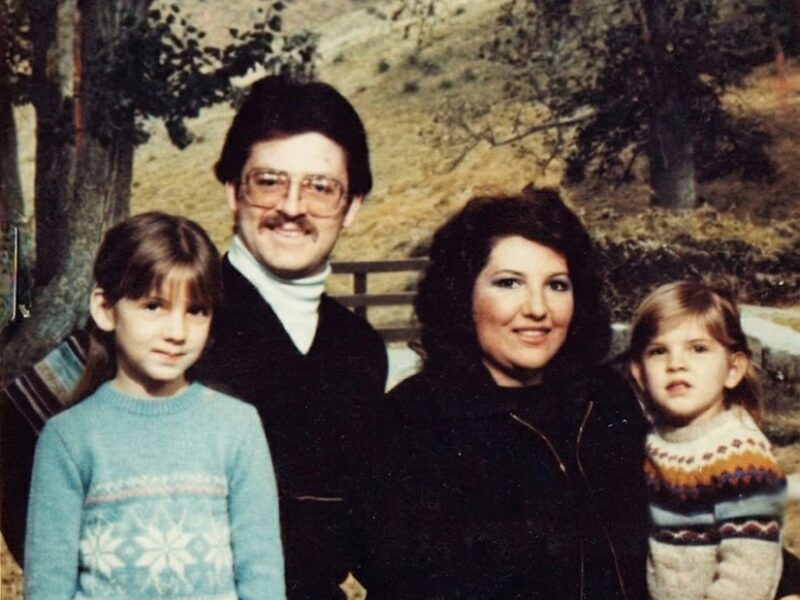
A grandmother walked into her son’s home in 1984 and found a nightmare: three family members beaten to death with a hammer. A 3-year-old survived. The killer vanished. For 34 years, the case went cold—until a change in the law forced a prisoner to give a DNA sample. It matched perfectly.
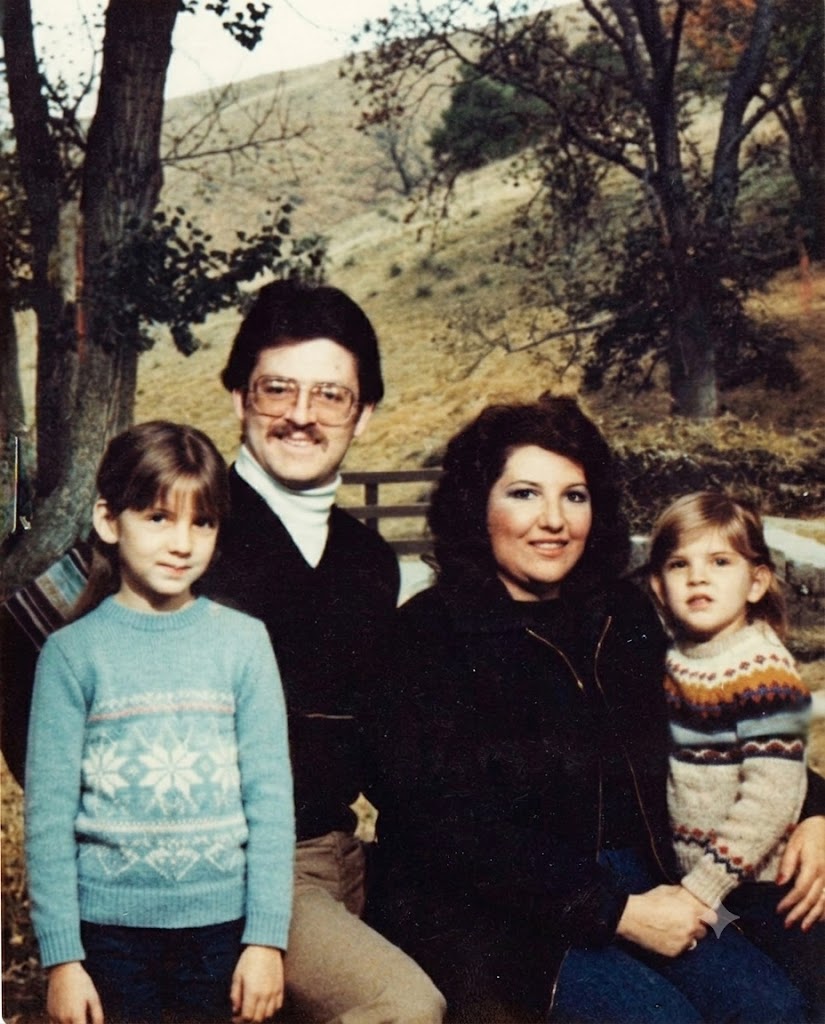
The garage door was still open.
That was the first thing Connie Bennett saw when she turned onto East Center Drive that Monday morning, January 16th, 1984 — the door hanging above her son’s driveway like a question nobody had answered.
Snow had fallen overnight, the kind of quiet Colorado powder that softens everything and hides the edges of the world.
Deborah’s purse lay in the snow near the garage, its contents scattered across the ground like someone had shaken it out and walked away without looking back.
Connie stared at it for a long moment.
She had driven here because Bruce and Deborah had not shown up for work at the family furniture store — and that had never happened before.
They were punctual people, the kind who called ahead if anything changed, the kind who answered the phone before the second ring.
Every call to the house that morning had gone unanswered.
So Connie got in her car and drove.
And now she stood in the snow, staring at a purse, and something cold moved through her that had nothing to do with the January air.
She pushed the door open and stepped inside.
—
The house was still.
Not the comfortable stillness of a family sleeping in — the other kind.
The kind that has weight.
Bruce was at the foot of the stairs.
He had come down when he heard something in the house, that much was clear from the trail of the struggle, the marks on the banister where he had tried to pull himself back up toward his family.
He had been beaten with a hammer and stabbed with a knife taken from the family’s own kitchen — the block on the counter still had the empty slot where it had lived.
Connie fell to her knees beside her son.
“Bruce,” she said. “Bruce, what happened?”
He couldn’t respond.
She ran to the neighbor’s house and hammered on the door with both fists until it opened.
“Call 911,” she said. “Call 911 now.”
—
When officers arrived, they moved room to room in that careful, quiet way first responders learn — the way that says we are hoping we are wrong.
They were not wrong.
Deborah was in the master bedroom, beaten, stabbed, and sexually assaulted, the room around her ransacked.
Dresser drawers pulled open. Her wallet on the floor, emptied.
Someone had moved through that room looking for cash and kept going without slowing down.
In the girls’ room, Melissa lay on the floor between the twin beds.
A blanket had been placed over her face.
She was 7 years old — two days from turning 8.
When investigators looked at her right hand, they found defensive wounds across her palm.
In the dark, in that room, a 7-year-old girl had raised her hand against whatever was coming.
It wasn’t enough.
But she had fought.
Then a firefighter crouched beside one of the twin beds and heard something that shouldn’t have been there — a sound, not a cry, a shallow, ragged wheeze coming from the gap between the bed frame and the wall.
A 3-year-old girl wedged into 4 inches of space, barely alive.
Vanessa had been in that gap for more than 12 hours.
She was rushed to Children’s Hospital in Denver, where the doctors used one word: miracle.
—
The killer had entered through an open garage door.
He brought his own weapon, used it on every member of the family, and walked it back out when he left.
Nothing was forced. Nothing was broken.
He had walked in the way someone walks into a place they are not afraid of being seen.
Investigators processed the house through the rest of that day.
Bloody boot prints tracked across the floors, room to room, then out through the garage into the snow — all the same shoe, a hiking boot.
The prints did not belong to anyone who had been at Melissa’s birthday party the night before.
The hammer was gone.
He had brought it with him and carried it back out when he left.
A person who loses control doesn’t carefully retrieve his weapon on the way out.
Someone who walks a hammer back through a garage and out into the night came with a plan and left with one.
—
But as detectives were still on their knees inside the house on East Center Drive, something worse was becoming clear.
The Bennett family was not the first.
Eleven days before the murders, on January 4th, a couple named James and Kimberly Habershield had been asleep in their Aurora home when a man entered through an open garage door and attacked them with a blunt instrument.
Both survived.
Kimberly’s purse was emptied of cash and dropped in the snow outside.
Aurora investigated it as an isolated home invasion.
The city moved on.
Five days later, on January 9th, a flight attendant named Donna Dixon pulled into her garage in Aurora after a long shift.
A single blow to the head dropped her before she understood what was happening.
Her boyfriend found her the next morning.
The hammer was left on the driver’s seat of her car.
Donna survived, but the head injury erased her memory of the attack permanently.
The one piece of evidence that could have identified him — his face — was gone, taken by the very blow he had delivered.
The next morning, January 10th, in Lakewood, a woman named Patricia Smith was found dead in her living room.
She was 50 years old.
She had moved from Nebraska to be closer to her daughter.
Her body had been covered with a child’s Winnie the Pooh blanket that belonged to her grandchildren.
Her purse had been gone through.
The garage door was open.
—
Four attacks. Twelve days. Two cities.
Same weapon. Same entry point. Same sequence.
But Aurora and Lakewood were separate jurisdictions.
In 1984, there were no shared databases, no instant alerts, no system that flagged matching patterns across city lines.
Case files sat in manila folders on different desks in different buildings, separated by a border the killer had crossed in less than 30 minutes.
By the time the FBI sent a profiler named Ron Walker to study the files from all four scenes, the picture was already complete.
White male, early 20s, likely construction or a skilled trade — someone who knew how these new developments were built and how quietly a person could move through one after dark.
Not a stalker. An opportunist.
A man who read an open garage door the way most people read an unlocked front gate.
Walker laid out the full pattern and then said the one thing that settled over the room like a verdict.
“This man will not stop,” he said. “Not until he is caught or dead.”
—
The community fractured.
People who had never thought twice about their garage doors were checking them three times a night.
Hardware stores couldn’t keep deadbolts on the shelves.
There were confirmed reports of families sleeping in helmets.
Not paranoia — the rational response of a neighborhood that understood it was being hunted.
And then the attacks stopped.
No more garage doors. No more calls. Just silence where the violence had been.
The weeks passed.
Aurora started to breathe again, cautiously, the way people do when something terrible seems to have lifted without explanation.
But Walker’s words hadn’t gone anywhere.
This man will not stop.
He hadn’t stopped.
He had moved.
—
On January 27th, 1984 — 11 days after the Bennett murders — a man in Kingman, Arizona, attacked a stranger named Roy Williams in his bed.
Not with a hammer this time, but with a granite slab picked up from the ground outside.
Roy looked up at the man standing over him and asked a question instead of screaming.
“Why are you doing this?”
Something in those three words reached something in the man above him.
The attack stopped.
Roy survived with over 100 stitches and several broken ribs.
He had seen the face.
A few hours later, a patrol officer spotted a disheveled man near a truck stop a quarter mile from Roy’s home, trying to hitch a ride on the interstate.
The officer checked his shoes.
The tread matched the impressions at the scene.
The man ran.
Officers found him minutes later crouched behind a bush, out of breath and out of room.
His name was Alex Christopher Ewing.
He was 23 years old, a former construction worker.
He had spent the previous year building homes in Aurora and Lakewood, Colorado — the same streets, the same subdivisions, the same quiet neighborhoods where four people had been attacked in 12 days.
He was arrested and charged in Arizona for the attack on Roy Williams.
But in that Arizona station, Colorado had no idea he existed.
His name had never surfaced in any of their four cases.
—
Six months later, while being transported between facilities for his Arizona trial, Ewing escaped custody during a stop in Henderson, Nevada.
He slipped away wearing a bright orange jumpsuit and disappeared into a residential neighborhood.
That same night, still on the run, he found another open door.
A couple named Nancy and Chris Berry were asleep in their home.
Ewing came through the door carrying an axe handle.
He attacked Chris first, then Nancy.
Chris sustained injuries so severe he would never fully recover — permanent brain damage that would follow him for the rest of his life.
Nancy was beaten, too.
But at some point during the attack, she went completely still.
She played dead.
She gave him nothing to react to, and he stopped.
He set the axe handle on the table downstairs and walked out.
Nancy waited until the silence held.
Then she called 911.
Four days later, rangers found Ewing at a payphone near Lake Mead.
He tried to run.
An officer raised his weapon.
He stopped.
The trial was fast. Guilty on all counts.
110 years in a Nevada prison — the maximum the state allowed.
And as far as Colorado was concerned, the man who had walked through the Bennetts’ garage door simply didn’t exist.
Ewing’s file sat in a Nevada cabinet.
Colorado’s evidence sat in a Colorado locker.
In 1984, the state line between them might as well have been an ocean.
—
Connie Bennett went to every case date she could find.
Every meeting. Every briefing.
Every time a detective said there was something new to report, she was in the room.
She did this for years, then decades.
The answer never came, and she never stopped showing up.
—
In 1989 — five years after the murders — an investigator reviewing the files noticed something that should have been caught the week the evidence was collected.
The comforter from the girls’ room, one of the most critical pieces of biological evidence from the entire crime scene, had never been submitted to the state crime lab.
Collected. Logged. Box never sent.
Five years.
The oversight was corrected immediately, but the road ahead was nothing but dead ends.
The comforter yielded only a partial, unusable profile.
Then in 1990, technicians found another microscopic biological sample in the collected evidence.
It was sent for specialized testing.
The technology was too crude.
The test destroyed the sample it was trying to read.
For the rest of the 1990s, the Bennett file sat in the dark.
—
In 1999, the Colorado Bureau of Investigation returned to the remaining evidence with tools that hadn’t existed a decade earlier.
Two years of careful, methodical work.
In 2001, they had it.
A full DNA profile — not a blood type, not a partial, a complete genetic fingerprint, the kind that could point to one person out of millions.
Seventeen years after the murders, the evidence had finally given up what it had been holding.
They ran it through CODIS, the FBI’s national database of DNA profiles collected from convicted offenders across the country.
No match.
The profile was perfect, but the man it pointed to was not in the system.
Nevada, where Ewing had been sitting in a cell since 1984, did not contribute inmate DNA to the national database.
The key existed, complete and waiting.
There was simply no lock to put it in.
—
Fifteen more years passed.
In 2016, investigators ran the profile again.
This time, something came back.
Not a suspect — a connection.
The DNA from the Bennett crime scene matched DNA from another unsolved case: Patricia Smith, Lakewood, January 10th, 1984.
Two murders. Two cities. One genetic signature.
What investigators had believed for decades based on pattern was now confirmed by science.
The same man had killed Patricia Smith, and then five days later, walked through the Bennetts’ garage door.
That same year, Nevada finally passed a law requiring every prison inmate to submit a DNA sample.
It should have moved quickly.
It didn’t.
No deadline. No enforcement window. No requirement to finish by any specific date.
It moved the way underfunded mandates always move — slowly, buried under backlog, with the quiet assumption that someone would get to it eventually.
—
In his cell, Alex Ewing was doing something else entirely.
He was filling out parole paperwork, writing personal statements.
He had set up a profile on a dating site.
He had actual plans for the life he expected to be living soon.
Thirty-four years behind bars had apparently convinced him that the past had stayed as frozen as he had.
It hadn’t.
Ewing’s DNA was eventually collected and added to the processing pile.
Then it sat there for two more years.
Two more years while Connie attended every update she could find, still carrying the weight of a Monday morning in 1984.
Two more years while Vanessa lived with permanent paralysis on her left side and a lifetime of damage she had no memory of receiving.
Two more years while Ewing drafted parole documents and genuinely believed he was about to walk free.
Then, one week after his DNA was finally entered into the database, CODIS returned a match.
The genetic fingerprint pulled from the carpet beneath Melissa Bennett’s body had found its owner.
Thirty-four years. A comforter untested for five. A destroyed sample. A complete profile with no lock. A law with no deadline. Two more years after that. And then one week.
That was all it took to end 34 years of silence.
—
July 10th, 2018. 9:15 in the evening.
Detective Steve Conners’ phone rang.
His supervisor was on the other end.
Three words: “We got a hit.”
Conners had worked the Bennett case for years.
He knew the files the way you know something you’ve carried for a long time — not just the facts, but the weight of them.
The birthday party. The garage door. The footprints in the snow.
Vanessa in the gap between the bed and the wall, barely breathing.
He asked where the hit came from.
An inmate in Nevada.
He asked for the name.
Alex Ewing.
Conners went through every report, every file, every name that had surfaced across 34 years of investigation.
Thousands of pages. Hundreds of leads. Persons of interest. Background checks. Tips from the public.
An enormous archive of dead ends assembled by detectives who never stopped trying.
Alex Ewing had never appeared once — not in a tip, not in a check, not in a single line of any document in that entire mountain of paper.
A man who had walked through the Bennetts’ garage door, destroyed an entire family, and then vanished so completely that 34 years of professional investigation had never once produced his name.
—
A team of Colorado detectives flew to Nevada.
They did not identify themselves as connected to the Colorado murders — just a routine conversation, nothing alarming.
Ewing talked freely, the relaxed ease of a man who had been carrying a secret for 34 years and had long since buried it somewhere he believed was permanently unreachable.
He talked about his past.
He mentioned work. Construction. Aurora and Lakewood.
The same streets, the same neighborhoods where four people had been killed in 12 days in January 1984.
He placed himself there, in his own words, at the same time, doing exactly the kind of work that would have made him invisible in those developing suburbs.
The detectives kept their faces steady.
They kept listening.
—
The next day they came back with photographs.
They showed him a picture of Patricia Smith alive — a woman in her 50s, warm, ordinary, someone’s mother, someone’s grandmother.
Ewing said he didn’t recognize her. Steady. Unbothered.
Then they placed the crime scene photograph on the table.
Patricia Smith the way her daughter had found her. The Winnie the Pooh blanket. The living room floor.
Ewing jumped back in his chair and stared at it.
The ease that had carried him through two days of conversation broke open.
“There’s got to be a mistake,” he said.
Then he asked for a lawyer.
—
A court order was secured.
A DNA swab was taken directly from Ewing and sent to the lab.
The results confirmed what the evidence had been holding for 34 years.
The DNA from the carpet beneath Melissa Bennett’s body. The DNA from Patricia Smith’s living room.
Both matched Alex Christopher Ewing perfectly. Completely.
His parole paperwork became meaningless overnight.
The dating profile, the plans, the quiet certainty that freedom was close — all of it dissolved in a single lab result.
Thirty-four years of distance had not saved him.
Time had not saved him.
The state border had not saved him.
The past had been moving toward him the entire time, and now it had arrived.
—
His legal team responded immediately.
Sixteen months of appeals, challenges to the extradition, questions about DNA handling — every procedural argument available to slow the inevitable.
The Nevada Supreme Court considered them carefully, then rejected them all.
The U.S. Supreme Court turned away his final appeal.
In August 2020, 36 years after he had walked out of Aurora into the night, Alex Ewing was placed on a plane under guard and flown back to Colorado.
—
The trial for the Bennett family murders began in July 2021 — 37 years after the birthday party, 37 years after the garage door.
The prosecution laid out the DNA, the behavioral profile that had described Ewing almost perfectly in 1984, the boot prints, the timeline, the connections between the Bennett murders and Patricia Smith.
The jury deliberated for nine hours.
On August 6th, 2021, they returned their verdict.
“Guilty on all counts. Bruce Bennett. Deborah Bennett. Melissa Bennett.”
Judge Darren Vaille looked at Alex Ewing and did not reach for careful language.
“Over a 12-day span, you inflicted an unspeakable orgy of violence,” he said. “Your actions are an abomination.”
Three consecutive life sentences.
The same freedom Ewing had been quietly preparing for — gone.
The judge asked if Ewing had anything to say.
He looked up from the defense table.
“No, thank you.”
The sum total of what Alex Christopher Ewing offered to the family he had destroyed, to the city he had terrorized, to the girl who had survived.
—
Before the sentence was read, Judge Vaille turned to Connie Bennett and told her he was stunned and amazed at her strength across four decades.
Then he looked at Vanessa.
He told her that when he looked at her, he saw human triumph.
Vanessa Bennett was 40 years old when she stood up in that courtroom.
The 3-year-old found in the gap between the bed and the wall.
The one the doctors had called a miracle.
She was standing 15 feet from the man who had taken everything from her before she was old enough to understand what everything meant.
She looked at him and spoke.
“I didn’t just lose my parents and my sister,” she said. “I lost the person I was supposed to be.”
—
Connie Bennett stood up next. 87 years old.
The woman who had driven to East Center Drive on a Monday morning because her gut told her something was wrong.
Who had found her son at the foot of a staircase.
Who had taken the last living piece of him home from a hospital and raised her.
Who had shown up to every briefing, every update, every meeting for 37 years.
She looked at the man who had killed her son and said what she had carried all that time.
“Some people may call him an animal, but I won’t,” she said. “Because I think animals have a purpose in this world.”
Outside the courthouse, someone asked her if she finally had closure.
She thought about it for a moment.
“It’s not closure,” she said. “But we’ve learned to live with it.”
—
In April 2022, a second jury convicted Ewing of murdering Patricia Smith — a fourth consecutive life sentence.
Patricia’s family had waited 38 years.
They got their answer in the same year Vanessa got hers.
—
On the evening of January 15th, 1984, a 7-year-old girl sat in a house on East Center Drive in Aurora, Colorado, and blew out the candles on her birthday cake.
The people who loved her most were all in that room.
Someone had given her a small organ, and she played it badly, loudly, and with complete joy.
Her little sister was 3 years old and still believed the world was safe.
Their father had been reminded to close the garage door.
He heard the message. He nodded.
He never closed it.
—
Melissa Bennett was two days from turning 8.
She never got the real birthday party.
But in the dark, in that room, she raised her hand.
She fought.
And Vanessa — the girl in the gap, the miracle, the survivor — she is still here.
Still standing.
Still refusing to let the darkness be the last word.
—
The garage door was still open.
It had been open when Richard noticed it on his way out, open when Bruce nodded and said he’d get to it, open when the killer walked in with a hammer he’d brought from somewhere else, open when Connie pulled onto the street the next morning and saw a purse in the snow.
Three times that door appears in this story, and three times it means something different.
The first time, it was a small thing — a chore deferred, a minute that could wait.
The second time, it was evidence — the same entry point across four scenes in two cities, the signature of a man who read open doors like invitations.
The third time, it was a symbol — of everything that could have gone differently, and of everything that didn’t.
Bruce Bennett was 27 years old.
He had served in the Navy as a sonar analyst stationed at Pearl Harbor, trained to sit in the dark and listen for threats moving through deep water.
When his service ended, he came home and started building.
A job at the family furniture store. Night classes to become an air traffic controller. Books open at the kitchen table after the girls were asleep.
Deborah was 26.
They had met through her brother Larry, married young, and meant every word of it.
Melissa was 7. Vanessa was 3.
—
The house on East Center Drive was their first home — a modest place at the end of a quiet cul-de-sac in Aurora, just east of Denver.
They bought it in 1983.
They filled it with the ordinary things that make a life: a small organ played badly and loudly, a cake with candles, coats on at the door, hugs goodnight.
And then, in the space of a few hours, it became something else entirely.
—
Connie Bennett walked into that house on a Monday morning and found a world that could never be put back together.
She carried that morning in her body every day for the rest of her life.
And she raised that little girl anyway.
It was an act of love so complete it barely has a name.
—
Vanessa Bennett came out of her coma weeks after the attack.
Her jaw had been wired shut.
She had tubes in her nose to eat.
She went through months of physical therapy, braces on her legs, relearning how to walk, how to eat, how to move through a body that had been broken before she was old enough to understand what broken meant.
When someone gently asked her what she remembered about that night, her answer was immediate.
“Nothing.”
They tried once more. A therapist, careful questions, a quiet room.
The moment the questions moved toward what had happened inside that house, she became so distressed they stopped and never tried again.
Whatever her three-year-old mind had seen, it had locked it somewhere completely unreachable.
In a case full of things that were almost impossible to sit with, that was the only mercy.
—
The Bennett case sat in the dark for decades, but it never went cold in the way these cases usually do.
There was always someone working it.
Always a detective who inherited the file and read it cover to cover.
Always a technician who ran the DNA one more time.
Always Connie, in the room, waiting.
—
In the years after the murders, Aurora changed.
The new subdivisions where Ewing had worked construction filled in.
The cul-de-sacs grew trees.
The hardware stores eventually stopped selling out of deadbolts.
But the case stayed.
It stayed in the way a stone stays in a shoe — small enough to forget for a while, impossible to ignore when you remembered.
—
The DNA journey alone is a story of its own.
A comforter collected and logged but never sent.
Five years lost.
A sample destroyed by technology too crude to read it.
Another decade of waiting.
A complete profile in 2001 that pointed to a man who wasn’t in the system.
Fifteen more years.
A cold hit in 2016 that connected two murders across two cities.
A Nevada law with no deadline.
Two more years of processing.
And then, one week after the DNA was finally entered, a match.
Thirty-four years of silence, broken by a database search that took less time than a lunch break.
—
Detective Steve Conners had worked the case for years.
He knew the files the way you know something you’ve carried for a long time.
When the call came on July 10th, 2018, he was at his desk.
His supervisor said three words.
“We got a hit.”
Conners asked where.
An inmate in Nevada.
He asked for the name.
Alex Ewing.
—
The name meant nothing.
That was the thing that hit Conners hardest.
Thirty-four years of investigation. Thousands of pages. Hundreds of leads.
And the name Alex Ewing had never appeared once.
Not in a tip. Not in a background check. Not in a single line of any document in that entire mountain of paper.
The man who had walked through the Bennetts’ garage door had vanished so completely that the system built to find him had never even known he existed.
—
When the Colorado detectives flew to Nevada, they did not announce themselves as connected to the murders.
They sat down with Ewing and let him talk.
He was relaxed. Easy. A man who had been carrying a secret for 34 years and had long since buried it somewhere he believed was permanently unreachable.
He talked about his past.
He mentioned construction work.
He mentioned Aurora and Lakewood.
He placed himself there — in his own words, at the same time, doing exactly the kind of work that would have made him invisible in those developing suburbs.
The detectives kept their faces steady.
They kept listening.
—
The next day, they brought photographs.
Patricia Smith alive. A woman in her 50s. Warm. Ordinary. Someone’s mother. Someone’s grandmother.
Ewing said he didn’t recognize her.
Steady. Unbothered.
Then they placed the crime scene photograph on the table.
Patricia Smith the way her daughter had found her. The Winnie the Pooh blanket. The living room floor.
Ewing jumped back in his chair.
The ease that had carried him through two days of conversation broke open.
“There’s got to be a mistake,” he said.
Then he asked for a lawyer.
—
A court order was secured. A DNA swab was taken.
The results confirmed what the evidence had been holding for 34 years.
The DNA from the carpet beneath Melissa Bennett’s body. The DNA from Patricia Smith’s living room.
Both matched Alex Christopher Ewing perfectly.
His parole paperwork became meaningless overnight.
The dating profile. The plans. The quiet certainty that freedom was close.
All of it dissolved in a single lab result.
—
The legal fight took another 16 months.
Appeals. Challenges to the extradition. Questions about DNA handling.
Every procedural argument available to slow the inevitable.
The Nevada Supreme Court rejected them all.
The U.S. Supreme Court turned away his final appeal.
In August 2020, Alex Ewing was placed on a plane under guard and flown back to Colorado.
Thirty-six years after he had walked out of Aurora into the night.
—
The trial began in July 2021.
The prosecution laid out the DNA. The behavioral profile that had described Ewing almost perfectly in 1984. The boot prints. The timeline. The connections between the Bennett murders and Patricia Smith.
The jury deliberated for nine hours.
On August 6th, 2021, they returned their verdict.
Guilty on all counts.
Three consecutive life sentences.
—
Judge Darren Vaille looked at Alex Ewing and did not reach for careful language.
“Over a 12-day span, you inflicted an unspeakable orgy of violence,” he said. “Your actions are an abomination.”
The judge asked if Ewing had anything to say.
He looked up from the defense table.
“No, thank you.”
—
Before the sentence was read, Judge Vaille turned to Connie Bennett.
He told her he was stunned and amazed at her strength across four decades.
Then he looked at Vanessa.
He told her that when he looked at her, he saw human triumph.
—
Vanessa Bennett was 40 years old when she stood up in that courtroom.
The 3-year-old found in the gap between the bed and the wall. The one the doctors had called a miracle.
She was standing 15 feet from the man who had taken everything from her before she was old enough to understand what everything meant.
“I didn’t just lose my parents and my sister,” she said. “I lost the person I was supposed to be.”
—
Connie Bennett stood up next. 87 years old.
The woman who had driven to East Center Drive on a Monday morning because her gut told her something was wrong.
Who had found her son at the foot of a staircase.
Who had taken the last living piece of him home from a hospital and raised her.
Who had shown up to every briefing, every update, every meeting for 37 years.
“Some people may call him an animal, but I won’t,” she said. “Because I think animals have a purpose in this world.”
—
Outside the courthouse, someone asked her if she finally had closure.
She thought about it for a moment.
“It’s not closure,” she said. “But we’ve learned to live with it.”
—
In April 2022, a second jury convicted Ewing of murdering Patricia Smith.
A fourth consecutive life sentence.
Patricia’s family had waited 38 years.
They got their answer in the same year Vanessa got hers.
—
On the evening of January 15th, 1984, a 7-year-old girl sat in a house on East Center Drive in Aurora, Colorado, and blew out the candles on her birthday cake.
The people who loved her most were all in that room.
Someone had given her a small organ, and she played it badly, loudly, and with complete joy.
Her little sister was 3 years old and still believed the world was safe.
Their father had been reminded to close the garage door.
He heard the message. He nodded.
He never closed it.
—
Melissa Bennett was two days from turning 8.
She never got the real birthday party.
But in the dark, in that room, she raised her hand.
She fought.
And Vanessa — the girl in the gap, the miracle, the survivor — she is still here.
Still standing.
Still refusing to let the darkness be the last word.
—
The garage door was still open.
It had been open when Richard noticed it on his way out.
Open when Bruce nodded and said he’d get to it.
Open when the killer walked in with a hammer he’d brought from somewhere else.
Open when Connie pulled onto the street the next morning and saw a purse in the snow.
Three times that door appears in this story.
The first time, it was a small thing — a chore deferred, a minute that could wait.
The second time, it was evidence — the same entry point across four scenes in two cities, the signature of a man who read open doors like invitations.
The third time, it was a symbol — of everything that could have gone differently, and of everything that didn’t.
—
Bruce Bennett was 27 years old.
He had served in the Navy as a sonar analyst stationed at Pearl Harbor, trained to sit in the dark and listen for threats moving through deep water.
When his service ended, he came home and started building.
A job at the family furniture store. Night classes to become an air traffic controller. Books open at the kitchen table after the girls were asleep.
Deborah was 26.
They had met through her brother Larry, married young, and meant every word of it.
Melissa was 7. Vanessa was 3.
—
The house on East Center Drive was their first home — a modest place at the end of a quiet cul-de-sac in Aurora, just east of Denver.
They bought it in 1983.
They filled it with the ordinary things that make a life: a small organ played badly and loudly, a cake with candles, coats on at the door, hugs goodnight.
And then, in the space of a few hours, it became something else entirely.
—
Connie Bennett walked into that house on a Monday morning and found a world that could never be put back together.
She carried that morning in her body every day for the rest of her life.
And she raised that little girl anyway.
It was an act of love so complete it barely has a name.
—
Vanessa Bennett came out of her coma weeks after the attack.
Her jaw had been wired shut.
She had tubes in her nose to eat.
She went through months of physical therapy, braces on her legs, relearning how to walk, how to eat, how to move through a body that had been broken before she was old enough to understand what broken meant.
When someone gently asked her what she remembered about that night, her answer was immediate.
“Nothing.”
They tried once more. A therapist, careful questions, a quiet room.
The moment the questions moved toward what had happened inside that house, she became so distressed they stopped and never tried again.
Whatever her three-year-old mind had seen, it had locked it somewhere completely unreachable.
In a case full of things that were almost impossible to sit with, that was the only mercy.
—
The Bennett case sat in the dark for decades, but it never went cold in the way these cases usually do.
There was always someone working it.
Always a detective who inherited the file and read it cover to cover.
Always a technician who ran the DNA one more time.
Always Connie, in the room, waiting.
—
In the years after the murders, Aurora changed.
The new subdivisions where Ewing had worked construction filled in.
The cul-de-sacs grew trees.
The hardware stores eventually stopped selling out of deadbolts.
But the case stayed.
It stayed in the way a stone stays in a shoe — small enough to forget for a while, impossible to ignore when you remembered.
—
The DNA journey alone is a story of its own.
A comforter collected and logged but never sent.
Five years lost.
A sample destroyed by technology too crude to read it.
Another decade of waiting.
A complete profile in 2001 that pointed to a man who wasn’t in the system.
Fifteen more years.
A cold hit in 2016 that connected two murders across two cities.
A Nevada law with no deadline.
Two more years of processing.
And then, one week after the DNA was finally entered, a match.
Thirty-four years of silence, broken by a database search that took less time than a lunch break.
—
Detective Steve Conners had worked the case for years.
He knew the files the way you know something you’ve carried for a long time.
When the call came on July 10th, 2018, he was at his desk.
His supervisor said three words.
“We got a hit.”
Conners asked where.
An inmate in Nevada.
He asked for the name.
Alex Ewing.
—
The name meant nothing.
That was the thing that hit Conners hardest.
Thirty-four years of investigation. Thousands of pages. Hundreds of leads.
And the name Alex Ewing had never appeared once.
Not in a tip. Not in a background check. Not in a single line of any document in that entire mountain of paper.
The man who had walked through the Bennetts’ garage door had vanished so completely that the system built to find him had never even known he existed.
—
When the Colorado detectives flew to Nevada, they did not announce themselves as connected to the murders.
They sat down with Ewing and let him talk.
He was relaxed. Easy. A man who had been carrying a secret for 34 years and had long since buried it somewhere he believed was permanently unreachable.
He talked about his past.
He mentioned construction work.
He mentioned Aurora and Lakewood.
He placed himself there — in his own words, at the same time, doing exactly the kind of work that would have made him invisible in those developing suburbs.
The detectives kept their faces steady.
They kept listening.
—
The next day, they brought photographs.
Patricia Smith alive. A woman in her 50s. Warm. Ordinary. Someone’s mother. Someone’s grandmother.
Ewing said he didn’t recognize her.
Steady. Unbothered.
Then they placed the crime scene photograph on the table.
Patricia Smith the way her daughter had found her. The Winnie the Pooh blanket. The living room floor.
Ewing jumped back in his chair.
The ease that had carried him through two days of conversation broke open.
“There’s got to be a mistake,” he said.
Then he asked for a lawyer.
—
A court order was secured. A DNA swab was taken.
The results confirmed what the evidence had been holding for 34 years.
The DNA from the carpet beneath Melissa Bennett’s body. The DNA from Patricia Smith’s living room.
Both matched Alex Christopher Ewing perfectly.
His parole paperwork became meaningless overnight.
The dating profile. The plans. The quiet certainty that freedom was close.
All of it dissolved in a single lab result.
—
The legal fight took another 16 months.
Appeals. Challenges to the extradition. Questions about DNA handling.
Every procedural argument available to slow the inevitable.
The Nevada Supreme Court rejected them all.
The U.S. Supreme Court turned away his final appeal.
In August 2020, Alex Ewing was placed on a plane under guard and flown back to Colorado.
Thirty-six years after he had walked out of Aurora into the night.
—
The trial began in July 2021.
The prosecution laid out the DNA. The behavioral profile that had described Ewing almost perfectly in 1984. The boot prints. The timeline. The connections between the Bennett murders and Patricia Smith.
The jury deliberated for nine hours.
On August 6th, 2021, they returned their verdict.
Guilty on all counts.
Three consecutive life sentences.
—
Judge Darren Vaille looked at Alex Ewing and did not reach for careful language.
“Over a 12-day span, you inflicted an unspeakable orgy of violence,” he said. “Your actions are an abomination.”
The judge asked if Ewing had anything to say.
He looked up from the defense table.
“No, thank you.”
—
Before the sentence was read, Judge Vaille turned to Connie Bennett.
He told her he was stunned and amazed at her strength across four decades.
Then he looked at Vanessa.
He told her that when he looked at her, he saw human triumph.
—
Vanessa Bennett was 40 years old when she stood up in that courtroom.
The 3-year-old found in the gap between the bed and the wall. The one the doctors had called a miracle.
She was standing 15 feet from the man who had taken everything from her before she was old enough to understand what everything meant.
“I didn’t just lose my parents and my sister,” she said. “I lost the person I was supposed to be.”
—
Connie Bennett stood up next. 87 years old.
The woman who had driven to East Center Drive on a Monday morning because her gut told her something was wrong.
Who had found her son at the foot of a staircase.
Who had taken the last living piece of him home from a hospital and raised her.
Who had shown up to every briefing, every update, every meeting for 37 years.
“Some people may call him an animal, but I won’t,” she said. “Because I think animals have a purpose in this world.”
—
Outside the courthouse, someone asked her if she finally had closure.
She thought about it for a moment.
“It’s not closure,” she said. “But we’ve learned to live with it.”
—
In April 2022, a second jury convicted Ewing of murdering Patricia Smith.
A fourth consecutive life sentence.
Patricia’s family had waited 38 years.
They got their answer in the same year Vanessa got hers.
—
On the evening of January 15th, 1984, a 7-year-old girl sat in a house on East Center Drive in Aurora, Colorado, and blew out the candles on her birthday cake.
The people who loved her most were all in that room.
Someone had given her a small organ, and she played it badly, loudly, and with complete joy.
Her little sister was 3 years old and still believed the world was safe.
Their father had been reminded to close the garage door.
He heard the message. He nodded.
He never closed it.
—
Melissa Bennett was two days from turning 8.
She never got the real birthday party.
But in the dark, in that room, she raised her hand.
She fought.
And Vanessa — the girl in the gap, the miracle, the survivor — she is still here.
Still standing.
Still refusing to let the darkness be the last word.









