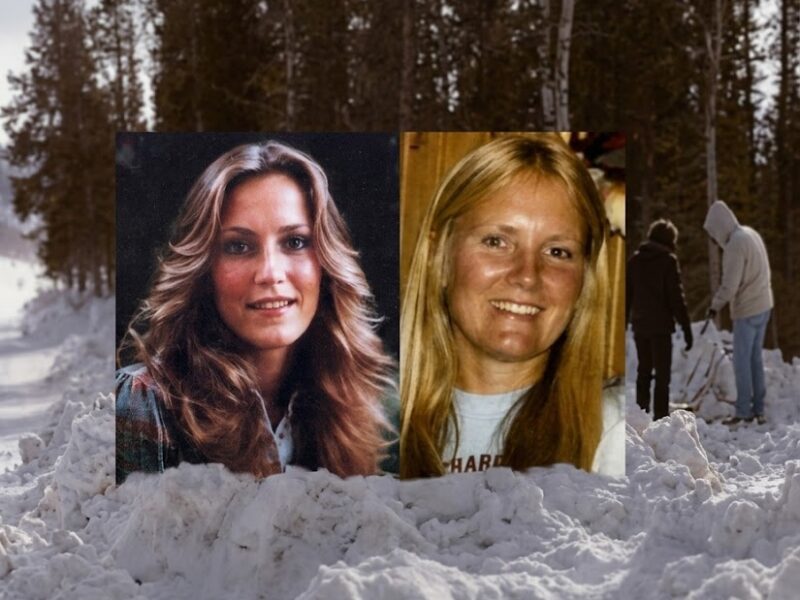
A Colorado Cold Case from 1982 Was Finally Solved—The Killer Had Been Rescued from a Snowdrift That Same Night
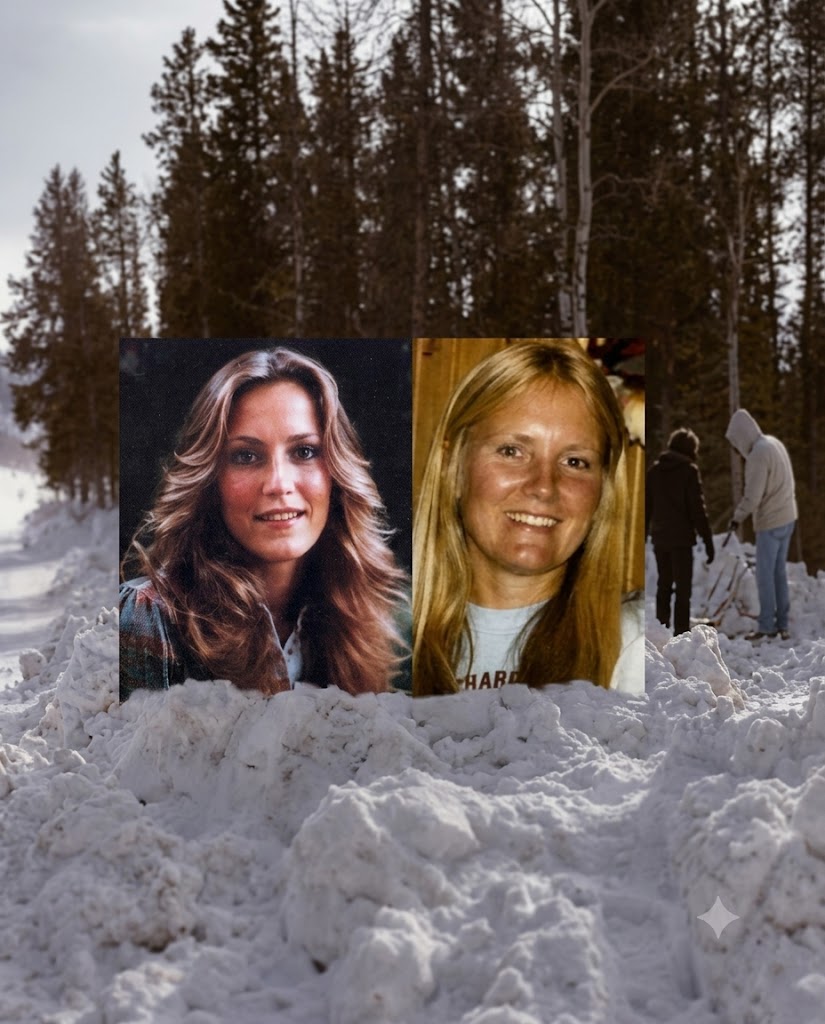
The passenger on the United Airlines flight looked down through the clouds and saw headlights blinking in the darkness below. Three short, three long, three short. SOS. It was the night of January 6th, 1982, and somewhere in the frozen Rockies, a man was signaling for help. A Jefferson County sheriff happened to be on that same plane, recognized the code, and alerted the crew. They radioed coordinates to dispatchers on the ground. A local fire chief named Dave Montoya heard the call, drove up Guanella Pass through the storm, and found a pickup truck half buried in a snowdrift. The driver came running toward him, his face bruised, his breath fogging in the brutal cold. Montoya recognized him—they had worked alongside each other underground in the mines.
The man’s name was Alan Phillips. He was thirty years old. He told Montoya he had gotten drunk and tried to drive home over the pass to avoid the highway patrol. He said the bruise on his face came from slamming into the side of his truck in the snow. Montoya called him stupid, drove him home, and forgot about it. The rescue made the local newspaper that week. Phillips’s picture ran in the paper, right next to the article about a woman named Bobby Joe Oberholtzer, whose body had just been found on Hooser Pass. Two columns, same page. Nobody connected them.
That same night, hours earlier, two women had disappeared from the same small mountain town. One of them fought back hard enough to leave her killer’s blood on her own glove. That blood sat in an evidence locker for forty years, waiting for a name. The name, when it finally came, belonged to the man who had been rescued from a snowdrift and driven home by a fire chief who had no idea he was helping a killer escape.
—
Bobby Joe Oberholtzer was twenty-nine years old when she walked out of the Village Pub in Breckenridge, Colorado, on the evening of January 6th, 1982. She had just been promoted at the real estate company where she worked. She called her husband, Jeff, to tell him the good news, and he offered to come pick her up. She told him not to bother. She would find a ride. It was the kind of place where hitchhiking was normal. Drivers looked for you on the side of the road. If they recognized you, they stopped. If they didn’t, they stopped anyway.
She stepped into a winter night where the temperature was already well below zero and snow was building on the road through the pass. She headed for the side of the road. Three hours earlier and a few blocks away, a twenty-one-year-old woman named Annette Schnee had walked out of a pharmacy after picking up a prescription. She was from Sac City, Iowa, working as a housekeeper at a Holiday Inn by day and a cocktail waitress by night, saving money toward her dream of becoming a flight attendant. She was seen talking to a woman with dark hair outside the drugstore. Nobody ever identified that woman. Nobody saw Annette after that.
Her disappearance was not even reported for two days. A coworker at the Holiday Inn noticed she had not shown up for her shift and made the call on January 8th. By then, Bobby Joe’s husband Jeff was already awake, already waiting, already driving to the homes of friends she had been drinking with, already walking into the Breckenridge Police Department to file a report. They told him it was too early.
The phone rang at a quarter to eight the next morning. A rancher had found Bobby Joe’s driver’s license blowing across his driveway. Jeff drove toward the rancher’s property. Before he got there, he spotted Bobby Joe’s blue backpack lying in the snow off Highway 285. He pulled over and waded through the drifts to reach it. Inside was her wool glove, soaked in blood. A tissue next to it, also bloody. But no Bobby Joe. The backpack was more than twenty miles southeast of Breckenridge—far past Alma, far past any route she would have taken to get home. Whatever vehicle she had gotten into that night had driven her in the wrong direction entirely.
Jeff went home. Friends headed up Hooser Pass on cross-country skis. They found her around three in the afternoon, half buried in a snowbank roughly three hundred feet from the summit parking lot, at an elevation of 11,542 feet. She had been shot twice in the chest. An eighteen-inch zip tie was fastened around one wrist. Her body was frozen. She was fully clothed. Her hands were close together. Investigators collected what they could in the fading daylight, including vials of bloody snow around the body.
In the parking lot, they found two objects. The first was a large brass key ring with a hook that Jeff had handmade for her to carry as a weapon in case she ever needed to defend herself. The second was an orange bootie sock. It did not belong to Bobby Joe. It did not match anything she was wearing. It did not match anything in her home. Nobody at the scene knew what to make of it.
—
The medical examiner determined Bobby Joe had been shot twice in the chest at close range. There were no signs of sexual assault. The zip tie on her wrist told investigators she had been restrained. The three hundred feet between the parking lot and where she fell told them she had broken free. She had run. The brass key ring Jeff had built for her was found in the lot. She had used it. The blood on her glove was not all hers. She had swung hard enough to cut him open.
The evidence told a story that did not match a straight line. Her body was at the top of Hooser Pass. Her backpack and bloody glove were twenty miles to the southeast on a completely different highway. Her driver’s license was found at a separate location along that same road. The distance between those points meant a vehicle. It meant the killer had driven her south through the pass, continued on to 285, and at some point doubled back. Items had scattered along the way, either thrown or lost during a struggle inside the cab.
Six months later, on July 3rd, 1982, a thirteen-year-old boy fishing Sacramento Creek in a mountain valley ten miles south of Hooser Pass found a woman’s body lying face down in the water. She was fully clothed in a blue jacket. She had been shot once in the back. The bullet traveled on a downward angle of about thirty degrees, exiting through the front. She had been running downhill, or she had been on her knees. Her shoes were on the wrong feet. Her jean zipper was broken. And on her left foot was an orange bootie sock—the exact match to the one found in the parking lot where Bobby Joe died.
Her mother had given her those socks for Christmas, just two weeks before she disappeared. Her name was Annette Schnee. She was twenty-one years old. One sock had traveled with Annette to wherever she died. The other had come off inside the killer’s vehicle and been kicked out hours later when Bobby Joe jumped from the cab and ran. Two women who had never met. Two crime scenes ten miles apart. One pair of socks connecting them through the same vehicle, the same night, the same man.
—
Jeff Oberholtzer was the first suspect. A Colorado Bureau of Investigation agent named Jim Hardkey told him directly. Number one. Jeff had been the last person to speak to Bobby Joe on the phone. He knew her route. He knew her habits. And then Annette’s body turned up with one of his business cards in her jacket pocket. He had an explanation. He said he had given Annette a ride once in November 1981 when she was hitchhiking, and he handed out those cards to everyone. But an explanation and proof are two different things, and investigators held on to him.
Then Jeff made it worse. He told police he had a premonition. He said he believed Annette would be found four miles from his house on the Fourth of July. On July 3rd, her body was found seven miles from his house. One day off. Three miles off. The kind of accuracy that turned every investigator in the room toward a man they had already been watching.
“I’ve always had different premonitions all my life,” Jeff said later. “I had told them that I felt that she’d be found four miles from my house on the Fourth of July. Wasn’t far off. That sure made me look pretty bad.”
Jeff took a polygraph. He agreed to blood testing. His blood type did not match the blood on Bobby Joe’s glove. But the suspicion did not lift. It sat on him for years, then decades. To the investigators, he was the man who could not be charged. To himself, he was a widower who had lost his wife and then lost the right to grieve in public because the people investigating her death thought he might be the one who killed her.
Back in Sac City, Iowa, Annette’s mother, Eileen Franklin, was sitting by the telephone. That was how Annette’s younger sister Cindy learned something was wrong. She heard her mother answer the phone. She heard her start to cry. She asked what happened. Her mother told her Annette was missing. Karen Reese, Annette’s older sister, got the call next. She gathered family and drove to Colorado. She knew Annette hitchhiked. She knew somebody had picked her up. She kept hoping her sister was still alive somewhere, but in the back of her mind, she already knew she was not.
Other suspects came and went. Thomas Edward Luther, a man with a violent record and ties to Colorado, was investigated and cleared. Tracy Petrachelli was placed under suspicion for his presence in the area. His alibi held. Neither man’s DNA matched the blood on the glove. Anonymous tips arrived by phone and letter. Unofficial confessions came from men already in prison for other crimes. Each one was checked against the evidence. Each one collapsed.
The orange socks had connected the two cases, and the blood on the glove had confirmed that the killer was an unidentified male, but every available database came back empty. The man who had left his blood on Bobby Joe Oberholtzer’s glove had never been arrested, never been convicted, never given any law enforcement agency in the country a reason to have his DNA on file. The most important piece of evidence in the case pointed to one man on Earth, and no system in existence knew who he was.
—
By the mid-1980s, every lead had been exhausted. The case file was boxed and moved to archive storage within the Summit County system. The evidence stayed sealed. The blood on the glove stayed frozen. The orange socks stayed tagged in their evidence bags. And the families stayed exactly where they were.
Eileen Franklin did not move on. There was no version of moving on that existed for her. She later described the years after Annette’s death in three words: thirty-nine years of hell. She told reporters that all she wanted to know was why and how, and nobody could give it to her. Nobody knew why or how. The answers did not exist in any file, any database, any confession that had come in. The only thing that carried any information was the blood, and the blood had no name.
Cindy carried it differently. She had been a kid when her sister disappeared. Annette used to do her hair and paint her fingernails and babysit her when she was home. She was more of a caretaker than a sibling. The absence of that person did not get smaller as Cindy grew up. It grew with her.
The case was featured on Unsolved Mysteries in the early 1990s. Tips came in from across the country. None matched. It was profiled again on the Discovery Channel and on Paula Zahn’s show. Attention arrived. A name did not. The wooden cross that had been placed at the summit of Hooser Pass, where Bobby Joe was found, weathered through twenty winters, then thirty.
Jeff eventually remarried. He had a daughter. He stayed in Colorado. He drove past the pass. The suspicion that had followed him since 1982 never fully lifted. No matter what the blood test showed, new investigators would inherit the file, read the premonition detail, read about the business card in Annette’s pocket, and circle back to the same man their predecessors had circled. Jeff carried two things at once for forty years. The grief of losing Bobby Joe and the weight of being the person some people still believed had killed her.
Eileen grew old in Sac City. By the time the case entered its fourth decade, she was in her late eighties. She told a reporter she did not think she would live long enough to see an arrest. She said she was ready to go when her time came and she had made peace with the possibility that the answer would never arrive. But she had not made peace with Annette being gone. That part had no peace in it.
—
In 2020, a Park County detective sergeant named Wendy Kipple made a decision. Kipple had driven past Hooser Pass every day on her way to work. She knew the case the way you know something you have carried for a long time—not just the facts, but the weight of them. She had looked at the DNA and looked at the dead ends and decided there was one road left that had never been tried. Forensic genetic genealogy. The same method that had caught the Golden State Killer two years earlier.
“I said, ‘Let’s try this genealogy thing. Maybe it can work for us,'” Kipple recalled.
She sent the DNA profile from Bobby Joe’s glove to United Data Connect, a Denver-based forensic genealogy company that ran crime scene samples through public ancestry databases. The Schnee family had hired a private investigator named Charlie McCormack back in 1989 to keep the case alive. McCormack charged them one dollar a year for his services. He had worked the case across three decades, followed every lead, attended every briefing, and refused to let the file close. When he heard about United Data Connect and what genetic genealogy could do, he pushed for it. McCormack and Kipple were pulling in the same direction.
On January 9th, 2021, Kipple’s phone rang. The genealogist on the other end had two names: Alan Phillips and Bruce Phillips, brothers. Kipple reached out to Bruce first. He told her he had never lived in Colorado. He was estranged from his brother, but Alan had lived just outside Breckenridge and worked in the local mines. Kipple ran Alan’s name. He was still in Colorado. He was sixty-nine years old. He had his own mechanic shop. He had been married three times. He had a daughter and two stepsons. He had lived within an hour of Breckenridge for forty years.
Then Kipple pulled his criminal record and found a 1973 arrest for assault and burglary. She needed that case file. The courts had no record of it. The DA’s office had nothing. She went to the sheriff’s office archives and found out a fire had destroyed most of the old files. She searched through hundreds of boxes and filing cabinets over days. Nothing. She reached the last cabinet, second-to-last drawer. Halfway back, she saw a tab that read Alan Phillips. Inside was a signed confession from 1973.
Phillips had been twenty-two years old. The first sentence read: “I saw a woman hitchhiking on the south edge of Breckenridge, and I stopped and gave her a ride.” He drove her toward Fairplay. He stopped at an empty cabin. He pulled her from the jeep. He picked up a rock and hit her several times. The woman survived. She convinced him to let her go and reported it to police. When they asked him why he did it, his answer was four words: “I don’t know why.” He served six months.
Kipple needed his DNA. She put Phillips under surveillance. He was a hermit. He stayed home. He did not interact with people. He did not throw out his garbage. Five weeks went by. Then he left the house and drove to a Sonic drive-in. The team watched him eat in his car.
“He eats and then he leaves,” Kipple said. “I’m like, ‘Dang it. He didn’t throw his trash away.'”
He finished and drove away without throwing anything out. They followed him to a post office. He walked in carrying the Sonic bag. He walked out carrying only mail. The moment he pulled away, an investigator went inside and pulled the bag from the trash can. The lab extracted DNA from saliva on a napkin inside the bag. They ran it against the blood profile from Bobby Joe’s glove—the profile that had been sealed in evidence since January 7th, 1982. It matched.
—
The probability that the blood on Bobby Joe’s glove belonged to anyone other than Alan Phillips was one in seven quadrillion. That is 2,275,000 times the population of the Earth.
When Dave Montoya learned the truth thirty-nine years later, after the arrest, he said one thing. “If I would have known what I know now, I probably would have left him.”
Kipple also learned something else while building the case. In 2005, an anonymous caller had tipped Crimestoppers with Phillips’s name. Investigators checked it out. The lead went cold when the information could not be verified. His name had surfaced once before and slipped back under.
On February 24th, 2021, Detective Sergeant Wendy Kipple drove to Dumont, Colorado, where Phillips was living in a house near his mechanic shop. He was seventy years old. She put the handcuffs on him herself. She said later that the look on his face was shock. He had carried the secret for thirty-nine years and somewhere along the way had convinced himself that it was buried permanently. He was charged with two counts each of first-degree murder, felony murder, and kidnapping. He denied everything.
Before trial, further DNA testing was run on the orange sock found near Bobby Joe’s body at Hooser Pass. The results placed both women on the same piece of evidence. Annette Schnee’s DNA was on the inside of the sock. Bobby Joe Oberholtzer’s DNA was on the outside. One woman had worn it. The other had touched it or bled on it in the same vehicle. Hours later, forty years, two crime scenes, two women who never met, tied together on a single sock.
—
The trial began August 31st, 2022, in Fairplay, Colorado. Two and a half weeks of testimony. Phillips’s defense team did not try to explain the DNA. They tried to destroy it. They argued the evidence had been contaminated and mishandled over the decades. Then they pointed the finger at Jeff Oberholtzer. They told the jury he had motive. The motive they offered was that the night before the murder, Bobby Joe had brought home cold pizza and Jeff was angry about it.
“I kind of found that a little bit ludicrous,” Jeff said later. “I couldn’t fathom Jeff killing Bobby Joe over a cold piece of pizza.”
They pointed to his premonition about where and when Annette’s body would be found and argued that only the killer could know those details. Jeff took the stand. The defense read forty years of suspicion one more time. He sat there and answered every question. He had been doing it since 1982.
“The crime’s back on me. The murder’s back on me,” Jeff said. “There was quite, quite painful.”
Annette’s sisters and brother flew in from across the country and sat in the row behind the prosecution for every day of the trial. Cindy French said they wanted the jury to see them. Not the leftovers. The left behinds.
On September 15th, 2022, after four hours and forty-five minutes of deliberation, the jury came back guilty on all eight counts. First-degree murder, felony murder, kidnapping, both victims. Phillips showed no reaction. His daughter, sitting behind the defense table, broke down. Karen Reese watched her cry and later said she felt bad for the family because they probably wanted to believe he did not do it.
Seven weeks later, Phillips stood for sentencing. His attorney told the court his client maintained his innocence and that the wrong man was being sentenced.
“He maintains his innocence and he maintains that the wrong man is being sentenced,” the attorney said.
Phillips did not speak. The judge handed down two consecutive life sentences without the possibility of parole. District Attorney Linda Stanley stood at the microphone and said what had been true since the morning of January 7th, 1982, when Jeff Oberholtzer found a bloody glove in the snow.
“Bobby Joe was a fighter and is a hero,” Stanley said. “She fought back and because of that, we were able to get DNA evidence to convict Annette and Bobby Joe’s killer after all this time.”
—
On February 27th, 2023, less than six months after his conviction, Alan Lee Phillips was found dead in his cell at the Arkansas Valley Correctional Facility in Ordway, Colorado. He was seventy-two. He died by suicide. He never admitted to the murders. He never explained why.
After the trial, Annette’s sisters and brother drove out to Hooser Pass. They went to the place where Bobby Joe’s body had been found forty years earlier. They were there to say something to a woman they had never met. Russell Schnee stood in the cold and said it plainly.
“Without her, we would not be here. Thank you, Bobby Joe.”
Then they drove ten miles south to Sacramento Creek, where the boy had found their sister face down in the water in July of 1982. Russell looked at the ground and spoke to her.
“Well, Annette, they caught him. He will be in prison for the rest of his life. Alan Phillips, just wanted you to know.”
Karen said two more words. “Love and miss you.”
—
Eileen Franklin was eighty-eight years old when the arrest was announced. She had spent thirty-nine years waiting for a phone call she was no longer sure would come. When it finally did, she said she was ready to go now.
“She’s like, ‘Oh, Scott, can you believe it? Can you believe it?'” her family recalled. “She says, ‘I’m just in a state of shock.’ She said, ‘I really, I really thought my time was going to run out, you know, before I found out.'”
And so she got to find out. We all did.
—
On the evening of January 6th, 1982, Bobby Joe Oberholtzer walked out of a bar in Breckenridge, Colorado, on the best day of her professional life. She had just been promoted. She was twenty-nine years old. She headed for the side of the road to catch a ride home the way she always did. When the man who picked her up tried to take her life, she fought back hard enough to trap his blood on her own glove. That glove sat in an evidence locker for forty years. The orange sock her killer carried from one crime scene to the next sat in a separate evidence bag for just as long. Both belonged to women who never met each other, who disappeared three hours apart from the same small town, and who were buried in the same mountains that were supposed to be the place where their lives were just getting started.
The man who killed them was rescued from a snowdrift that same night, driven home by a fire chief who called him stupid and forgot about it. His picture ran in the newspaper next to the story of Bobby Joe’s body being found. Nobody looked twice. For forty years, nobody looked twice. Until a detective who drove past the pass every day decided to try one more thing, and a genealogist found two brothers, and a trash can at a post office gave up a napkin with enough saliva to match the blood on a dead woman’s glove.
One in seven quadrillion. That is the number. That is what it took to name the man who had been hiding in plain sight, living within an hour of the town where he killed two women, running a mechanic shop, staying home, not throwing out his garbage, convinced he had gotten away with it. He had not. The glove had his blood. The sock had both women on it. And the truth, when it finally came, was carried by the one thing he could never control: the evidence he left behind when a twenty-nine-year-old woman fought back hard enough to make him bleed.
Bobby Joe Oberholtzer was a fighter. She is a hero. Without her, they would not have been here. Thank you, Bobby Joe.









