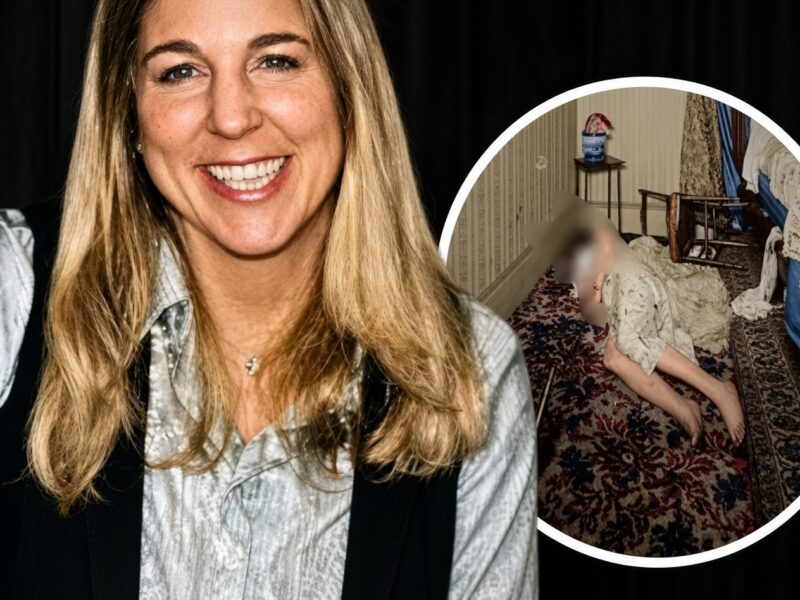
A 5-year-old boy came home from kindergarten and found his mother dead on the floor. For 52 years, no one knew who killed her—until DNA finally revealed the truth.
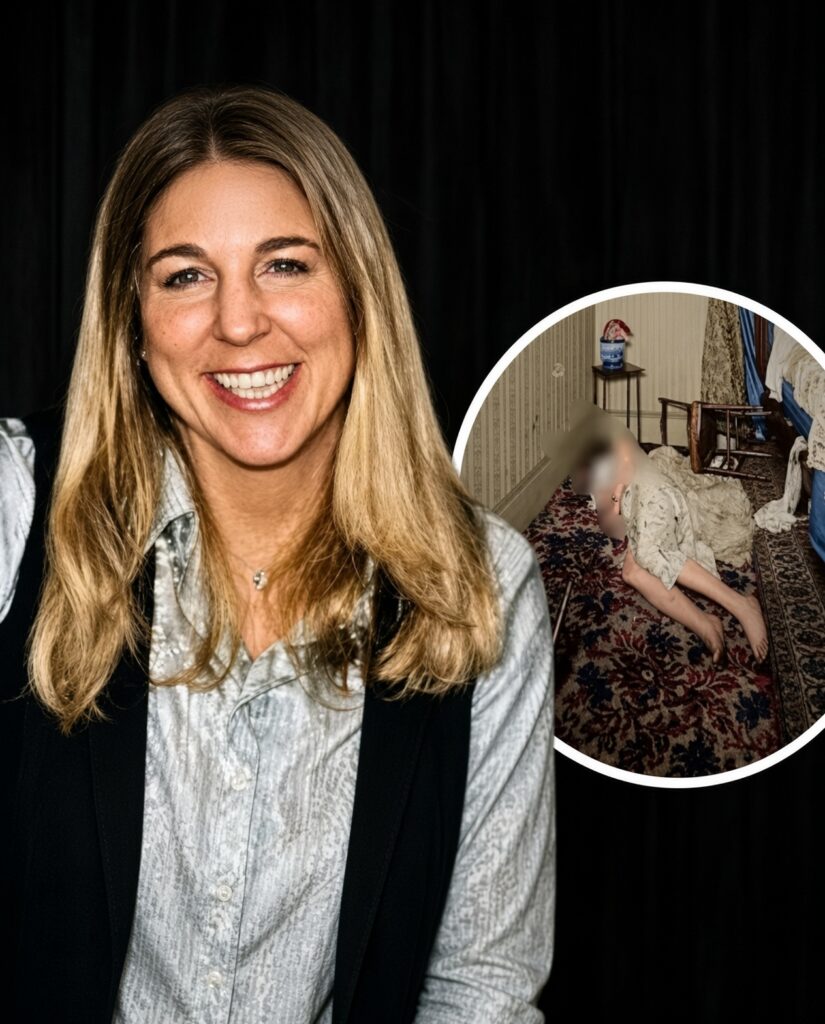
Five years old. That was Eric Waldman’s age when he stepped off the kindergarten bus on a quiet Friday afternoon in Oceanside, New York.
He walked the familiar path to his house on Sally Lane, climbed the front steps, and pushed open the door.
What he found inside would never leave him.
His mother was on the floor of her bedroom, face down beside the bed, her hands bound behind her back with a pair of long stockings.
One bullet. That was all it took to destroy everything.
More than half a century later, Eric—now fifty-seven years old—would sit before cameras, his voice trembling, and say the words that had haunted him every single day since that January morning in 1974.
“I’ve had my mother’s picture in my head since I was five years old. It will never go away until I die.”
Barbara Waldman was thirty-one years old. A mother of three. A wife. A beloved neighbor in a quiet Long Island suburb where people knew each other’s names.
And on the morning of January 11, 1974, someone entered her home and took her life.
For fifty-two years, no one knew who. Or so they thought.
Welcome to *Convicted*. This is the story of Barbara Waldman—and the truth that took more than half a century to surface.
What you’re about to hear is not an ordinary case. It contains everything: a brutal crime with no explanation, a family destroyed twice, evidence that led nowhere, and a twist that no one who lived through this story ever saw coming.
We’ll walk through everything—from that January morning in Oceanside, to what happened inside that house, to why investigators were left without answers from day one.
The suspicion that fell like a boulder on someone very close to Barbara. The years that person carried that burden in silence. The failed attempts to close the case, one after another, for decades.
And finally, how a combination of science, a family’s insistence, and one small detail no one expected changed everything in 2024.
But there’s something at the end of this story that doesn’t resemble any case we’ve ever told here. Something that will make you think deeply when you reach the end.
Stay with us until the end. It’s worth it.
Subscribe to *Convicted* now, hit the notification bell, and tell me in the comments what country or city you’re watching from today.
It was a winter Friday in Oceanside, a quiet suburb in Nassau County on Long Island, New York. The kind of neighborhood where everyone knows everyone, where kids walk to the local school, and where you leave your door unlocked because you trust the people next door.
Barbara Waldman was thirty-one years old. A graduate of New York University. Long blonde hair. Active in her community. A member of the Oceanside Cancer Society.
She was, by everyone’s account, a loving mother, a present wife, a woman rooted in her neighborhood.
That morning, her husband Gerald—a dentist with a practice in the same neighborhood—left for work. Their three children—Marla, seven; Larry, six; and Eric, five—went off to school.
The house fell silent.
What happened next, at some point that morning, was this: someone entered that two-story colonial home in the 3900 block of Sally Lane, with no signs of forced entry, and no one noticed anything unusual.
The neighborhood kept its natural rhythm while a life was being destroyed inside.
When Eric came home from kindergarten that morning, he climbed the stairs.
He found his mother on the floor of her bedroom, lying face down beside the bed. She was wearing a bathrobe and a nightgown. Her hands were bound behind her back with a pair of long stockings. There was a bullet in her head. One bullet. Only one.
The Nassau County Police Department arrived quickly and launched an investigation.
Commissioner Patrick Ryder would describe the scene decades later in these words: “Without embellishment or softening—a violent sexual assault on the mother, then a bullet fired into the back of her neck while she lay on the floor, bound with her own stockings.”
Nothing was stolen. No money missing. No jewelry gone. This was not a robbery.
Investigators interviewed neighbors. No one saw anyone enter. Yet several witnesses recalled seeing a man walking through the neighborhood that morning—a stranger who caught their attention without them being able to fully explain why.
Based on that information, investigators produced a composite sketch: a man with ordinary features wearing a coat with a fur collar.
That sketch would remain unidentified for fifty-two years.
In domestic crimes, the statistics are brutal and real. When a married woman is killed, eyes turn first to the husband. It’s protocol. It’s sound investigative logic.
Detectives know this. They work from that premise. But there’s a difference between investigating someone and convicting them in the court of public opinion without evidence.
Gerald Waldman was a dentist. A father of three who had just lost their mother. And from day one, the invisible, destructive weight of collective suspicion fell on him.
Marla Waldman Khan, his daughter—now fifty-nine years old—described it decades later.
“We heard many times that people suspected my father, that he might have had something to do with my mother’s murder. That social stigma was heavy and painful for our family.”
Gerald never ran. Never changed towns. Never hid behind lawyers.
He kept working. Kept raising his children in the same neighborhood where everyone knew him. He remained part of the Oceanside community—where, according to those who knew him, he was a respected and beloved member.
But the stares never fully disappeared.
Larry Waldman, one of the sons, expressed it in a way that sums up fifty years of burden in a single sentence.
“Justice for my father, Jerry Waldman, who went to his grave without knowing who or why.”
Gerald Waldman died without getting that answer. He died without knowing there was someone else. He died while still, in some whispers, a suspect.
There was never a formal charge against Gerald. Never any evidence linking him. But the absence of evidence isn’t always enough to erase what rumors build over decades.
And while Gerald Waldman lived under that weight, the real killer was collecting garbage from the streets of Oceanside.
Yes, you heard that correctly.
The Barbara Waldman case didn’t die in 1974. There were attempts.
Later, an incarcerated man confessed to the crime. Families searching for answers for decades sometimes cling to these confessions in desperation. But when DNA testing was done, the result was clear: the man who confessed was not the killer. The confession was false.
After that, investigators turned their attention to another man—someone who had been convicted of a similar crime in 1968 in Valley Stream, a nearby Long Island community. The pattern was disturbingly similar.
The family’s hopes renewed. But DNA testing came back negative again. It wasn’t him.
Two leads. Two dead ends. Two moments when the family thought they would finally find answers, only for the truth to recede once more.
And meanwhile, time did its silent work.
Witnesses aged. Memories faded. And the Barbara Waldman case slowly began to become what no crime ever wants to become: a cold file. A number on a list.
But Barbara Waldman’s children didn’t leave it that way.
Marla Waldman Khan, the eldest of the three, who works today as an investigator, never gave up—by her own will. She was the one who kept pressing the Nassau County Police. She was the one who insisted they keep searching. She was the one who, years later, became an essential element in finally solving the case.
How did she do it? I’ll tell you in the next chapter.
In 2024, exactly fifty years after her mother’s murder, Marla Waldman Khan received a phone call. It was the Nassau County Police.
They had found a genetic match.
Detectives from the Nassau County Homicide Division, in cooperation with the FBI and the District Attorney’s Office, had subjected DNA preserved from the crime scene to a technique known as investigative genetic genealogy—a method that combines DNA samples with public genealogy databases to trace relatives, and from there, identify a suspect.
The results pointed to a specific family. And within that family, to a man named Thomas Genierizio.
A name that had never appeared in any document from the 1974 case file. A name never mentioned in any previous investigation.
A resident of Oceanside who was living just 3.7 miles from the Waldman family home at the time of the murder. A man who worked as a municipal garbage collector, passing week after week down the same streets where the family he destroyed lived.
But there was a problem.
Thomas Genierizio had died of cancer in 2004. He was fifty-seven years old when he died.
He passed away without anyone pointing to him. Without charges. Without a trial. Without his children—if they didn’t know—ever knowing what he did in that January of 1974.
Police explained something to Marla that many people don’t know about real criminal work: DNA alone isn’t always enough to close a case. There needs to be probable cause. There needs to be corroborating evidence.
So Marla did something extraordinary. She turned investigator. She dug through local records. She spoke with Genierizio’s relatives. She tracked where he lived, where he worked, who he knew.
At some point in this research, she contacted Genierizio’s daughter, who told media outlets like CNN—on condition of anonymity—that she couldn’t imagine her father doing something like this.
But she sent her photos.
In one of those photos, Thomas Genierizio appears wearing a coat with a fur collar—almost identical to what the man witnesses saw walking through the neighborhood on the morning of January 11, 1974. The same coat detectives had sketched in the composite that remained nameless for fifty years.
Police described it this way: “The composite sketch was an almost perfect match to the suspect.”
That evidence—combined—was what finally closed the case. The DNA. The genetic genealogy. The interviews. The local records. The photographs.
On March 11, 2026, the Nassau County Police held a press conference with all three of Barbara Waldman’s children—Marla, Larry, and Eric—present. They officially announced that Thomas Genierizio was responsible for Barbara Waldman’s murder fifty-two years earlier.
There would be no criminal charges. Genierizio was dead. Criminal justice could not touch him.
But his name is now in history. And the name of Gerald Waldman—the man who carried the burden of suspicion his entire life—has finally been cleared.
Commissioner Patrick Ryder said it clearly at the press conference: “We wished we could have seen him in prison all that time for that brutal crime committed by that monster that day. Depriving three children of their mother. Unforgivable.”
Three children. Marla was seven. Larry was six. Eric was five.
The three grew up without a mother. They grew up hearing whispers about their father. They carried for decades an unanswered question: Who? Why?
Marla said: “We felt shock, fear, loss, and deep pain throughout our entire family, our friends, and the entire community.”
Then she added something that sums it all up: “Today, after fifty-two years, I can tell the world that our father, Jerry Waldman, has been exonerated. He was a victim, not a villain.”
And Eric—the five-year-old boy who got off the bus, climbed the stairs, and found what no child should ever find—said the most honest and painful words in this entire story.
“I’ve had my mother’s picture in my head since I was five years old. It will never go away until I die.”
Justice was served. But it wasn’t complete. It wasn’t pure. It came late, with broken edges, wrapped in both relief and pain.
Marla put it precisely: “It’s not about seeking a legal penalty. It’s an emotional and psychological settlement. Bittersweet.”
That’s the only word that suffices to describe what that family felt on March 11, 2026. Bittersweet.
Thomas Genierizio had a criminal record before Barbara Waldman’s murder—two arrests, one for assault and one for possession of stolen property. But in 1974, DNA collection didn’t exist as a forensic tool. There was no sample of him in any system, so he continued his life.
He collected garbage from the streets of Oceanside. He lived in the same neighborhood where he committed the worst crime imaginable. He had children. He grew old. He died of cancer in 2004 at the age of fifty-seven.
The same year police conducted the first DNA tests that would begin to bring them closer to him—though they didn’t realize it yet.
Marla said his daughter couldn’t imagine her father doing something like this, that she doesn’t believe the coat photo proves it was him, that the image of the man she knew doesn’t match what was said.
That, too, is part of this story. Killers don’t always look like killers. Monsters don’t always carry the features of monsters.
Sometimes they carry the features of a neighbor. Sometimes they collect garbage from in front of your house. Sometimes their children love them. Sometimes they die peacefully in a hospital bed while the family they destroyed is still searching for answers.
Marla Waldman said it with a mix of disbelief and horror: “He was a local. He literally lived among us. I was shocked.”
3.7 miles. That was all that separated the killer from his victims for fifty-two years.
There’s something in this case that can’t be resolved by a press conference.
Gerald Waldman—the dentist from Oceanside, the man who kept working and raising his children under the weight of collective suspicion—never knew he was officially innocent. He never heard police say his name alongside the word he deserved.
He was exonerated. But he died before that.
Thomas Genierizio—the man who entered that house in January 1974 and irreparably destroyed four lives: Barbara’s, Gerald’s, and three children’s—never stood trial. Never sat before a judge. Never looked into the eyes of Barbara’s children to answer for what he did.
He died before that, too.
Two men. One victim. And decades of damage.
And when justice finally arrived, it arrived the way the most important truths sometimes do: too late to change what mattered.
What remains is this.
Science preserved what time tried to erase. A handful of biological molecules held out for fifty-two years inside evidence stored in the Nassau County archive. And those molecules—combined with genealogy databases, FBI work, and the determination of a daughter who refused to accept silence—pointed to one man.
That’s what science can do. That’s what perseverance can do.
But complete justice—the kind that happens in a courtroom with a verdict and a sentence, the moment when the guilty must look into the eyes of their victims—that justice never came and never will.
And I ask you—I want you to think seriously before answering: Is knowing the truth enough when there’s no one left to punish?
Is that enough?
If this case shook you, if you thought about Barbara Waldman, about Eric getting off the bus, about Gerald carrying those suspicions his whole life—then do one thing right now.
Share this video. Not for the algorithms. But so more people know this story. So Barbara Waldman doesn’t become just a forgotten name in a cold file.
Leave me your answers in the comments. Yes or no? Is knowing the truth enough if the perpetrator is dead?
And if you haven’t subscribed to *Convicted* yet, now is the time. Hit the notification bell. We bring you cases like this every week—stories that aren’t told anywhere else, told with the respect the victims deserve.
This has been *Convicted*. See you in the next story.









