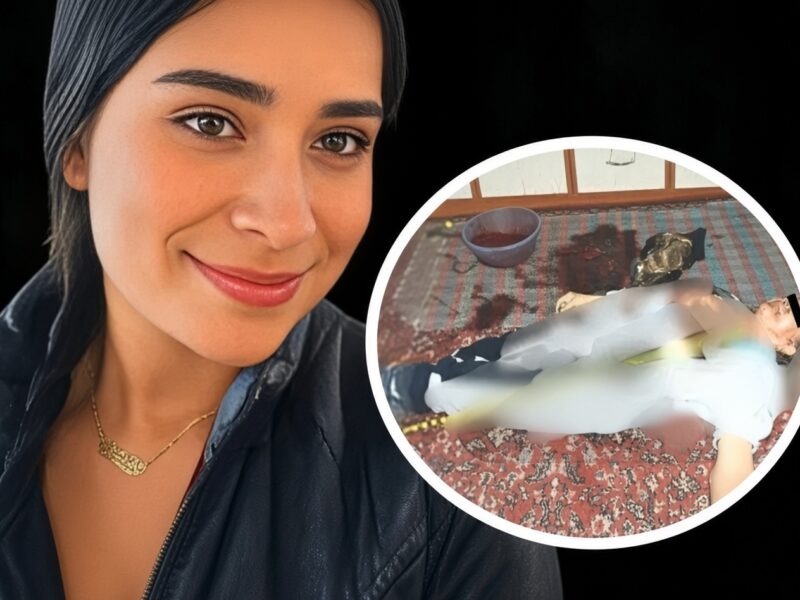
4 Criminal Cases from Colombia That Will Make You Lose Faith in Justice
The rain had stopped, but the puddles on Eastern Avenue still held the gray sky like mirrors.
Catherine Leiva, twenty-four years old, stepped around a shattered bottle of Modelo and checked her phone for the third time in two minutes.
The message from her boyfriend, Marco, was still there: “You got this. Text me when you’re done.”
She typed back: “If this is real, we’re getting that apartment.”
Then she sent a photograph to her father.
It was a picture of a man she had just met outside a 7-Eleven, a man with a professional smile and a business card that said “Talent Scout.”
She didn’t know that this photograph would be the only thing that identified her body.
She didn’t know that the job offer—$1,000 a week to be a webcam model—was a trap.
She didn’t know that the man in the photo had already done this to twelve other women.
This is Baltimore, Maryland. This is not a story from a faraway country.
This is the story of four people who trusted the wrong system at the wrong time.
And by the end, you will understand why “too good to be true” is not a warning—it’s a confession.
Over the next few minutes, you’ll hear four cases. Four names. Four failures. And one question: how many times does a system have to fail before we stop calling it a system?
Stick around, because the last case will make you want to check your own front door.
The first name is Catherine Leiva.
She had been looking for work for six months.
She had a resume with three jobs on it—a cashier at a CVS, a hostess at a diner, a receptionist at a dental office that closed during the pandemic.
She had a boyfriend who worked two jobs and still couldn’t cover the rent on their one-bedroom in Dundalk.
She had a father who called her every night to ask if she had eaten.
And she had a phone that buzzed with hope every time a notification appeared.
The notification came on a Tuesday afternoon.
It was a direct message on Instagram from an account called “Elite Model Management MD.”
The profile picture was a black-and-white headshot of a woman in a blazer.
The bio said: “We scout new faces for webcam, print, and commercial work. DM for details.”
Catherine almost deleted it.
But then she saw the follower count: 12,000.
She saw the posts: photos of young women in studio lighting, holding contracts, smiling.
She saw a comment from a girl she knew from high school: “This changed my life.”
So she replied.
“Hi, I’m interested. What are the requirements?”
The response came in two minutes.
“Hey beautiful! We’re looking for confident women 18-25 for a webcam studio in Baltimore. No experience needed. We provide training, equipment, and a private room. Starting pay is $1,000 a week. Cash. You interested?”
Catherine’s heart did a thing it hadn’t done in months.
It beat faster.
She typed: “Yes. When can I start?”
The man on the other end—his name was Daniel Montilla—sent a smiley face.
“Let’s meet tomorrow. 10 AM. Perdomo Heights. I’ll send the address.”
She told Marco that night.
“$1,000 a week,” she said. “That’s four grand a month. We could get the apartment with the balcony.”
Marco frowned. “Webcam? Isn’t that—”
“It’s modeling,” she said. “Like on TikTok. People pay to watch you talk. It’s not—it’s not what you think.”
He didn’t argue. He was too tired.
The next morning, November 8, 2024, Catherine put on her best jeans and a black sweater.
She kissed Marco goodbye.
He said, “Text me when you’re done. I’ll pick you up at the 7-Eleven on Eastern.”
She said, “I love you.”
She meant it.
She walked to the bus stop.
She rode the Number 22 to Perdomo Heights.
She got off at a corner where a 7-Eleven sat next to a check-cashing place and a nail salon.
A man was waiting outside the 7-Eleven.
He was tall, with a clean shave and a lanyard around his neck that said “ELITE MODEL MGMT.”
He smiled.
“Catherine? I’m Daniel. Thanks for coming.”
She shook his hand.
His grip was dry and strong.
He said, “The studio is just around the corner. It’s a private location. Very discreet.”
She said, “Okay.”
She took out her phone.
She snapped a photo of him.
He laughed. “What’s that for?”
She said, “My dad. He worries.”
He said, “That’s sweet. Send it. My mom worries too.”
She sent the photo to her father, Luis Leiva.
The caption said: “This is the guy. If I don’t call you in an hour, call me.”
Her father replied: “Okay, mija. Be careful.”
She put the phone in her pocket.
She followed Daniel around the corner.
She never came back.
That was the first hinged sentence.
Marco called her at 11:15 AM. No answer.
He called again at 11:30. No answer.
He called thirteen times between 11:15 and 1:45 PM.
At 2:00 PM, he drove to the 7-Eleven on Eastern Avenue.
He saw her phone on the ground near a storm drain. The screen was cracked. The battery was dead.
He called 911.
The Baltimore City Police arrived in eight minutes.
They took a report. They asked Marco for a description.
He gave them the photograph that Catherine had sent to her father.
The photograph showed a man with a clean shave, a lanyard, and a smile that did not reach his eyes.
The detective who caught the case was named Rosa Delgado.
She had been working homicides for eleven years.
She looked at the photograph and said, “I know this guy.”
She didn’t know his name yet. But she knew his pattern.
She pulled up a file from April 2024—a report from a woman who said she had been assaulted in a vacant lot in South Baltimore after responding to a modeling ad on Instagram.
The woman had described a man with a lanyard. She had described a white van. She had described the same smile.
The detective pulled up another file from June 2024. Another woman. Same story. Same lanyard. Same van.
She pulled up a third file from August. A fourth from September. A fifth from October.
By the time she finished cross-referencing, she had thirteen files.
Thirteen women who had answered a job offer on social media.
Thirteen women who had met a man with a lanyard.
Thirteen women who had been assaulted, robbed, or extorted.
Seven of them had been sexually assaulted. Three had been blackmailed with video recordings. Two had escaped before anything happened. One had never been found.
And one—Catherine Leiva—was dead.
That was the second hinged sentence.
The Medical Examiner’s report was clinical and devastating.
The cause of death was strangulation associated with suffocation by external compression of the neck and upper airways.
In plain English: she had been choked to death.
There were signs of sexual assault. There were signs of robbery. Her body had been left in a vacant lot near a recycling plant in South Baltimore.
The detective looked at the report and then looked at the photograph on her desk.
She said, “He’s not a monster. He’s a method.”
Daniel Montilla was arrested on December 14, 2024, in a motel room off Pulaski Highway.
He had a lanyard in his duffel bag. He had a phone with thirteen contacts labeled “Model 1” through “Model 13.” He had a folder with thirteen photographs of young women.
He had a gun. He had a knife. He had $4,200 in cash.
He did not resist arrest.
He said, “I want a lawyer.”
The trial took eighteen months.
The prosecutor was a woman named Janet Cho.
She stood in front of the jury and held up the photograph that Catherine had sent to her father.
She said, “This is the last thing Catherine Leiva ever sent to her family. She sent it because she was careful. She sent it because she loved her father. She sent it because she thought she was safe.”
She paused.
“She was not safe. But this photograph is why we are here today. Because the man in this picture thought he was invisible. He thought he was untouchable. He thought that the women he hurt would never be believed.”
She looked at the defendant.
“He was wrong.”
The jury deliberated for six hours.
They found Daniel Montilla guilty of first-degree murder, sexual assault, extortion, robbery, unauthorized access to a computer system, and identity theft.
The judge sentenced him to fifty years in prison.
After he serves his sentence, he will be deported to Venezuela.
The judge said, “This is not a sentence that brings anyone back. But it is a sentence that says: we see you. We see what you did. And we will not pretend you are a ghost.”
The father of Catherine Leiva, Luis Leiva, spoke outside the courthouse.
He held up the photograph.
He said, “This is my daughter’s last gift to us. She gave us the monster’s face. And because of that face, he will never hurt another woman in this country.”
He paused.
“But I have to ask: why did it take thirteen women? Why did it take my daughter’s death? Why did the system wait until there was a body in a vacant lot before it decided to look at the pattern?”
The question hung in the air like smoke.
That was the third hinged sentence.
The second name is Eddie Sanabria.
He was fifty-four years old. He drove a delivery truck for a bakery in Highlandtown. He had a wife named Rosa. He had two daughters in college. He had a habit of humming along to old salsa songs when he was stuck in traffic.
On April 15, 2026, at 1:45 PM, he was sitting in his car on a side street in Kennedy Park, waiting for a light to change.
He saw two men on a motorcycle pull up behind a woman who was walking alone.
He saw the man on the back of the motorcycle reach out and grab the woman’s purse.
He saw the woman fall to the ground.
He saw the men laugh.
Eddie Sanabria did not think about the law. He did not think about his own safety. He did not think about the fact that he had no weapon, no badge, and no obligation.
He thought: I am not going to watch this happen.
He accelerated.
He rammed his car into the motorcycle.
The motorcycle skidded across the asphalt, metal scraping against concrete, sparks flying like fireflies.
The two men were thrown to the ground.
One of them got up and ran. The other one—Brian Lopez—pulled a gun.
He fired three shots.
One bullet hit Eddie Sanabria in the chest. One hit him in the shoulder. One shattered the driver’s side window.
Eddie Sanabria was pronounced dead at the hospital twenty minutes later.
The woman whose purse was stolen was not hurt. Her name was Maria. She was a nurse at Johns Hopkins. She had been walking to her car after a twelve-hour shift.
She said, “I don’t even know his name. I don’t even know who he was. But he saved my life.”
The police arrested Brian Lopez at the scene.
They ran his record.
He had nine prior arrests. Nine. For homicide, aggravated robbery, assault, domestic violence, and illegal possession of a firearm.
He had been convicted of homicide in 2018. He had been sentenced to fifteen years. He had been released on parole in 2023.
At the time he shot Eddie Sanabria, he was supposed to be on home detention for a pending robbery charge.
He was supposed to be at his mother’s house in Glen Burnie. He was supposed to be wearing an ankle monitor. He was supposed to be watched.
He was not.
The Mayor of Baltimore, Carlos Galán, held a press conference the next day.
He said, “This is not an isolated incident. This is a system that is not working. We have criminals with home detention committing new crimes in the street. We have murderers with prior records walking around like they are invincible. We have robbers who are caught three times and released three times. The criminals know that nothing happens to them.”
He paused.
“Eddie Sanabria was not a police officer. He was not a vigilante. He was a citizen who refused to look away. And he paid for that refusal with his life.”
The community held a vigil three days later.
Rosa Sanabria stood in front of a crowd of two hundred people.
She said, “My husband was not a hero. He was a man who believed that you don’t let bad things happen in front of you. He believed that if you can do something, you do it.”
She held up a photograph of Eddie. It was the same kind of photograph that Catherine Leiva had sent to her father—a phone snapshot, slightly blurry, taken in a moment of ordinary love.
She said, “This is the man the system failed. This is the man the ankle monitor failed. This is the man the parole board failed. This is the man the courts failed.”
She paused.
“And this is the man I will never stop loving.”
The trial for Brian Lopez is still pending.
If convicted, he faces life in prison without parole.
But Eddie Sanabria is still dead.
And the ankle monitor is still somewhere in a warehouse, beeping into the void.
The third name is Tatiana Grueso.
And the fourth name is Olga Peñuela.
They never met. They were connected by the same man.
In 2015, Tatiana Grueso was twenty-two years old. She lived in a small apartment in San Cristóbal with her six-year-old son. She worked at a call center. She was saving money to go to community college.
Her boyfriend was Diego Murillo.
He was charming. He was attentive. He was jealous.
On May 16, 2015, he strangled her and stabbed her in their bedroom.
Her body was found three days later by her father.
Diego Murillo had been living in the apartment with the body. He had told the six-year-old boy that his mother was “sleeping” and “tired.”
He was arrested, tried, and convicted of second-degree murder.
He was sentenced to eighteen years and three months in prison.
But the system gave him a deal. He got a reduction for confessing. He got credit for good behavior. He got released to home detention after serving only six years.
He was supposed to be monitored. He was supposed to be supervised.
He was not.
In October 2023, Diego Murillo created a profile on a dating app.
He met Olga Peñuela.
She was thirty-seven years old. She was a single mother of four. She worked at a grocery store. She was trying to rebuild her life after a divorce.
They talked for a month. He told her he was “on house arrest” for a “minor theft.” He told her he was a changed man. He told her he loved her.
She believed him.
She moved in with him.
Her daughter, Andrea, met him. Her mother met him. Her friends met him.
Andrea said, “He was attentive. He was detail-oriented. We went out. We went to the pool.”
Then one night, Olga was watching television.
The show was Dateline NBC.
The episode was about the murder of Tatiana Grueso.
The screen showed a photograph of Diego Murillo.
Olga recognized the man sitting next to her on the couch.
She said, “That’s you.”
He said, “What?”
She said, “That’s you. You killed her.”
He didn’t deny it.
She packed her bags that night.
She moved out. She took her children to her mother’s house in Frederick, Maryland—almost sixty miles away from Baltimore.
She thought distance would save her.
Diego Murillo began to call her. He threatened to kill himself. He threatened to kill her. He said he would find her.
She blocked his number.
She changed her locks.
She told her family, “If he comes here, call 911.”
On December 5, 2024, Olga was at a convenience store in Frederick with her fourteen-year-old daughter.
They were watching a soccer game on the store’s television.
When they walked out, Diego Murillo was waiting.
He attacked her with a knife.
He stabbed her thirty times. The most lethal wound was in her chest.
Her daughter watched.
Olga was taken to the hospital. She died minutes later.
Diego Murillo fled.
He was on the run for three months. He was seen in Baltimore, then in Hagerstown, then in Frederick, then in Annapolis.
On March 3, 2025, the Maryland State Police stopped him at a checkpoint on I-95 near the Delaware border.
He was driving a stolen car. He had a knife in the glove compartment.
He was arrested.
He was charged with first-degree murder.
He pleaded not guilty.
The father of Tatiana Grueso—the first victim—spoke to reporters outside the courthouse.
He said, “I am shocked that in only five or six years he was free. They gave home detention to a murderer like this, and now there is a new victim. He killed a woman named Olga.”
Olga’s mother, Calderón Suárez, was even more direct.
She said, “That judge, a woman, gave all the benefits to this murderer. Thanks to that woman, he is still enjoying a wonderful life.”
The trial for Olga’s murder is still ongoing.
Diego Murillo is being held in a police station in Calarcá, Maryland, while the case moves forward.
He has not accepted the charges.
But the pattern is clear.
Two women. The same man. The same method. The same result.
And in the middle: a system that let him out.
The fourth name is Jenny Nohava.
She was twenty years old. She was in her third year of law school at the University of Maryland. She wanted to be a public defender. She wanted to help people who had been failed by the system.
On March 11, 2022, she left her apartment in Circleville, Maryland, to walk her two dogs.
It was a morning like any other. The sky was pale blue. The air smelled like wet grass.
The dogs came back alone.
Her family searched for hours.
Her uncle, Freddy Forero, walked the same trails she always walked. He pushed through bushes. He followed a trail of blood.
He found her body at the bottom of a ravine near the Roble River, about thirty yards from the road.
She was face down. Her jacket hood covered part of her head. She had a wound on her forehead. She had been stabbed multiple times.
She had not been able to defend herself.
A few days later, the police arrested her ex-boyfriend, Christian Ospina.
He was twenty-seven years old.
Two witnesses said they had seen Jenny with Ospina near the wooded area where her body was found. In his apartment, investigators found a knife hidden in a drawer. The blade matched the wounds on Jenny’s body.
He was charged with first-degree murder.
He said he was innocent.
Then something happened that split the case in two.
One hundred twenty days after his arrest, Christian Ospina was released.
The reason: violation of his right to a speedy trial.
The prosecutor’s office had failed to bring the case to trial within the legal time limit. The judge had no choice but to release him.
For Jenny’s family, it was a second death. Not the death of her body, but the death of their hope for a fair process.
Ospina was free.
The case continued for almost four years. The family did not know where he was. His aunt, Lucely Forero, said in an interview: “We don’t know where he is. We never saw him again. They say he is still in Maryland, but we don’t know. He has no restriction on leaving the country. He never shows up at hearings. They tell us he is not obligated to.”
Four years of hearings. Four years of evidence. Four years of witnesses. Four years of arguments. Four years in which the main suspect in the murder of a young law student lived free while her family waited for an answer.
On April 14, 2026, the circuit court in Annapolis issued a verdict.
Christian Ospina was sentenced to thirty-seven years and six months in prison for first-degree murder.
The judge recognized an aggravating circumstance: the exploitation of conditions that limited the victim’s ability to defend herself.
The prosecutor had proven that Ospina had located Jenny, convinced her to go to a deserted area, and attacked her with a knife.
But there was one more chapter.
When the sentence was announced, the judge determined that Ospina would remain free while the verdict was not final and the defense’s appeal was resolved.
Which means that the man convicted of murdering Jenny Nohava, on the day this story was recorded, is still not behind bars.
Justice arrived. But it took four years. And the convicted man has not yet spent a single night in a cell.
Four stories. Four names that America should not forget.
Catherine Leiva, who went to a job interview and never came back.
Eddie Sanabria, who refused to look away and paid for his courage with his life.
Olga Peñuela, who discovered the truth too late and was killed in front of her daughter.
Jenny Nohava, who walked her dogs one morning and never graduated from law school.
What connects these four cases is not only the grief of the families left behind.
It is something more structural, something that runs through each story like a red thread.
The gap between what the system promises and what it actually delivers.
A murderer who was released to home detention and killed again.
A criminal with a homicide conviction who was on home detention the day he pulled the trigger.
A convicted murderer sentenced to thirty-seven years who is still walking free while his appeal moves through the courts.
A predator who operated for eight months against at least thirteen women before anyone stopped him.
America does not lack laws. What it lacks, too often, is an unbearable distance between the letter of those laws and their real application.
And in that space between paper and reality, people like Catherine, like Olga, like Jenny live and die.
Which of these cases do you think best reflects the failure of the system?
Tell us in the comments.
And if you believe these names deserve to be remembered, share this story.
Subscribe so you don’t miss the next cases we cover from America and the rest of the world.
The photograph is still there.
It is a picture of a man with a lanyard and a smile that does not reach his eyes.
It is the last thing Catherine Leiva ever sent to her father.
It is the first piece of evidence that brought a monster to justice.
And it is the reason you should think twice before you trust a job offer that arrives in your DMs.
Because the system might fail you.
But a photograph never lies.
And a father never forgets.









