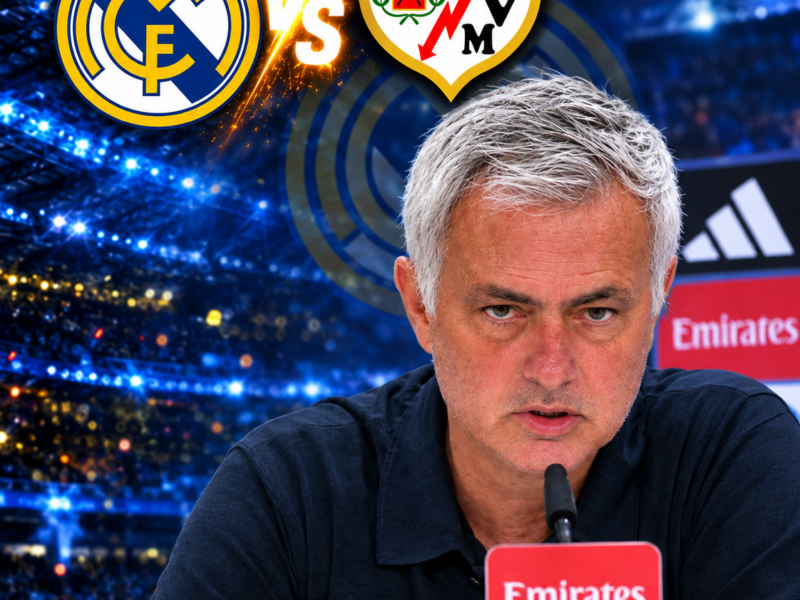
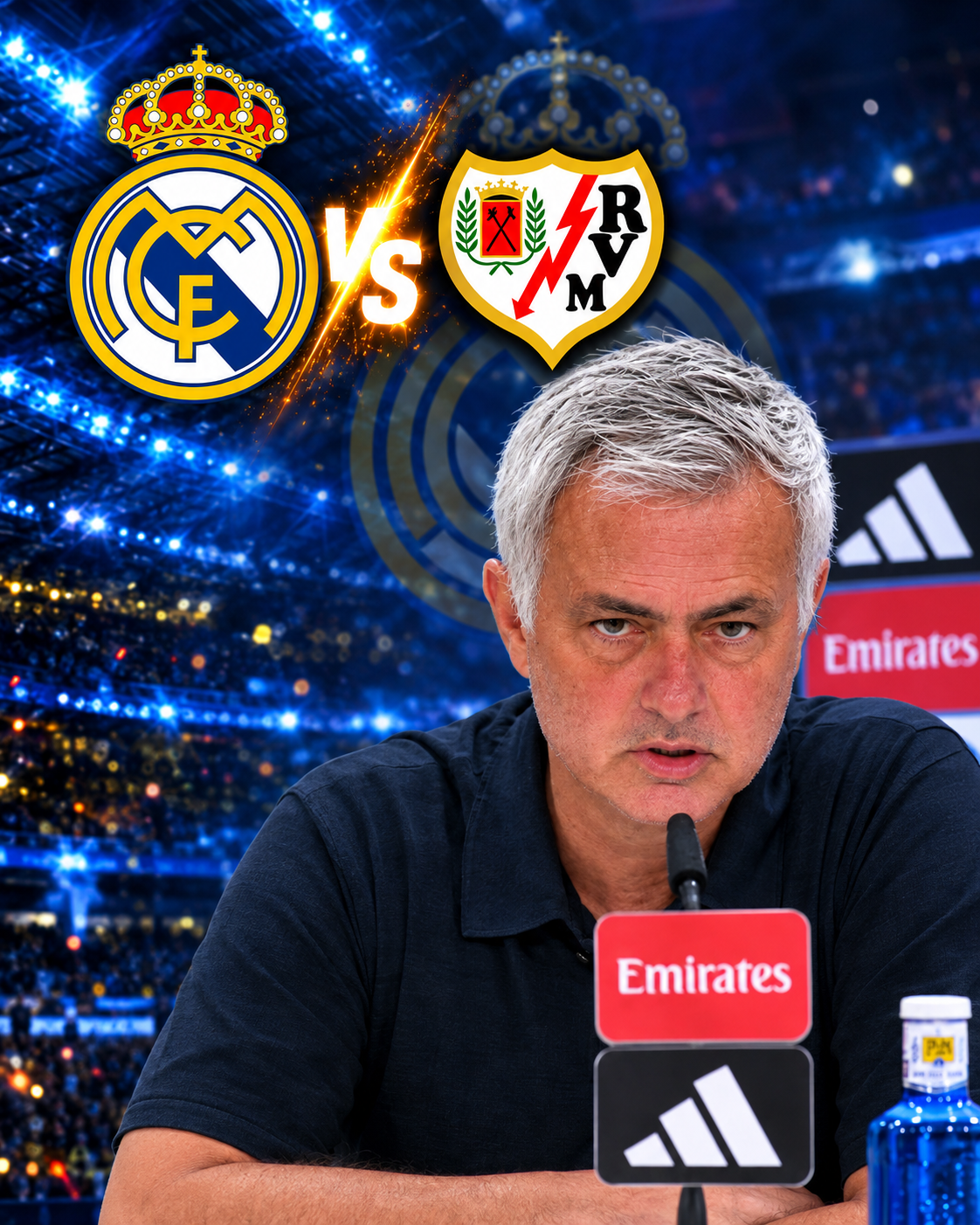
Xabi Alonso Finally Explains What Really Happened in Real Madrid’s Wild 4-1 Win Over Rayo Vallecano
The room went quiet the second he sat down.
Reporters leaned forward with their recorders already blinking red, because everyone in that press room already knew something strange had happened on the pitch that night.
A team that looked untouchable for forty-five minutes had nearly let it slip away in the second half, and the only man who could explain why was the one now settling into his chair in front of the microphones.
Xabi Alonso did not look rattled.
He looked like a man who had seen the second half coming before it even started, and now he was ready to say so out loud.
What followed over the next twenty minutes was not a routine post-match briefing.
It was a rare, unfiltered look inside the mind of a head coach managing egos, injuries, fatigue, and a teenage debutant all at once, live in front of the Spanish press corps.
By the time he stood up to leave, he had addressed a breakout debut, a substitute who changed the entire complexion of the match in eighteen minutes, a superstar forward finally finding his rhythm, and a warning about a second half that nearly turned a rout into a nightmare.
Real Madrid had just beaten Rayo Vallecano 4-1 at the Santiago Bernabeu, and on paper, it read like a comfortable night at the office.
The scoreline told one story.
The press conference told a completely different one.
The first question out of the gate set the tone for everything that followed.
A reporter from Cadena SER wanted to know whether this version of Real Madrid, the one Alonso had rebuilt since returning to the club, played better with Arda Guler on the pitch.
It was a loaded question, the kind designed to get a coach to either praise one player at the expense of others or dodge the subject entirely.
Alonso did neither.
He agreed with the premise almost instantly, then paused to make sure his answer would not be twisted into a headline about a player he had started on the bench that same night.
He was not about to let one clever question turn into a controversy.
So he built his answer the way he builds his lineups, carefully, with context, and without giving anyone easy ammunition.
Before diving into the tactical detail, it helps to understand exactly what had happened on the field that made this press conference so unusual in the first place.
Real Madrid opened the match like a team that intended to end the contest before the interval.
By Alonso’s own account, they had built a three-goal cushion inside the first forty-five minutes, playing with the kind of intensity and precision that turns a competitive La Liga fixture into a formality.
Rayo Vallecano, to their credit, simply could not live with it.
Every press, every combination, every transition from back to front carried the fingerprints of a team that had clearly drilled this exact plan all week in training.
And then the second half started, and something changed.
Within the opening twenty minutes after the restart, the entire tone of the match flipped.
Rayo started finding gaps that had not existed thirty minutes earlier.
Real Madrid’s press dropped several notches in intensity, the passing lanes that had been so crisp in the first half turned sloppy, and the home side lost the ball in dangerous areas three or four times in quick succession.
It was jarring to watch, especially for a crowd that had settled in expecting a comfortable evening.
Alberto Pero, a journalist covering the match for Radio Estadio, asked Alonso directly whether something about the way his team was playing worried him, noting that he had looked visibly frustrated on the touchline during that stretch.
Alonso did not deny it.
He was not going to pretend the frown reporters had spotted on the sideline camera was nothing.
Instead, he used it as a launching point to explain exactly what he believes wins football matches in the long run, patience over panic, and process over perfection.
That answer, more than any other moment in the press conference, revealed how Alonso thinks about building a team from the ground up.
He reminded the room that his group had genuinely only been training together as a complete unit for a matter of months.
Not three calendar months on paper, he clarified, but three months of actual shared time on the training pitch, because a meaningful chunk of his squad had spent the early part of the season away on international duty deep into a major tournament.
Players who had featured in the semifinals, the final, and even the third-place match of that competition had only recently rejoined full training.
That detail matters more than it might seem at first glance, because it reframes everything else Alonso said that night.
He was not managing a finished product.
He was managing a work in progress that happened to be winning most of its matches anyway, which is a very different psychological position for a head coach to be in.
Perfection in football does not exist, Alonso told the room, and he meant it as more than a throwaway line.
He said building something close to a complete team is not a three-day project.
It is not even always a three-year project, depending on the circumstances a coach inherits.
What he wanted the assembled reporters to understand was that the second-half wobble against Rayo Vallecano was not evidence of a team falling apart.
It was evidence of a team still being built, in real time, match by match, decision by decision.
And by his own admission, he was satisfied with where that process currently stood, even with the rough patches still showing up on nights like this one.
That framing set up the most tactically revealing exchange of the entire press conference, when a reporter from Cadena COP pressed him specifically on what had gone wrong in that opening stretch of the second half.
Alonso’s answer was blunt in a way that head coaches rarely allow themselves to be in public.
He described the match, in its entirety, as effectively a forty-five-minute contest.
Everything that mattered, he explained, had already happened before the players walked back out for the second half.
The three-goal lead was built, the game state was decided, and from that point forward, his players simply did not have the physical or mental fuel left to keep playing at the level they had shown in the first period.
He was blunt about it.
He said he knew, even before kickoff of the second half, that his group did not have the legs or the sharpness to sustain that opening intensity for a full ninety minutes.
That is an extraordinary thing for a coach to admit publicly, because it essentially concedes that he watched his own team’s performance level drop and chose not to intervene immediately, trusting the lead his players had already built.
It also revealed something about how Alonso reads fatigue in real time, both physical and mental.
He pointed to one player specifically as the clearest visual example of what he meant, and it was not a bench player or a fringe squad member.
It was Jude Bellingham.
Alonso described the way Bellingham moved through the final ten minutes of his time on the pitch, and the picture he painted was not flattering, though it was delivered with clear sympathy rather than criticism.
By that stage of the match, Alonso said, Bellingham had essentially run out of gas, with almost nothing left in the tank physically.
And critically, Alonso was careful to separate two different kinds of fatigue in his explanation, because he does not view them as the same problem.
There is physical energy, the kind that shows up in sprint counts and distance covered.
Then there is mental energy, the sharpness of concentration that allows a player to make the right decision in a split second even when his legs are heavy.
Alonso said both had clearly dipped in Bellingham’s case during that stretch, and he used the moment to explain a broader pattern he saw across the entire team during that same period.
Concentration slipped.
Errors multiplied.
He specifically flagged the early phase of Real Madrid’s buildup play, the first stage where a team tries to move the ball out from the back under pressure, as an area where his side lost possession three or four separate times during that difficult stretch.
Combined with a lower defensive block and reduced pressing intensity, that gave Rayo Vallecano room to generate shots on target that simply had not existed in the opening period.
None of this, Alonso insisted, came as a surprise to him personally.
He said his years of experience managing matches in the Champions League had essentially taught him to expect exactly this kind of pattern once a team builds a big early lead and the opposition has nothing left to lose.
The motivation from his side, he explained, had always been to start fast and finish the job quickly, and in his view, that mission had been accomplished, even if the manner of the finish left something to be desired stylistically.
It is worth pausing here to sit with how unusual that admission really is.
Most coaches, when facing a scoreline as lopsided as 4-1, will use the press conference to praise the professionalism of their squad and move on to the next fixture without much self-critique.
Alonso instead used a comfortable victory as an opportunity to lay out, almost like a lecture, exactly how fatigue compounds across ninety minutes of elite football, and why he is not panicking about a dip that he saw coming from the first whistle of the second half.
That kind of transparency tends to build trust with a locker room, because players know their coach is not going to throw them under the bus publicly for a problem he predicted and planned around.
It also set the stage perfectly for the next major theme of the press conference, the man who actually solved the second-half problem before it turned into something worse.
Roughly seventy-two minutes into the match, with Rayo Vallecano finding increasing joy against a tiring Real Madrid side, Alonso made the substitution that changed everything.
He brought on Arda Guler.
What happened over the following eighteen minutes, plus stoppage time, became the single biggest talking point in the Spanish football press the following morning, and Alonso spent a significant portion of his press conference explaining exactly why.
The Turkish international’s introduction did not just add fresh legs to a tired lineup.
It fundamentally altered the rhythm of the match in a way that few substitutions manage to do at this level.
Within minutes of stepping onto the pitch, Guler began dictating the tempo from the right-hand side, pulling defenders out of position with his movement and delivering the kind of precise service that had been noticeably absent during Real Madrid’s rough patch.
By the final whistle, Guler had racked up five key passes in barely eighteen minutes of action, a number that would represent a strong outing over a full ninety minutes for most attacking midfielders, let alone a substitute appearance.
He also created two genuine big chances during that same short window and completed two accurate crosses into the box, numbers that reflect a player operating with total clarity and confidence in a match situation that had briefly turned chaotic.
The signature moment came deep into stoppage time.
Eduardo Camavinga carried the ball forward with purpose, found Guler with a clever pass, and the young playmaker delivered the assist for Kylian Mbappe’s second goal of the night, sealing the 4-1 final score and putting an emphatic stamp on a match that had briefly threatened to slip away from its script.
It is exactly the kind of cameo that changes how a coach talks about a player in public, and Alonso did not hold back when the subject came up.
A reporter noted that Guler had started the match on the bench and asked, essentially, why a player capable of producing that kind of impact was not starting more regularly.
Alonso’s response managed to be both diplomatic and genuinely informative about how he thinks about squad management at a club with this level of attacking depth.
He confirmed, without hesitation, that his bench that night had been full of legitimate quality, missing only three players who were dealing with longer-term injuries.
He specifically named Rodrygo, Eder Militao, and Kylian Mbappe among those absences, though context from the match itself makes clear Mbappe was very much on the pitch and scoring that night, suggesting the injury reference applied to a different stretch of the squad list or a separate fitness situation Alonso was tracking heading into the weekend.
Whatever the exact roster nuance, his broader point stood clearly on its own.
When you look at our bench, he said, all you see is quality, and that changes the entire nature of the questions he expects to face after every single match.
He predicted, almost with a hint of resignation, that the press would keep asking rotation questions on a match-by-match basis for the rest of the season, simply because whoever did not start would always look like the more exciting alternative in hindsight.
He was careful to give credit to more than one player in that same breath.
He pointed out that Brahim Diaz had delivered a genuinely strong performance in Real Madrid’s earlier fixture against Inter Milan, a reminder that Guler is not operating in a vacuum on the right side of Real Madrid’s attack.
He also mentioned another player by name, someone he described as still working to improve, a young talent with serious long-term potential who simply needs more polish before consistent minutes arrive.
Returning to Guler specifically, Alonso did not hedge at all.
He called him genuinely excellent, someone with an enormous amount of natural quality who exerts a clearly positive influence over the way the entire team plays whenever he steps onto the pitch.
On this particular night, Alonso said, Guler had made a visible difference specifically in the stability of Real Madrid’s overall play during a stretch when the rest of the team badly needed exactly that kind of calming influence.
That is about as strong an endorsement as a head coach can give a player who did not start the match, and it explains why the Spanish press spent the following morning debating Guler’s role in the squad hierarchy all over again.
If Guler’s cameo was the tactical headline of the night, Yan Diomande’s full debut was the emotional one, and Alonso treated the subject with noticeably more care.
A reporter from El Chiringuito raised the topic directly, asking Alonso to assess Diomande’s performance and also asking whether the young player had felt pressure heading into the match, given that reporters had been asking about a potential starting debut in press conference after press conference for weeks.
Alonso’s answer revealed something interesting about how he thinks about pressure and readiness at different points in a young player’s development.
He noted, somewhat dryly, that Diomande is a little too old to be feeling that specific kind of rookie pressure, suggesting the player’s maturity level puts him beyond the nervous energy that might affect a true teenage prodigy making a first appearance.
But Alonso pivoted quickly into a broader point about squad management philosophy that applied well beyond just one player.
He explained that as a head coach, you inherit very different types of squads depending on the club and the era.
Some squads, he said, leave a coach essentially praying that nobody gets injured, because there is no meaningful depth behind the starters.
Other squads, and he clearly meant to include his current Real Madrid group in this category, hand a coach an abundance of legitimate solutions at almost every position.
Diomande, in Alonso’s assessment, is progressing steadily within that second kind of environment.
He acknowledged that the player still has remarkably little experience at the very highest level of European football, pointing specifically to a limited stretch with RB Leipzig as essentially the extent of his top-flight resume before arriving at the Bernabeu.
There is still plenty to learn from a tactical standpoint, Alonso admitted, and he did not try to oversell the current state of Diomande’s game.
But he balanced that honesty with real enthusiasm about what he sees in training on a daily basis.
He said Diomande’s raw potential shows even more clearly on the training pitch than it did during his actual debut minutes, specifically citing his ability in one-on-one situations, his movement through central areas, and the power behind his shot as standout traits.
Perhaps most interesting for Real Madrid fans thinking ahead to the rest of the season, Alonso outlined just how flexible Diomande’s role could eventually become.
He said the player is capable of operating in the position Vinicius Junior currently occupies on the left, or alternatively out on the right wing, giving Alonso multiple ways to deploy him depending on matchday needs.
That positional versatility matters enormously for a coach trying to manage a long, physically demanding season across multiple competitions.
Alonso closed the subject with a line that doubled as an explanation for the entire rotation decision that had triggered so many pre-match questions in the first place.
He said he already knows exactly what his more established options can provide on any given matchday, which is precisely why he wanted to prioritize Diomande’s development and give him extended time on the pitch in this particular fixture, rather than leaning on more proven quantities out of habit.
It is a subtle but important point about coaching at the elite level.
Playing a proven veteran is often the safer short-term choice, but it comes at the cost of developing depth that a squad will eventually need across a grueling season that includes league play, continental competition, and cup fixtures stacked on top of each other.
Alonso appears willing to absorb some short-term unpredictability in exchange for that long-term squad flexibility, and Diomande’s seventy-two minutes against Rayo Vallecano need to be read through that lens.
His underlying numbers from the match backed up Alonso’s praise in concrete terms.
Diomande completed ninety-two percent of his attempted passes across those seventy-two minutes on the pitch, a strong reliability figure for a young attacker still adjusting to the pace and physicality of La Liga.
He also generated two key passes during that stretch and posted an expected assists figure of 0.09, modest numbers on their own, but meaningful evidence of a player who stayed involved and dangerous throughout his debut rather than fading into the background.
He did not register a goal or an assist that night, and Alonso never pretended otherwise.
But the composure and reliability on the ball painted the picture of a player who belongs at this level, even while he is still working through the finer tactical details Alonso mentioned.
From there, the press conference shifted toward one of Real Madrid’s most closely watched storylines of the entire season, the continued evolution of Vinicius Junior.
Sergio Quirante, reporting live for Dazn, framed his question around a moment of visible emotion during the match, when Vinicius exchanged a warm handshake and embrace with Alonso during a substitution.
He noted that Vinicius had recorded his third league assist of the season during the match, adding it to a goal he had already scored, giving him four total goal contributions in league play.
The reporter’s actual question cut to something deeper than the statistics, though.
He wanted to know whether Vinicius still needed to work more on the mental and emotional side of his game, or whether the remaining gap toward his absolute best form was primarily physical.
Alonso’s answer was immediate and unambiguous on the physical side of that equation.
He said Vinicius is physically sharper right now than he has ever been in his Real Madrid career.
The only thing separating him from his absolute top speed, Alonso said, is something he described as a single missing millimeter, a small but telling image for how close the Brazilian winger is to peak explosiveness.
More importantly, Alonso emphasized Vinicius’s ability to repeat high-intensity efforts throughout a match, a quality that matters enormously for a winger whose entire game depends on explosive bursts rather than a single moment of magic.
He did acknowledge one specific area of ongoing demand.
Alonso said he holds Vinicius to a high defensive standard, and that adjusting to those expectations has been a genuine process the player is actively working through, rather than something he mastered instantly.
But when the conversation turned to Vinicius’s mental state more broadly, Alonso pushed back firmly against any suggestion of fragility.
He described Vinicius as extremely mentally strong, someone who has spent many years at Real Madrid and understands the club better than almost anyone else in the squad.
He pointed out that Vinicius has carried enormous responsibility for essentially his entire career, both at club level with Real Madrid and on the international stage with the Brazilian national team, and has handled that weight consistently.
Alonso described him as someone who is completely at peace with himself, someone who knows his own body intimately and understands precisely where he currently stands in his development.
He then offered a specific, almost technical assessment of where Vinicius’s game sits right now.
According to Alonso, the current phase of Vinicius’s season is defined by his assist production, and the next step involves pushing his mental approach to interpret matches more effectively from a defensive standpoint, with goal output expected to follow naturally as that broader understanding of the game continues to sharpen.
It was a nuanced answer, one that avoided both empty praise and unnecessary criticism, and it reflected the same measured tone Alonso had used throughout the entire press conference.
The final question of the night returned to tactics, specifically the decision-making behind Alonso’s closing substitution.
Miguel Angel Toribio, reporting for Radio Marca, asked what Alonso had been trying to accomplish with his very last change of the match, noting that other attacking options had been warming up along the touchline before Alonso instead opted for a more defensively minded full-back swap.
Alonso’s answer was refreshingly simple, almost blunt compared to some of his earlier, more layered responses.
He said his priority was straightforward, win the match and win it by the largest possible margin.
But he immediately qualified that ambition with practical, game-state reasoning.
With his team leading by three goals and only a handful of minutes remaining, he explained that facing a dangerous, high-energy opposing full-back made a defensively secure substitution the smarter move in that specific moment.
He described the opposing player in glowing terms despite the context, calling him a fantastic, highly offensive, and explosive player with an impressive capacity to repeat sprints and consistently create problems out wide.
Given that threat, Alonso said it simply made more sense to shut the door defensively rather than continue chasing additional highlight-reel moments or extra goals.
He used a vivid phrase to describe his thinking in that moment, saying that the time for fancy touches and chasing more goals had effectively run its course by that stage of the match.
The scoreline sat at three goals to one with the clock running down, and in Alonso’s own words, that was the right moment to close things out and head home with the three points secured.
Fittingly, Real Madrid added one final goal after that substitution anyway, turning the result into the emphatic 4-1 final score that sent everyone home satisfied, coach included.
Stepping back from the individual exchanges, this press conference offered something relatively rare in modern football media, a head coach willing to explain his in-game thinking with genuine depth rather than retreating into vague cliches about effort and character.
Alonso walked reporters through a fatigue model that acknowledged the physical and mental toll of a compressed international calendar.
He defended a heavily rotated bench without dismissing the very real talent sitting on it.
He praised a breakout substitute without undermining the player who started ahead of him.
He gave a debutant real credit while being honest about the gaps still remaining in his game.
And he offered a window into how he manages one of the most scrutinized attacking talents in world football, treating Vinicius Junior’s continued development as a process rather than a finished product.
For a club that has churned through dramatic managerial eras over the past decade, this kind of measured, almost professorial approach to explaining decisions in real time represents a notable shift in tone from the touchline to the press room.
Whether that approach continues to translate into results on the pitch will play out over the coming months of league play and continental competition.
But based on this particular forty-five-minute stretch of dominant football, followed by a second-half wobble that Alonso himself predicted before it even happened, the early signs suggest a coach who understands exactly what he currently has, and exactly what still needs to be built.
Real Madrid moved on with three more points in the bank and a handful of individual storylines that will follow the club deep into the season, from Guler’s push for more consistent minutes, to Diomande’s continued development, to Vinicius chasing the version of himself that Alonso described as already visible, just one small step away.
The next ninety minutes will bring a new set of questions.
Based on how directly Alonso handled this particular round of them, few expect him to dodge whatever comes next.









