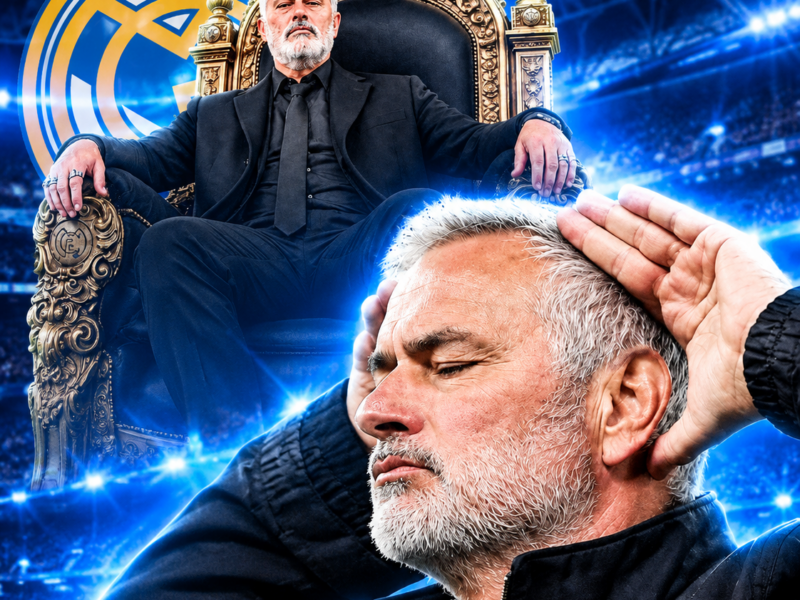
JOSE MOURINHO – THE VILLAIN I LOVE!
Some people enter football history through their goals. Others become legends through their trophies, and a few are remembered for football so beautiful that the whole world stops to watch. Jose Mourinho fits none of those conventional molds. He stepped onto the grand stage through rebellion, arrogance and a stubborn talent for turning the seemingly impossible into fact.
This is the man who once left Sir Alex Ferguson stunned at Old Trafford, infuriated Arsene Wenger and cost Pep Guardiola plenty of sleep. He made all of Europe argue about the kind of football he played. Admirers call him a genius. Critics call him a villain, and a growing chorus has mocked him as a washed-up old man whose era is long gone.
But if football history has taught us one thing about Mourinho, it is never to rush into writing his obituary. He has an uncanny habit of returning from the ashes. Whether you love him or cannot stand him, the sport has never quite managed to ignore him.
The story begins in 2004, when England was jolted by a Champions League shock. Ferguson’s Manchester United were knocked out by a Portuguese side called FC Porto. Old Trafford witnessed one of the most memorable moments the competition has ever produced.
Costinha scored a late equalizer, and the whole stadium fell silent. None of the United players could quite believe what had just happened. Then a man in a black coat burst out of the technical area and sprinted down the touchline, arms raised in pure ecstasy.
He was not a star player. He was not a strategist who had dominated Europe for decades. He was a 41-year-old coach who remained largely unknown to the British public, and his name was Jose Mario Dos Santos Mourinho Felix. On that night, the football world began to realize it had met a truly extraordinary character.
Porto went straight on to the Champions League final, where they beat Monaco 3-0. It completed one of the great fairy tales of modern European football. This was not the triumph of a collective stuffed with the world’s most expensive superstars, but a victory of discipline, tactics and absolute faith in the man in charge.
Mourinho had built a side in which every player carried out his duties with precision. Every space was calculated, and every opposition mistake could become a death sentence. At a time when Europe’s giants were locked in an arms race of blockbuster signings, Porto looked like a trained army sent to defeat empires many times wealthier than itself.
Having conquered the continent, the Portuguese decided that his next stage had to be bigger, tougher and more worthy of his ambition. In the summer of 2004, he arrived in London to take charge of Chelsea. The club had just been transformed by the billionaire Roman Abramovich into an emerging power in English football.
At his introductory press conference, he was asked about his prospects in the Premier League. His answer is still counted among the most famous quotes in the sport. He asked not to be called arrogant, then described himself as a European champion and “a special one.”
It was far more than an introduction. Many heard it as a declaration of war aimed at Ferguson, Wenger and the entire power structure of English football. From that moment, the world had a new and immortal nickname: The Special One.
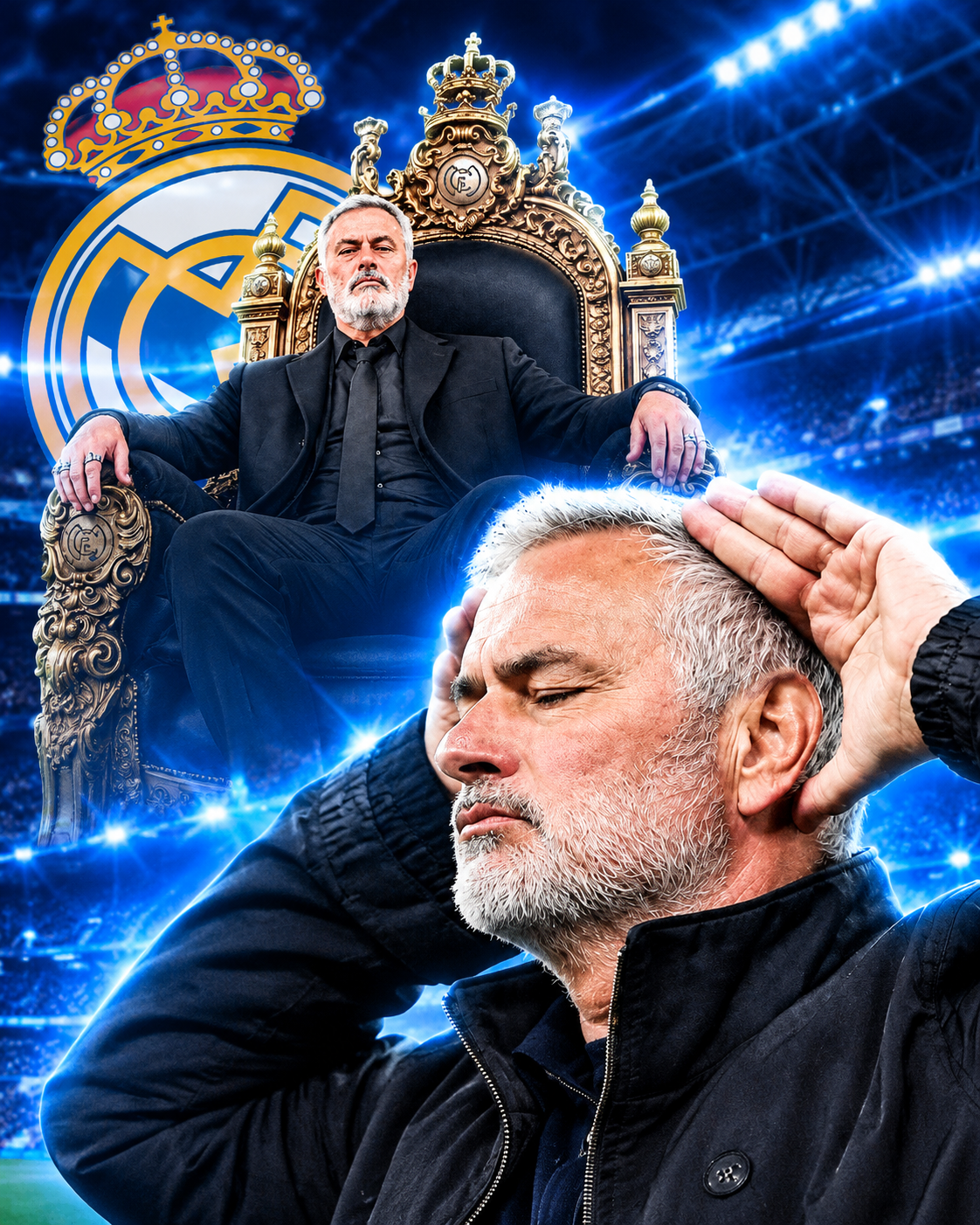
Mourinho knew, however, that bold words would mean nothing unless results on the pitch backed them up. Under his guidance, Chelsea quickly became a winning machine with an almost impenetrable defense. They had power in midfield and a cold, lethal instinct for the counter-attack.
John Terry became the leader of a steel-like back line. Frank Lampard rose to be one of the highest-scoring midfielders in Europe. Didier Drogba turned into a nightmare for center-backs, while Petr Cech made the team a fortress.
In 2004-05, the London club won the Premier League with 95 points. They conceded just 15 goals in 38 matches, a defensive record that still carries historical weight. Mourinho did not merely win titles. He forced England to rethink how a team could dominate a league through pragmatism, discipline and control of every minor detail.
The competition he faced was formidable. Wenger’s Arsenal had just come off their legendary unbeaten season. Ferguson’s United remained a symbol of power, and Liverpool were preparing to write their own legend in Istanbul. Yet on the domestic stage, Chelsea disrupted the old order and announced that a new one was forming.
They defended the title in 2005-06, leaving rivals helpless against a tightly organized system and a squad that played with the spirit of warriors. Mourinho turned an ambitious club into an empire, and he sparked a string of fiery confrontations with England’s best-known managers along the way. The most unsettling part was not the number of trophies but the feeling he gave opponents that they had lost before kickoff.
Of course, a personality that strong was never going to coexist peacefully with powerful owners forever. Disagreements over transfers, management and control of the team slowly surfaced. The marriage between Mourinho and Chelsea ended in September 2007.
It was a regretful parting, because he had given Stamford Bridge something Abramovich’s money could not buy by itself: the identity of a champion. Supporters of the club still point to that as his lasting contribution. Others argue that the clash with the hierarchy showed the limits of a manager who wants authority over everything.
Leaving Chelsea did not diminish his status, and his ambition stretched far beyond English football. He wanted to conquer Europe again, and his next destination was Milan. Inter were desperate to reclaim Champions League glory after decades of waiting.
When he arrived in 2008, the Nerazzurri were already a force in Serie A, but the European Cup remained an unbreakable curse. You can win the Italian league with squad depth, yet to rule Europe a club needs more than stars. Inter needed a leader capable of convincing the whole group that no opponent was invincible.
Mourinho built his team around warriors such as Zanetti, Cambiasso, Sneijder, Milito, Eto’o and Materazzi. These were men willing to sacrifice personal interests for collective victory. He shaped Inter into an army that knew how to endure, wait, strike on the break and, above all, win against opponents who were rated more highly.
The biggest test of his career at that point went by the name of Barcelona. This was the side of Guardiola and Lionel Messi, and it was not simply strong. It was seen as the embodiment of a football revolution, built on near-perfect possession.
Guardiola had Messi, Xavi, Iniesta and Busquets, along with a squad able to suffocate opponents with passing, triangles and relentless pressing. Most of Europe was almost helpless against them. People openly debated whether this was the ultimate peak of tactical art.
Mourinho did not care how beautiful his opponents were. In his world, football is not a contest to see who passes more, who holds the ball longer or who collects more praise. It is a battle decided by goals and by the result when the whistle goes.
In April 2010, Inter beat Barcelona 3-1 at the Giuseppe Meazza in the first leg of the Champions League semi-final, stunning the continent. The second leg at the Camp Nou, though, is where Mourinho wrote one of the greatest chapters of his career. Thiago Motta was sent off, leaving Inter with ten men for most of the remaining time.
They absorbed terrifying pressure, sat in a deep block and fought with everything they had. Barcelona won 1-0, but Inter went through 3-2 on aggregate. Mourinho ran onto the pitch to celebrate in a scene of chaos that the competition will remember for many years.
For lovers of beautiful football, it may have been a disappointing night. For those who value tactics and fighting spirit, it proved that even a seemingly perfect team can be beaten. The debate between those two camps has never really ended, and each side claims the night as evidence for its own view of the game.
Inter then overcame Bayern Munich in the final in Madrid, with Diego Milito scoring both goals in a 2-0 win. The historic treble was complete. Mourinho became one of the few managers to win the Champions League with two different clubs, and he returned Inter to the summit of Europe for the first time since 1965.
Yet the most emotional image of that journey may not be the silver trophy, the medals or the celebrations at the Santiago Bernabeu. It was Mourinho and Materazzi hugging in tears. Both men knew an extraordinary chapter had ended and that their leader was about to leave.
Having finished his mission at Inter, Mourinho refused the easy life. He chose perhaps the toughest assignment in world football: taking on Barcelona inside Spain. The Real Madrid of 2010 had Cristiano Ronaldo, Kaka, Karim Benzema, Sergio Ramos, Iker Casillas and other world-class names, yet still lived in the shadow of the Catalans.
Barcelona did not merely win. They created the impression that Madrid had been left behind in a tactical revolution led by Guardiola. Florentino Perez needed someone brave enough to break that dominance, a strategist unafraid of Messi, Xavi and Iniesta, and certainly unafraid of psychological warfare.
Mourinho arrived at the Bernabeu as a European champion, with the reputation of a man who had already beaten Barcelona on the biggest stage. But in his first Clasico as Madrid manager, he suffered one of the most painful defeats of his career. On November 29, 2010, Barcelona crushed Madrid 5-0 at the Camp Nou.
Xavi, Pedro, David Villa and Jeffren each added to the nightmare, and Madrid’s stars barely fought back. They endured a humiliating evening in front of tens of thousands of opposing fans. The Spanish press gloated, critics found fresh reasons to mock him, and many believed the Portuguese had finally met an opponent beyond his reach.
But no defeat, however heavy, was enough to make him abandon a fight he believed he could win. Instead of collapsing, Madrid started to learn how to endure, adapt and slowly find a way to counter the Barcelona machine. The duel between Mourinho and Guardiola soon outgrew ordinary football and became a clash of two ideologies, two personalities and two visions of victory.
One side worshipped possession, control and the beauty of the pass. The other prized organization, speed in transition, directness and the ability to punish mistakes. Press conferences became battlefields, Clasicos turned into psychological warfare, and every tactical decision was dissected under the microscope of the global media.
Mourinho was not always right. Many of his actions in that period caused fierce controversy and left cracks that were impossible to hide. Critics say the poisonous atmosphere damaged the game in Spain, and they have a point. His defenders reply that he forced Barcelona to face an increasingly formidable opponent, a Madrid that no longer accepted being a bystander while others were crowned.
The 2011-12 season was the moment it all came together. Mourinho’s Madrid exploded into one of the most fearsome attacking machines in the history of La Liga. Ronaldo scored like a machine, Mesut Ozil became the creative brain, and Angel Di Maria added pace and unpredictability. Benzema and Gonzalo Higuain kept punishing defenses.
Madrid finished with 100 points and 121 goals, and they won the title, ending Barcelona’s three-year reign. The defining image came in a 2-1 win at the Camp Nou, when Ronaldo scored the decisive goal and signaled for the stunned crowd to calm down. After all the defeats and the mockery, Mourinho had finally returned Madrid to the throne of Spanish football.
The very qualities that make Mourinho special also fill his career with contradictions. He can build an extraordinary fighting spirit, yet he can also push dressing-room relationships to breaking point. He can turn a squad into a family, but he can also let disputes with players, the media and the board grow into an endless war.
His final years in Madrid brought controversies involving Casillas, Ramos and others, and the mood at the Bernabeu became increasingly suffocating. He left in 2013 without winning the Champions League with the Spanish club. He did leave an indelible legacy, however: Madrid had stood up and beaten the most formidable Barcelona of its era.
The argument over that legacy is still going. Fans of the Portuguese say he restored belief and broke a monopoly. Detractors say the price was too high, pointing to the divisions in the dressing room and the bitterness that followed.
After Madrid, he went back to Chelsea and showed once again that he could conquer the Premier League, winning the 2014-15 title. But within months, everything unraveled. Chelsea slumped into the bottom half of the table, and the second parting between Mourinho and the London side ended in bitterness.
He then moved to Manchester United, the club where fans had once watched him sprint down the Old Trafford touchline as Porto’s coach more than a decade earlier. There he won the Europa League, the League Cup and the Community Shield, and he guided the team to second place in the 2017-18 Premier League. For a club that Ferguson had once taken to the summit of Europe, those honors were not enough to erase the sense that the Red Devils were losing their imperial status.
Mourinho left in December 2018 after prolonged conflicts and a disappointing run of form, and the debate over why has never truly ended. Some argue he failed because he could not build a modern style of play. Others believe that deep-rooted problems in United’s administrative structure would have made life hard for any manager.
In the years that followed, he carried on at Tottenham, AS Roma and then Fenerbahce, with memorable moments and undeniable disappointments in roughly equal measure. The 2022 Conference League title with Roma remains a significant achievement, especially for a capital club that had waited so long for a European trophy. Even so, in the eyes of many, he seemed to have passed his prime.
He had become, they said, a nostalgic figure in a game increasingly ruled by high pressing, spatial control and complex tactical systems. The label “has-been” began to follow The Special One around. The suggestion was that football had moved to a level where his ideas no longer belonged.
Younger managers had arrived with sophisticated ball-progression systems. Pressing models were being picked apart with data, and tactical philosophies were hailed by the media as the next revolution. Mourinho was cast as a relic, synonymous with mind games, low defensive blocks and a pragmatic style that no longer suited modern trends.
But can a man who beat Ferguson, Wenger, Guardiola and a host of the world’s best strategists really become obsolete just because the game has changed? His defenders say the problem lies elsewhere. People, they argue, have grown so used to judging managers by the elegance of their build-up play that they have forgotten the values that never change: adaptability, man-management and winning the big games.
His critics see it differently. They point to the results of recent years and say that reputation alone does not win matches. They argue that a manager who relies on the same formula for two decades will eventually be found out, and that the evidence for decline is not just talk.
There is a case that the caricature is too simple. Mourinho has never been a coach who only knows how to park the bus, even though that is an image he often cultivates himself. His Porto side played incredibly effective, direct attacking football. Chelsea were sharp and clinical in transition, and Inter knew how to finish opponents off on the counter.
Then there is the 2011-12 Madrid, which scored 121 league goals. What Mourinho cares about is not making his team look the most pleasing to the eye. It is maximizing the chance of winning with the players he has at his disposal. When he needs to control, he controls, and when he needs to defend, he is ready to defend.
And when a match must become a battle of physicality, mentality or tactics, The Special One has never been afraid. It is a philosophical pragmatism, and it makes him a dangerous opponent in games where the line between victory and defeat comes down to a single moment. Whether that approach still works at the highest level is precisely what his rivals and admirers keep disputing.
Looking at Mourinho only through tactics, though, means missing why he has such a profound influence on the players who work with him. Drogba has spoken of him as a special influence on his career. Zlatan Ibrahimovic holds him in deep respect, and the man known as the butcher even wept while hugging his mentor on the day they had to part.
Mourinho has a rare ability to make players feel they are fighting for something bigger than themselves. The whole world may be against them, but their manager will always stand on the front line. He is willing to become the center of criticism, to draw the cameras and to play the villain in order to take the pressure off his squad.
It is a power that statistics cannot measure, because it lives in trust, loyalty and the knack of making an ordinary group extraordinary at decisive moments. Players who have played for him tend to speak with something close to devotion. Some of those who fell out with him tell a very different story.
It would be unfair to history to turn him into a saint who never errs, because he has been responsible for plenty of the crises in his own career. Confrontations with players, the use of the media as a pressure tool and a rigidity that sometimes reached extremes have left many of his squads divided. The same man who creates fierce team spirit has, at times, broken once-strong relationships.
A great manager is not the same thing as a perfect human being, and that is what makes his legacy so interesting. It holds both glory and undeniable mistakes. Perhaps that contradiction is exactly why he fascinates.
Mourinho has never been easy to love, but he has never been someone you can ignore. Imagine a football world without him, where managers speak only in diplomatic phrases and every press conference is a study in dull politeness. There would be no sideline sprint at Old Trafford in 2004, no Special One declaration and no tactical battle at the Camp Nou in 2010.
The verbal sparring that has become part of Premier League culture would be missing too. Football would lose one of those rare figures able to turn a match into a story of pride, honor, hostility and the thirst for conquest. He may anger people, and he may annoy those who love beautiful football, but he makes the sport far more dramatic and unpredictable.
Football needs artists, geniuses and revolutionaries, certainly. It also needs rebels willing to stand in front of the world and say they will win on their own terms. Mourinho has filled that role for more than twenty years.
Twenty-two years have now passed since the night Porto left Europe stunned, and the game has changed so much that things once considered modern are now history. Messi and Ronaldo have moved beyond their peak years. Guardiola has become one of the most successful tacticians ever, while a new generation of coaches arrives with ever bolder ideas.
Mourinho is no longer the young man with dark hair, a sharp gaze and a defiant look who walked into the Chelsea press room in 2004. Time has put wrinkles on his face, along with the failures and scars of a long career. But nothing can erase the chapters he has already written.
Wherever the future takes him, his name will stay linked to an era in which one glimpse of the Portuguese on the touchline told the world that a major battle was about to begin. That brings us to the present, and to the scenario in which The Special One is back at Real Madrid once more. It helps explain why a meeting with Barcelona means far more than the three points on offer in a Clasico.
It would be a clash not only between Spain’s two greatest clubs but also between a historical figure and the very memories that shaped his career. The Camp Nou was where he suffered a 5-0 defeat, where he inflicted pain on Barcelona with Inter, and where he watched his Madrid take a pivotal win in the title race. Every corner of the stands, every blade of grass and every jeer from the Catalan fans can summon the battles of the most intense era of modern football.
Skeptics will say that nostalgia is no substitute for a plan, and that the Barcelona he once fought is long gone. Supporters will answer that a return to old battlegrounds is exactly the kind of stage on which he has always thrived. Both arguments have merit, and only results will settle them.
If he does one day beat Barcelona again, it will be a weighty new chapter in the story of a man who never surrenders to the times. Some managers are defined by their tactical schemes. Others are remembered for a golden generation, and some are only truly great in a perfect environment.
Mourinho is different. He has won in Portugal, England, Italy and Spain, lifted European trophies with more than one club and turned underdogs into opponents that made giants tremble. Not every adventure ended in glory, not every declaration came true and not every one of his methods deserves to be defended.
But those failures cannot cancel out a career that has helped change how modern football thinks about tactics, psychological warfare and the role of the head coach. He does not need to win every battle to prove he is among the most influential figures in the history of the sport. Even his fiercest critics tend to concede that much.
In the end, what people will remember is perhaps not just the trophies, the finals or the provocative celebrations. It is the image of a man who walks into every battle believing he can do what others call impossible, no matter how strong the opponent or how harsh the circumstances. From Porto to Chelsea, from Inter to Real, from Manchester United to Roma, and now back to Madrid, his journey is an epic of glory, controversy, heartbreak and comebacks that nobody could have predicted.
The world may love him or hate him, worship him or mock him. What it cannot do is rewrite the history of twenty-first-century football without his name in it. Before anyone finishes debating whether his time has passed, he has already become an immortal part of the beautiful game.
He is not an ordinary coach, and he was never born to please everyone. He is a conqueror, a rebel and a champion, the villain in the stories of the defeated and a hero in the memories of those who stood on the peak beside him. He is the man who made the entire football world learn to remember his name.
The Special One. The Only One. And the debate, as ever, will go on.