Tragic Tales from History You Wish Weren’t True
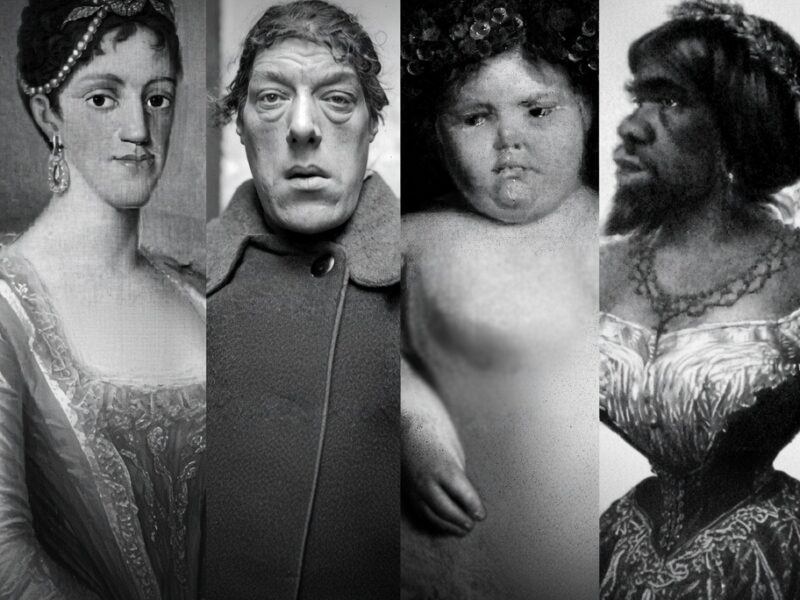
They were labeled the ugliest women in the world. From a hated queen to a Spanish court “monster” and women exploited for public entertainment, they endured ridicule, humiliation, and painful hardships. But behind their unusual appearances lay stories far more heartbreaking than you might imagine.
The first is Mary Ann Bevan, an Englishwoman who lived in the late 19th and early 20th centuries. Around 1906, she began to develop a rare medical illness that distorted her face and other features. In later years, that led to her being cruelly known as the ugliest woman in the world. What happened to her, and what did she make of her life?
Mary Ann Bevan was born Mary Ann Webster in Plaistow, East London, on December 20, 1874. She was one of eight children in a poor family. As an adult, she trained as a nurse, a profession that had boomed in Britain in the second half of the 19th century thanks to the reforms Florence Nightingale introduced in the 1850s and 1860s.
She finished her training by the late 1890s and was working as a nurse in London by 1900. Photos from this period show an attractive brunette. In 1903, she married Thomas Bevan, a London greengrocer she had been seeing for some time.
They quickly started a family, and by the early 1910s they had four children. Then, in 1914, Thomas died before his time. It was a severe blow to Mary Ann, both emotionally and economically, and she now had to raise the family alone, with little money.
Around 1906, she had begun suffering from a rare illness called acromegaly, a disorder of the pituitary gland, the organ that regulates hormone production. The disease is caused by an overproduction of growth hormone. In younger patients who are still growing, that is a limited problem. In adults, whose growth plates have largely closed, the excess hormone causes the body to grow abnormally, and the patient can suffer a lot of pain.
In more than 95 percent of cases, the underlying cause is a benign tumor on the pituitary gland known as a pituitary adenoma. The condition affects about six people in every 100,000 and usually begins in middle age. Symptoms typically start with the enlargement of the hands and feet, then progress to distortion and expansion of the face and other parts of the body, as happened to Mary Ann. Later come joint pain, periodic headaches, and often a deepening of the voice.
There are treatments today. Surgery can be used to remove the tumor, but because it means brain surgery, medication and radiation therapy are the preferred first-line options. In Mary Ann’s time, little was known about the disease and there was no effective treatment of any kind, so she had to soldier on while it began to affect her daily life.
Her hands and feet swelled first, and the physical damage worsened as the years passed. She appears to have quit nursing in the late 1900s or early 1910s as her features and body changed. Thomas, who was devoted to her, seems not to have minded and was happy for her to stay home.
When he died in 1914, she was left in a desperate position, with four young children, the youngest still an infant. By then her face was growing more drawn and masculine-looking, with folds of skin drooping under her eyes. In the conditions of the time, her appearance made her less and less employable, and she moved between jobs in the years after her husband’s death, constantly struggling to make ends meet.
Finally, in the late 1910s, she decided to try to capitalize on the way the disease had devastated her body. She entered a competition to find the world’s ugliest woman, advertised in a newspaper by Claude Bartram, the European agent for the American circus Barnum and Bailey. She sent in a photo, which caught Bartram’s attention, and he offered her a job with the circus in the United States.
She was initially reluctant. She agreed when she was offered £10 a week for a year, all travel expenses, and extra money from sales of postcards of her at the circus. With that income, she could pay for her children’s education.
Shows like this were common across America and other countries in the 20th century, and today they would be considered callous and politically incorrect. They displayed people seen as spectacles because of an abnormality, a genetic disorder, or a disease, such as giants and dwarfs, conjoined twins, albinos, people born without a limb, or people of very large size. Mary Ann would perform in such shows for the next few years.
Her work began with a tour of Hampshire in England, but she was soon contacted by the head of the circus in America and set off from Southampton in 1920. There she discovered she was actually working for the Ringling Brothers Circus. Founded in Wisconsin in 1884 by the five Ringling brothers, sons of German immigrants, it had merged with Barnum and Bailey in 1919 and was now advertised as the greatest show on Earth.
She quickly gained notoriety in America’s sideshows, and newspapers called her the ugliest woman in the world. Within a few months she was one of the stars of the show, and she even appeared in Time magazine. The circus dressed her in men’s clothing or unattractive garments to make her seem more masculine and to emphasize the damage the disease had done.
The notoriety made the circus more money, and Bevan received a substantial share. By 1923, she is said to have earned about £20,000 in the United States, a sum worth well over half a million pounds today. One can only wonder what being displayed as a human oddity night after night did to her emotionally and psychologically.
She returned to Europe in 1925 for a show in Paris, then decided to move her children to New York City. With her earnings she sent all four to boarding school and kept them in relative comfort, and she continued to work periodically at the Dreamland show on Coney Island, Brooklyn.
In 1927, she became a patient of Harvey Cushing, a distinguished American neurosurgeon who pioneered brain surgery. He could do little for her, but he did write a strongly worded letter to Time about its recent piece on her. He described a woman who had once been vigorous and good-looking, now sitting in the sideshow between the fat lady and the armless wonder, and said that as a physician he did not like to see Time “frivolous over the tragedies of disease.”
Mary Ann Bevan died on December 26, 1933, a few days after her 59th birthday. Treated today, acromegaly does not severely shorten life, but in the early 20th century sufferers typically lost 10 to 15 years. Her children fulfilled her dying wish and brought her home to England, where she was buried at Brockley and Ladywell Cemeteries in Lewisham, southeast London.
Her end may have been hastened by a considerable drinking problem in her later years, one no doubt worsened by her disease and by years of daily ridicule. Her story has been retold periodically in the 80-plus years since, partly because of her brief fame in 1920s America and partly because it shows how callous society could be toward people with physical differences as recently as the 1920s.
Sometimes she reappears in popular culture in more distasteful ways. In the early 2000s, Hallmark began selling a birthday card mocking the world’s ugliest woman, featuring Bevan’s picture and riffing on a blind-date TV show where contestants chose among three unseen people. The joke was that the contestant picked door number three, behind which Mary Ann waited.
Dr. Wouter de Herder, a Dutch consultant endocrinologist at the Erasmus Medical Center in Rotterdam, spotted the card on sale in London in 2006. He had recently written a research paper that referenced Bevan’s struggles with acromegaly, and he complained to Hallmark that the card was “insulting to all patients who suffer from the same condition.”
Hallmark reluctantly accepted it was wrong to make a sick woman the butt of a joke, but it only stopped further production and refused to pull cards already in circulation. Robert Knutton, chief executive of the Pituitary Network Association, said that making money from the misery of others was shameful, calling it “corporate greed taken to its lowest level.”
So here is the balance sheet on Mary Ann Bevan. She was exhibited and mocked, at her own expense. She also earned money, and gave her children a brighter future and more opportunities than she had in her youth.
The second story begins in the winter of 1807, as Napoleon’s army swept through Portugal and the royal court fled across the Atlantic to Brazil. For the monarchy it was a humiliating retreat, but for one ambitious princess it was the opportunity of a lifetime. Branded a monster by her critics, ridiculed for her appearance, and feared for her relentless ambition, Carlota Joaquina earned a reputation as one of the most infamous and hated queens in European history.
Carlota Joaquina of Spain was born on April 25, 1775, the eldest surviving child of the future King Charles IV, who took the throne in 1788. An earlier son, Charles, had died before she was born. Her mother, Maria Luisa of Parma, gave birth to several healthy daughters, but each subsequent son died in infancy.
That raised fears about the succession and kept Carlota in line to the throne for much of her childhood. A healthy son, Ferdinand, finally arrived in 1784, when she was nine. Perhaps awareness of her position in those early years awoke the craving for power that shaped her later life.
She received a strict education from Roman Catholic tutors, covering history, geography, languages, painting, sewing, and riding. It made her exceptionally well-educated and intelligent, though it did little to suppress the mischievous, playful personality she was often remembered for. Behind the palace walls, family life was far from stable.
Her mother was a domineering figure at court, and there were even rumors of an affair with the head of the Spanish government, Manuel Godoy. That made the queen a vilified figure, and some of Carlota’s later poor reputation came from being painted with the same brush. Spain had also declined rapidly as a power since the mid-17th century, though it still clung to a vast empire in the Americas stretching from California and Cuba south to Chile and Argentina.
Even after Ferdinand’s birth, Carlota remained an important figure as the eldest daughter of the future king. That made her one of the most valuable royal brides in Europe, and in 1785, at just 10 years old, she was married off, a shockingly young age even by 18th-century standards. It was only the beginning of a marriage that would descend into scandal, hatred, and political intrigue.
The groom was Dom John, second in line to the Portuguese throne. His parents, who were uncle and niece, had become dual monarchs in 1777 as King Peter III and Queen Maria I. Peter died in 1786, but Maria lived until 1816, so Carlota’s life would be shaped by her mother-in-law, Portugal’s first queen in her own right.
A proxy marriage took place in May 1785, weeks after her 10th birthday, when John was 18. Because of her age, the marriage was not to be consummated until 1790. Yet only days after the proxy wedding, the 10-year-old princess was sent to Lisbon with a Spanish entourage, leaving her family behind years before the marriage would truly begin.
She was at the Portuguese court when the politics of the realm shifted. On September 11, 1788, her brother-in-law Dom José, the heir, died of smallpox, making her husband the new heir. Queen Maria, who suffered from depression for much of her later life, was declared insane in 1792, so John was expected to step in as regent and de facto monarch from the 1790s, making Carlota a kind of unofficial queen consort from a young age. The couple bore the titles prince and princess of Brazil.
As Carlota became more prominent in the 1790s and 1800s, she became an object of ridicule and hatred at court and in wider society. She was seen as grasping for power and as someone who did not understand the conservative court culture around her. Raised in the far more lavish Spanish court, she struggled with Portugal’s deeply religious, austere royal culture.
Her outspoken personality, political involvement, and unconventional public behavior fueled gossip and malicious rumors, intensified by anti-Spanish xenophobia. She was criticized for her behavior, but attacked even more viciously for her appearance. The French writer Laure Junot, Duchess of Abrantes, left one of the most scathing descriptions, mocking her disheveled hair, her thin purplish lips under a thick mustache, and teeth “uneven like Pan’s flute.”
The duchess’s husband, Jean-Andoche Junot, echoed the sentiment on arriving at court, reportedly exclaiming, “How ugly the princess is.” It was not only French observers. Contemporary accounts often described Carlota as short, with a face marked by smallpox scars, a prominent aquiline nose, and a distinctive Bourbon underbite, and some remarked on her slightly stooped posture.
In many ways she was the antithesis of 18th-century beauty ideals. One particularly cruel later account claimed she had the most bizarrely monstrous head ever to walk the earth. Her public image was only one source of misery.
Behind the scenes, her marriage was unhappy. Their first child, a daughter named Maria Teresa, was born in 1793, and eight more children followed over the next 13 years, only one of whom, Francisco Antonio, died young. Despite the strains, Carlota was known to be attentive to her children’s health and welfare.
Even motherhood was surrounded by scandal. Persistent court rumors claimed not all her children were fathered by John, with suspicion falling particularly on her son Miguel. The claims were never proven, but they added to the gossip and hostility that followed her all her life.
The marriage was also troubled by John’s lack of affection and his increasingly erratic behavior. In an age when Enlightenment ideas and the French Revolution were spreading across Europe, he developed an obsessive fear that revolution would reach Portugal. Court rumors even claimed he wandered the palace halls at night in a semi-delirious state.
By the early 1800s, the royal marriage had turned into open political warfare. In 1805, when she was 30, Carlota conspired to seize power from her husband, the prince regent, planning to have him arrested and declared unfit to rule, just as his mother had been. The plot was uncovered and her co-conspirators were arrested.
She escaped imprisonment only because John refused to expose the scandal publicly. Instead, he banished her to the palaces of Queluz and Ramalhão while he withdrew to Mafra, effectively ending the marriage. During that exile she earned the infamous nickname the Shrew of Queluz.
Her life in Portugal, especially from around 1806, was shaped by wider upheaval. The French Revolution broke out in 1789, began as a moderate movement aiming at a constitutional monarchy, and turned more radical, eventually becoming a pan-European war from 1792. Portugal was an outlier, having largely avoided Europe’s religious and dynastic wars for centuries, though it kept a loose alliance with England dating to Catherine of Braganza’s marriage to Charles II in the early 1660s. It joined the War of the First Coalition in 1793 but played no major role afterward.
What changed things was Napoleon. In 1807, fresh from conquering Germany and Poland, he turned west and invaded Portugal to bring the Iberian Peninsula into his empire. He would make his brother Joseph king of Spain in 1808. Before that, Portugal had been overrun, and Carlota, with the rest of the court and government, fled across the Atlantic to set up a government in exile in Brazil.
The voyage in the winter of 1807 was dreadful. Carlota was forced to shave her head because of a lice infestation aboard ship. The court finally reached Rio de Janeiro, where she would spend 13 turbulent, politically ambitious years.
It was in South America that her ambitions to rule became clear. Her mother-in-law remained the nominal ruler of Portugal and its empire, but wars of independence broke out across the Spanish colonies after France took over Spain. One faction in the Viceroyalty of the Río de la Plata proposed making Carlota its regent, a movement known as Carlotism, which made sense because she was a daughter of Charles IV.
The scheme won the backing of British Admiral Sir Sidney Smith, but it was opposed by her husband, the Portuguese government in exile, Spanish officials, and many local elites. Carlota also undermined her own chances by insisting on the powers of an absolute monarch, while many supporters imagined her as a constitutional figurehead. The movement collapsed, and the region eventually evolved into the Republic of Argentina.
Her time in Brazil was controversial in other ways. She was disdainful of the people, drank heavily, allegedly took to drinking marijuana tea, and was the subject of persistent rumors of an affair with a prominent Brazilian businessman. Yet amid the scandal came the moment she had long awaited.
On March 20, 1816, Queen Maria I died at 81. At 40, Carlota finally became Queen Consort of Portugal, though her greatest political battles were still to come. Portugal had been liberated by then, after the Portuguese and Spanish, with significant British aid, drove the French out in 1813 and 1814 as Napoleon’s empire collapsed in the wake of his invasion of Russia in 1812.
The court nonetheless did not rush back to Lisbon, even after Napoleon’s final defeat in the summer of 1815, because of uncertainty over what kind of kingdom would be rebuilt. That came to a head with the Liberal Revolution of 1820, when a military uprising demanded a constitutional monarchy and forced the royal family to return. They left Brazil on April 26, 1821.
According to the Viscount of Porto Seguro, everyone shed tears on leaving, except the Queen. Carlota, who had never enjoyed Brazil, was reportedly delighted. One famous story claims she shook the dust from her shoes before boarding, declaring, “I shall not take even the dust of this land.”
Back in Portugal, John accepted the country’s first constitution in 1822. It sought to end absolutism but was only minimally successful and was abandoned in 1823. Meanwhile, Brazil split away in 1822 as an independent empire under Carlota’s son Pedro, removing the colony Portugal had relied on for wealth throughout the 18th century.
A power struggle followed as Carlota allied with her younger son Miguel to try to take power from her husband. John briefly became a prisoner in all but name, until a British intervention in 1824 led to Miguel’s exile and John’s return to control. He ruled until his death in March 1826, aged 58. It was a miracle the marriage had lasted until one of them died, and she refused to visit him in his final illness.
John’s death plunged Portugal into a succession crisis. Miguel, the expected heir, was in exile, while Pedro ruled Brazil. Pedro briefly claimed the Portuguese throne before abdicating in favor of his young daughter, who became Queen Maria II in May 1826. Miguel returned in 1828 to reclaim the crown, with a plan to avert civil war by marrying his niece, which never happened.
By then Carlota had been marginalized. Despite Miguel’s earlier alliance with his mother, he did not recall her to court after becoming king in 1828. She spent her last years estranged from court life, in the countryside outside Lisbon at the Palace of Queluz, and died on January 7, 1830, aged 54.
A fresh civil war was already underway and would end four years later with Miguel’s deposition. He lived out the remaining 32 years of his life in exile, and Maria II reclaimed the throne in 1834. Carlota was first buried at Sintra before being re-interred in 1854 beside her estranged husband in the Royal Pantheon of the Braganza dynasty in Lisbon.
She always aspired to greater power, and she spent nearly her entire adult life at the heart of one of the world’s largest monarchies, as queen or princess regent over Portugal and an empire stretching across Brazil, Africa, and Asia. To her enemies, she was an ugly, scheming, power-hungry foreign queen. To others, she was an intelligent, determined woman who refused to accept the limits placed on royal women of her age.
Perhaps the truth lies somewhere in between. Either way, she remains one of the most fascinating and controversial queens in Iberian history.
Eugenia Martínez became infamous in Spain from a very young age because of her size and weight. She was ridiculed by her neighbors and hidden away by her family. At just six years old, she joined the royal court of Charles II of Spain, where she was nicknamed La Monstrua, the monster, and she endured abuse for almost her entire life.
Eugenia Martínez Vallejo was born in 1674 in a remote settlement in the Merindad de Montija, in northern Spain. Her father was José Martínez Vallejo and her mother was Antonia de la Bodega. Their exact occupations are unknown, though they are reported to have come from a humble background. She had siblings, but how many is uncertain.
Before her birth, it was reported, her mother’s waters broke one Sunday morning in church, and Antonia had no time to get home and gave birth there. Those present took the unusual circumstances as a good omen for the baby girl’s future. The Spanish writer María Jesús Jabato suggests it could be the reason for her name, Eugenia, which in Spanish carries the sense of the well born.
As a baby, Eugenia was described as healthy, strong, and a good eater. That mattered in the 17th century, especially in rural areas without doctors, when infant mortality was very high. In England at the time, for example, about 12 percent of children died in their first year and 36 percent before the age of six.
She was plump as a baby, and her parents did not think much of it at first. Medical and social standards then favored slightly more robust girls as a sign of fertility and sometimes wealth. But as she got older, things became more worrying.
Little Eugenia grew very fast compared to other infants. It was said she looked 12 before her first birthday, which was more than likely an exaggeration, though at one year old she already weighed around 20 kilos. Her siblings grew normally, so her parents sought a physician, and she was put on a strict diet. It was not enough.
As she grew larger, her neighbors repeatedly made fun of her. Her parents tried to protect her by keeping her inside the house, away from the harassment outside. Even so, word of the giant girl spread to nearby towns and villages, and strangers would approach the house to catch a glimpse of her and mock her appearance.
By the age of six, she is said to have weighed around 65 kilos. Because of the constant bullying, she spent most of her time confined to her room. That changed when she was invited to join the court of Charles II in Madrid.
One day, a messenger from the royal family knocked on the door asking whether Eugenia could be brought before the king, also known as the Bewitched. Her story had spread so far through the countryside that it reached Charles II, who was intrigued by the large girl. Her parents were uneasy, but in no position to refuse. It is unclear whether they knew the reason for the visit, and perhaps they hoped for a cure for their daughter. Sadly, that was not the case.
In 1680, at six years old, Eugenia was taken to court with her parents. The royal tailor quickly made her a dress to be presented to the king. Charles II was said to be fascinated by her appearance and suggested to her parents that she become part of the royal household, which they promptly accepted.
The chronicler Juan Cabezas published a pamphlet on her arrival, announcing that the “wonders of nature have arrived to this court” in the form of a giant girl named Eugenia Martínez. He added that the king, recognizing a miracle of nature, had asked for her to be brought to his palace in Madrid, where she was admired by the royal household and the nobility.
At first glance, the king seemed to be acting out of goodwill and generosity. There was another reason. Since medieval times, European courts had kept entertaining characters, and in Spain these were called gente de placer, people of pleasure. Eugenia was promptly included in this group, which consisted of jesters, dwarfs, people with deformities, and even the insane.
The king and others at court liked to keep them around for fun, and the king especially enjoyed their company, albeit to ridicule them. He soon began exhibiting Eugenia at palace parties. Ladies sought to be drawn or painted beside her to emphasize the beauty of their slender figures.
Eugenia and others like her received no payment for their services despite working long hours, and they lived at the mercy of their lords, who could throw them out penniless whenever they saw fit. Some saw this as a grave misfortune, living simply to be mocked as a human exhibit. For others, it may have been a stroke of luck.
The nobility spent a lot of money on la gente de placer. They made sure they were well fed, kept warm in the winter, and given a varied and interesting wardrobe, which was more than most peasants of the day could say. But the nobility also treated them as objects and did with them as they pleased. Charles’s father, Philip IV, is recorded to have had around 110 court dwarfs, and much of the nobility kept dwarfs to reinforce the idea of perfection and the superiority of the ruling dynasty.
What sets Eugenia apart is that the king commissioned two renowned portraits of her from Juan Carreño de Miranda, appointed court painter to the queen in 1671. Both can be seen side by side today at the Museo del Prado in Madrid. In them, Eugenia looks sad and uncomfortable, and she was presumably in considerable pain, since her weight would have made it hard to hold a pose for so long.
The paintings are a testament to how she was exhibited as a curiosity, because they are named La Monstrua Vestida and La Monstrua Desnuda, The Monster Clothed and The Monster Undressed. Court descriptions were just as unkind. Cabezas wrote that she was pale and not too unpleasant to look at, but that her head, face, and neck were the size of two men’s heads, her stomach as huge as that of the fattest woman about to give birth, and her legs full of rolls. He also noted that she had trouble getting around because of her body’s size.
No one at the time knew what afflicted her. Today it is speculated that she likely suffered from Prader-Willi syndrome, a genetic disorder caused by the loss of function of specific genes on chromosome 15. Children with it are constantly hungry, which can lead to obesity and type 2 diabetes, and affected people often have a narrow forehead, small hands and feet, short height, and light skin and hair, and most cannot have children. Many of these match reports of Eugenia from the time, though no one can be 100 percent certain that was the cause.
She was frequently mocked as she walked through the palace, because she tired easily and struggled to keep up with others. It is also believed she had hormonal problems and was infertile, never having a period. Yet despite her poor health and the mockery, it is believed she enjoyed living at the palace.
Eugenia was a pleasant girl and became quite popular at court, even appreciated by the royal family, and she is said to have remained well liked into adulthood. She died in 1699, aged 24, having lived her whole life in the palace since she was taken in at six. The location of her remains and the exact cause of her death are unknown, though it was likely related to her condition.
Hundreds of years later, in 1997, the city of Avilés in Spain commissioned a statue of Eugenia, in honor of the artist who painted her. It depicts his most famous painting, La Monstrua Vestida, in bronze, by the Spanish sculptor Amado González Hevia, and stands on the street named after the painter in the Barrio Marinero de Sabugo.
The final story crosses the Atlantic to 19th-century Mexico. Julia Pastrana was born in 1834 in a small settlement called Santiago de Ocoroni in Sinaloa. Accounts of her early life vary depending on the source.
One popular version says Julia belonged to a Native American tribe called the Root Diggers, who supposedly lived in caves and resembled apes. In that telling, a woman called Mrs. Espinosa was kidnapped by the tribe and held hostage in a cave, then escaped and took young Julia with her. The story, loosely based on her early life, appears to have been fabricated by her future employers to boost sales. Her mother’s people were indigenous to Mexico, but they were neither ape-like nor cave dwellers.
From birth, Julia had a striking appearance. She was covered in thick black hair and had a large protruding jaw with big teeth. Though unknown at the time, the hair was the result of a rare genetic condition called hypertrichosis.
Some sources say her mother cared for her, that they lived near Ocoroni, and that locals called her the wolf woman. In that version, when her mother died, her uncle sold her to the circus. Another version says her mother left the tribe soon after Julia’s birth, whether cast out or fleeing is unknown. About two years later, herdsmen looking for a missing cow supposedly found the two hiding in a cave, and they were taken to the nearest city, where Julia was placed in an orphanage because her mother’s care was judged inadequate.
Whatever the truth, all sources agree that at some point she lived in the home of Pedro Sánchez, working as a maid and providing him with constant amusement. How she came into his service is unclear, but as she grew up, her appearance made her something of a local celebrity. Sánchez, the governor of Sinaloa, is said to have adopted her. Under his protection and employment, she learned to read, write, and speak new languages, and she was described as a sweet, intelligent, charming, and charismatic girl.
In 1854, after years in his home, 20-year-old Julia decided to return to her tribe. According to one telling, she met an American showman called M. Rates on the way, who persuaded her to go to America and make a living on stage. Other accounts say Sánchez sold her directly to the circus, or that Rates encouraged her to leave while she was still in the governor’s house. The 19th-century writer Ireneo Paz says a customs official named Francisco Sepúlveda bought her and took her to the United States.
Once in the States, she performed in freak shows, debuting at Gothic Hall on Broadway in New York in December 1854. Publicity billed her as a marvelous hybrid and the bear woman from the wilds of Mexico. She danced the Highland Fling and sang Spanish folk tunes, but the huge crowds were far more interested in her appearance than her music.
At four and a half feet tall, with a large jaw and lips and black hair covering her body, she was given a series of unpleasant stage names: the Baboon Lady, the Hairy Woman, the Ape Woman, the Bear Woman, and the Nondescript, among others. After New York she toured cities on the East Coast and in Canada, and she attended military balls and gala nights where men queued up to dance with her. By now she had a new manager, Theodore Lent, who saw her growing fame and knew the next step was a European tour.
Lent had doctors and scientists examine her, but only to lend validity to his publicity claims that she was a hybrid, which increased audiences and revenue. Dr. Alexander B. Mott privately certified that she was half human and half orangutan, and other doctors agreed. One declared she was of a distinct species.
In London, Lent kept lying in his promotional material. Posters claimed her native tribe lived in caves and had intimate relations with bears and apes. To avoid scaring off customers, he assured them she was sociable, clever, and kind, and that the nature of woman predominated over the orangutan.
Some people were fooled, but others knew she was human. When Samuel Kneeland Jr., a comparative anatomist of the Boston Society of Natural History, examined her, he declared her a perfect woman performing all the functions of her sex. The surgeon Francis Buckland visited her in London in 1857 and concluded she was simply a deformed Mexican Indigenous woman, though he also noted she had an exceedingly good figure, a sweet voice, great taste in music and dancing, and could speak three languages.
After her death, Charles Darwin discussed her case, calling her “a remarkably fine woman” with a thick masculine beard and a hairy forehead, whose mouth projected and whose face looked gorilla-like. By then Lent had earned a small fortune exploiting her on stage. She reportedly received many marriage proposals and declined them because the men were not rich enough, and some historians claim Lent hoped to marry her to a very wealthy man for his own benefit.
When rival showmen such as P. T. Barnum took an interest in her, Lent decided he could not take risks, so he married her himself to keep the wealth flowing. We cannot be certain how she felt about him, but it seems she was in love with him. Others see a very different picture: Lent was controlling and limited her freedom, would not let her out during the day because being seen in public could hurt ticket sales, and her life revolved around him, since she had few friends and most people saw her as a curiosity.
In Vienna, she grew close to the actress and singer Friederike Gossmann. Pastrana once told her that Lent loved her “for myself.” Gossmann later noted that a light fog of sadness always hung over her. The German circus owner Hermann Otto also met her in Vienna, had a long conversation with her, and wrote of her sad situation in his book. To the world she was “a monster,” he wrote, but to the few who knew her better she was warm, thoughtful, spiritually gifted, and sensitive, and she was deeply saddened by standing beside people instead of with them, shown as a freak for money and denied the everyday joys of a home filled with love.
In August 1859, she found out she was pregnant. She gave birth in March 1860 while on tour in Moscow. Her baby boy, who shared many of her features, was very large, making the birth difficult, and he died after just 35 hours. Heartbroken, Pastrana died five days later, aged 26, of postpartum complications.
Her last words are reported to have been that she died happy because she knew she had been loved for her own sake. Yet they seem too good to be true. Lent was distraught, not only over losing his wife and son but over losing his main source of income.
He sold the bodies of his wife and son to Professor Sokolov of Moscow University, who preserved them using a new technique blending mummification and taxidermy. They looked startlingly lifelike, not what Lent had expected, and when he learned how good the work was, he bought the bodies back, believing he could make money exhibiting them across Europe.
A few years later, Lent found another woman with similar features, Marie Bartel, and convinced her father to let her marry him, promising he would never exhibit her. He lied. Soon she was dancing and singing on stage as Señora Pastrana, advertised as Julia’s little sister. They toured Europe and the US for years, then retired to St. Petersburg with the fortune they had amassed.
Shortly after retiring, Lent started to go mad. On one occasion, he was spotted screaming naked on a bridge, ripping bank notes apart. He was admitted to a Russian mental asylum and died soon after, in 1884. His widow returned to Germany and sold the bodies of Pastrana and her child.
For around 50 years, the bodies were displayed in museums, circuses, and amusement parks around the world. By the 1950s they were in storage, but in the 1970s they were exhibited again in Sweden and Norway, to public outrage. In 1973, their owner, Hans Lund, put them in a carnival storehouse near Oslo.
In August 1976, the storage facility was broken into. Pastrana’s body was stolen and her son’s remains were badly damaged and finished off by rats. Three years later, police found her body, which was stored at the Institute of Forensic Medicine in Oslo. Police did not know whose body it was, until a journalist identified her remains in 1990, after which a debate ran in Norway over what should be done with her.
In 1997, she was sealed in a coffin and moved to the Department of Anatomy at Oslo University. She remained there until February 2013, when her body was finally returned to Mexico for a proper burial in her home state of Sinaloa. A Catholic funeral attended by hundreds of locals was held, and she was buried in a cemetery in the town of Sinaloa de Leyva, near her birthplace.
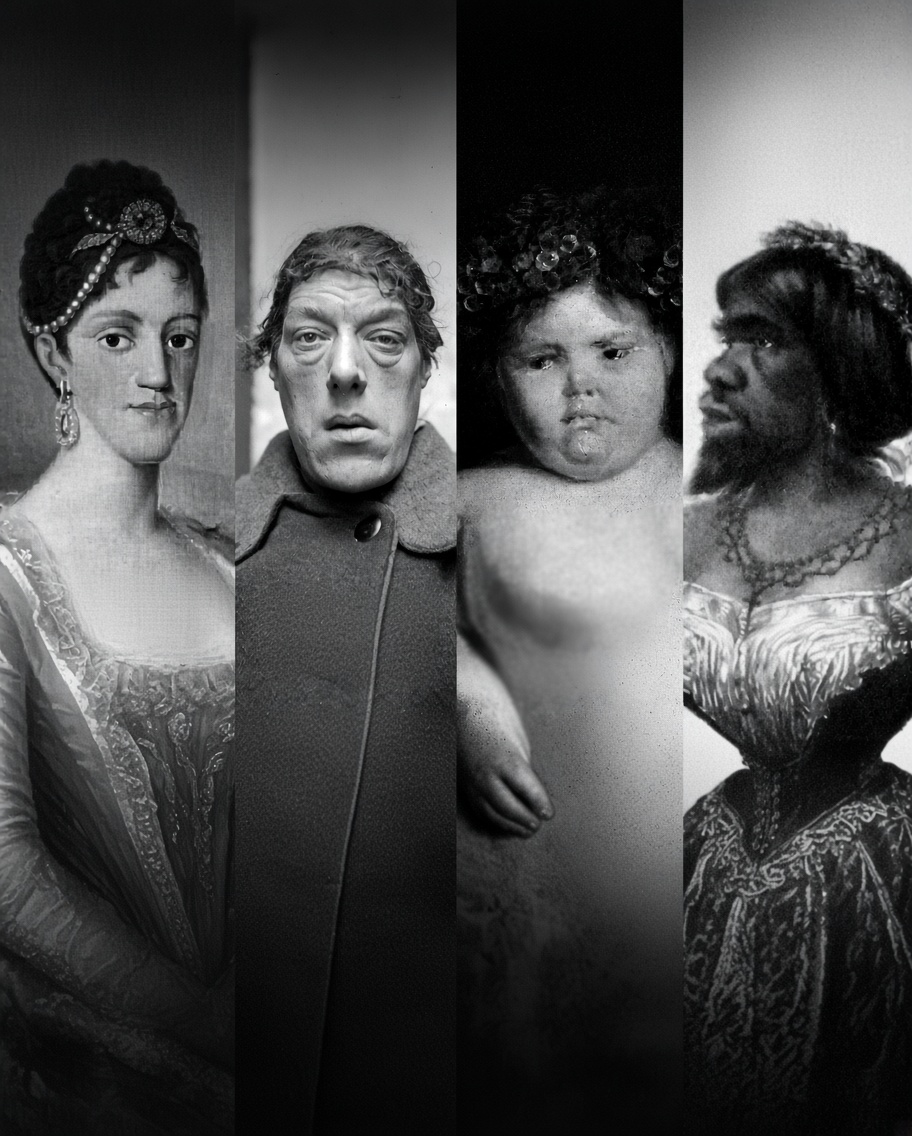
Four women, four lives reduced to a cruel label, and four stories that look very different once you see the person behind the name. Which of them stayed with you the most? Let us know in the comments.