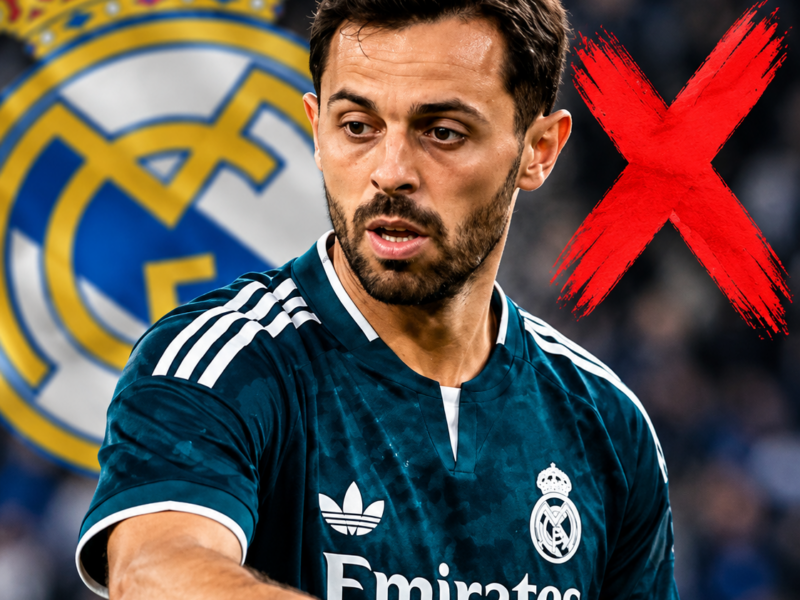
What Is Really Happening With Bernardo Silva at Real Madrid? The Mourinho Signing Who Is Quietly Disappearing From the Lineup
Some signings arrive with a roar. Others arrive with a plan.
Bernardo Silva arrived at Real Madrid with both, and now, barely into October, the roar has faded to something much quieter.
He is not injured, as far as anyone has said. He has not publicly complained, and he has not been caught in a scandal.
He is simply playing less and less, and that is exactly what has one well-known Madrid analyst scratching his head.
He opened his latest video with a confession. He is surprised, he admits, although a few pieces of the puzzle are beginning to fit together.
The question he put in the title is the one a lot of supporters are quietly asking: what is going on with Bernardo Silva?
To understand why the situation feels so strange, you have to rewind to the summer and to the man who reportedly wanted him most.
According to the analyst, José Mourinho asked for Bernardo Silva by name. Not as a vague wish, but as the specific midfielder he wanted to run his team.
He says he reported this during the summer as information rather than opinion, and he acknowledges that other reports have painted a different picture. He respects them, he says, but this is what his sources told him.
The role Mourinho had in mind was clear. Bernardo would be Real Madrid’s playmaker, the creative brain the midfield has been missing.
That detail matters, because the club did not always see it that way.
According to the same account, Madrid had turned Bernardo down twice the season before, when his agent Jorge Mendes offered him around.
The reason was simple: age. The Portuguese midfielder was thirty-two, and the club’s long-standing approach has been to avoid investing in players on the far side of thirty.
Then Mourinho took over, and the policy bent.
Bernardo’s contract at Manchester City was running out, which meant the move would cost no transfer fee. That removed most of the financial risk, and made the bet far easier to justify.
So Madrid took it. On paper, it looked like one of the smartest low-cost moves of the window.
The analyst says Mourinho then looked at his squad and felt it was nearly complete. Tchouaméni, Valverde, Bernardo Silva, Camavinga, Bellingham and Güler gave him all the midfield he needed.
He adds that the coach was particularly impressed with Camavinga during the preseason. It is a small detail, but it shows how the picture was forming.
One more name entered the story along the way. After the World Cup, Madrid reportedly looked at Rodri, and Mourinho was delighted by the idea, even speaking with the player directly.
Both sides have acknowledged that conversation. But the analyst insists that Mourinho was already happy with the midfield he had, and that Rodri was a bonus rather than a necessity.
That is the setup. A coach who wanted a creator, a free signing with a proven record, and a midfield that seemed balanced.
So why does it feel like something has gone wrong?
Start with the World Cup, which the analyst calls a little suspicious.
Bernardo started Portugal’s first match, he says, but was moved to the right wing, where he did not make much of an impact. From that moment on, he was a substitute for the rest of the tournament.
That pattern did not stop when the tournament ended.
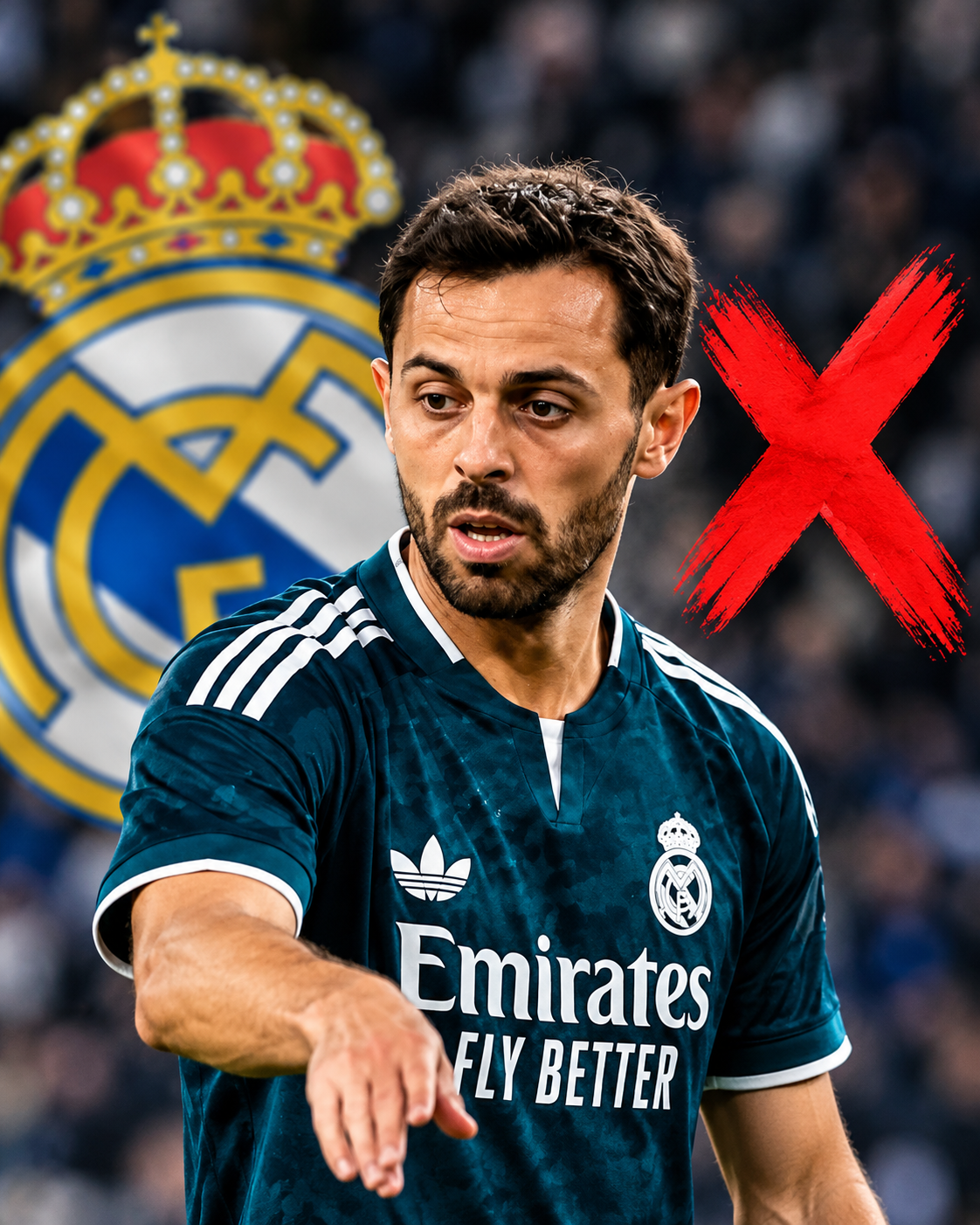
During the recent international break, Portugal played four matches in the Nations League, and as far as the analyst knows, Bernardo did not start any of them.
A player who spends a World Cup and a full international break on the bench is a player whose form, or fitness, deserves a closer look.
Then there is Mourinho’s own explanation from the preseason.
The coach reportedly said Bernardo did not train over the summer because he performs better when he switches off completely. A mental reset, in other words, rather than a physical one.
It is an unusual approach, and it is the kind of detail that looks harmless in July and uncomfortable in October.
Because here is the part the analyst finds hardest to explain: the minutes are going in the wrong direction.
Bernardo started a few matches early in the season. But as the weeks have passed, he has been getting less and less playing time.
That is the opposite of what should happen. A player who starts the year behind on fitness should be gaining sharpness by this point, not losing his place.
The analyst makes the same point he made about Vinícius. If the excuse in October is still physical condition, then something does not add up.
By now, he argues, a player should have had enough time to get up to speed.
Still, he believes physical level is the most likely reason. In his view, Bernardo is not playing because he has not reached the standard Mourinho demands to support this midfield.
That is his interpretation, and he presents it as a deduction rather than as inside information.
Which leaves the question nobody can answer yet.
Is this a temporary dip, a bad stretch that will pass by November or December? Is there something behind the scenes that fans do not know about?
Or, at thirty-two, has the player reached a decline that could be permanent?
The analyst is honest enough to say he does not know. It is a rare moment of humility in a genre that rewards certainty.
One thing he does notice is the silence.
There has been no rebellion from Bernardo, no awkward comment to the press, and no frustrated body language with either Portugal or Madrid.
To him, that suggests acceptance. The player seems to understand the situation, and he is not fighting it publicly.
That could be professionalism, or it could be a sign that he knows something fans do not. Either way, it makes the story harder to read.
There is also a stylistic puzzle that the analyst raises, and it may be the most interesting part of the whole video.
Bernardo spent years in Pep Guardiola’s Manchester City, one of the most controlled and carefully designed systems in modern football.
Every role was defined. Every movement was rehearsed. The team dominated possession and imposed its rhythm on opponents.
That environment shaped him. It also may have made him the player he was, and a player shaped by a system does not always travel well.
The analyst points out that he never thought Bernardo looked quite as good for Portugal as he did for City. The national team does not play with the same structure, and he suspects the difference is real.
If that is true, Madrid may be facing the same problem in a different shirt.
Madrid does not play like City. The rhythm is looser, the transitions are faster, and the stars are asked to solve problems on their own rather than follow a script.
A player who thrives on structure can look lost in that kind of freedom. That might explain why Bernardo currently looks like a residual figure in Mourinho’s plans.
That word, residual, is strong, and the analyst chooses it deliberately.
It describes a player who is in the squad but not in the picture. Someone who appears in the lineup when needed, but is not part of the idea.
For a signing that was supposed to bring creativity to the midfield, it is a surprising place to be.
It also ties into the earlier idea he floated about Federico Valverde.
In a video the day before, the analyst argued that Valverde could become the best in the world as a wing-back or a wide midfielder, using his engine and energy on the flank.
Moving him there, he says, would free a central midfield spot for someone with more vision and a better feel for the rhythm Madrid needs.
A creator. A brain. A player who opens passing lanes and keeps the play connected.
That, of course, was the job Bernardo Silva was brought in to do.
So the two ideas are connected. If Bernardo is not that player, Madrid still needs one, and the Valverde plan only works if someone else takes the creative role.
That is the logic behind the analyst’s frustration. The structure he thinks would help Madrid depends on a piece that is not currently fitting.
Even so, he is not writing Bernardo off.
He says plainly that he has always admired the player. He considers the signing a good one in principle, and he points out that there was no transfer fee involved.
There is always a risk when a club signs a player at a certain age, he says, but this one did not look like a bad bet.
He also reminds viewers that the contract guarantees two seasons. That is a long time for a player to sit on the margins, and a long time for a coach to ignore him.
So the next few months will tell us a lot.
If Bernardo’s minutes climb back up, this will be remembered as a slow start from a player adjusting to a new league and a new system.
If they keep falling, the story changes. It becomes a question about whether Madrid read the market correctly, and whether Mourinho still sees him as part of the future.
There is a fair counterpoint here as well. A coach as demanding as Mourinho tends to build his lineup around players he trusts, and trust takes time to earn at any club.
Early-season rotation can also be misleading. Minutes shift with fixtures, injuries and tactical choices, and a few weeks of data does not make a trend.
That is the honest answer to the analyst’s headline question. Nobody outside the dressing room knows, and the people inside are not saying.
What we do know is that the expectation and the reality are pulling apart.
A midfielder who was supposed to be central to Mourinho’s Madrid is currently watching from the sidelines more than he is shaping the game.
For a club that has built its identity on star power and big moments, that is not a small thing.
The analyst ends with a hope rather than a verdict. He wants Bernardo to start carrying more weight soon, even if not as an undisputed starter.
It is a fair wish, and one that many supporters share.
Because whether you believe in the signing or doubt it, the story is still unfinished. And in football, unfinished stories have a habit of turning.
So what do you think? Is Bernardo Silva just waiting for his moment, or has Real Madrid made a mistake? Tell us in the comments.









