What Happened After the Mansion Doors Closed Will Make This Strange Little Family Feel Heartbreakingly Human
The Addams Family Cast Then and Now: What Happened After the Mansion Doors Closed Will Make This Strange Little Family Feel Heartbreakingly Human
The Addams Family looked like a spooky comedy. But underneath the black dresses, the deadpan jokes, and the candlelit mansion, it was really about a love that refused to look normal.
That is why looking back hurts a little now. Some of these faces became icons, some kept working quietly, and some, like Raul Julia, left far too soon.
So step through the creaking front door one more time. What happened after the mansion doors closed may make this strange little family feel even more human.
Anjelica Huston as Morticia Addams: Gothic Elegance, Made Human
Morticia Addams turns darkness into warmth. She makes the Addams mansion feel less like a haunted house than a home.
Anjelica Huston, born on July 8, 1951, was 40 when The Addams Family arrived in 1991. She gave Morticia a stillness that became instantly iconic.
She does not chase attention. She controls the room by barely moving, with that pale face, black dress, dry voice, and calm devotion that makes the strange feel beautiful.
Morticia matters because she is never written as a joke about darkness. She is the emotional center of the family, the mother who loves without embarrassment, the wife who turns marriage into a dark romance, and the woman who never asks the world for permission to be different.
In 2026, Huston is 75, and the role sits inside a career already shaped by serious Hollywood history. She won an Academy Award for Prizzi’s Honor, earned acclaim in The Grifters and The Royal Tenenbaums, and carried the legacy of the Huston family with her own sharp identity.
Morticia endures because Huston made darkness feel graceful, maternal, and completely unafraid of itself.
Raul Julia as Gomez Addams: Passion Without Shame
Gomez Addams loves his wife, his children, his home, and every strange corner of life as if joy itself were a sacred duty.
Raul Julia, born on March 9, 1940, was 51 when the film opened in 1991. He gave Gomez the wild romantic energy that made the whole movie pulse.
He is funny because he is excessive, but he is moving because none of that excess feels fake. Gomez believes in everything completely, in love, family, sword fights, grief, delight, and devotion.
Julia made him theatrical without making him hollow, turning what could have been a cartoon patriarch into one of cinema’s most loving husbands and fathers.
That warmth feels even more painful now. Julia died on October 24, 1994, at only 54, just a few years after making Gomez unforgettable.
Before and beyond the Addams films, he was a respected stage and screen actor, acclaimed for Kiss of the Spider Woman, The Burning Season, and powerful work that brought dignity to complex roles. Gomez endures because Julia made eccentricity feel romantic and alive, and heartbreakingly brief.
Christopher Lloyd as Uncle Fester: The Lost Heart of the Family
Uncle Fester looks like a walking thundercloud. Somehow he carries the film’s deepest need to belong.
Christopher Lloyd, born on October 22, 1938, was 53 when the movie arrived in 1991. He turned Fester into something more than a bald, wild-eyed comic figure.
He made him confused, explosive, childlike, and oddly tender, as if the weirdest man in the room were also the one most desperate to be loved.
Fester matters because the story is not only about a con or a missing relative. It is about identity, memory, and the strange pain of being welcomed home before you even know who you are.
Lloyd turns 88 this month, and Fester sits inside one of the most recognizable careers in screen history. Before the Addams mansion, he had already become immortal as Doc Brown in Back to the Future and won Emmys for Taxi, and he remained a beloved presence across film, television, and animation.
Uncle Fester endures because Lloyd made madness feel wounded, funny, and unexpectedly human.
Dan Hedaya as Tully Alford: The Sweating Crack in the Normal World
Tully Alford is the lawyer who thinks he can outsmart the Addams family because he mistakes their strangeness for weakness.
Dan Hedaya, born on July 24, 1940, was 51 when the film opened. He gave Tully the perfect mix of desperation, greed, and comic panic.
Tully is not frightening because he is powerful. He is frightening because he is ordinary corruption in a cheap suit, a man close enough to the family’s trust to betray it and foolish enough to believe money will save him.
Hedaya makes him funny without letting him become harmless. Every nervous glance feels like a man sinking deeper into a scheme he no longer controls.
In 2026, Hedaya is 86 after decades as one of Hollywood’s most dependable character actors. Viewers remember him from Cheers, Clueless, The Usual Suspects, Blood Simple, and countless roles where he made pressure, suspicion, or blunt authority feel instantly believable.
Tully Alford endures because Hedaya made cowardice feel sweaty, comic, and painfully recognizable.
Elizabeth Wilson as Abigail Craven: The Cold Hand in the Mansion
Abigail Craven understands family only as something that can be used. She is the cold hand reaching into the Addams mansion.
Elizabeth Wilson, born on April 4, 1921, was 70 when the film arrived. She gave Abigail a sharp, controlled cruelty that made her scheme feel more poisonous than silly.
Abigail matters because she is the opposite of Morticia. Where the Addamses love without apology, Abigail calculates without affection.
She tries to turn Fester into a weapon, not because she understands him, but because she sees loneliness as something useful.
Wilson died on May 9, 2015, at 94, after a long and respected career across stage, film, and television. She had already appeared in classics such as The Graduate, 9 to 5, and Quiz Show, and she won a Tony Award on Broadway, bringing real theatrical weight to even the sharpest comic roles.
That craft made Abigail more than a cartoon villain. Abigail Craven endures because Wilson made manipulation feel maternal, polished, and quietly cruel.
Judith Malina as Granny: The Family’s Wild Old Magic
Granny is the elder who makes the Addams home feel like it has been strange for generations.
Judith Malina, born on June 4, 1926, was 65 when the film opened. She brought Granny a crooked warmth that felt less like performance than inheritance.
Granny does not explain the family’s darkness. She simply lives inside it, mixing potions, muttering wisdom, and treating the bizarre as the most natural thing in the world.
That is why she matters. In a film full of visual jokes and gothic design, Granny gives the household history, the sense that this family’s oddness did not begin with Gomez and Morticia and will not end with them.
Malina died on April 10, 2015, at 88, after a life far more radical and artistically serious than many viewers may realize. She co-founded the Living Theatre and became a major figure in experimental stage work, activism, and counter-cultural performance.
That background gives Granny a deeper glow in retrospect. Granny endures because Malina made eccentricity feel ancient, rebellious, and completely at home.
Carel Struycken as Lurch: A Silence That Says Everything
Lurch is the mansion’s living doorbell, the towering butler whose silence says more than most characters’ speeches.
Carel Struycken, born on July 30, 1948, was 43 when the film arrived. He gave Lurch a presence that was both imposing and strangely gentle.
He enters rooms like a shadow, answers with that unforgettable “You rang?” and turns stillness into comedy through the smallest timing. But Lurch is not just a sight gag.
He is part of the family’s emotional architecture, the loyal figure who makes the house feel protected, ritualistic, and complete.
In 2026, Struycken is 78, and his career has often used his distinctive height and presence in memorable ways, from Twin Peaks to Star Trek: The Next Generation and later Addams appearances.
What makes Lurch special is that Struycken never plays him as empty. Behind the groan, the slow movement, and the deadpan face, there is devotion, and Lurch endures because Struycken made silence feel loyal, funny, and oddly comforting.
Dana Ivey as Margaret Alford: Respectability Ready to Crack
Margaret Alford is the normal world trying to look superior, only to discover that the Addams family is freer, warmer, and far less ridiculous than she is.
Dana Ivey, born on May 12, 1941, was 50 when the film opened. She gave Margaret a brittle social polish that made her instantly funny.
Margaret matters because she shows the film’s central joke from the outside. The so-called respectable people are greedy, anxious, and status obsessed, while the supposedly monstrous Addamses are loyal, loving, and emotionally honest.
Ivey plays that contrast beautifully, making Margaret stiff, snobbish, and secretly more fragile than she wants anyone to see.
In 2026, Ivey is 85 after a long and highly respected career in theater, film, and television. She earned multiple Tony Award nominations and appeared in projects such as The Color Purple, Sleepless in Seattle, and Home Alone 2, often bringing elegance with a sharp comic edge.
Margaret Alford endures because Ivey made respectability feel nervous, brittle, and ready to crack.
Paul Benedict as Judge Womack: Authority That Begins to Wobble
Judge Womack is the law pretending it can stay serious while the Addams family turns the courtroom into a circus of truth.
Paul Benedict, born on September 17, 1938, was 53 when the film arrived. He brought the role a dry, pompous authority that fits perfectly into the film’s strange comic rhythm.
Womack represents the outside world’s need to classify, control, and judge what it cannot understand. But inside an Addams story, normal authority always begins to wobble, and Benedict knew how to make that wobble funny.
His face, timing, and voice gave even brief scenes a distinct flavor, the sense of a man trying very hard to remain dignified while the world gets stranger around him.
Benedict died on December 1, 2008, at 70, after a career beloved by sitcom and theater fans. Many remember him as Mr. Bentley on The Jeffersons, where his precise comic timing became part of television history.
Judge Womack endures because Benedict made authority feel ridiculous without ever losing its shape.
Jimmy Workman as Pugsley Addams: Cheerful Chaos
Pugsley is the cheerful chaos beside Wednesday, the brother who treats danger like play. In the Addams house, love often looks like an experiment gone wrong.
Jimmy Workman, born on October 4, 1980, was 11 when the film opened. He gave Pugsley a mischievous innocence that kept him from becoming just a strange kid in striped clothes.
Pugsley shows the softer side of the family’s darkness. He is not trying to be evil, he is trying to have fun in the only world he knows, where explosions, torture games, and sibling rivalry somehow come wrapped in affection.
In 2026, Workman is 46, and his life after the Addams films became much quieter than his childhood fame. Unlike Christina Ricci, he did not stay in the center of Hollywood, which gives Pugsley a different kind of nostalgia now.
It is the feeling of a child actor preserved in one unforgettable image. Pugsley Addams endures because Workman made weird childhood feel playful, loyal, and oddly sweet.
Christopher Hart as Thing: A Hand With a Soul
Thing is the hand that somehow becomes a full character. In the Addams world, even a disembodied limb can have loyalty, timing, and personality.
Christopher Hart, born on October 13, 1961, was 30 when the film opened. His performance is one of the film’s quiet miracles.
Thing has no face, no voice, and no ordinary body. Yet Hart gives him impatience, affection, panic, confidence, and comic elegance through movement alone.
That matters because Thing is not just a gimmick. He is the family’s helper, messenger, spy, and emotional participant, always present where normal logic says he should not be.
Hart turns 65 this month, and his Addams work remains one of the most memorable examples of physical performance hidden in plain sight. He also worked as a magician and performer, which helps explain the precision behind Thing’s expressive gestures.
Every tap of the fingers feels intentional, and every movement feels alive. Thing endures because Hart made a hand feel devoted, funny, and strangely complete.
John Franklin as Cousin It: The Mystery That Never Needs Translation
Cousin It is a walking curtain of hair whose high-speed gibberish somehow feels perfectly clear to anyone who belongs in the Addams world.
John Franklin, born on June 16, 1959, was 32 when the film arrived. He made Cousin It both absurd and oddly elegant.
It matters because he expands the family’s mythology without explanation. The joke is not that no one understands him, but that the Addamses understand him completely.
That makes him more than a visual gag. He becomes another sign that this family’s love does not require normal language, normal bodies, or normal rules.
In 2026, Franklin is 67, and his career remains strongly tied to distinctive genre roles. Before Cousin It, he was already recognizable as Isaac in Children of the Corn, and he later continued acting, writing, and teaching.
That range gives It a fun afterlife in pop culture, one performer connected to two very different kinds of cult memory. Cousin It endures because Franklin made incomprehensibility feel charming, confident, and completely accepted.
Kate McGregor-Stewart as the Employment Agent: Normalcy Meets Morticia
The employment agent is the normal world’s desk clerk, the woman who has no idea what to do when Morticia Addams walks in and treats ordinary employment like a gothic social experiment.
Kate McGregor-Stewart, born on October 4, 1944, was 47 when the film opened. She gave the brief role a grounded comic realism that makes the scene work.
She matters because The Addams Family is funniest when placed against people who believe the world should make sense. The employment agent does not need to be cruel or dramatic, she simply represents procedure, paperwork, and the ordinary rules Morticia quietly bends just by existing.
In 2026, McGregor-Stewart is 82 after a long career as a dependable stage, film, and television actress. Viewers may remember her from Scrooged, School of Rock, and many guest roles where she brought sharp timing and recognizable human texture.
Her appearance is small, but it gives Morticia a perfect outside mirror. The employment agent endures because McGregor-Stewart made normalcy feel startled, polite, and completely unprepared for beauty in black.
Whit Hertford as Little Tully: The Ordinary Kid Who Looks Strange
Little Tully is one of the small, normal-world children orbiting the Addams universe. He is useful because he shows just how strange ordinary people can look beside Wednesday and Pugsley.
Whit Hertford, born on November 2, 1978, was 13 when the film opened. His brief appearance sharpens the contrast between the Addams children and everyone else’s idea of childhood.
Little Tully is not a major figure, but in a film built on contrast, small parts like his matter. They remind us that the family’s weirdness only works because the outside world keeps insisting it is normal, respectable, and safe.
Hertford turns 48 next month, and his career moved beyond childhood acting into writing, directing, and independent creative work. He also appeared in A Nightmare on Elm Street 5 and many television roles, building a path more varied than one brief Addams appearance suggests.
Little Tully endures because Hertford helped make ordinary childhood feel like the real oddity, which is exactly the kind of joke the Addams Family does best.
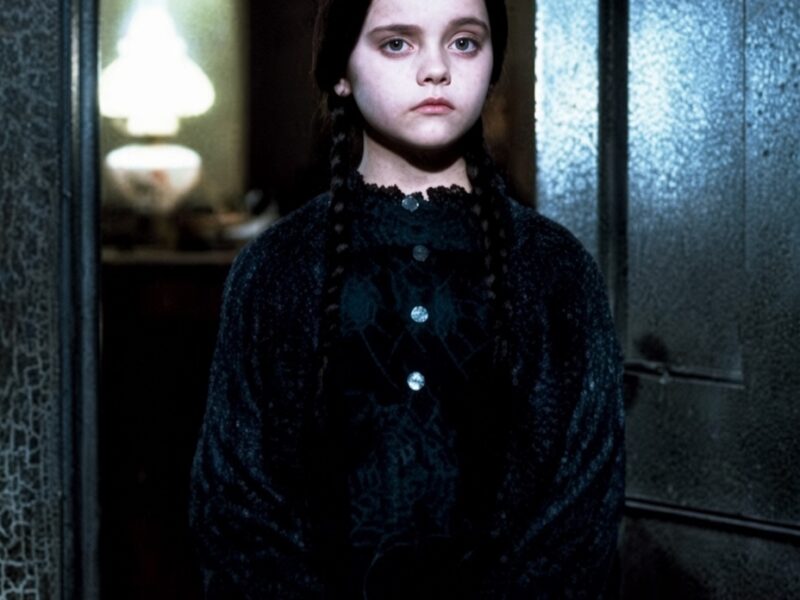
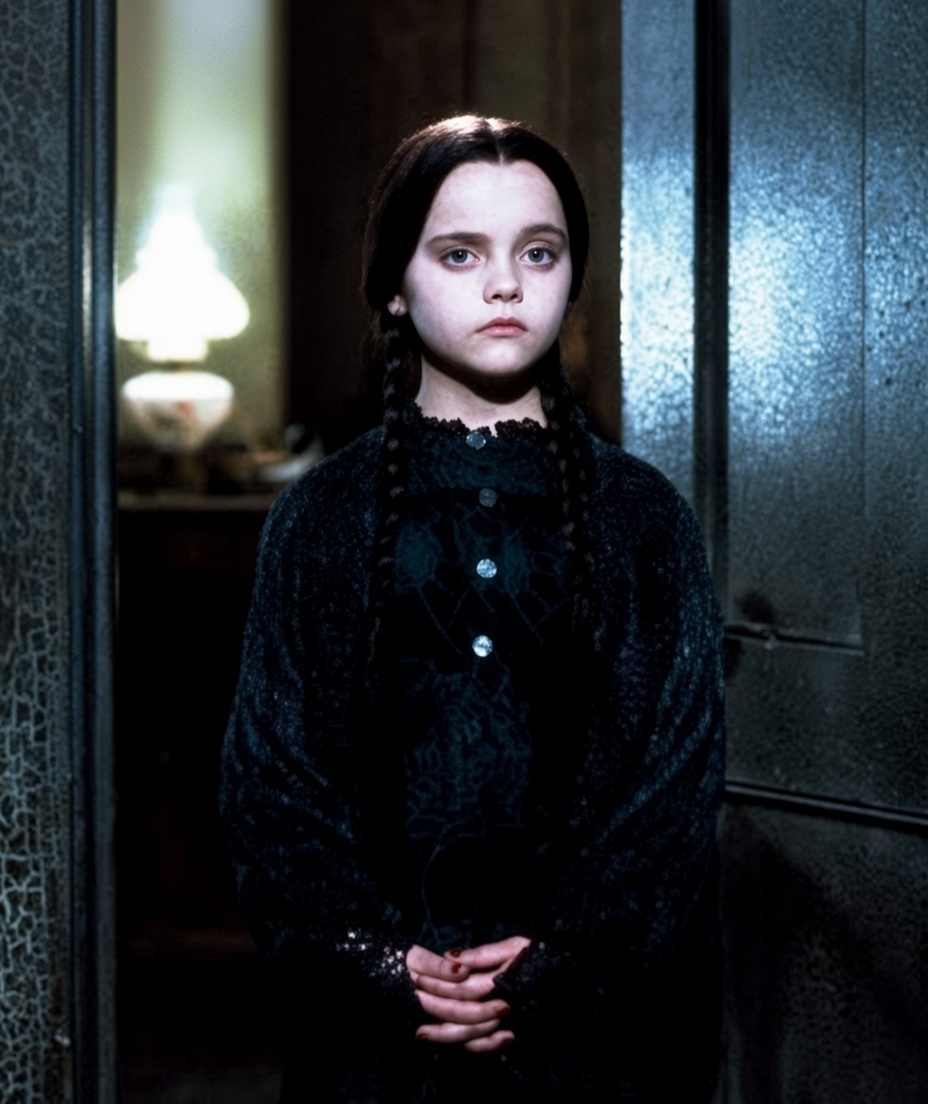
Christina Ricci as Wednesday Addams: Childhood With the Lights Turned Off
Wednesday Addams is the little girl whose blank stare made an entire generation laugh. She never needed to smile to own a scene.
Christina Ricci, born on February 12, 1980, was only 11 when the film opened in 1991. She gave Wednesday a deadpan precision that became instantly iconic.
Wednesday works because she is not just creepy. She is certain, and she knows who she is, what she likes, and why ordinary childhood rituals look absurd from her side of the graveyard.
Ricci understood the comedy of stillness even as a child, making every line feel like a tiny blade.
In 2026, she is 46, and Wednesday remains one of the roles that shaped her screen identity. Ricci later built a career through Casper, Sleepy Hollow, Monster, Buffalo 66, and Yellowjackets, often playing women with darkness, wit, or emotional damage just beneath the surface.
Looking back, Wednesday feels like the first clear sign of that gift. Wednesday Addams endures because Ricci made darkness feel intelligent, fearless, and completely her own.
The Mansion Goes Quiet Again
And just like that, the mansion goes quiet again. The Addams Family gave us darkness, laughter, romance, and a family that never needed to be normal to be loving.
But time changed the people behind those unforgettable faces. Some kept haunting Hollywood in the best way, and some stepped into quieter lives.
And some are now gone, leaving the mansion feeling warmer, stranger, and sadder than before.









