What Amish Wives Are Expected to Do Before Bed, I Dreaded Nightfall for Months
The Ninth Hour: A Young Amish Wife’s Journey from Dread to Freedom
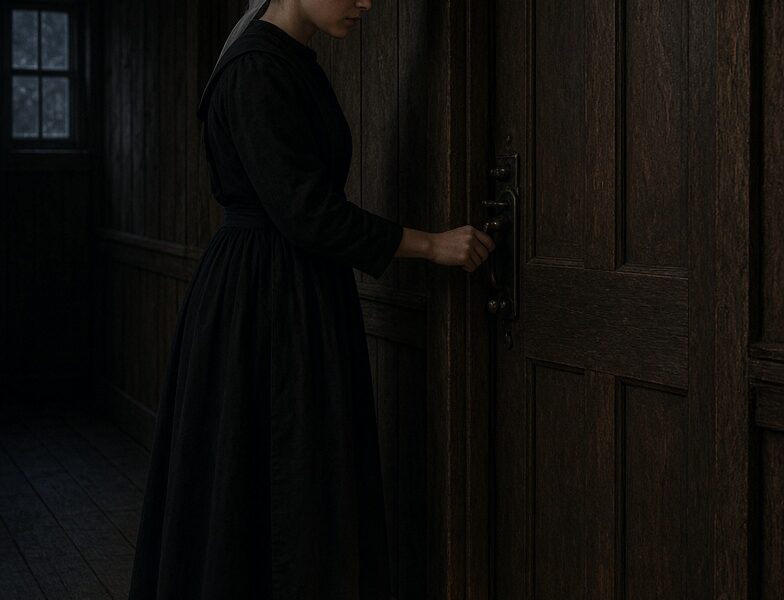
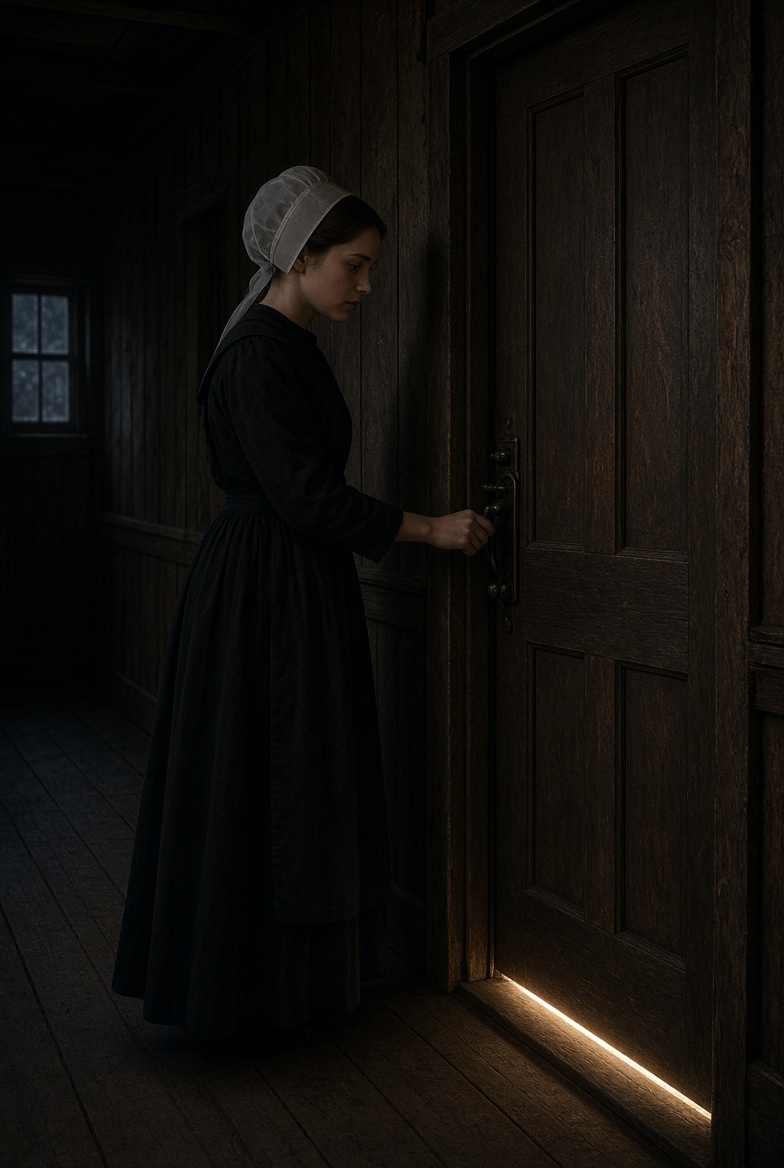
The bedroom was already dark, except for the thin line of lamp light under the door. I remember standing in the hallway with my hand on the wooden latch, listening to the clock in the kitchen count out every second. It was just after 9:00. The dishes were washed, the stove was banked for the night, tomorrow’s clothes were folded over the chair, and there was nothing left for me to do except open that door.
For months, that was the moment I dreaded most.
Not because of one single thing that happened every night. And not because every Amish home is the same. This is simply what marriage had come to feel like in mine.
I had been taught that a good wife finished the day quietly, without complaint, without making trouble, and without putting her own feelings first. By the time the house went still, I had learned how frightening silence could become.
My name is Katie. I grew up in an Old Order Amish family, and I share these stories because the plain life people see from the road is only one part of it. There is beauty in it. There is work, family, faith, and a kind of closeness I still miss sometimes. But there are also things we do not always know how to say out loud.
If you have ever gone through a season where you found yourself dreading a certain hour of the day, even when nobody else could see why, you are not alone. You do not have to explain everything. Sometimes, just knowing somebody else understands is enough.
When Bedtime Meant Something Simple
When I was younger, bedtime meant something simple. It meant Mama checking the stove one last time. It meant my sisters whispering too long after the lamp had been turned down. It meant Papa’s boots sitting by the back door with dried mud around the soles.
In winter, the upstairs rooms could be so cold that I would pull the quilt over my nose and breathe into the little warm pocket beneath it. In summer, we slept with the windows cracked and listened to insects in the grass.
Those were the sounds of safety. Those were the sounds of home.
Marriage changed the meaning of night for me.
I want to be careful with the way I tell this, because I do not want to pretend that every Amish wife is given the same rules, or that every husband acts the same way. They do not. What I am telling you is what I was taught, what was expected in the home I entered, and how I understood those expectations when I was a very young wife.
The Long Evening Before Bedtime
My evening started long before I went upstairs.
Supper was usually around 6:00. Afterward, the men might finish something in the barn or talk about work for the next morning. I cleared plates, packed away leftovers, wiped the table, washed the dishes, swept the crumbs from beneath the benches, and made sure the kitchen was ready for dawn.
If bread needed to be started, I did that. If there were clothes to mend, I tried to finish them before my eyes became too tired. On wash days, there could still be shirts hanging indoors if the weather had turned bad. On canning days, every surface seemed to smell like vinegar, fruit, or hot metal lids.
None of that bothered me. I had grown up working. Work made sense to me because it had a beginning and an end.
A sink full of dishes became an empty sink. A basket of mending became a neat stack. A dirty floor became clean.
What frightened me was the part of the evening that had no clear ending.
The Unwritten Rules of a Good Wife
Before bed, I had been taught to make sure my husband had what he needed for the next day. His shirt. His trousers. A clean pair of socks. His lunch things ready if he was leaving early. Water set where it belonged. The lamp trimmed. The doors checked.
There was also the expectation that no disagreement should be carried into the night.
That sounds gentle when somebody says it quickly. Do not go to bed angry. Many people live by something like that. But in my marriage, it meant something different.
It meant I was expected to become agreeable before the day was allowed to end.
If I was upset, I was supposed to settle myself. If I thought he had spoken harshly, I was supposed to forgive quickly. If I was exhausted, I was supposed to remember that he had worked, too. If I wanted space, I was supposed to ask myself whether wanting space was selfish.
And if I still felt troubled after all of that, I learned to keep it quiet.
The First Months of Marriage
The first few weeks after my wedding, I thought the tightness in my stomach would go away once I got used to being married. Everybody told me marriage took adjustment. Women smiled at me in that knowing way older women sometimes do with a bride.
One aunt squeezed my hand after church and said, “You learn each other’s ways.”
I held on to that sentence for a long time. I thought learning his ways meant eventually I would stop feeling afraid.
Instead, I became better at hiding it.
By 7:30 or 8:00, I would begin watching the clock without wanting to. If there was still bread dough to shape, I shaped it slowly. If a dish looked clean, I washed it again. I would step outside to bring in something that could easily have waited until morning. Sometimes I stood beside the clothesline in the dark with an empty basket in my hands just to feel the cool air on my face.
The night air became my only privacy. The only moment when nobody was watching, nobody was expecting, nobody was waiting.
A Mother’s Wisdom
There was one evening in late October that I remember better than most. The wind had been hard all afternoon, and dry leaves were scraping across the yard. I had spent nearly an hour mending a tear in one of my husband’s work shirts. The tear was only about three inches long, but I kept pulling out the stitches because they did not look straight enough.
My mother stopped by that afternoon to bring a jar of apple butter. She watched me sew for a moment and finally said, “Katie, that shirt is not going to church.”
I laughed because she meant I was being too careful. But then she looked at me more closely. Mothers notice things.
She asked if I was sleeping well. I said yes. She asked if I was eating enough. I said yes again. Then she sat beside me and rested both hands in her lap.
“You do not have to answer before you know what you want to say,” she told me.
That was the one sentence that stayed with me. She did not press me. She did not ask another question. She finished her coffee, talked about my younger brother, and left before supper.
That night I stood in the hallway at 9:00 with my hand on the bedroom door and repeated her words in my head.
You do not have to answer before you know what you want to say.
The trouble was, I did not know whether I was allowed to say what I wanted to say at all.
Where Expectations Come From
The expectations I had absorbed were not written on a wall. Nobody had handed me a list that said, “A wife must do these twelve things before bed.”
It was quieter than that.
It came from sermons about marriage. From comments made between women while snapping beans. From the way certain wives were praised for never complaining. From warnings about being stubborn. From the idea that peace in a home was something a woman protected by being patient.
Some of those teachings can sound beautiful. Patience is good. Forgiveness matters. Caring for another person is part of marriage.
But those ideas became dangerous for me when I believed they only moved in one direction.
I thought being a good wife meant my husband could be tired, but I should still be gentle. He could be frustrated, but I should not answer sharply. He could want closeness, but I should not admit when I felt overwhelmed. He could expect the evening to end a certain way, but I felt ashamed if my own body or mind did not agree.
So I started preparing for bedtime the way somebody prepares for weather they cannot control.
I made myself small. I kept my voice even. I avoided subjects that might become arguments. I tried to finish everything before he noticed it needed doing. I watched his face for signs of what kind of evening it would be.
That was probably the hardest part to admit to myself. I was no longer just living beside my husband. I was studying him.
The way he shut the door. The way he set down his hat. How loudly he pulled a chair from the table. Whether he answered me with one word or five. Whether his shoulders looked relaxed when he came in from the barn.
A person can become very good at reading a room when she does not feel safe enough to simply be herself in it.
The Good Evenings
There were good evenings, too. I want to say that clearly.
There were nights we laughed over something foolish. Nights he came home carrying a crooked carrot from the garden because it looked like a little man with legs. Nights we sat on the porch and watched heat lightning far off beyond the fields. Nights when I looked at him and remembered why I had wanted to marry him.
That almost made the difficult nights harder to understand. If someone is cruel every minute, perhaps the truth becomes simple. But when tenderness and fear live in the same house, you can spend a long time wondering which one is the real marriage.
The Breaking Point
By November, I was sleeping badly. I would wake before dawn and realize I had been clenching my jaw. Sometimes I had a headache before breakfast. I grew quieter around other women because I worried that if I started talking honestly, too much would come out at once.
At church, people saw a young married woman sitting beside her husband. At home, I was counting hours until dark.
One evening, after supper, I dropped a drinking glass. It slipped from my wet hand and broke against the floor. The sound was sharp enough that my husband came in from the next room.
I froze. Not because he had ever struck me. He had not. I froze because my body had learned to treat every mistake like the beginning of something I would have to manage.
He looked at the broken glass, then looked at me.
“It is only a glass,” he said.
I nodded. Then I started crying. Not quiet tears, the kind that make your chest hurt because you are trying so hard not to make noise. These were ugly, gasping tears that I could not stop.
He looked completely confused. I was embarrassed, which made me cry harder. He asked what was wrong. I said I was tired. He said we could go to bed early.
And that made everything worse.
I remember kneeling on the kitchen floor with a rag in my hand, picking up tiny pieces of glass, thinking, I cannot do this for another year. Not another year.
That frightened me because I had not allowed myself to think beyond another night.
Walking to My Mother’s House
The next morning, I went to my mother’s house. I did not make a dramatic plan. I did not pack a suitcase. I did not announce that I was leaving my marriage. I simply walked the familiar road after breakfast with my coat buttoned to my throat because the air was cold.
Mama was kneading dough when I came in. She looked at me once and washed the flour from her hands.
I sat at the table. For several minutes, neither of us said anything. Then I told her the truth in pieces.
I told her I dreaded bedtime. I told her I felt as if peace in the house depended on me never saying no to anything, never being too tired, never being angry, never wanting to be left alone. I told her I did not know which expectations were really from our faith and which ones I had built out of fear. I told her I felt guilty even sitting there.
My mother listened. She did not interrupt me. When I finally stopped, she said something I have carried with me ever since.
“Peace that requires you to disappear is not peace.”
That was her one sentence. She said it plainly, almost quietly. I looked at the flour still stuck in the lines of her fingers.
I had heard hundreds of words about obedience, patience, marriage, duty, forgiveness, and humility. I needed those ten words from my mother more than all of them.
Peace that requires you to disappear is not peace.
Naming the Fear
I wish I could tell you everything changed that day. It did not. Real life rarely changes because somebody says one perfect sentence.
I still went home. I still felt nervous when evening came. I still struggled to explain what was happening inside me.
But something had changed. I had named it.
Fear loses some of its power when you stop calling it duty.
The first conversation with my husband was terrible. Not violent, not dramatic, just painful. I told him I needed bedtime to stop feeling like an obligation I had to survive.
He became defensive. He said he had never meant to frighten me. I said intention was not the only thing that mattered. He said I should have told him sooner. I said I had not known how.
Then we sat in silence. I could hear the stove ticking as it cooled in the kitchen. For once, I did not rush to fix the silence. That was new for me. Normally, if he was uncomfortable, I felt responsible for making the room comfortable again.
That night, I let him be uncomfortable, and I let myself be honest.
We talked for a long time, then stopped because neither of us was saying anything useful anymore. The next evening, we talked again.
Questions I Had Been Afraid to Ask
I began asking questions I had once been afraid to ask.
Why was I responsible for ending every disagreement before bed? Why did being a patient wife mean ignoring my own exhaustion? Why had I confused marriage with constant availability? Why did I believe saying no to a conversation, a request, or any kind of closeness made me disobedient?
Some questions did not have quick answers. Some answers I had to discover much later.
But I learned something important during those months. Expectations can become powerful, even when nobody says them directly. A young woman can build an entire cage from hints, praise, warnings, and silence.
That does not mean every tradition is a cage. It means we have to be honest about what a tradition is doing inside a real person’s life.
What I Still Love About Evening
There are still evening routines I love.
I like the quiet after the dishes are finished. I like folding tomorrow’s clothes. I like checking the stove and hearing the house settle. I like the little ordinary rituals that tell your body the work day is over.
What I no longer believe is that a wife has to erase herself to make the night peaceful.
She can be tired. She can need space. She can say, “I do not want to talk about this tonight.” She can be upset without becoming a bad wife. She can have boundaries and still love deeply.
And a husband can listen without treating those boundaries as rejection.
Those truths sound obvious to me now. They did not feel obvious when I was young and afraid.
The Slow Thaw
For months, nightfall felt like a deadline. The sky would turn orange behind the barn, then gray, then black, and I would feel the same heaviness settle into my stomach.
I thought the answer was to become better at being a wife. Work harder. Be softer. Ask for less. Need less.
But the thing that finally helped was almost the opposite. I had to become more visible in my own marriage. I had to say when I was hurt. I had to admit when I was afraid. I had to stop pretending that silence meant peace, and I had to learn that faith does not require dishonesty about suffering.
Small Turnings
Looking back, I do not remember one single night as the turning point. I remember a series of small ones.
The first night I said, “I am too tired to keep talking.”
The first night I did not apologize for being upset.
The first night I went to sleep without checking his expression ten times.
The first night the clock reached 9 and I realized I had not been watching it.
That last one nearly made me cry.
I was in the kitchen putting away a cup. The house was quiet. I looked at the clock out of habit and saw the hands just past 9. For months, 9:00 had felt like a warning. That night it was just a time, nothing more.
I stood there for a moment with my hand around the cup and listened. The stove was quiet. The wind moving softly against the window. Somewhere outside, a loose piece of tin on the shed gave one little rattle, and I realized my body was not bracing itself.
That is what I remember most. Not a speech. Not a dramatic decision. Just the absence of fear.
What Marriage Should Be
These days, when I think about what a wife is expected to do before bed, I think the question itself can hide something important.
Marriage should not be a list where one person is always serving and the other is always receiving. Of course, we care for each other. We make meals, we do chores, we forgive, we compromise. We sometimes do things when we are tired because love is generous.
But generosity has to remain something freely given. It cannot survive if fear is doing the giving.
That is the clearest thing I understand now.
Pay Attention to Dread
If you are reading this because the title reminded you of your own marriage, your own family, or even another situation where you kept making yourself smaller to keep everybody else comfortable, I want to tell you what I wish somebody had told me sooner.
Pay attention to dread.
Not every nervous feeling means something terrible is happening. Sometimes we are tired. Sometimes relationships go through difficult seasons. Sometimes fear comes from old wounds that another person did not create.
But dread that returns again and again is worth listening to.
You are allowed to ask why it is there. You are allowed to speak honestly about it. You are allowed to expect care in return.
A Question for You
Before I go, I would like to ask you one question.
Have you ever mistaken keeping the peace for keeping yourself silent?
You can answer in as much or as little detail as you want. You do not have to explain everything. Sometimes, just knowing somebody else understands is enough.
And if this story resonated with you, if you have ever stood in a hallway at 9:00 with your hand on a door, dreading what came next, I want you to know that you are not alone. There is a way through. It starts with naming what you feel, even if only to yourself.
Peace that requires you to disappear is not peace.
It never was.
About This Story
This is the first in a series of stories from The Katie Journals, exploring the quiet, complicated, beautiful, and sometimes difficult parts of Amish life that people rarely see from the road. If you would like to hear more, subscribe and come back for the next story.
My new book, The Ninth Day, is available now. It is the first book in The Katie Journals, and if you would like to read it, you will find the link in the description. I am very grateful to everyone who has already picked up a copy and spent more time with these stories.
End of Article









