When My Husband Said Pregnancy Changed Nothing: An Amish Mother’s Story
The Sound That Changed Everything
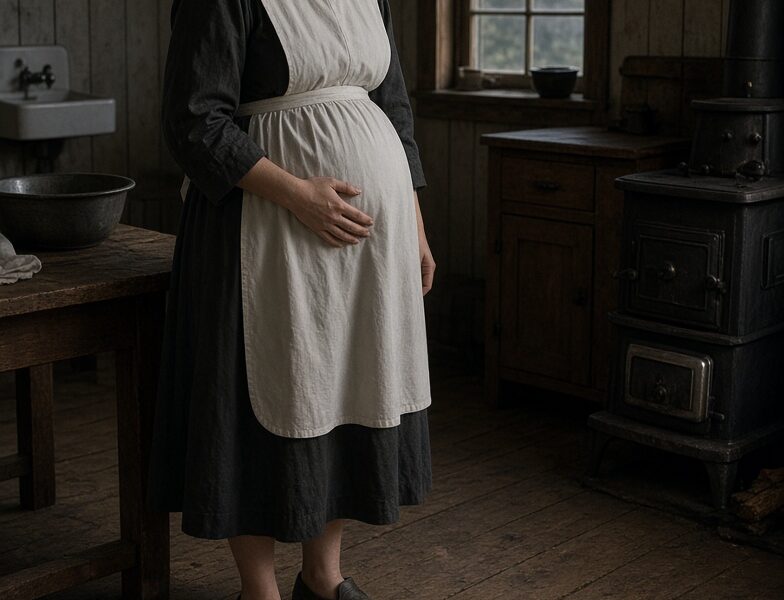
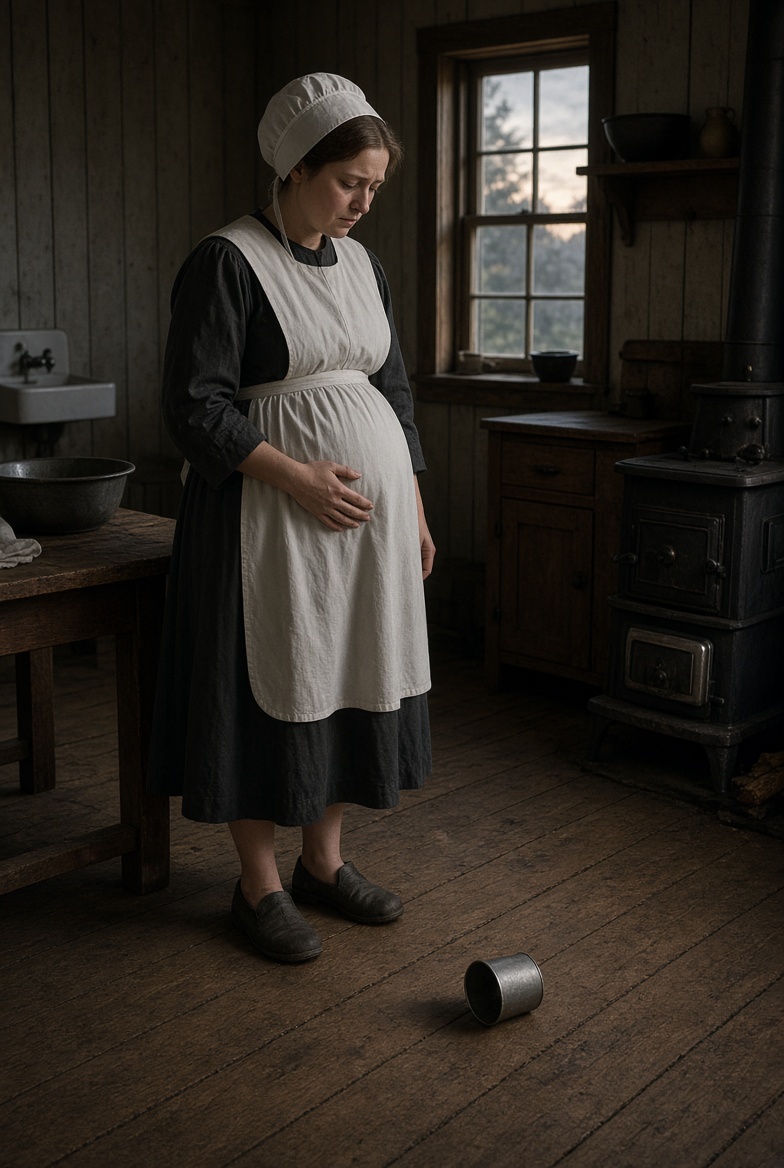
The tin cup slipped from my hand and struck the kitchen floor just after supper. It made such a sharp sound that I felt the baby jump beneath my ribs. I was eight months pregnant. My feet had swollen so badly that my shoes left marks in the skin, and I had spent the afternoon trying not to be sick.
My husband looked at the cup, then at me, and told me that being with child did not change what a wife owed her husband. I remember the ticking clock behind him more clearly than I remember his face because I had been waiting all day for him to notice how much I was struggling, and instead he had just told me that nothing had changed.
My name is Katie. I grew up in an Old Order Amish home, where a great deal of family life happens quietly behind kitchen doors and out in the fields, where other people cannot hear you. I tell these stories because sometimes the smallest things in a home stay with you the longest.
If you’ve ever had someone tell you that your needs were inconvenient at the very moment you needed help, you may understand what I am about to say. And if this brings a memory to mind, you can tell me about it in the comments if you want to.
Before I go further, I want to be careful about one thing. I am speaking about my marriage and the expectations I lived under in our particular household. I cannot tell you what every Amish husband thinks or what every Amish church teaches. Families are different, and the choices people make inside them are different. What I can tell you is what was said at our table and what it did to me. That is enough for one story.
The Spring I Learned I Was Carrying a Child
When I first learned I was carrying a child, the apple trees behind our house had not yet opened their blossoms. It was a cold morning in early spring. I remember standing near the washstand with my hands against the edge of the basin because my knees felt loose beneath me. I had been waking early with a sour taste in my mouth. The smell of coffee, which I had once liked, turned my stomach.
I did not know yet how to say the words aloud. I had imagined that when I told my husband, he would draw me close and that we would sit together for a while, speaking softly about names and whether the baby would have his dark hair.
He smiled when I told him. I want you to know that. He was not a man who never smiled, and it would be too easy to make him into somebody without a single tender moment. He set down the harness strap he was mending and put his hand on my shoulder. He said we had been blessed. That evening he carried an extra bucket of water without being asked.
For several weeks I kept that small kindness close like something warm in my pocket.
But pregnancy did not arrive in our house as a single beautiful announcement. It arrived as one change after another. Most of them too ordinary to speak of at Sunday gatherings. I could no longer hurry across the yard without catching my breath. The smell of fried onions made me lean over the backstep. My wrists ached after wringing wet fabric, and by noon the iron felt twice its usual weight.
I had been taught to finish what needed finishing. So I made the bread, fed the chickens, swept the grit from the kitchen floor, and folded the washing when it was dry. I did those things while the child inside me grew from a secret into a weight I could feel each time I bent forward.
At the end of the fourth month, I thought the worst sickness had passed. I could eat breakfast without having to sit down midway through it. I planted beans near the fence and watched the little leaves push through the soil. I even laughed at myself one afternoon because I had forgotten why I had walked to the pantry. I stood there looking at jars of peaches as if they could remind me.
During those weeks I began to believe that I understood this business of being pregnant. I thought it meant adjusting and then carrying on.
The Weight of the Sixth Month
By the sixth month, I was waking at night because my hips hurt. The baby pressed low when I walked and high when I sat. I learned how to sleep with a rolled blanket between my knees. Some nights I could hear a wagon far along the road and knew that other households were already asleep. Beside me, my husband breathed evenly and I would lie still, not because I felt peaceful, but because turning over seemed like a piece of work.
In the morning, I got up before him to put kindling in the stove. I had not been forbidden to ask for help. That is not how our difficulties worked. I could ask. Sometimes he helped, but the question carried a cost that was hard to name.
If I said I was too tired to finish something, he wanted to know why I had not begun earlier. If I said my back hurt, he reminded me that women had born children for generations and kept their households in order. He spoke about endurance as though it were a measure of love.
After a while, I found myself making every request smaller before it even reached my mouth.
One afternoon in July, I tried to lift a basket of damp sheets from the ground. I could feel the muscles pulling across the bottom of my stomach, so I set it down again. My husband was crossing the yard and saw me standing over it. I asked whether he would carry it to the line. He looked toward the barn where there was still work waiting and told me he would do it when he came back.
I thanked him. By the time he returned, I had carried half the sheets myself, one armful at a time, because I did not want the washing to sit wet and smell sour. He said nothing about the basket being empty. I said nothing about how long it had taken me.
That was how we began to misunderstand each other without ever having one great argument. He thought that because I finished things, I was able to finish them. I thought that if I could finish them, I had no right to complain. We both looked at the same clean sheets moving on the line and saw different things. He saw a house that was running as it should. I saw how hard I had worked to make it appear that way.
When Affection Felt Like Another Task
There were evenings when what he wanted was not a finished chore. He wanted closeness and affection, the ordinary private life of a husband and wife. I loved him and I wanted tenderness, too. But as my belly grew, I became uncomfortable and often afraid of hurting myself or the baby. I needed patience, conversation, and the freedom to say when something did not feel right. Instead, I sometimes felt that I had to explain my body like a child explaining why a task had gone unfinished.
That feeling, more than any single request, frightened me. I had begun to believe that my comfort needed permission.
I wish I could tell you I confronted him at once with a clear voice and perfectly chosen words. I did not. I watched the weather change. I watched the beans climb their poles. I counted the weeks because counting gave me something orderly to hold on to. When someone at a gathering asked how I was feeling, I said I was tired but grateful. Both things were true. Neither answer told the whole truth.
My Mother’s Visit
My mother visited one afternoon with a small bundle of baby shirts she had washed and mended. She folded each little sleeve inward before laying it on the table. I was sitting with my feet propped on a low stool, embarrassed that she should find me resting while the kitchen still needed sweeping.
She looked at the swollen skin above my stockings and set down the shirts. For a while, she simply sat beside me, rubbing a loose thread between her fingers. Then she said very quietly, “A good home has room for a tired person.”
I remember those words because she did not say them like a judgment on my husband or on me. She said them as if she were describing something as plain as a door that ought to open.
I wanted to ask her whether she had ever felt alone while carrying me. I wanted to ask whether she had cried after everyone else went to bed, whether she had learned to hide pain behind a cheerful voice, whether marriage was supposed to make asking easier or harder. But she had given me something already and I was frightened that many questions would turn a gentle visit into a confession.
We spoke instead about the baby shirts. I held one against my stomach and tried to imagine the little person who would one day fill it.
The Seventh Month: Heat and Silence
The seventh month was full of hot, heavy days. At sunrise the grass glittered with dew, but by noon the air inside the kitchen hardly moved. I could smell dust settling on the window ledge. I measured flour and pushed bread dough with the heels of my hands, stopping sometimes to brace myself against the counter. If the baby kicked while I was standing, I would put one hand beneath my belly and breathe until the feeling passed.
There were days when even my own body seemed to be asking me to slow down and I answered it by looking at the next task.
Then came the eighth month. I could see the shape of my child’s movement beneath my dress. I moved more carefully down the steps. My ankles ached in the evening. When I dropped something, I stared at it for a moment and decided whether picking it up was worth the effort. I began setting a chair beside the kitchen table because there were times I needed to sit while peeling potatoes.
That chair was a small thing, but I felt ashamed whenever I pulled it out. I had turned rest into evidence that I was failing.
The Morning the Cup Fell
The morning of the tin cup began badly. A storm had passed in the night and the ground was slick. I had scarcely slept because I kept waking with a tight feeling across my stomach. It eased when I rested, but each time it returned I worried. I did not have the words to tell whether what I felt was ordinary discomfort or something that needed attention.
I told my husband that I wanted to take the morning slowly and if the tightness returned, speak with someone who could help me decide what to do. He nodded but went back to discussing the work that needed doing before the next rain.
I do not remember every word that followed and I would not pretend I do. What I remember is the way our conversation kept circling back to what he needed. There was a visiting family expected on Sunday and the front room needed cleaning. He wanted the supper dishes put away before he returned from the barn. He wanted us to behave as we always had without every part of our day being changed by the pregnancy.
I asked him whether he could sweep the front room himself. His jaw tightened. He did not shout. Sometimes the absence of shouting makes a conversation harder to explain afterward.
The Afternoon That Stretched Forever
In the afternoon, I sat near the stove with a basin of potatoes. I could hear water dripping from the roof into a pail outside. I worked slowly, setting each peeled potato in clear water so it would not brown. Twice I stopped because my back had begun to ache. By late afternoon, I had done much less than I had planned, yet I felt as if I had been working for ten hours.
I wanted someone to look at me and say that it was enough.
He came in before the light was gone. He noticed the unwashed floor and the stack of linen I had not folded. I told him about the tightness in my stomach, about the aching, and how little I had slept. He asked whether I had finished supper. I said I had, though I had needed to sit down three times.
He took his place at the table. We ate potatoes, green beans, and bread while the clock counted out the seconds between us. After supper he spoke again about what a wife owed her husband. He meant work, attention, and the closeness he had come to expect. He said the eighth month had changed nothing.
The Breaking Point
I was carrying plates toward the washbasin when those words landed. I turned too quickly. The tin cup slid from the stack, and it struck the floor.
I stood over it without bending. The baby moved. My husband glanced at the cup as if it were the thing that interrupted our evening.
I wanted to tell him that the eighth month had changed almost everything. It had changed how I slept and walked and breathed. It had changed what I could lift. It had changed how long I could stand at a table and whether I could move without pain. More than that, it had changed the way I needed to be loved.
I did not need him to become a different man overnight. I needed him to see that I was not the same woman physically as I had been the previous spring. I was doing something enormous, even when I was sitting still.
At first I said only that I could not go on pretending. He asked what I meant. I placed the plate on the counter because my hand was shaking, then told him I was afraid to ask him for the simplest kindness. Saying it aloud made my face hot.
I had expected anger or perhaps a list of all the things he had done for me. There was a long silence. He looked toward the window. I could see our reflections in the dark glass, and mine looked smaller than I felt inside.
He answered that he worked hard as well. That was true. He rose early, cared for the animals, repaired fencing, and came back worn from the heat. I knew the sound of his boots on the step when a day had been difficult. But I had spent months letting his tiredness cancel out mine, as though only one person in a house could be tired at a time.
I told him that I knew he worked hard. I told him that I was not asking him to stop being tired. I was asking him to believe that I was tired, too.
The First Moment Without Proof
That was the first moment I can remember in which I did not offer proof. I did not pull up my stockings to show my swollen ankles. I did not describe every hour of the night. I did not mention how many times I had sat down to finish supper. I told him what was true and let it remain true without persuading him. I was more frightened by that than by the argument itself.
He did not suddenly understand. I want to be plain about that. He went quiet, then said we should speak after we had both rested. There was no embrace that night to make a tidy ending. There was a cup on the floor still waiting to be picked up. I left it there while I went to sit on the edge of our bed. I remember the cool cotton beneath my palms and how slowly the child shifted when I finally became still.
The Morning I Chose Rest
The next morning, I made a choice that felt larger than it should have. I did not get up before dawn to prove that I could. I stayed in bed until the sun had begun to touch the top of the window. When my husband asked about breakfast, I told him there was bread in the box and eggs in the pantry. I said I needed to rest first.
My voice was quiet. I did not apologize. I watched his expression waiting for the familiar tightening around his mouth. He turned toward the kitchen. I could hear him moving a pan onto the stove.
That small sound did not solve our marriage. It did tell me that the world would not end if I let someone else make breakfast.
The Conversation That Mattered
Later that day, we spoke again. I told him I wanted us to ask for guidance about my pregnancy concerns rather than guessing at what I should bear. I told him I needed him to accept a refusal when I was uncomfortable without treating it as a rejection of him. I said there were chores I could no longer do safely or without pain and that we needed to divide them differently for a while.
Those were hard sentences. I had practiced them silently while lying awake.
He listened unevenly. Sometimes he began answering before I had finished. Sometimes he looked ashamed. I could not know everything he was thinking.
I do know that he took over the heavy washing for the remainder of that week and that we arranged to discuss my symptoms with a qualified caregiver. It was not a grand transformation. There were still days when he forgot, when I had to say again that I needed to sit or that my body did not feel well. There were also days when he brought a chair before I asked.
I learned not to confuse a single good gesture with a problem being settled, but I also learned to notice genuine effort.
What I Learned About Strength
I have thought often about the words he used that evening. The idea that a wife’s responsibilities could remain exactly the same while her body changed so completely. I used to hear such words and think I had to discover a way to become stronger. Now I think strength can look like setting down a heavy basket. It can look like asking someone to believe you before you collapse. It can look like insisting that affection must leave room for an honest no.
Our child was born after those difficult weeks and the memory of that season stayed with me long after the swelling left my feet. I do not want to turn the birth into proof that everything before it was acceptable. A healthy moment later does not erase fear earlier. Nor do I want this story to become a claim that every Amish household is like mine was. I have known gentle men who care for their wives with quiet constancy and I have known women who speak freely about what they need. This is one kitchen, one marriage, and one part of my life.
A Word for Anyone Who Is Tired
If you are listening while you are tired yourself, there is something I wish I could place beside you as simply as my mother placed those little shirts on the table. You should not have to reach the point of breaking before your exhaustion is taken seriously. And when your body is changing, especially during pregnancy, needing support is not a failure of gratitude or faith. You can love your family and still tell the truth about what you cannot manage today.
I still hear that cup hit the floor sometimes when I remember the eighth month, but the sound no longer makes me think first of a mistake. It reminds me of the moment I stopped picking everything up automatically. The house was not ruined because one cup lay on the boards. The work could wait. I was allowed to sit down, and the person beside me had a responsibility not merely to receive what I gave, but to notice when giving had begun to hurt.
A Question for You
Before I go, I wanted to share something personal. My new book, The Ninth Day, is out now. It’s book one of The Katie Journals, and if you’d like to spend a little more time with these stories, you can find it through the link in the description.
Thank you for listening to a memory that is not easy for me to tell. If you’d like to hear more about the ordinary days and difficult decisions that shaped my life, I hope you’ll subscribe.
And I’d like to ask you this: when you were going through a hard season, what was one small act of help that made you feel truly seen?









