What Amish Brides Discover Their First Week of Marriage, Nobody Warned Me
The Sound of a Spoon
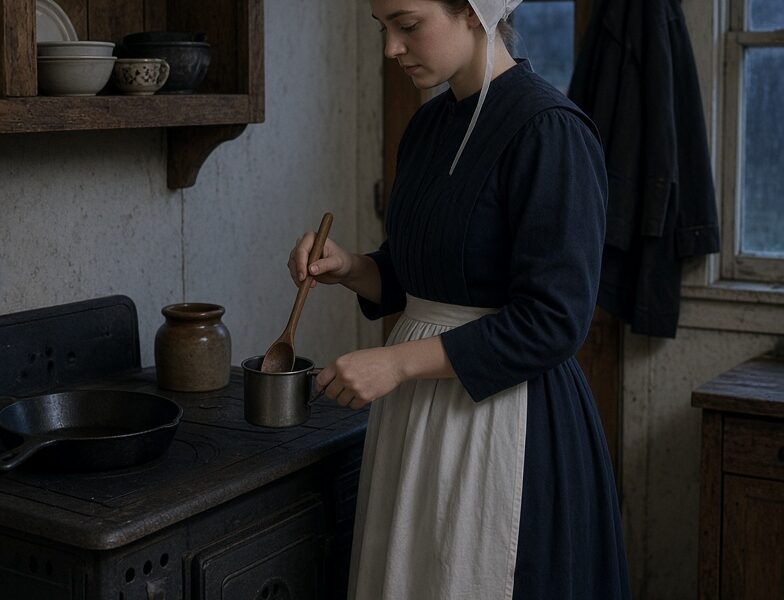
The first thing I remember is the sound of my own spoon touching the side of a tin cup before the sun was fully up. It was such a small sound, but in that kitchen, it seemed loud enough to wake the whole house.
I had been married six days. My husband was still outside finishing the milking, and I was standing at a stove that did not feel like mine yet, trying to make breakfast in a kitchen where I still had to stop and think about which drawer held the knives.
I had imagined that the first week of marriage would feel like stepping into a new life. Instead, it felt more like waking up in somebody else’s life and slowly realizing that everybody expected me to know how to live it.
That is the part nobody had warned me about—not the work itself. I knew work. I had grown up with chores before breakfast, sewing in the evenings, washing by hand, preserving food, helping younger children, and doing whatever needed doing without being asked twice.
What surprised me was how different ordinary work felt when there was no mother in the next room, no sister beside me, no familiar rhythm around me. There was only me, a new husband, a new home, and a hundred small decisions I had never had to make alone.
My name is Katie, and I grew up in an Old Order Amish family. I share these stories because so much of our life looks simple from the outside, and sometimes it is simple, but simple does not always mean easy.
If you have ever moved into a new home, married, or started a life where suddenly everyone assumed you knew what you were doing, tell me in the comments what surprised you most. I would like to know whether this feeling belongs to Amish brides or just to brides everywhere.
What Nobody Told Me
Before I was married, women talked to me about plenty of things. They told me to keep flour covered so mice would not get into it. They told me which kind of soap lifted grease from work shirts. They told me never to leave wet laundry folded in a basket overnight.
My mother showed me how she stretched one chicken across more than one meal, and my older aunt taught me how to mend the knees of men’s trousers without making the patch stiff. There were conversations about prayer, patience, keeping a home, and learning the habits of the man I would marry.
But nobody sat me down and said, “Katie, the strangest part of your first week will be how quiet everything becomes when you no longer belong to the house where you grew up.”
That was the first thing I discovered.
The Morning After the Wedding
On the morning after the wedding, I woke before my husband because my body was used to waking when my sisters did. For a few seconds, I did not know where I was. The ceiling above me had a faint water stain near one corner, and the room smelled of pine boards and the wool blanket folded at the foot of the bed.
There was no sound of my youngest sister crossing the hallway, no cupboard door opening in my mother’s kitchen, no father clearing his throat before going outside. It was just still.
I lay there listening to that stillness until I heard my husband breathe beside me, and that was when it came back to me. This is home now.
I had wanted that. I had chosen him. I was happy to be married. But happiness did not erase the oddness of it. Two things can be true at once, and I did not understand that yet. I thought if I felt lonely for home, it meant I was doing marriage badly.
So I told nobody.
I got dressed, pinned my covering, went downstairs, and started the stove.
The Strangeness of a New Kitchen
Our house was small. The kitchen and main room were divided by a doorway without a door, and from the table I could see the hooks by the entrance where his work coat hung. There were three plates in the cupboard that did not match, a crock of salt, one good cast iron skillet, and a wooden spoon darkened from years of use.
Most of those things had come from relatives. Some were mine, some were his. None of them felt like ours yet.
I remember opening the pantry and realizing I did not know how much food two people used in a week. That sounds foolish now. I had cooked for a large family since I was old enough to safely handle a knife, but cooking for ten people is not the same as cooking for two.
At home, if I made too much, somebody ate it. If bread disappeared faster than expected, my mother adjusted without thinking. In my own kitchen, every loaf, every jar, every scoop of oats suddenly felt like a calculation.
How much butter would we need? How often should I bake? Was I supposed to plan supper before breakfast? What did he expect to eat at noon? Had his mother packed lunches a certain way?
I did not want to ask too many questions because I was afraid of sounding childish.
That was the second thing I discovered. Marriage gives you permission to ask many questions, but pride can make you pretend you already know the answers.
The Burned Oatmeal
On the second day, I burned the bottom of a pot of oatmeal. Not badly, but enough that I could smell it. I scraped the top into bowls and hoped he would not notice.
He took one bite, looked at the bowl, then looked at me. I could feel heat climbing up my neck.
He said very gently, “Did the stove run hot on you?”
I almost cried. Not because he had been harsh—because he had not been. I had spent all morning imagining that one scorched pot would expose me as a girl pretending to be a wife.
Instead, he ate it. He even finished the bowl.
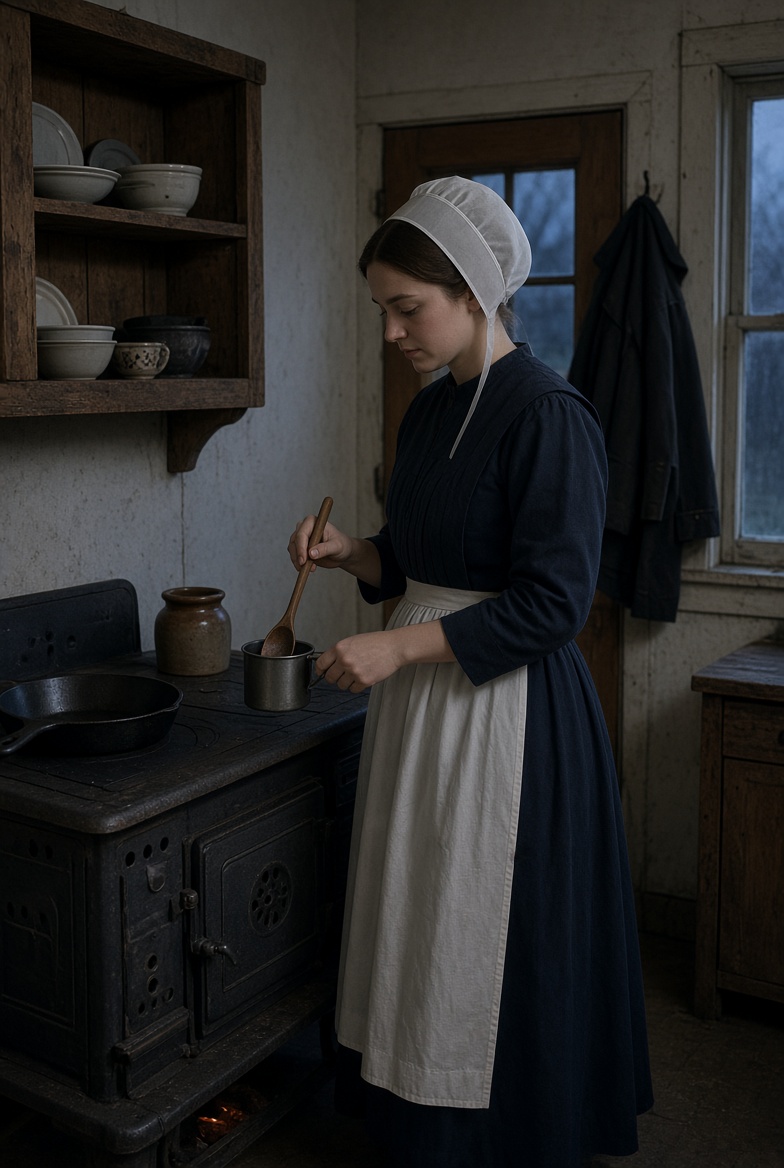
Later, I carried the pot outside and scrubbed it with sand and hot water until my fingers went red. I can still remember thinking, “Nobody told me how much of marriage would happen inside my own head.”
There were expectations, yes, but some of the heaviest ones were the expectations I placed on myself. I believed I should already be calm, capable, organized, grateful, patient, and sure of everything. I thought a good wife woke up knowing what needed doing.
I did not realize that a good wife could also stand in the pantry for five minutes wondering whether there was enough flour to make bread.
The Third Day
By the third day, I was tired in a way that had little to do with chores. Every movement required thought because nothing had become habit yet.
At home, my hands knew where everything was. I could walk into our kitchen in near darkness and reach for a bowl without looking. In the new house, I kept opening the wrong cupboard. I hung a towel in one place, then moved it because it dripped too close to the wood box. I swept the floor, then watched my husband come in with mud on his boots and had to decide whether to say something or quietly sweep again.
I washed clothes and discovered that the line behind the house received full wind from the field, which meant I had to use more clothespins than I was used to. One of my aprons blew halfway across the yard before I learned that. I chased it through damp grass in my stockings, laughing and irritated at the same time.
That moment stays with me because it was the first time the house felt less serious. I caught the apron at the fence, looked back at our little place, and for the first time I thought, “Maybe I do not have to know everything today.”
My Mother’s Visit
My mother came by on the fourth afternoon with a jar of beans and a small wrapped loaf. She did not stay long. In our community, people understood that newly married couples needed room to settle.
She looked around the kitchen, noticed a pile of folded towels on the table, and saw the tiredness on my face even though I tried to hide it. She set the jar down and said only one thing to me:
“A home learns you slowly.”
That was all. She did not tell me how to arrange my pantry. She did not inspect the corners. She did not ask whether I had been keeping up. She said those five words, drank half a cup of coffee, and left before supper.
I have remembered them for years because they changed the way I saw that first week. I had been trying to prove I belonged in the house. My mother reminded me that belonging was something built through repetition.
You make bread there once, then ten times, then a hundred. You learn which floorboard complains in winter. You learn how the morning light crosses the table. You know where to set the bucket when rain pushes under the back step. The house becomes yours because your life keeps happening inside it.
Nobody had told me that either. I had thought marriage changed your identity all at once. In truth, some changes happen at the wedding and others happen quietly over months.
Learning Each Other
Another thing I discovered was that being together every day is not the same as truly knowing each other’s habits. During courtship, you see a person in certain settings. You see him after chores, on visits, at gatherings, walking home, sitting in a buggy, talking with family nearby.
Then marriage begins and suddenly you know how he folds a shirt, whether he closes a cupboard, how much coffee he drinks before speaking in the morning, whether he hums while working, and what silence means when he is tired.
My husband learned things about me, too. He learned that I dislike crumbs left on the table but can ignore a stack of mending for days. He learned that when I am worried, I become very quiet instead of talking more. He learned that I need a few minutes after waking before I want to answer questions.
Those discoveries sound small, but small things are the substance of daily life. Love can be spoken in big promises, but marriage is often lived through where you put wet boots and whether you remember to save the last piece of pie.
Our First Disagreement
On the fifth evening, we had our first real disagreement. It was not dramatic. Nobody shouted. Nobody left the house. It was about money, of all things, and not even very much money.
I had assumed we would buy a certain household item that week. He had assumed we would wait until after another payment came in from work. I heard his hesitation as criticism. He heard my insistence as impatience. Within five minutes, we were both defending things the other person had never actually accused us of.
I remember standing near the sink with my hands wet, thinking, “This cannot be what married people do.”
Then I realized I had no idea what married people did when they disagreed, because children do not see every private conversation between their parents. We see the supper table. We see chores. We see the shape of family life. We do not always see how two adults repair a misunderstanding after the younger children have gone to bed.
That evening, we sat down at the table and explained what each of us had meant. It took less than twenty minutes. Nothing remarkable happened, but I learned something important.
Peace in a home is not the absence of disagreement. Sometimes peace is the way two people return to each other after one.
I wish somebody had told me that, because I spent years as a girl imagining good marriages as houses where nobody ever misunderstood anybody.
Sunday and the Feeling of Being Watched
The sixth day was Sunday, and that brought another surprise. I had expected to feel grown when I arrived beside my husband instead of with my parents. Instead, I felt more visible than I ever had in my life.
People smiled at us. Older women asked how I was settling in. Younger girls looked at me with the same curiosity I had once used when looking at newly married women. I suddenly understood that a bride can become a symbol to other people before she feels like anything different inside.
To them, I was a married woman now. Inside, I was still the same person who had left my mother’s kitchen less than a week earlier. I still knew which of my sisters stole the warm corner of the quilt. I still wanted to turn when I heard my father laugh across the room. I still thought of my parents’ house as home without meaning to.
That used to make me feel guilty. Now I think it was natural. We do not become new people by erasing the old life. We carry it with us until the new life becomes familiar enough to stand beside it.
The Seventh Morning
By the seventh morning, the kitchen did not feel entirely strange anymore. I knew which stove lid sat slightly crooked. I knew how long the water took to heat. I knew that my husband preferred one large piece of bread at breakfast instead of two smaller ones. I knew I needed to start the fire earlier if the wind was out of the north.
I also knew that I missed my family, that I was capable of running a household badly for a day without the world ending, and that asking a question did not make me less prepared for marriage.
That last one took me the longest.
Amish girls often learn many skills before marriage. We work hard. We are around babies, gardens, kitchens, sewing, preserving, cleaning, and farm life from a young age. From the outside, that can make it seem as though we step into marriage already knowing exactly how to keep a home.
But practical ability is only one part of it. Nobody can teach you in advance exactly what it will feel like to share decisions with one specific person in one specific house with one specific set of hopes, habits, weaknesses, and strengths.
You learn that together.
A Note About Amish Brides
I also want to be careful when I tell this story because no single first week describes every Amish bride. Some women move into a house close to their parents. Some move farther away. Some marry into a family they have known all their lives. Some find the adjustment gentle. Others struggle more.
Communities and families are different. Personalities are different. A woman who is naturally independent may experience the change one way, while someone deeply attached to a large household may feel it another way.
I can only tell you what surprised me.
For me, the hardest part was not some hidden rule. It was not a secret ceremony. It was not one dramatic moment. It was the accumulation of little things nobody thinks to explain because they sound too ordinary to mention.
How quiet a room can be when you are used to siblings. How strange it feels to buy food for only two people. How much energy it takes to turn an unfamiliar house into a routine. How quickly you discover another person’s habits. How easily you can mistake your own fear for someone else’s expectation. How homesickness can exist right beside happiness. And how marriage can feel both very grown and very new at the same time.
What That First Week Taught Me
Looking back now, I think that first week taught me something I still need to remember. We often expect important changes in life to arrive with certainty. We think if we made the right choice, we should feel sure. If we are grateful, we should not feel lonely. If we are prepared, we should not make mistakes.
But real life is rarely that neat. Sometimes you can love the life you chose and still need time to learn it. Sometimes you can be ready and still be a beginner.
I was both.
On that seventh evening, I baked bread again. The first loaf had been too dense. The second had risen better. I cut into it while it was still a little too warm, and my husband took a piece before I had even set the knife down.
We sat at the table with butter softening on a plate between us. The room smelled like yeast and wood smoke. Outside, it had started to rain, and I could hear it tapping against the window.
Nothing important was happening, but I remember feeling calm for the first time all week. I knew where the cups were. I knew what needed doing before bed. I knew I would wake up in that house the next morning, and it would feel slightly more familiar than it had the day before.
That was enough.
A Question for You
Before I go, I also want to tell you that my new book, The Ninth Day, is out now. It is the first book in The Katie Journals, and if you would like to read it, you will find the link in the description.
And if you enjoy these quiet stories about the parts of Amish life people rarely think to ask about, you can subscribe and come back for the next one.
I would also love to hear your answer to this: When you first married, moved away, or started a home of your own, what was the smallest thing that surprised you the most?









