What Amish Brides Are Told Never to Refuse, I Learned Before the First Sunrise
“A Wife Should Never Make Her Husband Feel Refused”: An Amish Bride’s First Sunrise
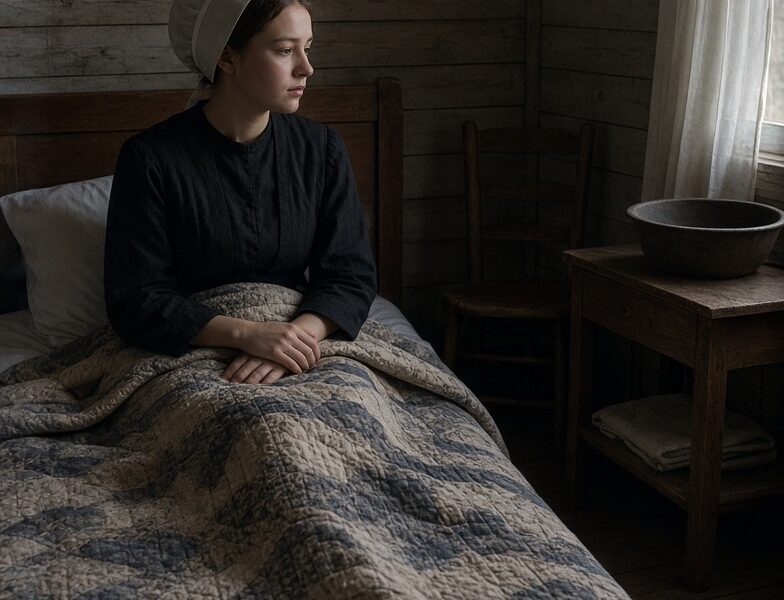
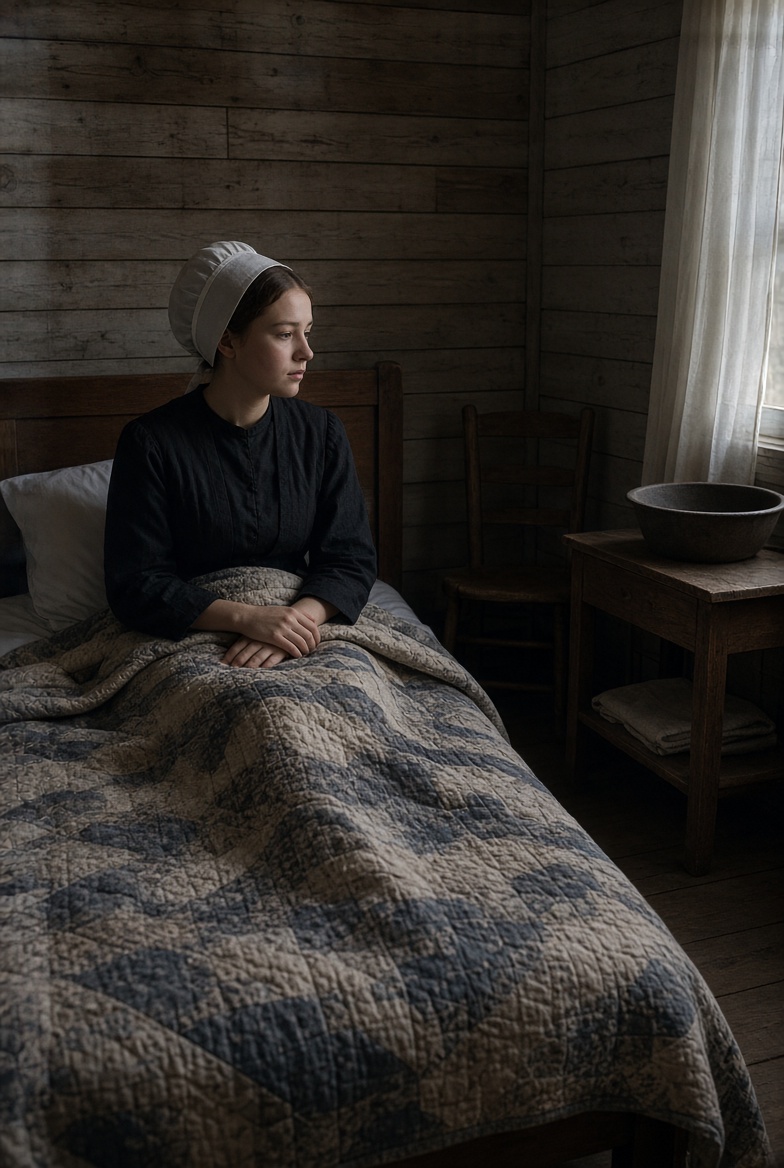
The room was so quiet I could hear the clock downstairs ticking through the floorboards. I remember the weight of the quilt over my knees, the smell of lye soap still clinging to my hands, and the first pale strip of morning beginning to show around the edge of the curtain.
I had been married less than a day, and already there was one sentence turning over and over in my mind.
A wife should never make her husband feel refused.
I had heard versions of it before—whispered by older women, folded into advice about patience and obedience. But I did not understand how heavy those words could feel until that first sunrise.
My name is Katie. I grew up in an Old Order Amish home, and I share these stories because there are parts of our lives that people outside the community often imagine one way and experience another when they hear them from someone who lived them.
If you have ever been given advice before a wedding that stayed with you long after the celebration was over, you will understand why that morning has stayed with me.
The Morning Before the Wedding
The morning before my wedding, our kitchen was already warm before 6:00. My mother had two pots going on the stove. My younger sister was carrying bowls from the pantry, and somebody had set three pies on the sideboard where nobody was supposed to touch them.
I was 18, tired from almost no sleep, and trying very hard to behave as though I was not frightened.
That is one thing people do not always understand about an Amish wedding. There can be a great deal of work around it, and very little room for a bride to sit quietly with her own thoughts. There are relatives arriving, food to prepare, benches to arrange, clothes to brush, dishes to wash, and questions coming from every direction. Everyone knows what day it is, so everyone looks at you a little longer than usual.
I remember standing at the sink with my sleeves rolled up, rinsing flour from a wooden spoon, when my mother told me she wanted to speak with me later. She said it softly—so softly I almost pretended I had not heard. She did not say what about.
I knew anyway.
There were things daughters were expected to understand without having them explained plainly. Marriage was one of them.
What I Knew and Did Not Know
We were not raised with open conversations about intimacy. There were no long talks at the table, no books left where a curious girl could find them, no casual questions that could be asked without embarrassment.
What I knew came in pieces. A married sister saying one thing while we snapped beans. A cousin going red in the face when somebody made a joke. A mother changing the subject when a daughter asked too much.
So by 18, I knew enough to know that marriage changed what was expected of a woman—but not enough to feel prepared for the change.
The Wash House Conversation
That afternoon, after most of the baking was finished, my mother asked me to walk with her to the wash house. The air was cold enough that our breath showed. It was late autumn and the grass had gone stiff and silver near the fence.
She carried a basket of folded cloths, even though I am still not sure she truly needed to take anything there. I think she only wanted a reason for us to be alone.
Inside, it smelled of soap, damp wood, and the ashes from the stove. She put the basket down. For a few seconds, she said nothing.
Then she told me that marriage required patience from both people, but that a wife carried a special responsibility for peace in the home. She said there would be moments when I was tired, moments when I did not understand my husband, moments when I might wish for more space than marriage allowed.
She spoke carefully, looking at the shelf beside me instead of directly at my face.
Then she said the sentence I remembered at sunrise.
“A wife should never make her husband feel refused.”
I did not ask what she meant. I knew what she meant. Or at least I thought I did.
My face went hot. I looked down at my hands. There was a tiny crack beside my thumbnail from winter dryness, and I remember staring at it as though that little line in my skin were suddenly the most important thing in the room.
My mother must have seen that I was embarrassed, because her voice softened. She told me not to be afraid. She said marriage was something two people learn together.
Then she added one short line that has stayed with me even longer than the first.
“Kindness is not the same thing as fear.”
At 18, I did not understand why she said that.
Later, I did.
The Wedding Day
The wedding itself passed in pieces that still feel like separate photographs in my memory. The cold floor beneath my shoes. The smell of coffee and roast meat. The low murmur of men moving benches. The sound of hymns filling a room without instruments. My father’s face looking older than it had the day before. My mother pressing her lips together when she thought I was not watching. And my husband beside me.
I will call him Samuel here.
Samuel was not a stranger. We had known one another for years. We had spoken at youth gatherings, ridden together, sat at the same long tables, and spent time in the company of family and friends. He was quiet, serious, and more nervous that day than I had ever seen him.
That mattered. Because when people hear a story like this, they sometimes imagine a simple division. One person powerful, one person powerless. One person certain, one person afraid.
Real life was more complicated.
Samuel had been raised with his own expectations about marriage. He had heard things from older men that I had never heard. I had heard things from women that he had never heard. We both arrived at marriage carrying rules that had been handed to us without much explanation. Neither of us had written them, but both of us felt responsible for obeying them.
The End of the Evening
By evening, after the food had been eaten and relatives had finally stopped coming through the room, I remember feeling almost light-headed from exhaustion. My cheeks hurt from smiling. My feet hurt. My hair felt too tight beneath my covering.
All I wanted was ten minutes in a quiet room with nobody asking whether I needed anything.
Instead, I knew the part of the day I had been trying not to think about was getting closer.
I wish I could tell you I became brave all at once. I did not.
I became very polite. That was what I knew how to do.
I folded my clothes carefully. I answered questions with one or two words. I kept smoothing the edge of the quilt even after it was already flat. I listened to every sound in the room because listening kept me from having to speak.
Samuel noticed. He asked whether I was tired. I said yes.
He asked whether I was frightened.
I said no.
That was not true. It was the first lie of our marriage, and it was only three letters long.
No.
For years afterward, that tiny answer bothered me more than I expected. I had been taught that honesty mattered. I had also been taught that a wife should not refuse. Somewhere between those two lessons, I did not know how to say, I am scared and I need you to slow down.
So I said no when he asked if I was afraid.
Samuel’s Confession
Samuel sat on the edge of the bed and looked at the floor. Then something happened that I had not expected.
He admitted he was frightened, too.
Not frightened of me. Frightened of doing something wrong. Frightened of failing at being a husband. Frightened that there were rules he was supposed to know that nobody had properly explained.
I looked at him then—really looked at him. His hands were clasped so tightly his knuckles had gone pale.
That was the first moment I understood that silence had trapped both of us.
I told him what my mother had said. Not every word—I could barely get the sentence out—but I told him I had been warned that a wife should never make her husband feel refused.
His face changed. He did not look pleased. He looked confused.
Then he asked me a question I still remember exactly.
“Does that mean you think you cannot tell me no?”
“I Do Not Know”
I could not answer.
The quiet stretched so long that I heard the clock downstairs strike 10.
He asked again, more gently.
I told him I did not know.
There it was. The truth. Not a dramatic speech. Not a rebellion. Four words.
I do not know.
Samuel leaned back and rubbed both hands over his face. Then he said he did not want a yes that came from fear.
That sentence changed the room.
Nothing outside changed. We were still married. We were still in the same house. The same expectations still existed. The same community would be waiting for us in the morning.
But inside that room, one assumption had finally been spoken aloud. And once it was spoken aloud, we could examine it.
The Conversation That Followed
We talked longer that night than either of us had planned. Some of it was awkward. Most of it was. There were long pauses. There were questions neither of us knew how to answer.
I told him I had spent most of the day worried that being a good wife meant never disappointing him. He told me he had spent most of the day worried that being a good husband meant always knowing what to do.
Neither belief was useful. Both made us afraid of each other.
At some point, I remembered my mother’s other sentence.
Kindness is not the same thing as fear.
That was when it finally made sense. My mother had grown up with the same language I had. She had likely been given many of the same warnings. I think she was trying, in the limited way available to her, to tell me that marriage should not be governed by fear—even if our community sometimes used words that could make a young woman feel she had no room to speak.
Not Every Home Is the Same
I do not want to pretend every woman received the same message I did. Amish communities are not one single household copied over and over. Families differ. Districts differ. Bishops differ. Parents differ.
Some women had mothers who spoke more openly. Some were told less. Some were told things much harsher than I was.
I can only tell you what happened in my home. And in my home, the language around marriage often emphasized duty before it emphasized communication. That difference matters.
Duty can be meaningful when it is freely chosen. Caring for someone when they are sick can be duty. Getting up early because the cows need milking can be duty. Sitting beside a grieving neighbor when you would rather hide from sadness can be duty.
But closeness between two people cannot be healthy if one person believes fear has taken away the right to speak.
I did not have that language at 18. I have it now.
The First Sunrise
The first sunrise after my wedding came slowly. I had barely slept. At around 5:30, the room began turning from black to gray. I could see the outline of the chair near the wall, then the washstand, then the window frame.
I remember lying there and thinking, I am still myself.
That sounds obvious. At 18, it did not feel obvious.
So much had changed in one day. My name was being spoken differently. My place at the table had changed. My responsibilities had changed. People would look at me now and see a married woman instead of a daughter.
But when the light came through the curtain, I was still the same person who had woken up the morning before.
Marriage had not erased me.
That realization was quiet, but it became important.
The Kettle
Later that morning, I went downstairs before Samuel. The stove had gone cold, so I knelt to shake out the ashes. My hands were trembling a little—partly from tiredness and partly from everything I had not yet processed.
My mother came in not long after. She looked at me. I looked at her. Neither of us mentioned the conversation in the wash house. That would have been almost impossible for us then.
She simply asked whether I had slept.
I said, “Some.”
She nodded. Then she put a kettle on.
That was our language for many things. Not confession. Not explanation. A kettle. A chair pulled closer. An extra piece of toast. A hand resting on a shoulder for two seconds longer than necessary.
People sometimes mistake quiet families for families without emotion. That was never true in ours. We had emotion. We simply did not always have words for it.
And lack of words can be dangerous—because when nobody explains the difference between love and obligation, a young person may assume they are the same thing. When nobody explains the difference between sacrifice and silence, a young person may assume they are the same thing. When nobody says clearly that marriage still requires two people to speak honestly, a frightened bride may believe that being good means becoming invisible.
That is what I wish had been explained to me before my wedding.
Not details. Not some long modern lecture. Just one clear sentence.
You are still allowed to be honest after you marry.
It would have saved me hours of fear. Maybe years of confusion.
Practice
Samuel and I did not suddenly become perfect communicators after that night. I want to be careful about that, because memory can make turning points look cleaner than they were.
We still misunderstood each other. I still sometimes said I was fine when I was not. He still sometimes became quiet instead of explaining what bothered him. We still carried the habits of the homes that raised us.
But we had one thing we did not have before the wedding.
We had named the fear.
Once you name something, it becomes harder for it to rule the room without being noticed.
There were evenings later when I would say, “I am tired tonight.” At first, even that felt bold.
There were mornings when Samuel would say, “I need you to tell me what you actually think.” At first, that felt almost unnatural, too.
We had to practice speaking plainly.
Imagine that. Two people raised to value plainness in clothes, worship, work, and speech—learning that plainness inside a marriage could be the hardest kind of all.
Later, I Asked My Mother
Years later, I asked my mother whether she remembered our talk in the wash house. She did.
I asked whether anyone had given her the same advice before her wedding.
She looked down at the table for a long time. Then she said, “Not in those words.”
I knew enough not to push. But I also knew enough to understand that some lessons travel through generations without anyone deciding to send them.
One woman inherits a warning. She softens it before giving it to her daughter. That daughter softens it again.
Sometimes change in a traditional community looks like that. Not a speech. Not a door slammed shut. One sentence becoming kinder each time it is passed down.
What I Understand Now
When I look back now, I do not feel anger toward my mother for what she told me. I understand the world she was trying to prepare me for. She believed marriage required endurance, patience, humility, and care. She was not trying to frighten me.
But intentions do not erase the weight of words. A young bride hears things literally—especially when she is scared, especially when nobody has told her which part she is allowed to question.
That first night taught me something I would need many times later.
Obedience without understanding can make a person surrender more than anyone actually asked them to surrender. Sometimes the rule in your mind is harsher than the person standing in front of you. Sometimes everybody is obeying a tradition that nobody has stopped to describe. Sometimes one honest question is enough to expose that.
Does that mean you think you cannot tell me no?
I still hear Samuel asking it. And I still remember that I could not answer.
Today, I can.
No marriage should require one person to disappear inside it. Love can ask for patience. It can ask for compromise. It can ask us to give more than we feel like giving on ordinary days.
But love should still leave room for truth.
That is what I understand now. Not that every piece of advice I was given was wrong. Not that duty has no place in marriage. But any duty that depends on fear has already lost something important.
When I think of that first sunrise, I do not remember it as the morning I became someone different. I remember it as the morning I realized I had not stopped being myself.
That mattered more than I knew.
A Question for You
Before I go, I would really like to know this from you.
What is one piece of advice you were given when you were young that you did not fully understand until years later?
Maybe it was a warning that took on new meaning when you lived through it. Maybe it was a sentence from a parent that you resented then and appreciate now. Or maybe it was advice that hurt you—and only later did you realize you were allowed to question it.
You can answer in the comments—in as much or as little detail as you want. You do not have to explain everything. Sometimes, just knowing somebody else understands is enough.
About This Story
This is one of the stories from The Katie Journals, exploring the quiet, complicated, beautiful, and sometimes difficult parts of Amish life that people rarely see from the road.
My new book, The Ninth Day, is out now. It is the first book in The Katie Journals, and if you would like to read it, you will find the link in the description. I wrote it for readers who want to spend more time inside the world behind these stories—with all the quiet details, difficult choices, and things that are not always said aloud.
If you want to hear more stories from my life and the world I grew up in, you can subscribe here.









