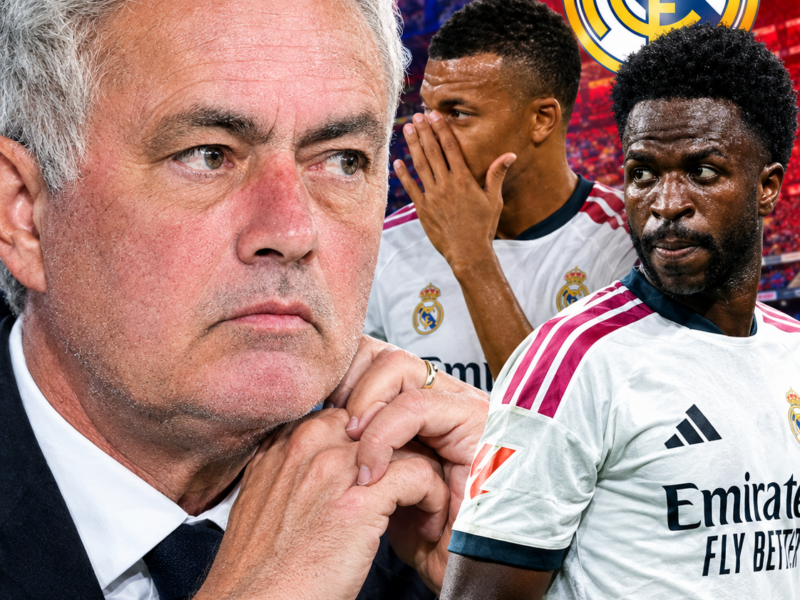
Vinícius Says He Needs Confidence, but Real Madrid’s Panel Sees a Time Bomb: The €300 Million Gamble That Could Blow Up Mourinho’s Season
Vinícius Says He Needs Confidence, but Real Madrid’s Panel Sees a Time Bomb: The €300 Million Gamble That Could Blow Up Mourinho’s Season
Here is a sentence no Real Madrid fan expected to hear about a Ballon d’Or contender.
He needed a penalty in a friendly against Australia to feel like himself again.
The kick came in the 80th minute of a match that had been decided long before, and it did not go well.
Yet it was what Vinícius Júnior said afterward that set off a full-blown debate among a panel of Madrid watchers.
Because the question underneath it is a big one: what if this is not a slump at all?
The Statement That Started It
The quote itself is simple and disarming.
Vinícius said that his teammates know he needs some confidence, that losing a World Cup is tough and difficult to accept, and that the return is never easy.
He also explained that Bruno Guimarães was the designated penalty taker on the pitch, but handed him the ball because he knew he needed it.
That was the whole story, straight from the player.
One panelist could not get past it.
To his ear, a player so out of place that he needs a penalty in an Australia friendly to regain confidence is a player in deeper trouble than anyone thought.
The penalty itself, he added, was weakly struck, hit next to the goalkeeper in a match that no longer mattered.
A Common Habit, or a Warning Sign?
Not everyone on the panel agreed with that harsh reading.
A second voice pushed back immediately, and his argument was sensible.
Strikers in a dry spell asking to take a penalty is the oldest trick in football, he said, and every forward at every club has done it at some point.
Four games without a goal, and suddenly the player wants the ball on the spot.
In that sense, the request is not the problem.
The problem, in his view, is what Vinícius believes is behind all of this.
He seems to think his current struggles come from not winning the World Cup.
The World Cup Hangover
That explanation did not sit well with the panel.
Only one team wins a World Cup, they pointed out, and everyone else loses it, including the many players who return to their clubs and continue to play at a high level.
One panelist brought up Tchouaméni, who missed an important penalty in a big final and had to carry that burden back home.
Understanding a hangover after a major defeat is one thing.
Treating it as the explanation for a long decline is another.
Vinícius also said the World Cup stick, as he called it, came in the round of 16, when Brazil lost to Norway.
That elimination clearly hurt, and it is one of the reasons his season has been so hard to read.
But for the panel, it did not explain what the numbers show.
What the Data Says
This is where the conversation turned cold.
One panelist looked at Vinícius’s league numbers this season and found them sobering.
His dribble success rate is just 42.9 percent, and the total number of dribbles he attempts is very low.
In his words, the data is dramatic.
A winger with Vinícius’s characteristics can have good days and bad days, and the numbers can swing either way.
But these figures do not look like those of a winger at all, he argued.
That is the heart of the concern.
The Vinícius of two years ago, in his view, is nowhere to be seen.
Can He Ever Get Back to That Level?
Then came the question nobody wanted to answer.
How many people on the panel believe he can return, if not to that peak, then at least close to it?
The answer was not many.
After two seasons of decline, the pessimists believe the old version is gone.
Some fans point at Mbappé, saying that Vinícius changed after the Frenchman arrived.
That theory could be tested soon.
If Mbappé misses the Villarreal match, the panel says, fans will get a look at Vinícius in a different setting.
Still, the doubt remains whether confidence alone can fix this.
One panelist wondered whether his physical qualities have changed too, and whether he is simply slower than before.
He has no data for that theory, but he said it looks obvious when a once-explosive winger stops winning races against defenders.
The Renewal Nobody Seems to Understand
Then the panel moved to the most explosive part of the discussion: the contract.
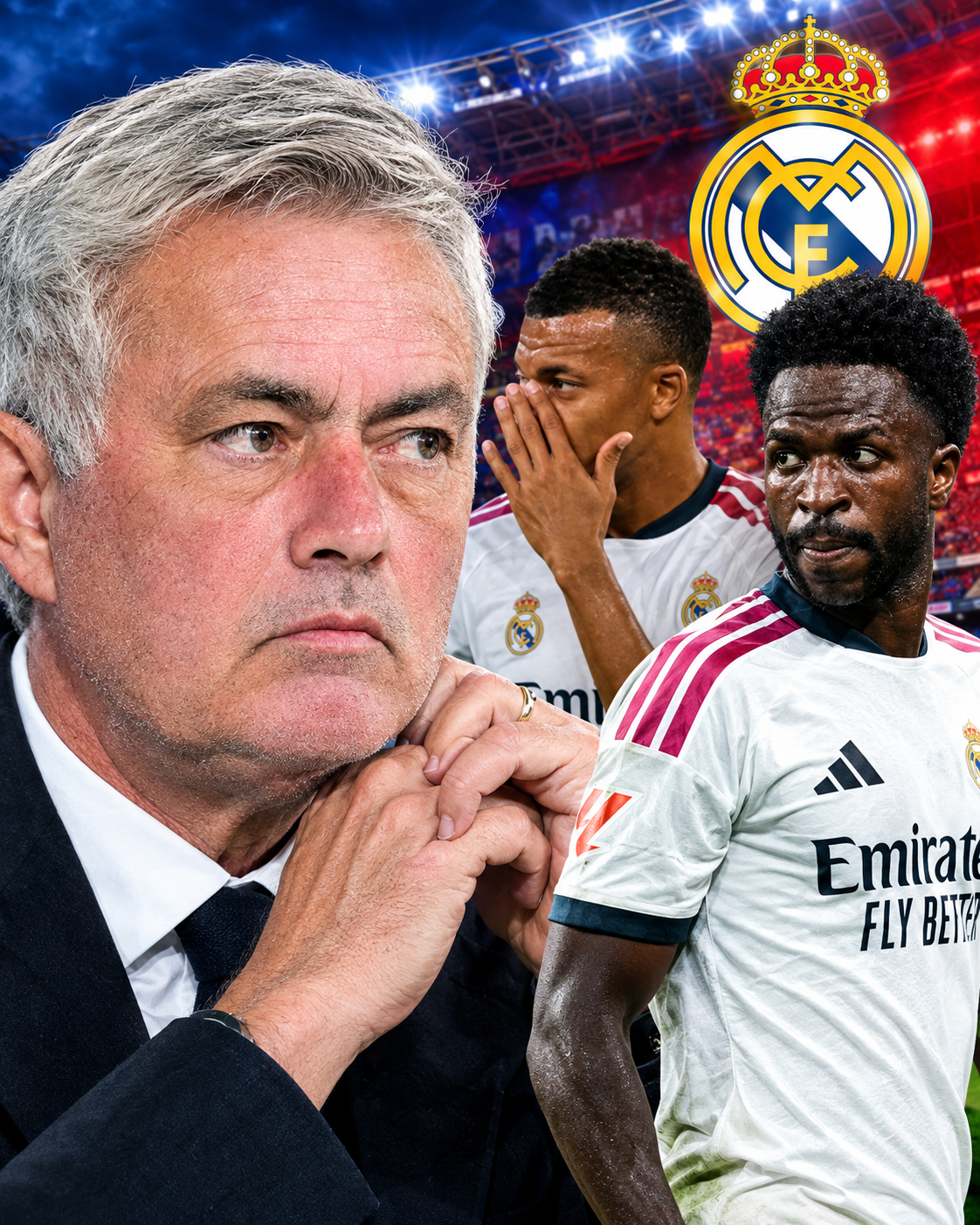
According to one panelist, who says he has reached sources with more information, Madrid did not actually want to renew Vinícius.
The claim is that the club made him a final offer expecting him to reject it after signing Diomandé, and that it even improved the offer to make rejection more likely.
That is a remarkable story, and it should be treated as an insider claim rather than a confirmed fact.
Just a few months earlier, he says, the player had been told he had the same offer as the previous year and should be thankful it had not been taken away.
Then, in a reported twist, the contract was raised from roughly 20 million to 25 million euros net a year, short of the 30 million his side had asked for.
According to this account, the improvement came at the last minute, right when it looked like Arsenal was about to send a formal offer.
Another panelist found that detail confusing.
If Madrid truly did not want to renew him, why raise his salary?
A Club in Two Minds
The answer, according to the panel, is that this is a club that makes erratic decisions.
One voice suggested the move may have been controversial inside the club, with some decision makers in favor and others against.
Whoever was in favor, he joked, simply won the argument at the last minute.
Meanwhile, the player’s representatives at Roc Nation were reportedly stunned by how the situation played out.
The reported sequence is this: Diomandé is about to be signed, an Arsenal offer is expected, and Madrid reacts by saying Vinícius cannot leave.
The updated offer arrives the very next day, with an extra five million euros per season.
The panel could not decide whether that was panic or strategy.
Two Gambles, One Squad
What worries the panel most is how the two big bets of the summer fit together.
One is the renewal of Vinícius. The other is the arrival of Diomandé.
In their view, the two moves do not go hand in hand in any way.
If one fails, the club could be left absorbing roughly 300 million euros. If the other fails, it could be stuck with around 200 million.
That is the scale of the risk they see.
On the sporting side, one panelist said the logic is simple: if Vinícius performs, the renewal is justified, and if he does not, the club will have to find a way to move him before 2032.
Diomandé, he said, is on a different level of risk.
He is very young, just starting his elite career, and he looks like a bet for the future more than the present, though he did not rule out that he becomes a starter.
As for Vinícius, the panelist said he never understood the renewal.
Why Arsenal Probably Will Not Get Him
The panel also discussed whether Arsenal could still land the winger.
One panelist says no, and the reason is simple: Madrid’s president reportedly values the player at around 200 million euros.
Arsenal’s offer, according to this account, was less than half of that.
That means a sale looks unlikely.
There is also a trap built into the situation.
If Vinícius recovers a great level, Madrid will not want to sell him. If he does not, nobody will pay anywhere near that kind of price.
There is no sweet spot in between, the panel concluded, where a buyer takes on a contract of that size.
Is Diomandé the Natural Replacement?
One of the sharpest exchanges of the debate came over the new signing.
A panelist questioned who decided that Diomandé is the natural replacement for Vinícius.
His point was that last season the young winger did not score a single goal on the left, and that his best work has come on the right.
Another panelist disagreed, and argued that the answer lies in squad building.
Think of a 4-2-4 shape, he said, with a coachable young player, a long-term plan, and a way to free up the left side of the squad.
It is not a one-for-one swap, he admitted, but it is how the player’s representatives and the club see the future.
In his view, the cleanest solution was always to let Vinícius leave, and he believes it would have fixed a lot of the dressing room problems too.
Mourinho’s Tough Decision
That brings the problem to the manager’s desk.
The panel agreed that Mourinho will have to act soon.
Putting Diomandé on the left may be almost the only solution, one panelist said, because the other big star in the front line does not want to play there.
If Vinícius does not have confidence and does not appear to be working hard either, as the panel believes was visible against Atlético, Mourinho will have to decide.
The most logical decision, they said, is to bet heavily on Diomandé as long as Vinícius stays on this path.
There is also a practical argument.
With games every three days, Mourinho has the perfect excuse to rotate, starting with Villarreal, and then Rome and Seville.
But a bigger question hangs over everything.
Will the club’s president let his coach bench a player who just signed a new contract, and the most expensive signing in the club’s history?
The Clásico Nightmare Scenario
One of the panelists shared a hunch, and it was not a comfortable one.
Looking ahead to the Clásico, which is about 25 days away, he expects a lineup of Tchouaméni, Valverde, Mbappé, Bellingham and Vinícius.
In other words, the same group that has struggled all season.
If Mourinho goes out with that unbalanced 4-2-4 shape and Barcelona dances around his team, the panelist said, it would be grounds for dismissal.
His reasoning was that a coach brought in to make decisions has to make them, and splitting the difference between the renewed star and the expensive new signing is not a decision at all.
He even argued that the sooner the board exposed itself, the better.
Not everyone agreed.
Fire the Coach? Not So Fast
The loudest pushback came from the panelist who refused to accept that firing Mourinho would solve anything.
After four coaches, he said, it is time to realize that the coach is not the real issue.
Whoever comes next, spoiler alert, would face the same structure.
He pointed out that there are no club elections coming, so nothing would change at the top.
A new coach would most likely take Madrid to the round of 16 or the quarterfinals of the Champions League anyway, just as Mourinho, Xabi Alonso, Ancelotti and Arbeloa would.
Mourinho, in his view, has to finish the season at least.
Then there was a political twist.
If the club fires another coach, someone said, it might finally make people realize that, of the 30,000 or 40,000 members who voted, around 66 percent voted for the current leadership.
What Four Coaches Have Taught Us
The most thoughtful argument of the night came near the end.
The problem with this team, one panelist said, goes beyond Vinícius’s individual form or Mbappé’s.
It is that there are no automatisms and no synergy on the pitch.
He reviewed the evidence from the last few years.
Ancelotti, in his opinion, was the least to blame of all.
Xabi Alonso arrived with modern ideas and a new work method, and it did not work either.
Arbeloa came in and, according to this view, bent to the players, and that did not work.
Now Mourinho is meant to be the last bullet in the board’s chamber, and so far he has not fixed it.
Still, the panel agreed that this does not mean it is the coach’s fault.
As one of them said, you cannot blame him for everything, especially if he sends out a lineup and the team scores five.
The Fans Already Know
Perhaps the most striking point was about the supporters.
One panelist argued that the average Madrid fan is fully aware of what is going on.
The man at the greengrocer, the retirees at the gym, everyone who watches the team every Sunday understands the situation.
The idea that a few voices on social media represent Real Madrid, he said, is a mistake.
The real Madrid is the Bernabéu, which no longer lets even two bad passes slide.
Fans know they are watching a replay of last year, and they know what an unstructured 4-2-4 could mean against a team like Barcelona.
They also know the club has to decide what to do.
Six Points Back and Counting
The numbers add a layer of urgency to everything.
Madrid is already six points behind Barcelona, and it is still September.
That sets up a Clásico where the gap could grow to nine, or shrink to three.
At the very least, the league risks becoming a lost cause very early again.
One panelist said he does not buy the argument that no team wins the Champions League every year.
For him, the real question is what the club does about a team that keeps repeating its mistakes.
The only certainty is that someone will have to decide.
The Verdict
When the debate ended, no one had solved Vinícius.
What the panel did agree on was that the situation is bigger than one player and bigger than one match.
A winger who says he needs confidence, a contract that reportedly nobody inside the club fully wanted, and a young signing waiting for his chance.
A coach who has to choose between loyalty to the board’s investments and loyalty to what he sees on the pitch.
And a fan base that has already seen this movie, and does not need anyone to explain the ending.
Villarreal is next, then the trips to Rome and Seville, and then the Clásico.
Each one is a chance for Mourinho to prove that he is still in control.
Each one is also a chance for the time bomb to go off.









