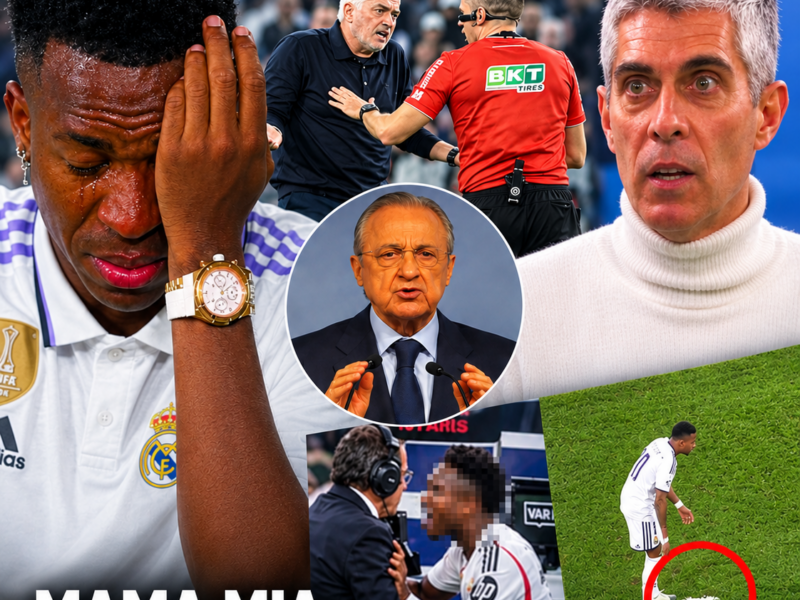
Vinícius, a Shoved League Official and the Footage Nobody Has Seen: Inside the Storm Hanging Over the Clásico
Every big football controversy has a moment where the noise stops and a single question takes over the room.
This time, the question is deceptively simple: what exactly happened in that stairwell, and why does so little of it seem to be on the record?
Ask around Spanish football right now and you will get a dozen different answers, most of them delivered at full volume.
Some see a star player with a temper and a target on his back. Others see a recurring problem that the sport keeps refusing to confront.
What almost nobody disputes is the timing. The Clásico is days away, and the temperature around Real Madrid and Vinícius Júnior has not been this high in a long time.
One of the loudest Barcelona-leaning voices on YouTube, a creator who admits he nearly skipped recording because of a flu, decided this story could not wait.
His reason was simple. Viewers kept flooding his comments with the same request: watch the breakdown by another creator known as Rapsoda, and talk about what it shows.
He watched. Then he made the video anyway, fever and all.
His argument is blunt. In his telling, the incident is not being covered by the mainstream media, and fans have a duty to make sure it gets seen.
That framing matters, because it explains why this story is spreading the way it is. It is not coming from newsrooms. It is moving through clips, comment sections and shared videos.
Before going further, one thing needs to be said plainly. What follows is a account of one fan-media perspective on a disputed episode.
Several of its strongest claims have not been confirmed by any official body, and the people at the center of it have their own defenders.
With that on the table, here is what is being alleged, why it is generating so much heat, and what the Clásico may look like against this backdrop.
Start with the central image. According to the footage circulating online, after Vinícius was sent off, he came into contact with a league match official, identified as Luis López.
Critics describe it as a push. They also claim the player insulted the official as he walked away.
The creator behind the video goes further, saying the scene looks like a player who had lost control of the moment entirely.
He also offers a sarcastic theory for what happened. League officials now wear headsets connected to the match broadcast, he notes, so perhaps Vinícius mistook the man for someone from the VAR room.
It is a joke, and it is clearly a joke. But it points at something real: the new visibility of officials on the touchline and in the corridors has changed how players interact with them.
The deeper question is procedural. Does something that happens after a red card, away from the pitch, carry any sporting consequence?
In the video, a pair of commentators tackle exactly that point. Their answer is not encouraging for anyone hoping for a heavy sanction.
The disciplinary process leans on what the referee wrote in the match report. If the referee did not record the incident, the competition committee has far less to work with.
One commentator suggests the league’s own match report might reflect it. Another journalist, quoted in the video, says nothing is likely to happen because the referee left it out.
That is where suspicion enters the story. Why would an official omit something so many people say they saw?
The creator offers his own answer, and it is a pointed one: he believes the referee wanted to spare the player from a harsher punishment.
That is an accusation, not an established fact, and it deserves to be treated as one. Referees often write reports based on what they personally saw or heard, and there are legitimate reasons an incident might not appear in one.
Still, the point resonates with fans because of a second detail that keeps coming up.
The referee reportedly stated he did not hear what Vinícius said during the confrontation that led to the red card. The creator finds that hard to believe.
His reasoning is visual. The two men were face to face. If you could see it from the stands and the cameras, he argues, how could the man standing there have missed it?
This is also where the conversation turns to bodycam footage. If match officials carry such cameras, fans want to know where the recordings are and why they have not been released.
The creator asks it directly. Why has the federation not published the clips? And he answers his own question with suspicion, suggesting someone may want to keep the player from receiving a long ban.
He mentions a figure of at least twelve matches as what he believes the incident deserves. That number is his opinion, not a ruling and not a reported proposal from any committee.
It is worth pausing on the bodycam point, because it is the one demand that even neutral observers might support.
Transparency cuts both ways. If the footage clears the player of the worst accusations, publishing it would end the debate in his favor.
If it shows something more serious, fans and the disciplinary committee are entitled to know. Silence only feeds the stories that grow in the gaps.
The red card itself is the other half of the controversy, and it is just as contested.
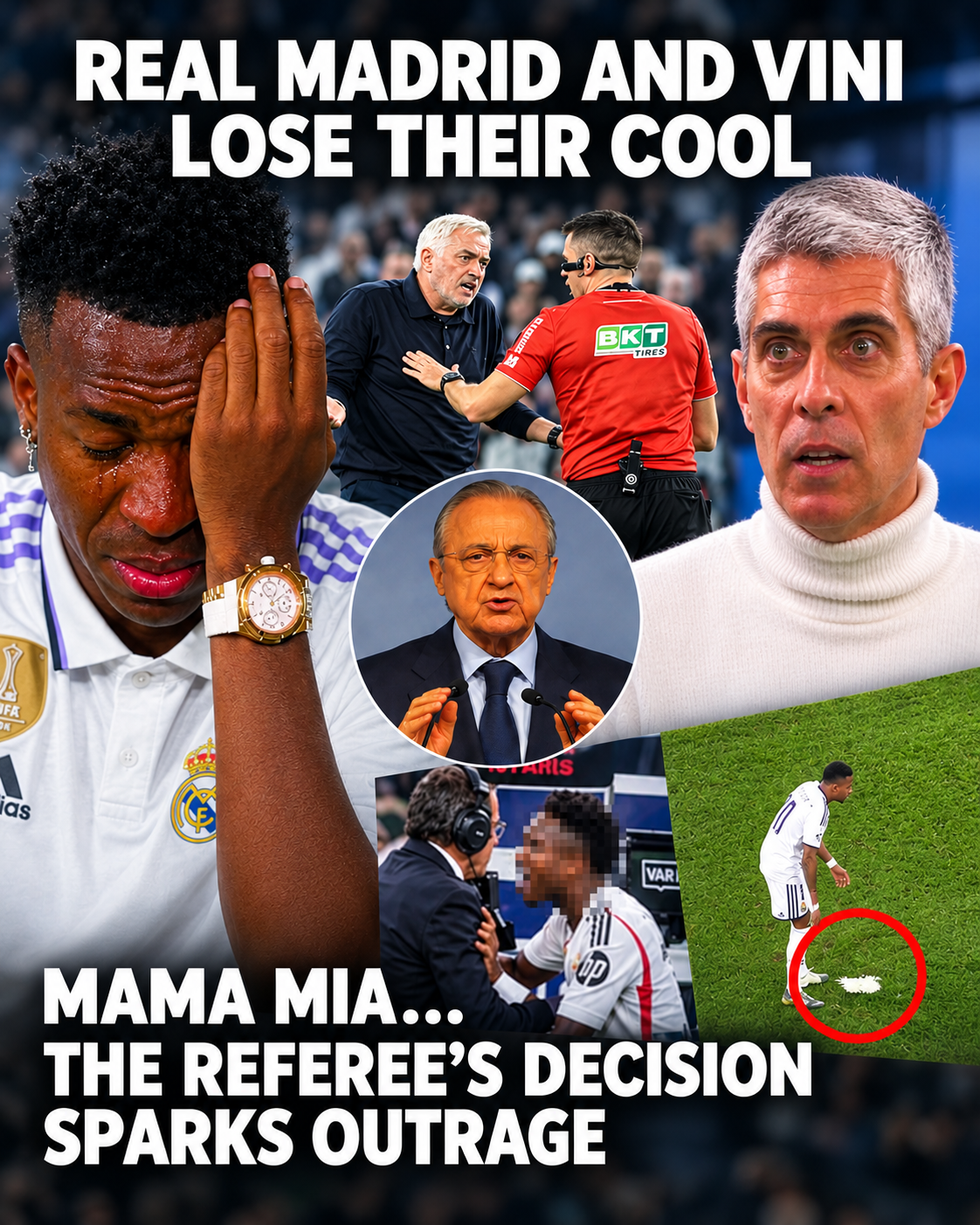
According to the video, the dismissal followed an exchange in which the player’s hand or hair became entangled with an opponent. The creator rejects that explanation outright.
He says the idea that a finger simply got caught on a shoulder makes no sense. In his view, there was a push and no justification for it.
The other side sees it differently, and plenty of Madrid supporters have said so loudly. Their view is that the contact was minor and the punishment, along with the public pile-on, was out of proportion.
That disagreement is the heart of the matter. Two groups watch the same replay and see opposite things, and neither seems likely to convince the other.
Which brings us to the player himself, and to a debate that has been running for years.
The video includes a clip from a panel discussion in which one speaker insists Vinícius is not an aggressive player. He argues that the winger is refereed differently because of a formed opinion about him.
The host of the video answers with heavy sarcasm. A loving player, he says, one who only wanted to share affection with an opponent and a league worker.
Strip away the sarcasm and you can see the genuine fault line. One camp believes the forward is repeatedly targeted by opponents and officials. The other believes he repeatedly crosses lines and escapes consequences.
Both camps can point to evidence. Vinícius has been fouled constantly throughout his career, and he has also been involved in more than his share of confrontations.
The truth, as is often the case, probably lives somewhere between the two stories and does not fit neatly inside a thumbnail.
The creator pushes the argument into harsher territory, and this is where a careful reader should slow down.
He says the player needs to see a psychologist or a psychiatrist, and warns that if things do not change he could eventually do something worse.
It is a strong claim to make about anyone. Nobody outside a player’s inner circle can diagnose his state of mind from a video clip, and that is worth remembering before taking the claim at face value.
What the comment really reveals is the frustration of a fan who believes the sport is not setting limits. The language is extreme, but the complaint behind it is about accountability.
He draws a comparison that explains a lot of the anger. If a Barcelona player had done the same thing, he asks, how would the Madrid fan base and the Madrid press react?
That kind of whataboutism is common on both sides of the rivalry. Madrid supporters make the mirror-image argument about their own players every season.
What makes this moment feel different is a perceived silence. The creator repeatedly says that media outlets are not covering the story.
Whether that is entirely accurate is open to debate, and the claim comes from his own viewing habits. But the feeling that a story is being buried is powerful, and it is the engine behind the video’s momentum.
The video also picks at a second thread, one that has little to do with Vinícius and everything to do with José Mourinho.
According to reports the creator cites, Mourinho has been showing his squad roughly thirty minutes of footage about referees before matches.
The alleged purpose is to explain each referee’s style and personality, and to teach players how to pressure them. The same reports say the approach also tries to build a sense that everyone is against the team.
These are secondhand claims relayed from sports media, and the video treats them as fact. They should be read as reports, not confirmations.
Even so, they fit an image of Mourinho that has followed him for decades: a coach who turns outside hostility into fuel for a locker room.
The creator’s follow-up claim is more speculative. He says a newspaper reported the dressing room is distancing itself from the coach, and that some players dislike his style and his appetite for the spotlight.
He backs that with a viral clip in which Mbappé appears to tell Mourinho to move out of the way during a pre-match moment. A fan account is the source of the framing, and the creator uses it to argue that the French star hates not being the protagonist.
A single clip proves very little. Players brush past coaches all the time, and it is easy to build a narrative around three seconds of video.
But narratives are the currency of this rivalry, and this one is landing with an audience eager to believe the worst about Madrid.
The creator takes it one step further. If Vinícius was already struggling to control himself, he says, imagine him taught to pressure referees by this coach.
Then he corrects himself, noting that Mourinho is not directly in charge of the player’s conduct. It is a rhetorical flourish, and a revealing one.
The target of the video is not only one player. It is a whole picture of Madrid as a team that, in his words, has stopped relying on football and started relying on tricks.
His example is a time-wasting moment in a match, where a player took off a boot and called for the referee to look at it.
Time-wasting is hardly unique to one club. Teams across Europe do it, and Barcelona has been accused of the same thing in the past.
But in the context of this video, it becomes one more piece of evidence for a story the creator has already decided is true: that Madrid is sinking, and sinking fast.
He puts it dramatically. A team heading downhill with no brakes, and waiting at the bottom is the best team in the world, meaning Barcelona.
That line is pure fan theater, and it is also a reminder of why the Clásico matters so much. Every controversy before it becomes ammunition.
The video then moves to the press rooms, where a different drama played out.
At the pre-match conference before Barcelona’s Champions League game against Galatasaray, a Spanish reporter asked Hansi Flick about the criticism of refereeing coming from Madrid.
The question asked whether the criticism grows louder when a Clásico is near. It also asked whether Flick would be capable of skipping a post-match press conference.
Flick’s answer was short and unmistakable. He said he does not answer questions about Real Madrid when he is there to talk about Galatasaray, and that respect is owed to the stadium and the occasion.
The creator loved it. In his eyes, the Barcelona coach is a gentleman who refused to be dragged into controversy.
Another journalist then asked whether Flick would prefer Vinícius to play or not, since the winger will probably miss the match anyway. Flick did not take the bait there either, according to the video.
Pau Cubarsí, still only nineteen, faced a similar line of questioning and responded with a composure that impressed the host.
The defender spoke about the team’s winning streak and the praise coming from everywhere except one place. When asked about the constant talk of referees coming out of Madrid, he gave a calm, almost bored answer.
He said he focuses on what he can control, which is the club, the game and what the team can give its fans. Everything outside, he said, does not interest them.
For Barcelona supporters, that was the perfect response. For neutral observers, it was a textbook example of how a young player is taught to handle a hostile question.
The contrast the creator draws is clear. In his telling, one club is calm and focused while the other is consumed by grievance and conspiracy.
It is a satisfying story for his audience, and also a convenient one. Barcelona has had its own share of refereeing controversies, and those arguments have not always stayed quiet.
Which makes his next proposal especially interesting.
He argues that Barcelona needs its own television channel, something that could expose what he sees as wrongdoing and reach people the way mass media can.
He is careful to say it should not manipulate or lie, a clear dig at Real Madrid’s club channel. The point, he says, is to tell the truth about what is happening.
He believes that if the news appeared in official outlets, Barcelona’s coach and players would see it, and it would carry far more weight than any YouTuber can.
Whether any club should run a channel that exposes rivals is a fair debate. Critics would say that is exactly what the Madrid channel is accused of doing, just wearing a different jersey.
Either way, the suggestion shows how this conversation has evolved. Fans no longer wait for journalists. They want to build the megaphone themselves.
That is the real story hiding inside this video, and it goes beyond one red card or one official.
The modern football audience does not trust any single source. It trusts clips, creators and communities, and it spreads them at a speed that traditional outlets struggle to match.
That speed creates pressure. A moment that might once have faded in a day now follows a player for weeks.
It also creates distortion. A short clip can be framed in a dozen ways, and the loudest framing often wins.
So where does that leave everyone?
For Vinícius, it leaves a fortnight in which every action will be watched through the lens of this controversy. Any tackle, any complaint, any word to a referee will be replayed.
For Madrid, it leaves a team trying to prepare for the biggest match of the season while its coach, its star winger and its image are all under fire.
For the federation, it leaves an awkward question. If footage exists that would settle the argument, why has it not been shared?
And for Barcelona, it leaves a team that can afford to stay quiet, as Flick and Cubarsí both did, while the other side argues with itself.
The creator ends his video the way he always does, with a call to his viewers. He asks for opinions in the comments, thanks the fans who earned shoutouts, and signs off with a Barcelona slogan.
That ritual is part of what makes this kind of content feel so personal. It is not trying to be neutral. It is a fan talking to other fans.
The risk, of course, is that passion turns into certainty. Many of the video’s claims are plausible, some are unverified, and a few are plainly opinion.
The sensible way to read it is the way you would read any rivalry debate: take the questions seriously and treat the verdicts with caution.
The questions are good ones. Why was the incident reportedly missing from the match report? Where is the bodycam footage? Is one player being treated more harshly, or more leniently, than others?
Answers to those questions would matter far more than any hot take. And they may arrive sooner than anyone expects, once the disciplinary process runs its course.
Until then, the debate will keep burning. Madrid supporters will defend their player, Barcelona supporters will demand consequences, and everyone else will watch it all unfold.
On the weekend of the Clásico, none of that will matter for ninety minutes. The ball will start rolling and the noise will finally have somewhere to go.
But the questions will still be waiting afterward, and so will the footage, wherever it is.
That, in the end, is why this story refuses to go away. It was never just about one push, one red card or one flu-ridden YouTuber with a point to make.
It is about who gets believed, who gets protected, and who decides what the public is allowed to see.
What do you think? Is this a player who has gone too far, or a star being unfairly singled out? Tell us in the comments.









