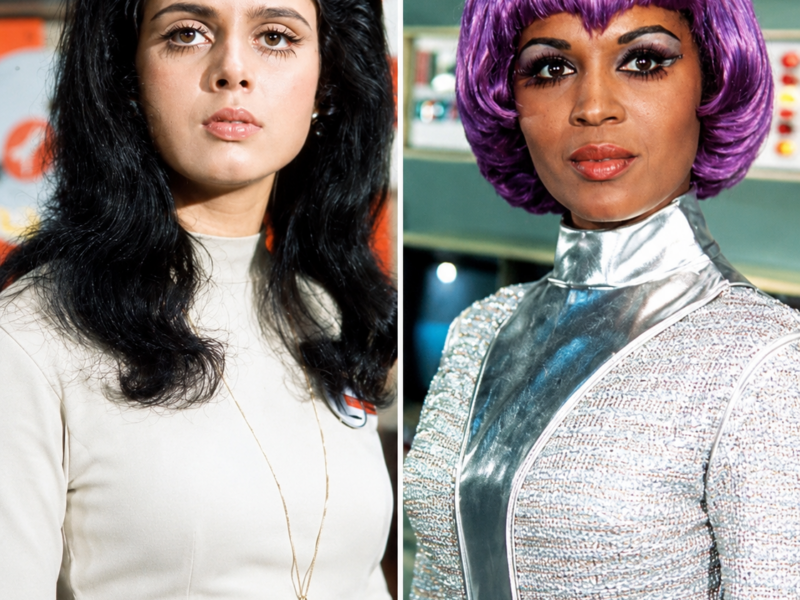
UFO Cast Then and Now in 2026: The Shocking Fate of Commander Straker, the Moonbase Crew, and the Secret Stars Who Vanished From Sci-Fi History
ufo-cast-then-and-now-2026
A secret war was being fought beneath a film studio.
Moonbase alarms were sounding. Interceptors were launching into the dark. And the rest of the world had no idea Earth was under attack.
UFO looked sleek and futuristic when it arrived in 1970, but underneath the silver uniforms and purple wigs was something much colder.
Commanders sacrificed their private lives. Officers disappeared without recognition. And an entire defense organization was built around secrets nobody could ever reveal.
More than 50 years later, many of those familiar faces are gone, while others followed lives far beyond SHADO.
So what really happened to the people who guarded the Earth from the shadows?
Some of the answers are heartbreaking. Some are completely unexpected.
And one member of that Moonbase crew went on to build a world so different from science fiction that you will barely believe it is the same person.
Let’s go back to the studio entrance.
A Secret War Hidden Behind an Ordinary Office Door
Visitors arrived at Harlington-Straker Studios expecting a film production.
They saw reception desks, ringing phones, and busy schedules. What they never saw was the real operation running beneath their feet.
UFO built its world on that contrast.
The extraordinary hid inside the ordinary, and the people protecting humanity could never tell anyone what they did.
That is what made the series so haunting. Its real subject was never only aliens.
It was sacrifice.
Let’s meet the people who made it.
Commander Ed Straker: The Man Who Could Save the World and Lose Everything
He could save the world and still lose almost everything that made saving it worth the cost.
Ed Bishop, born on June 11, 1932, in Brooklyn, New York, was 38 when UFO first aired in 1970.
Straker worked because he was never written as the reassuring commander audiences might expect from science fiction.
He was controlled, distant, and often painfully alone. A man whose responsibility required him to know terrible things while pretending ordinary life continued above him.
Bishop gave Straker a cold authority through clipped speech, a sharp stare, and the unnerving stillness of someone who had trained himself not to reveal what the pressure was doing inside.
That restraint made the character tragic rather than merely stern.
Every order carried consequence. Every secret created distance. And every decision seemed to take another small piece of his personal life away.
Straker was not protecting Earth for applause, because nobody outside SHADO could know the war existed.
That made his sacrifice almost invisible by design.
Bishop understood that loneliness and let it sit beneath the futuristic surfaces, turning the silver-haired commander into the emotional center of a series filled with machines.
Ed Bishop passed away on June 8, 2005, at the age of 72, just three days before his 73rd birthday, after a chest infection.
He continued working steadily across British film and television and remained closely associated with Gerry Anderson’s science fiction legacy.
Straker remains his defining role because Bishop made leadership feel less like power than imprisonment.
The commander knew too much to live normally and cared too much to walk away. He protected a world that could never thank him, which may be why decades later Straker still feels less like a hero standing above everyone else and more like a man slowly disappearing beneath the weight of the job.
Colonel Paul Foster: The Outsider Trapped by the Truth
Paul Foster discovered SHADO’s hidden war and then had to decide whether knowing the truth made him stronger or simply trapped him inside the same secrecy.
Michael Billington, born on December 24, 1941, in Blackburn, Lancashire, was 28 when UFO first aired.
Foster worked because he gave the audience a way into the organization.
Straker already understood the cost of command, and Freeman already knew how SHADO functioned. Foster began closer to the viewer, shocked, skeptical, and forced to absorb the idea that an alien threat had been operating beneath normal life without the public ever knowing.
Billington played that adjustment with intensity.
He let Foster’s confidence as a test pilot collide with the psychological burden of discovering a war nobody could discuss openly.
Once inside SHADO, Foster became brave and dependable, but he never completely lost the conscience that made him question orders in the first place.
That difference mattered.
Foster was loyal without being obedient in every circumstance. He could admire Straker and still challenge him, which gave their relationship tension beyond military hierarchy.
Billington also gave him a more openly emotional quality than many of the colder figures around him, making Foster feel like someone who still reacted to the human cost even after secrecy became routine.
Michael Billington passed away from cancer on June 3, 2005, at the age of 63, only days before Ed Bishop died.
He continued working in British television and on stage, and was often remembered as an actor who came close to James Bond-level stardom.
Paul Foster remains one of UFO’s most memorable figures because Billington made loyalty complicated.
Foster did not become courageous by losing his doubts. He became courageous by continuing to serve while still having them.
In a world where secrecy could turn people into machinery, he remained recognizably human.
Colonel Alec Freeman: The Man Who Stood Beside Straker Without Becoming Him
Some people can stand next to a powerful leader without becoming another version of him.
Alec Freeman was one of them.
George Sewell, born on August 31, 1924, in London, was 46 when UFO first aired.
Freeman worked because SHADO needed more than Straker’s cold efficiency. It needed someone capable of remembering that the organization was still made of people.
Sewell gave Freeman a lived-in toughness, practical judgment, and dry humor, making him feel like a man who had seen enough crisis to stop being impressed by authority for its own sake.
His relationship with Straker was especially important.
Freeman could disagree without becoming disloyal. He understood the commander’s burden, but he did not always accept the methods used to carry it.
That made him part second-in-command and part conscience.
When Straker grew too ruthless, Freeman’s presence reminded viewers that saving humanity can become morally dangerous if the people doing the saving stop recognizing the humanity in front of them.
Sewell played those moments without sentimentality. Freeman was not soft. He simply knew that discipline and compassion do not have to be opposites.
That balance gave the series emotional texture and made the command structure feel like a relationship rather than a chart.
George Sewell passed away from cancer on April 2, 2007, at the age of 82.
He built a long career across British film and television, often playing working-class men with grit, authority, and hidden sensitivity.
Alec Freeman remains one of UFO’s most valuable supporting figures because Sewell made friendship useful under pressure.
Freeman could support Straker without flattering him and challenge him without abandoning him. In an organization where secrecy isolated everyone, that kind of loyalty may have been one of the few forms of honesty still available.
Lieutenant Keith Ford: The Calm Voice in the System
Impossible information is useless until someone turns it into something an organization can act on.
Lieutenant Keith Ford did exactly that.
Keith Alexander, born on February 3, 1930, in Australia, was 40 when UFO first aired.
Ford mattered because the series constantly depended on communication. Alien craft had to be detected, Moonbase had to coordinate with Earth, interceptors needed orders, and Straker needed reliable information before any decision could be made.
A failure at the communications desk could become a failure everywhere else.
Alexander played Ford with quiet precision, making him feel like someone who understood that panic is useless when everyone else is waiting for your voice.
That steadiness was especially effective in a show where danger could arrive without warning.
Alarms might flash, pilots might scramble, and commanders might argue over impossible choices, but Ford remained part of the system that kept the response coherent.
The character was not designed for grand emotional arcs, yet that is exactly why he contributed so much to the reality of SHADO.
Organizations feel believable when the people doing necessary work seem capable of doing it even when nobody is watching.
In 2026, Keith Alexander is 96 years old.
He continued working in film and television before eventually stepping away from the spotlight.
Lieutenant Ford remains a subtle but important part of UFO because Alexander made communication feel like responsibility.
The dramatic heroes may be the ones launching into danger, but they can only do that if somebody has received the warning, understood it, and passed it along without mistake.
Ford’s legacy is quiet because his job was quiet.
That never made it unimportant.
Lieutenant Joan Harrington: The Officer Who Made Moonbase Feel Real
Moonbase could easily have been just a visual fantasy.
Lieutenant Joan Harrington made it feel like a functioning military post.
Antonia Ellis, born on April 30, 1944, in Newport, was 26 when the series first aired in 1970.
Harrington worked because Moonbase was Earth’s first warning line, which meant every calm face behind a console carried enormous responsibility. Incoming craft had to be detected, trajectories interpreted, and interceptor launches coordinated before the threat reached Earth.
Ellis gave Joan a poise that fit that environment perfectly.
She did not need dramatic speeches to communicate competence. The control came from stillness, from the sense that she understood the system, trusted her training, and knew panic would only waste the few seconds available.
Her presence also contributed to one of UFO’s most interesting aspects for its era.
Women were visible inside technical and operational roles rather than existing only on the margins of the action. Harrington was part of the machinery of defense, and the series generally treated that position as normal rather than exceptional.
That quiet normalization mattered as much as the silver costumes or the lunar setting.
It imagined a future where authority and expertise were not limited to one type of person.
In 2026, Antonia Ellis is 82 years old.
She continued working in British entertainment, though Joan Harrington remains the role many cult television fans remember most clearly.
The character endures because Ellis made competence elegant without turning it decorative.
Moonbase looked futuristic, but Joan made it feel inhabited. She was part of the reason the alarms mattered, because audiences believed there were real people up there, listening for them.
Lieutenant Gay Ellis: The Purple Wig and the Power Beneath It
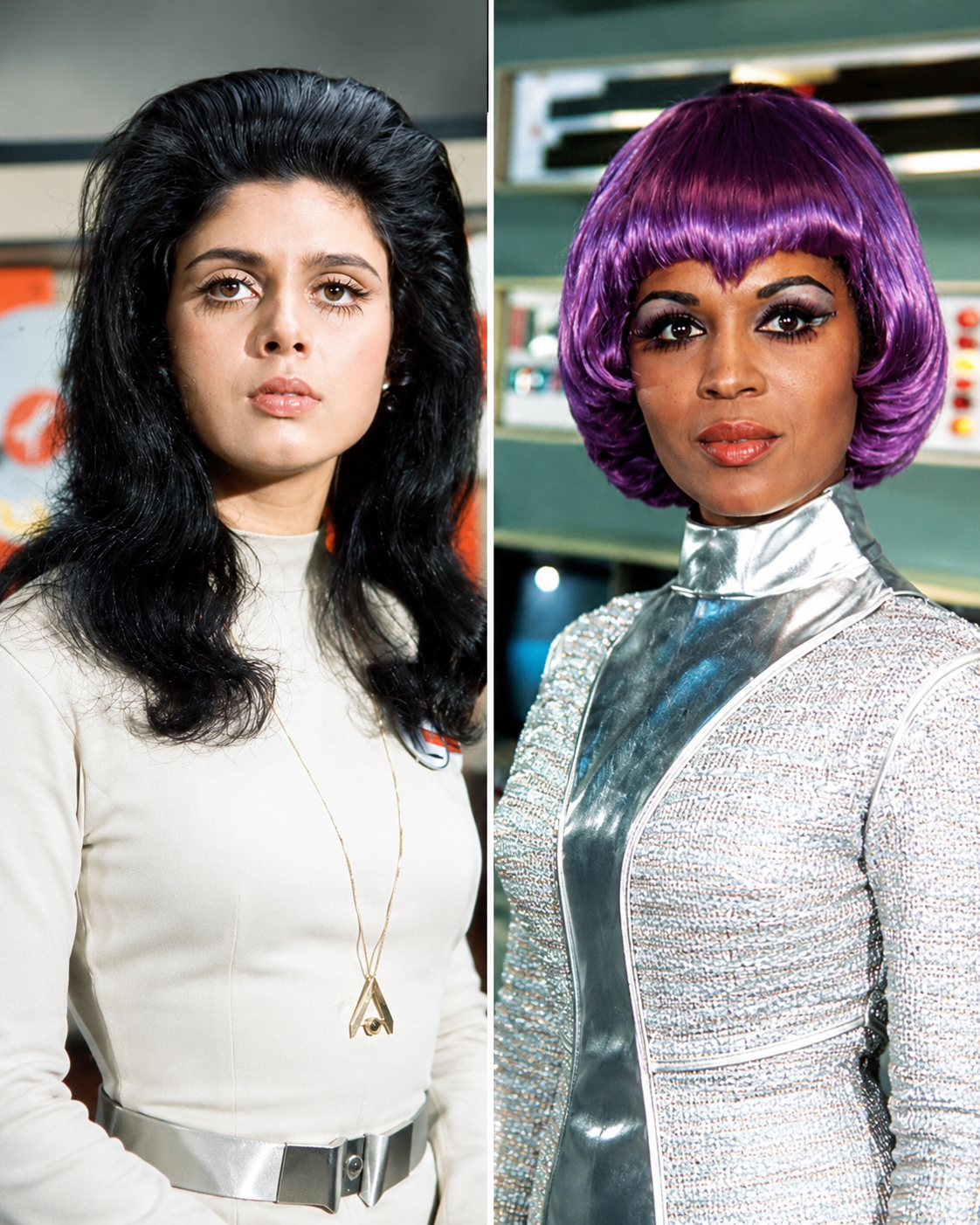
The purple hair became iconic long before viewers realized how much authority the character actually carried.
Gabrielle Drake, born on March 30, 1944, in Lahore, British India, was 26 when UFO first aired.
Gay Ellis worked because the visual design could easily have overwhelmed the person underneath it.
The purple wig, the silver uniform, and the futuristic Moonbase made her instantly recognizable. But Drake grounded the character through calm command.
Ellis was responsible for decisions that mattered. She helped oversee interception procedures, managed personnel under pressure, and occupied a position where hesitation could let an alien craft closer to Earth.
Drake played that authority without forcing it.
Gay did not need to become aggressive in order to be respected. Her competence was simply assumed by the people around her, and that quiet confidence gave the character a modern quality even decades later.
The role also challenged some expectations of science fiction television at the time, placing a woman at the center of military decision-making rather than simply beside it.
What makes Ellis endure is the combination of unforgettable design on the outside and disciplined leadership beneath it.
The style caught the eye, but the professionalism gave the image meaning.
In 2026, Gabrielle Drake is 82 years old.
She went on to build a respected career across British theater and television, and later became closely involved in preserving the legacy of her brother, the musician Nick Drake.
Gay Ellis remains one of classic science fiction’s most instantly recognizable women because Drake never allowed the costume to become the whole character.
Moonbase may have given her one of television’s most unusual looks, but the reason fans still remember Ellis is simpler.
When Earth needed a commander, she looked completely capable of being the person in charge.
Dr. Doug Jackson: The Doctor Who Unsettled More Than Illness
Some doctors comfort you.
Dr. Doug Jackson made you wonder what he already knew.
Vladek Sheybal, born on March 12, 1923, in Zgierz, Poland, was 47 when UFO first aired.
Jackson worked because he did not offer the warm reassurance audiences might expect from a physician. He observed people with a clinical precision that often felt psychological as much as medical.
In a series already filled with surveillance, secrecy, and paranoia, that detachment made him unusually effective.
Sheybal’s distinctive voice and controlled delivery gave Jackson the feeling of someone who was always studying more than the immediate problem.
A conversation with him could seem like an examination, even when nobody had asked to be examined.
That ambiguity added tension, because the audience was never completely sure how much compassion sat behind the professional distance.
Jackson understood minds, motives, and weakness, which made him valuable to SHADO, but also slightly frightening.
In an organization where everyone was forced to conceal something from the outside world, the man capable of seeing through internal defenses became almost as powerful as the commander.
Sheybal left enough mystery around the character that Jackson seemed to have a life and history the series never fully revealed.
That incompleteness suited UFO’s darker tone perfectly.
Vladek Sheybal passed away on October 16, 1992, at the age of 69, from a ruptured aortic aneurysm.
He had a long international career and was frequently cast as sophisticated villains or morally complicated figures across film and television.
Dr. Jackson remains one of UFO’s most fascinating supporting characters because Sheybal made intelligence feel dangerous.
The aliens were an obvious threat. Jackson was unsettling for another reason entirely.
He looked at people as though the answers were already visible, and he was simply waiting to see whether they knew it yet.
Miss Eland: The Receptionist Guarding Earth’s Biggest Secret
She sat at the front door of one of television’s strangest secrets and made protecting it look like ordinary office work.
Norma Ronald, born on October 1, 1937, in Northumberland, was 33 when UFO first aired.
Miss Eland mattered because the entire Harlington-Straker Studios cover depended on somebody maintaining the illusion before anyone ever reached Straker.
Visitors arrived expecting a film studio. Calls were answered, schedules were managed, and the surface world continued normally while SHADO operated beneath it.
Ronald played Eland with polished restraint, making discretion feel like a professional skill rather than a dramatic act.
She knew far more than most people entering the office, but nothing in her behavior suggested the secret was difficult to carry.
That calm made the cover believable.
UFO worked best when the extraordinary hid inside the ordinary, and Miss Eland embodied that idea. A receptionist’s desk became part of planetary defense, because access, information, and discretion were just as important to secrecy as underground elevators or coded identification.
Ronald also gave the role enough personality that Eland never felt like a piece of office furniture.
She had composure, awareness, and the quiet confidence of someone trusted with a responsibility she fully understood.
Norma Ronald passed away from cancer on November 20, 1993, at only 56.
She worked across British radio and television, building a respected career through both comedy and drama.
Miss Eland remains one of UFO’s quietly essential figures because Ronald made secrecy look routine.
Nobody passing through the studio entrance would imagine that the woman behind the desk was helping protect access to Earth’s hidden defense network.
That was exactly why she was so good at the job.
Colonel Virginia Lake: Intelligence as a Weapon
Inside SHADO, a sharp mind could be every bit as powerful as the interceptors waiting above Earth.
Colonel Virginia Lake proved it.
Wanda Ventham, born on August 5, 1935, in Brighton, was 35 when UFO first aired.
Lake worked because her authority came from analysis rather than spectacle.
She was a serious scientific and strategic mind, trusted in situations where decisions depended on understanding complex information rather than simply responding with force.
Ventham gave the character a cool confidence that suited SHADO’s environment perfectly.
Virginia listened carefully, measured the problem, and spoke with the composure of someone who expected her judgment to be taken seriously. That made her important within the command structure, because she was never treated as ornamental.
Her role imagined a future where women belonged inside technical and military leadership as naturally as the men around them.
She also provided another contrast to Straker.
His intensity could narrow into obsession, while Lake’s measured approach created a different kind of authority, one based on clarity rather than personal force.
Ventham’s restraint kept the character credible in scenes where too much emotional performance would have made the futuristic organization feel less disciplined.
In 2026, Wanda Ventham is 91 years old.
She enjoyed a long British television career, with memorable work in Doctor Who, Only Fools and Horses, and many other productions.
Colonel Lake remains one of UFO’s most intelligent presences because Ventham made competence look effortless.
She did not need to dominate a scene to control its logic. In a series filled with machinery, weapons, and alarms, Lake represented another kind of defense system entirely.
A clear mind capable of understanding what everyone else was looking at before the wrong decision became irreversible.
General James Henderson: The Boss Above the Secret
Even a secret organization fighting aliens still had budgets, oversight, politics, and people above it asking difficult questions.
General James Henderson was the man who asked them.
Grant Taylor, born on December 6, 1917, in Sydney, Australia, was 52 when UFO first aired.
Henderson worked because he expanded the conflict beyond SHADO versus aliens.
Straker saw the threat directly and naturally wanted the freedom to respond without hesitation. Henderson had to consider the larger institutional machinery, resources, accountability, political consequences, and the risk that secrecy itself could collapse.
Taylor gave him firm authority, making his arguments with Straker feel like clashes between two men who both understood the danger but carried different responsibilities.
That distinction was important.
Henderson was not simply an obstacle standing between the hero and the mission. He represented the uncomfortable reality that organizations cannot survive on urgency alone.
Someone still has to ask what the mission costs, who controls it, and what happens when one commander becomes convinced that only he fully understands what must be done.
Taylor’s performance gave those confrontations weight, because Henderson felt capable of standing in Straker’s path without becoming weak or foolish.
Grant Taylor passed away from cancer on April 5, 1971, at only 53, not long after UFO’s original run.
His career extended across film and television until illness intervened.
General Henderson remains memorable because Taylor made bureaucracy feel dramatic without turning it into parody.
The aliens might threaten Earth from outside, but Henderson reminded viewers that power inside the organization also has to be controlled.
In UFO, the chain of command is not merely paperwork. It is another battlefield, and sometimes the argument over who holds authority can become almost as dangerous as the enemy everyone is supposedly fighting.
The Skydiver Navigator: Quiet Work Beneath the Waves
SHADO was more than a collection of glamorous command rooms.
It was a global defense system, and the Skydiver navigator was one of the professionals who made that believable.
Jeremy Wilkin, born on June 6, 1930, in Byfleet, Surrey, was 40 when UFO first aired.
The navigator mattered because Skydiver represented one of the show’s most imaginative ideas. A submarine-linked interceptor platform operating far from public knowledge and requiring absolute technical discipline.
A mistake at sea could become a failure in the air, and that interconnected system depended on specialists who understood their part without needing recognition for it.
Wilkin played the role with understated focus, which fit UFO better than exaggerated heroism would have.
The people inside SHADO did not receive medals in public or tell stories about saving the world afterward. Their greatest successes happened when nobody outside the organization realized anything had happened at all.
The navigator therefore embodied one of the show’s central ironies.
Doing an extraordinary job may look completely ordinary when secrecy requires silence.
Wilkin’s background within Gerry Anderson productions added another layer for fans already familiar with his voice work.
Jeremy Wilkin passed away on December 19, 2017, at the age of 87.
He was familiar to Gerry Anderson audiences through Thunderbirds and later appeared across other British television productions, including Doctor Who.
The Skydiver navigator remains a small but meaningful part of UFO’s machinery because Wilkin made specialization believable.
The stars may receive the dramatic close-ups, but fictional universes become convincing through the people standing just beyond them, doing the technical work that makes every impossible mission function.
Lieutenant Sylvia Howell: The First to Notice
Her job required her to notice danger before almost anyone else knew it existed.
Georgina Moon, born on February 29, 1950, in London, was only 20 when UFO first aired.
Howell worked because radar duty is one of those roles that sounds quiet until the audience understands the stakes.
A screen changes. A signal appears. A trajectory does not match expectations.
Suddenly the difference between routine and catastrophe depends on someone recognizing that tiny change quickly enough.
Moon played Howell with composure rather than nervousness, which made her youth especially interesting.
She looked completely at home inside SHADO’s control environment, even though the organization was dealing with threats that would terrify almost anyone outside it.
That confidence helped sell the futuristic world. Young people were not simply trainees waiting for older commanders to act. They occupied essential positions inside the operational network.
Howell’s presence added both realism and generational texture to SHADO.
The organization felt larger because responsibilities were distributed across many people whose names might never become central to the story.
In 2026, Georgina Moon is 76 years old.
She appeared across British television and film during the 1960s and 1970s, building a modest but memorable screen career.
Lieutenant Howell remains one of those shadow figures fans recognize, because Moon makes the background feel alive.
She is not the person giving the final order. She is the person whose observation may be the reason there is enough time for anyone to give an order at all.
In a secret war, sometimes the first person to save the world is simply the first person to notice something is wrong.
Lieutenant Mark Bradley: Courage Without the Swagger
Science fiction often gives its frontline heroes a certain swagger.
Lieutenant Mark Bradley carried his courage quietly instead.
Harry Baird, born on May 12, 1931, in Georgetown, British Guiana, was 39 when UFO first aired.
Bradley worked because Moonbase combat was dangerous enough without the series turning every pilot into a larger-than-life adventurer.
Baird played him with controlled confidence, suggesting a man who understood the risks and had already accepted them before the launch sequence began.
That restraint made the courage more convincing.
When alarms sounded and interceptors prepared to move, Bradley did not need to explain that he was brave. His willingness to take the seat was the explanation.
The role also carried significance beyond the immediate action.
As a Black actor in early 1970s British science fiction, Baird brought representation into a futuristic military setting where audiences too rarely saw it. His character was part of Earth’s defense because he was qualified to be there, not because the story stopped to justify his presence.
That kind of visual normalcy can be quietly powerful.
Bradley broadened the future imagined by UFO while remaining fully integrated into the story’s operational world.
Harry Baird passed away from cancer on February 13, 2005, at the age of 73.
He built a varied career across British film and television, appearing in roles far beyond science fiction.
Lieutenant Bradley remains meaningful because Baird combined dignity, capability, and cultural importance without allowing any one element to overwhelm the character.
He was a pilot first. Calm, trained, and ready to launch.
Progress lay partly in the fact that UFO allowed him to be exactly that.
Carol Miller: The Voice That Held Moonbase Together
Moonbase was one of television’s most unforgettable sets.
Carol Miller helped make it function as something more.
Andrea Allan, born on November 18, 1946, in Glasgow, was 23 when UFO first aired.
Carol mattered because communication inside SHADO was never background activity. Information was survival.
Moonbase had to stay connected to Earth. Interceptor crews needed instructions. Warnings had to be passed quickly, and every delay could shorten the time available to respond.
Allan played Carol with quiet efficiency, fitting naturally into the disciplined rhythm of the lunar outpost.
The character did not require a dramatic personal storyline to contribute. Her importance came from function, and UFO was unusually good at letting function create atmosphere.
Seeing trained people at their stations made the fantastic premise feel organized enough to believe.
Carol also contributed to the series’ futuristic image of women occupying technical roles as a routine part of the defense structure.
She was not framed as remarkable for being there. She was simply working, which helped make the future feel more modern than some contemporary television settings on Earth.
In 2026, Andrea Allan is 79 years old, and she turns 80 in November.
She appeared across British film and television through the 1960s and 1970s before retiring from acting.
Carol Miller remains a small but memorable presence because Allan helped complete the illusion of Moonbase as a living operation.
A secret defense network cannot survive on commanders alone. It needs the voices connecting one part of the system to another.
When the future looks believable, it is often because somebody in the background is doing exactly the right job.
Tamara Paulson: From Radio Operator to Design Legend
Here is the one that will genuinely surprise you.
Tamara Paulson was the radio operator whose brief appearance reflected one of UFO’s greatest visual strengths. Even the smallest corners of SHADO looked as though they belonged to a carefully imagined future.
Anouska Hempel, born in 1941, was 28 when UFO first aired in 1970.
Tamara mattered because SHADO was supposed to be vast, and a vast organization needs more people than the handful of commanders audiences know by name. Radio operators, communication specialists, pilots, technicians, and hidden staff formed the network that carried Straker’s orders across bases and borders.
Hempel brought a poised presence to the role, fitting perfectly inside the series’ polished visual world.
Even a brief appearance contributed to the impression that everybody inside SHADO had a defined function and understood the secrecy surrounding it.
Tamara’s job was about connection, maintaining contact inside an organization whose existence depended on remaining disconnected from public knowledge.
That contradiction sat at the heart of UFO.
Internally, information had to move quickly. Externally, nothing could escape.
In 2026, Anouska Hempel is 84 years old.
Her life later moved far beyond acting, as she became widely known as a hotelier and interior designer, building a respected luxury design career in the United Kingdom.
Tamara Paulson remains a stylish footnote in that much larger journey.
Hempel’s story is especially fitting for a series fascinated by hidden identities and reinvention. She entered UFO as part of SHADO’s communications world and eventually became known for designing entirely different kinds of worlds herself.
Sometimes the most surprising transformation happens after the camera stops following the character.
Captain Steve Minto: A Rising Force in a Small Role
Some officers can make a brief appearance feel as though an entire military history exists behind them.
Captain Steve Minto was one of them.
Steven Berkoff, born on August 3, 1937, in Stepney, London, was 33 when UFO first aired.
Minto worked because Berkoff already possessed the intensity that would later become one of his defining screen qualities.
Even in limited time, he could give a character physical control, clipped authority, and the sense that crisis was something to be confronted rather than discussed endlessly.
That suited SHADO perfectly.
The organization existed in a permanent emergency nobody outside it could know about, and officers inside that system needed to look as though they had accepted danger as part of routine.
Berkoff brought exactly that edge.
Minto did not require extensive exposition, because the actor’s presence communicated discipline before the script had to.
The role also shows how cult television often contains early glimpses of performers whose later careers become far larger than the appearance itself.
UFO may be only one line in Berkoff’s long résumé, but the intensity is already recognizable.
In 2026, Steven Berkoff is 89 years old.
He went on to become known internationally across film, theater, writing, and directing, with memorable screen work including A Clockwork Orange and Beverly Hills Cop, while maintaining a major career in the arts.
Captain Minto remains a brief shadow presence, but Berkoff gave the role enough force to survive its limited screen time.
He endures because major performers often reveal themselves before the major roles arrive.
Minto may be small in UFO’s universe, yet the man playing him already carried the charge of someone unlikely to remain a background figure forever.
Lieutenant Ayshea Johnson: Precision Under Pressure
SHADO survived the moments when everyone else depended on information arriving at exactly the right second.
Lieutenant Ayshea Johnson was part of the reason it did.
Ayshea Brough, born on November 12, 1948, in Highgate, London, was only 21 when UFO first aired.
Johnson mattered because the series understood that secret wars are not fought only by commanders and pilots.
They are fought by the people at consoles who track movement, relay instructions, coordinate alerts, and keep complicated systems functioning when one mistake could let an alien craft through.
Brough gave Johnson poise rather than theatrical urgency.
Her calmness became part of the show’s atmosphere, because the audience learned that if SHADO personnel panicked every time an alarm sounded, the organization would collapse almost immediately.
Johnson therefore represented a different kind of courage.
The ability to remain precise while danger was unfolding somewhere beyond the screen in front of her.
She also contributed to UFO’s distinctive visual identity.
The control rooms might be filled with futuristic design, lights, and unusual costumes, but Brough kept the human center believable. Her presence reminded viewers that technology matters only when somebody disciplined is there to interpret what it is telling them.
In 2026, Ayshea Brough is 77 years old, and she turns 78 in November.
She was also known outside UFO as a singer and television personality, making her a familiar face of the period beyond science fiction.
Lieutenant Johnson remains a graceful part of UFO’s legacy because Brough made professionalism visible without demanding attention.
She was not the person giving the most dramatic speech. She was the person ensuring the message reached the people who needed to hear it.
In SHADO’s hidden war, survival often depended on exactly that kind of quiet competence.
Lieutenant Nina Barry: Representation at the Console
Moonbase was UFO’s most visually futuristic setting.
Lieutenant Nina Barry gave it another image of professionalism.
Dolores Mantes, born on October 17, 1936, in Liverpool, was 33 when UFO first aired.
Nina worked because the danger around Moonbase was constant but rarely allowed to become chaotic.
Incoming alien craft had to be tracked, responses coordinated, and command decisions carried out before the public on Earth had any idea something was happening above them.
Mantes played Nina with restraint, making her seem completely comfortable at the console even when the situation was anything but comfortable.
That composure contributed to the credibility of SHADO as an organization. These were people trained to operate under pressure, and Nina looked like someone who belonged there.
Her presence also carried significance beyond plot mechanics.
As a woman of color in early 1970s British science fiction, Mantes occupied a futuristic professional environment where competence and authority were part of the image rather than exceptions requiring explanation.
That representation may have been quiet, but quiet visibility can still matter.
Nina was not treated as a novelty. She was treated as a member of the team, which let the future imagined by UFO look broader than much of the television surrounding it at the time.
Dolores Mantes passed away on November 30, 2012, at the age of 76, after a long illness.
She continued working in British television and film, leaving behind a comparatively small but memorable screen legacy.
Lieutenant Barry remains one of UFO’s quietly important figures because Mantes combined grace with professional authority.
She did not need a huge storyline to matter.
Sometimes representation begins simply by showing someone exactly where audiences had too rarely been allowed to see them. At the console, trusted with the future.
The Moonbase Is Silent Now
The uniforms changed. The Moonbase alarms fell silent.
And SHADO’s secret war disappeared back into television history.
But UFO still feels strangely modern, because its real subject was never only aliens.
It was sacrifice.
Straker losing pieces of his life to command. Foster learning the cost of knowing too much. Freeman trying to keep humanity inside the system. And dozens of quiet professionals protecting a world that would never even know their names.
Ed Bishop, Michael Billington, George Sewell, Vladek Sheybal, Norma Ronald, Dolores Mantes, Grant Taylor, Jeremy Wilkin, Harry Baird, and others are sadly gone.
Their names belong to another age, but their work keeps finding new viewers.
And the story is not only about loss.
Gabrielle Drake, Wanda Ventham, Ayshea Brough, Antonia Ellis, Georgina Moon, Andrea Allan, Anouska Hempel, Steven Berkoff, and others remain living links to SHADO’s strange future.
Why UFO Still Feels Ahead of Its Time
Look at the crew one more time.
A lonely commander who gave up his private life. A pilot who refused to stop questioning. A friend who kept humanity alive inside the system.
And dozens of professionals at consoles, desks, and radar screens whose greatest victories nobody would ever see.
That is the quiet power of UFO.
It understood that the heroes who matter most are often the ones working in the dark, and that saving the world can look a lot like doing a very hard job extremely well.
So now we want to hear from you.
Which UFO character stayed with you the most? And which cast story surprised you the most?
Tell us in the comments, and stay with us for more classic sci-fi stars, unforgettable transformations, heartbreaking losses, and the television worlds that still feel ahead of their time.









