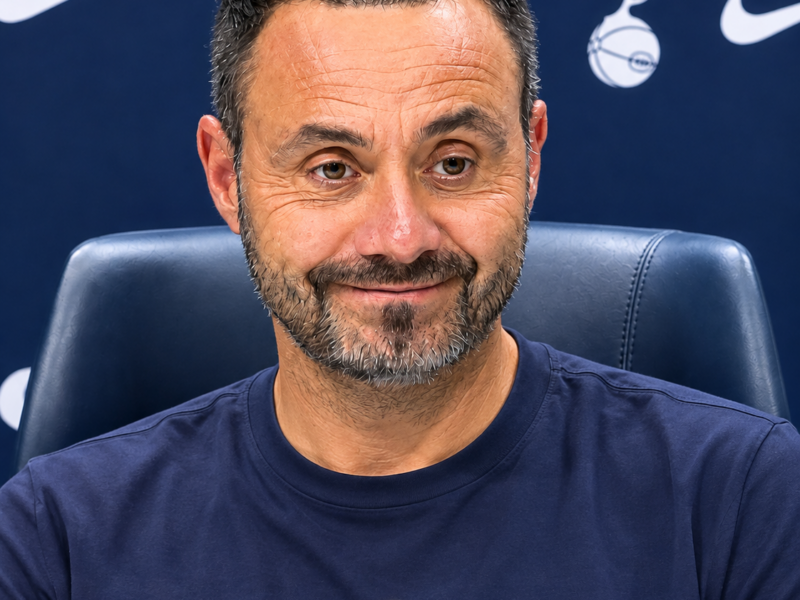
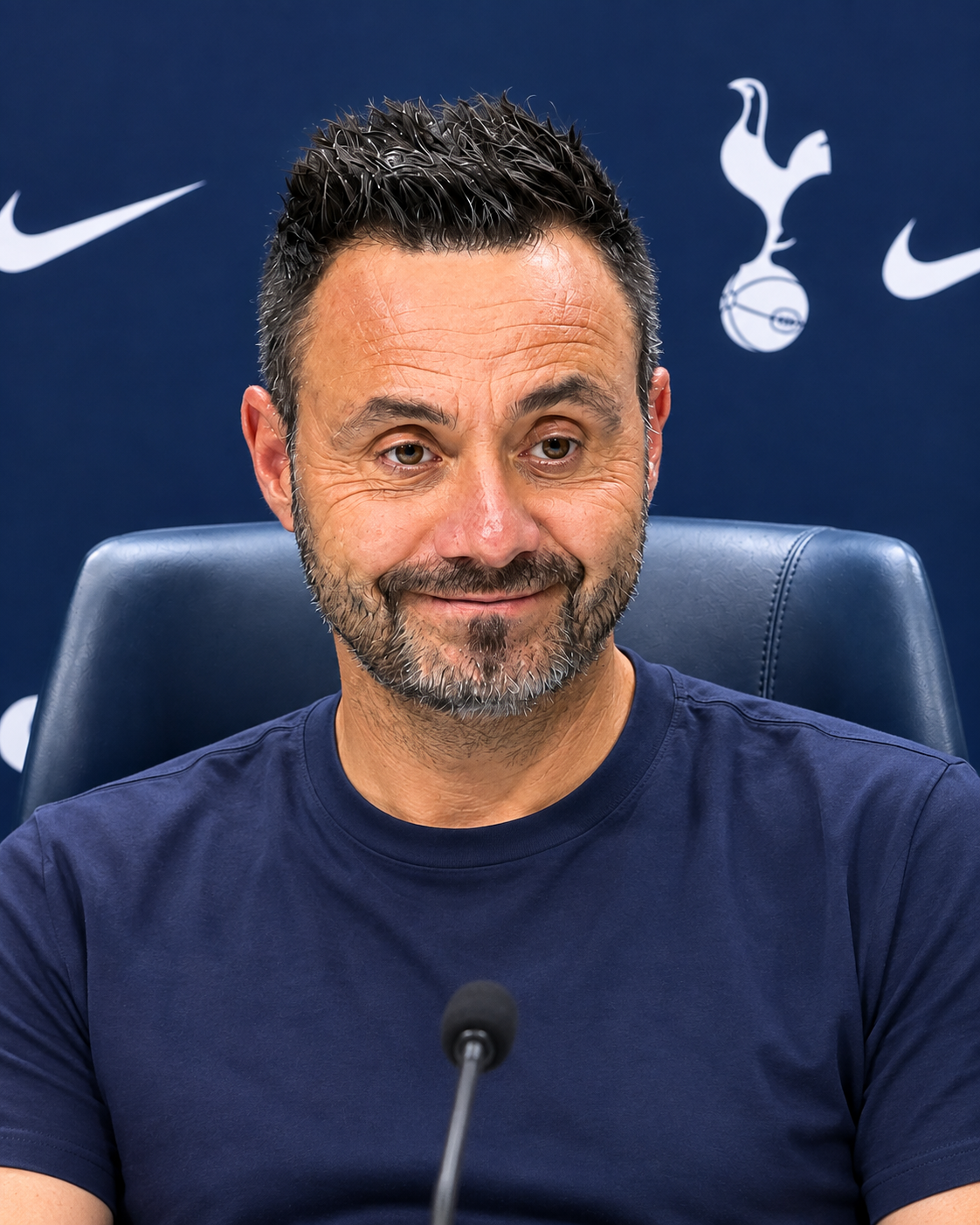
Thomas Frank Opens Up on Dominic Solanke’s Fragile Confidence, Admits Tottenham “Can’t Change the Opinion” After Another Goalless Frustration
There is a particular kind of tension that settles over a press room when a manager is asked, again, why his team cannot find the net.
Thomas Frank did not flinch from it on the eve of Tottenham Hotspur’s next fixture, but he also did not pretend the questions were easy ones to answer.
For close to half an hour, the Danish head coach worked through injuries, confidence, a controversial team dinner, and the growing sense that Spurs are a side capable of creating chances but incapable, for now, of finishing them.
By the end, one message had been repeated so many times it felt like a mantra: he believes in his players, even when the results refuse to reward that belief.
Here is everything Frank said, unpacked in full.
The Injury List: Two Fresh Doubts, One Cautious Green Light
Frank opened the session the way most pre-match briefings begin, with fitness news, though this time it came with a caveat.
He confirmed there were a couple of fresh knocks to monitor involving Maddison and Kudus, describing both as situations that require caution even though he expects them to be available to start.
Kudus, he clarified, is in better physical shape than Maddison at this stage, which suggests the two issues are not being treated with equal urgency behind the scenes.
It was a small but telling admission, the sort of detail that tends to get picked apart by supporters trying to read between the lines of team news.
Frank did not dwell on it, though, because the conversation quickly turned to the player everyone in the room wanted to discuss.
Solanke: “He Needs to Feel Full Confidence”
Dominic Solanke is only two appearances into his season, and the question hanging over him is obvious to anyone who has watched Tottenham labor in front of goal.
Frank was asked directly how the striker is coping, and his answer went well beyond the usual managerial platitudes.
He revealed that he has spoken with Solanke personally and is trying to manage him carefully on two fronts at once, the physical side of his recovery and the mental side of his rebuild.
The reason for that dual approach, Frank explained, is that Solanke is what he called a sensitive guy, someone who needs to feel total confidence radiating from his manager before he can perform at his best.
Frank insisted that confidence is exactly what he is providing, stating plainly that he believes Solanke can score somewhere in the region of ten to fifteen goals across the campaign if given the right platform.
He pointed to the forward’s history at Bournemouth as proof the finishing instinct has not disappeared, framing the leap to a new club and a new stadium as nothing more than a change of scenery rather than a change in ability.
“It’s the same sport, different stadium,” was effectively his argument, a reminder that once you strip away the noise, a goal is still a goal no matter which end of London it is scored in.
Why Pressure at Home Is Different From Pressure Anywhere Else
One of the more interesting threads Frank pulled on was the psychology of playing in front of a team’s own supporters versus playing away from home.
He argued that there is comparatively little pressure inside his own stadium as long as the team is pressing forward and playing on the front foot, because a home crowd tends to stay locked in with the players when the effort is visible.
Contrast that, he said, with any other ground in the country, where losing or failing to score invites criticism that can follow a player long after the final whistle.
Frank was careful to frame that criticism as a normal part of football rather than something to fear, a reflection of how competitive and unforgiving the sport can be at this level.
It was in this section of the press conference that he widened the lens beyond Solanke alone, name-checking the broader attacking group and stressing how central they are to the team’s identity.
He grouped Solanke together with other attacking players, describing them collectively as the players capable of supplying quality, and repeating the word quality itself several times, along with talent and individual skill, as though hammering home exactly what the group is missing right now.
England Ambitions and the Long Road Back
A reporter pressed further on Solanke’s international prospects, noting that with England naming a squad in the coming days, it would be a surprise if the forward were included given his recent injury history.
The follow-up question tried to pin down what Frank meant by calling him sensitive, asking whether that sensitivity extended to criticism specifically.
Frank pushed back on that interpretation immediately and firmly.
He clarified that being sensitive, in his eyes, is not a weakness tied to criticism at all, but rather a trait that tends to accompany intelligence, arguing that sensitive people are often smart people by nature.
He then widened the explanation to include the accumulated toll of Solanke’s injuries, suggesting that after so much time out, a player can lose the physical sharpness needed to express himself the way he wants to on the pitch.
Frank was adamant that Solanke’s underlying physical condition is now good, but stressed that good condition on paper means little until it is matched by actual playing time on the field.
Looking ahead to the very next match, Frank signaled his intention to use Solanke for only part of the game rather than the full ninety minutes, without committing to whether that would come from the start or as a substitute appearance.
He framed even a partial role as potentially significant for the striker’s rebuild, a stepping stone rather than a token gesture.
The Amex Memory That Still Lingers
Perhaps the most vivid moment of the entire press conference came when Frank reached back to a specific afternoon that clearly left an impression on him.
He recalled watching Solanke play for Bournemouth against Brighton at the Amex Stadium, describing the performance as incredible and remembering how he turned to his assistant coach in the stands to ask who exactly this striker was.
That anecdote did more to sell Solanke’s ceiling than any statistic could, because it came from a rival manager’s genuine, in-the-moment reaction rather than a scripted answer designed for the cameras.
Frank tied that memory directly to his current challenge, describing his job now as recreating the conditions that allowed that version of the player to flourish.
He broke the plan down into concrete pieces, starting with assistance from teammates around him, followed by continued improvement in his physical condition, and finally trusting that the finishing instinct Bournemouth fans once celebrated is still there waiting to resurface.
A Twenty-Eighth Birthday and a Reason for Optimism
In a lighter aside that briefly cut through the tension, it emerged that the day of the press conference happened to be Solanke’s birthday, his twenty-eighth.
The timing gave the question that followed extra weight, as a reporter pointed out that the last couple of seasons have been defined largely by injury setbacks rather than sustained form.
Asked plainly what gives him the belief that Solanke can return to his old level, Frank’s response was almost indignant in its positivity.
He asked, rhetorically, why on earth he should be expected to think negatively about one of his own players, refusing outright to accept the premise of pessimism.
He acknowledged the recent injury record honestly rather than dismissing it, agreeing that last season was disrupted by fitness problems on multiple occasions.
But he immediately pivoted to what he sees as genuine structural change behind the scenes this time around, pointing to what he described as a top-level physical and medical staff now in place at the club.
He also highlighted the calendar itself as a factor working in Solanke’s favor, noting that the team is not currently grinding through three matches a week, with three full days of rest built in before the next fixture following the previous game against Everton.
Even with that improved schedule, Frank said he still has to weigh whether Solanke should only feature for part of the next match, citing a conversation the two had that very morning to gauge his current condition and the possibility that fatigue is still a factor.
His closing line on the subject was almost a plea for patience from those in the room and, by extension, from supporters reading the coverage afterward: the situation has to be judged against the changes made this season, not simply against the disappointments of the last one.
Richarlison’s Uncertain Standing: “It’s Not for Me, This Question”
The mood shifted again when the conversation turned to a player conspicuously absent from both this squad and the Premier League squad list altogether, referred to in the room as Roison but clearly understood to mean Richarlison.
Asked bluntly whether there is any way back for him and what his standing is as far as the club is concerned, Frank offered a notably guarded response.
He said plainly that he does not know, and that the question of Richarlison’s long-term future is simply not his to answer.
He did, however, use the moment to redirect attention back toward performance on the pitch, referencing a heavy 3-0 defeat away at Brentford and reminding the room, somewhat pointedly, not to forget that context when discussing the wider attacking picture.
Confronting His Own Playing Career to Explain a Striker’s Struggle
One of the sharper exchanges of the press conference came when a reporter, aware of Frank’s own background as an attacking player, asked whether he remembered what made scoring and chance creation so difficult from personal experience.
Frank answered from the perspective he occupies now rather than the one he used to occupy, drawing a clear line between speaking as a former player and speaking as a coach.
He conceded that missed chances can happen and are not automatically a crisis, but he also drew a sharp distinction: the real problem only exists if the players available simply are not good enough.
If the squad has genuine quality, he argued, then failing to convert chances should not be treated as a fundamental flaw but as something correctable through work.
To back that up, he ran through a mental highlight reel of recent missed opportunities, starting with the belief that Tottenham could have scored three times in that Brentford match alone.
He moved on to a Newcastle fixture in which he recalled only a single clear chance falling to Pedro Porro, and then to the Everton game most recently, where the team created a chance but again failed to convert it.
Frank stopped short of making excuses for any of it, acknowledging in the same breath that not scoring in those matches is simply a fact he cannot spin away.
His prescription was almost aggressively practical rather than emotional: more work, more analysis of exactly where improvement is needed, and an acceptance that fixing it is squarely his own responsibility as head coach.
He closed that section on a notably forward-looking note, reminding everyone that the next match is a fresh opportunity, one his team can win by focusing on scoring, defending well, and building on the defensive solidity shown across the previous two matches.
The Team Dinner: Loosening Up Without Losing the Edge
Perhaps the most colorful segment of the entire session revolved around a team dinner, and whether it echoes a tactic Frank has used before during difficult stretches to rebuild confidence.
A reporter recalled a previous occasion when confidence issues were addressed through a night out involving food and drink, and asked whether the same approach was being repeated now.
Frank confirmed that the entire squad had indeed gone out for dinner together the previous week, describing a relaxed evening that included food along with water and beer for the players.
When pressed on the specific venue, he confirmed it took place at a well-known Mayfair restaurant, adding a touch of specificity that gave the anecdote real texture rather than leaving it as a vague gesture.
Asked directly whether the intention was to loosen the players up and help them feel more relaxed, Frank’s answer became notably personal and defensive of his squad.
He acknowledged he might not be entirely objective when it comes to his own players, but insisted his genuine opinion of their quality differs sharply from the more critical view he suspects exists in the media room.
He described the group as very good players in his own assessment, framing the current period explicitly as the construction of a new project and a new team rather than a finished product that should already be delivering the finished results.
Taking the Blame Without Changing His Mind
What followed was arguably the most revealing passage of the entire press conference, a kind of manifesto for how Frank intends to handle a difficult run of form.
He stated outright that he takes full responsibility whenever the team fails to score or fails to win, positioning himself as the one absorbing the consequences of poor results rather than deflecting them onto individual players.
Crucially, though, he refused to let bad results change his underlying opinion of the squad’s ability, insisting that whether they win, score, or fail to do either, his fundamental respect for the players and his behavior toward them will not shift.
He then framed the moment facing the club almost as a fork in the road, arguing that if Tottenham want to turn around the underachievement of recent seasons, the answer has to be built on inner strength and belief in the work already being done, in the quality of the players, and in the decisions made roughly a month earlier when the current approach was set in motion.
The alternative, he suggested with a hint of resignation, is simply more upheaval: swapping players, swapping coaches, making change after change after change without anything fundamentally improving as a result.
His preferred path was described in almost spiritual terms, staying grounded, staying humble, keeping the right spirit, with everyone taking individual responsibility, putting their face to the challenge, and continuing to grind rather than looking for shortcuts.
He tied it all back to belief one final time, stating that he believes in his players and hopes they believe in themselves with the same conviction he holds for them.
What Actually Happens on the Training Pitch
A more technical question followed, asking what concretely can be done in training sessions to help the team convert good approach play into actual goals, rather than simply talking about confidence in the abstract.
Frank immediately pointed to video analysis as a critical tool, explaining that watching footage back offers a different perspective than what a coach can see live from the touchline during the match itself.
He described a combination of collective work and individual, targeted exercises designed to sharpen specific skills, from delivering better assists to improving the quality and timing of crosses into the box.
To illustrate the point, he walked through a specific tactical example involving wide players and the shape the team tries to create in the final third, referencing a particular passage of play in which one full-back pushed higher up the pitch while a wide attacker was asked to tuck infield and a forward dropped into the space between the lines, known commonly as the pocket.
He admitted that in that specific instance, the positioning created some confusion for the player receiving the ball out wide, showing a rare moment of self-critical honesty about how the shape had actually functioned in a live match rather than on the training whiteboard.
Even so, he pointed to a cross that did get delivered as evidence that the team’s overall attacking structure had briefly worked as intended, even if the final touch inside the box was not positioned correctly relative to the striker, the opposite winger, and the two midfielders expected to arrive centrally.
His broader point was about aggression and reaction rather than perfect execution every single time, arguing that not every goal needs to come from the first attempt.
Sometimes, he explained, a team simply has to fight for the second ball after an initial effort is blocked or cleared, staying alert enough in and around the goal area to pounce the moment possession is regained.
The International Break: A Distraction He Cannot Afford to Dwell On
With an international break looming, Frank was asked for his thoughts on the timing and whether he welcomes the pause in league action.
His response carried a note of dry humor mixed with genuine exasperation, wondering aloud whether he has the mental bandwidth to spend much time thinking about the break at all given everything else currently occupying his attention.
He conceded there could be an upside to the timing, suggesting that having every single month broken up by a pause might actually be worse for continuity than the current schedule, but stopped short of offering a firm verdict either way.
Pressed on what he specifically plans to do with the group during the enforced pause, he indicated that the coaching staff intend to wait until international call-ups are confirmed before finalizing their plans, after which they will organize a structured program around whichever players remain at the club.
Managing Scrutiny While Building Something New
A more reflective question followed, asking whether it is inherently harder to build a new project when there is intense scrutiny not just on results, but on the broader style of football being played, given the added pressure that always seems to surround this particular club.
Frank rejected the framing outright, insisting he is happy to work at the club and genuinely proud to hold the position, describing the level of passion and effort he brings to the role in unmistakably sincere terms.
He then broadened the conversation to the Premier League as a whole, arguing that if you look at other clubs across the division over the past decade, heavy spending and wholesale squad turnover rarely produce instant transformation, without naming specific teams by name.
Change, in his framing, takes time regardless of resources, sometimes producing quicker returns and sometimes taking longer, but always following what he called the normal plan, the normal project, the normal process, a phrase he repeated almost like a shield against outside impatience.
A Lighthearted Jab About Who Is Footing the Bill
Not every question in the room was tactical or emotionally weighted, and the mood lightened considerably when a reporter asked, half-jokingly, who exactly was paying for what was described as all these posh wheels, an apparent reference to the mode of transport for the team outing.
Frank answered with a grin implied in his tone, saying simply that he pays because he is the coach, adding that as the oldest person in the group, it is a genuine pleasure for him to take his players out for dinner.
When the follow-up teased that he would need deep pockets to keep footing that bill indefinitely, Frank leaned further into the joke, replying that he keeps his own money strictly for cigarettes and insisting there would be no problem covering the cost regardless.
It was a small, human moment that offered a glimpse of the relationship Frank appears to be cultivating with his squad away from the intensity of matchday.
Extra Shooting Practice and Players Staying Late
The final substantive exchange returned to the training ground, with a reporter asking whether the forwards specifically are putting in extra shooting practice, perhaps something old-fashioned, beyond the structured video and tactical work already described.
Frank’s response carried a note of mild indignation at the suggestion that nothing extra was happening, confirming immediately that yes, additional work is indeed taking place.
When pushed further on whether this extra effort comes in the form of players staying out after normal training sessions had concluded, Frank clarified an important distinction: this is not something being imposed by the coaching staff.
He stressed that it is the players themselves who want to stay on the field longer, specifically in the days leading up to matches, driven by their own hunger to improve.
He framed it as a direct emotional response from within the group to the current results, explaining that the players are acutely aware they are neither winning enough matches nor scoring enough goals, and that awareness is pushing them to put in additional individual work off their own initiative.
It was a fitting note to end on, a manager describing a squad that, whatever its recent shortcomings in front of goal, has not lost its appetite to fix the problem through its own graft.
The Bigger Picture Heading Into the Next Match
Taken together, the press conference painted a portrait of a manager under mounting scrutiny who is choosing to respond with patience rather than panic.
Frank’s repeated invocation of belief, in Solanke individually and in the squad collectively, reads less like empty coach-speak and more like a deliberate strategy to shield a fragile group from outside noise while the underlying process, in his own words, is given time to bear fruit.
Whether that patience is rewarded will depend on whether the very specific, almost granular fixes he described, better cross delivery, sharper runs into the box, more clinical work on the training ground, translate into goals when it matters most.
For now, Tottenham’s story under Frank remains one of promising performances undercut by a stubborn inability to finish, a gap between chance creation and chance conversion that he insists is fixable rather than fundamental.
Solanke’s next appearance, even if limited to a substitute cameo, will be watched closely as an early test of whether the manager’s faith in his sensitive but talented striker is about to be vindicated.
And with the international break approaching, Frank and his staff now face a narrow window to translate all of this talk, about confidence, about video analysis, about extra shooting drills, into results that finally match the effort everyone at the club insists is already being put in.









