They Printed Her Murder 24 Years Before She Actually Died
There is a woman buried in a Tuscan villa cemetery whose grave nobody ever bothered to make public. It’s oddly fitting. Almost nothing written about Marie Boozer during her lifetime, or for roughly 90 years afterward, was entirely true.
She was called the most beautiful woman in the Confederacy. She was also called a traitor, a gold digger, a Russian jewel thief and a courtesan. One newspaper even reported her as a murder victim, then had to retract the story two days later because, whoops, she wasn’t dead.
By the time she died a countess in 1908, Marie had been reinvented so many times by so many strangers that the life she actually lived had vanished under all of it. This is that life. And like a lot of good scandals, it starts with a complicated family.
Marie Boozer was born in December 1846 in Columbia, South Carolina, though even her birth year was mangled by later biographers. Her mother, Amelia Sees, was the daughter of a Philadelphia constable. By then she had already survived one marriage, to a dying man she wed out of pity. He died the next day.
Her second husband, Peter Burton, was an older South Carolina businessman who dropped dead of a seizure while Amelia was pregnant with Marie. Husband number three, David Boozer, gave Marie her surname. He died by his own hand in 1850 while Amelia was at church.
Amelia had now buried three husbands. David left an estate worth more than $10,000, over $400,000 today, which put mother and daughter in a much more comfortable position. Even so, Columbia’s high society never quite let Amelia in.
She was gossiped about constantly. She also worked as a seamstress, which was practically social death in the antebellum South.
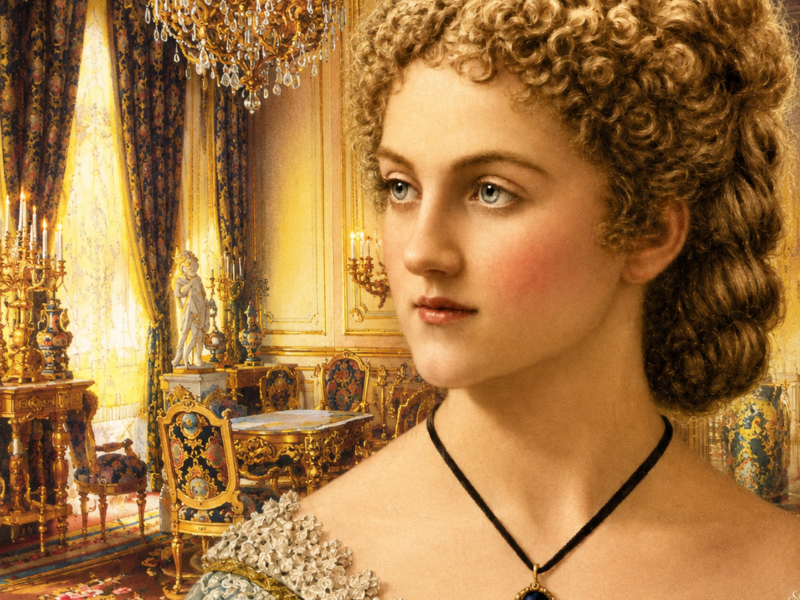
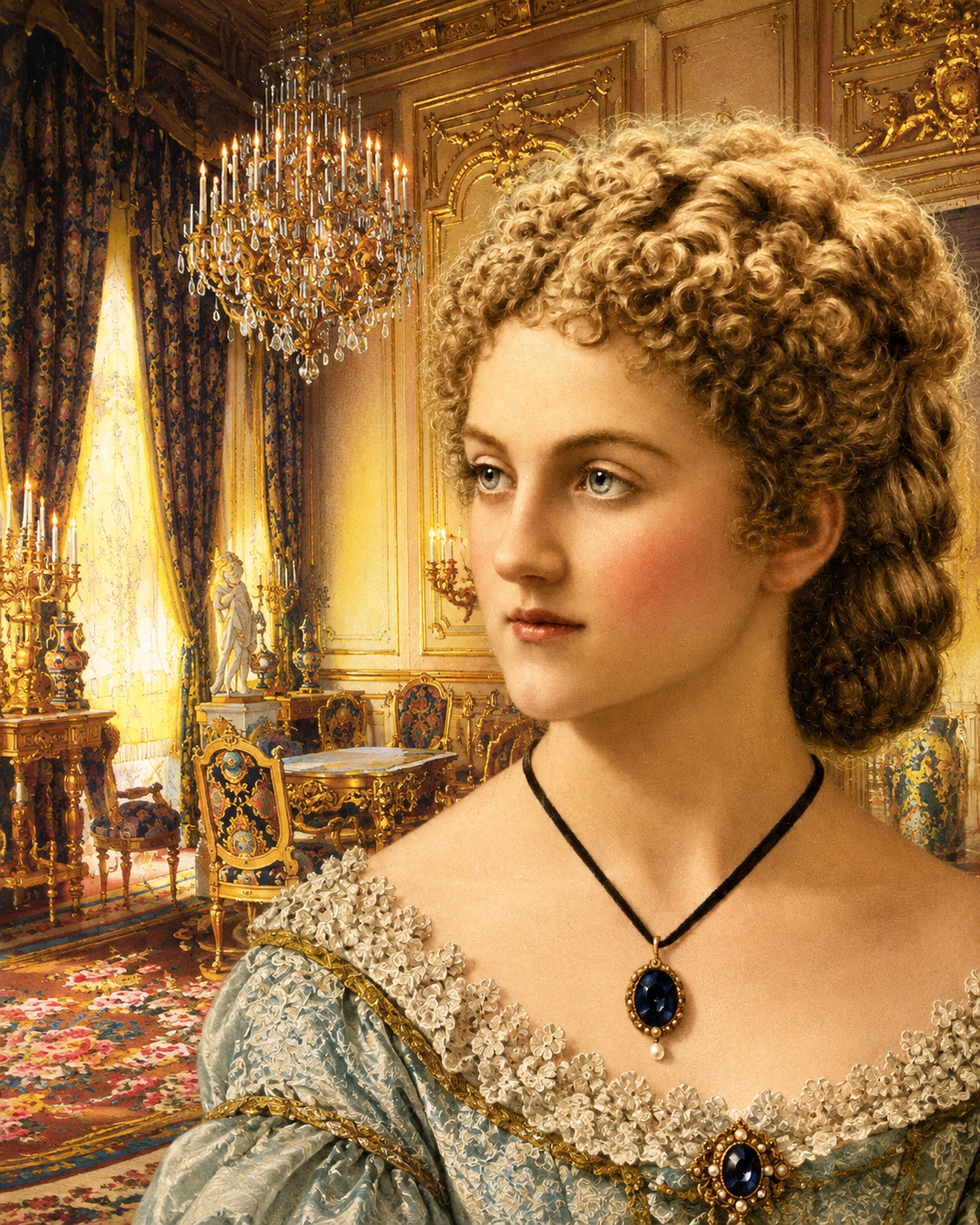
Marie herself, however, was undeniable. She had strawberry-blonde hair and deep blue eyes, and by every account, even the catty ones, she was genuinely stunning. General John Preston once called her the most beautiful thing he had ever seen.
Mary Chesnut, the Civil War’s most famous diarist and no fan of the Boozers, admitted grudgingly that Marie was “a beauty that none can deny.” She was also nothing like the delicate magnolia stereotype.
After her mother remarried in 1852, Marie grew up in a comfortable household, and her devoted stepfather made sure she got an excellent education. In 1863 she was sent to study in Paris, where she fell for French culture. She even came home calling herself Marie instead of Mary, simply because she liked it better.
She returned to Columbia cultured, confident and entirely her own person. She rode horses, shot firearms and cared little for society’s expectations. Then the war found her, and it handed her the love story that would define everything after.
For the first years of the war, Marie was, on paper, a good Confederate daughter. She nursed wounded soldiers at a Columbia hospital and did her part for morale. Her mother, though, had different loyalties. Amelia was secretly aiding Union prisoners held at Camp Sorghum outside the city.
Through that work, Marie met the man who would change everything. Samuel W. Preston was a Union naval lieutenant who had been captured and held as a prisoner of war right there in Columbia. While helping tend two prisoners, Marie met the dashing young officer, and the two fell deeply in love.
They made plans to marry as soon as he was free. For a brief moment, the future looked certain. But it didn’t survive the war.
Samuel was released in a prisoner exchange and returned to the fighting. In January 1865, he was killed at Fort Fisher. When the news reached Marie, something inside her shifted for good.
Whatever was left of her Confederate loyalty died with him. She was now fully her mother’s daughter, and she was in it for the Union all the way.
A month later, General William T. Sherman and his army marched into Columbia. Within days, a third of the city was gone, consumed by fires whose blame has never been fully settled. Sherman insisted the retreating Confederates started them. Confederate General Wade Hampton insisted Sherman did.
Historians today often point to a mix of drunk soldiers, loose cotton and high winds. Defenders of each side’s version have never fully given ground.
While the city smoldered, Marie and her mother were doing something that would have gotten most Columbia families run out of town on principle alone. They were hiding escaped Union prisoners in their cellar, feeding and sheltering them until Union lines reached them. One local man caught doing the same thing was whipped and had his head shaved.
Marie and Amelia were never caught. By then they had earned the gratitude of Union officers, and that gratitude offered some protection. But Columbia had noticed what they did, and its people would not forget.
Amelia knew the math. If they stayed, they would be marked women in a city that had just watched them help the enemy. So when Sherman’s army moved out, she packed up Marie, her half-sister Ethelind and their nurse, and they left with the Union column.
They weren’t trailing behind it, either. General Oliver Howard arranged a proper carriage for them and kept them close to his own staff, because he knew exactly how rough the roads north would be.
This is the part of the story where legend takes over from fact, so it’s worth setting the record straight.
For decades, popular histories claimed that Marie was caught in a Confederate cavalry raid on General Judson Kilpatrick’s camp. She was supposedly chased half-dressed into the woods while Kilpatrick himself ran off in his shirt and drawers. It’s a genuinely great scene. It’s also fiction.
The earliest account of the incident, from 1899, names the woman involved as an older Vermont schoolteacher, not Marie. Somewhere between 1899 and a widely read 1956 history of the campaign, storytellers swapped the schoolteacher for a beautiful 20-year-old, because it made a far better tale.
Every serious historian who has gone back to the primary sources since agrees that Marie was nowhere near that camp. Her real journey was dramatic enough without a made-up love story bolted on.
By March 1865 they had reached Wilmington, then Philadelphia, and finally New York. The North didn’t see traitors arriving. It saw heroines.
The Union League Club handed the family $10,000 to help them resettle. More than 30 Union officers signed statements praising their courage. Sherman himself gave them a warm mention in his memoirs.
For most people, that would have been the end of an extraordinary story. For Marie, it was only the beginning.
$10,000 was serious money in 1865. Combined with whatever Amelia had managed to preserve, it opened doors a seamstress’s daughter from Columbia had no business walking through. As it turned out, New York society cared less about where you came from than what you could bring to the room.
Marie brought plenty. She was beautiful, fluent in French and sharp enough to read a room instantly, and she wore her new life flawlessly.
Amelia had one ambition left, and she pursued it relentlessly: to marry Marie well. She settled on John S. Beecher, a wealthy older merchant, and the wedding took place in 1866. Marie’s own description of him was blunt. He was “a pleasant old man.”
It was not a love match. It was a transaction dressed up in silk. In 1867 they had a son, and she named him Preston, after Samuel, the man she had actually wanted to marry.
Then, in 1870, Amelia died. For nearly two decades she had been Marie’s fiercest advocate, social manager and protector, smoothing over scandals, arranging introductions and keeping her daughter’s place in society secure. Suddenly Marie was on her own.
Beecher wasn’t faithful either. In a twist that borders on self-sabotage, he was the one who introduced Marie to Lloyd Phoenix, a wealthy yachtsman with a habit of promising marriage to women he had no intention of marrying.
Marie believed him completely, and she waited. When she finally pressed him, he laughed at her. Whatever she did in response in October 1873, it was serious enough that everyone involved worked hard to bury it, and they largely succeeded.
Beecher used the scandal to file for divorce. The case dragged on until 1874 and became tangled up with a separate scandal in London involving Marie’s half-sister, which made headlines on both sides of the Atlantic.
The ruling was harsh. Marie was named the adulterous party, and Beecher kept their son. She received alimony, but under New York law at the time she could not remarry while he was alive.
New York was finished with her. Paris hadn’t even met her yet.
Paris in the 1870s played by different rules. A divorced American woman with a scandalous reputation wasn’t automatically cast out, and with the right moves she could even become an asset. Marie played her cards perfectly.
She rented rooms, filled them with the right people and let word spread. Within months, her apartment was drawing artists, writers, minor royalty and other notable figures. It was part of the demimonde, a shadow society running parallel to respectable Paris, where charisma counted for more than reputation and connections for more than blood. Marie had both.
She lived loudly, with expensive habits and a rebellious streak, and her profile was high enough that Paris police reportedly kept half an eye on her. Not because she had committed any crime worth mentioning, but because women moving through those circles inevitably drew official attention.
Somewhere in the middle of all this, before she had fully settled into the city, she and her sister took a trip to St. Petersburg. They mingled with Russian aristocrats, had their portraits taken by a fashionable court photographer and became the center of attention. It should have been a footnote.
Instead, it became the seed of a rumor that outlived the actual trip by decades. The rumor was explosive: that Marie had walked away with jewels belonging to the Russian imperial family. Unsurprisingly, there was no truth to it. None. But once a story like that attaches itself to your name, it rarely lets go.
Marie’s biggest headlines were still ahead of her.
In London, in the autumn of 1875, she met the man who would finally give her what New York never had, a title gossip couldn’t revoke. Count Arthur de Pourtalès-Gorgier was Swiss-born, working as a French diplomat, roughly her age and, by every account, an actual gentleman. After Beecher and Lloyd Phoenix, that must have felt almost suspicious.
There was a small-world wrinkle to it. Arthur’s late first wife had been Jenny Holliday, and Marie had known Jenny years earlier from the same convent school. Gilded Age circles were a remarkably small world.
They married in a London church on November 4, 1875. Marie was 28. Arthur was 31. Because her divorce technically barred her from remarrying while Beecher was alive, they married again the following spring in Baltimore, this time with Beecher’s own blessing, to make the arrangement airtight under American law.
Two weddings for one marriage. That’s how carefully Marie had to move, even as she finally stepped into the world she had spent years fighting to reach.
Just like that, the girl her hometown had branded a traitor was a countess. But a title could change her status without erasing her past, and the infamy would continue.
Marie left her rebellious Paris years behind and spent the next three decades as a faithful, well-traveled diplomatic wife. Her life after marriage reads less like a biography and more like a shipping manifest. Peking. Naples. A chateau in Switzerland. Santiago. Cuba. Buitenzorg, on the island of Java, where she and Arthur happened to be stationed when Krakatoa erupted in 1883.
Then Tokyo, where they spent four years in the 1890s and were, by most accounts, genuinely well liked. The French government eventually awarded Arthur one of its highest honors, the Legion of Honor. More than one source credits Marie’s own social touch with helping him earn it.
But fame, once it attaches itself to you, doesn’t care how far you run. It follows you, and sometimes it gets stranger with distance.
Even years later, attacks came from figures like the South Carolina journalist Julian Selby and other former Confederates, who viewed Marie as someone who had betrayed the South. Her defenders say she simply refused to keep serving a cause that had cost her the man she loved. Her critics never accepted that explanation.
Newspapers back home circulated stories that she had married the Ottoman sultan. Others placed her in Africa, supposedly living among the Zulu. None of it was true, and none of it was anywhere near the life she was actually living.
Then, in October 1884, the New York Times ran a headline you don’t forget. A young woman had been strangled with a bowstring in Japan, dead over some indiscretion. The paper named Marie.
The only problem was that Marie hadn’t set foot in Japan yet. Her actual posting there was still a decade off, and she was very much alive. Two days later, the same paper printed a retraction. She was alive and well in Switzerland, it admitted, as if that erased what it had already published.
It didn’t. The retraction ran on page two. The murder had run on page one.
After decades of headlines, scandals and rumors, Marie’s final chapter was far quieter than the legend that followed her. She spent her last years in Italy, in a 25-room villa outside Florence with a view of the cathedral in the distance. After decades of packing for the next posting, she finally stopped moving.
She received the last rites of the Catholic Church and died on January 25, 1908, at 61. Her husband outlived her by 20 years.
Which brings the story back to where it began. Nobody ever made her burial site public. Not the location, and barely even the date. After a lifetime spent as raw material for other people’s stories, the one detail she managed to keep for herself was where her body would rest.
The papers took everything else: the jewel theft that never happened, the murder that never happened, the nightgown scene at a cavalry camp she was never anywhere near. Novelists built entire books on a bitter pamphlet by a man who never forgave her for leaving Columbia in the first place.
Beneath all of that was the real woman. She cared for wounded soldiers and loved a man who died before they could marry. She survived a brutal divorce and rebuilt herself from a disgraced South Carolina exile into a countess who crossed the world.









