They Crossed Her Name Off the Christmas Party List — Then He Took Her Arm and Made the Whole Room Watch
Snow was falling on 25th Street the way it always did ten days before Christmas, slow and heavy, as if the sky had all the time in the world.
Marlo Kitridge did not.
She came through the doors of the old Kingsley Hotel at a quarter past seven, still smelling faintly of steamed ash wood.
There was sawdust in her hair.
She had tried to brush it out in the truck mirror and given up.
Under her wool coat was a navy dress, the only nice one she owned.
In her pocket was a receipt for two extra hours of babysitting because Pippa’s choir concert had run long.
Marlo had stood at the back of the gym and mouthed every word of “Silver Bells” right along with her, then promised her a slice of the party cake.
The lobby glowed.
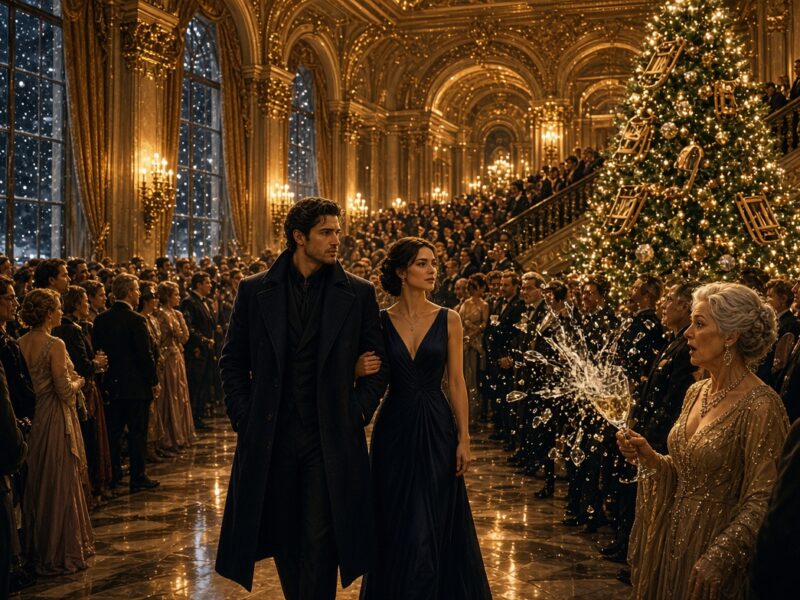
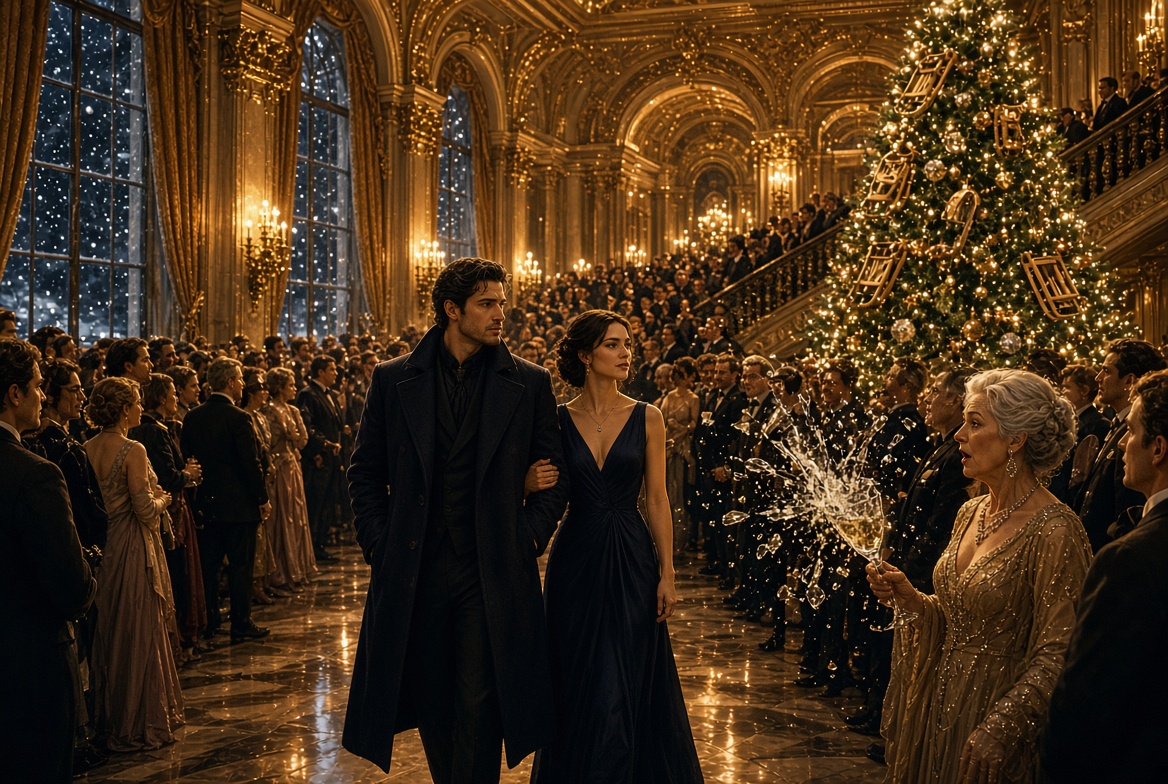
A twelve-foot tree stood by the staircase, hung with tiny wooden sleds.
Men she knew in work boots wore ties tonight.
Children ran between their parents’ legs.
Eighty years of Bridger Sled Works Christmas parties.
The first one without Amos.
At the shop, people knew Marlo as the woman who fixed things before anyone noticed they were broken.
She caught the warped batch before it shipped.
She remembered which apprentice couldn’t work Tuesdays.
She kept the old 1946 steambox breathing with patience and a wrench.
When things went right at Bridger, her name was rarely the one mentioned.
That was all right.
She didn’t need it mentioned.
She only needed it on the list.
“Kitridge,” she told the young volunteer at registration.
“Marlo.”
The girl smiled and ran her finger down the printed page, then down it again.
The smile slipped.
“Oh, hang on.”
Marlo saw it upside down before the girl could hide it.
Her own name halfway down, a clean blue line through it, and beside it, two small initials.
D.K.
“Marlo, sweetheart.”
Deardra Kemp appeared at her elbow the way she always did, softly, perfectly dressed, a silver brooch at her collar.
Thirty-one years at Amos Bridger’s right hand.
She didn’t sneer.
She didn’t raise her voice.
She just rested a gentle hand on Marlo’s arm.
“It’s been a hard year, honey,” Deardra said.
“Maybe this isn’t your night.”
Marlo looked at her.
Those weren’t the words of someone fixing a seating chart.
It wasn’t policy.
It sounded personal in a way Marlo couldn’t name.
People were watching now.
A man from the finishing line, two women from shipping.
The volunteer’s cheeks had gone pink.
And somewhere in the back of Marlo’s mind, a voice she had divorced three years ago said what it always said.
“Don’t make a scene, Marlo.”
So she didn’t.
“It’s fine,” she told the girl, and she even smiled.
“Really.”
She buttoned her coat to the collar.
On her way to the doors, she passed a small table near the tree.
A framed photograph stood on it.
An old man in a canvas apron laughing at something outside the picture.
A candle burned beneath it.
Marlo stopped.
One year ago tonight, while this same ballroom was full of music, she had knelt on a cold concrete floor beside that man.
She had held his hand.
She had listened to him fight for every breath.
Nobody in this building knew that.
Nobody had ever asked.
She had kept that night the way she kept everything.
Quietly.
The front door swung open on a gust of snow.
A tall man stepped in, stamping his shoes, his dark coat dusted white.
He wasn’t dressed for a party.
He looked like he’d come from somewhere he hadn’t wanted to leave.
James Bridger.
She had spoken to him exactly twice.
Once about a cracked runner, once in an elevator about the weather.
He saw her coat, then the snow melting on her shoulders, then her face.
“You’re leaving already?”
Marlo tried to make it small.
“Apparently I’m not on the list.”
Something moved behind his eyes.
He walked to the registration table without a word.
The volunteer handed him the page like it was hot.
He read it.
He found the line.
He found the initials.
His jaw tightened just slightly.
He set the page down and came back to her.
Then he held out his arm.
“Come with me.”
Marlo stared at it.
At him.
Then she took it.
The ballroom doors opened.
Three hundred faces turned toward them.
The piano faltered mid-song.
And across the room, a champagne glass slipped from Deardra Kemp’s fingers and shattered on the parquet floor.
The walk across that ballroom was the longest of Marlo’s life.
James didn’t hurry.
He didn’t look at anyone.
He just kept her arm in his and moved between the tables like he had every right to, which he did.
Behind them, someone was already sweeping up the broken glass.
He stopped at the round table nearest the stage.
Table one.
The founders’ table.
A place card sat beside his own.
He picked it up, read the name of a Denver client who had canceled that afternoon, and slipped it into his pocket.
“Sit,” he said.
“Please.”
She sat.
The whole room seemed to lean toward her.
Marlo kept her coat on for a full minute before she realized how foolish that looked and slid it off her shoulders.
“I’m sorry,” she said quietly.
“You didn’t have to do that.”
“Yes, I did.”
He poured her a glass of water.
“And honestly, you’re doing me a favor. I’ve been dreading tonight for a month.”
She looked at him.
“It was his favorite night of the year,” James said.
“He used to stand at the door and shake every hand. I don’t even know half the names in this room.”
Marlo hesitated.
Then she nodded toward the back.
“Table nine runs the finishing line. The man in the red tie is Walt Hensley. Forty-one years. He sanded the first runner you ever rode on. Probably.”
James turned and looked.
Really looked.
“Forty-one years?” he said softly.
“He’ll tell you about every one of them if you let him.”
For the first time that night, James smiled.
A heavy hand landed on his shoulder.
“There he is.”
Dwight Pomeroy, the plant manager, red-cheeked and loud, pumped James’s hand.
Then his eyes found Marlo and the smile stayed on his mouth but left his face.
“Kitridge,” he said.
“Didn’t expect to see you here.”
Before she could answer, he glanced across the room at his sister.
Deardra was standing very still by the dessert table, a fresh glass in her hand.
Dwight moved on.
The lights dimmed.
James stood, took the microphone, and the room went quiet.
He talked about Amos simply.
The canvas apron, the bad jokes, the way the old man insisted on cutting the cake himself every year, crooked every single time.
People laughed.
A few wiped their eyes.
Then James looked down at the microphone for a long moment.
“A year ago tonight,” he said, “my grandfather fell on the shop floor. Somebody found him. Somebody called for help and stayed with him.”
The report just says, “Employee.”
“I’ve spent a year trying to learn who that was.”
The room was silent.
“If you’re here tonight,” James said, “please come find me. I owe you something I don’t know how to say.”
Marlo went cold all the way down.
She remembered the phone call the next morning before the sun was even up.
Deardra’s voice, low and kind.
“The family wants privacy, honey. Please don’t contact them.”
And then, more softly.
“You were off the clock in that shop with your little girl. I’d keep that quiet if I were you.”
Marlo had been on a final warning that winter for every shift she’d missed sitting in a courthouse hallway.
So she had kept quiet for a whole year.
She had kept quiet.
Now she watched James’s face as he set down the microphone, and she understood.
He had never asked for privacy.
Somebody had made sure he would never know.
Her phone buzzed.
Lupe.
Marlo slipped into the hallway.
“She won’t sleep until she talks to you,” Lupe said.
Then Pippa’s voice, breathless.
“Mom, is there cake? Does it have the good frosting?”
Marlo leaned her forehead against the cold wall and closed her eyes.
“It has the good frosting, baby.”
“Bring me a corner piece.”
“I’ll bring you a corner piece.”
When she came back, Deardra was standing beside James, one hand on his elbow, gracious and composed.
She smiled at Marlo warmly.
Then she steered him toward a cluster of retail buyers by the bar, and he was gone.
At ten, James found Marlo by the coat rack, a corner piece of cake wrapped in a napkin in her hand.
“I’ll walk you out.”
The snow had thickened.
25th Street was blurred and golden under the old street lamps.
Their footsteps were the only sound.
At her truck, Marlo stopped.
She turned to face him.
Her heart was pounding.
“Mr. Bridger, about your grandfather, the night he—”
Then she saw it.
A folded square of paper tucked under her windshield wiper.
She pulled it free.
The ink had bled a little in the snow, but the words were clear.
“Some nights are better left alone.”
Marlo folded the note in half and slid it into her coat pocket before James could read it.
“Just a flyer,” she said.
He waited for her to finish what she’d started to say.
She couldn’t, not with those words pressed against her hip like something hot.
“Another time,” she said.
“Thank you for tonight. Really.”
She drove home with both hands on the wheel and checked the mirror at every light.
That night, after Pippa fell asleep with frosting on her chin, Marlo sat at the kitchen table in the dark.
And for the first time in months, she let herself remember.
One year ago, the night of last year’s party, she couldn’t afford a sitter, so she’d volunteered to finish the rush batch instead.
Pippa had fallen asleep on the breakroom cot under Marlo’s coat, one sneaker still on.
As Marlo turned into the shop lot, a pickup tore past her so close she’d had to brake hard.
A bar of white lights burned across the top of its cab.
Then it was gone, fishtailing onto the road.
She remembered thinking somebody was in a hurry to get home.
Inside, the shop was dim and warm.
The steambox hissed, and Amos Bridger was lying on the concrete at the foot of it.
She remembered running, her knees hitting the floor, his face gray, his phone still glowing in his hand.
D.
No answer.
She had called 911 with shaking fingers.
Then she’d taken his hand because she didn’t know what else to do, and she had held it until the paramedics came.
He had gripped her back hard.
His lips had moved, and he had told her something.
Marlo pressed her palms flat against the kitchen table.
Even now, alone, she didn’t say the words out loud.
On Monday, the schedule was taped to her locker.
Kitridge.
Nights.
Effective immediately.
It was signed by Dwight Pomeroy.
No warning, no conversation.
“Holiday rush,” he said when she found him on the floor.
He didn’t look up from his clipboard.
“We need the steam box running around the clock. You’re the best we’ve got. Should be flattered.”
Lupe could cover three nights a week, not five.
“I don’t mind, Mom,” Pippa said at dinner, pushing peas around her plate.
“I can sleep at the shop like before.”
She said it so easily.
That was what scared Marlo most.
Tuesday, close to ten, the shop was nearly empty.
Marlo was pulling a steamed runner from the box, working it slowly into the form, when she felt someone watching.
James Bridger stood near the door, still in his good coat.
He hadn’t been on the shop floor in months.
He looked like a man walking into church after a long time away.
He didn’t come to her.
He walked to the far wall instead.
The runner wall.
Eighty years of first runners, each one signed by the apprentice who bent it.
He found the very first, his grandfather’s, dated 1946.
The ash gone dark as honey.
Then his eyes moved down the row and stopped on MK.
Marlo set the runner in its clamp and wiped her hands.
When she turned, he was already standing in front of her.
He didn’t dance around it.
“Was it you?”
The steam box ticked between them.
For a long moment, she couldn’t speak.
Then she nodded.
So she told him.
The rush batch.
Pippa asleep on the cot.
Finding Amos on the floor.
The 911 call.
Holding his hand until the ambulance came.
She told him about the phone call the next morning.
“The family wants privacy. Don’t contact them.”
James’s face went very still.
“Nobody in my family said that,” he said quietly.
“Nobody.”
“I know that now.”
She did not tell him what his grandfather said.
Not yet.
She didn’t know if those words would heal him or break him.
And after the note, she didn’t know who else might be listening.
“There’s one more thing,” she said.
“When I found him, he had his phone in his hand. The screen was still lit up. He’d been trying to call someone.”
James didn’t move.
But something changed in him.
The way a room changes when a door opens somewhere you can’t see.
“His phone,” he said.
“Yes.”
He stared past her at the steam box, at the place on the concrete where it had happened.
“The hospital gave us his coat,” James said slowly.
“His watch. His wallet.”
He looked back at her.
“They told us there was no phone.”
James came back the next night and the night after that.
He didn’t come to talk about the phone.
He said he’d ask about it quietly in his own way.
And that was all he said.
What he asked for instead surprised her.
“Teach me to bend one.”
Marlo looked up from the steam box.
“A runner.”
“He tried to teach me for twenty years,” James said.
“Every summer. I always had somewhere else to be.”
So after her shift, close to midnight, she taught him.
She showed him how to read the grain of the ash, how to find the straight line running through it like a spine.
She showed him how long the wood needed in the steam.
One hour for every inch of thickness, not a minute less.
Pippa did her spelling homework on the breakroom cot, looking up now and then to supervise.
James’s first runner cracked halfway into the form, a sharp, ugly sound.
He stared at the split like it had insulted him personally.
“I ruined it.”
“The wood’s not broken,” Marlo said.
“You just rushed it.”
He looked at her.
“Your grandfather used to say, ‘Wood remembers the shape you bend it into,'” she said.
“So you’d better be patient with it.”
James was quiet for a long moment.
“He said that to me once. I was fourteen. I thought he was talking about sleds.”
On the second night, he bought three hot chocolates from the vending machine in the hall, took one sip, and set his down.
“That’s terrible.”
“Everybody knows that,” Pippa informed him without looking up from her spelling words.
He lost to her at Uno twice before the steam was ready.
When the old breakroom heater rattled and died, he didn’t call maintenance.
He took off his good coat, lay down on the floor with a screwdriver, and fixed it himself.
Pippa watched him the whole time.
Marlo watched Pippa watching him.
Near one in the morning, with Pippa asleep and the steam hissing low, James sat on an upturned crate and turned a scrap of ash over in his hands.
“I talked to him that afternoon,” he said.
“The day he fell.”
Marlo went still.
“I was in Denver closing our biggest retail account. I called to say I’d fly home for the party. He told me to stay put. ‘It’s busy season, Jimmy. Close the deal.'”
James’s thumb moved over the grain.
“And I said okay. Because it was easier.”
He set the wood down.
“I was in a hotel bar when the hospital called. Celebrating.”
Marlo felt the words she had carried for a year rise up in her throat.
They were so close to what he just said.
So close it frightened her.
She held them back.
Not like this.
Not at one in the morning with that note still folded in her coat pocket and no idea who was watching.
When she gave him those words, she wanted them to stay given.
She didn’t want anyone to be able to take them away.
“I’m sorry,” was all she said.
He nodded like that was enough.
Maybe it was, for tonight.
Wednesday evening, before her shift, there was a knock at Marlo’s front door.
Deardra Kemp stood on the small porch in a camel coat, snow catching in her silver hair.
In her gloved hands was a round tin.
“Molasses cookies,” she said, smiling.
“Amos’ favorite. I make them every Christmas.”
Marlo let her in because she didn’t know how not to.
Deardra sat at the kitchen table like she’d been there a hundred times.
She was gentle, almost motherly.
She asked about Pippa’s choir.
She admired the crayon drawings taped to the refrigerator.
Then she folded her hands.
“I’ve spoken to Dwight. We can move you back to days right after New Year’s. And there’ll be a raise. A real one.”
She smiled.
“A clean start, honey. You’ve earned it.”
Marlo didn’t answer.
At the door, Deardra paused and touched Marlo’s arm.
The same soft touch as the night of the party.
“That boy is still grieving,” she said quietly.
“Let him grieve in peace. Digging will only hurt him.”
Then she walked out into the snow.
That night, Marlo crossed the shop lot just before eleven, keys in her hand, breath clouding in the cold.
She stopped.
A pickup was parked by the loading door, half in shadow beneath the yard light.
Snow had gathered on the hood, and across the top of the cab ran a bar of white lights.
It was Dwight’s truck.
It was the same truck that had torn out of this lot one year ago.
The winter solstice.
The longest night of the year.
By the time the last shift clocked out, the shop was dark except for the lights above the steam box.
Snow ticked against the high windows.
Marlo had told James everything that afternoon.
The truck tearing out of the lot, the light bar, the note under her wiper.
She had unfolded it on his desk with hands that wouldn’t quite stop shaking.
He’d read it twice.
Then he’d picked up the phone and called Dwight.
“Stay,” James told her now as headlights swept across the windows.
“Please. I want you in the room.”
Dwight came in stamping snow off his boots, loud and cheerful.
“Little late for a meeting, boss.”
Then he saw Marlo standing by the steam box.
The cheer drained out of him.
James didn’t raise his voice.
He didn’t have to.
“Where were you the night my grandfather fell?”
Dwight laughed.
Then he stopped laughing.
He looked at the floor, at the door, at anything but James.
“I was here,” he finally said.
The steam box ticked.
“He caught me in my truck in the lot.”
Dwight rubbed his face hard with both hands.
“I’d had a few. It was Christmas. He knocked on my window and he was so calm. He said I was done on the floor after the holidays. Forty years he’s known me, and he said it like he was reading the weather.”
“So you argued,” James said.
“We shouted. Sure, we shouted. And I peeled out of there mad as hell.”
Dwight’s voice cracked.
“But he was standing, James. I swear to God he was red in the face and yelling at me, but he was standing when I left.”
“And the note,” Marlo said quietly.
Dwight looked at her for the first time.
“I saw you walk in with him at the party, and I thought, she knows. She saw my truck. Everybody’s going to think I killed him.”
His eyes were wet.
“I just wanted it left alone.”
The side door banged open.
Deardra came in fast, snow in her silver hair, a coat thrown over a cardigan like she’d left the house in a hurry.
She went straight to her brother and put herself between him and James.
“That’s enough, Dwight. Don’t say another word.”
“D, he already—”
“I said that’s enough.”
She turned, and her eyes landed on Marlo.
Something hardened in her face.
“Do you want to know who was really in this shop that night, James?”
She was off the clock, alone with an eight-year-old child asleep in a building full of steam lines and saws.
Her voice was soft and precise.
“On a final warning, too. And now, suddenly, she’s very close to the man who signs the checks.”
The words landed in the room like a slap.
And for one second, Marlo saw it.
A flicker in James’s eyes.
A question that hadn’t been there before.
She heard the old voice in her head.
“Don’t make a scene, Marlo.”
Something inside her finally broke loose.
“He had his phone in his hand.”
Her voice rang off the steel rafters, louder than she had spoken in years, maybe louder than she had ever spoken.
“When I found him, his phone was in his hand, and the screen was still lit up.”
She looked straight at Deardra.
“It said ‘D.'”
Deardra went white.
Not pale.
White, like all the blood in her body had gone somewhere else.
Dwight turned slowly to look at his sister.
James didn’t move at all.
For a year, Deardra Kemp had decided who stood where, who sat at which table, whose name was written down and whose was crossed out.
Now she stood in the middle of the shop floor with nothing in her hands, and everyone was looking at her.
But she wasn’t finished.
She lifted her chin.
Her eyes were bright and frightened and cruel all at once.
She turned to James.
“Ask her what he said.”
James frowned.
“What?”
“He spoke to her before the ambulance came. I’d bet my life on it.”
Deardra’s voice shook.
“Ask her what your grandfather said, James. She’s been keeping it from you for a year.”
The steam box hissed.
James turned toward Marlo slowly, as if the floor had tilted under him.
“He spoke to you?”
Marlo opened her mouth.
The words were right there, every one of them.
She had carried them for twelve months.
But not here.
Not with Deardra watching.
Not handed over like evidence in front of the woman who had made her silent in the first place.
“Not like this,” she whispered.
She saw his face change.
She watched him hear it as one more person deciding what he was allowed to know about his own grandfather.
James didn’t call the next morning.
Marlo hadn’t expected him to.
She had seen his face when she said, “Not like this.”
She had watched him walk out into the snow without looking back.
What she heard instead came secondhand from Walt Hensley at the time clock.
“Boss called Dwight and Deardra into his office at seven,” Walt said quietly.
“Door open. Whole hallway heard it.”
He studied her over his glasses.
“said, ‘Nobody gets judged and nobody gets let go until you’re ready to speak.’ Said, ‘Your word deserves to be heard before his temper does.'”
James had told Dwight he was not to discipline anyone or make personnel changes until the matter was settled.
But production still ran through the plant manager’s desk, and with Christmas orders stacked to the ceiling, Dwight still controlled the schedule.
Marlo stood very still with her time card in her hand.
He was hurt.
She knew he was hurt, and he still wouldn’t let anyone use it against her.
The shop felt it by noon.
Some of Dwight’s crew went quiet when she passed.
One man moved his lunch to the far end of the bench.
But when she got back to the steam box, there was a cup of coffee waiting on the ledge.
No note.
Just coffee, still hot.
Dwight had called her in for a double.
Holiday rush.
He moved through the shop like a man being chased.
His eyes were red.
He snapped at the finishing line and slammed a clipboard on the loading dock hard enough to crack it.
Just after two, he came to the steam box and taped a new work order to the controls.
Cut cycle to forty minutes.
Increase steam pressure.
D.P.
“We need more runners out the door,” he said.
“You can’t make up for twenty minutes by driving the pressure higher,” Marlo said.
“Those fittings are older than you are.”
“Then they’ll hold a little longer.”
He walked away before she could answer.
Rafe Tuilangi was nineteen, the newest apprentice.
Big shoulders and a gentle laugh.
At 3:30, he was leaning in to check the clamps when Marlo heard it.
The pressure needle was sitting higher than she had ever allowed it to sit.
A thin, rising whistle from the old brass fitting at the top of the box.
She had heard every sound that steambox could make in ten years.
She had never heard that one.
“Rafe, back up.”
He looked at her, confused.
The fitting blew.
Marlo grabbed his jacket and threw him sideways with everything she had.
A blast of white steam roared past them.
It caught her across the left forearm like a hot iron.
For a moment, the whole shop stopped.
Then everyone was running.
Someone shut off the valve.
Someone wrapped her arm in a wet towel.
Rafe was on his knees beside her, shaking.
“You pushed me,” he kept saying.
“You pushed me.”
By the time the urgent care nurse finished the bandage, the story had already spread across the shop floor.
Dwight told the crew she’d ignored the gauge.
Said she’d gotten careless, working too many nights.
Marlo got home just after dark.
Pippa met her at the door and saw the bandage before she saw anything else.
She didn’t cry.
She just went very quiet.
She sat on the arm of the couch and stared at the white gauze for a long time.
“Did they say it was your fault?” she finally asked.
Marlo didn’t answer.
“Did you make a scene this time?”
The question landed somewhere deep.
Marlo looked at her daughter, nine years old, chin up, eyes steady, trying so hard to be brave, trying so hard to be like her.
And Marlo understood, with a sick little drop in her stomach, that she had been teaching Pippa how to be quiet.
Close to nine, there was a knock.
James stood on her porch in the snow.
He wasn’t in his good coat.
He looked like he hadn’t slept.
He held out his hand.
In his palm sat a blackened brass fitting, split down one side.
A paper work order was still wired to it.
Cut cycle to forty minutes.
D.P.
“Rafe brought it to me,” James said.
“He walked into my office and wouldn’t leave until I listened.”
Marlo looked at the fitting, then at him.
“I didn’t come to fix anything,” he said.
“I came because I needed to see you were okay.”
He placed the fitting in her good hand and closed her fingers around it.
“What happens next is your decision, not mine.”
They stood on the small porch with the cold pressing in around them.
Snow drifted under the light.
Neither of them said what they felt.
Both of them knew.
He walked back to his truck.
She watched his taillights until they were gone.
At eleven, her phone rang.
The name on the screen made her heart stop.
Deardra Kemp.
Marlo answered.
For a long moment, there was only breathing on the line.
Ragged, uneven.
Then Deardra spoke, her voice shaking so hard Marlo barely recognized it.
“I have his phone.”
Silence.
“Come to the shop alone. Tomorrow night. December 23rd.”
Snow fell on the empty shop lot, soft and steady, burying the tire tracks as fast as they were made.
Marlo didn’t go alone.
That afternoon, she had called James.
Her voice was steady, even if her hands weren’t.
She told him where she was going and why.
Then she told him what she needed.
“Wait outside unless I call you in.”
There was a long pause on the line.
“Okay,” he said.
“I’ll be there.”
For the first time in her life, she had asked for help without giving away the choice.
It felt strange.
It felt like standing up straight.
Inside, the shop was dim.
The steam box was cold and silent.
Only the old boiler hummed in the corner, its firebox banked low and glowing orange behind the open grate.
Deardra sat on a stool beside the steam box.
She wasn’t wearing her brooch.
Her silver hair hung loose.
In her lap, held in both hands like something alive, was a phone in a worn leather case.
Amos’ phone.
“Sit down, honey,” Deardra said.
“Please.”
Marlo sat on the edge of the workbench and waited.
“We quarreled that afternoon,” Deardra began.
“He told me he was retiring, handing everything to James in the spring.”
She smoothed the leather with her thumb.
“Thirty-one years I sat outside his office. I never married. I never had children. That company was my family. And I thought, James will bring in his own people, and I’ll be nothing.”
She swallowed.
“That night at the party, my phone lit up. Amos. And I was still so angry. So I let it ring. I was laughing with the sales girls by the punch bowl.”
Her voice broke.
“Then it lit up again. And I let it ring again.”
Marlo didn’t move.
“When I got to the hospital, his coat was hanging on a chair. James was still in Denver. The nurses knew me. I’d been Amos’ right hand for thirty-one years, so nobody thought twice when I gathered his things. I found this in the pocket. Two calls to me. Both unanswered.”
Deardra closed her eyes.
“I put it in my purse. I couldn’t let anyone see that he’d called me and I didn’t pick up. That I was laughing while he was—”
She couldn’t finish.
“And the party list,” Marlo asked softly.
“James told me he’d thank whoever found Amos out loud in front of everyone.”
Deardra’s eyes filled.
“I couldn’t sit in that room and watch him thank the one person who answered when I didn’t.”
The side door crashed open.
Dwight stood there, wild-eyed, snow on his shoulders.
Marlo could smell the whiskey from across the room.
“D, what are you doing? What did you tell her?”
“Dwight, go home.”
“She’s going to put it all on me.”
He crossed the floor in four long strides and ripped the phone out of his sister’s hands.
“This thing ruins all of us.”
He swung toward the boiler, toward the open firebox.
“Stop.”
Marlo’s voice exploded off the rafters, louder than she had ever been, louder than anything she had ever allowed herself to be.
Dwight froze mid-step.
Outside, boots hit the packed snow at a run.
The door slammed open behind them.
James was inside in three seconds, standing between Dwight and the fire.
Dwight’s arm dropped.
His fingers opened.
The phone hit the concrete and skidded to Marlo’s feet, unbroken.
For a long moment, nobody breathed.
Then Marlo knelt and picked it up.
She held it carefully in both hands.
She looked at James, and she finally said it.
“When I found him, he held my hand hard, and he said, ‘Tell Jimmy it’s all right. It’s busy season. He did right.'”
James stopped moving.
“He knew you’d blame yourself,” Marlo whispered.
“He made sure somebody would tell you.”
Something broke open in James’s face.
A whole year of it.
He put a hand over his eyes, and his shoulders began to shake.
Marlo stood and went to him.
She held on to him, and she didn’t let go.
Then she turned to Deardra.
“He said one more thing. I never understood it. Not until tonight.”
Deardra looked up, terrified.
“He said, ‘D, be mad at me. Tell her I’m sorry.'”
Deardra made a sound Marlo would never forget.
Low and broken, like something inside her had finally given way.
“He was calling to apologize,” she whispered.
“Both times, he was calling to say he was sorry.”
She folded over in her chair and wept.
For Amos.
For the year.
For all of it.
Dwight sank down onto an upturned crate.
He stared at the floor for a long time.
“I cut the cycle,” he said hoarsely.
“I lied about the gauge. I let you take the blame for it.”
He looked up at Marlo.
“I’ll tell the whole crew first thing tomorrow. Myself.”
Outside, the snow was still falling under the yard light.
James and Marlo stood in it together, saying nothing.
The cold didn’t matter.
Then Marlo reached over and took his hand first.
It was a small thing.
Just her hand, just above the white bandage, finding his.
But it was the first thing between them that neither one could mistake for gratitude or grief or rescue.
Dwight kept his word.
On the morning of Christmas Eve, he stood on an upturned crate in the middle of the shop floor and told the whole crew the truth.
The cut cycle, the lie about the gauge, the argument in the lot a year ago.
His voice shook the entire time.
Nobody interrupted him.
He resigned that afternoon.
By February, he was in a recovery program down in Salt Lake.
In March, Rafe got a letter in shaky handwriting.
It said he was sorry about the steam box and that he was glad Marlo was quicker than he was stupid.
Rafe pinned it inside his locker.
Deardra retired at the end of January on her own terms.
Every Sunday after that, she drove out to the cemetery and sat beside Amos’ grave in her camel coat, talking to him like she used to talk to him through his office door.
One Saturday in February, she knocked on Marlo’s door holding the round tin of molasses cookies.
“No offers this time,” she said.
“No conditions.”
Her eyes were wet.
“Just, I’m sorry. For all of it.”
Marlo let her in.
They drank coffee at the kitchen table, and Deardra told her stories about Amos for two hours.
Marlo stayed at the steam box.
James offered her an office upstairs more than once.
She said no every time.
“The steam box is where I’m good,” she told him.
“Let me stay where I’m good.”
So she trained the new apprentices instead.
Rafe became her deputy.
He learned to hear the box the way she did.
In April, Pippa’s science fair filled the school gym.
Halfway through, Marlo’s phone buzzed in her pocket.
“Rafe handled it. Enjoy the volcano.”
She smiled and put the phone away.
When Pippa’s baking soda volcano foamed over the edge of the table and onto the floor, James was already holding out a stack of paper towels with the other parents.
It had grown slowly between them.
More runner lessons.
Saturday sledding on the hills above Ogden, Pippa screaming with joy all the way down.
Dinners at Marlo’s small kitchen table.
Uno games James still lost badly.
He never asked Pippa to treat him like anything more than he was.
She called him James.
That was enough.
One year later, it was the Christmas party at the Kingsley again.
Snow was falling on 25th Street.
The twelve-foot tree glowed by the staircase, hung with its tiny wooden sleds.
There was no printed list at the registration table.
James had changed the rule in January.
Everyone on the Bridger payroll and their families were expected.
Period.
Marlo wore the same navy dress, altered a little.
Pippa had ruled that buying a new one would be financially irresponsible.
Pippa was gone toward the cookie table before Marlo even had her coat off.
That afternoon at the shop, one new runner had gone up on the wall.
After four cracked tries, James’s had finally held.
It hung now right beside hers.
MK.
And next to it, JB.
At the toast, James stood.
The room went quiet, but he didn’t talk about his grandfather.
Instead, he turned and held out the glass to Marlo.
For a second, she couldn’t breathe.
Three hundred faces turned toward her.
The same faces that had watched her walk in on his arm one year ago.
Then she stood up.
“Amos Bridger used to say something to anyone who’d listen,” she said.
Her voice was clear and carried all the way to the back of the room.
“Wood remembers the shape you bend it into. So be patient with it.”
She looked out at them.
Walt Hensley in his red tie.
Rafe.
The finishing line at table nine.
“I think people are the same way.”
All over the room, people who had worked at Bridger for decades nodded slowly.
Walt took off his glasses and wiped his eyes.
Late in the evening, Marlo noticed James was gone.
She found him in the lobby, standing alone in front of his grandfather’s photograph.
The candle burned low beneath it.
He had his hands in his pockets the same way he had that night a year ago when he came in from the snow.
She knew that look.
She had worn it herself once.
He had found her here when she was leaving.
Now she had found him.
She didn’t wait for anyone to step in.
She walked up beside him and held out her hand.
“Come with me.”
He looked at her hand, then at her face, and he smiled slowly, the way he had smiled at table one a year ago.
He took it, and she led him back through the ballroom doors, into the light and the music and the noise, into a room where her name would never be in question again.









