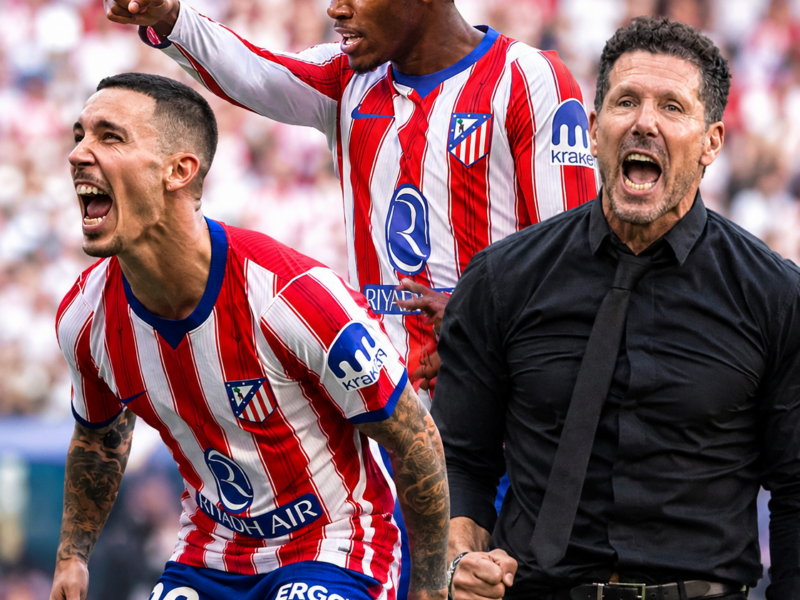
The Stat Simeone Dropped Almost Like An Afterthought That Explains Why This Win Meant So Much More Than Three Points
Sometimes the biggest headline of a press conference isn’t the answer to the first question.
It’s a single number, mentioned almost casually in passing, buried inside a longer answer about something else entirely.
That’s exactly what happened when Diego Simeone, midway through explaining why his team’s derby win mattered, dropped a detail about just how long Atletico Madrid’s fans had been waiting for a moment exactly like this one at home.
Once you hear that number, the rest of his press conference reads completely differently, and it’s worth going through it again with that context in mind.
A Fifteen Year Wait Finally Broken
Buried inside his answer to a question about whether the referee controversy overshadowing the match bothered him personally, Simeone revealed something that reframed the entire result.
He spoke about the joy of his own supporters, describing a stretch of roughly fifteen years during which beating Real Madrid had been an exceptionally difficult task, and framed this particular derby win at home as another step in finally breaking that pattern.
That context matters enormously, because it means this wasn’t just another three points in a long league campaign for the fanbase inside that stadium.
It was a release valve for over a decade of frustration against the club’s fiercest rival, delivered on home turf, in a fixture that had been building toward controversy from the opening whistle.
Simeone made clear he wasn’t interested in treating the win as some enormous milestone moment either, instead describing it as one small step in an ongoing process of growth for a team he insists is still very much under construction.
That kind of measured response, refusing to let even a genuinely historic result inflate expectations too quickly, has become something of a signature for how he manages a fanbase that can swing rapidly from doubt to euphoria depending on the result.
Refusing To Play The Referee Game
Right from the very first question, reporters tried to draw him into commenting on the same controversy that was dominating headlines from the opposing dugout.
He opened his response with a broader point about the responsibility that comes with being a high-profile coach, naming names deliberately, mentioning Mourinho, Hansi Flick, Manuel Pellegrini, and himself in the same breath, arguing that all of them carry outsized influence with their public comments and need to be careful about respecting officials and fellow professionals.
His closing line on that subject was simple and pointed, saying that once someone crosses the line of basic respect, it doesn’t matter whose name is attached to the comment, everybody involved ends up losing something in the process.
That framing set the tone for the rest of the session, where nearly every attempt to pull him into a referee debate got redirected back toward football itself.
Controlling The Game From Start To Finish
When a reporter specifically referenced the accusation that officials had favored both his club and Barcelona this season, he responded by describing the match itself rather than engaging with the accusation directly.
He called it an intense derby that his team controlled from start to finish, acknowledging that Real Madrid possess genuinely outstanding individual talent and dangerous transitions, but insisting his side managed almost every one of those moments defensively throughout the second half.
He specifically referenced one defensive mixup between two of his own players that briefly opened the door for a dangerous counter, but categorized it as essentially the only moment of real danger his team allowed across the entire ninety minutes, aside from conceding the eventual goal.
His broader message was that regardless of any outside noise, his team’s performance and rising level of play would continue on its current trajectory no matter what narrative other people wanted to attach to the result.
Sidestepping The Specific Incidents Entirely
One reporter tried a more direct approach, asking pointedly for his personal opinion on the Kang-in Lee incident, the Romero incident, the penalty, and the Huijsen red card, referencing the printed images that had already been shown in the opposing press conference just minutes earlier.
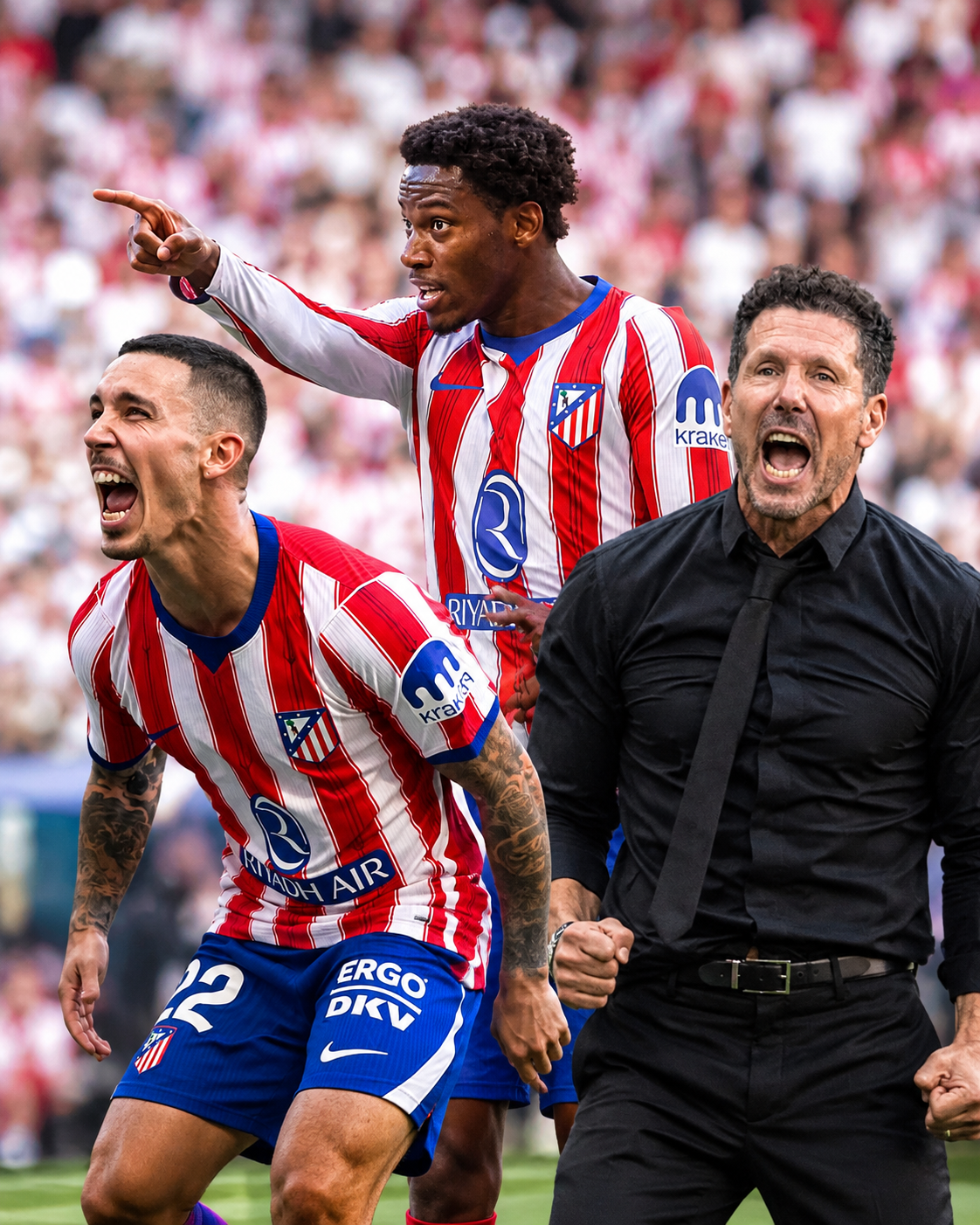
Simeone declined to offer a personal verdict on any of them, explaining that he generally avoids commentating on decisions that have already been made and cannot be changed, adding that he had exercised the same restraint in the past when penalty decisions went against his own team.
He then dropped in a detail that quietly undercut a significant portion of the outrage building around the officiating, mentioning that the head of Spain’s refereeing body had reportedly stated after the match that the Romero incident did not merit a red card.
He closed the point with a shrug, essentially saying that if people wanted to keep relitigating individual decisions rather than discussing what actually happened on the pitch, that was their choice to make, but as far as he was concerned the match had been even at eleven versus eleven, his team controlled it, and once the numbers shifted in their favor, they finished the job.
Answering The Question Everyone Wanted Asked
One of the more refreshingly blunt moments of the press conference came when a reporter simply asked whether the better team had won that day.
Simeone didn’t hesitate, saying yes, the team that pushed hardest and created the most danger deserved the result, framing his own side as the one chasing silverware while suggesting he personally has little left to prove given everything he’s already achieved in the game.
He used that same answer to highlight the collective defensive discipline his team showed against an opponent stacked with individual quality, specifically naming Vinicius, Mbappe, the opposing winger Diomande, Guler, Bernardo Silva, and Valverde as players who are all excellent in their own right, and framing the containment of that talent as a genuine team achievement.
He repeated a version of that same question back at the room almost rhetorically, asking whether that defensive discipline had actually been visible to the people watching, making clear he wanted that specific storyline, not the officiating debate, to be the headline people remembered.
A Quiet Redemption Arc For Julian Alvarez
Not every question in the room concerned tactics or controversy.
One reporter raised the ongoing storyline surrounding Julian Alvarez, asking whether the reception from the home fans during this match represented a turning point in his relationship with the supporters after a difficult stretch.
Simeone’s answer leaned emotional, describing the club’s fanbase as an extraordinary source of support throughout both his own playing career and his time as a coach, and expressing genuine gratitude for what he called their incredible backing through difficult periods.
He was honest about the specifics, admitting Alvarez had struggled during the match and describing his performance using the word difficult more than once, but insisted the club would continue working with him because he remains a player considered essential to what the team needs moving forward.
In the same breath, he made sure to highlight Jonathan David’s continued scoring form, noting the striker had now found the net in three consecutive matches, and framed that emerging competition for places up front as exactly the kind of internal push the squad needs heading into a long and demanding season.
The Coke Story That Reveals His Coaching Philosophy
Perhaps the most personally revealing moment of the entire press conference came when a reporter asked what this derby win, achieved ahead of Real Madrid heading into the international break, actually meant for the club.
Simeone downplayed the significance almost immediately, reminding everyone that the league season stretches on for many more months and that early standings rarely tell the full story of how a campaign ends.
But he then used the moment to tell a story that clearly meant a great deal to him personally, describing a veteran player in his thirties who had not started what was arguably the biggest match of his life since childhood, only to come off the bench in the second half and completely change the course of the game.
He used that anecdote to make a broader statement about squad culture, saying the club needs players who stay ready and fully engaged even when left out of the starting lineup, and expressed hope that everyone inside the dressing room continues to witness and absorb that same example on a daily basis, because in his view, that mentality is fundamentally what Atletico Madrid represents as a club.
Staying Locked On The Next Match
The final question tried to get him to frame the derby win as proof that his squad could realistically compete for major honors this season.
True to the tone he maintained throughout the entire session, he deflected that framing entirely, saying the team doesn’t need grand symbolic moments to validate itself, and that what actually matters is preparing for the very next fixture against Alaves with the same enthusiasm and sense of purpose the squad has carried through their recent run of matches.
He closed by reinforcing the same message he had returned to throughout the press conference, that staying focused strictly on the process, one match at a time, without losing sight of the team’s broader identity and objectives, is what separates a club that sustains success from one that simply enjoys a good week.
Why This Restraint Was The Real Story
Read the full exchange from start to finish, and a clear pattern emerges that says as much about Simeone’s approach to management as it does about the match itself.
Every single opportunity to escalate a referee controversy, defend his own club aggressively, or take a swipe at his rival’s dramatic press conference happening just down the hall, he quietly declined.
Instead, he used his time to praise his players individually, acknowledge a struggling attacker’s difficulties honestly rather than making excuses for him, highlight a veteran’s impact off the bench as a lesson for the whole squad, and remind everyone that ending a fifteen year drought against a fierce rival is meaningful precisely because it wasn’t treated as some final destination.
That kind of discipline under pressure, especially immediately after winning the most emotionally charged fixture on the calendar, is not easy to maintain, and it stood in sharp contrast to the theatrics unfolding in the press room next door.
If Atletico Madrid are indeed entering a genuinely different era after over a decade of struggling against their city rivals, this press conference offered a pretty clear blueprint for how that era intends to conduct itself, one calm, deflected question at a time.









