The Private Lives, Beloved Stars We Lost, and the Heartbreaking Story of the Twin Who Was Only 19
One family.
Two houses, directly across the street from each other.
And enough resentment, guilt, love, and meddling to fuel nine full seasons of television.
Everybody Loves Raymond made ordinary family life hilarious because the Barones felt uncomfortably familiar.
Anyone who ever sat through a tense dinner, a passive-aggressive compliment, or a mother who wandered in without knocking saw their own family in that kitchen.
But more than 20 years after the finale, the real life stories behind those faces look very different.
There are private lives, long careers, and beloved stars who are now gone.
And there is one devastating loss involving a cast member who was only 19.
So what happened to the people who made the Barone family feel so real?
This is Everybody Loves Raymond, then and now, in 2026.
Ray Barone was the husband who could interview professional athletes with total confidence and still look terrified when Debra asked one simple question.
What did you do?
Ray Romano played him, and he was born on December 21, 1957, in Queens, New York.
He was 39 when the show began in 1996.
Ray works because his greatest talent is avoidance.
He wants peace with Debra, approval from Marie, distance from Frank’s criticism, and some kind of relationship with Robert that does not require discussing why their mother clearly treats them differently.
The problem is that Ray usually wants all of those things without doing the difficult emotional work required to get them.
Romano makes that weakness funny because Ray knows, somewhere beneath the excuses, that he is often the problem.
His pauses, nervous explanations, and defensive smiles create comedy precisely because viewers recognize the instinct.
He is not a television superdad.
He is sometimes selfish, often immature, affectionate in awkward ways, and deeply dependent on the family he regularly complains about.
In 2026, Ray Romano is 68.
After the sitcom, he continued in stand-up and expanded dramatically through Parenthood, The Irishman, Made for Love, and other film and television work that revealed far more range than the anxious sportswriter suggested.
Ray Barone remains his defining comic creation because Romano made weakness recognizable without making it empty.
Ray spent nine seasons trying to avoid uncomfortable conversations.
The irony is that those conversations became exactly what millions of viewers remembered most.
Debra Barone was the woman expected to raise three children, manage a household, survive Ray’s evasions, and somehow stay gracious while her mother-in-law walked across the street without knocking.
Patricia Heaton played Debra, and she was born on March 4, 1958, in Bay Village, Ohio.
She was 38 when the show began.
Debra works because her frustration is not just a sitcom device.
She is exhausted for understandable reasons.
Ray wants family harmony but often expects her to produce it, Marie arrives with food that is also criticism, Frank brings noise and insults, and Robert brings his own resentment.
Debra is the person standing in the middle, trying to create boundaries in a family that regards boundaries as an insult.
Heaton gave her sharpness without losing affection.
A glare could tell Ray everything before she said a word, but the performance worked because the marriage never felt like pure hostility.
Her rivalry with Marie became the show’s great domestic war, because both women cared about the same family while expressing that care in incompatible ways.
Marie believed involvement proved love, while Debra believed love sometimes means leaving people alone.
In 2026, Patricia Heaton is 68.
After the series, she found another major sitcom success through The Middle and continued working in television, film, books, and public advocacy.
Debra remains memorable because Heaton made domestic exhaustion active rather than passive.
She complained, fought back, laughed, lost patience, apologized, and kept going.
The Barone men often treated family chaos as something happening around them, while Debra understood that somebody actually had to live inside it.
Robert Barone was the 6-foot-8 reminder that a grown man can become a wounded child again the moment his mother praises his younger brother.
Brad Garrett played Robert, and he was born on April 14, 1960, in Woodland Hills, California.
He was 36 when the show began.
Robert works because the joke beneath his jealousy is painfully serious.
He is a police officer, physically imposing, responsible, and capable of handling situations far more dangerous than anything in the Barone kitchen.
Yet inside his own family, he feels like the unsuccessful son standing beside Ray, the golden child who seems to receive love without trying.
Garrett used Robert’s enormous frame beautifully, because it contrasted with the character’s emotional insecurity.
His shoulders slumped, his voice dropped into gloomy resignation, and one glance toward Marie could reveal decades of disappointment.
His romance with Amy became important because she offered him something the Barone household rarely did, love that is not automatically compared with someone else.
In 2026, Brad Garrett is 66.
He continued working extensively in stand-up, television, film, and voice acting after the series.
Robert endures because Garrett made misery oddly lovable.
Robert could complain about Ray for hours and still defend him when someone else crossed the line.
He wanted what Ray had, but he never truly wanted a life without Ray in it.
Marie Barone was the mother who could bring you dinner, insult your cooking, rearrange your kitchen, question your parenting, and still genuinely believe every step had been an act of love.
Doris Roberts played Marie, and she was born on November 4, 1925, in St. Louis, Missouri.
She was 71 when the show began.
Marie works because she is never simply the meddling mother-in-law.
She is a woman whose entire identity has been built around being needed by her family, and every boundary feels like evidence that the role is shrinking.
Roberts understood that fear and hid it beneath impeccable comic aggression.
Marie rarely attacks directly when guilt can accomplish more.
Her relationship with Debra became legendary because the two women were fighting over territory neither could completely surrender.
Debra wanted ownership of her marriage, kitchen, children, and household, while Marie saw those same things as extensions of the son she raised.
Roberts made the character infuriating and vulnerable at the same time.
One minute, Marie is manipulating everyone at the table, and the next, a small glimpse of insecurity reminds viewers why she cannot stop.
Doris Roberts passed away in 2016 at the age of 90 due to a stroke.
She had enjoyed a long acting career before the sitcom, but Marie became the role most closely associated with her later life.
Marie endures because Roberts made maternal love feel both comforting and dangerous.
Marie never doubted that she loved her family.
The problem was that loving them also gave her, in her own mind, permanent permission to manage them.
Frank Barone was the father who treated politeness like an unnecessary modern invention and affection like something best disguised as an insult.
Peter Boyle played Frank, and he was born on October 18, 1935, in Norristown, Pennsylvania.
He was 61 when the show began.
Frank works because his emotional vocabulary is almost entirely indirect.
He complains about the food, his sons, his wife, money, neighbors, and whatever happens to be within reach, yet he remains deeply attached to the same people he spends all day insulting.
Boyle gave him a bluntness that felt generational rather than designed for punchlines.
Frank does not believe he is being outrageous.
He simply sees no reason to waste time softening what he thinks.
That made his marriage to Marie one of the show’s funniest relationships.
They argued constantly, criticized each other reflexively, and appeared exhausted by decades of shared life, but beneath that hostility was an attachment neither seemed capable of imagining life without.
Frank’s rare moments of tenderness mattered because Boyle refused to advertise them.
A small gesture or one unusually sincere sentence could reveal more than a dramatic speech ever would.
Peter Boyle passed away in 2006 at the age of 71 from multiple myeloma and heart disease.
Long before the sitcom, he had already built a distinguished film career that included his unforgettable performance in Young Frankenstein.
Frank remains one of his most beloved television roles because Boyle made hidden warmth valuable.
Frank spent years acting as though sentiment made him uncomfortable, which is exactly why the rare occasions when he let affection escape mattered so much.
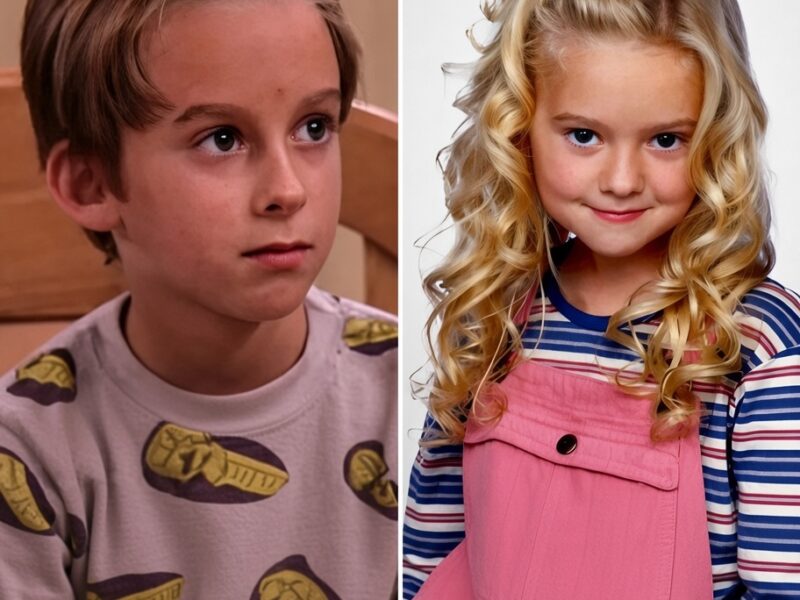
Michael Barone was one half of the twin brothers whose childhood helped make the Barone house feel genuinely noisy, crowded, and alive.
Sullivan Sweeten played Michael, and he was born on May 12, 1995, in Brownwood, Texas.
He was only one year old when he began appearing in 1996.
Michael works because the children serve as the reality underneath the adults’ endless debates about marriage and parenting.
Ray may try to avoid responsibility, Debra may be exhausted by carrying too much of it, and Marie may have opinions about almost everything they do, but Michael and his siblings are the reason those conflicts matter.
Sullivan’s real-life bond with his twin brother Sawyer gave their scenes an easy physical familiarity.
They behaved less like two carefully cast television children and more like brothers who already knew each other’s rhythms.
Audiences watched the twins grow through the entire series, and their faces became part of the show’s visual memory, almost without viewers noticing how quickly the years were passing.
In 2026, Sullivan Sweeten is 31.
After the show ended, he largely stepped away from regular acting and chose a private life outside the constant attention that accompanies childhood fame.
That privacy became even more understandable after the death of his twin brother Sawyer in 2015.
Michael endures because Sullivan helped give the sitcom something that cannot be created through dialogue alone.
It was the feeling that children were actually growing up inside the house while the adults were busy arguing about how to raise them.
Amy MacDougall was the woman who looked at Robert Barone’s insecurity, pessimism, strange habits, and complicated family and somehow saw a man worth choosing.
Monica Horan played Amy, and she was born on January 29, 1963, in Darby, Pennsylvania.
She was 34 when she first appeared in 1997.
Amy works because kindness could easily become bland in a sitcom filled with personalities as loud as the Barones.
Horan prevented that by giving Amy boundaries.
She is patient, but not infinitely patient, and she loves Robert, but she does not exist only to reassure him.
Their relationship goes through breakups, misunderstandings, family interference, and Robert’s repeated difficulty believing happiness might actually last.
Her arrival also expanded the show’s family universe, because marrying Robert meant the Barones were forced to confront the MacDougalls, whose dysfunction looked completely different.
Marie’s controlling affection met another mother, and Frank’s bluntness met Hank’s peculiar politeness.
In 2026, Monica Horan is 63.
She remained connected to television, theater, and charitable work after the series.
Amy endures because Horan made patience active.
Amy does not rescue Robert from his insecurity.
She gives him a relationship where he can slowly learn that love does not have to be earned by becoming Ray, pleasing Marie, or winning some invisible competition.
For perhaps the first time in his life, Robert becomes somebody’s first choice.
Andy brought a different kind of anxiety into the show, the neurotic workplace friend whose dry observations proved Ray’s problems could follow him even after he escaped the house.
Andy Kindler played him, and he was born on October 16, 1956, in Queens, New York.
He was 41 when he first appeared.
Andy works because Ray’s job needs its own comic ecosystem.
At home, Ray is surrounded by people who know him too intimately, while at Newsday he has friends and colleagues who offer another version of his life, where sports writing, deadlines, and office banter temporarily replace Marie’s cooking or Debra’s frustration.
Kindler brings a naturally uneasy delivery that pairs perfectly with Romano’s own anxious comic rhythm.
Andy sounds as though even a casual observation has already been overthought, which makes him a useful companion for a man who spends most of his life worrying about the consequences of ordinary decisions.
As of October 2026, Andy Kindler is 69, and he turns 70 on October 16.
Beyond the show, he continued a long career in stand-up comedy, acting, and voice work, developing a distinctive reputation for observational and self-aware humor.
Andy remains memorable because Kindler made workplace friendship slightly strange in exactly the right way.
Ray may have left the family house for work, but apparently nervous overthinking had already found him another desk.
Gianni was the friend who could wander into Ray’s day, offer questionable advice, join a scheme, and leave before the family consequences arrived.
John Manfratti played Gianni, and he was born on March 5, 1953.
He was 44 when he began appearing in 1997.
Gianni works because the show needs occasional spaces where Ray is not somebody’s husband, son, brother, or father.
Around friends, he can temporarily behave like an ordinary guy rather than the disputed territory between Debra and Marie.
Manfratti gave Gianni a relaxed familiarity that suggested the friendship existed long before the episode started.
He did not enter scenes requiring explanation.
He simply fit.
Ray’s problem, of course, is that home is directly across the street from his parents, so refuge rarely lasts.
In 2026, John Manfratti is 73.
He continued acting in television and film after the sitcom.
Gianni endures because Manfratti made friendship look ordinary, and ordinary was exactly what the show did best.
Not every relationship needed betrayal, romance, or a giant emotional speech.
Sometimes Ray simply needed somebody who would listen to his latest problem and give advice just questionable enough to ensure the episode still had 20 minutes left.
Bernie Gruenfelder was the friend whose awkward sincerity fit perfectly into a show where adult men rarely seemed certain how serious conversations were supposed to work.
Tom McGowan played Bernie, and he was born on July 26, 1959, in Chicago, Illinois.
He was 37 when he first appeared in 1996.
Bernie works because he expands Ray’s social circle without feeling artificially inserted.
He is slightly nerdy, offbeat, and capable of making an ordinary exchange uncomfortable through nothing more than earnest participation.
McGowan understood how useful that is in a series built around embarrassment.
Ray is already nervous enough about almost every social situation, and friends like Bernie create new opportunities for the awkwardness to spread beyond the family.
Yet the character also contributed something warmer.
Adult friendship in this show is not glamorous.
These men talk, complain, meet up, make jokes, and provide each other with the kind of low-level companionship that makes ordinary life easier.
In 2026, Tom McGowan is 67.
Beyond the series, he continued a steady career across television, film, and theater, moving comfortably between comedy, drama, and stage productions.
Bernie remains memorable because McGowan made awkwardness friendly.
He never needed to be the funniest person in the room.
His value came from being exactly the sort of slightly odd friend a real person might have known for years, familiar enough that nobody bothers explaining him anymore.
Lois Whelan was the polished mother from Debra’s side who proved that family pressure does not become harmless merely because it arrives wearing better manners.
Catherine Helmond played Lois, and she was born on July 5, 1929, in Galveston, Texas.
She was 67 when she first appeared.
Lois works because she provides contrast without giving Debra a completely uncomplicated family of her own.
Compared with Marie, Lois appears refined, socially smoother, and less aggressively involved, but she still carries expectations, opinions, and emotional history into her daughter’s marriage.
That broadened the show’s central idea.
When two people marry, they do not simply combine two lives.
They inherit two entire family systems.
Helmond brought elegance and eccentric comic timing to the role, making Lois very different from Marie without pretending that one mother is entirely easy and the other impossible.
Catherine Helmond passed away in 2019 at the age of 89.
Long before this sitcom, she had already become beloved through Soap and Who’s the Boss?, establishing herself as one of television’s great comic actresses.
Lois remains a fitting later role because Helmond could make sophistication funny without making it cold.
Marie enters a room like an invasion, while Lois enters with better manners.
Either way, Ray and Debra still end up dealing with another parent who has thoughts about their marriage.
Hank MacDougall was the father whose politeness somehow became almost as uncomfortable as Frank Barone’s rudeness.
Fred Willard played Hank, and he was born on September 18, 1933, in Shaker Heights, Ohio.
He was 70 when he first appeared in 2003.
Hank works because the MacDougalls needed to feel completely different from the Barones while remaining equally capable of creating family tension.
Frank insults people openly, while Hank smiles.
Marie manipulates through food and guilt, while the MacDougalls bring religion, restraint, and a peculiar social formality into the room.
Willard’s genius lay in treating awkwardness like a perfectly normal condition.
Hank could pause slightly too long, misunderstand the emotional temperature, or respond to something inappropriate with cheerful sincerity, and suddenly a simple dinner scene became wonderfully strange.
Their own patterns also became increasingly visible, proving that Robert had not escaped dysfunction by marrying into a quieter household.
He had merely discovered another dialect of it.
Fred Willard passed away in 2020 at the age of 86.
His extraordinary comedy career stretched across film, television, improvisational classics, and countless guest appearances, where his ability to make earnest confusion hilarious became almost a genre of its own.
Hank endures because Willard made discomfort delightful.
Frank could make a room tense by saying exactly what everyone wished he would keep to himself, and Hank could achieve the same result while smiling politely.
Pat MacDougall was the mother whose sweetness seemed almost impossibly gentle, until the Barones discovered that soft voices can create some very strange family moments, too.
Georgia Engel played Pat, and she was born on July 28, 1948, in Washington, D.C.
She was 55 when she first appeared in 2003.
Pat works because Engel’s style is the complete opposite of the Barone family’s volume.
Marie attacks through implication, Frank announces whatever enters his mind, Ray panics, and Debra fires back.
Pat speaks with delicate calm, turning even unusual observations into something that sounds harmless until everyone has had a second to process what she actually said.
Engel’s distinctive voice and timing made that softness a comic weapon.
Pat also helped explain Amy’s gentleness, since the daughter had clearly inherited warmth and patience from a household where kindness mattered.
The character became especially funny beside Frank because the difference in emotional presentation was enormous.
Georgia Engel passed away in 2019 at the age of 70.
She had already become beloved through The Mary Tyler Moore Show and continued working extensively in television and theater throughout her career.
Pat remains memorable because Engel made softness precise.
She proved that a performer does not need volume, sarcasm, or anger to dominate a comic moment, because sometimes the quietest person at the table can say the strangest thing anyone hears all night.
Linda Gruenfelder brought eccentric romantic energy into Robert Barone’s already complicated search for love.
Maggie Wheeler played Linda, and she was born on August 7, 1961, in New York City.
She was 35 when she appeared in 1996.
Linda works because Robert’s romantic life repeatedly exposes the insecurity he tries to conceal beneath sarcasm and gloom.
He wants companionship deeply, but wanting it makes him vulnerable to rejection, and rejection confirms every belief he already carries about being less fortunate than Ray.
Wheeler brought a distinctive comic rhythm to Linda, giving the character enough personality to stand out inside a series crowded with powerful voices.
Her chemistry with Robert let another side of him emerge, because romance required him to stop measuring himself against Ray for at least a few moments.
Linda is not the final answer to that question.
Amy eventually becomes Robert’s lasting partner, but characters like Linda form part of the emotional road that gets him there.
In 2026, Maggie Wheeler is 65.
She became internationally recognizable as Janice on Friends, while continuing a wide-ranging career in television and voice acting.
Linda remains a smaller piece of that career, but Wheeler brings the same ability to make eccentricity feel specific rather than random.
Robert spends much of the series convinced that happiness happens more naturally to everyone else.
His romantic misadventures matter because they make the eventual stability with Amy feel earned rather than inevitable.
Warren brought confidence, polish, and the kind of romantic history capable of making Ray insecure before anyone had actually done anything wrong.
Robert Culp played Warren, and he was born on August 16, 1930, in Oakland, California.
He was 66 when he first appeared.
Warren works because Ray’s anxiety does not require an actual threat.
The idea that Debra had another life before their marriage is enough.
Culp gave Warren the self-assurance necessary to become a mirror for Ray’s doubts.
He appears more composed, more sophisticated, and less desperate for approval, exactly the qualities Ray worries Debra might secretly prefer.
That makes the conflict comic rather than dangerous.
Warren does not need to behave like a villain, because Ray’s imagination can do the work by itself.
Culp’s mature presence made the contrast especially effective, since he did not need to compete directly.
Simply standing comfortably in the same room was enough to make Ray start comparing himself.
Robert Culp passed away in 2010 at the age of 79 from an acute myocardial infarction.
Long before the sitcom, he had been a major television star through I Spy and an extensive career across film and television.
Warren endures because Culp made confidence dangerous only inside Ray’s mind.
The joke is not that Warren might steal Debra.
The joke is that Ray sometimes seems convinced any man who behaves like an adult could.
Peter MacDougall was the brother who proved Robert had not escaped strange family dynamics by marrying Amy.
He had simply added a new specialist in discomfort.
Chris Elliott played Peter, and he was born on May 31, 1960, in New York City.
He was 43 when he first appeared in 2003.
Peter works because Elliott’s comic rhythm is unlike anyone else’s in the ensemble.
Frank is blunt, Marie is manipulative, Ray is anxious, and Robert is gloomy, while Peter is simply strange in a way that leaves everyone around him slightly uncertain about what kind of conversation they are having.
His attachment to Amy and uneasiness around Robert created another obstacle for the couple, because Peter had his own complicated feelings about losing the family arrangement he understood.
Elliott played the character with odd intensity, pauses that lasted too long, and behavior that seemed emotionally logical only to Peter himself.
That gave the later seasons fresh energy, because the MacDougalls were not just another version of the Barones.
In 2026, Chris Elliott is 66.
His distinctive comedy career includes Get a Life, Late Night with David Letterman, numerous film roles, and later Schitt’s Creek, where another eccentric character introduced him to a new generation.
Peter endures because Elliott made weirdness disciplined.
The character seems unpredictable, but the performance is precise.
In a series built around familiar family irritation, Peter arrived and somehow found entirely new ways to make everyone uncomfortable.
Garvin was the older friend whose grumbling presence proved Frank Barone had successfully found other men who considered complaining a reasonable social activity.
Len Lesser played Garvin, and he was born on December 3, 1922, in New York City.
He was 74 when he first appeared in 1996.
Garvin works because Frank needs relationships outside his immediate family, too.
The older generation has its own friendships, routines, shared jokes, and language of affection, even if that language sounds suspiciously like mutual irritation.
Lesser gave Garvin a dry, rough-edged presence that fit naturally beside Boyle’s Frank.
They looked like men who could sit together for an hour, complain about almost everything, insult one another twice, and still consider the afternoon pleasant.
That familiarity helped the Barone world feel larger than the two houses at its center.
Len Lesser passed away in 2011 at the age of 88.
His long career included decades of film and television work, though many viewers also knew him instantly as Uncle Leo on Seinfeld.
Garvin remains a smaller but affectionate part of his television legacy, because Lesser could make grumpiness welcoming.
He did not soften the character into a sweet old man.
He simply showed that friendship can survive perfectly well without sweetness being spoken aloud.
Stan was another man from Frank Barone’s social world who understood that some friendships are maintained almost entirely through sarcasm, complaints, and the refusal to admit anybody is enjoying themselves.
Victor Raider-Wexler played Stan, and he was born on June 28, 1943, in New York City.
He was 53 when he first appeared in 1996.
Stan works because he feels immediately compatible with Frank’s generation and temperament.
He is sharp, grumpy, and comfortable with a style of male friendship that does not require emotional discussion to remain real.
Raider-Wexler gave the character a sturdy comic presence without pushing him into the center of the Barone family dynamic, which is exactly what a recurring supporting figure needs to do.
Stan expanded Frank beyond his roles as husband, father, and grandfather.
He reminded viewers that Frank had a life with men who knew him differently, people who were not shocked by the insults because insults were partly how affection was communicated within the group.
In 2026, Victor Raider-Wexler is 83.
He continued a steady career across television, film, theater, and voice acting, appearing in both comedy and dramatic projects.
Stan endures because Raider-Wexler made crankiness companionable.
Frank may have spent years acting as though other people were irritating interruptions to his life, but characters like Stan reveal the truth underneath.
He kept choosing to sit with them anyway, and in the Barone world, that was sometimes as close to saying “I like you” as anyone was going to get.
Ally Barone was the eldest child, who gradually became old enough to notice that the adults around her were not nearly as competent as they thought.
Madylin Sweeten played Ally, and she was born on June 27, 1991, in Brownwood, Texas.
She was just five when the show began in 1996.
Ally works because she gives the family arguments another point of view.
Ray and Debra may believe they are discussing parenting privately, but children absorb far more than adults imagine.
Marie interferes, Frank complains, Robert arrives carrying another grievance, and Ally lives in the middle of that ecosystem, sometimes reacting with the quiet honesty only a child can get away with.
Sweeten gave her a thoughtful presence that prevented the character from becoming background decoration.
Watching her grow across nine seasons also reinforced one of the series’ central truths.
While the adults repeat familiar patterns, the children are changing right in front of them.
In 2026, Madylin Sweeten is 35.
After the series, she continued working within entertainment through acting and creative projects.
Ally remains meaningful because Sweeten made childhood observation part of the comedy.
Adults spend enormous energy deciding what children should understand, and Ally repeatedly reminded them that the children had been watching everything anyway.
And now we come to the story we promised.
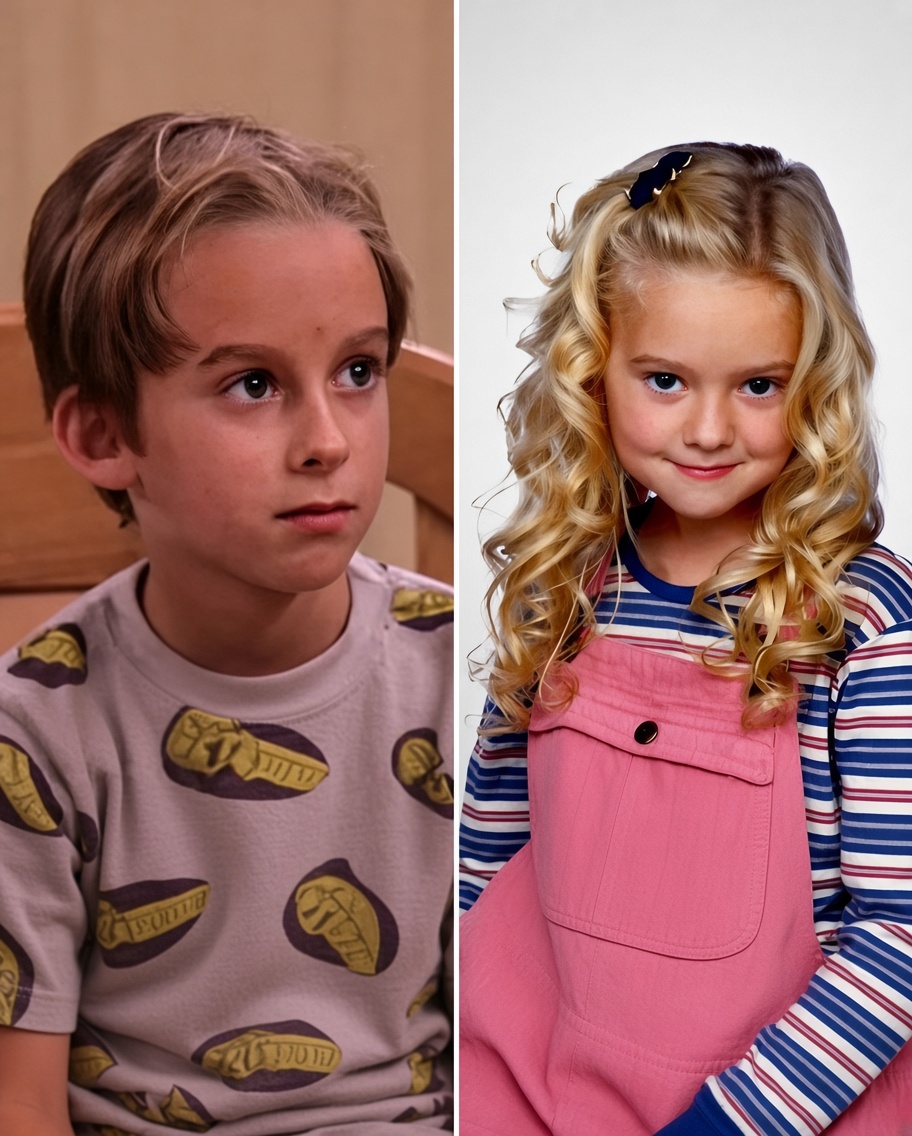
Geoffrey Barone was one of the twin boys whose presence reminded viewers that beneath all the adult arguments, Ray and Debra were still trying to raise a young family.
Sawyer Sweeten played Geoffrey, and he was born on May 12, 1995, in Brownwood, Texas.
He was only one year old when the show began in 1996.
Geoffrey worked less through elaborate storylines than through atmosphere.
The twins and Ally made the Barone home feel occupied by actual children, with toys underfoot, bedtime routines, noise, school interruptions, and the unpredictability that kept Ray and Debra’s marriage from existing in an artificial sitcom vacuum.
Sawyer appeared alongside his real-life twin brother Sullivan, and that natural familiarity gave the childhood scenes an authenticity that is difficult to manufacture.
The boys were rarely asked to carry entire episodes, which strengthened their function.
They were part of daily life rather than miniature adults constantly delivering punchlines.
After the series ended, Sawyer stepped away from regular acting and lived more privately.
Tragically, he died by suicide in 2015 at only 19.
His death gave those early family scenes a sadness nobody could have imagined when they were filmed.
If you or someone you know is struggling, you are not alone, and help is available by calling or texting 988, the Suicide and Crisis Lifeline in the United States.
Geoffrey remains tied to the warmth of the fictional household.
But Sawyer’s real story also reminds viewers that the lives of child performers continue long after the characters stop appearing on screen.
His presence endures in a show built around family, which makes the loss especially painful for viewers who watched him grow from infancy.
The houses are quieter now, but the Barones still feel strangely close.
Ray is still trying to escape another argument.
Debra is still seeing through the excuse, Robert is still wondering why Ray got everything first, Marie is still arriving with food nobody asked for, and Frank is still insulting everyone while refusing to stay away.
Doris Roberts, Peter Boyle, Catherine Helmond, Fred Willard, Georgia Engel, Len Lesser, Robert Culp, and young Sawyer Sweeten are sadly gone.
Ray Romano, Patricia Heaton, Brad Garrett, Monica Horan, Sullivan and Madylin Sweeten, Chris Elliott, and many others remain connected to a sitcom that turned ordinary family frustration into something timeless.
Which Everybody Loves Raymond character felt most like someone in your own family?
And which cast story surprised you the most?
Tell us in the comments, and share this with the person who always shows up without knocking.









