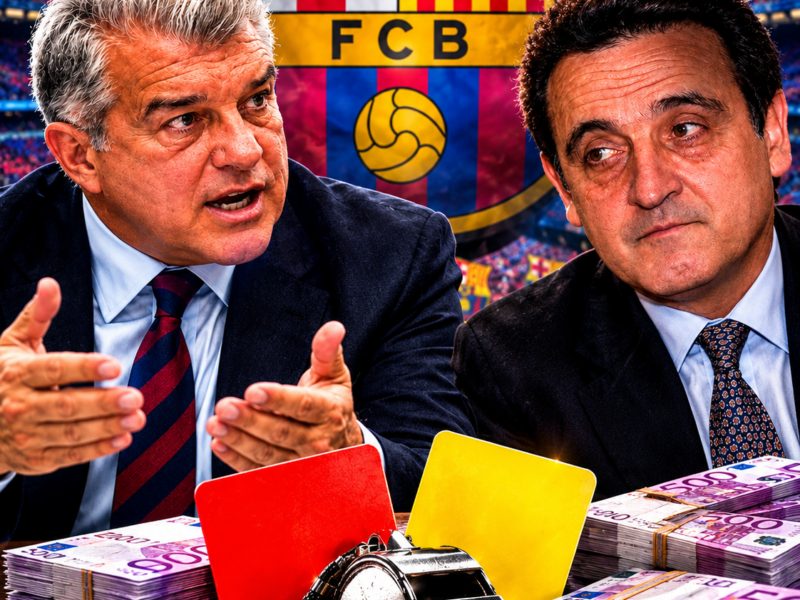
The Negreira Scandal Is Back: A Secret FIFA Complaint, a Controversial Ethics Code Reform, and the Explosive Audio Clip Shaking Spanish Football
The Negreira Scandal Is Back: A Secret FIFA Complaint, a Controversial Ethics Code Reform, and the Explosive Audio Clip Shaking Spanish Football
Some scandals refuse to die, and this one just found a new pulse.
Behind the scenes in Spanish football, a legal move is quietly taking shape that could put the federation itself on trial.
And it did not start in a stadium or a boardroom. It started with a group of lawyers who want to stay anonymous.
Those lawyers, according to the commentator at the center of this story, sent a warning to a private group chat: watch out, something is going to happen in the next few days.
Then it happened.
Before we go further, one thing needs to be clear.
Everything below is the analysis and opinion of a Spanish commentator and his co-host, presented in a video discussion.
The Negreira case is a real and publicly documented investigation. The claims made about individuals and institutions are theirs, they are contested, and nobody named here has been convicted of anything in the material discussed.
With that on the table, here is the argument they laid out, and why it landed so hard.
The story begins with a document most fans have never read.
In 2021, the Spanish Football Federation reformed its code of ethics.
The commentator calls that reform manifestly illegal.
His reasoning starts with procedure.
He says the reform failed to follow several required steps, and that those failures alone should have stopped it cold.
But he goes further.
He argues that FIFA regulations, and the Spanish Federation’s own rules, authorize FIFA to step in and act on the federation’s behalf when the federation fails to act.
That, he explains, is exactly what the anonymous lawyers are now asking for.
According to the host, they have filed a very well-crafted appeal.
It is not simply an appeal to the federation, which, in his telling, has already been dismissed by one voice with the line that the complainants have no standing.
It is a request that FIFA act against the federation first, for inaction.
The commentator points to a stretch of roughly 30 months in which, he says, the federation failed to do what it was obligated to do every month.
The second request is even bigger.
The lawyers want FIFA to take the reins, punish the federation for its inaction, and act against the ethics code reform itself, which they argue is contrary to FIFA’s own framework.
And then comes the question that clearly bothers the commentator most.
How has no club acted against the federation?
Not one, he says. Not even a club willing to pick a fight with Florentino Perez.
His conversation partner pushes back on one point, and the exchange is worth noting.
Tomas is skeptical that UEFA would go after the ethics code, and he admits he gets a little lost with the FIFA side of the argument.
The commentator agrees there are two separate tracks.
One is the 2021 reform of the federation’s code, which clubs or private accusers could attack directly.
The other is the FIFA angle, which is a different mechanism.
But his conclusion is simple. Everything within your power should be tried, even if it is a long shot.
One more lawsuit, in his words, costs you little.
Now to the heart of his criticism.
He calls the current code of ethics a joke.
A code of ethics, he explains, is a private contract between parties. It says so right at the beginning, in an effort to distance itself from the administrative nature of Spain’s Sports Law.
Because it is a private agreement, he argues, the code should follow FIFA’s in spirit.
The purpose of FIFA and UEFA codes, as he describes it, is to set minimum standards across every territory they govern.
He gives a vivid example.
One country might have a statute of limitations of one year, another ten years, another none at all, depending on what the local powers decide.
The common code sets floors so that sports corruption is sanctioned everywhere, regardless of local whims.
And that, he says, is what the Spanish version undermines.
Here is where his frustration turns almost incredulous.
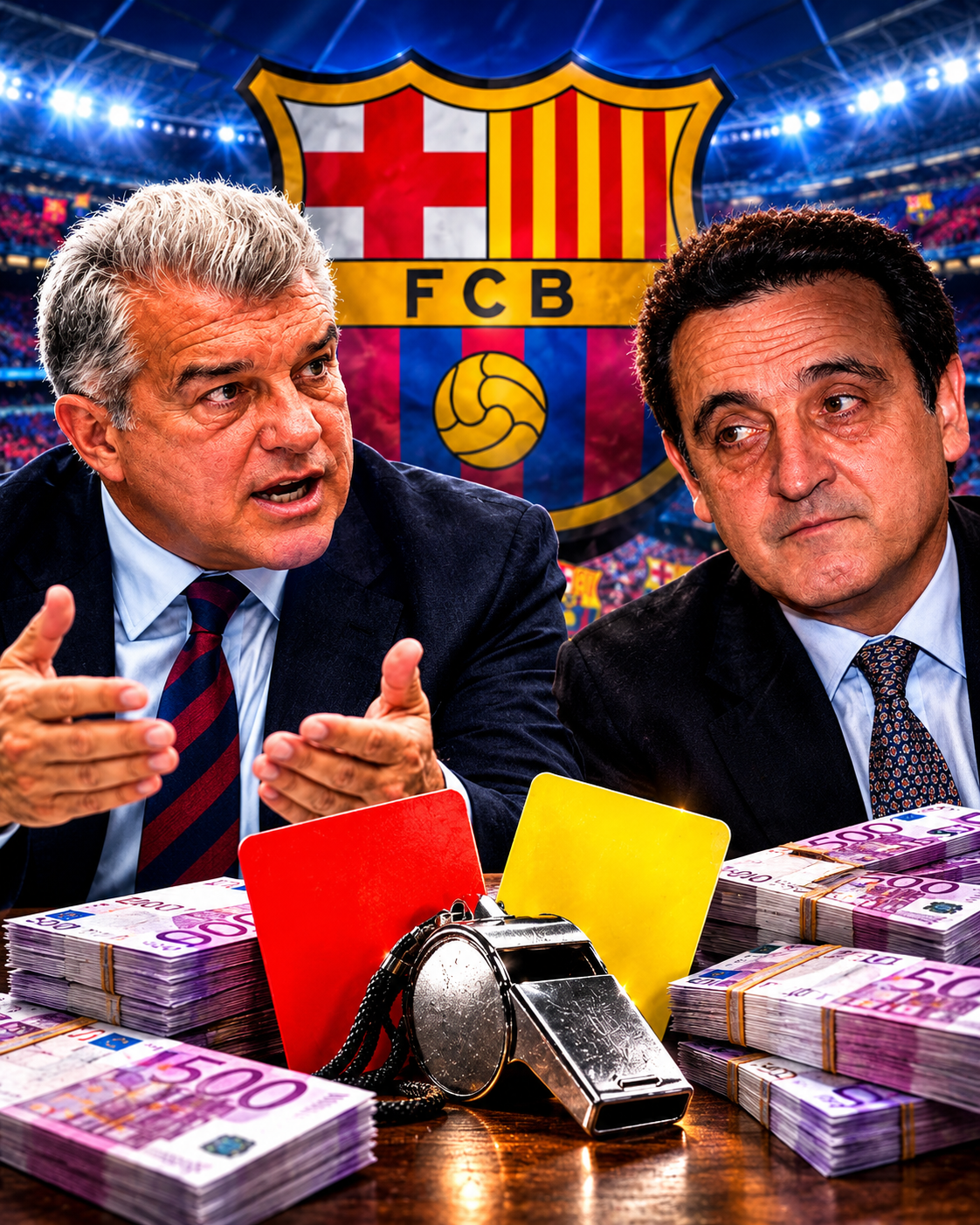
The Spanish code, he explains, first declares that the code and the ethics committee have no sanctioning power.
Then it lists the sanctionable conduct in detail.
And then it removes all of the sanctions.
What, he asks, is the point of an ethics code that defines offenses and then erases the consequences?
He is just as pointed about how the reform was approved.
In 2021, he says, it went through the federation’s assembly under an agenda item labeled only as legal affairs.
Nothing was explained.
He recalls an expression to the effect that it was not the right moment to go into detail.
The vote, he says, was 80 in favor and 2 against.
To him, the lopsided result shows how little the delegates knew about what they were approving.
It is, he argues, a very effective way to change the rules without anyone noticing.
He lays out four alleged procedural problems.
First, previous codes were approved by a delegated commission, not by the full assembly.
Second, the federation’s board of directors is supposed to deliberate beforehand, and he says there is not a single set of minutes where the topic appears.
Third, the item was not specified on the assembly agenda.
And fourth, delegates voted on something they did not understand.
His verdict is blunt. How, he asks, can a change like that not be reversible?
He adds one more layer.
Even if a criminal ruling and a sports ruling disagree, he says, that is normal, because they are different matters with different standards of relevance.
Which is exactly why he believes a sports sanction should be pursued in its own right.
He suggests the first move for Real Madrid, the league, or any club should be a lawsuit over the ethics code change.
If the reform is declared unlawful, he says, the door may open to a possible sports sanction. Or it may not.
But it is worth the shot.
Then the video takes a turn.
The commentator plays an audio clip.
It comes from a video several months old, and it features a former Barcelona official speaking about how Spanish football works.
In the clip, as the commentator hears it, the speaker suggests Barcelona has felt mistreated and belittled for decades, and that the club paid for something others allegedly received for free.
The commentator calls it a full-blown confession.
He says it is enough for a sanction.
He also reports that this audio is part of the investigation, and that Real Madrid asked for it to be included.
Now, it is important to be careful here.
That is his reading of the audio, and it is an interpretation, not a court finding.
Barcelona’s position, which has been stated publicly, is that the payments to Jose Maria Enriquez Negreira were for technical reports and not to influence referees.
The commentator rejects that explanation outright.
He does not believe the payments were for reports.
He believes, and says he thinks the evidence points to, influence over referee promotions and relegations.
His argument rests on Negreira’s position.
Negreira, he explains, was the number two to Sanchez Arminio, then the head of the referees’ committee, and had spent about 25 years in the federation on top of his time as a referee.
He describes a very strong personal relationship between the two men.
Sanchez Arminio signed the referee assignments, but the commentator says he was not the only one deciding.
There were vice presidents around him, and Negreira, as a member of the designation committee for many years, would offer his opinion and his vote.
That opinion, the commentator argues, was compromised the moment a club began paying him.
The most common defense, he says, is that Negreira was a figurehead with no real power.
The commentator calls that one of the big lies in the story.
His evidence comes from the Civil Guard’s findings and from how the referee grading system worked.
He describes an evaluation mechanism known as the corrective index reports.
According to what he recounts, those reports for the first division were signed by three officials, and the first division records could not be found when the Civil Guard arrived.
He says the story told is that officials spent about three hours destroying documents on their last afternoon at the federation.
But he adds that the second division reports were left in a warehouse, and that all of them carried the same three signatures.
In his view, those second division reports show the mechanism at work.
He claims the three referees who received the highest scores were the ones who moved up, even when another referee was nearly relegated.
He also points to a witness account from a referee named Fernandez Hinojosa.
Hinojosa, in the commentator’s retelling, was chosen as the best referee in the second division and yet did not move up.
He reportedly attributed that to his enmity with both Sanchez Arminio and Negreira.
The commentator seizes on the fact that Hinojosa named both men.
If Negreira had no power, he asks, why would a referee cite his enmity as a reason for being held back?
He also addresses claims made by other media figures who point to another passage in the same report, which says Sanchez Arminio held the greatest power.
His response is that saying one man held the greatest power does not mean the other held none.
Then he describes what he says the Civil Guard also noted.
Negreira, he says, was the person who phoned referees during the season to tell them which group they were in and how they were performing.
Then he offers a scenario.
Imagine you officiated a match and, in his words, favored Real Madrid, and then two days later you get a call from Negreira telling you to wake up because you are in group three and doing very badly.
Now imagine you favored Barcelona, and a call comes telling you that was very good, you are in group one, do not listen to what you hear.
The commentator says any referee would understand the message.
It is an illustration and an allegation, not a proven fact, and he presents it as his interpretation of how the system worked.
His conclusion is that Negreira’s opinions, decisions, signatures, and executive influence were all compromised in favor of Barcelona.
He also brings up the wider context of Spanish football.
He references the Osasuna case, in which a former club president, Pachi Izco, went to jail.
He says Izco also owed the club a large sum from money taken improperly.
And he notes that Osasuna itself avoided a harsher fate because the new management turned itself in.
His point is about credibility.
If sports corruption is only punished with fines, or not at all, then sponsors, fans, and the public may conclude the sport is not telling the truth.
He draws a parallel to another recent debate over sanctions in English football, and warns that the Premier League could be exposing itself to the same problem.
And then he lands on the line that seems to define the whole video.
Not only are alleged offenders not reported, he says. Not only do they seem to confess almost openly in the media. Their partners also allow it, and vote in their favor, and nothing happens.
His conclusion is stark.
In his view, Spanish football is not truthful, and there is an effort to cover it up.
That is the strongest claim of the video, and it is important to remember what it is.
It is an opinion, forcefully argued, by someone who has clearly reached his own verdict.
The legal reality is different, and slower.
Courts, not commentators, decide guilt.
The Negreira investigation has been a long and complicated process, and the outcome is not something a video can settle.
What the video does accomplish is to raise questions that deserve real answers.
Why did a reform of this importance pass with so little scrutiny?
Why did no club challenge the federation for years?
And what will FIFA do if the complaint reaches its desk?
Those answers will come, if they come at all, through formal channels.
Until then, the debate rages on, and it shows no sign of cooling.
Where do you stand?
Is this a legitimate call for accountability, or a heated argument that outruns the evidence?
Share your thoughts in the comments below.









