The Munsters Cast Then and Now in 2026: Who Is Still Alive, Who Vanished From Hollywood, and the Surprising Fates Behind Mockingbird Lane’s Monster Family
They looked like monsters. But what happened to the cast of The Munsters after the cameras stopped was far more surprising than anything that ever went bump in the night at 1313 Mockingbird Lane.
Behind the laughter came vanished careers, private struggles, unexpected reinventions, and heartbreaking goodbyes.
One actor would walk away early because of love. Another would turn his Grandpa persona into a restaurant, a fan following, and even a run for political office.
So where did television’s strangest family end up? Open the creaky front door, because the real stories behind The Munsters cast in 2026 are stranger, sadder, and more touching than any script.
Al Lewis as Grandpa Munster: The Man Who Made Chaos Lovable
Grandpa Munster is the family member most likely to turn a simple household problem into an experiment involving smoke, explosions, magic, or something nobody else quite understands.
Al Lewis was 41 when The Munsters began in 1964, and he gave Grandpa a restless theatrical energy that made every entrance feel as if trouble were about to follow.
The character is supposedly ancient, yet he often behaves like the most mischievous child in the house. He schemes, invents, interferes, and confidently announces solutions that usually create entirely new problems.
But underneath all that chaos is genuine loyalty. Grandpa loves the family, and most of his disasters begin because he is trying, in his own peculiar way, to help them.
Lewis plays him with rapid comic timing, exaggerated confidence, and the kind of joyful unpredictability that makes the character impossible to ignore.
His chemistry with Fred Gwynne is especially important. The two had already worked together on Car 54, Where Are You?, and that familiarity helps Herman and Grandpa feel like relatives who have been arguing, teasing, and rescuing each other for years.
Their scenes give the household a lived-in comic rhythm that no amount of spooky production design could create on its own.
Al Lewis died in 2006 at the age of 82.
After The Munsters, he stayed closely connected to fans, kept appearing in film and television, opened a restaurant, and even entered New York politics. That unusual second act suited a performer whose public personality was almost as colorful as Grandpa himself.
Grandpa endures because Lewis made chaos lovable. Dramatic, stubborn, inventive, and always ready to turn one small family problem into a full supernatural catastrophe.
Pat Priest as Marilyn Munster: The Only Normal One, According to Everyone Else
Marilyn Munster is the one person at 1313 Mockingbird Lane who looks completely ordinary to the outside world, which naturally means her family feels terribly sorry for her.
Pat Priest was 28 when she joined the show in 1964, and she understood that the central joke only works if Marilyn never acts ashamed of the people around her.
She loves Herman, Lily, Grandpa, and Eddie exactly as they are. Their appearance is normal to her, while they sincerely believe she is the unfortunate one because she does not share their more dramatic features.
That reversal gives Marilyn an important role in the series. She is both the outsider and the insider at the same time. Visually different from the Munsters, yet emotionally completely at home with them.
Priest plays her with patience, sweetness, and a calm sincerity that keeps the joke affectionate rather than cruel.
Marilyn’s attempts to date or socialize often go wrong because the family’s good intentions frighten the very people they are trying to impress. Yet she rarely turns against them, and that loyalty reinforces one of the show’s most enduring ideas. Family love matters more than appearances.
In 2026, Pat Priest is 90.
After The Munsters she continued appearing in television and commercials before gradually stepping away from heavy Hollywood visibility, later taking part in fan events connected to the show.
Marilyn remains one of the series’ cleverest creations because she quietly exposes how arbitrary the idea of normal can be. She endures because she proves that the person who looks most conventional can still be considered the strange one, depending entirely on who is doing the looking.
Beverly Owen as the Original Marilyn Munster: A Short Run That Set the Tone
Before Pat Priest became the face most viewers remember, Marilyn Munster was first portrayed by Beverly Owen, whose brief time on the series helped establish the emotional tone of the character.
Owen was 27 when The Munsters premiered in 1964, and her version of Marilyn is gentle, polite, and deeply affectionate toward the strange household around her.
That sincerity is essential. She never reacts to Herman, Lily, Grandpa, or Eddie as if they are frightening creatures. She reacts to them as family.
By treating their appearance as completely normal, Owen helps the audience understand the basic rule of the show. The Munsters do not know they are unusual, so the comedy must come from the outside world’s reaction rather than from the family mocking itself.
Her softer approach gives Marilyn the feeling of someone who has lived with these people long enough to stop noticing anything strange at all.
Beverly Owen died in 2019 at the age of 81, from ovarian cancer.
She left the series early because she was unhappy being far from her future husband on the East Coast, and she later stepped away from acting almost entirely.
That makes her place in television history unusual. Brief, but foundational. She did not stay long enough to become the version of Marilyn most commonly remembered, yet she helped define what the character needed to be before anyone else inherited it.
Her Marilyn endures because she gave the role its first emotional language. Gentle, loyal, graceful, and completely convinced that the monster family around her was simply home.
Yvonne De Carlo as Lily Munster: The Calm Center of the Storm
Lily Munster is the calm center of a household where almost everyone else seems capable of creating chaos before breakfast.
Yvonne De Carlo was 42 when The Munsters premiered in 1964, and she gave Lily a mixture of elegance, humor, romance, and maternal authority that made the family feel emotionally complete.
Herman may be loud and excitable. Grandpa may be plotting another basement experiment, and Eddie may arrive with another childhood crisis. Yet Lily rarely loses her sense of control.
She does not dominate the family through force. She guides it through patience, intelligence, and the quiet confidence of someone who already knows exactly how everyone around her will behave.
De Carlo’s performance is especially important because Lily could easily have become nothing more than a glamorous vampire costume. Instead, she feels like a real wife and mother.
Her affection for Herman is sincere, her protection of Eddie is instinctive, and her tolerance of Grandpa carries the familiar exhaustion of someone who has been cleaning up after the same relative for years. The gothic appearance becomes secondary to the emotional truth underneath it.
Yvonne De Carlo died in 2007 at the age of 84, from heart failure.
Long before The Munsters, she had already been a major film star, appearing in adventure pictures, musicals, and famously as Zipporah in The Ten Commandments. The sitcom introduced her to an entirely new television generation and eventually became one of the roles most strongly attached to her name.
Lily endures because De Carlo made the supernatural domestic. She could stand beneath cobwebs in a gothic mansion and still feel like one of television’s most recognizable mothers. Graceful, composed, deeply loving, and usually the one person capable of keeping everyone else from turning a small problem into a disaster.
Chet Stratton as Clyde Thornton: Seeing the Munsters Through Normal Eyes
Clyde Thornton belongs to the ordinary world outside 1313 Mockingbird Lane, which means his greatest comic challenge is reacting to a family that sees nothing unusual about itself.
Chet Stratton was 54 when The Munsters premiered in 1964, and his dependable character actor presence was exactly what the series needed in supporting roles like Clyde.
The show works because its central family never believes it is strange. Herman walks into a room expecting politeness. Lily behaves with perfect calm. Grandpa may cause supernatural chaos, but even he treats the situation as routine.
Characters like Clyde provide the reaction that makes the joke complete. Confusion, suspicion, nervous courtesy, and occasional panic all become funnier when placed beside the family’s cheerful sincerity.
Stratton’s job is not to overpower the scene. It is to make the outside world feel believable enough that the Munsters’ behavior becomes even more absurd by comparison.
Chet Stratton died in 1970 at the age of 59.
He worked across television and film in supporting roles, becoming one of those familiar character actors who helped populate the neighborhoods, offices, and social spaces of classic television.
Clyde remains a modest part of that larger career, but the character illustrates why performers like Stratton mattered so much. Comedy built on contrast needs someone who can react honestly.
Clyde endures because he helps the audience see the Munsters through normal eyes, and ironically, that comparison usually makes the supposedly frightening family seem even warmer, kinder, and more lovable than everyone around them.
Edward Mallory as Jack: A Stop on the Way to Daytime Fame
Jack is one of the supporting figures who helps move the Munsters beyond the front door of 1313 Mockingbird Lane and into the ordinary world that never quite knows how to respond to them.
Edward Mallory was 34 when the series began in 1964, and he brought the clean, straightforward television style needed for a role like this.
Jack’s importance lies in contrast. The Munsters are funniest when they interact with people who assume life follows normal rules, only to discover that Herman, Lily, Grandpa, and Eddie have an entirely different definition of normal.
Mallory keeps that reaction believable rather than exaggerated, allowing the main cast’s strange sincerity to carry the comedy. His presence helps build the larger social world around the family.
Edward Mallory died in 2007 at the age of 76.
After The Munsters he became widely known for his long-running role as Dr. Bill Horton on Days of Our Lives, building a strong daytime television career that extended far beyond this guest appearance. He also worked in theater and other television projects.
Jack remains a small stop in that career, but he contributes to the carefully constructed world that made the show work. He endures as part of the ordinary society that constantly reveals how unusual normal people can look when placed beside a monster family that is far more loving, polite, and emotionally stable than anyone expects.
Harvey Korman as Dr. Linneker: A Future Comedy Legend Already Losing His Composure
Dr. Linneker walks into the world of The Munsters with all the confidence of a professional trained to explain the human body, and then meets a family that cheerfully breaks every expectation such training depends on.
Harvey Korman was 37 when the series premiered in 1964, and his comic instincts make a character like Dr. Linneker especially effective.
Korman could register disbelief, politeness, discomfort, and approaching panic almost simultaneously, often with little more than a facial expression or a shift in tone.
That ability fits the show’s formula perfectly. The family itself rarely panics. Herman and Lily behave as though everything around them makes perfect sense, while the supposedly rational outsider is the one slowly losing control.
Korman understands that contrast and never needs to overpower the material. His reactions become the joke because he treats the absurdity seriously. Even in a small role, he creates the feeling of someone desperately trying to remain professional while reality has stopped cooperating.
Harvey Korman died in 2008 at the age of 81.
After The Munsters he became one of American television’s great comedy performers through The Carol Burnett Show, where his character work, timing, and famous inability to stay composed around Tim Conway became legendary. He also appeared in Mel Brooks films including Blazing Saddles and High Anxiety.
Dr. Linneker is only a small part of that enormous comic legacy, but the fingerprints of Korman’s later brilliance are already visible. The character endures because the role captures what he did best. Take someone who desperately wants to remain serious and let the world around him slowly make seriousness impossible.
Paul Lynde as Dr. Edward Dudley: Irritation Turned Into Music
Dr. Edward Dudley is exactly the kind of serious professional The Munsters loves to place in an impossible situation.
Paul Lynde was 38 when the series began in 1964, and even a guest role became memorable once his unmistakable voice and comic timing entered the scene.
Dudley works because the joke depends on someone expecting logic and receiving the Munsters instead. A doctor normally deals in symptoms, explanations, and rules about how human beings are supposed to function, and nothing about Herman’s family is interested in obeying those rules.
Lynde plays the collision with precision. His arched delivery and sharply controlled reactions make confusion funnier because he does not immediately collapse into panic. He tries to remain dignified, which only makes the absurdity around him more effective.
Paul Lynde died in 1982 at the age of 55, from a heart attack.
After his appearance he became one of television’s most recognizable comic personalities through Bewitched, Hollywood Squares, stage work, and countless appearances that made his delivery instantly identifiable.
His life also carried private struggles and pressures during an era that offered little safety for openly gay performers. That context gives the laughter around his work a more complicated legacy today.
Dr. Dudley remains a brief role, but Lynde’s personality is unmistakable from the moment he appears. He endures because he could turn irritation into music, disbelief into rhythm, and a few minutes of screen time into something audiences remembered long after the episode ended.
John Fiedler as Warren Bloom: Nervousness That Audiences Adored
Warren Bloom is the kind of ordinary outsider whose nervous energy becomes perfect comic fuel once the Munsters enter his world.
John Fiedler was 39 when the series premiered in 1964, and his distinctive combination of soft speech, anxious politeness, and expressive worry made him ideal for characters who seem uncomfortable before the real problem has even arrived.
Warren works because the entire series depends on a gentle reversal. The Munsters look frightening, yet they are usually calm, loving, and polite. The ordinary people around them look conventional, yet they are often the ones who panic, judge, or lose control.
Fiedler’s natural nervousness makes that contrast especially effective. He never needs enormous physical comedy. A hesitant voice or a worried expression can communicate exactly how badly the character wants to escape while still attempting to remain civil.
John Fiedler died in 2005 at the age of 80, from cancer.
Beyond The Munsters he built a remarkable career across stage, film, television, and voice acting. His credits included 12 Angry Men and The Odd Couple, while generations of younger viewers knew him as the voice of Piglet in Disney’s Winnie the Pooh productions.
That role, like many of his screen appearances, made wonderful use of the gentle anxiety that became his trademark.
Warren Bloom endures because Fiedler could make nervousness sympathetic rather than irritating, turning fear into something sweet, recognizable, and quietly hilarious.
John Carradine as Mr. Gateman: Old Hollywood Gothic Walks Into a Sitcom
Mr. Gateman brings a piece of classic gothic cinema directly into The Munsters through the unmistakable presence of John Carradine.
Carradine was 58 when the series began in 1964, and by then his voice, posture, and dramatic authority already carried decades of screen history.
That history makes him a perfect fit for a comedy built from the visual language of old horror movies. The Munsters takes familiar monster imagery and places it inside suburban family life, so having a performer associated with classic cinema move through that world adds an extra layer of atmosphere.
Carradine can make even a small role feel larger simply by standing still and speaking with theatrical gravity. The comedy does not require him to abandon seriousness. In fact, his seriousness makes the surrounding absurdity stronger.
John Carradine died in 1988 at the age of 82, from heart and kidney failure.
His career was enormous, stretching across stage, westerns, horror films, Shakespeare, and countless character roles. His films included The Grapes of Wrath and Stagecoach, along with many classic horror titles that helped make him one of the great supporting presences of his generation.
Mr. Gateman remains a small piece of that legacy, but his appearance feels almost symbolic. He represents old Hollywood gothic tradition walking briefly into a television comedy that lovingly borrowed from it.
The character endures because Carradine brought history with him, a voice and face that made Mockingbird Lane feel connected to an entire earlier generation of screen monsters.
Jane Withers as Fanny Pike: A Child Star Walks Through the Front Door
Fanny Pike enters The Munsters with the kind of energy that reminds viewers how much the series benefited from guest performers who already understood show business from the inside.
Jane Withers was 38 when the series premiered in 1964, but her career had begun decades earlier, when she became a major child star in the 1930s.
That history gave her the confidence to step into a heightened sitcom world without being overwhelmed by its costumes, sets, or broad comic premise.
Fanny works because outside characters in The Munsters often represent the rules of conventional society, and those rules tend to collapse almost immediately once Herman or Grandpa becomes involved. Withers knew how to play big enough for that world while still keeping control of the scene.
Her personality and timing allowed the character to register quickly, an important skill for guest roles that have limited time to establish themselves beside such visually dominant main characters.
Jane Withers died in 2021 at the age of 95.
Her long career became a story of reinvention. After childhood fame she continued through character acting, voice work, commercials, and television appearances, proving that an early studio-era identity did not have to define the rest of a performer’s life.
Fanny Pike is not the role most strongly associated with her, but it reflects the way The Munsters drew performers from many generations of American entertainment into its strange suburban world.
She endures as a reminder that Mockingbird Lane was not isolated from Hollywood history. It was populated by actors who had already lived entire careers before walking through the front door and joining the joke.
Val Avery as Marty: The Realism That Made the Monsters Funnier
Marty belongs to the ordinary world surrounding the Munsters, and Val Avery’s grounded presence makes that world feel solid enough for the family’s supernatural normality to bounce against it.
Avery was 40 when The Munsters premiered in 1964, and he brought a toughness and realism that made him especially useful in supporting roles.
Marty works because the series needs people who react seriously to impossible situations. When Herman walks into a room looking enormous and frightening while behaving with perfect politeness, the joke only lands if the person opposite him responds as though the danger is real.
Avery’s face and voice carry the feeling of someone rooted in everyday reality, which makes the contrast even sharper. He does not have to become broad or hysterical. His seriousness does the work.
Val Avery died in 2009 at the age of 85.
Beyond The Munsters he built a long career as a character actor, appearing in films and television productions including The Magnificent Seven, Papillon, Columbo, and Kojak. The gritty authority that served him well across dramas also served him here.
Marty remains a small piece of that larger career, but the performance demonstrates the value of a dependable character actor inside a fantasy comedy.
Marty endures because Avery’s believability makes the Munsters themselves funnier. The stranger the family looks against a grounded world, the more obvious it becomes that they may actually be the most decent people in it.
Willis Bouchey as Mr. Bradley: The Authority Figure the Joke Needed
Mr. Bradley represents the kind of official or skeptical authority figure that classic sitcoms use to test the main character’s version of reality.
Willis Bouchey was 57 when The Munsters began in 1964, and his mature, serious screen presence made him a natural fit for that function.
Bradley works because the Munster family is rarely trying to create trouble. They are usually sincere, polite, and completely confused by the alarm they cause in other people. An authority figure who approaches them with conventional expectations becomes part of the joke almost automatically.
Bouchey understands how to remain polished and controlled while absurdity gathers around him. That restraint keeps the humor balanced. If every guest character reacted wildly from the first moment, the contrast would disappear.
Willis Bouchey died in 1977 at the age of 70.
His career was extensive, particularly across film and television westerns, dramas, and authority roles. He worked frequently with director John Ford and appeared in productions including The Man Who Shot Liberty Valance and Sergeant Rutledge, along with many television series.
That background explains the credibility he could bring to a relatively small sitcom appearance.
Mr. Bradley remains one of those supporting faces that connects the Munsters’ strange world to the broader landscape of classic Hollywood. He endures because Bouchey could make authority convincing without making it dull, and in a comedy where normality is constantly being turned upside down, a convincing authority figure is exactly what the joke needs.
John Hoyt as Barney Walters: A Serious Face in a Very Unserious House
Barney Walters is another representative of the conventional world surrounding the Munsters, and John Hoyt brings the character the kind of seriousness that makes supernatural comedy land even more effectively.
Hoyt was 58 when the series premiered in 1964, already carrying years of experience across stage, film, and television.
Barney works because the series repeatedly places its loving monster family beside people who believe they understand how society is supposed to function. The Munsters then expose how fragile those assumptions can be.
Herman is polite, but terrifying to look at. Lily is elegant, but unmistakably vampiric. Grandpa treats impossible experiments as everyday household projects. A serious outsider reacting to that world gives the audience a second perspective, and Hoyt’s controlled presence makes the contrast sharper.
He could project intelligence, authority, or tension without needing much screen time, which made him ideal for supporting roles where character had to be established almost instantly.
John Hoyt died in 1991 at the age of 85.
His long career included appearances in When Worlds Collide, Blackboard Jungle, Spartacus, and the original Star Trek pilot, along with many other stage and screen productions.
Barney Walters remains a modest part of the Munsters universe, but Hoyt’s presence reflects the depth of talent that passed through the series.
He endures as one of classic television’s dependable supporting faces, the kind of actor who could walk into an episode, establish an entire personality within moments, and make the strange family beside him seem even more unforgettable.
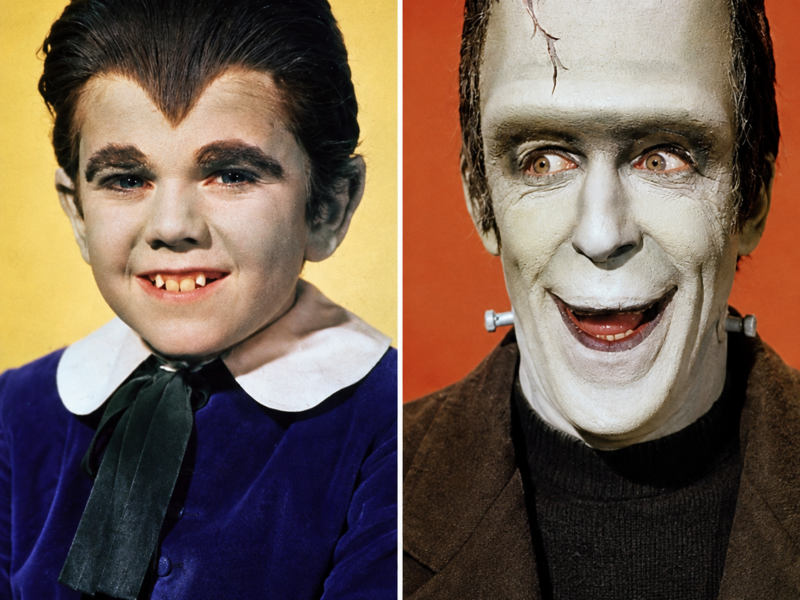
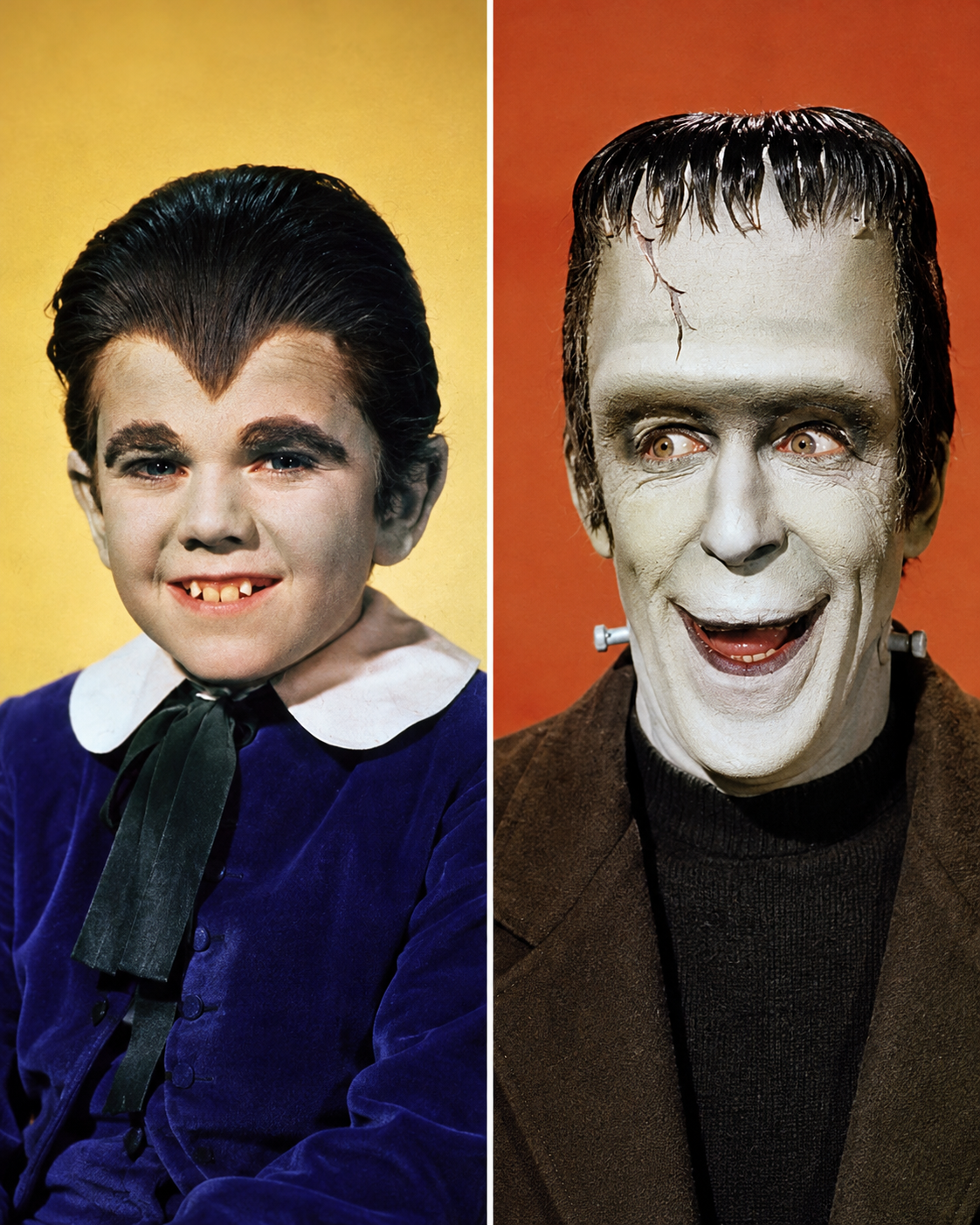
Fred Gwynne as Herman Munster: The Gentlest Giant on Television
Herman Munster is the enormous Frankenstein-like father who looks terrifying to strangers but is, in reality, one of the gentlest men on television.
Fred Gwynne was 38 when The Munsters premiered in 1964, and he understood that the character would only work if the audience stopped seeing the makeup and started seeing the heart underneath it.
Herman is clumsy, emotional, easily excited, and sometimes hilariously unaware of how frightening he appears to the outside world. But inside 1313 Mockingbird Lane, none of that matters.
He is simply a husband who adores Lily, a father who loves Eddie, and a working man trying to provide for a family that sees nothing unusual about him at all.
Gwynne uses his deep voice, towering frame, exaggerated expressions, and remarkably gentle timing to make Herman both ridiculous and sincere. The heavy makeup could easily have turned the role into a visual gimmick, yet Gwynne gives him warmth, innocence, and vulnerability.
That is why the comedy still works. The joke is never that Herman is a monster. The joke is that the normal world keeps judging someone whose family life is often kinder and healthier than theirs.
Fred Gwynne died in 1993 at the age of 66, from pancreatic cancer.
Before The Munsters, he had already found television success on Car 54, Where Are You?, and later generations discovered a very different side of him through films such as Pet Sematary and My Cousin Vinny.
Herman nevertheless remained one of the roles most closely connected to his legacy. He endures because Gwynne transformed a horror image into a loving father, proof that the warmest heart in the neighborhood could belong to the man everyone else was afraid to look at.
Butch Patrick as Eddie Munster: The Little Werewolf Who Was Loved Exactly As He Was
Eddie Munster is the little werewolf growing up in a household where fangs, fur, and coffins are treated as completely ordinary family details.
Butch Patrick was 11 when The Munsters premiered in 1964, and his youth gave Eddie a natural innocence that helped the entire series feel warmer.
Eddie’s problems are rarely about being a monster. They are about being a child. He worries about school, friends, bullies, fitting in, and whether other people understand him.
The joke is that his parents never see anything unusual about their son. To Herman and Lily, Eddie is simply their boy, and that unconditional love gives the character more emotional depth than the makeup might suggest.
Patrick plays him with wide-eyed sincerity, never forcing the sweetness. His scenes with Herman are especially important because they reveal how traditional the emotional structure of The Munsters really is.
Beneath the spooky house and supernatural jokes is a father trying to guide his son. Sometimes badly, but always lovingly.
Eddie also gives the show a way to explore childhood difference without turning it into something tragic. In the Munster family, being unusual is not a problem that needs to be fixed.
In 2026, Butch Patrick is 73.
After The Munsters he continued acting for a period before becoming closely connected with fan conventions, nostalgia appearances, and the long afterlife of the series. He has also spoken publicly about personal struggles and recovery, adding a more complicated human chapter to the story of a former child star.
Eddie endures because Patrick made him more than a cute monster child. He became a symbol of growing up different while being completely loved at home. A reminder that sometimes the safest place in the world is the family that never asks you to become ordinary.
The Family That Never Really Left Mockingbird Lane
The roll call is quiet now.
Only two members of this cast are still with us. Pat Priest, the gentle Marilyn many fans remember best, is 90. Butch Patrick, the little werewolf who grew up in front of America, is 73.
Everyone else has gone. Al Lewis, Fred Gwynne, Yvonne De Carlo, Beverly Owen, and the long line of guests who made the doorbell at 1313 Mockingbird Lane worth answering.
The Munsters may have looked frightening, but behind the makeup was a family audiences never stopped loving.
Some of the actors became legends. Others quietly disappeared from Hollywood, and many are no longer here.
Yet every return to 1313 Mockingbird Lane brings them back exactly as we remember them.
So tell us in the comments. Who was your favorite Munster, and which cast story surprised you the most?
Thank you for remembering this strange, warm family with us. Stay with us for more forgotten stories, surprising transformations, and unforgettable stars from television’s golden years.









