The Jewish B-17 Pilot Shot Down Over Nazi-Occupied Belgium: Bruce Sundlun’s Impossible Fight to Survive
Two engines were dead.
One of his gunners was already gone.
And the sky beneath his B-17 was running out fast.
At 27,000 feet, the Damn Yankee had still been a flying fortress. Now it was falling toward Nazi-occupied Belgium, with German fighters circling and the ground rising to meet it.
At the controls sat a twenty-three-year-old pilot from Rhode Island named Bruce Sundlun.
He was an American bomber pilot, which was dangerous enough. But he was also Jewish.
If the Germans captured him, that would mean two strikes against him at once.
This is the story of how he got there, and of what happened next.
On January 12, 1946, four months and ten days after the formal Japanese surrender that ended World War II, thousands of American soldiers marched down Fifth Avenue in New York City.
It was a victory parade, America’s way of honoring the men and women who had sacrificed so much since the country was drawn into the war on December 7, 1941.
Every soldier, sailor, and airman who went off to war had a deeply personal experience of it.
Each one contributed to the most cataclysmic event in world history in his or her own way.
Many came home, went back to work, and started families.
Many never did, and they still rest in American cemeteries overseas, in places like Normandy, Holland, and Manila.
Bruce Sundlun was one of the fortunate ones who survived.
But how he survived is truly an amazing story.
He lived one of the most remarkable escape stories of World War II.
It is still celebrated in Belgium today, more than seventy years later.
His daughter, Cara Sundlun House, discovered that for herself when she retraced her father’s journey through the war.
Bruce Sundlun was born on January 19, 1920, in Providence, Rhode Island, the first son of Walter and Jan Zelda Sundlun.
He grew up in the Depression.
And before America entered the war, perhaps sensing what lay ahead, he earned his pilot’s license.
He was a senior at Williams College when it happened.
President Franklin Delano Roosevelt wanted the United States to be prepared. He wanted one hundred thousand pilots trained.
So he put out a program. If you could pass a physical examination, the government would teach you to fly and give you a pilot’s license.
Sundlun applied.
Then came December 7, 1941.
A special news bulletin interrupted the radio. The attack, the announcer said, had been made on naval and military activities on the principal island of Oahu.
Like every American, Sundlun saw his carefree college days come to a sudden stop.
Flyers who already held a pilot’s license were in great demand the day after Pearl Harbor.
They were in even greater demand four days later, when Adolf Hitler declared war on the United States.
Sundlun did not wait.
He packed a bag, climbed into his car, and drove to Westover Field in Chicopee, Massachusetts.
There he enlisted in the Army Air Corps, in the aviation cadet training program.
By 1943, he was in England, one of thousands of American boys there at the height of the air war against Germany.
Because he had held a pilot’s license before the war, he was given command of a B-17 Flying Fortress, the most durable and effective four-engine bomber the Allies had.
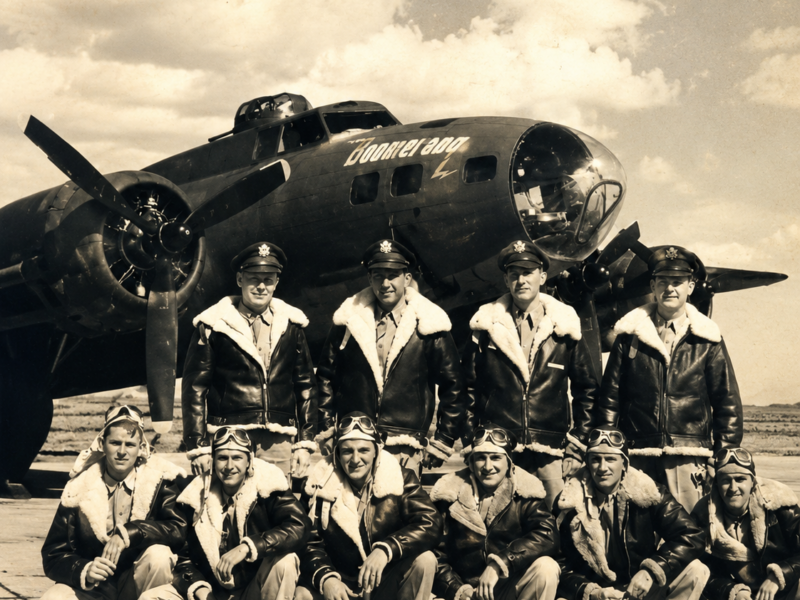
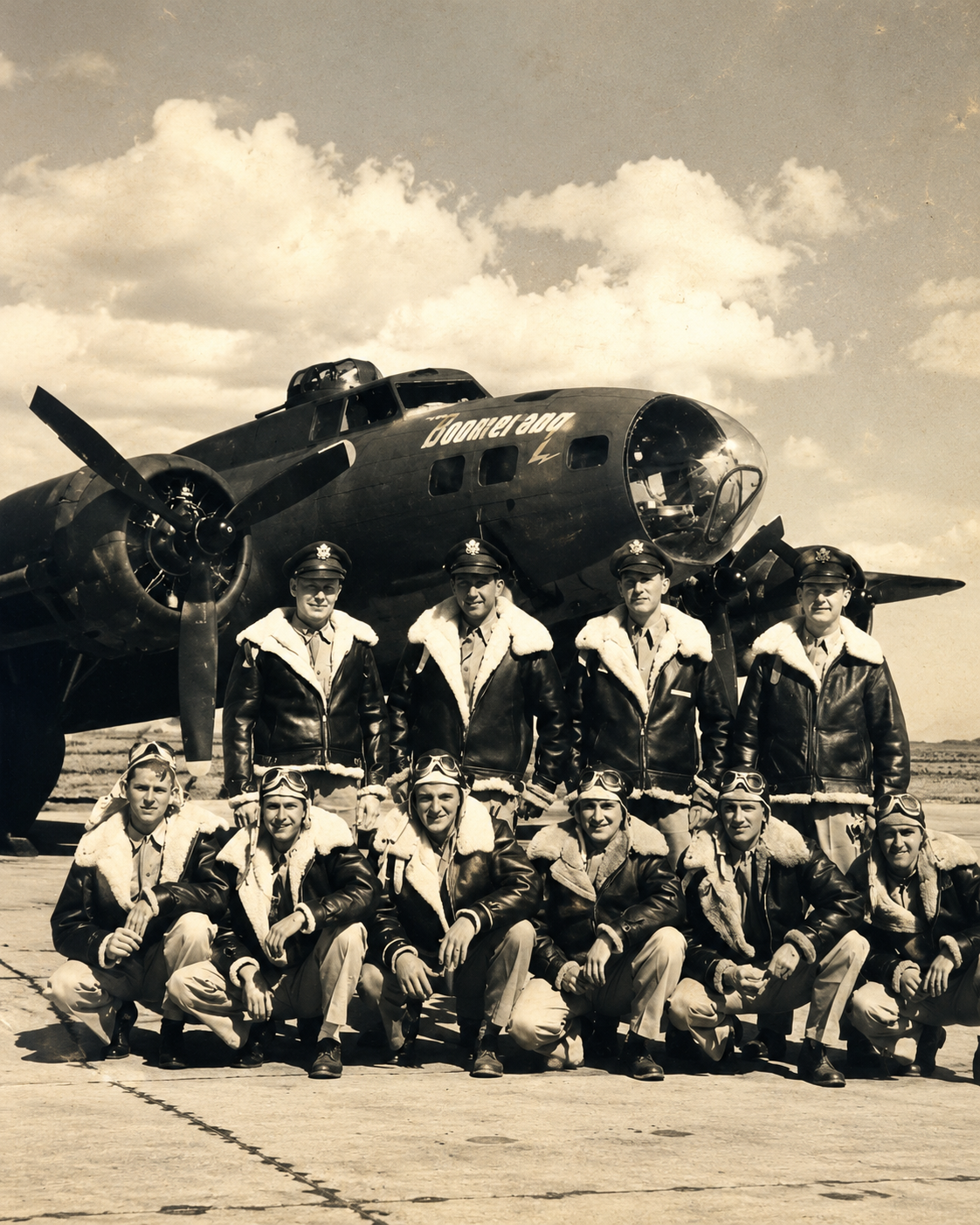
His plane was called the Damn Yankee.
It earned the nickname because most of its crew were boys from the North.
The Damn Yankee was based at Grafton Underwood, one of twenty-five airfields north of London.
Officially, Sundlun and his ten-man crew belonged to the 384th Bombardment Group, 545th Bomber Squadron, First Air Division of the U.S. Eighth Air Force.
Unofficially, they were something closer to a Hollywood casting call.
If you had gone to Central Casting and asked for a typical American bomber crew, you could not have found a more typical one.
His navigator was a Lithuanian American nicknamed Rhino Yelka.
Up front sat Sundlun himself, the pilot, a Jewish kid from Rhode Island.
His co-pilot was an Austrian American from Chicago who had played football for Notre Dame.
Behind him were the top turret gunner and engineer, a farm boy from Oklahoma, and the radio operator, a Pennsylvania coal miner of German descent.
In the ball turret sat a Hollywood extra, a pretty boy.
Two waist gunners rounded out the middle of the plane. One was an Italian American from Seattle, the other a young man from North Carolina.
And in the tail was a Greek American from New Jersey.
They were completely different men.
But as Sundlun later put it, they fought very well as a crew.
On December 1, 1943, the crew of the Damn Yankee had twelve missions under their belts.
Unlucky thirteen would take them into Hitler’s backyard.
The Damn Yankee was one of 293 B-17s assigned to bomb a steel factory in the German city of Solingen, in the industrial pocket known as the Ruhr Valley.
The B-17 was the workhorse of the Eighth Air Force.
It was known as a tough and dependable bomber that could take a savage beating from enemy planes and anti-aircraft guns and still, often miraculously, bring its crew home.
Over Germany, amid heavy flak, the Flying Fortresses of the 384th Bombardment Group dropped their bombs.
Once the job was done, the Damn Yankee and the other B-17s turned west for England.
But they were by no means out of the woods.
With Sundlun at the controls, a burst of flak struck the plane and knocked out one of its four engines.
The Yankee turned west over Belgium, slower now, her airspeed dropping with a damaged engine.
To two German fighter planes, she was perfect prey.
They pounced on the wounded bomber and killed the tail gunner.
The crew fought off the German fighters for half an hour.
Then another engine was hit, and it went dead too.
The Damn Yankee began to sink.
She fell from 27,000 feet to 4,000.
A few minutes later, the B-17 was down to 1,000 feet, in serious trouble, over a country the Germans controlled.









